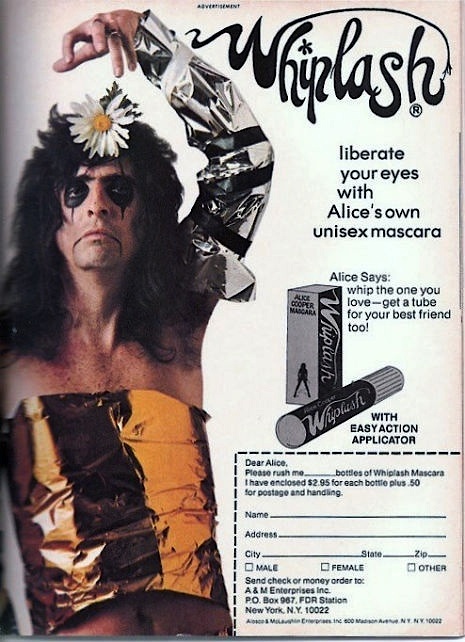
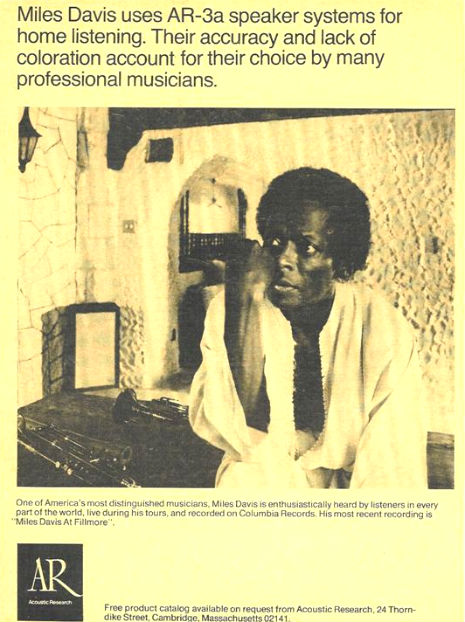
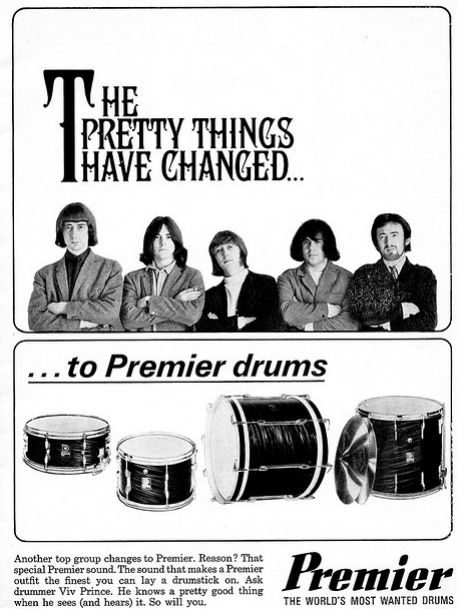
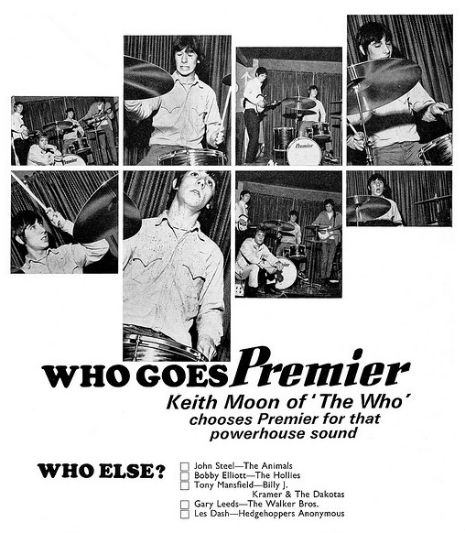
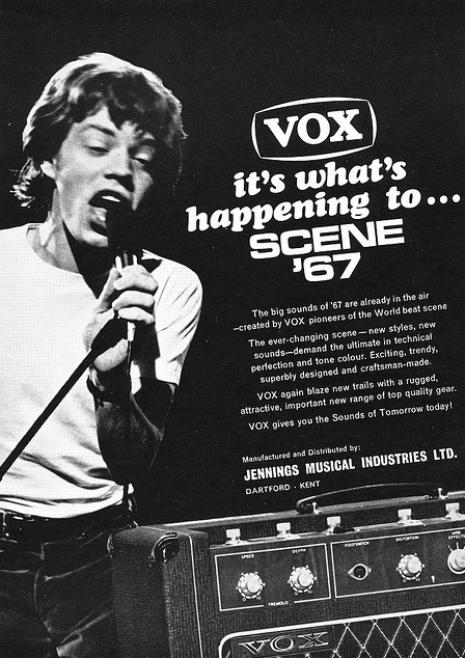
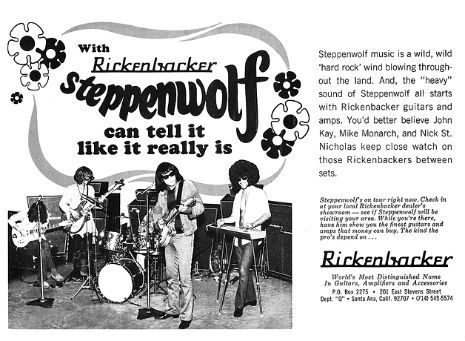
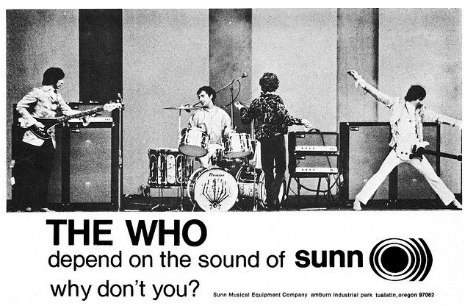
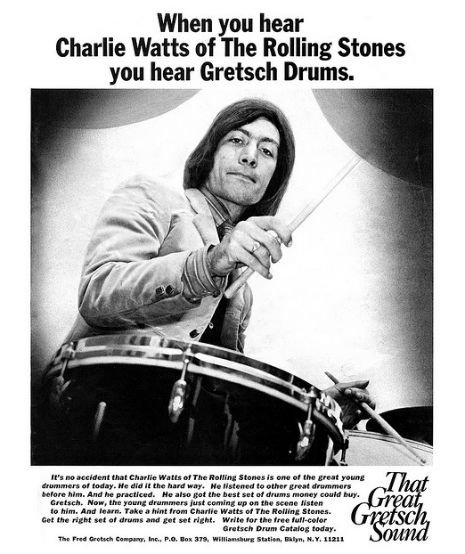
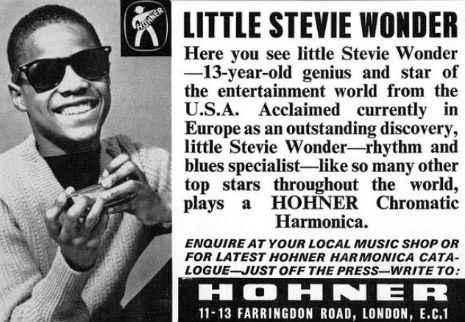
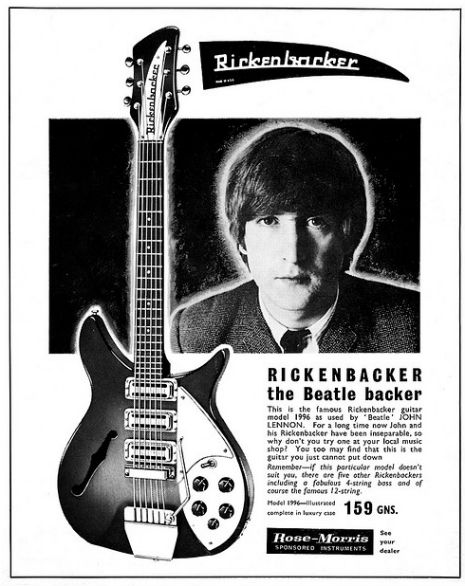
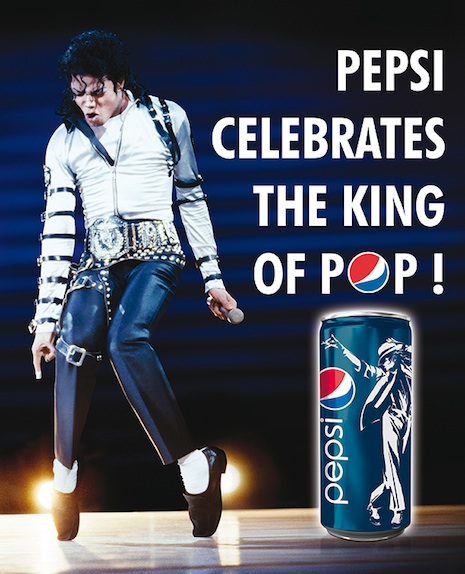
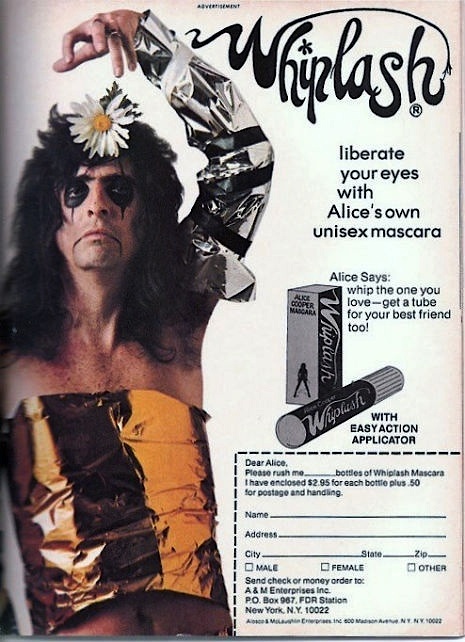
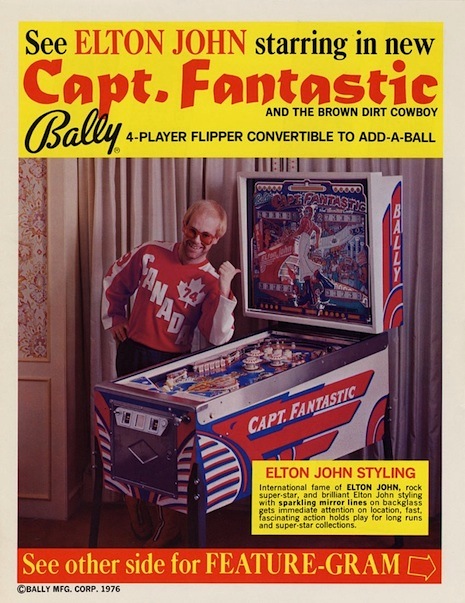
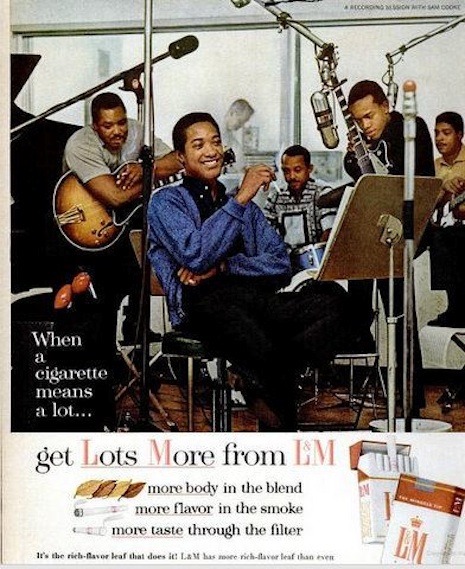
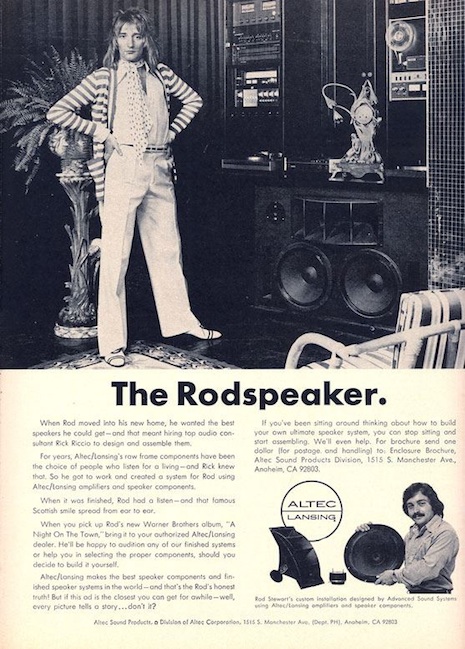
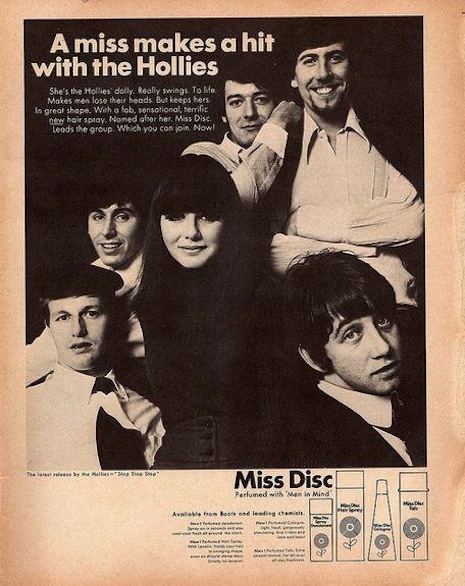
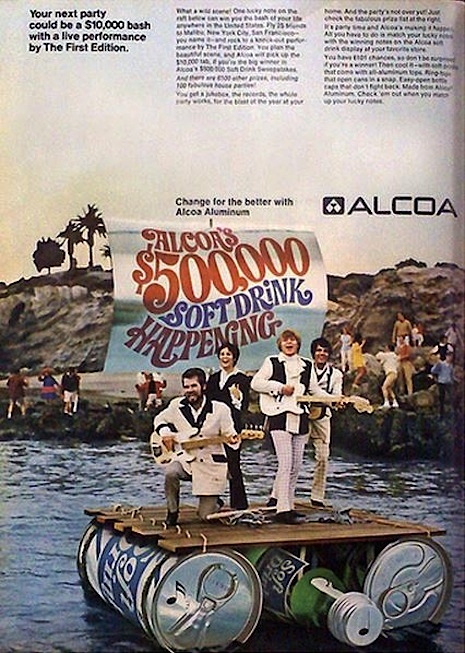
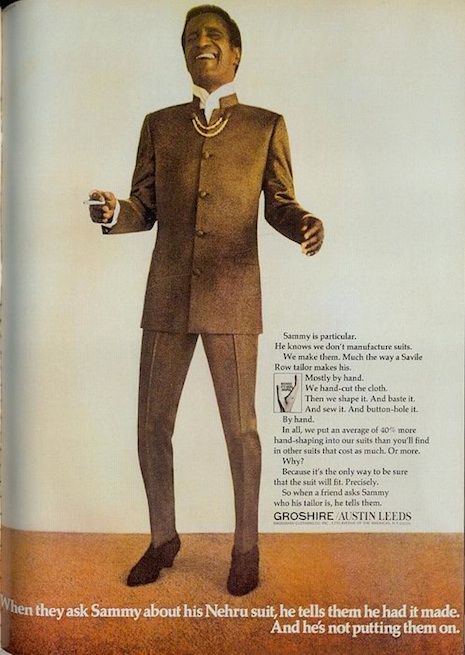
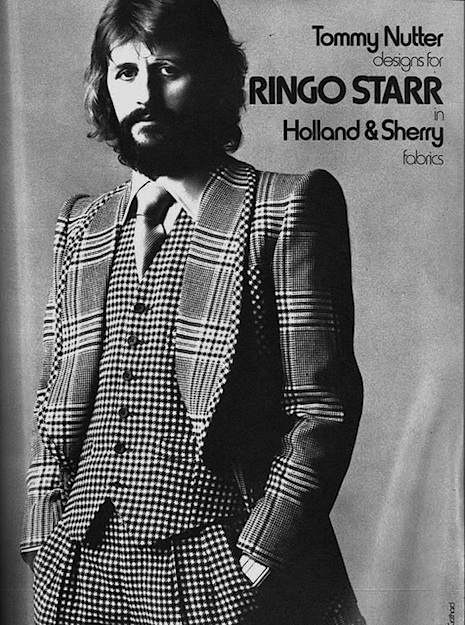
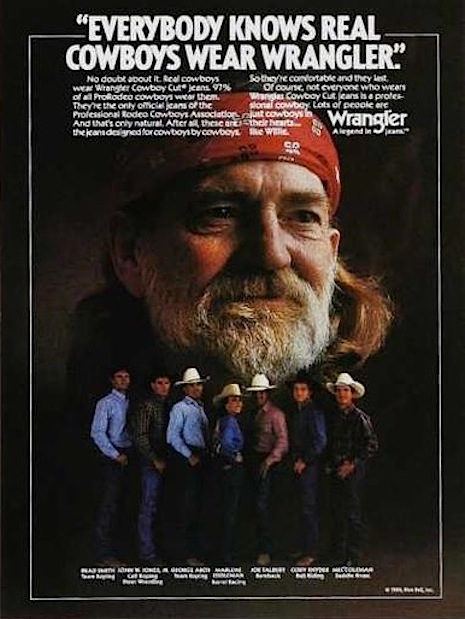
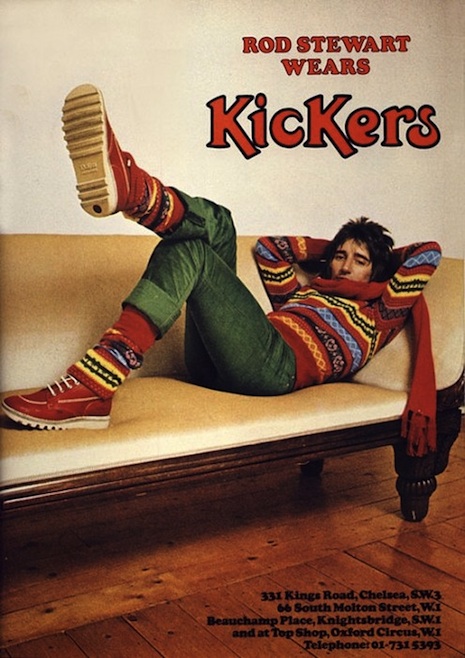
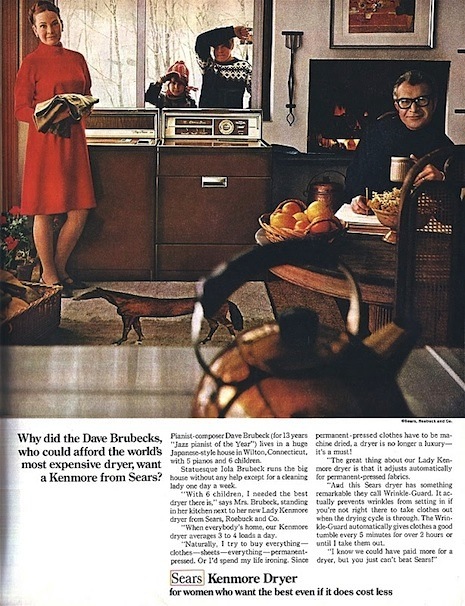
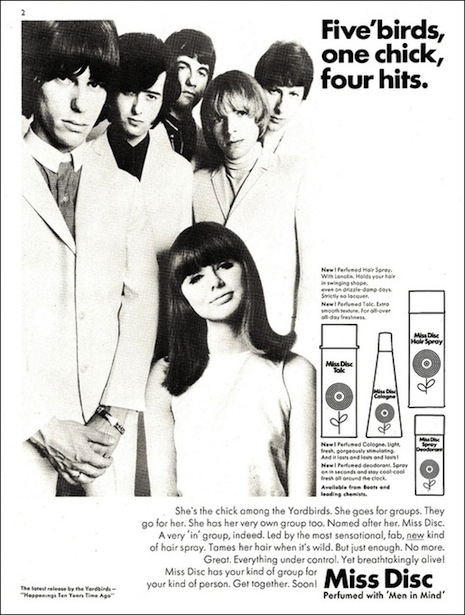
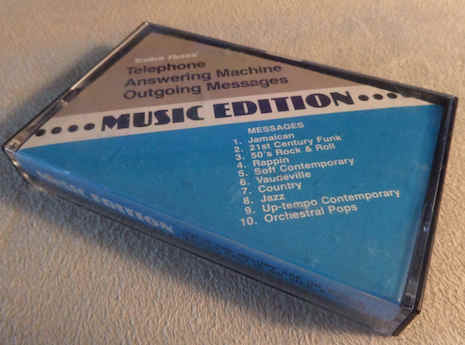
I always have to laugh when people talk about musicians, authenticity and selling out, the act of artists promoting products through advertisements or product placements and endorsements. It was always like this. Check out these vintage ads for proof.
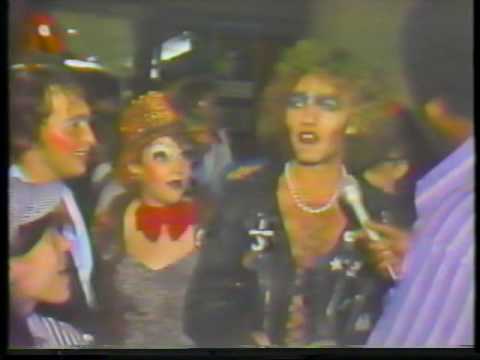
Among one of the coolest pre-rock star videos I’ve ever seen is this one – it’s from a St. Louis news broadcast from the late 1970s about the fans of The Rocky Horror Picture Show at the city’s Varsity Theater.
At around the 1:25 mark, you’ll see future R.E.M. frontman Michael Stipe, in his best Frank-N-Furter drag, giving his enthusiastic impressions of the film.
It all started with a YouTube video. Three young men flipped Odd Future songs into a jazz medley in an abandoned apartment. The drummer wore a pig mask. They were christened the Odd Trio via cardboard sign.
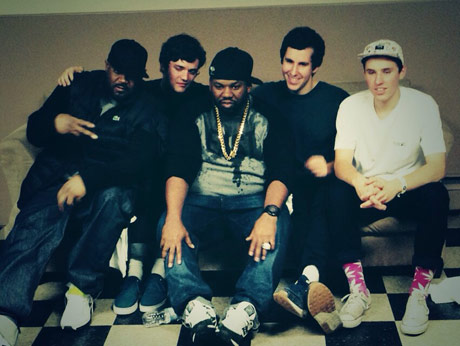
Toronto musicians Matthew A. Tavares, Chester Hansen and Alex Sowinski first met in Humber College’s Music Performance program, bonding over a common love for Odd Future, Gucci Mane and Lil B. With Matthew on piano and synths, bassist Chester, and Alex on drums, they began jamming casually and the Odd Trio was assembled.
The first Odd Trio video became a viral sensation as they cultivated a devoted online fan base. They dropped new videos regularly and millions of hits later, newly christened Badbadnotgood released their self-titled EP in June 2011. It was a complete UFO upon arrival on the musical landscape. Tavares’ virtuosity on keys, Sowincki’s human drum machine prowess and Hansen’s in-pocket swing on bass redefined the possibilities of what a trio can do. Inspired equally by Lil B or John Coltrane, Badbadnotgood found the post-bop in Big Apple classics (“The World Is Yours”, “Mass Appeal”, “Electric Relaxation”), Zelda themes or the off-kilter electronic soundscapes of Flying Lotus.
In September 2011, BBNG sold out their debut show at Toronto’s Red Light Club. Soon after, a friendship on Twitter led to jam sessions with Tyler the Creator while he was in Toronto. The moment was captured on Youtube and spread through the web like wildfire, soon followed by an opening set for Roy Ayers and a headlining performance in London for Gilles Peterson’s Worldwide Award show in December 2011.
Nothing seems to stop these three.
BadBadNotGood released an astounding album in February of this year – Sour Soul isthe collaborative album with Staten Island rap champ and Wu-Tang Clan member Ghostface Killah. Inspired by 1960s and 70s music – taking inspiration from the recording techniques and production of that era, and eschewing sampling in favour of live instrumentation, BBNG with producer Frank Dukes have created a dramatic, cinematic musical staging for Ghostface’s vivid storytelling. Sour Soul also features guest spots from MF DOOM, Elzhi (Slum Village / J Dilla), Danny Brown and prodigal new rapper Tree (Project Mayhem).
Eric: So, despite asking the obvious, what really attracted to you to work with Ghostface? Frank Dukes: At the time I was doing a lot of work with him, I loved him as an artist and I felt like it was just a real natural collaboration. I feel like BadBadNotGood, they really care about music and not to sound cheesy but they care about making art and not anything else, really. I feel like Ghostface has a parallel career. While he’s had a long, lucrative career these guys were just like – in their early stages and I felt like it was the perfect.
Eric: Earlier in the day when you guys were rehearsing with Ghost Face, he was actually give you some pretty solid advice, about following your own path, and don’t listen to the naysayers. Matt Tavares: I think if you try and cater to other people then you’re not being yourself. Then you can’t really make art in that case, because you really have to express yourself for it to be a true artistic thing. It’s like, sometimes it’s depressing to read when people say negative things or when people are saying you’ve put a lot of work in, then when people say good things about it you just ignore it. You take it for granted. Chester Stone Hansen: Hearing him saying it on a life perspective of starting in the Wu-Tang Clan, all the trials and tribulations of being a worldwide phenomenon and successful everywhere but then their dynamic as a group shifting and changing over time. So many different things he was telling us but it was crazy and so honoring to hear him say that. When someone of his stature and his experience tells you that you’re good – woah, this is meaningful stuff.
Eric: Tell me a little bit about the collaboration process. Matt: We went to New York and Dukes basically was working at the studio with Menahan Street Band, they’re an amazing band for a 50 Cent record that didn’t get cleared, but they loved the sample so much that they met up with Dukes and hit it off instantly. Then they gave him the key to the studio and he hung out there for a while. Dukes, after we met, was like hey let’s go down to Dunhams, the studio, and record some stuff. It’s all analog and they have a very purist, it’s a very authentically very purist old school sound. That’s where we laid the bed tracks, we had about 5 days there. We spent 18 hours a day in the studio and just wrote 11 songs. Frank: From there we just – kind of like, sent those initial 11 recordings to Ghost and built a foundation of the songs we were doing and over the course of the next couple of years hatched his way into them, changed some instrumentals and wrote a few new things and kind of massaged it into the record it is today.
Eric: What are you most excited about for people to hear on this record, showing the audience this side of the band that maybe they haven’t seen before? Chester: Maybe a more refrained side. No solos on this record, which almost every song on all of our other records had solos on it. It sounds like a small thing, but it really changes how you scope the song. Obviously Ghostface is on top, so that creates a lot of interest. Still, it’s very easy for us because we get so used to it to write a song, solo, finish the song. It’s a completely different style of songwriting.
Documents from the FBI reveal that J. Edgar Hoover took personal offense to comedian George Carlin following his appearances on “The Carol Burnett Show” and “Jackie Gleason.”
Carlin and his “Seven dirty words” comedy routine were central to the 1978 U.S. Supreme Court case F.C.C. v. Pacifica Foundation, in which a 5–4 decision affirmed the government’s power to regulate indecent material on the public airwaves.
According to documents requested by Shawn Musgrave, the FBI first took notice of Carlin following his 1969 Jackie Gleason appearance where he “referred to the Bureau and the Director in a satirical vein.” They maintain that the bit was “considered to be in very poor taste” and “it was obvious that he was using the prestige of the Bureau and Mr. Hoover to enhance his performance.”
Shawn Musgrave made this request to Federal Bureau of Investigation of the United States of America.
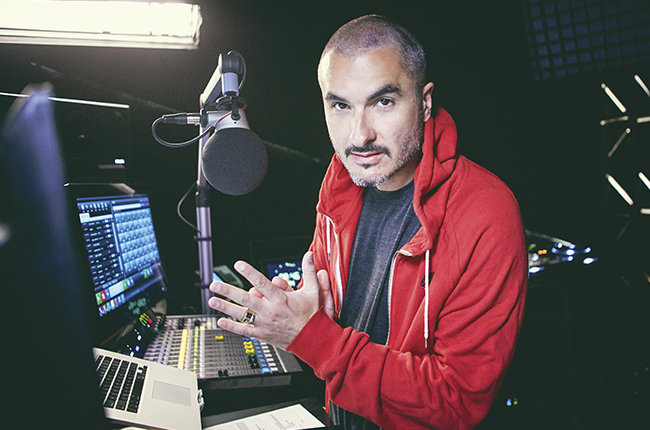
Beats 1 was basically Trent Reznor’s idea?
Zane Lowe: Yeah. I’m not sure if you’ve had a chance to sit with Trent, but he’s one of the most intelligent, eloquent, passionate people I’ve ever met, not just for art, but also the way people can use it. He’s really committed to the user experience, so his whole thing was like, “People have been splintered off into individual experiences — let’s see if we can bring them back together and if so, what would that feel like for the user? What if they’re using it on a device in a music service, and not in the traditional places where radio is experienced?” It was incredibly useful for me to hear him say that because it really [solidified] some of the ideas that I’d been kicking around but wasn’t sure if I was on the right path. What is really valuable and exciting about radio is the connection to a community. Trent has been incredibly supportive every step of the way.
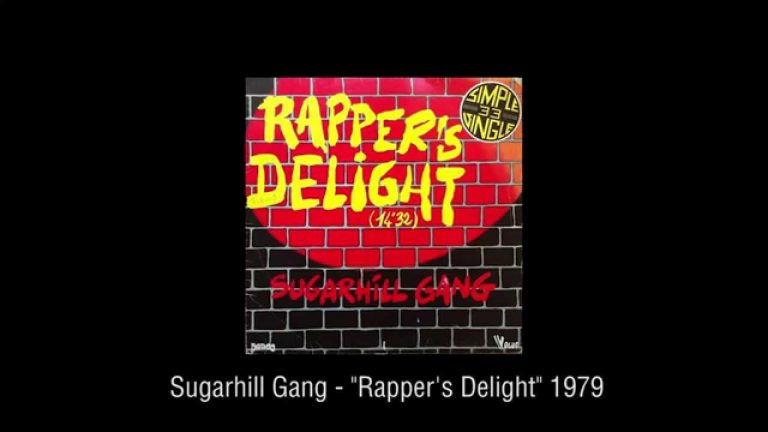
In 1987, I had just graduated high school and moved from San Jose to Long Beach, CA for college. I chose Long Beach State because I assumed it would be a party school since it had ‘beach’ in the name. My parents helped me move all my belongings which were my clothes, 2 turntables, a mixer, speakers, an amp and probably around 10 crates of records. I was into hip hop, but wore vintage clothes from thrift stores and had a mushroom haircut so wasn’t really accepted by the other college students who never understood me. So I was a loner who pretty much stayed in my dorm room and made music all the time. I remember saving my money once I got there and eventually bought a 4-track recorder and a Casio drum machine that had 4 pads, each with a split second of sample time. I got the drum machine used for like $300 and was very excited. Next step was to find a rapper so I put an ad in the paper. I said my influences were Schoolly D, Just Ice, Scott La Rock, and Ultramagnetic MCs. ‘Hardcore rap.’ That’s how I found Spunky Spunk Dogg, a Cholo rapper from Long Beach. A few years later when Snoop Doggy Dogg came outta Long Beach, I wondered if he knew Spunky Spunk Dogg, but that’s another story. Spunky had more tattoos than I had ever seen on a human, especially for 1988 and I was always kinda afraid of rolling with him cuz I didn’t really know his background, but he always treated me with respect and admiration. I made the beats and did the cuts. This recording is the only one I have with him from back then and we performed outside at the backyard of a BBQ on a Sunday afternoon for an audience of around 15-20 people. We did around 5 or 6 original songs we had made and 1 cover and for the cover, we chose the biggest rap song in LA at the time. My turntable kept skipping as it wasn’t a 1200 and nobody even really cheered. I don’t even recall people really paying attention, but we were having fun and it was our first and last show together as a group. This was in the summer of ’88, and soon after, I moved back to San Jose, where I eventually met Charizma and started all over again. — PBW 8/14/2015