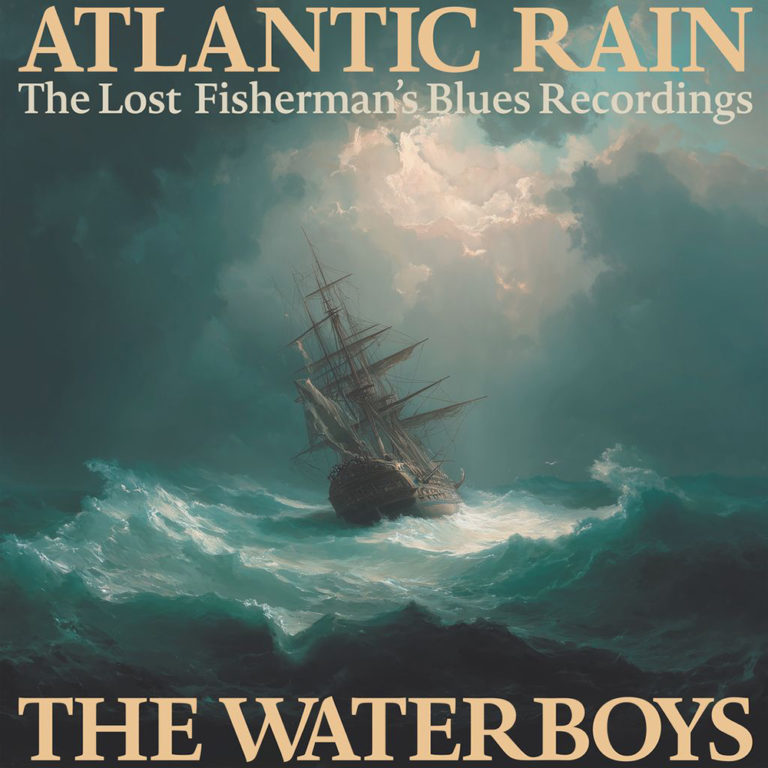
Nearly 40 years after the sessions, The Waterboys are opening the vault. The band has announced ‘Atlantic Rain – The Lost Fisherman’s Blues Recordings,’ a 25-track collection of previously unheard music from the classic ‘Fisherman’s Blues’ era, out July 17 via Chrysalis Records in 3CD, 3LP, and digital editions.
The backstory is staggering. During the 1986-88 sessions, The Waterboys recorded almost 400 multi-track reels, many running at half-speed to pack in more music. Around a fifth of those reels carried no song titles, just scribbled notes like “instrumental,” “unknown,” “soundcheck,” or “jam.” Band leader Mike Scott finally went through the mystery tapes in 2024-25 and pulled out a trove of release-worthy performances.
Among the finds are never-before-heard songs like “Come Back To Galway,” “Light Shine On Me,” and “Endless Store,” the epic “Man With The Wind At His Heels,” and covers of Hank Williams, Woody Guthrie, and Willie Nelson. The set stands proudly alongside the legendary 6-disc ‘Fisherman’s Box’ from 2013, once thought to be the final word on these sessions.
A second preview track is out now, a passionate cover of Bob Dylan’s “Knockin’ On Heaven’s Door,” with a new lyric video streaming. It follows last month’s first teaser, “Too Close To Heaven (soul version).” There’s also a fresh remix of the classic “We Will Not Be Lovers,” recently featured in the Netflix show ‘Something Very Bad Is Going To Happen.’
When ‘Fisherman’s Blues’ arrived in 1988, it marked a sharp turn for the band. After their early alternative rock records, they relocated to Ireland and embraced roots, country, and Celtic music, and as ‘Atlantic Rain’ shows, the palette also stretched into soul, old-time gospel, and ecstatic instrumental jams. The album drew bemusement, delight, and rage in equal measure on release, and has since become the band’s biggest seller. The physical editions come with a 54-page deluxe book featuring track-by-track notes from Scott.
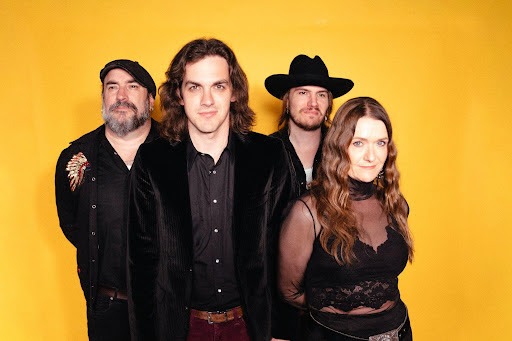
This summer brings the music to the stage. The Waterboys head out on a nine-date arena run dubbed The Fisherman’s Blues Revue, celebrating the era across Dublin, London, Glasgow, and Europe. The shows feature Americana great Steve Earle, who joins the ensemble singing his own songs while adding guitar and mandolin to Waterboys numbers, alongside legendary fiddler Steve Wickham and ‘Fisherman’s Blues’ flautist Colin Blakey. The lineup also includes Brother Paul on organ, Famous James on piano, Aongus Ralston on bass, Eamon Ferris on drums, and Norwegian lap steel ace Roar Øien. Tickets are on sale now.
Atlantic Rain Tracklisting:
- Too Close To Heaven (soul version)
- Come Back To Galway
- The Man With The Wind At His Heels
- And Then The Gods
- Light Shine On Me
- Endless Store
- This Land Is Your Land (studio version)
- Saints And Angels (1988 version)
- I Can’t Feel At Home In This World Anymore
- Knockin’ On Heaven’s Door
- Honky Tonkin’
- No Expectations
- When Doves Cry
- Angel Flying Too Close To The Ground
- Killing My Heart (full length)
- Bob And Anto’s Soundcheck
- We Will Not Be Lovers (live take)
- Lost Highway (double version)
- The Good Ship Sirius / The Ship In Full Sail
- Mister Saxman
- The Waves
- The Last Jam (long version)
- Night Falls On Windmill Lane
- Sgt. Pepper’s Lonely Hearts Club Band
- Sgt. Pepper’s Lonely Hearts Club Band (Reprise)