Home Blog Page 3

What The Beatles Can Teach You About Ending a Successful Partnership at the Right Time

0

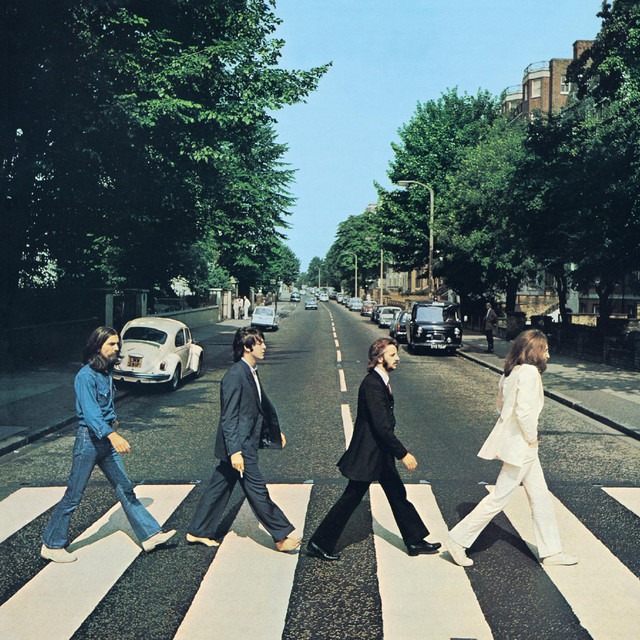
We tend to think of the breakup as the failure. The relationship that ended, the company that split, the partnership that dissolved. But anyone who has spent time advising businesses or couples will tell you the same thing: the real failure usually lies elsewhere. It’s staying too long, or leaving so badly that you torch everything you built. And there’s no better case study in both the wisdom and the difficulty of ending well than the most successful creative partnership in history. The Beatles gave us so much, and one of their quieter gifts is a masterclass in how and when to walk away from something great.

Lesson 1: A Partnership Can Outlive Its Purpose, and That’s Okay

The first thing to understand is that the Beatles had reached a point where they were ready to be something new. One of the formal reasons put forward for the dissolution was that the Beatles had ceased to perform together as a group, so the purpose of their partnership had been fulfilled.

This is one of the gentler truths any successful partnership can come to accept. The reason you came together can quietly complete itself while the legal and emotional structure remains standing. A band ready to make solo music, a company whose founders now feel called toward different things, a couple whose original shared mission has been beautifully accomplished. The partnership can be a tremendous success and still be ready to conclude. Recognizing that difference, between “this failed” and “this finished what it set out to do,” is the beginning of ending with grace.

Lesson 2: Notice When the Stabilizer Is Gone

Here’s a pattern worth remembering with care. The Beatles felt the ground shift after they lost the one person who held the whole structure together. The death of their manager Brian Epstein in 1967 left them rudderless, and McCartney later compared it to suddenly losing their dad, since Epstein had been their guide and the buffer between their artistry and the brutal realities of fame.

The lesson here is a kind and practical one: keep an eye on who in your partnership is quietly doing the stabilizing work. Often there’s one person, or one shared structure, that absorbs the friction and keeps everyone pointed in the same direction. When that steadying force changes or steps away, it’s a moment to pay loving attention, because the partnership may need a new source of stability, or it may be a sign that a new chapter is beginning for everyone.

Lesson 3: Protect Your Partnership From the Wrong Outside Influence

Much of the Beatles’ pain came down to a disagreement over who they let into the room. After Epstein died, Allen Klein took over managing Apple Corps, and the financial situation grew precarious, with Harrison later recalling the whole thing as simply a mess. McCartney saw it differently from his bandmates, and that split over an outside party became the fault line. His basis for arguing the others had violated their partnership agreement was that they had appointed Klein as manager over his objection and that he had been kept in the dark about the band’s finances.

For any partnership, the takeaway is warm and useful: be thoughtful and aligned about who you invite into your inner circle, whether that’s an investor, a manager, an advisor, or anyone whose decisions touch what you’ve built together. A shared, trusting decision about outside influence keeps a partnership strong. A divided one can quietly become the thing that pulls it apart.

Lesson 4: Structure Your Partnership So Individual Success Is Celebrated

This one is fascinating, and genuinely instructive for modern partnerships. Under the original plan for Beatles and Company, all income paid into the company was ultimately split four ways, and that included earnings on solo projects. Some members were perfectly happy with this, while McCartney came to feel ready to bet on himself. He may simply have believed his own career going forward would be worth more than a quarter share in an ongoing partnership, having begun to think of himself as a separate agent for some time.

There’s real wisdom to draw from this. When you build a partnership, think early and generously about how individual growth will be handled down the road. The happiest long-term partnerships tend to leave room for each person to flourish on their own terms, so that personal success feels like a shared joy rather than a tension. Designing that flexibility in from the start is one of the kindest things partners can do for their future selves.

Lesson 5: End It Cleanly, Even When That Takes Courage

The most striking part of the Beatles’ story is how much courage it took to formally let go. In August 1970, McCartney began steps to dissolve the partnership, and the only way to break the deadlock was to take legal action, so on December 31, 1970, he filed a suit in the London High Court to dissolve The Beatles & Co. It was a hard road, and it took time to resolve. The case ground on into the decade, the court eventually found in McCartney’s favour, and The Beatles as a legal entity came to an end on December 29, 1974.

History has been kind to that decision. Freed from the constraints of their partnership, McCartney, Lennon, Harrison, and Starr each went on to solo careers that further cemented their legacies. The lesson lands softly but firmly: ending a partnership cleanly, even when the process feels daunting, can free everyone to do their best work next. A clear, honest conclusion is a gift to all parties, not a betrayal of what came before.

The Beautiful Paradox

Here’s the heart of it. The Beatles remain the most beloved band in history, and the fact that they parted ways takes nothing away from that. If anything, their willingness to let the partnership rest allowed four extraordinary people to keep growing. That’s the gentle paradox worth carrying into your own work and relationships: ending something at the right time, and in the right way, can be one of the most respectful and loving things you ever do for it. The goal was never to make it last forever. The goal was to honour what it was, and to let everyone walk forward whole.
Philip Adrian Booth, Filmmaker and Musician Behind the ‘Everyone Knows That’ Mystery, Dies at 66

0

Philip Adrian Booth, the British-Canadian filmmaker and musician who, with his twin brother Christopher, unwittingly became the answer to one of the internet’s most enduring musical mysteries, has died at the age of 66. His brother announced his passing on Instagram on June 11, 2026, describing him as a beloved father, brother, uncle, partner, and true artist.

Born in Halifax, Yorkshire on February 19, 1960, Philip and his identical twin Christopher shared a creative life from the very beginning. The family moved to Canada in the 1970s, where the brothers first dipped into music alongside their older brother John. In a remarkable footnote to Canadian rock history, Christopher briefly replaced Bryan Adams as vocalist of the band Sweeney Todd, with Philip on guitar, though the brothers left before recording any music.

Relocating to Los Angeles in the 1980s, the twins formed the band Who’s Who?. Unable to land a record deal, they found an unconventional outlet for their songs, licensing their original recordings to adult films through an industry connection. One of those songs, written and recorded in the mid-1980s and featured in a 1986 film, would go on to live a strange and unexpected second life decades later.

That song became the heart of an internet phenomenon. In 2021, a 17-second clip surfaced on the song-identification site WatZatSong, and the online “lostwave” community, devoted to tracking down obscure and unidentified music, became consumed by the hunt. Known online as “Everyone Knows That,” the track baffled sleuths for years, its title and authorship a complete mystery. The search captivated thousands and drew coverage from The Guardian, Rolling Stone, and beyond. In April 2024, the mystery was finally solved: the song was “Ulterior Motives,” written by the Booth brothers. Suddenly, after nearly four decades, Philip and Christopher found themselves the subjects of viral fame, and they embraced it, releasing a wave of remastered “lost” albums and finally giving fans the full version of a song the world had only known in fragments.

Music was only half of the brothers’ creative output. Together they built a prolific career in independent horror and the paranormal through their company Spooked Productions. Philip directed and shaped numerous films, among them Droid, Death Tunnel, Dead Still, and their 2023 feature The Attached, working variously as director, cinematographer, editor, and writer. The pair specialized in ghost stories, haunted locations, and exorcism documentaries, including Spooked: The Ghosts of Waverly Hills Sanatorium and Children of the Grave, often collaborating closely as a creative unit.

In a poignant turn, the brothers had only recently brought their most famous story full circle. In 2026 they released Ulterior Motives: The Search Is Over, The Story Begins!, a documentary chronicling the very mystery that had made them, against all odds, internet legends late in life.

Philip Adrian Booth was 66.

Al Closter, Olympic Gold Medalist and Major League Pitcher, Dies at 82

0

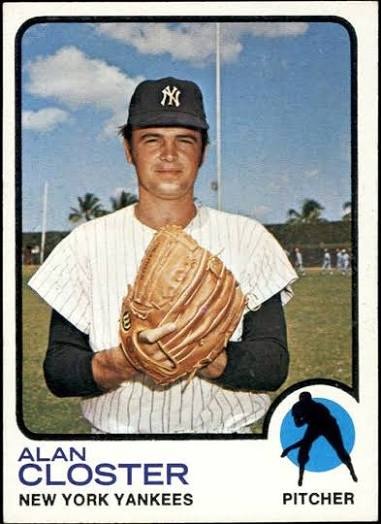
Al Closter, the left-handed pitcher who won a gold medal with the United States baseball team at the 1964 Olympics before reaching the major leagues, has died at the age of 82. He passed away on June 11, 2026, in Morattico, Virginia.

Born Alan Edward Closter in Creighton, Nebraska on June 15, 1943, he developed into a standout left-hander at Iowa State University. In 1964, he earned one of the proudest distinctions of his career, representing the United States as one of seven pitchers on the national baseball team at the Tokyo Summer Olympics, where the sport was featured as a demonstration event and the Americans took the gold.

His talent caught the eye of the New York Yankees, who signed him as an amateur free agent ahead of the 1965 season. What followed was a career defined by persistence, as Closter spent years shuttling between the high minors and the big leagues. His finest minor-league stretch came in 1967 with the Double-A Binghamton Triplets, where he went 4–0 with a sparkling 1.74 ERA, and over the years he became a fixture with the Triple-A Syracuse Chiefs, appearing in 249 games for the club.

His path to the majors was a winding one. After being selected by Cleveland in the Rule 5 Draft and then purchased by the Washington Senators, he made his MLB debut on April 19, 1966, pitching a third of an inning against the Baltimore Orioles before being reacquired by the Yankees weeks later. He would not appear in the majors again until 1971, when he returned to make relief appearances for New York. In September 1973 he was traded to the Atlanta Braves as the player to be named later in a deal involving pitcher Pat Dobson, closing out his big-league career that season.

Across parts of four MLB seasons, Closter pitched in 21 games for the Senators, Yankees, and Braves, recording a 2–2 mark with 26 strikeouts.

After hanging up his glove, Closter built a long second career in business, working for Philip Morris International for 30 years with a focus on product development in Latin America, and settling in Richmond, Virginia. His contributions to the game were not forgotten. In 2006, he was elected to the Syracuse Baseball Wall of Fame, honoring the years he gave to one of the minors’ most storied franchises.

Al Closter was 82.

Pauls Butkēvičs, Legendary Latvian Actor of Stage and Screen, Dies at 85

0

Pauls Butkēvičs, the revered Latvian actor whose career spanned six decades and roughly 150 films across Latvia and the wider Soviet world, has died at the age of 85. He passed away on June 12, 2026.

Born in Riga on August 8, 1940, Butkēvičs came to acting along an unusually winding path. After finishing secondary school in 1959, he enrolled at the Riga Polytechnical Institute and took a job as an automatic phone line regulator at the VEF factory, all while nurturing his performing instincts on the side. He had already begun appearing with the Roberts Ligers Riga Pantomime Ensemble and an experimental studio at the Dailes Theatre, and his restless curiosity led him through law, history, and philosophy studies at the University of Latvia and into the choir conducting program at the Latvian Conservatory of Music. That blend of intellect, movement, and music would shape the artist he became.

He found his breakthrough on screen in the 1960s, starring in I Remember Everything, Richard and in Elpojiet dziļi!, also known as Četri balti krekli, or Breathe Deeply. The latter became something of a legend in Latvian culture. Though the film itself was shelved and not shown publicly until the late 1980s, its songs, written by the acclaimed composer Imants Kalniņš and performed by Butkēvičs with the army ensemble Zvaigznīte, took on a life of their own and became beloved across Latvian society. Many felt no one ever sang Kalniņš’s songs better than he did.

Over the following decades, Butkēvičs became a familiar and commanding presence in Soviet cinema, appearing in films including Ilgais ceļš kāpās, Rallijs, Nepabeigtās vakariņas, Mirāža, and Aija, as well as the celebrated series Seventeen Moments of Spring and the epic Waterloo. His range carried him from contemporary dramas to historical roles, including Frederick the Great in Viva Gardes-Marines!. In 1990 he was honored with the title of Merited Artist of the Russian SFSR.

His creativity refused to stay within a single discipline. He once said that to complete his life’s work he wished to write a play and act in it, write a book, and record a music album, and he set about doing all of it. In 2001 he published his biography Kājām pa Ugunszemi, assembled with journalist Vija Apinīte. While teaching a musical acting course at the Baltic Russian Institute, he wrote the musical play Es visur aicināts un izraidīts, drawn from five centuries of Russian poetry, which premiered in Daugavpils in 2005 and toured schools, libraries, and venues across Russia. In 2008 he returned to music, recording the album Tu esi, Tu biji, Tu būsi with Elīna Cileviča.

His life partner was Zinta Jansone, a former costume designer for Latvian Television.

From a phone-line regulator with a passion for pantomime to one of Latvia’s most enduring and multifaceted artists, Pauls Butkēvičs lived a life rich in reinvention, leaving behind a legacy on film, on stage, on the page, and in song.

Pauls Butkēvičs was 85.

20 Vinyl Pressing Companies That Will Work Directly With Independent Artists, No Label Required

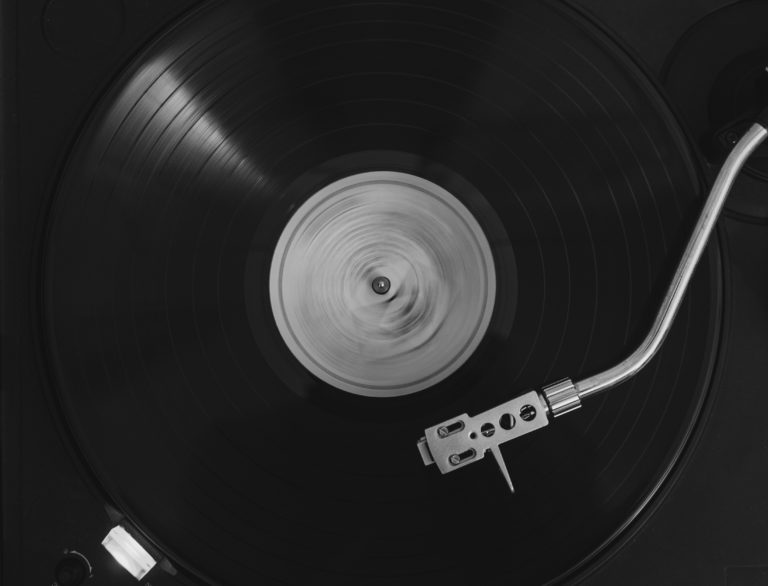
Here’s a number that might just change how you think about your next release. In 2024, vinyl sales in the United States reached $1.4 billion, the highest level since 1984, with 44 million records sold, outselling CDs for the third year running. And this wasn’t a fluke or a one-year spike. It marked vinyl’s 18th consecutive year of growth. Eighteen straight years. That points to something deeper than a nostalgia wave. It’s a real, lasting shift in how people want to experience the music they love.

And here’s the heartening part for you as an artist. Your fans don’t only want access to your music, streaming already gives them that. Many of them want to own it too, to hold it, to slide it onto a shelf and drop the needle on a Sunday afternoon. That desire is a genuine opportunity, and it’s one that’s wide open to independent artists right now.

The beauty of vinyl is that it’s a completely different experience than a stream, and fans treasure it for exactly that reason. Streaming costs the listener nothing per song, while a buyer paying $30 for an LP is purchasing the physical object, the artwork, and the gatefold experience. These two formats aren’t really competing. They’re different things that serve different moments, and your most devoted listeners happily want both.

That devotion is what’s driving this whole resurgence, and it shows no sign of slowing. US vinyl sales grew for a 19th consecutive year in 2025, surpassing $1 billion in US sales and representing nearly half of the format’s entire global value. The appetite is real, it’s durable, and there’s plenty of room in it for artists at every level.

For a long time, vinyl felt out of reach for smaller artists, and for an understandable reason. Traditional vinyl pressing required minimum orders of 500 to 1,000 units, which priced out smaller artists or demanded large upfront investments. Gambling thousands of dollars on a thousand records was simply too much for most people to take on.

The wonderful news is that this has changed. Independent artists can now press as few as 100 to 300 records, turning vinyl into a powerful marketing and fan-engagement tool rather than just a distribution format. The supply backlog that slowed everyone down a few years ago has eased up too. Pressing lead times, which stretched to around 18 months at the peak of the bottleneck in 2021 and 2022, have come back down to roughly 6 to 9 months, and short-run plants are often quicker still. Which leads nicely to the question everyone asks.

Let’s walk through some real numbers so you can plan with confidence. At the manufacturing level, the per-unit cost is quite reasonable. A vinyl record costs roughly $5 to $9 to manufacture per unit before any margin to the label, distributor, store, or artist. For a finished short run with full packaging, here’s a helpful benchmark. Disc Makers charges approximately $1,299 for 100 standard black 12-inch records with full-color jackets.

Now picture the math. If you press 100 records for around $1,300 all-in and sell them at $30 each at shows and through your own store, that’s roughly $3,000 in revenue on your investment, with the difference going straight to you. Color variants, splatter effects, and gatefolds can mean even more to collectors. It’s one of the rare moves where the numbers genuinely work in an independent artist’s favor, and you get to keep what you earn.

This is the best news of all. You don’t need a label, a distributor, or an inside connection to do this. A whole community of pressing plants is ready to work directly with independent artists at friendly minimums. Here are some worth getting to know.

Disc Makers (USA)
Veteran full-service option, cuts lacquers and prints jackets in-house, friendly pricing on runs of 100 to 200.

Memphis Record Pressing (USA)
Short-run program built for indies, orders of 100, 200, and 300 units ready in about 4 to 6 weeks.

Mobineko (USA, UK, Taiwan)
Pioneered ultra short runs, presses from as few as 25 pieces with a live order-tracking portal and worldwide shipping.

Mastertrack (USA)
Short runs from 100 units with loads of color and splatter options, budget Gig packages shipping in 4 to 6 weeks.

Hellbender Vinyl (USA)
Pittsburgh plant known for personal service, made-in-USA 7-, 10-, and 12-inch records with transparent pricing.

Gotta Groove Records (USA)
Cleveland-based, well loved by indie labels for quality and hands-on support.

Pirates Press (USA)
San Francisco company with a strong reputation, especially for creative formats and packaging.

Citizen Vinyl (USA)
Asheville, NC plant and café that acquired Donaldson Record Pressing, indie-friendly and community-minded.

Kindercore Vinyl (USA)
Athens, Georgia plant focused on supporting independent and emerging artists.

Record Technology Inc. (RTI) (USA)
Camarillo, California, respected for audiophile-grade pressing quality.

Smashed Plastic (USA)
Chicago’s artist-focused plant, geared toward independent runs.

Brooklyn Phono (USA)
Long-running independent plant in New York handling smaller orders.

Canada Boy Vinyl (Canada)
Western Canada’s full-service plant, handy for Canadian artists avoiding cross-border shipping.

Microforum (Canada)
Toronto-based, presses vinyl alongside other media for indie clients.

The Vinyl Factory (UK)
Storied West London plant for higher-end and collectible pressings.

One Cut Vinyl (UK)
Specializes in short runs and one-off custom records, ideal for very small quantities.

Vinyl de Paris (France)
Established Paris plant offering quality short and standard runs.

Mad Vinyl Music (Spain)
Madrid plant with decades of experience, back pressing locally after years away.

Deepgrooves (Netherlands)
Dutch plant known for sustainability and indie-friendly service.

Starlight Vinyl (China)
Low minimums from 50 records with quick 3 to 4 week lead times for budget-conscious runs.

A friendly tip as you choose: the two things to weigh first are minimum order quantity (can you realistically sell 250, or is 100 safer?) and turnaround time, since many plants run 3 to 6 months unless you pay for a rush. Starting small is a perfectly lovely way to test the waters.

Pressing your first record is a milestone, and it’s one that more independent artists can reach now than ever before. Whether you want a boutique collector’s item for your superfans or a full run to sell on tour, there’s a company out there that fits your needs, budget, and vision.

So if you’ve been wondering whether vinyl is worth it, let this be a gentle nudge. Your fans are already telling you they want something they can hold onto. Giving them that isn’t just good business, it’s a beautiful way to deepen the bond between your music and the people who love it most. Start small, press a hundred, and see how it feels to hand someone a record with your name on it. Chances are, you’ll both treasure it.

Belfast’s Murals and Music: Where Art and Sound Tell the Same Story

0

Walk through Belfast and you’ll notice something. The walls talk, and so does the air. On one street, a gable-end mural the size of a house tells you exactly who lived here, what they believed, and what they lost. Around the corner, a pub spills traditional fiddle into the evening, or a plaque marks the spot where a punk band changed everything. These two things, the paint and the sound, aren’t separate stories. They’re the same story told in two languages. And this August, with Fleadh Cheoil na hÉireann coming home to Belfast from August 2 to 9, 2026, the world’s biggest celebration of Irish music lands in a city that has always processed its history out loud, whether with a brush or a guitar. There’s no better moment to look at how Belfast’s art and its sound have always moved together.

To understand Belfast’s murals, you have to understand the walls themselves. The first peace walls went up in 1969 to divide Catholic and Protestant communities, and today they stretch over 21 miles across the city. What began as raw division slowly became a canvas. Amid the turmoil of the Troubles, the walls of Belfast became surfaces for political expression, memorialisation, and cultural identity, evolving from crude slogans and territorial markings into elaborate murals.

The result is one of the most striking open-air galleries on earth. Belfast and Derry have the most political murals in all of Europe, with Belfast displaying around 300 quality murals throughout the city. Crucially, the two communities painted in different visual dialects. On the nationalist side, murals depict important moments in Irish history and pay tribute to victims of the Troubles, while on the loyalist side the imagery tends to be more militaristic, equally loaded with political meaning. Read them side by side and you’re reading the city’s divided memory in real time.

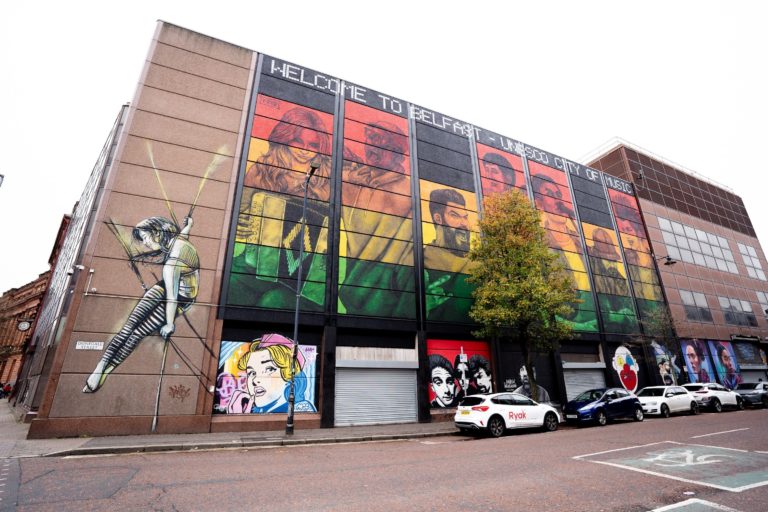
Here’s where the story turns hopeful. A newer generation of artists, raised in peacetime, began painting a different Belfast. Adam Turkington organised a street art festival called Hit The North, which transformed the mural scene in Belfast’s Cathedral Quarter, where a new generation of artists born in peacetime are more concerned with making art than political statements. The Cathedral Quarter today feels like a living, breathing canvas. The art there changes constantly, with new pieces replacing old ones and walls repainted, functioning as a living gallery rather than a fixed exhibition. And fittingly for a UNESCO City of Music, the walls have begun to celebrate sound itself. A new mural celebrating the value of music was unveiled at the Telegraph Building on Donegall Street.

Now layer the music on top, and the parallels jump out. Belfast’s musical legacy was forged in exactly the same pressure that produced the murals. Belfast was a major epicentre for the garage rock revolution of the 1960s with the formation of Them, the home of Van Morrison, as well as Thin Lizzy founders Eric Bell and Gary Moore, and punk bands Stiff Little Fingers, Rudi and The Outcasts.

Van Morrison did with songs what the muralists did with paint: he turned ordinary Belfast streets into permanent landmarks. He turned the streets of Belfast into something magical, with Cyprus Avenue just as mythical a place as The Eagles’ Hotel California or Sinatra’s New York, New York. When a songwriter immortalises your streets like that, you’ve earned a place in music history that no mural could rival, and yet the impulse is identical, taking the everyday geography of a divided city and making it mean something.

The punk scene drew the connection even more explicitly. Where muralists painted the conflict onto the walls, the punks shouted it back at those same walls. Stiff Little Fingers wrote “Alternative Ulster” as a direct challenge to the militarised streets they were living on, and the punk scene put Belfast music on the world stage in the seventies and eighties in a way no marketing campaign could have manufactured. That defiance had a home base. Good Vibrations, founded in 1976 by Terri Hooley, served as a voice of defiance and an escape from violence, a place where people didn’t care about sectarian labels, and released “Teenage Kicks” by The Undertones, a track John Peel loved so much he played it twice in a row. A record shop that ignored the dividing lines, in a city defined by them. That’s the same reconciliation the newer murals reach for, just pressed to vinyl.

What ties the paint and the sound together is that both refused to look away. The murals memorialise and the songs protest, but both take Belfast’s hardest realities and transform them into something the wider world will stop and look at, or listen to. And both have made the same journey, from instruments of division toward expressions of identity, pride, and increasingly, peace. For hundreds of years Belfast has channelled its passion into music and song, and the city is more than just a place where music is played; it’s a way of life. You could say precisely the same thing about its walls.

This is why the best way to experience Belfast is to treat the murals and the music as a single tour. The grand finale of the city’s music walking tour brings you to the Oh Yeah Music Centre in the Cathedral Quarter, a music hub whose exhibition showcases memorabilia from Snow Patrol, Van Morrison, and Stiff Little Fingers. Stand in the Cathedral Quarter and you can take in a street artist’s mural and a punk landmark within the same block. Art on the wall, sound in the air, both telling you who Belfast was, and who it’s becoming.

Fleadh Cheoil na hÉireann (fleadhcheoil.ie) takes place in Belfast, August 2–9, 2026. For more information visit fleadhcheoil.ie, visitbelfast.com, and discovernorthernireland.com.

Gene Shalit, Beloved Bow-Tied “Today” Film Critic, Dies At 100

0

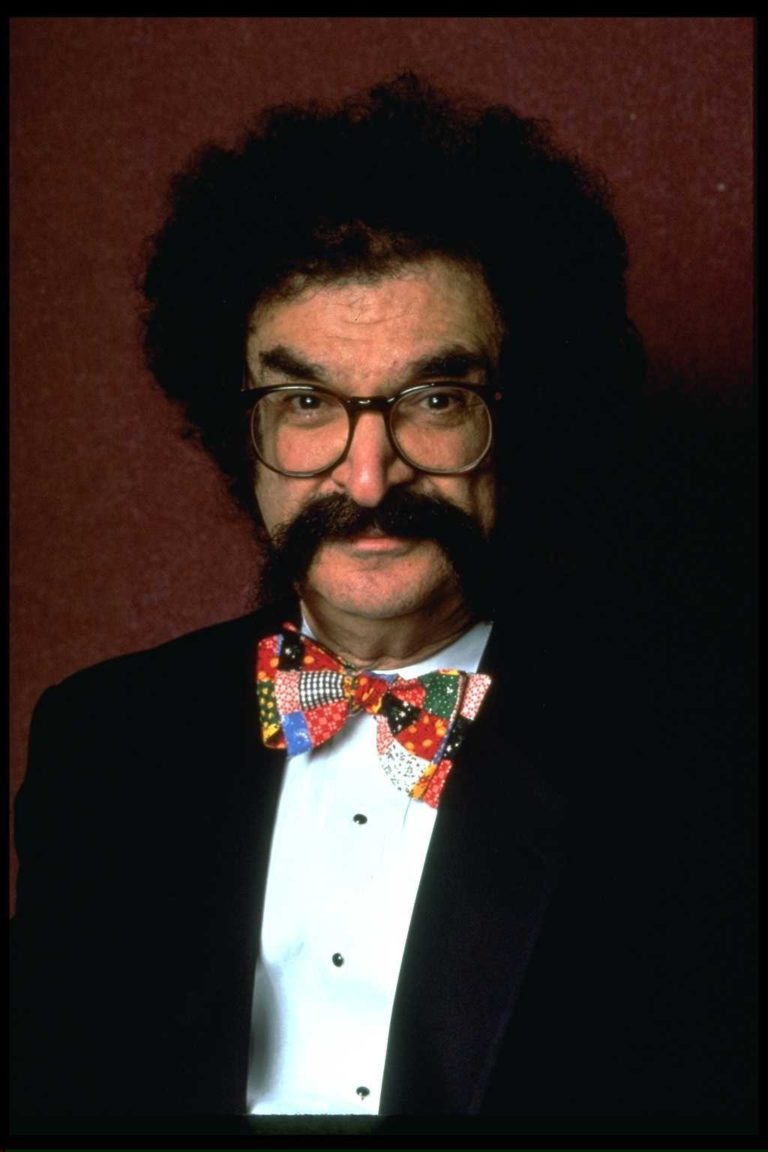
Gene Shalit, the puckish film and book critic whose handlebar moustache, wild hair, and rainbow of bow ties made him one of television’s most recognizable faces, died June 12, 2026, at the age of 100. He had turned 100 just months earlier, on March 25.

For more than 37 years, Shalit was a fixture on NBC’s “Today,” serving as its film and book critic from January 1973 until his retirement in November 2010. Over that span he reviewed thousands of films and interviewed countless actors and directors, building a reputation for accessible, pun-loving commentary delivered with the air of a delighted absent-minded professor. His generally warm assessments drew both affection from viewers and ribbing from peers, including the rival duo of Siskel and Ebert.

Born in New York City on March 25, 1926, and raised in New Jersey, Shalit got his start writing a humor column for his high school newspaper before studying at the University of Illinois at Urbana-Champaign, where he wrote for The Daily Illini and graduated in 1949. He began reviewing the arts in the late 1960s, contributing to Look, Ladies’ Home Journal, Cosmopolitan, TV Guide, and The New York Times, among others. From 1970 to 1982 he also delivered “Man About Anything,” a daily essay that became NBC Radio’s most widely carried feature.

His wordplay and unmistakable look turned him into a pop-culture touchstone. He was parodied on “Saturday Night Live,” “SCTV,” and “Family Guy,” voiced versions of himself on “The Critic,” and even surfaced as a fish food critic named “Gene Scallop” on “SpongeBob SquarePants.”

Shalit largely stepped away from public life after leaving “Today,” summing up his retirement with characteristic brevity: “It’s enough already.” He was married to Nancy Lewis from 1950 until her death in 1978, and is survived by members of his family, including his daughter, artist and businesswoman Willa Shalit, and his son Peter, a physician. He was a devoted New York Mets fan to the end.

Riley Green And Lara Spencer Host “CMA Fest” Primetime Special June 25 On ABC

0

Country Music’s biggest weekend is about to take over primetime. “CMA Fest presented by SoFi” returns to ABC and Hulu later this month, and the Country Music Association has revealed a stacked lineup for this year’s concert television special. Country superstar Riley Green and “Good Morning America” host Lara Spencer share hosting duties when the special airs Thursday, June 25, at 8/7c on ABC, streaming the next day on Hulu.

The three-hour event captures unforgettable performances, exciting collaborations, and standout moments from the 2026 CMA Fest in Nashville. Fans get front-row access to one of Country Music’s most star-studded weekends from their living rooms.

The featured roster runs deep. Performers include Bailey Zimmerman, Blake Shelton, The Band Perry, Brothers Osborne, Carly Pearce, Cody Johnson, Deana Carter, Ella Langley, Fetty Wap, Florida Georgia Line, Gretchen Wilson, HARDY, Jason Aldean, Jelly Roll, Jordan Davis, Keith Urban, Lainey Wilson, Luke Bryan, Michael McDonald, Molly Tuttle, The Red Clay Strays, Ricky Skaggs, Riley Green, Russell Dickerson, Shaboozey, Shay Morgan, Stephen Wilson Jr., Tim McGraw, Tucker Wetmore, and Zach Top.

SoFi steps in as the first-ever broadcast presenting sponsor and Official Bank of CMA Fest, a partnership built around inspiring financial independence through the power of music. The sponsorship spotlights performances including Country legend Deana Carter and a first-ever live take on Shaboozey’s newest single “Cowgirl.”

Fans can already mark their calendars for next year. The 54th CMA Fest returns to Nashville from Thursday, June 10 through Sunday, June 13, 2027, continuing its run as the longest-running Country Music festival in the world.

What started in 1972 as Fan Fair® with just 5,000 attendees now draws an estimated 100,000 daily. For more than 50 years, CMA Fest has united fans, artists, and industry under one Nashville roof, with a portion of proceeds supporting music education nationwide through the CMA Foundation. This marks the 23rd consecutive year CMA has produced a summer music program for ABC and Hulu.

Verve Jazz-Pop Charmer aron! Spins Romance Into “Shiny Stockings”

0


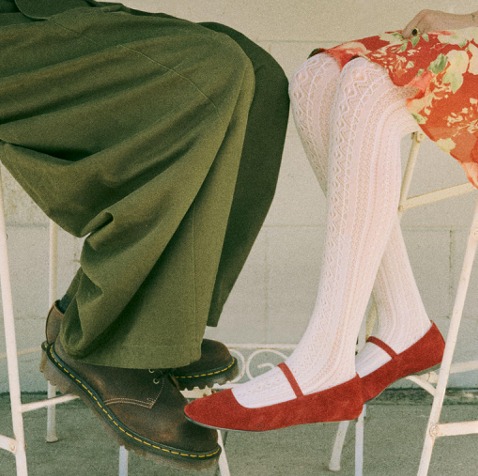
A pair of stockings is all it took to spark aron!’s most charming song yet. The jazz-pop singer-songwriter and multi-instrumentalist releases his newest single “Shiny Stockings,” the latest installment in his monthly release series. He takes a tiny observation and turns it into something unexpectedly tender.

Inspired by stockings worn by someone he loves, the track pairs whimsical guitar melodies with laid-back orchestral strings. The result blends vintage jazz sophistication with playful pop sensibility, a charming little world all its own. He sings of timeless love, calling his mother to share the news that the feeling she once knew lives on. The song glides with the kind of effortless warmth that’s becoming his signature. Listen and watch the official music video now.

“Shiny Stockings” follows a strong run of recent monthly drops, including last month’s “Macramé,” April’s “Foolsong,” and March’s “Wonderful Thing.”

“Macramé,” a collaboration with indie-pop and jazz artist Mei Semones, fuses indie rock with jazz-inflected guitar work to capture the spark of a new relationship. On “Foolsong,” aron! writes an unlikely guidebook for the next person who dates his ex, recounting her love of sneaking into movie theaters and reflecting on the mistakes he hopes the next guy won’t repeat. The self-aware warning lands with a wink: “don’t be a fool / you’re looking at one.”

“Wonderful Thing,” a cozy-pop meditation on fearing love but falling anyway, earned praise from John Mayer, who spotlighted it on his SiriusXM channel Life with John Mayer. Mayer admired how aron! packs complex harmonic information into a tune while keeping it right for the song, calling it a pleasure to hear from someone who knows a lot of chords and knows how to use them.

The road here runs deep. Born and raised in Charlotte, NC, aron! picked up a guitar at eight thanks to Guitar Hero, then fell for jazz under an 80-year-old teacher he met at Sam Ash. He studied classical composition at the University of North Carolina School of the Arts, taught himself piano during COVID, and earned a full scholarship to the University of Miami, majoring in jazz voice and film scoring. In high school, he played Nat King Cole and Frank Sinatra standards for retirement home residents, bow tie and all.

In 2023 he leaned into what he calls a vintage pop sound, built a following online, and signed to Verve to develop his brand of cozy pop. As he puts it, heartbreak is heartbreak and love is love, the same now as ever.

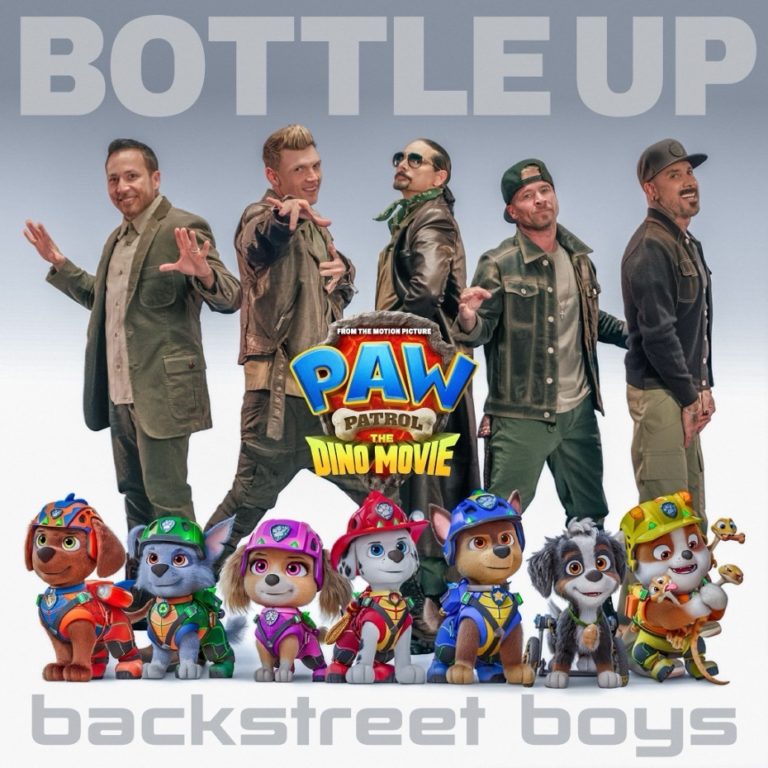
Backstreet Boys Drop “Bottle Up” From ‘Paw Patrol: The Dino Movie,’ Penned By Ed Sheeran

0

The biggest boy band in history just landed on a soundtrack built for the whole family. The Backstreet Boys have released their new track and music video “Bottle Up (from Paw Patrol: The Dino Movie),” out now via Visva Records/Republic Records. Written by Savan Kotecha and Ed Sheeran, the song features in ‘Paw Patrol: The Dino Movie,’ arriving August 14, 2026. Listen here.

The pairing of pop royalty and a blockbuster songwriting team gives the track instant pull. The video is streaming now alongside the single, with the movie tie-in setting it up for a massive summer.

The release lands ahead of the group’s Into the Millennium residency at Sphere in Las Vegas this summer. Since launching in July 2025 as the first pop act to headline Sphere, the Backstreet Boys have performed for more than 575,000 fans across 35 sold-out shows. Night after night, crowds have filled the venue dressed in all white, a nod to the iconic cover of the band’s 1999 blockbuster album ‘Millennium.’

The numbers behind this group stay almost hard to fathom. Across more than 30 years, the Backstreet Boys have racked up countless No. 1s, record-setting tours, and worldwide sales topping 130 million, earning their place as the best-selling boy band of all time.

Their 2019 GRAMMY-nominated album ‘DNA’ debuted at No. 1 and delivered the Top 10 hit “Don’t Go Breaking My Heart,” their first Billboard Hot 100 hit in a decade. The DNA World Tour followed as their biggest arena run in 18 years, selling over 3 million tickets across four continents.

In 2023 they released their first-ever Christmas album, ‘A Very Backstreet Christmas,’ which debuted at No. 1 on Billboard’s Top Holiday Albums chart. Decades in, the group keeps captivating millions and stays larger than life.