ROMAANCE aren’t here to answer your questions. They’re here to make you dance. The Portland-based disco-pop outfit’s new single “Touch” is out now, and it’s exactly the kind of Italo-soaked, synth-driven floor-filler that makes you forget what year it is.
Producer Jason Wann, known for his work with synth-pop duo SINES and his dance-focused alter ego Blood Oyster, is the architect behind ROMAANCE’s sound. Beyond that, the band’s identity stays deliberately murky. The four-piece includes two sisters named Val and Emma, reportedly met at an ABBA trivia night, alongside members credited only as “The Model” (MiniKorg 700S and bass) and “Sex Object” (drums and percussion). Make of that what you will.
“Touch” pulls hard from the Italo disco and synth-pop sounds of the ’80s, reinventing that vintage palette with glossy production and real dance-floor momentum. Warm, passionate vocals bring new wave energy to the surface, and the accompanying music video leans fully into the technicolor, retro-disco aesthetic the band has made its own.
The themes running through the track are timely. Connection, proximity, and the strange emotional distance of the digital age sit at the song’s core, giving its celebratory groove a surprisingly resonant undercurrent.
ROMAANCE’s 2025 debut album, ‘Dust Among The Stars’, laid the foundation: eight tracks of cinematic disco-pop built on thunderous drums, throbbing basslines, and velvet harmonies. “Touch” keeps that momentum going without missing a step. It’s a confident, hooky, and genuinely fun single from a project with serious creative range.
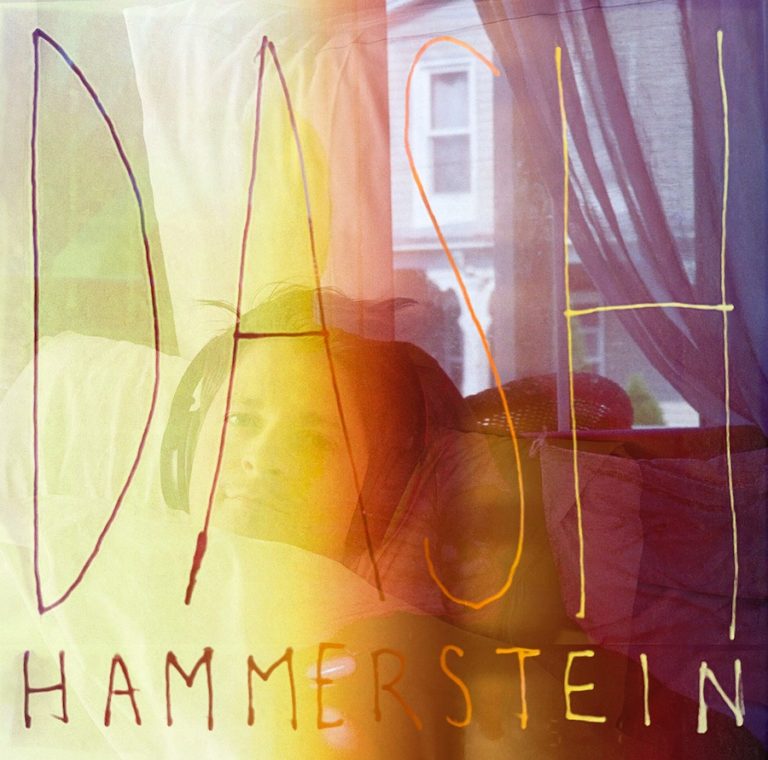
Dash Hammerstein has scored films for Netflix, Hulu, HBO, and PBS, had his music licensed by Adidas and Toyota, and premiered work at Sundance, Tribeca, and DOC NYC. Now he’s made his most personal record yet, and he did nearly all of it himself.
The self-titled ‘Dash Hammerstein’ is an eleven-track chamber folk collection built from a period of creative sobriety and genuine experimentation. It’s his tenth full-length album and the first to carry his name on the cover. That’s not a small detail.
Aside from a handful of guest appearances on strings, horns, and woodwinds, every track was written, performed, and mixed by Hammerstein alone. The result is lean, deliberate, and deeply human. Influences like Bill Callahan, John Prine, and Frank Loesser are felt throughout, folk songwriting that values plainspoken honesty and dry wit over ornamentation.
Hammerstein describes the album’s design with real precision: “The music is simple, each song crafted to work on multiple levels, living comfortably in the background of a small dinner party, and revealing depth on repeated and focused listens.” That balance is genuinely hard to pull off, and ‘Dash Hammerstein’ pulls it off track after track.
His background in neo-classical composition and Kinks-inflected folk pop runs underneath everything here, shaping the arrangements without overwhelming them. This is chamber folk with real craft behind it, warm, unhurried, and worth your full attention.
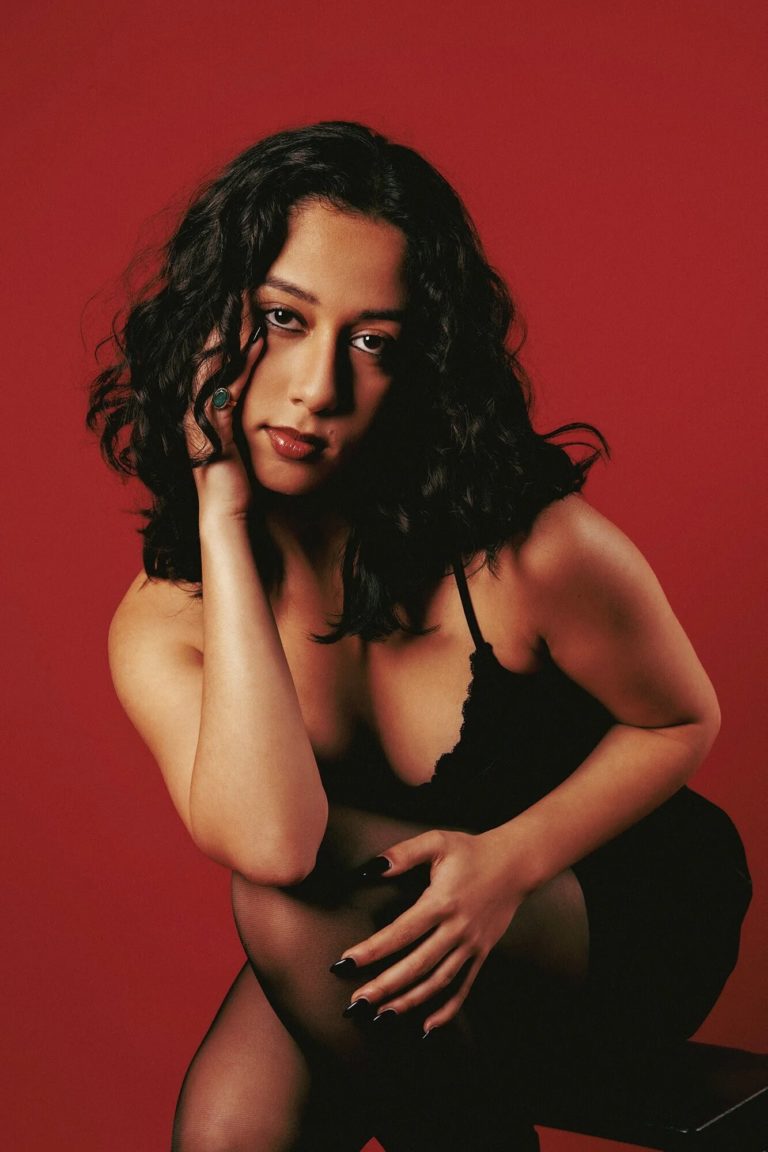
Navisha knows exactly what she’s doing. The Boorloo-based soul/funk singer-songwriter’s new single “You” is warm, groove-heavy, and impossible to shake, a track built for late-night connection and the kind of feeling that takes over everything else.
At just 19, Navisha is already making serious moves. A WAAPA graduate, her previous independent releases include “See Through,” which climbed to number 12 on local charts and cemented her presence in the Western Australian music scene throughout a busy run of headline shows in 2025.
“You” is a confident step forward. Where earlier releases leaned into raw, heartbreaking ballads, this one plants itself firmly in funk-influenced grooves, letting rhythm carry the emotional weight. Full-bodied electric guitars, velvety keyboard textures, and a steady rhythmic foundation give the track an upbeat ease that never loses its edge. Overdriven guitar phrasing weaves between tight riffs and expressive solos, adding real swagger without overwhelming the laid-back momentum.
Navisha’s vocal delivery is the centrepiece throughout. Smoky, passionate, and flirtatious, it leans into the track’s themes of desire and intimacy with total conviction. It’s the kind of performance that makes the song stick.
She wrote “You” from a deeply personal place. “I wrote ‘You’ following the journey of finding myself when I realised I was in love as a teenager,” she explains. “Carefree with only one thing on my mind, the energy of the song plays on that exact sentiment, forgetting about everything else and just being immersed in the moment.”
“Fibre Optics” hits hard from the first listen. Door d’Or’s new single is moody, guitar-driven, and built around the kind of slow-burning intensity that alternative rock has always done best. It’s out now on all major streaming platforms. Listen here.
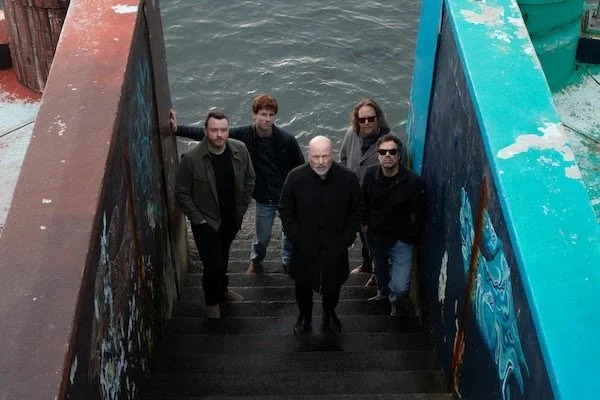
The Victoria-based rockers recorded their debut album, ‘The Exquisite Dream’, in fall 2025 with Juno Award-winning producer Colin Stewart. The album is out now. “Fibre Optics” is its opening statement, and it’s a strong one. Brooding riffs, grunge-soaked guitars, and subtle psychedelic textures create a sound that pulls from the ’90s without getting stuck there.
Vocalist and guitarist Mat Geddes wrote the track in direct response to the technological world we’re all navigating. “Fibre optics connect us at the speed of light, both unifying and redefining ‘the economics of my generation,'” he explains. “The concept of travelling as light as conscious beings to manifest our own reality is a subtle theme throughout the album.”
That thematic depth runs through everything Door d’Or does. The band reunited after years apart, rediscovering their creative chemistry in a jam space marked by a golden door, a symbol that continues to shape their identity and their sound. Rooted in improvisation and real musical connection, they’re building something with genuine staying power.
‘The Exquisite Dream’ pairs vivid, immersive guitars with post-punk textures and melodic tension. It’s an emotionally resonant debut, optimistic without being naive, and grounded in a distinctly Canadian expressive quality that runs through the band’s guitar work like a thread.
“Fibre Optics” is the kind of track that rewards repeated listens. The atmospheric edge deepens, the themes sharpen, and the song’s emotional weight lands harder each time through.
A Stone’s Throw Festival is doing something most festivals can’t pull off. It turns an entire coastline into a venue.
Now in its fourth edition, the North Shields-based multi-venue music trail returns on Saturday, May 23rd, 2026, and it’s bringing its biggest lineup to date. Co-headlined by dark-pop force Luvcat and Manchester indie-electronic outfit Working Men’s Club, the bill is loaded with artists worth showing up for.
Belfast’s Chalk bring new music from their debut album to the stage. Welsh upstarts Panic Shack are on as special guests. Thrilling singer-songwriter Gia Ford is on the bill, as are alt-newcomer Imogen and the Knife and North Shields’ own Hector Gannet, alongside a deep roster of emerging regional talent.
The festival spans five distinct venues: The Exchange 1856, King Street Social Club, Salt Market Social, Three Tanners Bank, and The Engine Room. The Go North East bus service, included in the ticket price, shuttles wristband holders between stages all day. It’s a genuinely inventive setup, and it works.
Since debuting in 2022, A Stone’s Throw has hosted 150-plus artists across coffee shops, event warehouses, CBD dispensaries, and working men’s clubs transformed into live music spaces for the day. Previous editions have featured Shame, The Horrors, White Lies, Lanterns On The Lake, and Psychedelic Porn Crumpets, among many others.
Founder Anthony Thompson summed it up well: “This festival is rooted in place, community and discovery, and 2026 is shaping up to be another smash hit.”
Chalk are equally fired up heading into their set: “We can’t wait to play A Stone’s Throw Festival. It’s our first time back in the North East since Twisterella. We’ll be coming with new music from our debut album and looking forward to bringing it to the stage.”
The full lineup delivers real range, from established indie names to artists making serious noise right now. It’s a bill that rewards the curious.
Beverley Martyn, the British folk singer-songwriter whose career touched nearly every significant corner of the 1960s and 1970s folk and rock scene, has died peacefully at home at the age of 79. A statement from the family of her former husband, the late John Martyn, confirmed the news. “Beverley was a remarkable woman of great inner strength,” the family wrote. “She was beautiful, intelligent, warm and kind.” She died on April 27, 2026.
Born Beverley Kutner near Coventry on March 24, 1947, she arrived in London in her mid-teens for drama school and found her way almost immediately into the folk scene flourishing in clubs like Les Cousins, Bunjies, and the Troubadour. Bert Jansch, an early boyfriend, taught her guitar and encouraged her songwriting. She can be seen lounging in the background of the cover photograph of his 1965 album ‘It Don’t Bother Me.’ She recorded her first single, “Babe I’m Leaving You,” with her band the Levee Breakers for Parlophone that same year. She was sixteen.
What followed was a run of moments that should have made her a household name. She became the first signing to Deram, the progressive new imprint from Decca, her label-mate at number two being Cat Stevens. Her debut Deram single was Randy Newman’s “Happy New Year,” recorded with Jimmy Page, John Paul Jones, Nicky Hopkins, and Andy White providing the backing. Page later said of the session: “I knew that she was a shining talent in the world of performance and songwriting.” Another single, “Museum,” was written by Donovan. She became romantically involved with Paul Simon during his formative London years, travelled with him to the Monterey Pop Festival in 1967, and contributed her voice to the Simon & Garfunkel album ‘Bookends,’ a No. 1 on both sides of the Atlantic.
She met John Martyn in 1969, and the two married and recorded together in Woodstock with Levon Helm on drums and Joe Boyd producing, releasing ‘Stormbringer!’ in February 1970, followed by ‘The Road to Ruin’ later that year, both on Island Records. Songs like “Sweet Honesty,” “Auntie Aviator,” and “Primrose Hill” (later sampled by Fatboy Slim on his 2004 track “North West Three”) have outlived the era that produced them. During this period she also came to know Nick Drake, who would babysit for her children. The two began writing a song together, “Reckless Jane,” in 1974, which Beverley completed and recorded decades later. “I couldn’t even think about the song for so long because it brought up so much pain,” she said at the time of its release.
What came next is harder to write about, and Beverley herself never flinched from it. Island pushed John toward a solo career and her own trajectory was sidelined. The marriage deteriorated under the weight of John Martyn’s alcoholism and abuse. She later spoke about it without bitterness: “There was love there. It was the drink and the bad drugs, the very heavy ones, that changed his disposition, and they made life unbearable for anyone around him. I wouldn’t stay with a man who was killing himself.” She escaped, moved to Brighton, raised her children, and made music when and where she could, including time with Loudon Wainwright III and Wilko Johnson.
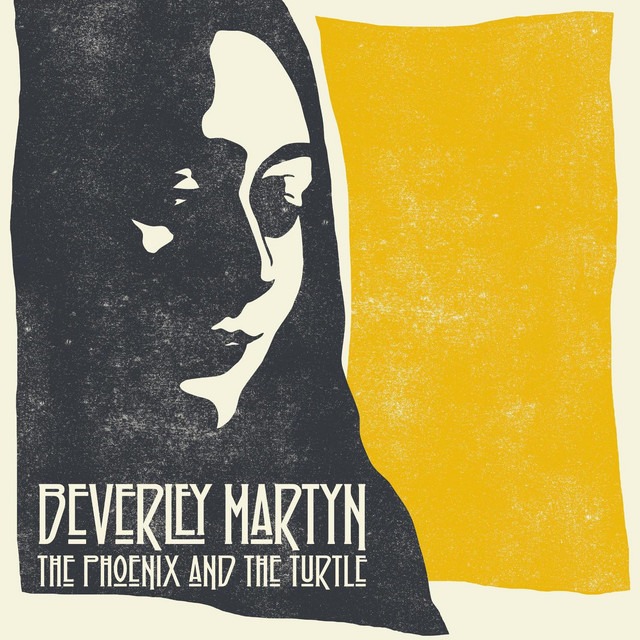
Her return came fully in 2014 with the solo album ‘The Phoenix and the Turtle,’ produced by Mark Pavey and featuring Matt Malley of Counting Crows on bass and Victor Bisetti of Los Lobos on drums. “It was a great relief to finally do something on my own terms,” she said at the time. “That was a dream I’d almost given up on.” The year before its release she performed at the Bert Jansch tribute concert at London’s Royal Festival Hall alongside Robert Plant, Donovan, and members of Pentangle. In 2018 she released ‘Where The Good Times Are,’ a compilation of her 1960s material. Her memoir, ‘Sweet Honesty,’ published in 2011, took its title from one of the ‘Stormbringer!’ songs and captured her relationship to the whole chapter, unflinching but free of self-pity.
She had always been more than a footnote in someone else’s story. She was there, with a guitar and a voice, from the very beginning. Beverley Martyn is survived by her children.
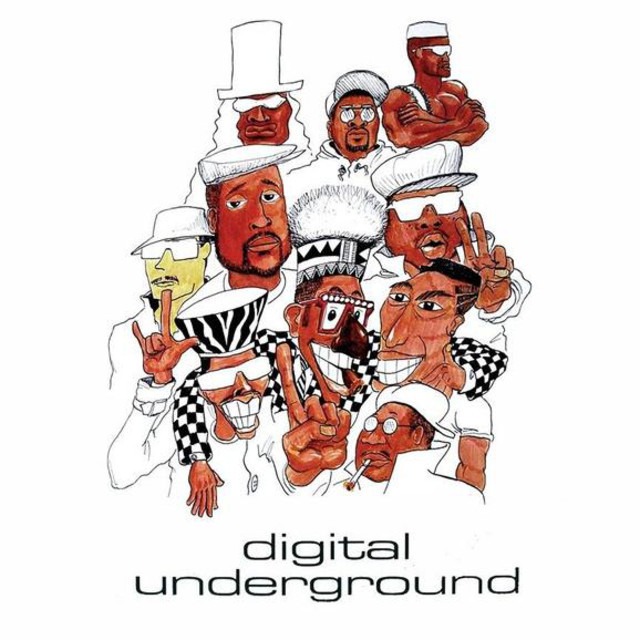
Cleetis Mack, known to fans as Clee, has died suddenly. The longtime member of Oakland hip-hop legends Digital Underground passed away unexpectedly, with a representative for the group confirming the news to TMZ. No cause of death has been disclosed, and his age has not been made public. The loss follows that of Digital Underground founding member Shock G, who died in April 2021 at 57.
Mack joined Digital Underground in 1993, arriving alongside rapper Saafir at the time of ‘The Body-Hat Syndrome.’ His debut on record came with “Wussup Wit the Luv,” a track that also featured Tupac Shakur in what would be one of his final public appearances with the group before departing to focus on his solo career. It was a moment of genuine historical weight in hip-hop, and Mack was right in the middle of it. He went on to contribute to some of the group’s most beloved tracks, including “Pick-A-Part,” “La Vida Broka,” “Drank A Lot,” and “Holla Holiday.”
Digital Underground itself is woven into the foundation of hip-hop history. Founded in Oakland in 1987 by Shock G, Chopmaster J, and Kenny-K, the group broke through in 1990 with “The Humpty Dance” and the critically celebrated ‘Sex Packets,’ a record that diehard fans have long considered an unsung classic of the golden era. “Same Song,” which appeared on the Nothing But Trouble soundtrack, marked Tupac’s debut as a rapper, with Mack and the rest of the group around him as he took his first steps toward becoming one of the most iconic figures in music history.
The tribute from Digital Underground captures who Mack was beyond the music. “He was more than a part of the movement,” the group’s representative said. “He was part of the soul behind it, bringing warmth, loyalty, and quiet strength to everyone around him. He will always be remembered by his humility, love, and spirited energy, qualities that lifted those around him and made a lasting impression on all who knew him.” Bandmate Money-B responded on Instagram with a performance clip captioned simply “#DU4LIFE,” words apparently failing where music still could speak. DJ Envy led the broader hip-hop community’s tributes, noting Mack’s contributions to the group’s legacy and his connection to Tupac’s early story.
The group continues, now led by Money-B and Young Hump. But with Shock G gone in 2021 and now Clee, another piece of one of hip-hop’s most original and joyful chapters has slipped away.
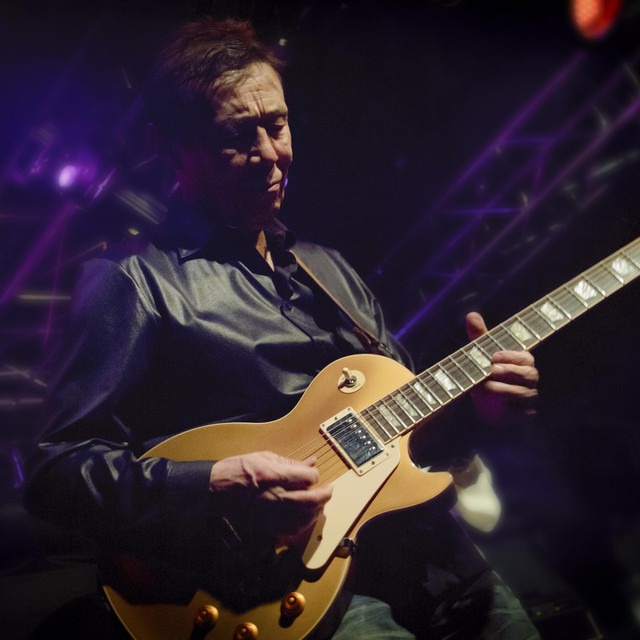
Bobby Murray, the Detroit blues guitarist whose 23-year partnership with Etta James produced some of the most emotionally direct guitar work in modern blues, died on April 30, 2026. He was 72. The Detroit Blues Society, which awarded Murray their Lifetime Achievement Award in 2011, announced his passing. No cause of death was given.
Born on June 9, 1953, on a U.S. Air Force base in Nagoya, Japan, to a Japanese mother and an Irish father, Murray grew up in a military family and was later raised in Tacoma, Washington. He attended the same high school as Robert Cray, and the two classmates famously recruited Albert Collins to play their graduation party, a detail that says everything about where Murray’s musical compass was already pointing. He built his early career playing blues clubs in the San Francisco Bay Area, forming an ensemble that eventually became Robert Cray and the Crayolas, and spent the 1970s and 1980s supplying guitar work for Frankie Lee, Sonny Rhodes, Mark Naftalin, and others while performing regularly alongside Collins, Charlie Musselwhite, Otis Rush, Jimmy Witherspoon, and John Lee Hooker.
In 1988, Murray joined Etta James’ backing ensemble, the Roots Band, and stayed for over two decades. His contributions to her Grammy-winning albums ‘Let’s Roll’ and ‘Blues to the Bone’ were described as sharp, expressive lines that deepened the emotional pull of James’ vocals without crowding them. He also appeared on B.B. King’s Grammy-winning ‘Blues Summit,’ reuniting with Robert Cray on the track “Playing With My Friends.” His guitar work on the Etta James song “Blues is My Business” appeared in an episode of The Sopranos, bringing his playing to an entirely new audience. He performed with the Roots Band on The Tonight Show, Austin City Limits, and Late Night with David Letterman, and played at the 1992 Summer Olympics in Barcelona and the inaugural celebration for President Bill Clinton.
Tribute poured in from the Detroit music community. Concert company 2 Stones Events wrote: “In the nearly 25 years we’ve been booking musicians, probably in the thousands by now, we’ve never met a musician as humble, sweet, caring, kind, and talented as Bobby Murray. As classy as it gets. The late Etta James could’ve chose ANY guitarist, but she had Bobby by her side on the road for 23 years.”
Murray released five solo albums, from his 1996 debut ‘The Blues is Now’ through his final record ‘Love Letters From Detroit’ in 2021, the title track of which he wrote with his wife about his years playing alongside Etta James. It earned Outstanding Blues Recording of the Year at the Detroit Music Awards. He also spent two decades as part of the Better Business Bureau, using his platform beyond music to advocate for his community. Murray won multiple Detroit Music Awards and remained a steady presence on the local scene, mentoring younger musicians and helping sustain the city’s blues lineage until the very end.
He was 72. The blues lost one of its most devoted and quietly essential voices.
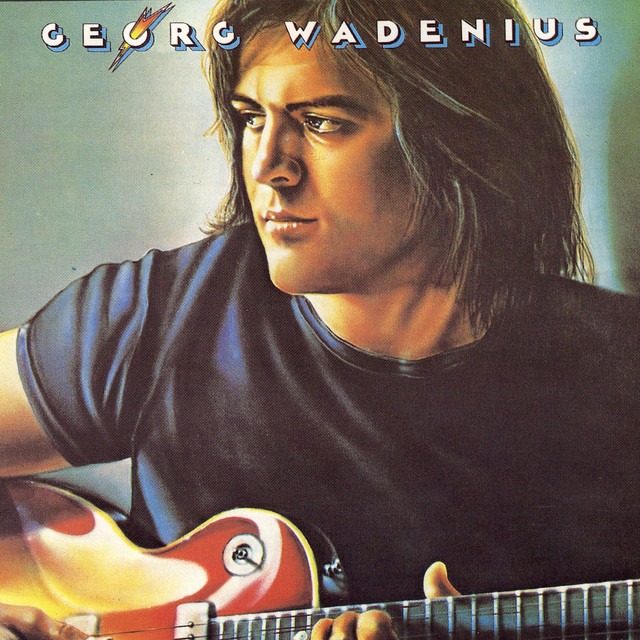
Georg “Jojje” Wadenius, the Swedish guitarist whose career took him from the stages of Stockholm to the studios of New York and everywhere in between, has died at the age of 80. His family confirmed his sudden passing on May 1, 2026, writing, “It is with great sorrow that Jennifer Gilman and I share the news of our father, Georg Wadenius’s sudden passing.” No cause of death was provided. He is survived by his daughters, Annika Wadenius Erlich and Jennifer Gilman.
Born in Stockholm on May 4, 1945, Wadenius trained at Adolf Fredrik’s Music School before becoming a founding figure in two Swedish supergroups of the early 1970s, Made in Sweden and Solar Plexus. His talent was impossible to ignore, and it wasn’t long before it carried him across the Atlantic. From 1972 to 1975, he served as lead guitarist for Blood, Sweat & Tears, one of the defining rock and jazz-fusion acts of the era, appearing on four studio albums including ‘New Blood,’ ‘No Sweat,’ ‘Mirror Image,’ and ‘New City.’
In 1979, he joined the Saturday Night Live Band, the NBC sketch show’s house band, and remained a fixture there until 1985. It was a role that put him in front of millions of viewers every week and cemented his reputation as one of the most versatile and reliable guitarists working in American music. The list of artists he went on to work with as a session player and touring musician reads like a hall of fame roll call: Steely Dan, Aretha Franklin, Diana Ross, James Brown, Marianne Faithfull, Paul Simon, Dionne Warwick, Roberta Flack, Donald Fagen, Luther Vandross, Dr. John, David Sanborn, and many more.
Alongside his international career, Wadenius maintained deep roots in Scandinavian music, producing artists including Anne Sofie von Otter and contributing to the work of countless Swedish and Norwegian performers across five decades. He also built a beloved second career as a children’s musician in Sweden, releasing albums including ‘Goda, Goda’ and ‘Puss, Puss, Sant, Sant’ with lyrics by Barbro Lindgren, earning a Swedish Grammis for the work in 1970.
He never stopped playing. Just six days before his death, Wadenius performed on stage with Swedish singer Helen Sjöholm. His most recent album, ‘Livet är mer än musik,’ was released in 2025. A career that spanned more than five decades, two continents, and virtually every genre of popular music, Wadenius leaves behind a body of work that will outlast any headline.
Spotify’s all-time most-streamed songs list is a fascinating document of how music consumption has changed, what sticks across generations, and which artists have built catalogs that refuse to quit. The top 100, ranked by cumulative streams since release, tells a story that goes well beyond chart performance. These are the songs people keep coming back to, year after year, regardless of what’s currently trending.
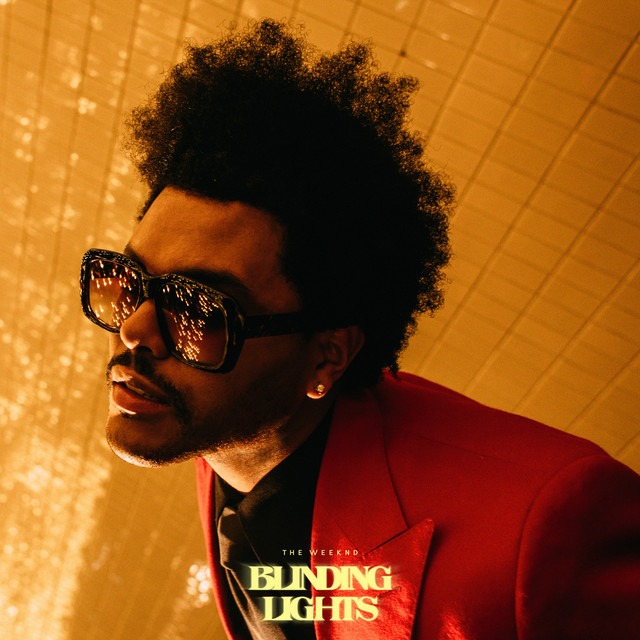
The Weeknd owns the top spot with “Blinding Lights” at 5.392 billion streams, a number so far ahead of the field it’s almost its own category. Released in November 2019, it remains the most-streamed song in Spotify history by a significant margin. He appears six times in the top 100 total, more than any other artist on the list, with “Starboy” with Daft Punk (4.508B), “Die For You” (3.246B), “The Hills” (3.024B), “Save Your Tears” (2.701B), and “One of the Girls” with Jennie and Lily-Rose Depp (2.608B) rounding out his presence.
Ed Sheeran places four times with “Shape of You” (4.888B), “Perfect” (3.936B), “Photograph” (3.400B), and “Thinking Out Loud” (3.104B). Bruno Mars lands four times as well, spread across collaborations and solo cuts. Imagine Dragons place four times. Post Malone, Coldplay, Arctic Monkeys, Kendrick Lamar, Linkin Park, Justin Bieber, and Queen each appear multiple times, a testament to how streaming rewards consistency and catalog depth over one-off moments.
One of the most striking aspects of the list is its age range. “Every Breath You Take” by The Police, released in 1983, sits at No. 24 with 3.468 billion streams. Fleetwood Mac’s “Dreams” from 1977 appears at No. 89, powered significantly by a viral TikTok moment years after its original release. “Bohemian Rhapsody” by Queen, out since 1975, holds at No. 45 with 3.138 billion streams. Oasis’s “Wonderwall” and Journey’s “Don’t Stop Believin'” both make the cut. Streaming hasn’t just rewarded new music. It’s given catalog tracks a second, third, and fourth life.
The newer entries deserve attention too. Billie Eilish’s “Birds of a Feather,” released May 2024, already sits at No. 18 with 3.679 billion streams, one of the fastest climbs on the entire list. “Die With A Smile” by Lady Gaga and Bruno Mars, also from 2024, lands at No. 19 with 3.641 billion. Sabrina Carpenter’s “Espresso” from April 2024 places at No. 62 with 2.961 billion, and Benson Boone’s “Beautiful Things” from January 2024 sits at No. 64 with 2.919 billion. These are relatively young songs already competing with tracks that have had decades to accumulate plays.
The list also quietly validates some long-underrated cuts. Lord Huron’s “The Night We Met” from 2015 sits at No. 16 with 3.719 billion streams, higher than most would expect. The Neighbourhood’s “Sweater Weather,” released in 2012, holds at No. 3 with 4.569 billion, making it one of the most-streamed songs in history despite never being a mainstream radio juggernaut in the traditional sense. Tom Odell’s “Another Love” from 2012 places at No. 23 with 3.536 billion, a song that found most of its audience through sync placements and social media years after release.
Here is the full top 100:
“Blinding Lights” — The Weeknd — 5.392B
“Shape of You” — Ed Sheeran — 4.888B
“Sweater Weather” — The Neighbourhood — 4.569B
“Starboy” — The Weeknd and Daft Punk — 4.508B
“As It Was” — Harry Styles — 4.387B
“Someone You Loved” — Lewis Capaldi — 4.306B
“Sunflower” — Post Malone and Swae Lee — 4.223B
“One Dance” — Drake with Wizkid and Kyla — 4.200B
“Perfect” — Ed Sheeran — 3.936B
“Stay” — The Kid Laroi with Justin Bieber — 3.899B
“Believer” — Imagine Dragons — 3.828B
“I Wanna Be Yours” — Arctic Monkeys — 3.757B
“Heat Waves” — Glass Animals — 3.743B
“Lovely” — Billie Eilish and Khalid — 3.739B
“Yellow” — Coldplay — 3.728B
“The Night We Met” — Lord Huron — 3.719B
“Closer” — The Chainsmokers and Halsey — 3.700B
“Birds of a Feather” — Billie Eilish — 3.679B
“Die With A Smile” — Lady Gaga and Bruno Mars — 3.641B
“Riptide” — Vance Joy — 3.637B
“Something Just Like This” — The Chainsmokers and Coldplay — 3.612B
“Say You Won’t Let Go” — James Arthur — 3.587B
“Another Love” — Tom Odell — 3.536B
“Every Breath You Take” — The Police — 3.468B
“Counting Stars” — OneRepublic — 3.447B
“Take Me To Church” — Hozier — 3.446B
“Dance Monkey” — Tones and I — 3.432B
“Photograph” — Ed Sheeran — 3.400B
“Rockstar” — Post Malone and 21 Savage — 3.373B
“Cruel Summer” — Taylor Swift — 3.334B
“Iris” — The Goo Goo Dolls — 3.329B
“Can’t Hold Us” — Macklemore and Ryan Lewis with Ray Dalton — 3.308B
“Señorita” — Shawn Mendes and Camila Cabello — 3.306B
“Viva La Vida” — Coldplay — 3.303B
“Watermelon Sugar” — Harry Styles — 3.273B
“Just the Way You Are” — Bruno Mars — 3.250B
“Die For You” — The Weeknd — 3.246B
“Don’t Start Now” — Dua Lipa — 3.216B
“Locked Out Of Heaven” — Bruno Mars — 3.209B
“Love Yourself” — Justin Bieber — 3.187B
“That’s What I Like” — Bruno Mars — 3.181B
“Mr. Brightside” — The Killers — 3.171B
“Circles” — Post Malone — 3.145B
“In The End” — Linkin Park — 3.139B
“Bohemian Rhapsody” — Queen — 3.138B
“When I Was Your Man” — Bruno Mars — 3.125B
“Goosebumps” — Travis Scott and Kendrick Lamar — 3.120B
“Lucid Dreams” — Juice WRLD — 3.119B
“Thinking Out Loud” — Ed Sheeran — 3.104B
“Wake Me Up” — Avicii — 3.088B
“Shallow” — Lady Gaga and Bradley Cooper — 3.073B
“Without Me” — Eminem — 3.064B
“All of Me” — John Legend — 3.062B
“God’s Plan” — Drake — 3.057B
“The Hills” — The Weeknd — 3.024B
“Let Me Love You” — DJ Snake and Justin Bieber — 3.018B
“Stressed Out” — Twenty One Pilots — 3.015B
“Demons” — Imagine Dragons — 3.012B
“Thunder” — Imagine Dragons — 3.005B
“All The Stars” — Kendrick Lamar and SZA — 2.975B
“Do I Wanna Know?” — Arctic Monkeys — 2.968B
“Espresso” — Sabrina Carpenter — 2.961B
“Seven” — Jung Kook and Latto — 2.921B
“Beautiful Things” — Benson Boone — 2.919B
“Bad Guy” — Billie Eilish — 2.911B
“See You Again” — Tyler, the Creator and Kali Uchis — 2.909B
“Humble” — Kendrick Lamar — 2.906B
“No Role Modelz” — J. Cole — 2.904B
“Unforgettable” — French Montana and Swae Lee — 2.893B
“Sorry” — Justin Bieber — 2.889B
“Lose Yourself” — Eminem — 2.887B
“Smells Like Teen Spirit” — Nirvana — 2.876B
“Creep” — Radiohead — 2.863B
“Flowers” — Miley Cyrus — 2.855B
“Treat You Better” — Shawn Mendes — 2.841B
“The Scientist” — Coldplay — 2.838B
“Drivers License” — Olivia Rodrigo — 2.822B
“Don’t Stop Believin'” — Journey — 2.806B
“7 Rings” — Ariana Grande — 2.804B
“505” — Arctic Monkeys — 2.803B
“Let Her Go” — Passenger — 2.800B
“There’s Nothing Holdin’ Me Back” — Shawn Mendes — 2.790B
“Kill Bill” — SZA — 2.786B
“Wonderwall” — Oasis — 2.764B
“Take On Me” — A-ha — 2.752B
“Numb” — Linkin Park — 2.721B
“Save Your Tears” — The Weeknd — 2.701B
“Cold Heart (Pnau Remix)” — Elton John and Dua Lipa with Pnau — 2.698B
“Dreams” — Fleetwood Mac — 2.697B
“Sweet Child O’ Mine” — Guns N’ Roses — 2.690B
“One Kiss” — Calvin Harris and Dua Lipa — 2.676B
“Billie Jean” — Michael Jackson — 2.670B
“Lean On” — Major Lazer and DJ Snake with MØ — 2.660B
“Payphone” — Maroon 5 and Wiz Khalifa — 2.657B
“Don’t Stop Me Now” — Queen — 2.643B
“Uptown Funk” — Mark Ronson and Bruno Mars — 2.637B
“Good 4 U” — Olivia Rodrigo — 2.634B
“One of the Girls” — The Weeknd, Jennie, and Lily-Rose Depp — 2.608B