Home Blog Page 3016

Bruce McCulloch’s Young Drunk Punk Gets Airing On CITY TV

0

Treasured Canadian comic Bruce McCulloch, of Kids in the Hall, returns to the TV screen with a new 13-episode scripted comedy series, YOUNG DRUNK PUNK. Filmed in Calgary, Alberta, this original half-hour show was created by Bruce McCulloch and will premiere on City TV on Wednesday, January 21, 2015 at 8:30pm ET/PT.

From the clever and caustic mind of McCulloch, YOUNG DRUNK PUNK tells the tale of two teen rebels on the fringes of society . . . or in the suburbs of Calgary, circa 1980. Set to a soundtrack that includes Pointed Sticks, The Buzzcocks, The Demics and The Diodes, Ian McKay and his best friend Shinky are searching for ways to grow up without selling out. In those lost years between high school and “what’s next,” they fight against conformity all the while dodging parents, cowboys, oilmen and responsibility.

“You don’t even know. There’s so much happening in the world, you don’t even understand. Mom, I won’t live in your microwave oven world anymore!” – Ian McKay

YOUNG DRUNK PUNK stars Tim Carlson (Gracepoint) as Ian McKay, Atticus Mitchell (Fargo) as Archibald Shinky, Bruce McCulloch as Ian’s father Lloyd, Tracy Ryan (Nancy Drew) as Ian’s mother Helen, and Allie MacDonald (House at the End of the Street) as Ian’s sister Belinda.

“Remember, the world isn’t run by people who were popular in high school . . . so our future must be very bright indeed.” – Ian McKay

YOUNG DRUNK PUNK is produced for television by Accent Entertainment and SEVEN24 Films and broadcast on City.

Driver Park to Get Gas. Can’t Figure Out Which Side Gas Cap Is On.

0

I hav a new rule I’d like to implement. If, after, several times and a few minutes you still don’t realize what side your gas cap is on, you don’t get to drive.

‘The Incredible Dog Shrinking Machine’ Is A Thing!

0

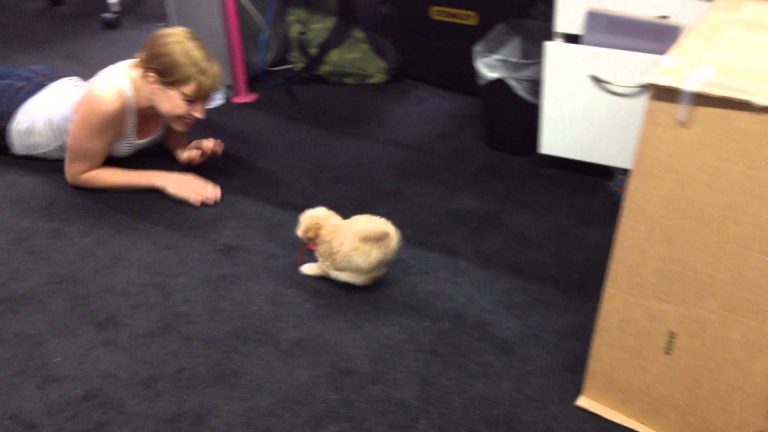
YouTuber Jon Hill decided to test out his Incredible Dog Shrinking Machine. I think it worked!

‘National Geographic’ Profiles Musician Paul ‘DJ Spooky’ Miller

0

With cultural and environmental issues as its backbeat, the music of National Geographic 2014 Emerging Explorer Paul D. Miller aka DJ Spooky creates a space to ponder and address some of society’s biggest questions.

The Explorers Project chronicles the work of National Geographic’s Emerging Explorers—tomorrow’s visionaries who are making discoveries, making a difference, and inspiring people to care about the planet. Learn more here.

Deaf African Teens Have Never Been Able To Communicate – Until Now

0

Patrick Otema, 15 was born profoundly deaf. In the remote area of Uganda where he lives there are no schools for deaf children, and he has never had a conversation. Raymond Okkelo, a sign language teacher, hopes to change all this and offer Patrick a way out of the fearful silence he has known his whole life. Thanks to the work of inspirational sign language teachers, they are transforming the lives of profoundly deaf children and adults across the country who have never been able to communicate – until now.

Noel Gallagher Gets It Right On The Value Of Music

0

“People are more than willing to sit in a coffee shop and spend a tenner on two coffees and talk about the weather to their friends, and that coffee will last 45 minutes. Yet they will physically get angry at you for asking you to buy an album for a tenner which will last a lifetime and might even tell you something about yourself and might even change your life.”
– Noel Gallagher

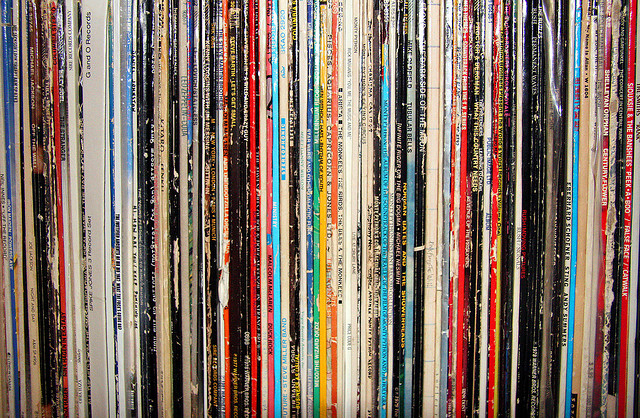
Can the creaking machinery of the few remaining record pressing plants cope with demand?

0

From The Guardian:

In the first half of 2014, officially registered sales of vinyl in the US stood at around 4m, confirming an increase of more than 40% compared to the same period in 2013. In the UK, this year’s accredited sales will come in at around 1.2m, more than 50% up on last year. That may represent a tiny fraction of the industry’s estimated sales of recorded music, but still, a means of listening to music essentially invented in the 19th century and long since presumed to be dead is growing at speed, and the presses at Optimal – along with similar facilities smattered across the UK, mainland Europe, the US and beyond – are set to grind and pump on, into the future.

“Isn’t it strange?” Runge mused. “I’m an automation engineer. I never thought I’d be dealing with vinyl. It’s unexpected. But it’s also unexpectable.” He shouted this over the din of the machinery. Each press sat in a space not much more than four metres square. Two circular paper labels were mechanically plucked from one end, while tiny vinyl pellets were sucked into a steam-driven heating process. The result was a hunk of plastic with the circumference of a beer mat, heated to 130C, to which the labels were attached, while 50 tonnes of hydraulic pressure squashed and spread it into a disc. Metal stampers pressed against either side, and it was quickly cooled to 40C. With another clunk, the finished product was dropped on to a spindle, ready to be inserted in its sleeve. The whole cycle had taken 27 seconds. Each day, the factory makes somewhere between 50,000 and 55,000 records.

Hanging over everything Runge showed me was an awkward question. While demand for records is increasing year by year, Optimal’s stock of machinery is old, and getting older. New presses are unaffordable, unless the big companies were to invest, but vinyl is still too small a sector of the market for them to be convinced. The kind of painstaking maintenance and technical ingenuity one might think of as the Cadillacs-in-Cuba model keep the industry going. But for how long?

CMRRA’s New Licensing and Royalty Distribution System

0

When CMRRA staff began to analyze how it could serve its music publisher clients better in this new and vast world of online music, it found its IT partner across the ocean in Ireland.  Spanish Point Technologies Ltd had already helped IMRO, the Irish Music Rights Organisation, find a solution to the growing volumes of data they were processing from online music services and other sources.  After an extensive RFP process, CMRRA launched a project that will see the replacement of its 25 year old legacy system with a new modern system that is being built using the latest Microsoft technology.

CMRRA’s commitment to transforming its systems to meet new challenges in the music industry is impressive. We are lucky to work with a dedicated team of professionals who are reinventing their business and providing value to their clients,” states Donal Cullen CEO of Spanish Point Technologies.

CMRRA’s new License and Royalty Distribution System (LDS) is based on combining a suite of Microsoft technologies including Microsoft SQL, BizTalk, SharePoint and Azure.  Work has been ongoing for some time already and will continue throughout 2015. The project is being rolled out in stages in order to provide as little disruption as possible to our clients.  “A good friend once compared many of our technology projects to “changing the tires on a moving car” said Caroline Rioux, President of CMRRA. “Here, we’re also changing the engine, the dashboard and the car shell, so it’s important we don’t lose anyone along the way. We need everyone to stay on board, all moving in the same direction. We’re committed to reaching our destination with the fewest bumps possible”.

The first module allows for the processing of mechanical licences and royalties from the major labels, and incorporates many new process improvements. New modules will be added to accommodate our various other lines of business, including distribution of Broadcast Mechanical royalties and the licensing of online music services offering downloads, on-demand streaming and webcasting.  The rollout of CWR processing in LDS will begin in early 2015, and we will slowly begin reaching out to CWR submitters to transition them to a more secure file transfer protocol for all CWR files.

Accurate automation is the key to increased efficiencies and faster royalty distributions”, said Lori Ellis, CMRRA’s  Vice President, Operations. “LDS offers a completely new operational approach to licensing and royalty processing and is designed to increase and improve the accuracy of data matching as much as possible without human intervention”.  In particular, our new system will have the ability to match all manner of incoming work and usage data – CWR registrations, recording and usage/sales details –  to musical work data that we have compiled from a variety of sources. It will also give us the ability to add new lines of business in a cost conscious manner.  In addition, the use of the Microsoft technologies will make it easier to maintain and upgrade LDS as the world of music and audiovisual distribution evolves.

The staged implementation approach means that CMRRA publishers will see royalty statements from two different systems in the short term but, in the longer term, they will benefit from combined statements and payments for all business lines in one easy to use format.  Clients will have access to an array of song, licence and royalty information online, via a new version of CMRRA Direct; this enhanced data will allow music publishers to analyze their royalty sources in new ways that will help them streamline their own business processes. Clients will also have access to useful online features to help them conduct their business with CMRRA, such as song registration, dispute resolution and royalty tracking and claiming tools.


U.S. Department of Transportation Issues Final Rule Regarding Air Travel with Musical Instruments

0

The U.S. Department of Transportation today issued a final rule to implement section 403 of the FAA Modernization and Reform Act of 2012, which requires that U.S. airlines accept musical instruments as carry-on or checked baggage on commercial passenger flights, provided that certain conditions are met.

“At DOT, we know how important instruments are to musicians and are committed to doing everything we can to ensure that they are not damaged while being transported on airlines,” said U.S. Transportation Secretary Anthony Foxx. “This final rule implements the statute, and it will go a long way towards keeping instruments safe when they fly – from allowing them in the cabin if there’s space for safe stowage, to letting passengers buy a seat for certain large instruments.”

The rule requires that each U.S. carrier subject to this regulation allow a passenger to carry into the cabin and stow a small musical instrument, such as a violin or a guitar, in a suitable baggage compartment, such as the overhead bin or a closet, or under the seats, in accordance with FAA safety regulations and the carrier’s FAA-approved carry-on baggage program.

Carriers must allow passengers to stow their small musical instruments in an approved stowage area in the cabin if at the time the passenger boards the aircraft such stowage space is available. Under the rule, musical instruments as carry-on items are treated no differently from other carry-on items and the stowage space should be made available for all carry-on items on a “first come, first served” basis. Carriers are not required to give musical instruments priority over other carry-on baggage, therefore passengers traveling with musical instruments may want to buy the pre-boarding option offered by many carriers to ensure that space will be available for them to safely stow their instruments in the cabin.

For some musical instruments that are too large to fit in the cabin stowage areas described in the carrier’s FAA-approved carry-on baggage program (e.g., an overhead bin or under a seat), it is sometimes possible to secure them to a seat as “seat baggage” or “cargo in passenger cabin.” Carriers are required to carry large musical instruments in the cabin if the passenger wishing to carry the instrument in the aircraft cabin has purchased an additional seat to accommodate the instrument and the instrument is contained in a case or cover to avoid injury to other passengers, the weight of the instrument does not exceed 165 pounds or applicable weight restrictions for the aircraft, and the instrument can be stowed in accordance with the requirements for carriage of carry-on baggage or cargo established by the FAA. Carriers are not required to provide for this process in their carry-on baggage programs; however the Department encourages carriers that do not currently allow such stowage to amend their programs to allow it, provided that all safety requirements are met.

Carriers are required to accept musical instruments in the cargo compartment as checked baggage if those instruments comply with the size and weight limitations provided in Section 403 and the FAA’s safety regulations.

The final rule applies to scheduled and charter flights in domestic or international transportation operated by U.S. carriers, regardless of the size of the aircraft they operate. The rule also applies to persons not directly involved in the operation of an aircraft who sell air transportation services to the general public other than as an authorized agent of a carrier.

This final rule is issued without notice and comment from the public as it simply implements the statutory requirements. The rule will take effect 60 days after its publication in the Federal Register. The final rule is available on the Internet at www.regulations.gov, docket DOT-OST-2014-0231.

In addition to issuing this rule, the Department has also created a webpage (http://www.dot.gov/airconsumer/air-travel-musical-instruments) that provides useful tips and information for consumers on how to prepare for air travel with musical instruments. The Department also sponsored meetings to provide representatives of musicians and airlines an opportunity to discuss the difficulties musicians face when traveling by air. DOT may conduct additional such meetings to further explore ways to better assist musicians and airline personnel ensure the safe carriage of musical instruments.