Home Blog Page 32

Country Hitmakers Blake Shelton And Lainey Wilson Lead Star Packed ACM Awards Lineup

0

The ACM Awards are loading up for a major return, and the performance lineup just got deeper.

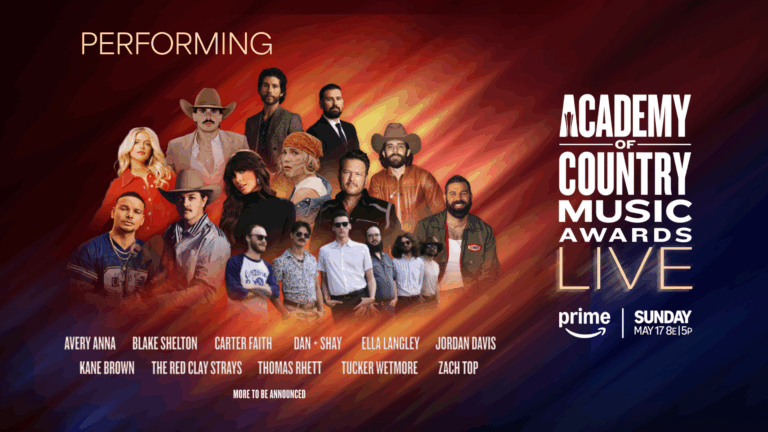
A new wave of names joins the 61st Academy of Country Music Awards, expanding an already stacked roster. Blake Shelton, Dan + Shay, Kane Brown, and Thomas Rhett bring chart history and stage command, while rising voices like Avery Anna, Carter Faith, and Tucker Wetmore add fresh momentum.

The additions land alongside previously announced performers including Lainey Wilson, Miranda Lambert, Kacey Musgraves, and Cody Johnson. That mix of established power and emerging talent gives the show real range across the current country landscape.

Shania Twain steps in as host, anchoring the broadcast with one of the genre’s most recognizable voices. The show streams live worldwide from the MGM Grand Garden Arena in Las Vegas, with a global reach that continues to expand the ACM footprint.

This year’s lineup also reflects major moments for several performers. Avery Anna hits the stage after earning New Female Artist of the Year, while Tucker Wetmore arrives fresh off his New Male Artist of the Year win. Both represent a new generation stepping into the spotlight with authority.

The Red Clay Strays make their ACM Awards debut, adding a distinct edge to the night. Jordan Davis, Ella Langley, and Zach Top round out a lineup that balances radio mainstays with fast-rising names.

Beyond the main show, ACM Awards week stretches across Las Vegas with multiple events, including the Whiskey Jam Welcome Party and Country on the Green. Keith Urban headlines the beach bash, keeping the energy moving through the entire weekend.

The 61st ACM Awards land as a full-scale celebration of where country stands right now. The lineup hits with depth, variety, and real star power, a strong snapshot of the genre in motion.

Protected: Revolutionizing Fashion Imagery: How VisualGPT AI Virtual Try On Serves Both E-Commerce Brands and Individual Stylists

0

This content is password protected. To view it please enter your password below:

What to Do in the First 24 Hours After an Accident in New York

0

By Mitch Rice

Accidents almost always leave you feeling overwhelmed and disoriented. You might be shaken, confused about what happened, or worried about injuries that haven’t fully surfaced yet. What you do in these critical first 24 hours can significantly impact your physical recovery, your ability to file insurance claims, and any potential legal case down the road. Understanding the immediate steps to take after an accident helps protect both your health and your legal rights.

New York has specific laws and deadlines that start ticking the moment an accident occurs. Some requirements must be met within hours, while others give you a few days or weeks. Missing these windows can jeopardize your ability to receive compensation for medical bills, lost wages and other damages. If you’re unsure of the steps you need to take, consulting with experienced New York Personal Injury Lawyers can guide you through the process and ensure your legal rights are protected.

What Should You Do in the First Few Minutes After an Accident?

Your immediate priority is safety. Before anything else, assess whether you or anyone else needs emergency medical attention. Adrenaline often masks pain and injury symptoms in those first moments, so even if you feel fine, serious injuries like internal bleeding, concussions, or soft tissue damage may not be immediately apparent.

If you were in a vehicular accident and your car is drivable, move it to safety. Turn on your hazard lights. Check on all passengers and occupants of other vehicles involved. If anyone appears injured, is unconscious, or complains of pain, do not move them unless there’s an immediate danger like fire or oncoming traffic.

Call 911 right away. Request police, ambulance, or fire services as needed. Many people hesitate to call emergency services for accidents that seem minor, but having an official police report creates a documented record of what happened. This report becomes invaluable when dealing with insurance companies and potential legal claims. In New York, the NYPD may not respond to every minor collision, particularly those without serious injuries or significant property damage exceeding $1,000, but you should still attempt to get law enforcement on scene whenever possible.

If you’re involved in a hit-and-run accident or the other driver is uninsured, reporting to police within 24 hours becomes even more critical. This report is required to access certain protections and compensation funds available in New York for victims of uninsured drivers.

What Information Should You Collect at the Accident Scene?

Once everyone is safe and emergency services are on their way, begin gathering information and evidence. The accident scene won’t remain preserved for long. Traffic will resume, weather conditions may change, and vehicles will be moved or towed. What you document in this first hour can make or break your case.

Exchange basic information with all drivers involved: full names, phone numbers, addresses, driver’s license numbers, license plate numbers, and insurance company details including policy numbers.

If there are passengers in any vehicle, collect their contact information as well; they may have witnessed important details about how the accident occurred.

Look for witnesses who saw what happened. Bystanders, pedestrians, people in nearby buildings, or other drivers can provide crucial independent accounts of the accident. Get their names and phone numbers. Witnesses have no obligation to stay at the scene, so if you don’t collect their information immediately, you may lose the opportunity to contact them later.

Take photos and videos extensively. Capture damage to all vehicles from multiple angles, the position of vehicles in relation to each other and the roadway, skid marks, debris, traffic signs and signals, road conditions, weather conditions, and any visible injuries. Modern smartphones make this easy. The more documentation you have, the harder it becomes for insurance companies or other parties to dispute what happened.

Write down or record your own account of the accident while the details are fresh. Note the time, location, what you were doing immediately before the accident, what you saw and heard, and the sequence of events. Memory fades and details blur quickly, especially after a traumatic event.

Should You Discuss the Accident With Other Drivers or Witnesses?

Keep your conversation limited to exchanging necessary information. Do not apologize, admit fault, or speculate about what caused the accident. Statements like “I’m sorry” or “I didn’t see you” can be used against you later, even if you were simply being polite or thinking out loud.

Stick to facts when speaking with police officers. Answer their questions honestly and directly, but don’t offer theories or guesses about what happened. If you’re unsure about something, say so. The police report will document your statements, and anything you say can influence how fault is assigned.

Avoid discussing the accident in detail with the other driver’s insurance company, especially in the first 24 hours. You’ll need to notify your own insurance company promptly, but the at-fault party’s insurer may contact you quickly trying to get a recorded statement. These adjusters are trained to ask questions designed to minimize their company’s liability. You have no legal obligation to give them a statement immediately, and doing so without speaking to an attorney first can hurt your case.

How Soon Do You Need to See a Doctor After an Accident?

Seek medical evaluation as quickly as possible, ideally within the first 24 to 48 hours, even if you don’t think you’re injured. Many serious injuries don’t produce immediate symptoms. Whiplash, concussions, internal injuries, and soft tissue damage often take hours or even days to manifest. By the time pain and other symptoms appear, the connection between your injuries and the accident becomes harder to prove.

Insurance companies scrutinize the timing of medical treatment closely. If you wait several days or weeks to see a doctor, they’ll argue that your injuries either aren’t serious or weren’t caused by the accident. New York law generally requires medical evaluation within 72 hours to maintain the credibility of your injury claim, but sooner is always better.

Go to an emergency room, urgent care center, or your primary care physician. Explain that you were in an accident and describe all symptoms you’re experiencing, no matter how minor they seem. Headaches, stiffness, soreness, difficulty concentrating, or feeling “off” all warrant medical attention and documentation.

Make sure the medical provider documents everything in writing. The medical records should note the mechanism of injury (how the accident occurred), all symptoms you report, the examination findings, any diagnostic tests performed, the diagnosis, and the treatment plan. Request copies of all medical records immediately. These documents become critical evidence linking your injuries to the accident.

Keep detailed notes about your symptoms in the days following the accident. Take photos of visible injuries like bruises, cuts, or swelling. Track how your injuries affect your daily activities, work, sleep, and overall quality of life. This personal documentation supplements your official medical records.

What Reports Do You Need to File After an Accident in New York?

New York law imposes specific reporting requirements with strict deadlines. Missing these deadlines can result in license suspension, insurance complications, and loss of benefits or compensation.

  • If your accident resulted in any personal injury, death, or property damage exceeding $1,000, you must file a Report of Motor Vehicle Accident (Form MV-104) with the New York Department of Motor Vehicles within 10 days. This requirement applies regardless of whether police responded to the scene. You can download the MV-104 form from the DMV website and file it yourself if necessary.
  • The $1,000 property damage threshold is lower than many people realize. Even seemingly minor accidents often result in repair costs exceeding this amount once you factor in modern vehicle technology and parts costs. When in doubt, file the report. Failing to file when required can lead to suspension of your driver’s license and vehicle registration.
  • For hit-and-run accidents or crashes involving uninsured drivers, you must report to police within 24 hours. This police report is required to access compensation through the Motor Vehicle Accident Indemnification Corporation (MVAIC), a New York fund that provides coverage when the at-fault driver cannot be identified or has no insurance.

How Does New York’s No-Fault Insurance System Work?

New York operates under a no-fault insurance system for auto accidents. This means your own insurance company pays for your initial medical expenses and certain other losses up to $50,000, regardless of who caused the accident. This coverage is called Personal Injury Protection (PIP).

To access your PIP benefits, you must provide written notice to your insurance company within 30 days of the accident. Your insurer should provide you with the required no-fault application form (NF-2). Fill this out completely and submit it promptly along with medical documentation.

The no-fault system is designed to provide quick payment for medical bills, lost wages, and other expenses without having to prove who was at fault. However, it has limitations. The $50,000 cap may not cover severe injuries requiring extensive treatment. Additionally, no-fault benefits don’t include compensation for pain and suffering.

You can step outside the no-fault system and file a lawsuit against the at-fault driver if your injuries meet what is called the serious injury threshold under the New York Insurance Law Section 5102(D). 

These injuries include:

  • Death;
  • Dismemberment;
  • Significant disfigurement; 
  • A fracture; 
  • Loss of a fetus;
  • Permanent loss of use of a body organ, member, function or system;
  • Permanent consequential limitation of use of a body organ or member;
  • Significant limitation of use of a body function or system; or 
  • An injury/impairment that hinders a person from usual daily activities for at least 90 days (within the first 180 days following the accident). 

What Evidence Should You Preserve in the First 24 Hours?

Beyond the immediate scene documentation, take steps to preserve other evidence that may disappear quickly. If your accident occurred in an area with surveillance cameras, such as at an intersection, parking lot, store, or building entrance, that footage typically gets deleted or recorded over within 30 days or less.

Identify potential camera locations and note them. If you’re working with an attorney, they can send preservation letters to property owners and businesses requiring them to maintain the footage. If you’re handling things yourself initially, contact these entities as soon as possible to request the footage be saved.

Keep everything related to the accident in a safe place. This includes the police report number and information about how to obtain the full report, all medical records and bills, photos and videos, contact information for all parties and witnesses, insurance correspondence, and your own notes about the accident and your injuries.

Don’t repair your vehicle immediately if it’s drivable. The damage is evidence. Take extensive photos first, and consult with your insurance company and attorney before authorizing repairs. Once a vehicle is repaired, that evidence is gone forever.

If you were wearing certain clothing or using equipment during the accident, preserve these items as well. A torn jacket, damaged helmet, or broken phone can all serve as evidence of impact severity.

Reach out to us for a free consultation, or visit our New York Birth Injury Lawyers page to explore details on claims, liability, and compensation.

When Should You Contact an Attorney After an Accident?

The sooner you speak with a personal injury attorney, the better. Many people wait, thinking they’ll see how things develop with the insurance company first. This delay can cost you.

Insurance companies have teams of adjusters and lawyers working to minimize what they pay out. They start building their defense immediately. Having your own attorney levels the playing field from the start.

An experienced personal injury lawyer can guide you through those critical first steps, help you avoid common mistakes that damage claims, deal with insurance companies on your behalf, ensure all deadlines are met, arrange for medical treatment even if you can’t afford upfront costs, preserve evidence before it disappears, and accurately value your claim so you don’t settle for less than you deserve.

Most personal injury attorneys work on a contingency fee basis. This means you don’t pay anything upfront, and the attorney only gets paid if you recover compensation. The initial consultation is typically free, so you have nothing to lose by getting legal advice early.

The statute of limitations for personal injury lawsuits in New York is generally three years from the date of the accident. While this might seem like plenty of time, certain claims have much shorter deadlines. If a government entity or employee is involved, such as a city bus or municipal vehicle, you may need to file a notice of claim within just 90 days. Waiting too long to consult an attorney can mean missing these critical deadlines.

What Mistakes Should You Avoid in the First 24 Hours?

Several common mistakes can seriously damage your ability to recover compensation:

  • Leaving the accident scene before exchanging information or before police arrive (if required) can result in criminal charges and automatic fault assignment. Stay at the scene until it’s appropriate to leave.
  • Don’t minimize your injuries or tell anyone you’re fine if you’re actually hurting or uncertain. What seems like minor soreness immediately after an accident can develop into serious, chronic pain. Let medical professionals assess your condition rather than making that determination yourself.
  • Avoid posting about the accident on social media. Insurance companies and defense attorneys routinely monitor social media accounts looking for statements or photos that contradict injury claims. A photo of you smiling at a family gathering two weeks after the accident can be used to argue you’re not really suffering, even though you were putting on a brave face for loved ones while dealing with significant pain.
  • Don’t sign anything from an insurance company without reading it carefully or having an attorney review it first. Some documents may contain language releasing the insurance company from further liability or accepting a settlement that’s far below what your claim is worth.
  • Don’t agree to a quick settlement in those first 24 hours or even the first few weeks. You don’t yet know the full extent of your injuries or how they’ll impact your life long-term. Some injuries require months of treatment. You may need surgery. You might face permanent disability. Once you accept a settlement and sign a release, you typically cannot go back and ask for more money if your condition worsens.

Summing It Up

The first 24 hours after an accident set the foundation for everything that follows, from your physical recovery to your financial compensation. Prioritize safety and medical care above all else. Call 911, get checked by a doctor even if you feel okay, and follow through with recommended treatment.

Document everything thoroughly at the scene through photos, videos, witness information, and written notes. Exchange information with other parties but keep conversation limited and don’t admit fault. File required reports with the DMV and police within the specified deadlines. Notify your insurance company to access no-fault benefits, but be cautious about giving detailed statements to the other driver’s insurer.

Preserve evidence before it disappears, including surveillance footage, damaged property, and physical items. Avoid social media posts about the accident. Don’t accept quick settlement offers before you understand the full scope of your injuries.

Consider speaking with a personal injury attorney as soon as possible. Legal guidance in those critical early hours can prevent costly mistakes and ensure your rights are protected. The decisions you make in the first day after an accident can affect your health, finances, and legal options for years to come. Taking the right steps now gives you the best chance at full recovery and fair compensation.

Data and information are provided for informational purposes only, and are not intended for investment or other purposes.


From Vincent Price to Sting’s Accidental Giggle, These Are the Most Unforgettable Laughs in Music History

“Thriller” – Michael Jackson (feat. Vincent Price)

Vincent Price’s closing monologue and maniacal laugh is one of the most recognizable moments in pop music history. Jackson specifically sought out Price for the part, and the actor recorded it in one take. The laugh alone has become a cultural landmark.

“Crazy Train” – Ozzy Osbourne

That manic, high-pitched cackle that opens the track sets the tone for everything that follows. Recorded for Osbourne’s debut solo album ‘Blizzard of Ozz’ in 1980, the laugh was entirely in character for a man building a reputation as rock’s ultimate wild card.

“Brain Damage” – Pink Floyd

The haunting, building laughter was provided not by any band member but by Peter Watts, the band’s road manager. It remains one of the most perfectly placed sonic details on ‘The Dark Side of the Moon,’ an album that left nothing to chance.

“Rock With You” – Michael Jackson

Jackson’s infectious, high-pitched giggle appears throughout his catalog, and this track captures it at its most natural and warm. It was rarely scripted, often left in because producers knew it added a personality no production trick could manufacture.

“Super Freak” – Rick James

That cheeky, funky laugh in the intro tells you everything about the song before a single lyric lands. Rick James was known for his flamboyant personality, and this opening moment is pure him, loose, confident, and completely in control.

“Wipe Out” – The Surfaris

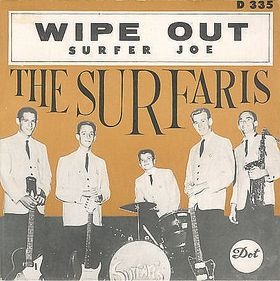
One of the most manic laughing intros in rock history, immediately recognizable and impossible to mistake for anything else. The laugh was reportedly performed by drummer Ron Wilson, and it became as famous as the drum break that follows it.

“Feel Good Inc.” – Gorillaz (feat. De La Soul)

The sinister, echoing laugh that opens this track somehow makes the song both more unsettling and more irresistible at the same time. It was crafted to reflect the song’s themes of distraction and manufactured happiness, and it lands exactly right.

“Roxanne” – The Police

Sting’s brief laugh at the very top of the recording was entirely accidental. He sat on a piano before the take began, the sound startled him into laughter, and producer Nigel Gray kept it in. It’s now inseparable from one of the band’s most iconic songs.

“Hungry Like the Wolf” – Duran Duran

The playful laugh woven into this track carries a looseness and energy that adds real texture. Recorded during the ‘Rio’ sessions in 1982, it reflects the band at their most confident and adventurous, chasing a sound that was entirely their own.

“Sweet Emotion” – Aerosmith

Tom Hamilton’s bass-heavy, laid-back laughter opens this track before the iconic riff even kicks in. It’s one of rock’s great understated moments, setting a mood that perfectly previews everything the song delivers.

“That’s Life” – Frank Sinatra

Sinatra closes this classic with a laugh of pure swagger and resilience that lands like a final punctuation mark on one of his most defiant vocal performances. It sounds spontaneous, but everything Sinatra did in the studio was intentional.

“Sadeness (Part I)” – Enigma

A haunting, whispering laugh is buried deep in this atmospheric track, surfacing like something from a fever dream. It adds to the song’s deeply mysterious, cinematic quality and is easy to miss on first listen.

“The Situation” – Yazz

The laughter woven into this late-80s dance track carries an infectious energy that matches the song’s euphoric, celebratory spirit. It’s one of those details that makes the recording feel genuinely alive rather than just produced.

“The Message” – Grandmaster Flash and the Furious Five

One of hip-hop’s most important recordings carries moments of dark, knowing laughter that cut through the song’s grim urban narrative with uncomfortable clarity. The laugh here tells you more than the words ever could.

“Mama” – Genesis

The opening of this 1983 track features one of the most unsettling laughs in rock history, a sinister, distorted cackle from Phil Collins processed through a LinnDrum machine. Collins has stated the laugh was directly inspired by the dark, knowing laughter woven through Grandmaster Flash’s “The Message,” making it one of the great cross-genre influences in pop music history. The combination of that laugh, the pulsing drum machine, and the brooding synths makes “Mama” one of Genesis’s most haunting recordings.

“Everybody Needs Love” – Bobby Womack

Womack’s laugh is deeply soulful and entirely his own, warm and lived-in in a way that only someone who has truly felt the music can produce. It’s a small moment that reveals everything about who he was as an artist.

Jason Aldean and Luke Bryan Announce the Double Down Tour

0

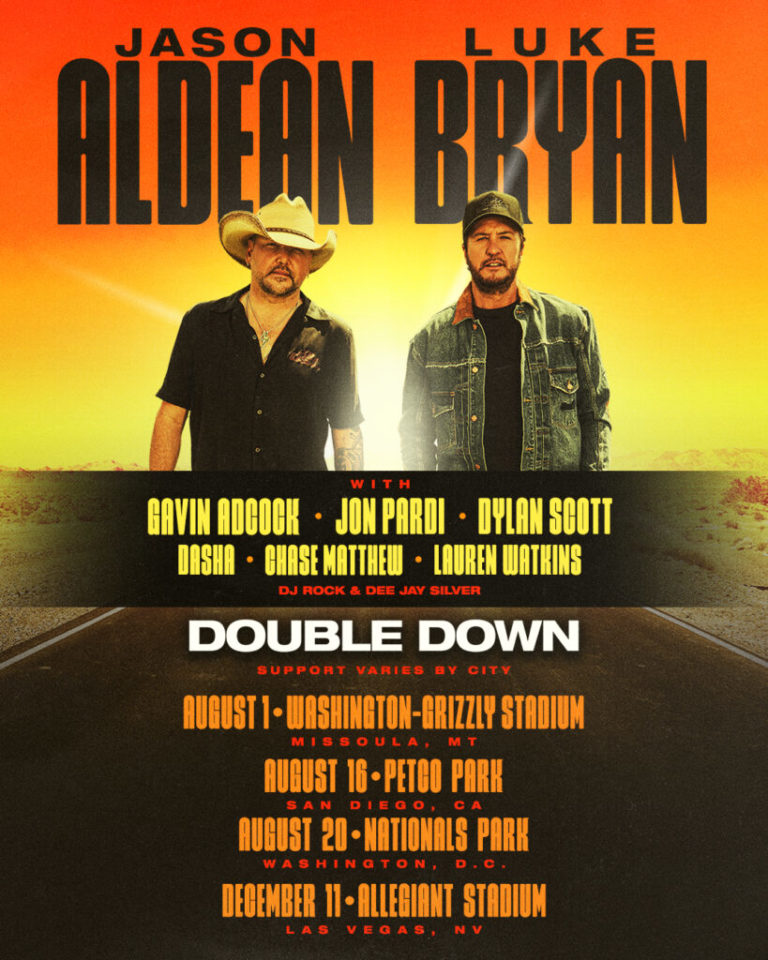
Hot off a sold-out show at UGA’s Sanford Stadium in front of 63,000 fans, Jason Aldean and Luke Bryan are keeping the momentum going. The two Georgia natives have announced the Double Down Tour 2026, a co-headlining stadium run of four dates kicking off August 1 in Missoula, Montana. Live Nation promotes the tour. Artist presales open May 6, with the general on-sale launching May 8 at 10 AM local time via Ticketmaster. VIP packages are available.

The Double Down Tour features a rotating lineup of support acts across select dates including Jon Pardi, Dylan Scott, Chase Matthew, Gavin Adcock, Dasha, and Lauren Watkins, with Dee Jay Silver and DJ Rock on all four dates. Between them, Aldean and Bryan bring two of country music’s most celebrated careers to the same stage: ACM Artist of the Decade for Aldean and five-time Entertainer of the Year for Bryan.

“Luke and I have each been at this, career-wise and as friends, for over twenty years,” says Aldean. “Playing UGA was just a preview of what’s coming for the rest of these shows.” Bryan matched the energy: “If our time in Georgia was a barometric measurement of what’s ahead, these shows with Jason will make it one of the best touring years of my life.”

Aldean heads into the tour behind his 12th studio album ‘Songs About Us,’ a 20-track project that includes a title collaboration with Bryan alongside singles “How Far Does A Goodbye Go” and “Don’t Tell On Me.” Bryan, meanwhile, wraps his ninth season as a judge on American Idol in May before launching his separate Word On The Street Tour.

Double Down Tour 2026 Dates:

August 1, Missoula, MT, Washington-Grizzly Stadium

August 16, San Diego, CA, Petco Park

August 20, Washington, DC, Nationals Park

December 11, Las Vegas, NV, Allegiant Stadium

Oreo’s New Firecracker Pop Cookie Is the Most Patriotic Snack of Summer 2026 and It Hits Stores May 4

0

Just in time for America’s 250th birthday and the summer barbecue season, Oreo has announced its latest limited-edition release and it’s a genuinely clever one. The new Firecracker Pop Oreo takes direct inspiration from the classic red, white, and blue popsicle, sandwiching blue raspberry, lemon, and cherry-flavored crème between two golden wafers in the same iconic color order as the frozen treat. Three distinct crème flavors in one cookie. The internet, predictably, lost its mind.

The cookies hit retailer shelves nationwide beginning May 4 for a limited time while supplies last. The colorful striped filling makes them immediately recognizable the moment you open the package, and early tasters are already calling them legitimately delicious rather than just a novelty. One eager fan on social media summed up the general mood perfectly: “This actually gave me the giddiest feeling.” Another kept it even simpler: “Say less. Adding to cart immediately.”

The Firecracker Pop Oreo arrives as part of a broader wave of America250 celebrations hitting grocery store shelves this summer. Coca-Cola has state-themed collectible cans, Cheerios launched a red, white, and blue birthday cake-flavored cereal, and Mountain Dew rebranded as American Dew for the season. Oreo’s contribution to the patriotic snack roster lands as arguably the most fun of the bunch, and the triple-crème construction makes it stand out from anything the brand has done before.

Oreo has kept itself busy in 2026 beyond the Firecracker Pop launch. The brand recently released a small-batch dill pickle-flavored cookie available exclusively online at Oreo.com for $9.99 a six-pack, relaunched Oreo Cakesters with a new recipe in Original, Golden, and Double Chocolate formats, and rolled out a special 12-count fudge-covered Mother’s Day cookie box for $39.99. The Firecracker Pop, though, is the headline act of the summer.

Mark May 4 on the calendar. These are going to go fast.

How to Get Verified on Facebook and Why It Actually Matters

0

Getting that blue checkmark on Facebook carries real weight for anyone building a public presence. For musicians, public figures, journalists, and brands, verification signals authenticity and helps fans and followers confirm they’re engaging with the real you. Facebook has seen its share of fake profiles and copycat pages over the years, and verification cuts through that noise immediately. It delivers a credibility boost that translates to better visibility, stronger trust, and more meaningful engagement with your audience.

Facebook verification runs through Meta Verified, the platform’s subscription-based program covering both Facebook and Instagram under one subscription. The cost sits at approximately $14.99 USD per month on web or $17.99 per month on iOS and Android. That subscription also includes proactive account protection, access to a real human support representative, and increased visibility in search results. For anyone serious about their public profile, that’s a reasonable monthly investment with tangible returns.

Here’s the step-by-step. Go to your Facebook profile or page and tap the menu icon. Navigate to “Meta Verified” and select “Get Verified.” Confirm which account you want to verify, then submit a government-issued photo ID, your full legal name as it appears on that ID, and confirm your profile photo matches the submitted ID. Facebook reviews your submission within a few days and sends a notification when complete. Approval means the blue badge appears on your profile or page immediately.

A few eligibility requirements to check off before applying. Two-factor authentication needs to be enabled, a profile photo needs to be in place, and the account needs to comply with Meta’s community standards and terms of service. Your name on Facebook also needs to match your government ID exactly, so stage names or brand names require some thought. In those situations, setting up as a public figure or brand page rather than a personal profile tends to work better, as the requirements differ slightly between account types.

The blue badge opens the door, and consistent, quality content keeps people walking through it. Posting regularly, engaging with your audience, and making the profile genuinely worth following are what turn verification into something meaningful. For artists, creators, and public figures building something real in 2026, getting verified on Facebook is a smart, straightforward step toward a stronger digital presence.

The CNE Announces Its 2026 Concert Lineup With Shaggy, Lupe Fiasco, Tom Cochrane, Lights, The Trews and Silverstein

0

The Canadian National Exhibition has dropped its first round of 2026 concert headliners, and it’s a strong opening statement for what organizers are calling the Year of Music at the CNE. The 18-day fair runs August 21 through September 7, and all concerts are free with CNE admission, with a new Front Row VIP Experience add-on available at the Bell SOUNDSTAGE at the Bandshell. Advance ticket discounts of up to 35% are on sale now at TheEx.com/tickets.

The newly named Bell SOUNDSTAGE at the Bandshell, rebranded in partnership with Billboard Canada and Rolling Stone Canada through ArtsHouse Media Group, marks the 90th anniversary of the beloved outdoor stage with a lineup that spans hip-hop, reggae, rock, post-hardcore, and electropop. Opening Day on August 21 belongs to Grammy-winning Chicago rapper Lupe Fiasco, who emerges 20 years after his landmark debut ‘Food & Liquor’ with a catalog that includes 12 Grammy nominations, three platinum singles, and one of hip-hop’s most consistently celebrated bodies of work. The following evening, platinum-selling Canadian singer-songwriter and Billboard Canada’s inaugural 2025 Visionary Award recipient Lights takes the stage, bringing her genre-blurring indie, alternative, and dance sound to a hometown crowd.

August 23 brings the only Diamond-selling dancehall artist in music history. Shaggy, born Orville Richard Burrell in Kingston, Jamaica, has sold more than 40 million album units worldwide, logged multiple Billboard Hot 100 hits including “It Wasn’t Me” and “Boombastic,” earned a Grammy for his joint album with Sting ’44/876,’ and produced “Banana” with Conkarah, which crossed two billion digital streams. His new album ‘Lottery,’ featuring Sting, Robin Thicke, Akon, and Aidonia, drops May 15. The Trews, one of Canada’s most successful rock bands with 20 Top Ten Rock Radio singles and support slots for The Rolling Stones, KISS, and Bruce Springsteen, headline August 27 behind their latest album ‘The Bloody Light.’ Silverstein, Ontario-formed post-hardcore veterans with over one billion streams and 25-plus years in the game, close out September 3, and eight-time JUNO Award winner and Canadian Music Hall of Fame inductee Tom Cochrane closes the announced lineup September 5 with a catalog that includes “Life Is a Highway,” “Lunatic Fringe,” and “Big League.”

More artists are still to be announced across all five CNE music stages, including the newly added NXNE Stage in partnership with NXNE Music Festival & Conference. The 2026 CNE runs August 21 through September 7. Full details at TheEx.com.

Opening Day, Friday August 21: Lupe Fiasco

Saturday, August 22: Lights

Sunday, August 23: Shaggy

Thursday, August 27: The Trews

Thursday, September 3: Silverstein

Saturday, September 5: Tom Cochrane

Elmiene and Baby Rose Unite on New Version of “Honour” as His North American Tour Kicks Off Today

0

Elmiene launches his North American headline tour tonight in Detroit, and he’s doing it with a brand new version of “Honour” featuring rising soul star Baby Rose, out now. The track, taken from his debut album ‘sounds for someone,’ gets a whole new dimension from Baby Rose’s grounding, self-aware verse, her vocal locking in with Elmiene’s with a seamlessness that makes the collaboration feel entirely natural. The two voices approach the song’s themes of intimacy and uncertainty from complementary emotional angles, and the result is one of the more compelling R&B releases of the spring.

‘sounds for someone’ is a 12-track debut that traces two decades of familial trials and triumphs through deeply personal songwriting and production from an exceptional lineup including Sampha, Jeff “Gitty” Gitelman, No I.D., and Raphael Saadiq, who also contributes as a featured artist. Single “Reclusive” has already crossed 13 million combined streams. NME gave the record five stars, calling it cinematic. Rolling Stone UK awarded four stars, praising his “astounding range and control.” DIY added four more, noting a vocal “that can break and fix hearts within the space of one single song.” That’s a critical reception most debut albums don’t come close to.

The British-Sudanese vocalist has been building to this moment with real intention. His COLORS session sparked instant fandom. His NPR Tiny Desk Concert has surpassed one million views and earned praise for his “vintage voice.” He sold out O2 Academy Brixton, performed at the BET Awards, supported Stevie Wonder at British Summer Time Hyde Park, and received nominations for the BRITs Rising Star Award and the Ivor Novello Rising Star Award. His This Is The Remix EP saw his own tracks reimagined by Timbaland, Blxst, and IAMNOBODI.

The North American leg runs through May 31 in Los Angeles, touching 18 cities across the U.S. and Canada. The UK and European leg follows in late November, closing December 8 at London’s Eventim Apollo. These are rooms that match exactly where Elmiene is right now, and based on everything he’s delivered so far, they’re going to feel too small before long.

Tour Dates:

April 30, Detroit, MI, St. Andrew’s Hall

May 1, Chicago, IL, Riviera Theatre

May 3, Toronto, ON, Opera House

May 6, Brooklyn, NY, Brooklyn Paramount

May 7, Silver Spring, MD, The Fillmore

May 9, Philadelphia, PA, Theatre of Living Arts

May 11, Charlotte, NC, The Fillmore

May 12, Nashville, TN, Brooklyn Bowl

May 14, Birmingham, AL, Saturn

May 15, Atlanta, GA, Coca Cola Roxy

May 17, Houston, TX, House of Blues

May 19, Austin, TX, Emo’s

May 20, Dallas, TX, House of Blues

May 23, Salt Lake City, UT, The Depot

May 26, Sacramento, CA, Ace of Spades

May 27, Berkeley, CA, The UC Theatre

May 29, Phoenix, AZ, Crescent Ballroom

May 31, Los Angeles, CA, The Wiltern

November 29, Amsterdam, NL, Melkweg

November 30, Berlin, DE, The Metropol

December 2, Paris, FR, Salle Pleyel

December 3, Brussels, BE, Ancienne Belgique

December 5, Bristol, UK, O2 Academy

December 6, Manchester, UK, Albert Hall

December 8, London, UK, Eventim Apollo

Def Leppard Release ‘Greatest Hits’ on Vinyl and Head Out on a UK and European Tour This June

0

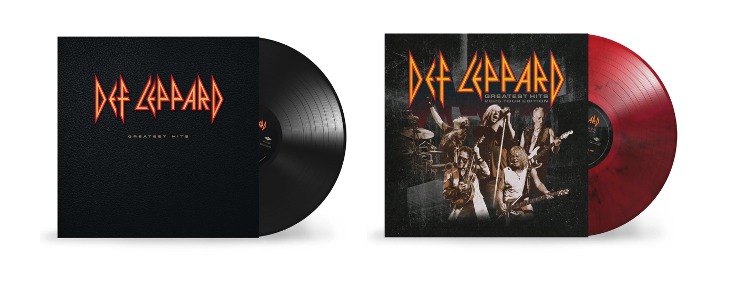
Def Leppard are marking 2026 with a freshly mastered ‘Greatest Hits’ vinyl release, available June 12 in two formats: standard black vinyl and a special edition blood red marbled vinyl featuring exclusive 2026 tour artwork, the latter available exclusively on the road. Pre-orders are live now at defleppard.com.

The 10-track collection pulls from the core of one of rock’s most bulletproof catalogs, covering “Pour Some Sugar on Me,” “Hysteria,” “Photograph,” “Love Bites,” “Rock of Ages,” “When Love and Hate Collide,” “Bringin’ On the Heartbreak,” “Foolin’,” “Animal,” and “Armageddon It.” For a band that has sold more than 110 million albums worldwide and holds two Diamond Awards in the U.S., this is exactly the kind of distillation their catalog deserves on vinyl.

The release arrives on the heels of an already packed year. Def Leppard completed a sold-out Las Vegas residency, toured India, and released a brand new single “Rejoice,” available now with a lyric video. The Rock & Roll Hall of Fame inductees, who also recently received their star on the Hollywood Walk of Fame, show no signs of easing up.

The UK and European tour runs through June and July 2026, with Extreme joining as special guests on most dates. Highlights include a headline show at The O2 in London and the band’s first Paris show in nearly 30 years, a milestone for European fans who’ve waited a long time for that one. Full dates and tickets at defleppard.com.

‘Greatest Hits’ Track Listing:

Side One:

Pour Some Sugar on Me

Hysteria

Photograph

Love Bites

Animal

Side Two:

Rock of Ages

When Love and Hate Collide

Bringin’ On the Heartbreak

Foolin’

Armageddon It