Home Blog Page 325

Milwaukee Rap Rockstar DC The Don Signs With Republic Records

0

DC The Don has signed with Republic Records, marking a major milestone for the Milwaukee artist as he enters a new phase of his career. The deal formalizes years of steady momentum built through a genre-fluid approach that pulls from hip-hop, punk, pop, and rock, earning him a devoted following and a reputation for versatility. Republic Records leadership describes DC The Don as a songwriter-driven artist with a sound that moves freely across styles, positioning the partnership as a long-term creative alignment.

To mark the announcement, DC The Don has released his new single “Lie2Me,” his first official release under the Republic banner. Produced by LouieOTK, the track flips a playful sample from electronic duo ear’s 2025 song “Real Life,” pairing melodic delivery with emotional tension. The single reflects a refined direction while staying true to the shapeshifting instincts that defined his earlier work, from SoundCloud releases to boundary-blurring projects that resisted easy categorization.

“Lie2Me” also arrives with a new music video directed by The Window, which centers on the pull of a connection that feels almost unreal in its intensity. The release serves as the first glimpse of DC The Don’s upcoming project, ‘the rumors are true,’ and sets the tone for what follows. With a major-label platform now in place, the new chapter builds directly on the creative control and identity he has cultivated from the start.

Ghanaian Artist Lamisi Shares New Single “Come” From ‘Let Us Clap’

0

Lamisi has shared “Come,” the second single from her forthcoming album ‘Let Us Clap,’ marking a new phase in her collaboration with producer and musical director Wanlov the Kubolor. Released via Real World Records, the track brings Lamisi’s soulful vocal style into dialogue with contemporary production, weaving traditional northern Ghanaian rhythms with modern textures. The song reflects Lamisi’s ongoing commitment to social change, rooted in her work leading the Lamisi Fata Foundation, which supports girls and young women in northern Ghana.

On “Come,” Lamisi draws inspiration from everyday village exchanges, translating call-and-response conversation into music built around rhythm and interaction. She describes the song as being about generosity balanced with dignity and healthy boundaries. Across ‘Let Us Clap,’ handclaps form the core of the music, reshaping long-standing women’s clapping traditions into compositions that combine organic grooves with electronic processing, shifting tempos, and heavily treated vocals. The result feels grounded in heritage while moving deliberately forward.

Wanlov the Kubolor describes the project as forward-looking music shaped by where people come from, rather than nostalgia. Known for his work across hip-hop, film, and activism, he brings a satirical and socially engaged sensibility to the album. For Lamisi, the record also carries personal urgency, reflecting on how access to education and opportunity remains uneven for girls in her home region. Through ‘Let Us Clap,’ she centers women’s voices, turning rhythm, collaboration, and collective movement into tools for empowerment.

Why Crypto Refuses to Die: A 2026 Look at an Industry That Won’t Go Quiet

0

By Mitch Rice

Every few years, crypto is pronounced dead. A crash hits, headlines turn hostile, regulators step in, and social media moves on to the next shiny thing. And yet, here we are in 2026, still talking about it, still building on it, still using it. Crypto didn’t fade away, it just got quieter, leaner, and more practical. This article looks at why the industry keeps surviving its own funerals, how it adapted in 2026, and why it remains relevant even without the hype.

Crypto Has Been “Dead” Before

If you’ve followed crypto long enough, you’ve seen this movie already. Bitcoin “dies” during bear markets. Ethereum is declared broken every time gas fees spike. Entire sectors collapse, from ICOs to NFTs to overleveraged lending platforms. What people often confuse is price with relevance. Markets crash, technologies rarely disappear overnight. The internet didn’t die after the dot-com bubble. It just stopped being a casino for a while. Crypto’s crashes tend to flush out weak projects and unrealistic promises. What survives is slower, more boring, and far more resilient.

Speculators Left, Builders Stayed

One of the most significant shifts between earlier cycles and 2026 is who remains active. The loudest voices from the hype years moved on. Influencers, pump groups, and overnight “experts” largely vanished when easy money dried up.

What stayed behind were developers, infrastructure teams, and long-term companies. Wallet providers improved security. Blockchains focused on stability rather than headline features. Payment rails, custody tools, and on-chain identity have quietly matured, marking the point where crypto starts to grow up. Not when everyone is talking about it, but when fewer people are watching.

Regulation Didn’t Kill Crypto, It Shaped It

For years, people framed regulation as crypto’s executioner. In reality, it became its filter. By 2026, most major jurisdictions had more straightforward rules. Exchanges faced leverage limits and reporting standards. Auditors examined stablecoins, and custodial services operated with real accountability.

That scared off shady operators, but it also made crypto usable for more people. Institutions finally knew where the lines were. Retail users had better consumer protections, and builders stopped guessing what might be illegal next year. Crypto didn’t escape regulation. It learned how to exist alongside it.

2026 Is Less Hype, More Utility

Crypto in 2026 is quieter, and that’s a good thing. Instead of chasing the following narrative, users care about reliability. Can this network stay online? Are fees predictable? Is custody safe? Does this actually solve a problem?

We’re seeing more real-world usage. Cross-border payments that actually settle quickly. Tokenized assets with legal backing. On-chain systems that integrate with existing finance instead of trying to replace it overnight. The industry didn’t disappear. It narrowed its focus.

Crypto Is No Longer Just an Investment

One reason crypto refuses to die is that it has stopped being about price alone. People still trade, of course, but that’s no longer the whole story. Crypto now functions as infrastructure. It’s a settlement layer. A way to move value without permission. A tool for financial access in places where traditional banking is limited or unstable.

Even people who don’t care about “crypto culture” use it indirectly behind apps, wallets, remittance tools, and digital identity systems. When something becomes infrastructure, it’s much harder to kill.

Self-Custody Became a Survival Skill

One of the clearest lessons from past collapses is simple: if you don’t control your keys, you don’t control your assets. By 2026, self-custody is no longer a niche concept. It’s a fundamental skill for anyone serious about crypto. Centralized platforms still exist, but fewer people unquestioningly trust them.

Hardware wallets became more user-friendly and less intimidating. Tools like the Tangem hardware wallet helped bridge the gap for everyday users who want security without complexity. Tapping a card feels a lot more natural than managing seed phrases on sticky notes.

If you’re still relying entirely on exchanges, this cycle has already taught that lesson the hard way. Using a hardware wallet like Tangem isn’t about paranoia. It’s about owning what you actually paid for.

Why Crypto Still Matters Going Forward

Crypto survives because it solves problems that haven’t gone away. Money still moves slowly across borders. Financial access is still uneven. Trust in institutions rises and falls. People still want alternatives, especially during uncertainty. The industry doesn’t need universal belief. It only needs enough people to see real value in it, and it has already reached that point. Crypto in 2026 isn’t loud. It isn’t trendy. It doesn’t promise overnight wealth. What it offers instead is optionality. A parallel system that keeps running whether it’s fashionable or not, and as long as that option exists, crypto isn’t going anywhere.

For individuals who choose to stay involved, the focus is simpler now. Use fewer platforms. Understand custody. Reduce unnecessary risk. Keep control in your own hands. A secure hardware wallet like Tangem fits naturally into that mindset, not as a speculative tool, but as a practical one. Crypto doesn’t need hype to survive anymore. It has already proved it can outlast the noise.

Data and information are provided for informational purposes only, and are not intended for investment or other purposes.


Barry Adamson Releases SCALA!!! Soundtrack Celebrating London’s Wildest Cinema

0

Barry Adamson has released ‘SCALA!!!’, his score for the documentary SCALA!!! Or, the Incredibly Strange Rise and Fall of the World’s Wildest Cinema, out now via Mute on limited edition “banned blood” vinyl, CD, and digital formats. The 22-track album soundtracks the rise and fall of London’s legendary Scala cinema, capturing its anarchic energy, late-night chaos, and deep emotional pull. Tracks like “Scala Cats” nod to the cinema’s resident felines, as inseparable from the venue’s mythology as the all-night screenings, sticky floors, and unruly crowds.

Adamson’s score brings his noir, cinematic instincts to a setting that helped shape generations of filmmakers, artists, and music fans. Running from 1973 to 1993, the Scala became a cultural hub through its boundary-pushing programming, double features, and auteur showcases spotlighting figures such as John Waters, Russ Meyer, Derek Jarman, and David Lynch. The documentary features interviews with regulars, staff, and artists including Adamson himself, reflecting on how the cinema’s fearless approach influenced creative lives well beyond its walls.

Often described as a master of the soundtrack form, Adamson uses SCALA!!! to move fluidly between menace, playfulness, and melancholy, mirroring the cinema’s unruly spirit. Across his career, from Magazine and The Birthday Party to Nick Cave & the Bad Seeds and a wide-ranging solo catalog, Adamson has built a reputation for narrative-driven composition. His work for film, dance, and stage continues that tradition here, translating the Scala’s legacy into music that feels lived-in, unpredictable, and deeply evocative.

Croatian Death Metal Trio In Dakhma Unleash Sepultura Cover “Territory”

0

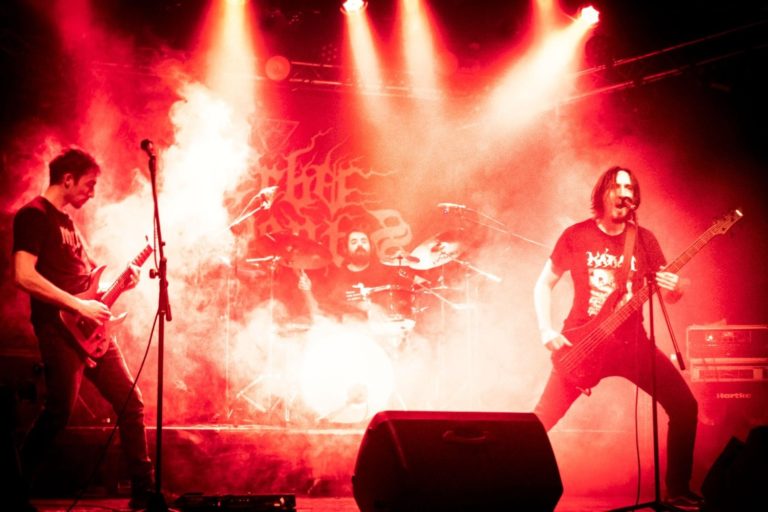
In Dakhma have released their take on “Territory,” revisiting the Sepultura classic through a heavier, more suffocating death metal lens. Originally released on Sepultura’s 1993 album ‘Chaos A.D.,’ the song is reworked with dense atmospheres, tight rhythmic control, and an unrelenting intensity that aligns closely with In Dakhma’s approach to the genre. The band describes Sepultura as a formative influence, pointing to the song’s themes of borders, conflict, and propaganda as ideas that still carry weight today.

Rooted in old-school death metal while incorporating ritualistic and modern elements, In Dakhma draw thematic inspiration from mortality, ancient practices, and societal collapse, a direction reflected in both the music and visuals. The accompanying video for “Territory” adopts a stripped-down, DIY style that mirrors the band’s direct and uncompromising sound. Known for their high-energy live shows, In Dakhma continue to build momentum within the Balkan metal scene, positioning themselves as a rising presence driven by conviction and atmosphere.

Expert Insights: Foldable, Moped & Tricycle Electric Bikes Explained

0

By Mitch Rice

No longer has the electric bike remained a niche trend. Now, they are transforming to be the perfect eco-friendly and cost-efficient alternative for daily commuters in urban environments as well as delivery boys and fun riders. The most searched for models among today’s consumers are the Foldable Electric Bike, Moped Style Ebike and Electric Tricycle. Each is designed to serve a different function, and understanding them provides insight for riders seeking the model that best fits their real-world needs.

As a close follower of electric mobility trends, someone who has tested a wide variety of riding styles and performance data, our guide provides expert level knowledge on how these three types of ebikes compare during day to day use.

Understanding Modern Electric Bike Categories

From their initial form, electric bikes have evolved into specialized categories focusing on comfort, range, portability, and stability. A Foldable Electric Bike, for instance, is all about convenience and small storage space. It is perfect for regular commuters in search of a minimalistic riding experience. The Moped Style Ebike is designed for long rides, combining electric capacity with a motorcycle-like appearance. Lastly, the Electric Tricycle is focused on the user’s balance, while a tricycle is able to carry big loads. Essentially, the last model is suitable for adults in search of stability. Every category uses advanced battery systems, pedal-assistance, and effective electric motors. Google search trends indicate an increased interest in electric mobility. Furthermore, the trends reveal a heightened focus on comfort and practicality in dense urban environments.

Foldable Electric Bike: Compact Power for Urban Mobility

A Foldable Electric Bike is perfect for riders who require flexibility. These bike fold down fast and can be easily stored in an apartment, office or car trunk. They’re small, but what they lack in size they more than make up for with torquey pedal assist and great brakes.

The majority of Foldable Electric Bikes for sale are comprised of lightweight aluminum and include an integrated lithium-ion battery which can be adjusted to meet different handlebar heights. This means they’re great for mixed commuting – when you want to ride in on your bike and get the train home. Folding models are particularly popular among urban professionals who want to avoid theft and parking hassle.

An Efficient Foldable Electric Bike is your best bet for city commuting . Our folding E – Bikes are perfect for city commuting and fit easily in the trunk of your car or any other urban transport. These bikes ride great and perform well with a little elbow grease every so often.

Moped Style Ebike: Performance Meets Comfort

The Moped Style Ebike has been increasingly popular with its powerful motor, long range cycling and comfortable riding posture. Borrowing the design cues from classic mopeds, this one features a larger seat, fatter tires and beefed up suspension system for comfortable riding on bumpy terrains.

Unlike a standard bike, a Moped Style Ebike is very comfortable for those long rides. Ride longer, farther and faster with added battery capacity in a single charge. This means it is great for commuting to work, deliveries and casual rides.

Specialized: From an industry professional, the Moped Style Ebike is great in terms of stability and speed control. Its profile is carefully shaped to distribute weight evenly and minimise all types of-rider fatigue.

Electric Tricycle: Stability, Safety, and Practical Use

Electric Tricycle is the ideal transportation tool for riders who prioritized stability and safety. This area of bikes has been growing in popularity among adults, seniors and in riders who need a little extra help on their daily commutes.

These Electric Trike models tend to have a large frame, upright seating and rear baskets with or without the option to carry small passengers. These qualities also make them perfect for shopping, delivery and everyday tasks. An Electric Tricycle is much more stable at lower speeds or when carrying heavy loads than a two-wheeled bike.

Practically, the Electric Tricycle is less likely to tip over and requires minimal physical exertion to maintain on two wheels. Yes, that makes it a reliable option for riders who want to be independent, without putting their safety in jeopardy.

Comparing Ride Experience and Practical Applications

There is a unique riding experience with every electric bike type. The following is a foldable electric bike that prioritizes portability and high performance. The Moped Style Ebike brings comfort and more power for longer up to 80 miles distance. A third Electric Bike is about stability and carrying capacity.

Ride feel depends greatly on battery positioning, motor strength and frame shape. These factors can be assessed separately by experts depending on the terrain / rider weight and daily riding time. Literal data from the real world: Cyclists ride better and have longer-lasting gear when their types of riding match up with the style of bike that they choose to bring along for the gig.

Knowing the differences between the two can help users make a decision based on their commuting needs, comfort and storage restrictions.

Long-Term Value and Maintenance Considerations

When you consider long-term value, things like battery life, motor efficiency and build quality matter more than the initial purchase price. A Foldable Electric Bike in most cases will need less room for storage and its maintenance is usually easy. For a Moped Style Ebike there may be a need for regular checks because more power is being produced. An Electric Tricycle benefits from parts that have been made to flex and support the weight of usage.

Good charging habits, regular checks and optimal tyre pressure really extends the life of any electric bike. Industry research shows that electric bikes kept in good repair can provide reliable service for years.

Frequently Asked Questions 

What is the difference between a foldable electric bike and a regular electric bike?

The Collapse Folds UpUnlike a regular electric bike that takes up more space, the F4W collapse folds down for simple storage and transport.

Are moped style eBikes legal to ride on public roads?

Moped Style Ebike legality varies; location, it depends on State and local laws (N/A), power wattage, speed limit where moped style ebikes are allowed.

Who should use an electric tricycle?

Electric Tricycle is perfect for riders that need to carry cargo.adults looking for a little extra balance, or seniors.

How far can an electric bike go on one charge?

The number here depends on the model, battery size and riding conditions, but most electric bikes can go far enough for your daily commute and errands.

How Cyber Security Services Protect Against Emerging Threats

0

By Mitch Rice

The online realm can feel like an endless playground, but lurking beneath each innovation is a fresh opportunity for attackers to exploit vulnerabilities. Companies of every size grapple with protecting sensitive data from evolving digital threats. When a single breach can erode trust and disrupt vital operations, robust cyber security services step up as a crucial shield.

Below, we’ll explore how these services defend businesses against malicious actors. We’ll look at emerging threats, the technologies that power modern defenses, and the proactive strategies that keep data and reputations safe.


1. What are Cyber Security Services?

1.1 Defining Cyber Security Services in the Modern Landscape

Cyber security services encompass the tools, practices, and professional expertise dedicated to safeguarding digital systems. These services help businesses identify vulnerabilities and set up layered defenses to deter various forms of unauthorized access. The modern landscape relies on complex networks, cloud systems, and ever-growing data flows that often carry sensitive information. As a result, experts in cyber security craft solutions that monitor suspicious activities, neutralize potential breaches and provide comprehensive reporting for informed decision-making.

Because technology changes swiftly, cyber security services must adapt just as fast, blending prevention and rapid response to tackle the challenges of constant connectivity.

1.2 Importance of Cyber Security for Businesses Today

A secure digital environment forms the bedrock of any successful enterprise. With so much riding on internal databases and customer data, a breach can trigger severe consequences, including legal complications and damage to brand image. Cyber security services offer guidance on compliance, best practices, and immediate action plans if something goes wrong. They’re not just an added expense, they’re an integral part of modern risk management.

When clients know their information is safe, trust flourishes. That level of confidence fuels loyalty and continued growth for businesses intent on thriving in the digital era.

1.3 Overview of Emerging Threats in Cyber Security

In recent times, the rise of ransomware attacks and sophisticated malware has placed companies on high alert. Attackers often rely on social engineering techniques to trick employees into revealing sensitive data, or they exploit unpatched software to gain stealthy access. Emerging threats are frequently powered by advanced technologies like artificial intelligence, which can help intruders automate and scale their attacks.

To stay ahead, organizations need cyber security services that constantly evaluate new risks, educate staff on updated tactics, and leverage cutting-edge detection methods that leave no gap unguarded.


2. Understanding Emerging Cyber Threats

2.1 Definition and Characteristics of Emerging Threats

Emerging threats are those that evolve rapidly, often using novel tactics and technologies to bypass standard security measures. These include zero-day exploits, where weaknesses in software are attacked before developers can release a patch. Threats also evolve to fool traditional antivirus systems, employing techniques like fileless malware or Trojan backdoors that camouflage themselves under routine processes.

A key characteristic is unpredictability. Cyber security solutions must be fluid, analyzing behavioral patterns and responding in real time to subtle anomalies that hint at malicious activity.

2.2 Examples of Recent Emerging Threats (e.g., Ransomware, APTs)

Ransomware assaults typically encrypt company data and demand payment for its release. They can disrupt an entire organization’s operations, especially if backups are incomplete or infected. Advanced Persistent Threats (APTs) are another challenge, as they aim for long-term infiltration, siphoning off data silently over weeks or months. These attacks often target intellectual property, strategic plans, and any valuable internal intelligence.

When combined with social engineering, these sophisticated threats become even harder to detect. Businesses need a multi-layered approach to outsmart attackers’ carefully crafted methods.

2.3 The Role of AI and Machine Learning in Evolving Threats

AI and machine learning aren’t only used by security professionals. Cybercriminals also exploit these powerful tools to automate scanning processes, identify system loopholes, and launch large-scale phishing campaigns that adapt to user behavior. By harnessing algorithms that learn from each interaction, attackers refine their strategies continually.

Countering AI-driven threats calls for proactive systems. Services must integrate advanced analytics, anomaly detection, and predictive modeling that highlight unusual patterns. This blend of human expertise and machine intelligence keeps protective measures one step ahead in a rapidly shifting battlefield.


3. Key Components of Cyber Security Services

3.1 Threat Intelligence and Monitoring Systems

Effective cyber security often begins with thorough threat intelligence. These services gather real-time data on potential risks, analyzing malicious domains, evolving malware signatures, and blacklisted IP addresses. Monitoring systems then sift through vast logs of activity, flagging suspicious patterns or unexpected logins. If an anomaly is detected, alerts go out right away, giving security teams a chance to intervene before damage occurs.

This proactive stance creates a safety net that shields businesses from sudden, large-scale disruptions. Without it, intrusions could remain hidden until it’s too late.

3.2 Incident Response Planning and Management

Incident response is the action plan for what to do when something goes wrong. It’s a structured approach to identifying threats, containing them, and restoring normal operations in the least amount of time possible. These plans outline critical roles, escalation procedures, and communication strategies so employees know exactly how to react.

When thoroughly designed, an incident response framework reduces panic and confusion. It can also minimize financial loss and reputational harm, which might otherwise spiral out of control if no preparedness exists.

3.3 Vulnerability Assessment and Penetration Testing

Scanning systems for known vulnerabilities is just the start. Penetration testing goes further by simulating real-world attacks to see how well defenses hold up under pressure. Expert “ethical hackers” try multiple entry points, from network ports to web applications, to find hidden flaws that conventional scanners may miss.

These assessments can uncover insecure configurations, unpatched software, or overlooked endpoints that could provide an easy route for attackers. By addressing identified gaps quickly, companies strengthen their shield against fast-moving cyber threats.


4. Proactive Measures Against Emerging Threats

4.1 Importance of Regular Security Audits and Assessments

Routine security audits help organizations catch potential weaknesses before criminals spot them. These checkups review system configurations, user privileges, and data handling procedures to pinpoint anything that could be exploited. A thorough examination may also involve analyzing logs for suspicious trends or verifying that encryption protocols are up to date.

Frequent assessments encourage continuous improvement. They enable businesses to fine-tune policies and adapt to new threats, ensuring their security posture remains sturdy as technology and attacker tactics advance.

4.2 Implementing Multi-Factor Authentication (MFA)

Passwords alone offer a fragile line of defense. A stolen or guessed credential can open the door to sensitive databases, emails, and proprietary resources. Multi-factor authentication adds extra layers, like one-time codes sent to a phone or biometric verification. That way, even if a password falls into the wrong hands, unauthorized access becomes significantly more difficult.

MFA solutions are increasingly user-friendly and can integrate with single sign-on platforms, making them a staple recommendation in the cyber security toolkit.

4.3 Employee Training and Awareness Programs

Phishing emails still rank among the most common entry points for data breaches. Even strong technical safeguards can fail if employees unintentionally click a malicious link. That’s why comprehensive security awareness training is vital. These programs teach staff how to recognize suspicious messages, use secure communication tools, and report potential red flags early.

When teams understand their role in preventing attacks, the collective effort strengthens an organization’s safety net. Continuous education ensures best practices remain fresh in everyone’s mind.


5. The Role of AI in Cyber Security Services

5.1 AI-Driven Threat Detection and Response Capabilities

Advanced AI systems specialize in spotting deviations from normal patterns. They sift through network traffic, user behaviors, and application logs to highlight anomalies that might suggest a breach. By automating these detection processes, security teams receive prompt alerts, often cutting down response times significantly.

AI can also help coordinate a response. Some solutions initiate containment procedures once a threat is confirmed, isolating affected machines or accounts before hackers can spread further. This speed prevents attacks from escalating into widespread incidents.

5.2 Automating Security Processes with Machine Learning

Machine learning tools can reduce the workload on human analysts. They take repetitive tasks—like scanning for known malware signatures or sorting through daily activity logs—and handle them quickly. Over time, these algorithms learn which events are false alarms and which ones demand deeper investigation, increasing their accuracy.

With routine tasks automated, security professionals can focus on more complex responsibilities, such as investigating sophisticated threats or refining defensive strategies to match industry-specific demands.


6. Cloud Security Challenges and Solutions

6.1 Overview of Cloud-Based Threats

Storing data on the cloud introduces unique challenges. Shared computing environments can be targeted by attackers looking for misconfigurations in storage buckets or vulnerabilities in application containers. Unauthorized access might come from weak credentials or mismanagement of permissions, allowing intruders to pilfer data undetected.

These risks are amplified by the complexity of modern cloud infrastructures. Keeping track of who has access to what can be tricky, especially when multiple services or third-party integrations are in play.

6.2 Strategies for Securing Cloud Environments

One of the most effective strategies involves clearly defined security policies that map out data classification, encryption requirements, and identity management. Network segmentation can minimize the blast radius of a breach, limiting movement between different parts of the environment. Log monitoring tools offer continuous visibility and alert administrators to questionable activity.

Regularly reviewing and updating cloud configurations is equally important. It’s easy to overlook newly added resources or forget about legacy systems that still store sensitive information.

6.3 Importance of Compliance and Data Governance in Cloud Security

Different industries operate under regulations that define how data must be stored, accessed, and managed. In cloud environments, it’s critical to ensure that providers and their infrastructure meet these guidelines. Clear data governance practices outline ownership, data residency, and control mechanisms to protect privacy and intellectual property.

When compliance is treated as an ongoing effort rather than a one-time checklist, organizations can maintain a lawful and secure cloud footprint. That approach also simplifies risk assessments, since compliance frameworks often align with strong security standards.


7. Building a Resilient Cyber Defense Strategy

7.1 Layered Security Approaches: Defense in Depth

Defense in depth involves multiple protective layers that work together. Firewalls, intrusion detection systems, and endpoint protection create barriers that slow down attackers. Even if one layer is compromised, others can still block the threat from progressing. This strategy reduces the chance of a single vulnerability jeopardizing the entire operation.

Companies also incorporate physical security, like controlled access to server rooms, into their layered approach. Security measures that blend hardware, software, and human oversight often yield the strongest results.

7.2 Integrating Cyber Security into Business Continuity Plans

Many organizations maintain detailed business continuity plans for natural disasters or power outages yet neglect the digital realm. Integrating cyber security ensures that data backups, emergency communications, and restoration procedures are covered for hacking incidents, too. This synergy guarantees that normal operations can resume quickly if a breach occurs.

Testing these plans regularly, possibly through drills or tabletop exercises, reveals gaps in recovery strategies. Plugging those gaps helps minimize downtime and safeguards revenue streams.

7.3 Collaborating with Third-Party Cyber Security Providers

External providers can offer specialized skills and fresh perspectives that might not exist in-house. Some businesses partner with managed security service providers (MSSPs) for continuous monitoring or advanced threat analysis. Others seek consultancy on compliance, penetration testing, or incident response readiness.

This collaborative model expands a company’s access to cutting-edge expertise without the overhead of building an extensive in-house security team. It also fosters knowledge transfer as external experts work closely with existing staff.


8. Emerging Technologies Shaping Cyber Security

8.1 The Impact of Quantum Computing on Encryption Standards

Quantum computing has the potential to break certain cryptographic methods, prompting researchers to develop new forms of “quantum-resistant” encryption. Although quantum machines aren’t widely commercially available, security experts are watching the field closely. It’s imperative to ensure that sensitive data transferred today remains protected in the future.

Organizations that begin exploring quantum-safe encryption earlier may have an advantage, avoiding a last-minute scramble to update critical systems once quantum capabilities become mainstream.

8.2 Blockchain Technology for Enhanced Data Integrity

Blockchain can provide a tamper-evident ledger of transactions or records, which can be particularly valuable for securing supply chains or tracking data ownership. Because each block is tied to the previous one through cryptographic hashes, unauthorized changes become easy to detect. This approach can also remove single points of failure, making data manipulation far more difficult.

While still evolving, blockchain-based solutions may play a role in strengthening authentication protocols, ensuring that digital identities remain trustworthy in various online interactions.

8.3 Future Trends: IoT Security Challenges and Innovations

As wearables, smart home devices, and industrial sensors multiply, the Internet of Things brings both efficiency and risk. Each connected device adds another entry point attackers might exploit. Many IoT gadgets lack robust security features, magnifying the potential for intrusion.

Developers and security teams are experimenting with lightweight encryption and secure firmware updates for these devices. Advanced segmentation strategies and network-based anomaly detection also help shield IoT ecosystems from rampant cyber threats.


9. Regulatory Compliance and Cyber Security Standards

9.1 Overview of Key Regulations (GDPR, CCPA, etc.)

Data protection regulations vary by region and industry, but they share a common goal: safeguarding personal and sensitive information. The General Data Protection Regulation (GDPR) applies to European citizens’ data, while laws like the California Consumer Privacy Act (CCPA) protect consumers in specific jurisdictions. Noncompliance can lead to hefty fines and legal repercussions.

Staying current on the latest rules is vital, especially as new legislation often arises in response to high-profile breaches or rising public concern over data privacy.

9.2 How Compliance Enhances Cyber Security Posture

Although compliance can seem like a maze of guidelines, meeting these standards typically strengthens an organization’s security stance. Requirements such as regular risk assessments and breach notification procedures encourage businesses to maintain healthy security practices. Some regulations also demand encryption of sensitive data and robust access controls.

When these measures become part of routine operations, they create a more resilient environment. Compliance can thus serve as both a legal safeguard and a catalyst for continuous improvements.

9.3 Best Practices for Maintaining Compliance

Maintaining compliance isn’t a one-and-done exercise. It involves periodic audits, up-to-date documentation, and employee training on relevant regulations. Clear data classification helps teams understand how to store or transmit different categories of information. Implementing systematic log reviews or data retention schedules can help organizations demonstrate accountability to regulators.

Engaging with legal experts and specialized consultants can simplify the compliance journey. Their insights can guide policy development that satisfies regulations without burdening day-to-day workflows.


10. Future Outlook: Preparing for Next-Gen Threats

10.1 Anticipating Future Trends in Cyber Threats

Threat actors are inventive, and their tactics evolve constantly. Looking ahead, advanced social engineering attacks may rely on deepfake technology, automating tailored phishing attempts. The explosion of remote work and globally distributed teams also expands the attack surface, creating new entry points across cloud platforms and personal devices.

Organizations that proactively review and update their security strategies are more likely to adapt quickly. Preparedness is an ongoing process, fueled by data-driven insights and specialized threat intelligence.

10.2 Evolving Strategies to Combat Advanced Persistent Threats

Advanced Persistent Threats, or APTs, require a more nuanced defense than traditional malware. Security services need a layered approach that detects malicious behavior over time. Continuous monitoring for suspicious movements across networks and endpoints is crucial, coupled with segmentation that confines any intruders who manage to sneak in.

Close collaboration between IT, legal, and executive teams is also vital. By sharing knowledge and conducting frequent security drills, companies can refine their incident response playbooks to address APT scenarios more effectively.

10.3 The Importance of Continuous Improvement in Cyber Defense

Cyber security isn’t a static goal. It’s a cycle of assessment, adaptation, and refinement that persists for as long as digital systems exist. Businesses that stay curious about emerging tools, keep an open dialogue with security experts, and never assume “we’re safe now” place themselves in a better position.

While absolute protection may be unattainable, ongoing vigilance and evolutionary planning significantly reduce the window of opportunity for malicious actors.


Strengthening Your Cyber Defense Framework

Assessing Your Current Cyber Security Measures

No matter the size of your organization, reviewing your security posture is a responsible step. This might involve vulnerability assessments, exploring managed security services, or launching a comprehensive internal audit. 

You can create an action plan that aligns with your resources, objectives, and compliance obligations by identifying strengths and weaknesses. Investing in cyber security transforms it from an afterthought into an indispensable strategic asset.

Data and information are provided for informational purposes only, and are not intended for investment or other purposes.

Remastered Rock Documentary ‘The Long Way Home’ Returns With Expanded 2026 Edition

0

The trailer has been released for The Long Way Home: Remastered and Expanded (2026), the updated edition of Michael Apted’s 1989 documentary following Soviet rock musician Boris Grebenshchikov during his late-1980s journey to the West. Filmed during the early days of Glasnost, the documentary captures Grebenshchikov as he records music abroad and navigates new cultural freedoms, alongside appearances from his band Aquarium and collaborators including Dave Stewart, Annie Lennox, Chrissie Hynde, and Crosby, Stills & Nash.

Available for the first time in more than three decades, the remastered release includes a newly produced epilogue co-directed by Steven Lawrence and Susanne Rostock that brings Grebenshchikov’s story up to the present, including his exile from Russia. The film will have its U.S. premiere on January 28, 2026 at the Museum of Modern Art in New York City, with tickets available through MoMA.org. The project is presented by Yerosha Productions Inc., with additional details available via the official film website.

Progressive Metal Icons Dream Theater Announce ‘Live In Tokyo, 2010’ Release

0

Dream Theater return to their Lost Not Forgotten Archives series with ‘Live In Tokyo, 2010,’ set for release on March 13, 2026 via InsideOutMusic. Recorded at Summer Sonic Festival in Tokyo, the six-track live set captures the band during a pivotal moment, marking founding drummer Mike Portnoy’s final performance with the group before his return in 2023. The release follows the band’s fourth career Grammy nomination and serves as their first archival offering of 2026.

The performance features extended live versions of key songs from across the band’s catalog, including “A Nightmare To Remember,” “The Count Of Tuscany,” and a combined finale of “Pull Me Under / Metropolis.” ‘Live In Tokyo, 2010’ will be available in multiple formats, including CD, several 180-gram double-LP variants, and digitally. The set documents Dream Theater’s precision and scale in a festival setting, preserving a high-water mark from a defining era of the band’s live history.

Electronic Music Pioneer Moby Announces New Album ‘Future Quiet’ And Shares Lead Track “When It’s Cold I’d Like To Die”

0

Moby has announced his 23rd studio album ‘Future Quiet,’ set for release on February 20, 2026 via BMG. Alongside the announcement, he shares the album’s opening track, a newly recorded orchestral version of “When It’s Cold I’d Like To Die,” featuring vocals from Jacob Lusk of Gabriels. The release marks a reflective new phase in Moby’s catalog, built around restraint, atmosphere, and emotional space.

Across eleven tracks, ‘Future Quiet’ moves through piano minimalism, ambient compositions, and select vocal collaborations. The album centers on the contrast between constant digital noise and the human need for stillness, shaping a listening experience designed around calm and focus. The record has already drawn a strong response for its clarity and intention, presenting a quieter but deeply considered body of work.

Moby describes the album as a deliberate retreat. He explains that while he still loves loud and maximal music, the increasing intensity of modern life has pushed him toward writing and recording music that feels safe and grounding. He describes ‘Future Quiet’ as a personal refuge, created with the hope that listening can offer the same sense of relief and pause.

The album opens with the reworked “When It’s Cold I’d Like To Die,” originally released on Moby’s 1995 album ‘Everything Is Wrong’ with vocals by Mimi Goese. The song has reached a new audience following its use in seasons one and four of Stranger Things, where it resonated widely despite its sparse structure. Moby notes that the renewed attention has been surprising, especially given that the original recording was never released as a single.

Reflecting on Jacob Lusk’s involvement, Moby recalls hearing his voice for the first time on KCRW and immediately wanting to collaborate. After tracking him down, the two worked together on the new version, which places Lusk’s voice at the center of a sweeping orchestral arrangement. Moby has described the result as transcendent, pointing to the emotional depth Lusk brings to the performance.

With a career spanning more than three decades, Moby continues to evolve while remaining deeply connected to his values around activism, compassion, and mental health awareness. His work across music, writing, film, and visual art reflects an artist still driven by curiosity and purpose. As ‘Future Quiet’ arrives and live plans expand through 2026, the album reinforces his long-standing role as a singular voice shaping the emotional language of modern music.