Sad songs are magic. They make you cry, they make you feel alive, they make you stare out the window like you’re in a movie no one else is watching. These aren’t just tracks to hear — they’re experiences that hit you right in the gut and leave you better for it. Put on your headphones, grab some tissues, and let’s dive in.
“Black” – Pearl Jam
Eddie Vedder pouring his heart out over lost love. A raw howl that never stops aching.
“Fast Car” – Tracy Chapman
A dream, a plan, and the crushing reality that life sometimes doesn’t let you escape.
“Hallelujah” – Jeff Buckley
A haunting voice, a spiritual sadness, a song that feels like it was sung by an angel already halfway gone.
“Hurt” – Johnny Cash
An old man staring down his life in three minutes. It’s not just a cover, it’s a confession.
“Nothing Compares 2 U” – Sinéad O’Connor
The kind of heartbreak that made the world stop for a moment. You can still feel it decades later.
“River” – Joni Mitchell
Loneliness, longing, and a piano that sounds like it’s crying right alongside her.
“Skinny Love” – Bon Iver
Fragile, fractured, and whispered like a secret you weren’t supposed to hear.
“Someone Like You” – Adele
That line — Never mind, I’ll find someone like you — is enough to turn a crowd into tears in seconds.
“Tears in Heaven” – Eric Clapton
Written for a child who left far too soon. Every note carries unbearable grief and unbearable love.
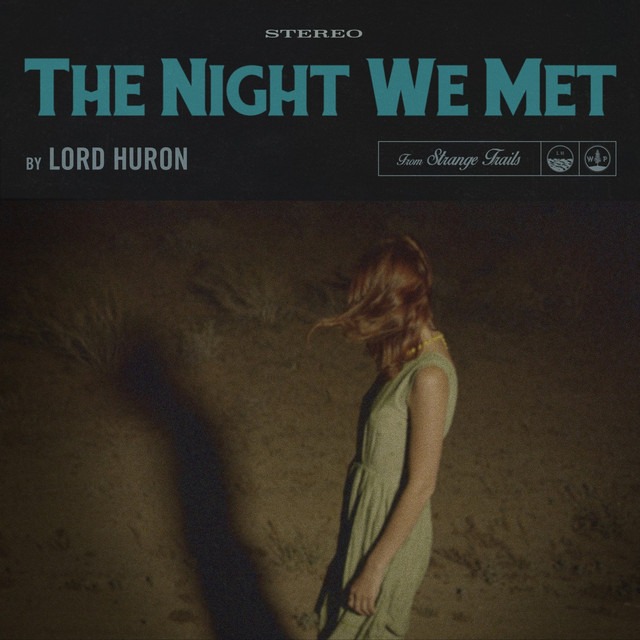
“The Night We Met” – Lord Huron
A ballad of regret so heavy it feels like you’re drowning in memories.
The State of Streaming Payouts in 2025 (And How to Maximize Them)
For independent musicians, streaming is not optional—it’s foundational. But in 2025, understanding how streaming translates into revenue is just as important as getting the streams themselves. With shifting royalty policies, varied platform formulas, and changing listener habits, artists who know the rules have a serious advantage.
Current Landscape
Here are the most up-to-date figures (or best estimates) for streaming-platform payouts per stream, plus context. These are averages; your own earnings may differ based on contracts, listeners, geography, etc.
Platform
Approximate Payout per Stream (USD)
Notes / Key Variables
Spotify
~$0.003 to $0.005
Premium-user streams pay more; streams must be at least 30 seconds; Spotify requires a minimum threshold (1,000 annual streams for a track) to trigger royalty payments.
Apple Music
~$0.006 to $0.01
All Apple Music is (mostly) premium (paid subscription) so no ad-supported free tier; payout depends on subscription plan and country.
YouTube Music / YouTube
Around ~$0.002
Monetized video/content ID views often pay less. Official channel and premium streams do better. User-generated content, ad revenue shares, and region make a big difference.
Tidal
~$0.012 to $0.015
Fewer users but higher per-stream payout; premium quality tiers matter.
Amazon Music
~$0.004 to $0.008
Paid subscription type, region, and distribution agreements affect the payout.
A 2024 industry report also noted that across platforms, per-1,000-stream payments for indie recording royalties averaged about US$3.41 globally, with Amazon Music leading (about US$8.80 per 1,000), then Apple Music (~US$6.20), YouTube (~US$4.80), and Spotify (~US$3.00).
The Variability Factor: Why No Two Songs Earn Alike
Even with “average payout” figures, many variables make each song’s revenue profile unique. Here are the main levers that cause big differences, often in ways independent artists can influence (or at least anticipate):
Listener location (country / region)
Streams from the U.S., UK, Germany, and Scandinavia tend to pay more because subscription fees are higher and ad revenue is stronger.
Streams from lower-income countries or free/ad-supported tiers often yield much less per stream.
Subscription tier vs. free / ad-supported listener
Premium / paid streams almost always deliver higher payouts. Platforms like Spotify have a large number of free / ad-supported users; those streams are monetized differently.
Some platforms (e.g. Apple Music) are entirely or almost entirely paid tiers, which boosts their per-stream average.
Platform royalty formula and policies
Some platforms use a pro rata / market-share model (you get a slice of the global revenue pool based on your share of streams). Others are exploring or using listener-based models.
Minimum thresholds exist: e.g. Spotify requires at least 1,000 yearly streams on a track to generate master-recording royalties.
Special programs or promotional features (Discovery Mode on Spotify, playlist boosting, etc.) may influence visibility but sometimes trade-off payouts.
Song length / completion / what counts as a stream
Many platforms count a “stream” after a listener has played 30 seconds. If listeners drop off before that, it may not register.
For very short tracks (or “functional noise”), some platforms now have policies that reduce payouts or change thresholds.
Rights ownership / distribution agreements
Who owns the master? Who owns the publishing? What share does the distributor or label take? If you’re independent and own your rights, more of what the platform pays comes to you.
Some platforms require or offer fees, or have tiers of distribution that reduce net payout.
Streaming volume + audience behavior
More streams = more total revenue, but marginal return can decrease (if more streams come from free users or from low-payout regions).
Listener repeat rate, completion, saves, playlist adds, and video/audio versions all contribute to algorithmic ranking, which then influences further streams.
5 Actionable Tips: How to Maximize Streaming Revenue in 2025
Here are concrete strategies you can use to improve both your per-stream rate and your total streaming revenue.
Release Strategy Optimization
Time releases to maximize initial momentum: drop on Fridays, align with local or regional events, use pre-save campaigns.
Release singles leading up to an album rather than dropping everything at once to keep consistent streaming activity.
Consider regionally targeted releases: push in high-payout markets first or focus on where you already have engaged listeners.
Playlist Pitching Techniques
Build relationships with curators (both editorial and independent). Tailor pitches: show stats (streams, listener demographics), explain why your track fits their playlist theme.
Use platforms’ built-in pitch tools properly (Spotify for Artists, Apple Music for Artists, etc.) well in advance.
After placement, promote heavily to sustain playlist momentum (share on social, encourage saves, adds). The more engagement after placement, the more algorithmic weight.
Platform-Specific Content Approaches
For YouTube and other video-enabled platforms: produce visuals, lyric videos, behind-the-scenes content, performance videos. These open additional revenue streams.
Consider high-quality audio formats that pay more (e.g. lossless or HiFi tiers).
Adapt content to local tastes and languages when possible; localized versions or remixes can expand reach into higher paying territories.
Audience Engagement Methods
Cultivate a direct fan base: email lists, Patreon, merch, live-streams. The more fans you can convert to premium subscribers or paid supporters, the better.
Encourage saves, shares, and follows — platforms track those signals, and they feed into discoverability.
Consider fan challenges or remix contests to boost user-generated content, which often extends reach on platforms like YouTube.
Data Analysis Practices
Track where your streams are coming from (geography, platform, playlist source, free vs premium) so you know which markets and platforms to prioritize.
Use the built-in analytics tools to spot patterns: which songs retain listeners, which tracks lead to followers, etc.
Test and iterate: try different release times, different types of content, even different artwork or metadata, and compare performance; double-down on what works.
Understanding streaming payouts in 2025 means seeing beyond “streams = dollars.” The per-stream rates you see quoted online are useful as benchmarks, but your actual earnings depend heavily on listener location, platform, subscription type, how many people stick around, what rights you own, and how you manage your releases and promotion.
If you apply the right strategies—focusing releases smartly, getting onto playlists, tailoring content for platforms, engaging your audience, and keeping a sharp eye on your data—you don’t need millions of streams to make streaming a meaningful income source.
Looking ahead, more platforms are exploring listener-based payout models, transparency around free vs premium splits is increasing, and reforms to threshold rules may come. For independent artists, adaptability, data literacy, and rights ownership will remain more important than ever.
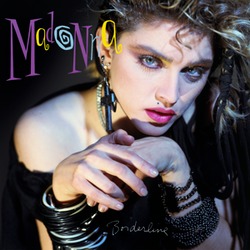
Some songs feel like the moment everything changes. For Madonna, “Borderline” was that song, the track that took her from rising talent to undeniable star, proving that pop could carry both soul and swagger.
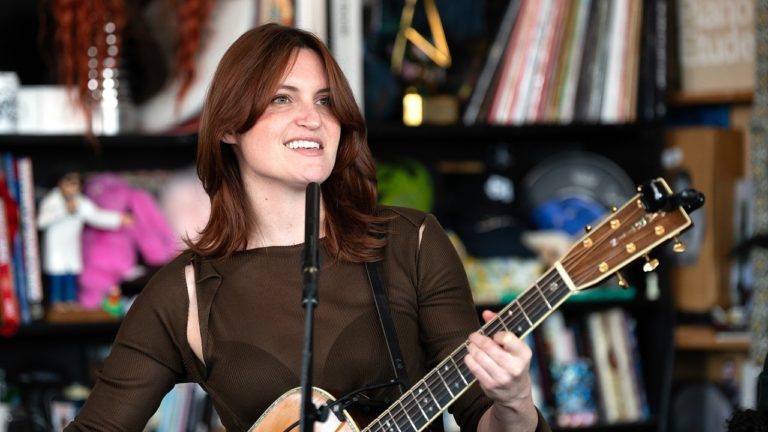
Every so often an artist walks into a room and changes the air around them. Katie Gavin does it with honesty, switching from violin to piano to guitar as if they were extensions of her own voice. At the Tiny Desk, vulnerability becomes electric.
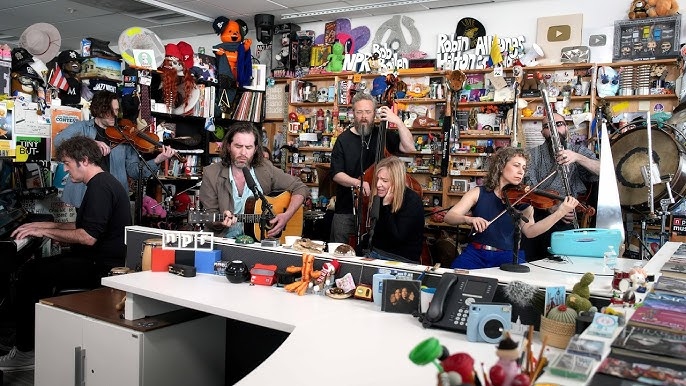
The rarest artists are the ones who can make silence feel alive. Beth Gibbons does just that, every note quivering with both pain and light, every lyric inviting you closer. At the Tiny Desk, her music feels less like performance and more like confession.
There’s something magnetic about a performer who can turn a small space into an entire universe. Carín León does exactly that, letting brass, strings, and raw emotion collide in a set that proves why Regional Mexican music is thriving right now.
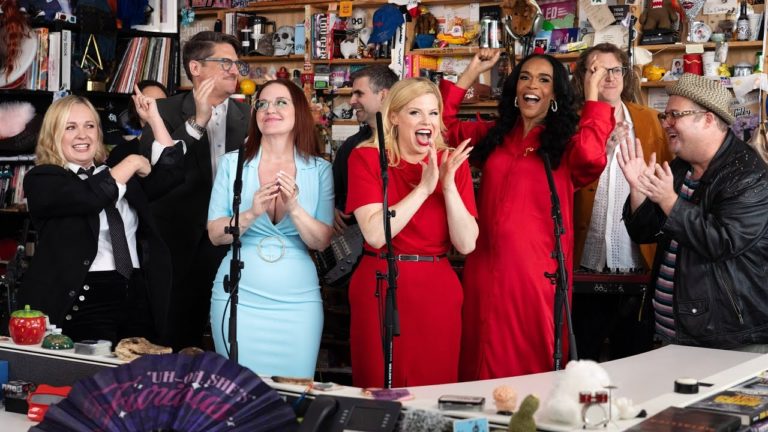
Sometimes theater is supposed to be serious. Sometimes it’s supposed to make you cry. But when a cult classic like Death Becomes Her becomes a musical, it’s supposed to make you laugh until you realize just how fun and weird art can really be.
The Who has announced the grand finale of their bittersweet The Song Is Over farewell tour of the U.S. and Canada. The last show will take place at Acrisure Arena in Greater Palm Springs on Wednesday, October 1st. Additionally, The Offspring is set to join The Who in Los Angeles next Friday, September 19th, at the iconic Hollywood Bowl.
Presales for the Palm Springs show start on Tuesday, September 16th, ahead of the general sale on Wednesday, September 17th.
The group’s North American run kicked off on August 16th in Sunrise, Florida. We attended night two in Newark, New Jersey, which saw Roger Daltrey deliver over 20 songs with “strength and forcefulness.”
The Who continued to thrill US fans throughout the 1970s before undertaking their first “farewell” tour in 1982, which featured two shows at the legendary Shea Stadium in New York. When the band returned to the road in the late 1990s and early 2000s, perhaps one of their greatest performances was at The Concert For New York City at Madison Square Garden shortly after the terror attack of 9/11; their three-song set in front of emergency workers and first responders was met with a primal roar from the audience. When Pete Townshend and Roger Daltrey were given the Kennedy Center Honors in December 2008 for their contributions to American culture, a tribute performance of “Baba O’Riley” was delivered with a full choir of New York firefighters in gratitude for The Who’s performance at the show.
Inducted into the Rock n’ Roll Hall Of Fame in 1990, the band has placed 27 top 40 singles in the United States and the United Kingdom and earned 17 Top Ten albums, including the 1969 groundbreaking rock opera Tommy, 1971’s pummeling Live At Leeds, 1973’s Quadrophenia, and 1978’s Who Are You. The Who debuted in 1964 with a trio of anthems “I Can’t Explain,” “The Kids Are Alright,” and “My Generation.” Since then, they have delivered hits such as “Baba O’Riley,” “Won’t Get Fooled Again,” “Pinball Wizard,” “Who Are You,” and “You Better You Bet.”
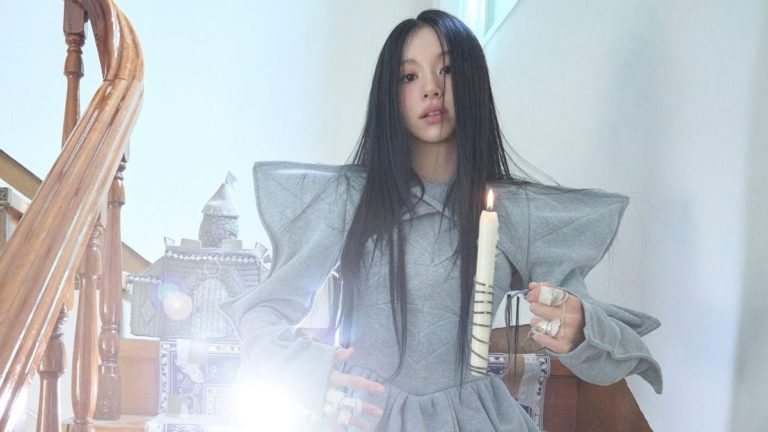
Global sensation Chaeyoung of Twice has officially released her debut solo album, Lil Fantasy, Vol. 1, via JYP Entertainment/Imperial/Republic Records. The project is now available on all digital and streaming platforms.
Chaeyoung becomes the fourth member of the iconic girl group to release a solo project, following the critical and commercial success of Jihyo’s Zone, Tzuyu’s abouTzu, and Nayeon’s two solo releases: Im Nayeon in 2022 and the recently released NA. Her debut solo project features Chaeyoung’s writing on every track, offering a deeply personal look into her inner world. The project highlights the many facets of her personality beyond her role in Twice, marking a bold step into her identity as a solo artist.
As the first installment in her Lil Fantasy series, the release signifies the beginning of Chaeyoung’s artistic journey – one that reflects not only her growth as a performer, but also her evolving voice as a songwriter and creative force. The highly anticipated focus track, “Avocado,” sets the tone for the album with its playful melody and vibrant energy. Accompanied by a captivating music video, the track draws audiences into Chaeyoung’s whimsical world, highlighting her artistry and unique creative vision.
The album showcases a diverse range of sounds, from the R&B-infused “Ribbons,” featuring Y2K92, to emotionally raw tracks like “BF” and “그림자 놀이 (Shadow Puppet),” offering listeners an intimate glimpse into the complexities of Chaeyoung’s life. Closing out the album is the fan-favorite “My Guitar,” the very first song Chaeyoung ever wrote. Originally performed during her solo set on Twice’s Ready To Be Tour, the track serves as a heartfelt and fitting conclusion to the project.
Over the last few years, Over has continued to make her mark on the global music scene as a member of Twice, one of K-pop’s most influential and chart-topping groups. Most recently, Twice made history as the first K-pop girl group to headline the iconic Lollapalooza festival in Chicago. Their groundbreaking performance captivated tens of thousands and solidified their place on the world stage.
Track Listing:
Avocado featuring Gliiico Band-Aid Shoot (Firecracker) Girl Ribbons featuring Sumin, Jbin of Y2K92 Downpour featuring Gliiico BF 그림자 놀이 (Shadow Puppet) 내 기타 (My Guitar) Lonely Doll Waltz (CD Only)