Home Blog Page 360

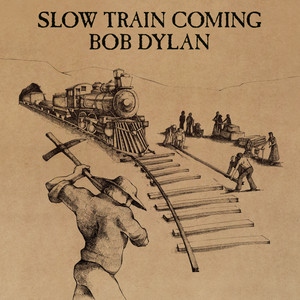
5 Surprising Facts About Bob Dylan’s ‘Slow Train Coming’

When Bob Dylan released Slow Train Coming in August 1979, he stood at a crossroads unlike any in his career. Fueled by a sudden religious awakening, the record fused gospel fire with Muscle Shoals groove, producing platinum sales and a Grammy-winning single. Beyond the headlines, the story of the album is full of fascinating details.

1. A Cross Sparked the Journey

At a San Diego concert in 1978, a fan tossed a silver cross onto the stage. Dylan pocketed it and later, in a Tucson hotel room, experienced what he described as a vision of Christ. That moment ignited the songs and spiritual urgency that became Slow Train Coming.

2. Dire Straits Meets Dylan

Mark Knopfler was invited after Dylan heard “Sultans of Swing.” The Dire Straits guitarist joined the Muscle Shoals sessions, adding clean, understated lines that wrapped Dylan’s new spiritual messages in sharp precision. His manager was surprised when every song turned out to be about God.

3. Jerry Wexler, the “Jewish Atheist,” at the Controls

Dylan chose legendary producer Jerry Wexler for the album’s big funk feel. Wexler joked about the irony of being asked to “get the Jesus sound,” but his deep soul pedigree gave the record its tight, polished Muscle Shoals backbone.

4. “When He Returns” Began as a Guide Vocal

Dylan originally planned for one of his backup singers to deliver the final track. After recording a guide vocal with Barry Beckett’s piano, Dylan reconsidered. He returned the next day, sang eight takes, and produced what critics call one of his most powerful studio performances.

5. Outtakes With Their Own Lives

Three songs didn’t make the final cut: “Trouble in Mind,” “Ain’t No Man Righteous,” and “Ye Shall Be Changed.” All resurfaced later, either on singles, compilations, or bootlegs, proving that Dylan’s Christian period was even more prolific than one album could contain.

Slow Train Coming combined Dylan’s newfound faith with Muscle Shoals muscle, gospel urgency, and some of the sharpest studio players of the era. With “Gotta Serve Somebody” leading the charge, it stands as one of Dylan’s boldest statements—an album that still shakes with conviction.

5 Surprising Facts About Cheap Trick’s ‘Dream Police’

When Dream Police landed in 1979, Cheap Trick were fresh from the global eruption of At Budokan. With platinum sales, strings of singles, and Tom Werman once again at the controls, the album stretched their sound into bigger, more complex territory. Beneath its high-energy hooks are stories that give it even more edge.

1. A Platinum Delay

The record was already finished by early 1979, but its release was held back to make room for the surprise success of At Budokan. By the time it hit shelves, Cheap Trick were bigger than ever, and Dream Police shot to #6 on the Billboard 200.

2. The Disco Pulse of “Gonna Raise Hell”

Rick Nielsen built “Gonna Raise Hell” on a driving disco beat. The band even planned a 12-inch dance version for clubs, and live shows stretched it into a ten-minute jam. With strings, pounding bass, and a “Detroit jungle beat,” it became one of their heaviest experiments.

3. Layers of Voices on “Voices”

Originally sung by Tom Petersson, the final version of “Voices” featured Robin Zander with six or seven vocal tracks stacked in the mix. The lush arrangement was impossible to recreate live. Adding another layer, Toto’s Steve Lukather quietly played lead guitar on the recording.

4. Boards Masquerading as Drums

To beef up the snare on “Gonna Raise Hell,” producer Tom Werman and Bun E. Carlos overdubbed the sound of two wooden boards hitting together. The trick gave the track extra punch, sliding right into the album’s wall of sound.

5. “Need Your Love” Built From the Stage Up

First performed live for At Budokan, “Need Your Love” was originally left off Heaven Tonight. When Werman heard the audience response, he made sure it landed on Dream Police. The studio version runs over seven minutes, channeling the Yardbirds and Beatles into a roaring, slow-build groove.

Dream Police fused Cheap Trick’s pop instincts with orchestration, disco grooves, and expansive jams, proving the band’s range in one platinum package. With unforgettable singles, experimental flourishes, and raw energy, it stands as a peak moment in their late-’70s run.

5 Surprising Facts About The Cars’ ‘Candy-O’

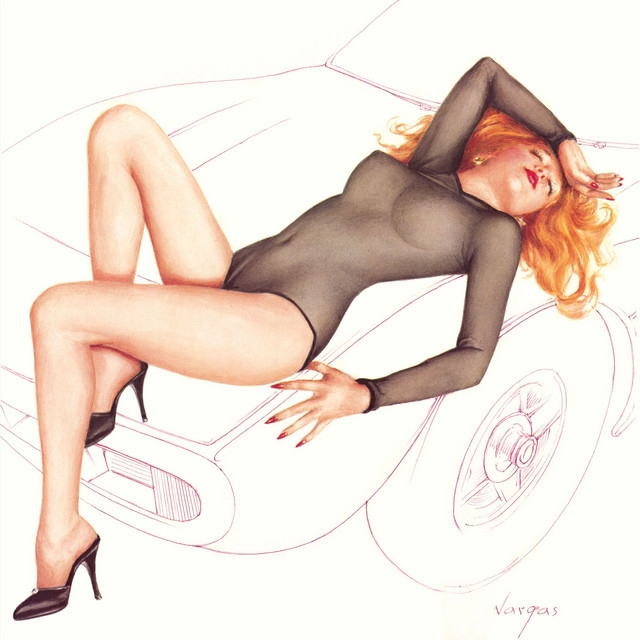
After the sleek precision of their debut, The Cars came roaring back with Candy-O in June 1979. It was bigger, bolder, and hit #3 on the Billboard 200, proving the band was no one-album wonder. With pin-up fantasy artwork and tightly wound synth-rock, Candy-O remains a snapshot of new wave cool—loaded with surprising backstories.

1. Democracy in Action

Unlike their debut, Candy-O was shaped by group votes. Ric Ocasek would bring in a rough demo, and if the band didn’t agree, the song was scrapped. “Double Life” almost didn’t make the cut, proving how collaborative this record really was.

2. Vargas Pulled Out of Retirement

The striking album cover came from famed pin-up artist Alberto Vargas. At 83, he had retired after his wife’s death, but was persuaded by his great-niece—who loved The Cars—to take on the commission. The result is one of rock’s most iconic covers.

3. A Model Named Candy on Candy-O

The Ferrari-draped figure on the cover was real model and actress Candy Moore. She went on to appear on Rick James’ Street Songs cover and other sleeves. She briefly dated drummer David Robinson, who also dreamed up the concept for the shoot.

4. A Hook from the Routers

The handclap-and-shout hook of “Let’s Go” was lifted from the Routers’ 1962 hit “Let’s Go (Pony).” Paired with Greg Hawkes’ Prophet-5 synth riff, it gave The Cars their first top 20 hit—and later became the 100th video ever aired on MTV.

5. “Dangerous Type” and a T. Rex Echo

Though never a single, “Dangerous Type” has become a cult fan favorite. Its slinky guitar riff mirrors T. Rex’s “Bang a Gong,” and its grand, swelling finale closes the record in the same cinematic way “All Mixed Up” capped their debut.

Candy-O was a neon-drenched expansion of The Cars’ vision, with democratic songwriting, sly humor, and one of the most memorable covers in rock history. Forty-five years later, it still gleams like chrome on the open highway.

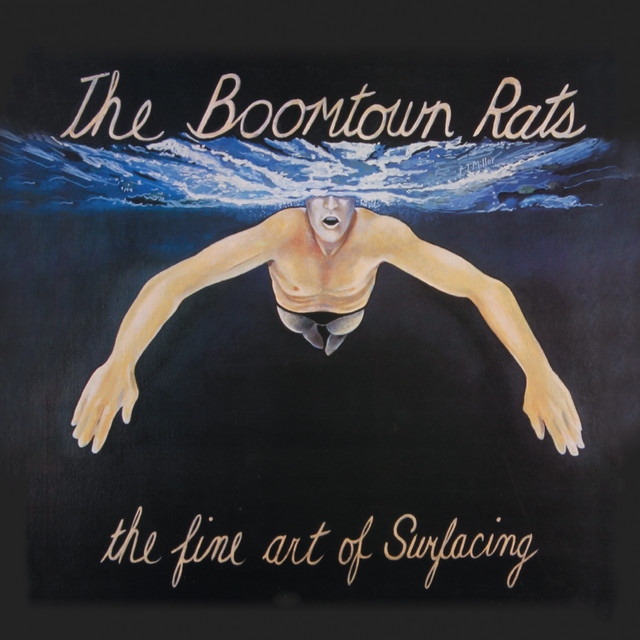
5 Surprising Facts About The Boomtown Rats’ ‘The Fine Art of Surfacing’

By 1979, the Boomtown Rats had already scored a #1 with “Rat Trap.” But The Fine Art of Surfacing turned them into household names, anchored by “I Don’t Like Mondays” and their sharp-eyed take on American culture. The record swings between satire, darkness, and playful absurdity, and its backstory is full of surprising turns.

1. A Telex Sparked “I Don’t Like Mondays”

Bob Geldof first saw the news of Brenda Ann Spencer’s school shooting on a telex machine during a radio interview in Atlanta. Her chilling line—“I don’t like Mondays”—hit Geldof instantly. By the time he got back to his hotel, he had already written the song’s unforgettable opening line.

2. Apple Inspired the Lyrics

The opening line about a “silicon chip” was a wink to Geldof’s connection with Apple. Steve Jobs had previously asked the Rats to perform for the company, and the lyric slipped technology into a song about senseless violence, making it one of the eeriest pop crossovers of the era.

3. A Greenpeace Rally Found Its Way In

“Someone’s Looking at You” paints a picture of surveillance culture, but its roots were personal. Geldof referenced his appearance at a Greenpeace anti-whaling rally in London’s Trafalgar Square. A line about “saving some fish” became a sly nod to activism hidden inside a chart hit.

4. The Top of the Pops Strike Hurt “Diamond Smiles”

When the band released “Diamond Smiles,” a song about a debutante’s tragic suicide, it climbed the charts but stalled at #13. The Rats later suggested the single might have gone higher if not for a strike by TV lighting technicians that limited Top of the Pops exposure.

5. Geldof Once Planned “Mondays” as a B-Side

“I Don’t Like Mondays” was nearly buried. Geldof thought of it as a throwaway flip until the band’s U.S. tour proved audiences reacted strongly. It became their biggest international hit, winning Ivor Novello Awards for both Best Pop Song and Outstanding British Lyric.

The Fine Art of Surfacing was restless, theatrical, and unafraid to veer from gallows humor to political unease. It captured the Boomtown Rats at their sharpest, combining wit, tragedy, and hooks that still echo decades later.

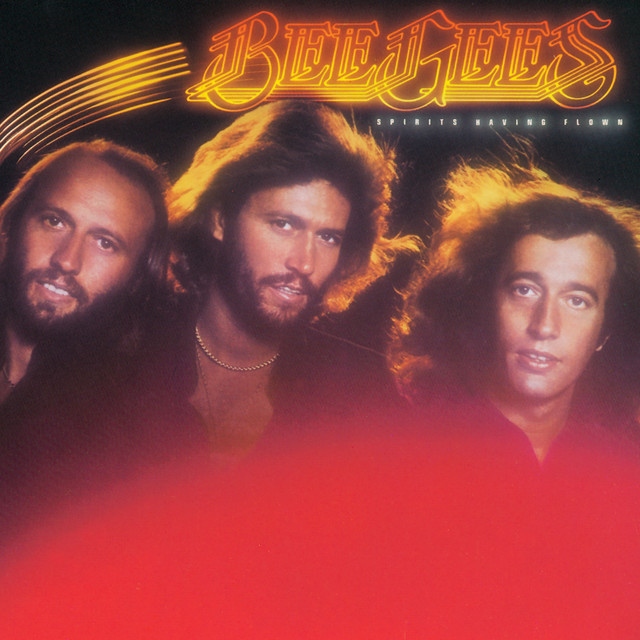
5 Surprising Facts About The Bee Gees’ ‘Spirits Having Flown’

When the Bee Gees released Spirits Having Flown in February 1979, they were riding the tidal wave of Saturday Night Fever. With three consecutive #1 singles, sold-out stadiums, and 20 million copies of the album flying off shelves, it was the crown jewel of their disco-era reign. Yet behind the falsettos and glittering grooves, the album carries hidden stories worth celebrating.

1. Barry’s Studio Marathon

Producer Albhy Galuten recalled that the sessions were powered mostly by Barry Gibb, Karl Richardson, and himself pulling long nights at Criteria Studios. Barry even overdubbed many of the harmonies himself, layering stacks of falsetto and chest voice until the songs shimmered like glass.

2. Robin’s Quietest Album

Robin Gibb, usually a commanding voice, took the lead only once—on “Living Together.” His falsetto lines are woven with Barry’s chest vocals. It became the Bee Gees album with his fewest lead vocals, a rarity in their catalog.

3. Chicago in the Room Next Door

While the Bee Gees worked on Spirits Having Flown, Chicago was recording Hot Streets in the studio next door. Their horn section—James Pankow, Walt Parazaider, and Lee Loughnane—wandered in to play on tracks, giving the record a brassy punch. In return, the Bee Gees guested on Chicago’s “Little Miss Lovin’.”

4. The Homemade Explosion of “Tragedy”

The climax of “Tragedy” explodes with a blast no one had ever heard before. Barry Gibb created it by blowing air through his cupped hands into a microphone, which was then run through a product generator alongside a smashed piano chord. The result: pure dynamite on vinyl.

5. The Prank Behind “Love You Inside Out”

During recording, the brothers slipped a joke line into the lyrics—“backwards and forwards with my cock hanging out”—and sent it to manager Robert Stigwood to see if he was paying attention. The released version, of course, keeps it clean with “heart hanging out.”

Spirits Having Flown wasn’t only a commercial giant—it was the last peak of the Bee Gees’ golden era before the tides turned in the early ’80s. Packed with meticulous harmonies, playful studio tricks, and three chart-topping singles, it remains one of their most dazzling achievements, proof of how high their wings could carry them.

5 Surprising Facts About AC/DC’s ‘Highway To Hell’

By the summer of 1979, AC/DC were road warriors living life at jet speed, blasting their blues-soaked hard rock through endless tours. Highway to Hell became the album that carried them into global superstardom, sharpening their sound while keeping the grit intact. Beneath the riffs and the swagger, the record hides some surprising stories.

1. The Producer Switch That Changed Everything

Atlantic Records wanted radio-friendly polish, which meant moving on from George Young and Harry Vanda. The band resisted at first, but after a disastrous attempt with Eddie Kramer, they sent a secret tape of six songs to Robert John “Mutt” Lange. He said yes—and history turned a corner.

2. Marathon Studio Sessions

Recording at London’s Roundhouse pushed AC/DC harder than ever before. Lange kept the band grinding for three months, sometimes fifteen hours a day. The endless repetition honed the riffs into weapons, teaching the band a new discipline that matched their ferocity.

3. Bon Scott’s Breathing Lesson

During the recording of “If You Want Blood,” Lange suggested Bon Scott control his breathing. Bon fired back, daring Lange to do it himself. Lange nailed it on the spot, shocking the room. Bon laughed, listened, and used the technique to unleash even more power on the mic.

4. The Cassette That Almost Got Away

The seed of “Highway to Hell” came from a riff and beat Malcolm and Angus laid down on a cassette in Miami. That tape was borrowed by someone in the studio, handed to a kid, and promptly unraveled. Bon Scott repaired it, rescuing the blueprint for one of rock’s immortal songs.

5. A Title Born on the Road

“Highway to Hell” wasn’t dreamed up in a boardroom. It came straight from Angus Young’s description of the band’s brutal touring schedule—city after city, night after night. The title captured the grind, the danger, and the thrill of living loud on the endless road.

Highway to Hell roared out of the speakers with riffs as tough as steel and hooks sharp enough to cut glass. It marked the last ride with Bon Scott and the first time AC/DC’s sound was sharpened for the world stage. Forty-six years later, the album still rolls like thunder down the endless blacktop.

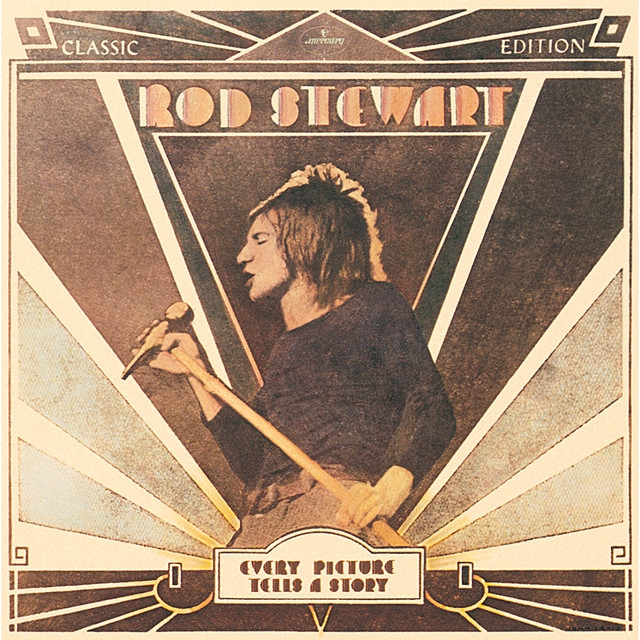
5 Surprising Facts About Rod Stewart’s ‘Every Picture Tells A Story’

Released in May 1971, Every Picture Tells a Story radiates a mix of rock, folk, and blues that feels both raw and timeless. With chart-topping singles and unexpected studio quirks, the album holds a treasure chest of details that make it shine even brighter.

1. A B-side That Took Over the Airwaves

“Reason to Believe” was released as the lead single, with “Maggie May” tucked on the flip side. Radio DJs chose the latter, and suddenly Stewart’s tale of youthful romance and rebellion was blasting from speakers across the world.

2. Cymbals Arrived After the Session

During the recording of “Maggie May,” drummer Micky Waller discovered there were no cymbals in the studio. The track was captured without them, and the shimmering crashes were later added as overdubs, giving the song its unusual rhythm feel.

3. The Forgotten Mandolin Credit

The album sleeve mentions “the mandolin player in Lindisfarne,” because Rod Stewart had forgotten Ray Jackson’s name. Jackson’s spirited playing became a signature sound on “Maggie May,” adding a sparkle that listeners still recognize instantly.

4. Faces Hidden in Plain Sight

Every member of the Faces contributed to the record, including Ronnie Wood and Ian McLagan. Due to contractual wording, the credits downplayed their involvement, but tracks like “(I Know) I’m Losing You” carried the full firepower of the band.

5. Two Takes Made History

“Maggie May” came together in only two takes. That lightning-fast recording session captured an energy that required little polishing, and the performance rolled straight into rock history.

Every Picture Tells a Story reached #1 in both the UK and US, all while “Maggie May” topped singles charts at the same time. Its blend of folk melodies, rock grit, and heartfelt storytelling secured Stewart’s place as one of the defining voices of the 1970s.

Just One Guy?! 10 Solo Acts Hiding Behind Band-Sounding Names

Music has a funny way of playing dress-up. Sometimes, one person shows up in the studio, but the name on the marquee makes you expect a whole marching band to tumble out of a van. Here are 10 of the best “solo-but-sounds-like-a-band” names—served with a wink.

Tame Impala
It sounds like a trippy psychedelic collective, right? Wrong—it’s Kevin Parker in his bedroom with a million pedals, layering grooves that do feel like an entire band in orbit.

Iron & Wine
Not a duo, not a rustic folk tavern—just Sam Beam and his soft voice, quietly crushing hearts with an acoustic guitar and a beard so lush it could be its own rhythm section.

Owl City
Spoiler: it’s not a bustling metropolis of owls running nightclubs and traffic lights. It’s Adam Young, who stayed up late tinkering on synths until “Fireflies” lit up the world.

Aphex Twin
The word “twin” really sells the illusion of at least two people—but nope, it’s Richard D. James, the ambient/techno genius who can out-weird an entire band on his own.

City and Colour
Sounds like a duo, maybe even an art-rock collective. In reality, it’s Dallas Green (get it? Dallas = City, Green = Colour). Once you know, you can’t un-know.

Nine Inch Nails
Plural! Industrial! Surely an army of musicians in black combat boots? Actually, it’s Trent Reznor (and now Atticus Ross), building universes of noise basically by himself.

The Weeknd
It really feels like a group name, doesn’t it? A Canadian boy band, maybe? Nope—just Abel Tesfaye, crooning and breaking streaming records all alone.

Five for Fighting
Sounds like a scrappy hockey team lineup. In reality, it’s John Ondrasik, sitting at a piano, writing heartfelt ballads that punch you in the gut with feeling.

Ghost
A stage full of masked “Nameless Ghouls” looks like a band—but behind the curtain, it’s Tobias Forge pulling the strings, writing the songs, and directing the spectacle.

Passenger
You’d expect a full bus of folks with guitars, but Passenger is just Mike Rosenberg. One man, one acoustic, and a knack for making stadiums sing along like it’s a campfire

The Truth About Playing to Five People And How to Make It Count

There’s a famous story about The Beatles playing to only 18 people at the Aldershot Club on December 9, 1961. Picture it: the soon-to-be biggest band in the world hauling their amps into a venue that looked more like a high school gym than a cultural touchstone, blasting through their set to a few dozen bewildered souls. Within a year, Beatlemania would be in full swing. The moral? A tiny crowd doesn’t mean a wasted night. It might mean you’re just one step away from everything changing.

Those “five people shows” (or the bartender and the dog) matter. Maybe even more than the packed ones. Let’s break it down.

The Booking Agent’s View: Every Show Is an Audition

From a booking perspective, a five-person crowd isn’t an embarrassment—it’s an opportunity. Venue owners and promoters are watching how you handle it. Do you pout through your set, or do you play like the room’s full? The pros know that consistency wins repeat bookings. Every small room is a stepping stone to the bigger ones.

The Manager’s Perspective: Superfans Start Small

A manager sees those five attendees not as a low turnout, but as five potential superfans. Careers aren’t built on millions of casual listeners; they’re built on a few hundred diehards who show up, buy the vinyl, and evangelize you to their friends. If you can convert a small crowd into lifelong supporters, you’re playing the long game exactly right.

The Publicist’s Angle: A Story in Disguise

From a PR standpoint, a tiny audience can be spun into a tale of grit and resilience. Journalists love an underdog narrative. “They played like it was Madison Square Garden, even though it was just a half-dozen fans and the bartender.” That’s character. That’s authenticity. And those are the kinds of stories that set you apart in a crowded field.

The Social Media Strategist’s Secret: Small = Shareable

And here’s the real trick—small shows create gold for social media. You can capture behind-the-scenes clips, film crowd singalongs (even if it’s just two voices), or grab a quirky TikTok of you dedicating a song to everyone by name. Authenticity beats polish, and nothing says authentic like laughing with five fans after the set and turning it into content that makes a thousand more wish they were there.

Five Ways to Turn a Five-Person Show Into Pure Gold

  1. Tap the show for social content.
    Record short clips of the set, backstage banter, or even a candid moment with fans. These human touches play beautifully online.
  2. Engage personally with every attendee.
    Shake hands, share stories, sign merch, take selfies. Those five fans will talk about you for weeks.
  3. Test new material.
    Want to try out a half-finished verse or rearrange a song? This is the room to do it—low stakes, high reward.
  4. Network with the venue staff.
    Bartenders, sound engineers, and promoters are often the gatekeepers. Treat them like VIPs—they’ll remember.
  5. Follow up with attendees.
    Collect emails, DM them later, thank them for coming. That personal touch turns strangers into repeat ticket buyers.

Here’s the truth: if you can make five people feel like the most important crowd in the world, you can make 5,000 feel it too. Every career in music starts in tiny rooms with awkward silences and echoing claps. What matters is what you do with those nights—how you perform, how you connect, and how you carry yourself.

Remember, The Beatles once looked out over a nearly empty club. Years later, they looked out over Shea Stadium. The gap between those two nights? Persistence, passion, and the ability to play every show like it matters. Because it does.

That’s the truth about playing to five people: sometimes, it’s the best gig you’ll ever have.

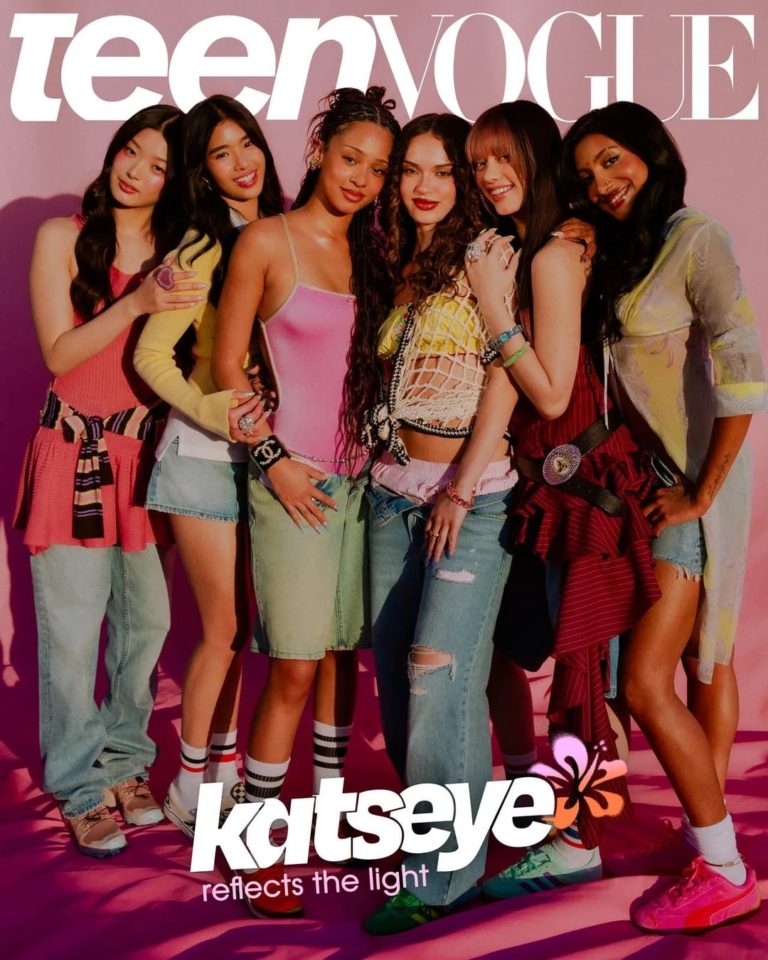
KATSEYE Shine on Teen Vogue Cover and Set to Appear at Teen Vogue Summit 2025

0

Today, Teen Vogue published their latest cover featuring global music superstars KATSEYE, and announced that the girl group will appear at the  annual Teen Vogue Summit taking place on September 20 in Los Angeles. 

Tickets to the full-day experience featuring today’s most influential cultural icons and change-makers are on sale now at https://events.teenvogue.com/.  Additional details will be announced in the coming months.

Highlights of KATSEYE’s cover story can be found below.

On their polarizing song “Gnarly”:

“It’s sort of good when people so strongly dislike something,” Lara Raj tells Teen Vogue. “Because I think it just shows that it makes people feel something strong, whether that’s dislike or they really like it.” Sophia Laforteza reveals that the group was similarly hesitant when they listened to the demo. “We screamed,” Yoonchae Jeung says, but they knew they would make it their own.

On combating negative feedback and social media haters:

“We learned that’s going to be a part of the position that we’re in,” Sophia says. “We’re always told by our team [that] if you’re a trendsetter or if you have this influence, a lot of the things that you’re going to bring into the world, people aren’t going to understand from the beginning.”

On maintaining their individuality through visual presentation:

“What resonated with the people so much about our visuals is how much we choose to enhance it and stay true to ourselves,” Sophia says. “As much as we love to try new things, every single one of us is true to ourselves, and we always make sure that we’re confident and we feel good. I think that’s what makes whatever you put on make others feel like they’re going to feel the impact and the intention.”

Leader Sophia Laforteza on celebrating her Filipino heritage:

“I want to be somebody who will never hide the fact that I’m Filipino,” she says. “I want to be loud about it … It means a lot when somebody embraces their culture, especially their Philippine culture and their heritage.”

Manon Bannerman on building up her confidence:

“Growing up in Switzerland, I always looked very different,” Manon, who has Ghanaian, Swiss, and Italian heritage, says. “Mostly all my life, I was the only Black girl in class and one of the only Black girls in the school. It was a struggle for me to embrace that [identity], and I got a lot of mean comments, especially in elementary school, about my hair. So I would only wear it in a bun, and I didn’t really know how to take care of it that well.”

“I started to braid my own hair because getting it braided in Switzerland is really expensive, and I couldn’t afford that,” she says, noting that she learned how on YouTube. “I would just braid my hair and try out different things. And in the beginning, I would literally sit in front of the mirror for like 14 hours braiding my hair. It looked really bad back then, but now I can braid my own hair.”

She also loves the interest in another cultural look she sports, her waist beads that she picked up while visiting a flea market at one of her father’s favorite spots in Ghana six years ago. “I was standing there for so long and looking at all of them, and I just fell in love.”

“It makes people curious, and I feel like it’s always a great conversation starter too,” she says, adding that she loves to educate people on the rich history of the country. The beads connect Manon to her roots, but she’s adopted a modern twist, too: “Old-school women in Ghana would not show [their waist beads]; only their husbands could see them,” she says. “But I’m a very modern girl, so it’s more about embracing it, and I think it looks cute. A cute part of my culture that I like to share.”

Daniela Avanzini on leaning into her Latin roots:

“I would speak Spanish all the time [growing up in Atlanta], and I grew up in that culture at home,” she says. As she began to embrace her heritage while campaigning for The Debut: Dream Academy, some commenters would debate over whether she’s truly a Latina since she was born in Georgia, not Latin America. “My mom’s entire side is all Cuban. I’ve been to Cuba many, many, many times, and I’m just so deep into the culture and know so, so much. It’s in my blood, and it is just a big, big part of who I am. I’m not going to let anybody take that away from me because that’s just how I grew up. Without that, I don’t know what I would be.”

Lara Raj on being unapologetic about representing her Indian culture onstage:

“Growing up in America, being brown is really not easy at all,” Raj says, explaining why she now unapologetically represents her Indian culture onstage. “And the jokes, the stereotypes, it was always such a thing. I feel like this has probably been the most important thing to me forever because this was also a big reason why I wanted to be an artist and be a pop star.”

Raj on how her queer identity informs her style:

“I always knew that I like girls, always. But I feel like I’m so straight-looking in a way, and I wanted to look more gay because I wanted girls to know that I like girls,” Lara says, struggling with an age-old femme problem. “It was so hard for me to pull girls because they just wouldn’t know.”

Now, Lara is getting “a little bit more comfortable” expressing some masculinity through her style, and she’s finding joy in the experimentation. “Some days I love to be super feminine and I love to show a bunch of skin and really be super girly,” she says. “And then some days I love to be more masculine, baggy clothes, and really have my tattoos out.”

Megan Skiendiel on growing up in the public eye and going through a phase of experimentation:

 “I don’t even really truly know who I am yet,” Megan says. “That’s a big reason why I’m still experimenting with everything, like my style, my hair, my makeup. It’s fun, but at the same time, it is scary just knowing that everyone’s watching. And especially me, I struggle with anxiety, so I’m like, ‘Oh, I wonder if people like this or not.’”

Yoonchae Jeung on what the other members have taught her:

“When I was living in Korea, I didn’t really know about things outside of Korea, outside of my life. After I came here, I started to know about so many cultures and so many thoughts because [the members] also came from different cultures. I’ve been learning English more from living together, and being confident,” she adds. “They always hype me up.”

On their dynamic as a group:

“You can clearly see that each of us has a different vibe going on, a different aesthetic,” Sophia says. “Yet, when you see us all collectively together, it makes sense. There’s that beautiful blend of it, and that’s why it’s so hard to put into words what it is. But when you see all of it together, it’s just like, ‘That’s KATSEYE!’”

On their current era:

Daniela says. “I think that we all have an idea of what we want us to go for, but the point is that it’s always changing and it’s this big mess, and with each era it changes and it develops. Definitely for this era, it’s edgy and it’s colorful and shows our grit and even more masculinity, because SIS was so feminine. So for right now, that’s what our vibe is.”