Home Blog Page 4

What Is a Music Publishing Deal and Do You Need One?

If you write songs, even just for yourself, even just on weekends, even just on your phone’s voice memo app at two in the morning, you are already in the publishing business. You just might not know it yet.

That is not a scary thing. It is actually kind of exciting once you understand what it means. So let’s walk through it together, because music publishing is one of those topics that gets talked about constantly in the industry but rarely gets explained in plain language. That ends today.


What Is Music Publishing?

Music publishing is the business of owning and administering the rights to songs. Not recordings. Songs. This distinction is one of the most important things a songwriter can understand, so let’s take a moment with it.

When a record label releases an album, they typically own the master recording. That is the specific performance captured in the studio, the actual audio file. But underneath every recording is a song, a composition, which consists of the melody and the lyrics. That composition is a completely separate piece of intellectual property, and it belongs to whoever wrote it.

Music publishing is the system that manages, licenses, and collects money for that composition every single time it is used in the world. When someone streams your song, plays it on the radio, puts it in a film or television show, covers it at a live venue, or plays it in a coffee shop, money is owed to the person who wrote it. Publishing is the infrastructure that makes sure that money finds its way back to you.

According to the National Music Publishers Association, global music publishing revenues reached approximately USD $4.3 billion in 2023, driven largely by continued streaming growth. That number has been climbing steadily for years. Songs are valuable, and the world is using more of them than ever.


The Two Kinds of Rights Inside Every Song

Every song actually contains two separate copyrights, and understanding the difference will save you a lot of confusion down the road.

The first is the musical composition copyright, which covers the melody and the lyrics. The second is the sound recording copyright, sometimes called the master, which covers the specific recorded version of the song.

Music publishing deals only with the composition copyright. And within that composition copyright, there are two main income streams that flow to songwriters.

The first is the writer’s share, which always belongs to the person who wrote the song and cannot be signed away. The second is the publisher’s share, which is the portion that a publishing company administers in exchange for their services. Together these two shares make up the full publishing royalty, and understanding who controls each one is at the heart of any publishing conversation.


Where Does the Money Actually Come From?

This is the part that surprises a lot of songwriters, because publishing royalties come from more places than you might expect.

Performance royalties are generated every time your song is performed publicly, whether that means radio airplay, a live concert, a streaming platform, or background music in a business. These royalties are collected by performing rights organisations, and which one is relevant to you depends on where you are based.

In Canada, that organisation is SOCAN. In the United States, songwriters and publishers affiliate with one of three organisations: ASCAP, BMI, or SESAC, with a newer entrant called GMR also operating in that space. In the United Kingdom, the organisation is PRS for Music. In Australia it is APRA AMCOS. In France it is SACEM. In Germany it is GEMA. In Japan it is JASRAC. In Sweden it is STIM. In the Netherlands it is Buma/Stemra. In Brazil it is ECAD. In South Africa it is SAMRO. Nearly every country in the world has its own performing rights organisation, and they share data and royalties with each other through reciprocal agreements, which is how a song written in Toronto can generate royalties when it is played on the radio in Japan.

Mechanical royalties are generated every time your song is reproduced, whether that is a physical CD, a digital download, or an on-demand stream. In Canada, mechanical royalties have historically been collected through agreements involving CMRRA, the Canadian Musical Reproduction Rights Agency. In the United States, mechanical royalties for physical and download sales have traditionally been administered through the Harry Fox Agency, while streaming mechanicals are now largely handled through the Mechanical Licensing Collective, known as the MLC, which was established under the Music Modernization Act of 2018. In the United Kingdom, mechanicals are handled by MCPS, which operates alongside PRS for Music. Many countries have their own equivalent mechanical collection societies, and in some territories the performing rights organisation and the mechanical rights organisation are combined into a single body.

Synchronisation royalties, commonly called sync fees, are paid when your song is licensed for use in a film, television show, advertisement, video game, or any other visual media. These can range from very modest amounts to life-changing sums depending on the placement, and they are one of the most sought-after income streams in the modern music industry. Unlike performance and mechanical royalties, sync fees are not collected by performing rights organisations. They are negotiated directly between whoever controls the publishing rights and whoever wants to use the song.

Print royalties cover the reproduction of sheet music and lyrics, a smaller stream than the others but still worth knowing about.

The important thing to understand is that all of these royalties exist whether you have a publishing deal or not. The question is simply how effectively they are being collected.


So What Does a Music Publisher Actually Do?

A music publisher is essentially a business partner for your songs. Their job is to help you make the most of your compositions, and that work falls into a few broad categories.

Administration is the foundation of everything. A publisher registers your songs with performing rights organisations around the world, tracks where and how they are being used, collects royalties from every territory, and makes sure the money gets to you. This sounds straightforward but the global royalty collection system is genuinely complex, and a lot of money gets left on the table by songwriters who do not have someone managing this process carefully. A song that is only registered with SOCAN but not with its equivalent organisations in other territories is a song that is not earning everything it could be earning.

Pitching and placement is where publishers can add significant value for the right songwriter. A publisher with good relationships in film, television, advertising, and other media can actively pitch your songs for sync opportunities that you would never have access to on your own.

Co-writing and creative development is something the best publishers take seriously. Connecting you with other writers, getting you into sessions, and helping you grow as a songwriter is part of the relationship at many publishing companies.

Licensing is the process of granting permission for others to use your songs and negotiating the terms and fees involved. A good publisher handles this on your behalf so you can focus on writing.


What Kinds of Publishing Deals Exist?

There are a few main structures you will encounter, and they vary quite a bit in terms of what you give up and what you get in return.

A full publishing deal is the traditional arrangement where you assign your publisher’s share of copyright to the publishing company for a period of time. In exchange, the publisher provides an advance against future royalties, actively pitches your songs, and handles all administration. This is the deal that historically came with the most support but also the most significant transfer of rights.

A co-publishing deal is a more songwriter-friendly version of the full publishing deal. In this arrangement, you retain a portion of the publisher’s share, often fifty percent, while the publisher retains the other portion. You still receive an advance and the full suite of publisher services, but you hold onto more of your long-term rights. Co-publishing deals have become increasingly common as songwriters have become more informed about the value of what they are signing away.

An administration deal is the lightest touch option and has become very popular in the modern era. Here, you retain full ownership of your copyrights entirely. You simply hire a publisher to administer your catalogue, meaning they handle registration, collection, and licensing on your behalf, in exchange for a percentage of royalties collected, typically somewhere between ten and twenty-five percent. You give up nothing permanently and can move on when the term expires.

A self-publishing arrangement means you handle everything yourself, either directly or through a service. Platforms like DistroKid, TuneCore, and Songtrust offer varying levels of publishing administration support for independent artists who want to stay in full control. Songtrust in particular is worth mentioning here because it specialises in global publishing administration, registering your songs with collecting societies in over 245 territories so that your royalties are being captured wherever your music is being heard. This requires more attention and effort on your part but keeps all the money and all the rights in your hands.


Do You Actually Need a Publishing Deal?

This is the honest answer: it depends on where you are in your career and what you need right now.

If you are early in your journey as a songwriter, the most important thing you can do is make sure you are registered with your local performing rights organisation. In Canada that is SOCAN. In the United States, choose between ASCAP, BMI, or SESAC and register there. In the UK, join PRS for Music. In Australia, join APRA AMCOS. Wherever you are in the world, find your local PRO and get your songs registered. It is almost always free for songwriters to join, and there is simply no good reason to delay it.

You do not need to rush into any deal. Take the time to understand what your songs are worth and what you actually need help with before you sign anything.

If your songs are getting placed in media, being covered by other artists, or getting meaningful streaming numbers, a publishing administrator can be genuinely useful even if you are not ready for a full publishing relationship. Getting your catalogue properly registered across multiple territories and making sure you are capturing royalties from around the world is worth the administrative percentage many times over. A song generating streams in Germany that is not registered with GEMA is a song leaving money on the table.

If you are a prolific songwriter who wants to be in rooms with other writers, who wants someone actively working to place your songs, and who is ready for a real creative and business partnership, a co-publishing or full publishing deal with the right company could be a wonderful thing. The key words there are the right company. This is a relationship, and like any good relationship, fit and trust matter enormously.

If you sign a publishing deal, a few things are worth paying close attention to. Understand exactly what portion of your copyright you are assigning and for how long. Know what happens to those rights when the deal term ends, this is called reversion and it varies significantly from contract to contract. Make sure the advance being offered reflects a realistic expectation of what your catalogue will earn. And please, talk to a music lawyer before you sign anything. In Canada, organisations like Music Publishers Canada and the Songwriters Association of Canada are excellent starting points for finding the right guidance. In the United States, the National Music Publishers Association and the Songwriters Guild of America offer resources and referrals. In the UK, the Music Publishers Association and the Musicians’ Union can point you in the right direction.


A Few Things Worth Knowing

One of the most common mistakes songwriters make is failing to register their songs promptly and properly. Registration with your performing rights organisation is free and straightforward, and there is simply no reason to delay it. Every unregistered song is a song that may not be earning what it should. And if your music is reaching listeners in other countries, it is worth understanding whether those territories have their own registration requirements or whether your home PRO handles the international collection on your behalf through its reciprocal agreements.

Split sheets are another thing worth taking seriously from the very beginning. Any time you write a song with another person, document the ownership split in writing immediately, before the song goes anywhere. Disputes over songwriting splits are one of the most common and most painful conflicts in the music business, and a simple split sheet signed by everyone involved can prevent years of headaches.

The music publishing landscape has changed significantly in recent years. Streaming has reshaped royalty flows in ways that are still being sorted out at the policy and legislative level in countries around the world. The Music Modernization Act in the United States was a meaningful step forward for how streaming mechanicals are collected and distributed. Similar conversations are happening in Canada, the European Union, and elsewhere. Artificial intelligence is raising new questions about authorship and rights that the industry is only beginning to grapple with. And the catalogue acquisition boom of the past several years, with major funds and investors paying enormous multiples for the publishing rights to proven song catalogues, is a reminder of just how valuable songs can be over the long term.

All of which is to say: your songs are worth understanding, worth protecting, and worth building a proper business around. You do not need to have it all figured out on day one. But you do need to start paying attention. Because the money is there if you know where to look for it.
Squeeze Celebrate 50 Years With a Major North American Tour Alongside Adam Ant and Haircut 100

0

Fifty years in, Squeeze are having one of the most creatively alive moments of their career, and they’re bringing it to North America in a big way.

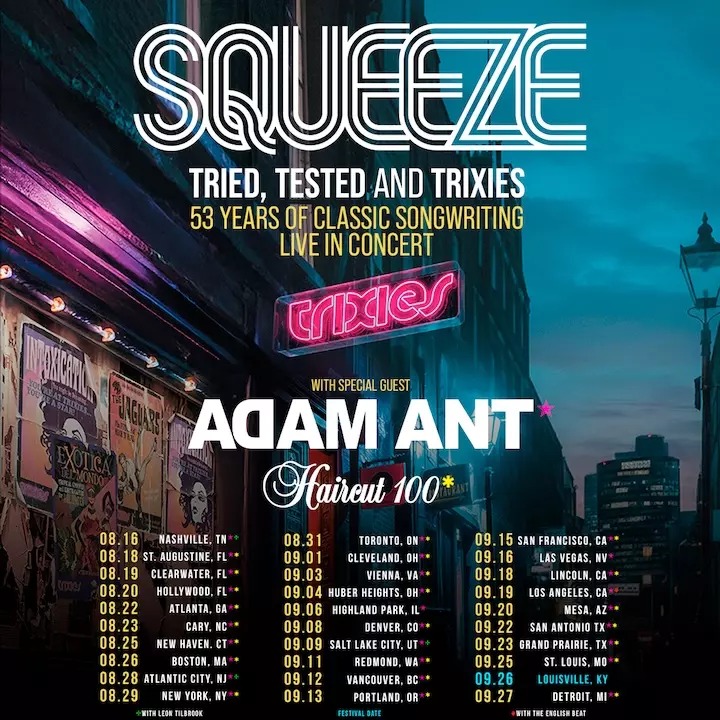
The legendary British hitmakers launch a major fall tour August 16, with Adam Ant and Haircut 100 joining them on most dates and Leon Tilbrook appearing at select shows. The Hollywood Bowl date on September 19 features Adam Ant and The English Beat alongside Squeeze. The run opens at the Ryman Auditorium in Nashville and works its way coast to coast through September 27 in Detroit, hitting Radio City Music Hall, Wolf Trap, Ravinia Festival, Fiddler’s Green Amphitheatre and Bourbon & Beyond Festival along the way.

The tour arrives on the back of ‘Trixies,’ and the album’s story is genuinely remarkable. Drawn from songs Chris Difford and Glenn Tilbrook first wrote as teenagers in 1974, the record resurrects a long-shelved concept album set inside a fictional nightclub, complete with vivid characters and sharp observational detail that foreshadowed everything that would later make Squeeze essential. Produced by bassist Owen Biddle (The Roots, John Legend, Al Green), the album has drawn some of the strongest reviews of the band’s career. SPIN calls it “the duo’s personal masterpiece,” FLOOD hails Difford and Tilbrook as “one of the great songwriting duos of their time,” and Brooklyn Vegan notes the album captures their signature style already fully formed, “complex melodies that nonetheless sound effortless.”

Squeeze built their reputation on classics like “Up The Junction,” “Tempted” and “Cool For Cats,” a songbook that has influenced artists as wide-ranging as Erykah Badu and The Shins, and a revitalized live lineup has turned that catalog into one of the strongest live shows currently on the road. With more new material already in the works, this North American run marks a band in genuine forward momentum.

Tickets for most dates are on sale now. The Ravinia Festival, Hollywood Bowl and Bourbon & Beyond Festival dates are on sale now.

Squeeze 2026 North American Tour Dates:

August 16 — Nashville, TN — Ryman Auditorium (with Leon Tilbrook)

August 18 — St Augustine, FL — St Augustine Amphitheatre

August 19 — Clearwater, FL — The BayCare Sound

August 20 — Hollywood, FL — Hard Rock Live

August 22 — Atlanta, GA — Fox Theatre

August 23 — Cary, NC — Koka Booth Amphitheatre

August 25 — New Haven, CT — Westville Music Hall

August 26 — Boston, MA — MGM Music Hall at Fenway

August 28 — Atlantic City, NJ — Bogata Resort Spa & Casino (with Leon Tilbrook)

August 29 — New York, NY — Radio City Music Hall

August 31 — Toronto, ON — RBC Amphitheatre

September 1 — Cleveland, OH — Jacobs Pavilion

September 3 — Vienna, VA — Wolf Trap

September 4 — Huber Heights, OH — The Rose Music Hall

September 6 — Highland Park, IL — Ravinia Festival (ON SALE NOW)

September 8 — Denver, CO — Fiddler’s Green Amphitheatre

September 9 — Salt Lake City, UT — Capitol Theatre (with Leon Tilbrook)

September 11 — Redmond, WA — Marymoor Live

September 12 — Vancouver, BC — Queen Elizabeth Theatre

September 13 — Portland, OR — Arlene Schnitzer Concert Hall

September 15 — San Francisco, CA — The Warfield

September 16 — Las Vegas, NV — The Wynn

September 18 — Lincoln, CA — The Venue at Thunder Valley Casino Resort

September 19 — Los Angeles, CA — Hollywood Bowl (with Adam Ant and The English Beat, ON SALE NOW)

September 20 — Mesa, AZ — Mesa Amphitheatre

September 22 — San Antonio, TX — Majestic Theatre

September 23 — Grand Prairie, TX — Texas Trust CU Theatre

September 25 — St Louis, MO — St Louis Music Park

September 26 — Louisville, KY — Bourbon & Beyond Festival (ON SALE NOW)

September 27 — Detroit, MI — Masonic Temple

Adam Ant and Haircut 100 appear on all dates except those marked with Leon Tilbrook

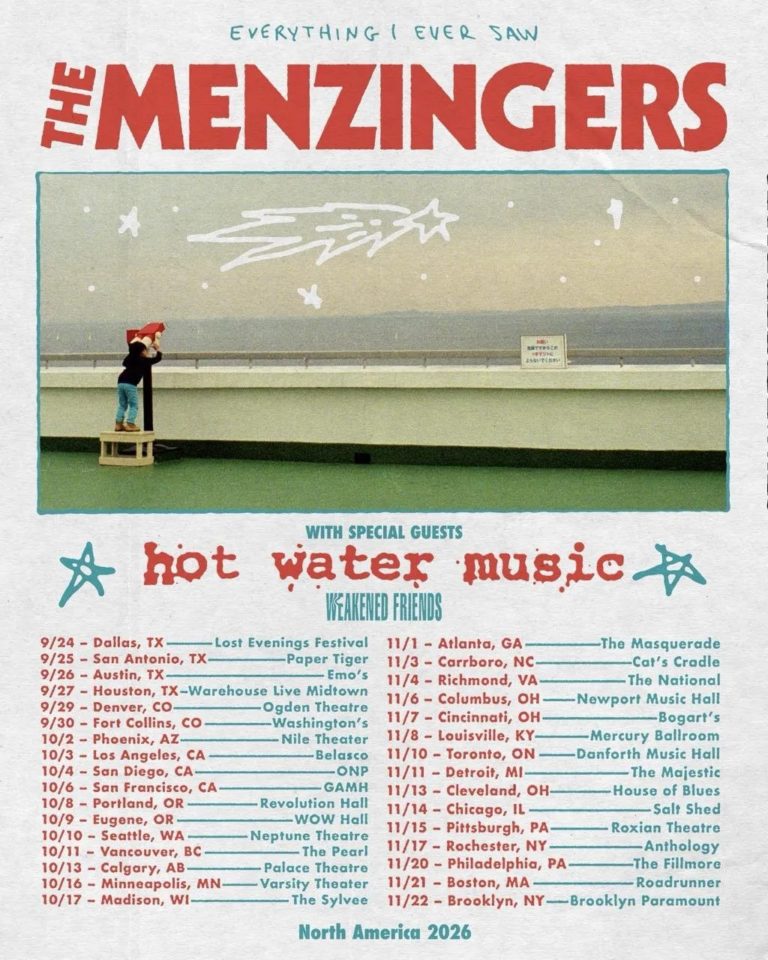
The Menzingers Announce North American Tour Behind New Album ‘Everything I Ever Saw’

0

Twenty years in and The Menzingers are operating with a clarity and drive that makes ‘Everything I Ever Saw’ feel like one of the most important records of their career.

The Scranton-bred punk institution has announced a full North American headline tour in support of the new album, due July 17 via Epitaph, with special guests Hot Water Music and Weakened Friends along for most of the ride. The run kicks off September 24 at Frank Turner’s Lost Evenings Festival in Dallas and closes November 22 at Brooklyn Paramount, with a special hometown finale November 20 at The Fillmore in Philadelphia, where the band takes over the entire complex with local favorites Spraynard performing ‘Funtitled’ in full, plus Mercy Union and Five Hundred Bucks rounding out a stacked one-night event. Ticket presales are live now at 12:00 PM ET, with general on-sale May 8 at 10:00 AM local time.

Lead single “Chance Encounters” is out now across all streaming platforms, accompanied by an official music video directed by Britain Weyant and the band. It follows previously released single “Nobody’s Heroes” and sets the tone for an album that draws from marriage, divorce, loss and growth with the kind of directness that has always made The Menzingers essential. “Twenty years in and this is the most connected we’ve felt to what we’re doing,” says vocalist and guitarist Tom May. “With Everything I Ever Saw, we wanted to lean into all of it, head on. The whole damn thing.”

‘Everything I Ever Saw’ was recorded with Grammy Award-winning producer Will Yip (Turnstile, Mannequin Pussy) at his new Memory Music Studios in Philadelphia, and the album is available for pre-order now with several limited edition vinyl color variants in the band’s store.

The Menzingers 2026 North American Tour Dates:

September 24 — Dallas, TX — Lost Evenings Festival (Festival Date)

September 25 — San Antonio, TX — Paper Tiger

September 26 — Austin, TX — Emo’s

September 27 — Houston, TX — Warehouse Live Midtown

September 29 — Denver, CO — Ogden Theatre

September 30 — Fort Collins, CO — Washington’s

October 2 — Phoenix, AZ — Nile Theater

October 3 — Los Angeles, CA — The Belasco

October 4 — San Diego, CA — The Observatory North Park

October 6 — San Francisco, CA — Great American Music Hall

October 8 — Portland, OR — Revolution Hall

October 9 — Eugene, OR — WOW Hall

October 10 — Seattle, WA — Neptune Theatre

October 11 — Vancouver, BC — The Pearl

October 13 — Calgary, AB — Palace Theatre

October 16 — Minneapolis, MN — Varsity Theater

October 17 — Madison, WI — The Sylvee

November 1 — Atlanta, GA — The Masquerade

November 3 — Carrboro, NC — Cat’s Cradle

November 4 — Richmond, VA — The National

November 6 — Columbus, OH — Newport Music Hall

November 7 — Cincinnati, OH — Bogart’s

November 8 — Louisville, KY — Mercury Ballroom

November 10 — Toronto, ON — Danforth Music Hall

November 11 — Detroit, MI — The Majestic Theatre

November 13 — Cleveland, OH — House of Blues

November 14 — Chicago, IL — The Salt Shed

November 15 — Pittsburgh, PA — Roxian Theatre

November 17 — Rochester, NY — Anthology

November 20 — Philadelphia, PA — The Fillmore (with Hot Water Music, Weakened Friends, Spraynard performing ‘Funtitled’ in full, Mercy Union and Five Hundred Bucks)

November 21 — Boston, MA — Roadrunner

November 22 — Brooklyn, NY — Brooklyn Paramount

Grateful Dead’s Historic ‘Steal Your Face’ Returns With a 50th Anniversary Remaster on June 26

0

Fifty years on, ‘Steal Your Face’ is getting the treatment it deserves.

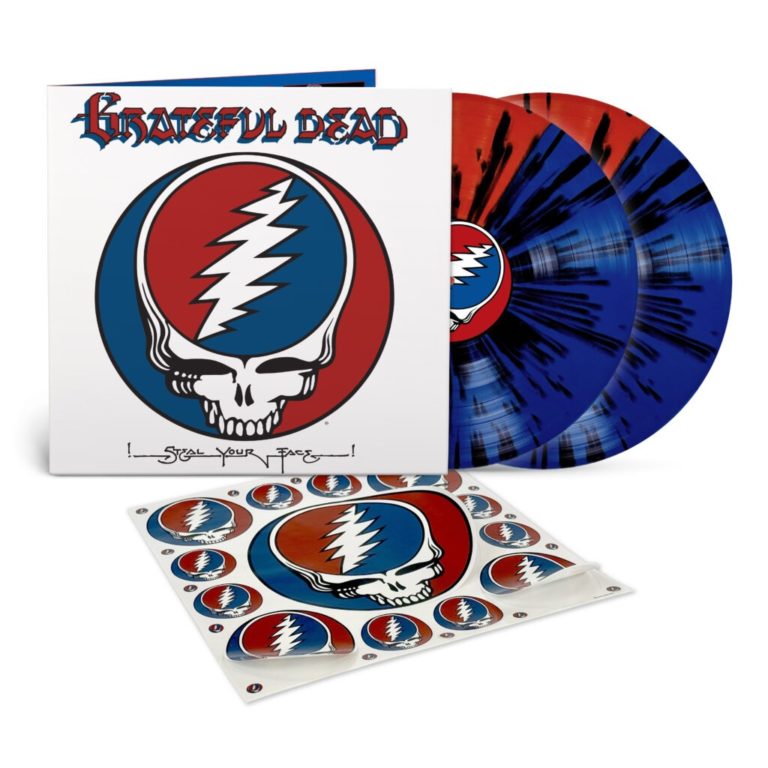
The Grateful Dead’s 1976 double-live album, drawn from the legendary five-show “farewell” run at Winterland in October 1974, arrives June 26 as a newly remastered 2LP set marking its 50th anniversary. The edition was mastered by Grammy Award-winning engineer David Glasser at Airshow Mastering, sourced from Plangent Processes restored and speed-corrected tapes, with lacquers cut by Chris Bellman at Bernie Grundman Mastering. The vinyl arrives in the band’s official Pantone colors, Grateful Red and Stealie Blue, with an exclusive “Off Your Head” variant available through Dead.net splitting the colors half-and-half with black splatter across both discs. A remastered version of “Black-Throated Wind” is available to stream now ahead of the June 26 release, which is open for pre-order today.

The story behind ‘Steal Your Face’ is as compelling as the music. The Winterland run marked the end of the band’s Wall of Sound era, the most ambitious live audio system ever deployed at the time, a 75-ton modular structure requiring four semi-trailers and 21 crew members that revolutionized concert audio as essentially the first large-scale line array in modern concert history. After those final shows, Jerry Garcia spent the next three years editing The Grateful Dead Movie while Phil Lesh and Owsley “Bear” Stanley mined the 16-track tapes for a live record. The resulting album balanced road-tested rockers like “U.S. Blues” and “Promised Land” with standout solo album tracks, including “Sugaree” and “Black-Throated Wind,” and choice covers in “Big River” and “El Paso.” It arrived in June 1976, the same month the band returned to the road. “Black-Throated Wind is widely considered one of Bob Weir’s finest compositions,” says Grateful Dead legacy Manager and Audio Archivist David Lemieux. “This is the definitive Grateful Dead recording of this gem.”

‘Steal Your Face’ also holds the distinction of being the last album released on the band’s independent Grateful Dead Records label, closing out one of the most creatively and logistically ambitious chapters in rock history.

‘Steal Your Face’ (50th Anniversary Remaster) 2LP Tracklist:

Side One

“Promised Land”

“Cold Rain And Snow”

“Around And Around”

“Stella Blue”

Side Two

“Mississippi Half-Step Uptown Toodeloo”

“Ship Of Fools”

“Beat It On Down The Line”

Side Three

“Big River”

“Black-Throated Wind”

“U.S. Blues”

“El Paso”

Side Four

“Sugaree”

“It Must Have Been The Roses”

“Casey Jones”

German Folk-Pop Duo Milky Chance Deliver a Mesmerizing Virtual Set for Mexico’s Tecate Pa’l Norte Festival

0

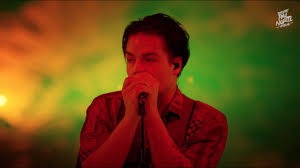
German alternative folk-pop duo Milky Chance took the virtual stage for Mexico’s Tecate Pa’l Norte Festival on April 17, 2021, delivering a full concert to viewers across more than 15 countries, and the performance holds up beautifully, Clemens Rehbein’s raspy, distinctive vocals and Philipp Dausch’s production instincts translating the band’s laid-back yet irresistibly danceable sound into an intimate experience that needed no physical crowd to connect, with fan favorites “Stolen Dance,” “Cocoon” and “Down By The River” all landing with real warmth and groove.

Todd Rundgren Expands the ‘Damned If I Do’ Tour With New U.S. and European Dates

0

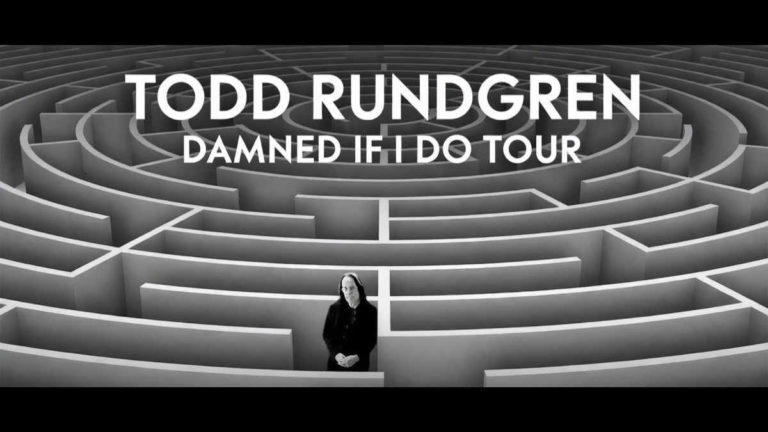
Todd Rundgren’s 2026 Damned If I Do Tour just got significantly bigger.

The legendary producer, songwriter and guitarist has added a major new slate of dates spanning additional U.S. cities and extending the run across the UK and Europe. The first leg kicks off June 11 at the Arcada Theatre in St. Charles, Illinois and runs through July 19 at the Cabot Theater in Beverly, Massachusetts. A second leg launches August 8 at Bergen PAC in Englewood, New Jersey and closes September 21 at the Paradiso Main Hall in Amsterdam, with stops in London, Bristol, Manchester, Glasgow, and Denmark along the way.

Rundgren’s band for the tour is a strong one: Gil Assayas on keys, Bruce McDaniel on guitar, Prairie Prince on drums, Bobby Strickland on horns and Kasim Sulton on bass. The setlist, as always, will draw from one of rock’s most eclectic and beloved catalogs. “It’s always a challenge for me because my audience is so diverse,” Rundgren says. “I never know what they’re in the mood for. I want to make sure we have all the musical ammunition we need to satisfy the spectrum.”

Fan presale for new dates is live now at 10 AM ET with password VICTORY26, with general on-sale Friday, May 8 at 10 AM local time.

Todd Rundgren “Damned If I Do” Tour Dates:

June 11 — St. Charles, IL — Arcada Theatre

June 12 — Des Plaines, IL — Des Plaines Theatre

June 14 — Waukee, IA — Vibrant Music Hall

June 16 — Dallas, TX — Majestic Theatre

June 17 — Houston, TX — House of Blues

June 19 — San Antonio, TX — Tobin Center for the Performing Arts

June 20 — Lake Charles, LA — Golden Nugget

June 22 — Atlanta, GA — Buckhead Theatre

June 23 — Ft. Lauderdale, FL — The Parker

June 25 — Clearwater, FL — Capitol Theatre

June 26 — Clearwater, FL — Capitol Theatre

June 28 — Ocala, FL — Circle Square Cultural Center

June 30 — Charleston, SC — Charleston Music Hall

July 1 — Durham, NC — Carolina Theatre of Durham

July 3 — Pelham, TN — The Caverns

July 5 — Columbus, OH — KEMBA Live!

July 6 — North Tonawanda, NY — Riviera Theatre

July 8 — Williamsport, PA — Community Arts Center

July 9 — Washington, DC — Warner Theatre

July 11 — Glenside, PA — Keswick Theatre

July 12 — Glenside, PA — Keswick Theatre

July 15 — Patchogue, NY — Patchogue Theatre

July 16 — Tarrytown, NY — Tarrytown Music Hall

July 18 — Lincoln, RI — Bally’s Twin River Casino

July 19 — Beverly, MA — Cabot Theater

August 8 — Englewood, NJ — Bergen PAC

August 9 — Ridgefield, CT — Ridgefield Playhouse

August 11 — Ocean City, NJ — Ocean City Music Pier

August 12 — Red Bank, NJ — Count Basie Theater

August 14 — Pittsburgh, PA — Stage AE

August 15 — Newport, KY — MCL Pavilion

August 17 — Kalamazoo, MI — Bells Beer Garden

August 18 — Saginaw, MI — Temple Theatre

August 20 — Royal Oak, MI — Royal Oak Theatre

August 21 — Cleveland, OH — Agora Theater

August 23 — Ft. Wayne, IN — Clyde Theater

August 25 — Minneapolis, MN — Uptown Theatre

August 26 — Milwaukee, WI — Pabst Theatre

August 28 — Louisville, KY — Brown Theater

August 29 — St. Louis, MO — The Pageant

September 6 — Lorica, IT — Campo Sportivo

September 9 — London, UK — Cadogan Hall

September 10 — Bristol, UK — Bristol Beacon

September 12 — Manchester, UK — Opera House Manchester

September 13 — Glasgow, SCT — Theatre Royal Glasgow

September 18 — Aalborg, DK — Skraaen

September 19 — Helsingør, DK — Kulturvaerftet, The Culture Yard

September 21 — Amsterdam, NL — Paradiso Main Hall

Dance Gavin Dance Unveil Updated “The Robot With Human Hair, Pt. 3” Ahead of ‘Tree City Sessions 3’

0

Dance Gavin Dance are keeping the Tree City Sessions series moving, and the latest preview is a sharp one.

The Sacramento post-hardcore outfit have shared an updated version of “The Robot With Human Hair, Pt. 3,” originally from their 2008 self-titled album, as the second taste of the upcoming ‘Tree City Sessions 3.’ Vocalist Andrew Wells is direct about what the track means to him. “Growing up I was a huge fan of the Deathstar album, so being able to emulate Kurt and bring my own passion to this version of Robot 3 was truly an honor,” he says. The Tree City Sessions series has consistently given each lineup configuration a chance to reimagine the band’s deep catalog, and this installment is no different.

‘Tree City Sessions 3’ arrives May 22 via Rise Records digitally and through the label’s webstore, with full physical retail following June 19. A limited edition tour variant will be available at shows on the band’s upcoming North American tour from May 22 while stock lasts.

Nordischsound Proves Depeche Mode Was Made for the Commodore 64’s SID Chip

0

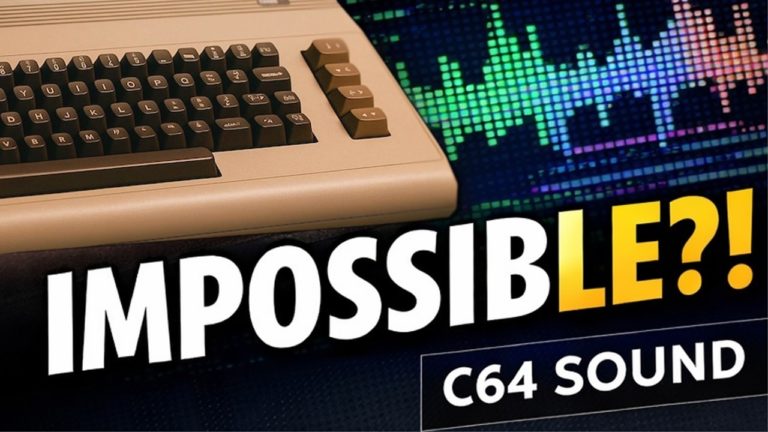
YouTube channel Nordischsound has been doing something remarkable with a three-voice SID chip and a 1980s Commodore 64, and their chiptune reimagining of Depeche Mode’s “Everything Counts” is the latest proof that the synth-heavy DNA of classic synthpop translates with uncanny precision into 8-bit territory, the iconic melody and bass lines rendered in the raw, characteristic crackle of vintage chiptune with every note earning its place across just three channels.

Alfred Molina, Geena Davis and Alfre Woodard Lead Netflix’s Thrilling New Series The Boroughs

0

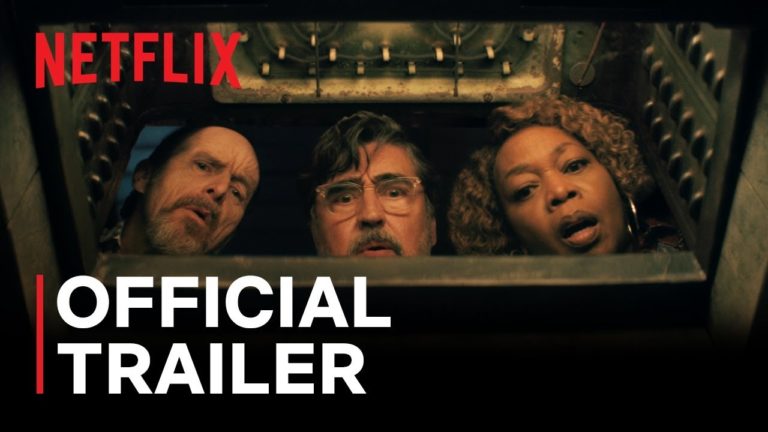
From the executive producers of Stranger Things comes The Boroughs, a new Netflix series that takes the concept of a picturesque retirement community and turns it into something far more urgent and strange. Starring Alfred Molina, Geena Davis, Alfre Woodard, Bill Pullman, Clarke Peters and Denis O’Hare, the show follows a group of unlikely heroes who must band together against an otherworldly threat targeting the one thing they don’t have: time. Created by Jeffrey Addiss and Will Matthews, The Boroughs arrives on Netflix May 21 and the trailer makes a strong case for clearing your calendar.

Jazz Dispensary Brings Roger Glenn’s Lost Jazz-Funk Masterpiece ‘Reachin” Back to Vinyl

0

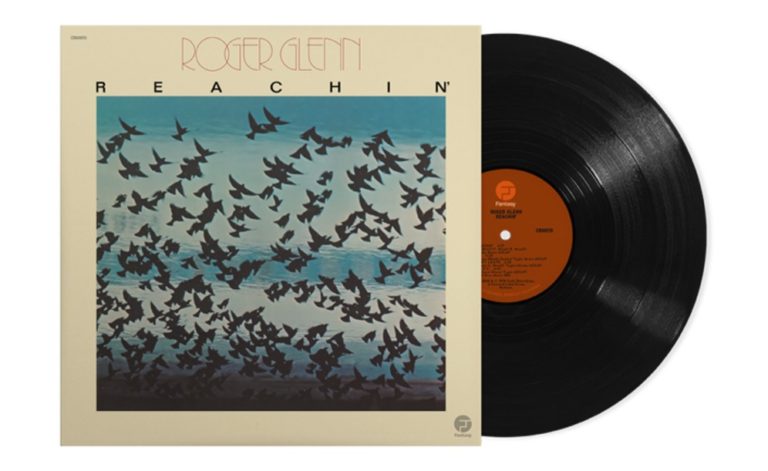
For nearly fifty years, Roger Glenn’s 1977 debut ‘Reachin” has circulated as a secret handshake among serious crate-diggers, a jazz-funk fusion gem from the fertile musical world of the late-70s Bay Area that never got the wide audience it deserved. Jazz Dispensary is fixing that on July 10 with an all-analog AAA reissue via the label’s acclaimed Top Shelf series, mastered by Kevin Gray at Cohearent Audio directly from the original master tapes, pressed on 180-gram vinyl at Fidelity Record Pressing, and housed in a tip-on jacket that faithfully reproduces the original artwork. It’s available for pre-order now.

Glenn’s story is as rich as the record itself. Son of celebrated trombonist and vibraphonist Tyree Glenn, he absorbed Cuban polyrhythms from his mother, served in an army band alongside Grover Washington Jr. and Billy Cobham, and went on to play with Cal Tjader, Herbie Mann and Dizzy Gillespie before appearing on sessions with Mary Lou Williams, Mongo Santamaría and Donald Byrd. When he reconnected with producers The Mizell Brothers, fresh off defining the DNA of jazz-funk with Donald Byrd’s ‘Black Byrd,’ the conditions for something special were firmly in place.

‘Reachin” delivered on every front. Glenn teamed with Herbie Hancock’s Headhunters members Bill Summers and Paul Jackson, guitarist Ray Obiedo, keyboardist Mark Soskin and a percussion section that included a young Sheila E., building a record that moves from the infectious title track through dancefloor heat on “Rio,” modal jazz depth on “Gloria” and the Yoruba-invoking percussion ceremony of closing track “Rezo Chango.” Latin jazz, cosmic funk and rare groove, all in one place, all completely alive.

‘Reachin” is the third Top Shelf release in Jazz Dispensary’s 10th anniversary celebration, following releases from The Visitors and Joe Henderson. More groove-forward deep cuts are on the way throughout 2026.

‘Reachin” Tracklist:

Side A

Reachin’

Rio

Don’t Leave

E.B.F.S.

Side B

Overtime

Kick

Gloria

Rezo Chango