

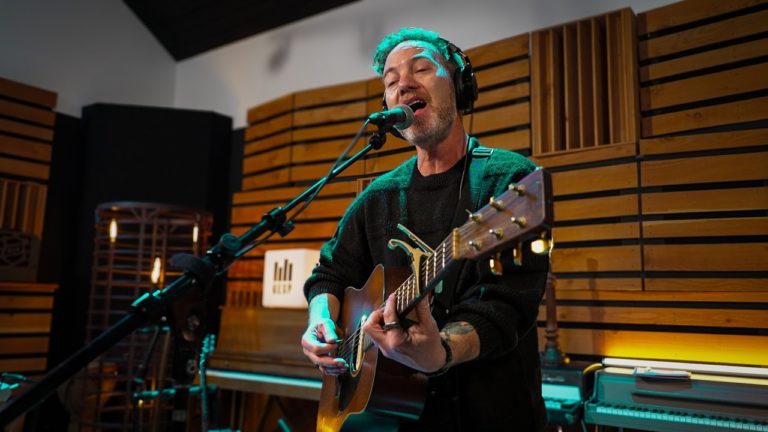
Rogue Wave are back, and the welcome is overdue. KEXP captured the indie favorites live at 25th Street Recording in Oakland during Noise Pop 2026, running through a five-song set that spans fresh arrangements of old favorites and a couple of inspired covers. Zach Rogue leads the band through “Bird On A Wire,” “Falcon Settles Me,” “Endless Shovel,” “Aesop Rock,” and a closing take on The Stone Roses’ “She Bangs The Drums,” backed by Pat Spurgeon, Graham LeBron, Masanori Christianson, and Jon Monahan.
Video: Daryl Hall & John Oates Light Up New York With Their Complete 1985 Liberty Concert
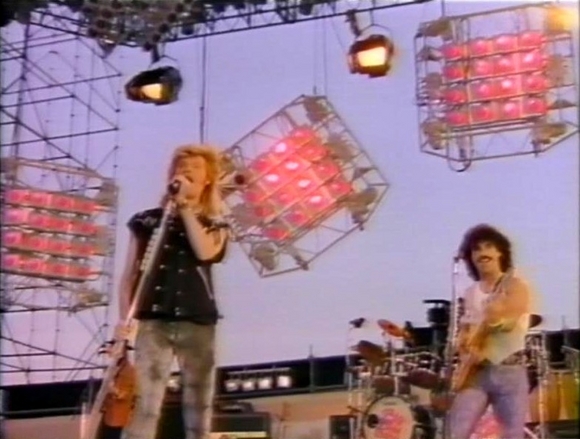
This one’s a time capsule. Hall & Oates’ complete 1985 Liberty Concert in New York captures the duo at the absolute peak of their powers, ripping through a setlist stacked with hits like “Out Of Touch,” “Rich Girl,” “Maneater,” and “You Make My Dreams.” Daryl Hall and John Oates are in commanding form, backed by a phenomenal band featuring G.E. Smith and Tom Wolk, the kind of players who turn a great show into an unforgettable one.
Video: Harry Styles Makes A Tears For Fears Classic His Own With “Everybody Wants To Rule The World” In The Live Lounge
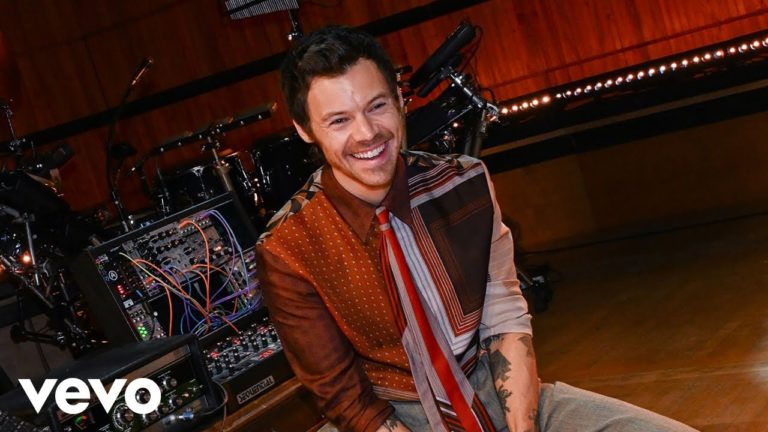
Harry Styles knows his way around a cover. The pop star stopped by the BBC Radio 1 Live Lounge to take on Tears For Fears’ “Everybody Wants To Rule The World,” bringing his signature warmth to the 80s classic. He leans on relaxed vocals and a full-band arrangement that lets the song breathe, with his control the standout and drummer Sarah Jones driving the whole thing with serious energy.
Video: Rob Zombie Unleashes Theatrical Chaos At The UK’s Download Festival In 2014
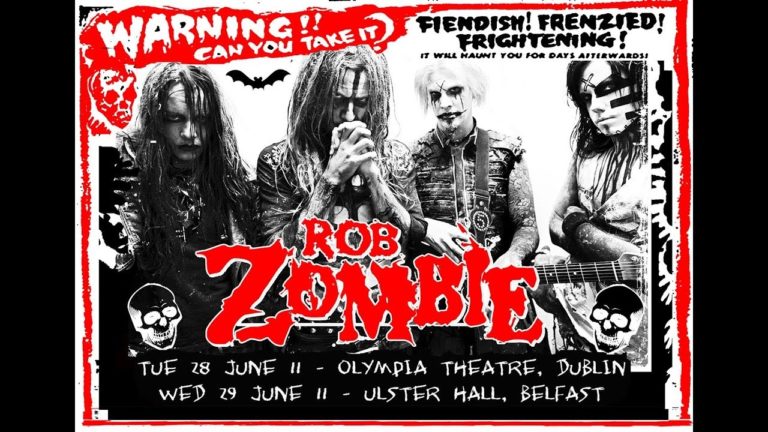
Rob Zombie picked the perfect day for it. On a fittingly spooky Friday the 13th in June 2014, the master of industrial horror rock brought his signature theatrical chaos to the massive crowd at the UK’s legendary Download Festival. Taking over the main stage at Donington Park, Zombie and his band delivered a high-octane set packed with fan favorites, a full-frontal assault on the senses complete with ghoulish stage props, frantic energy, and the sleazy, grinding riffs that have defined his career. The setlist ran through his catalog of macabre hits, igniting the audience with anthems like “Superbeast,” “Living Dead Girl,” and the White Zombie classic “More Human Than Human.”
New Wave Favorites Bow Wow Wow And Men Without Hats Step In For The Motels On The Totally Tubular Festival
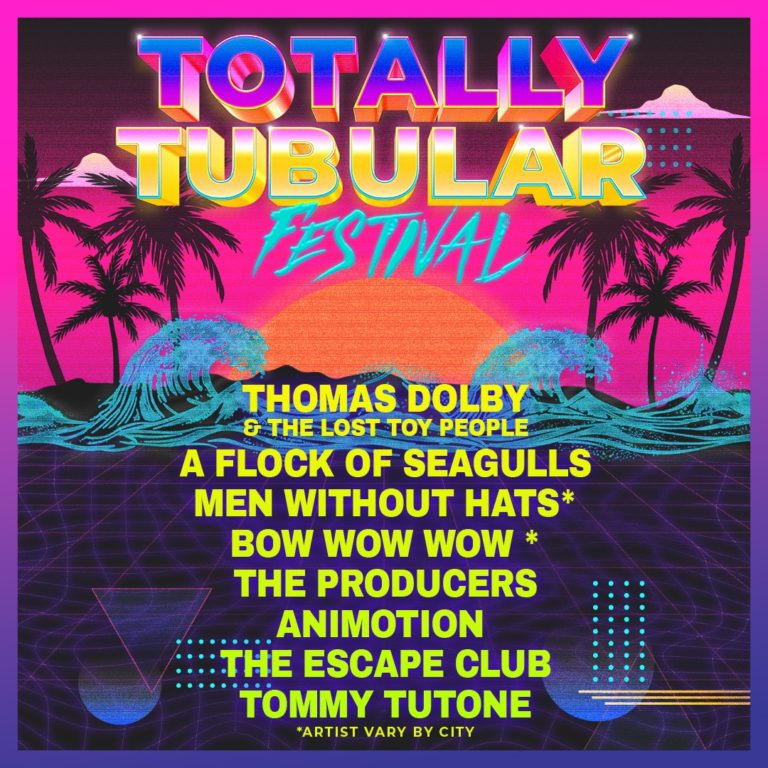
The Totally Tubular Festival is reshuffling its 80s New Wave bill. Organizers for the colorful summer tour, launching July 17 in Phoenix, have announced a lineup change after The Motels were forced to cancel. Bow Wow Wow will fill in from the Phoenix opener on July 17 through the July 26 show in Salt Lake City, and Men Without Hats will step in from the August 7 show in Washington D.C. through the August 16 finale in Aurora, IL.
The Motels bowed out so singer and founder Martha Davis can recover from a recent medical procedure. “Singer/founder Martha Davis needs time to heal from a recent medical procedure. Martha is expected to make a full recovery but must take the summer off,” the band shared. Davis added her own note. “It breaks my heart to have to cancel The Motels part in the ‘Totally Tubular Tour’ this summer. The band and I were looking forward to it big time! But the doctors have some unfinished business with me, so I must comply. But don’t worry, ‘I’ll be back!'”
Festival creator Jon Pleeter is already looking ahead to her return. “I look forward to welcoming The Motels back on Totally Tubular Festival dates soon, as the magic of Martha Davis cannot be contained!”
The rest of the bill stays loaded with MTV-era favorites, featuring Thomas Dolby & The Lost Toy People, A Flock Of Seagulls, The Producers, Animotion, The Escape Club, and Tommy Tutone. This year’s run marks the first time Thomas Dolby & The Lost Toy People have performed together since 1988, when they last played the Rose Bowl supporting Depeche Mode, and the first time in over 25 years that The Producers’ original lineup will tour the US coast to coast. It’s a genuine treat for anyone who came up on 80s New Wave.
Bow Wow Wow Replacement Dates:
July 17 – Phoenix, AZ @ Celebrity Theatre
July 19 – Denver, CO @ Mission Ballroom
July 22 – San Francisco, CA @ The Castro Theatre
July 23 – Anaheim, CA @ House of Blues
July 24 – Hollywood, CA @ Palladium
July 25 – Las Vegas, NV @ The Sahara Las Vegas @ The Pool
July 26 – Salt Lake City, UT @ Red Butte Garden Amphitheatre
Men Without Hats Replacement Dates:
Aug 7 – Washington, DC @ Warner Theatre
Aug 8 – Atlantic City, NJ @ Etess Arena @ Hard Rock Live
Aug 9 – New York, NY @ The Rooftop @ Pier 17
Aug 12 – St. Petersburg, FL @ Ferg’s Concert Pavilion
Aug 14 – Louisville, KY @ Iroquois Amphitheatre
Aug 15 – Huber Heights, OH @ Rose Music Center at The Heights
Aug 16 – Aurora, IL @ RiverEdge Park
Video: Nine Inch Nails Bring Punishing Intensity To New York’s Panorama Festival In 2017
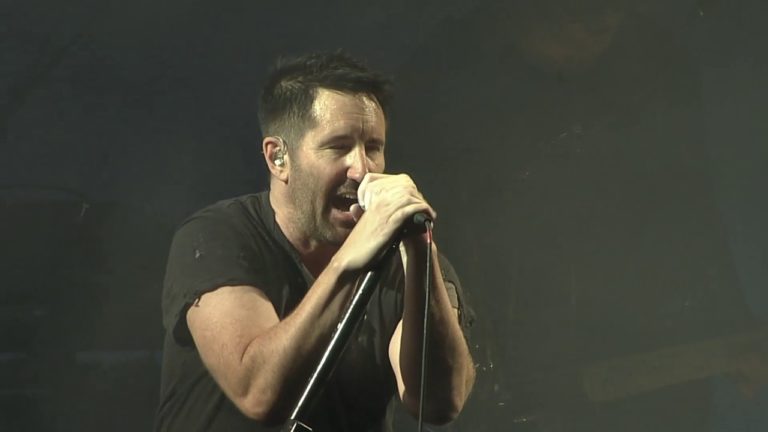
Nine Inch Nails unloaded on New York City at Panorama Festival on July 30, 2017, headlining Randall’s Island Park with a set that stood as a high point of their “I Can’t Seem To Wake Up” tour. The performance captured the band’s ferocious return to the live circuit after a multi-year hiatus, pairing raw aggression with meticulous sonic detail in front of a massive, electric crowd. The setlist swung through dynamics with ease, weaving timeless anthems like “Wish” and “March Of The Pigs” alongside the visceral energy of newer EP material. Trent Reznor was as commanding as ever, his voice cutting through dense layers of distorted guitars, abrasive synths, and punishing rhythms, all matched by a stark, aggressive light show that mirrored the music’s controlled chaos. It’s a complete sensory assault and a bold reminder of why they remain one of modern music’s most vital live acts.
V Torres Announces Sophomore Album ‘Woman’ With A Cinematic, Desert-Soaked Title Track
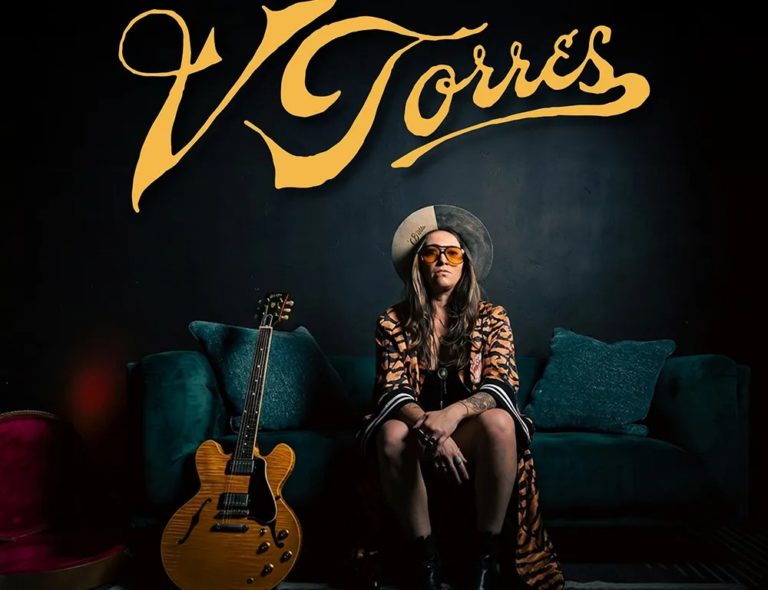
V Torres is stepping into her most personal work yet. The Los Angeles songwriter has announced her sophomore album ‘Woman,’ arriving independently September 1, 2026, led by a stirring title track and a cinematic new video. The single is out now on all streaming platforms.
The song came from a heavy place. “When I wrote ‘Woman,’ it felt heavy,” Torres explains. “The line, ‘my work never ends, it just starts over and over again,’ felt so fitting to how I was feeling at the time, and honestly, most of the time.” Playing it live changed her sense of what it was. “Women kept coming up to me afterward saying, ‘You wrote this song for me.’ That’s when I realized it had become something bigger than my own story.” The accompanying video, directed by cinematographer Dylan Pelle, is a desert-soaked visual that mirrors the track’s raw vulnerability and hard-earned liberation.
Co-produced with longtime collaborator Steve Aguilar, “Woman” pulls from western landscapes, Latin textures, and indie-rock catharsis, driven by galloping drums, sprawling guitars, and Torres’ commanding vocal. It builds like a journey toward collective release, keeping the immediacy of her live shows while reaching for something cinematic and immersive.
That honesty runs through the whole record, a seven-song collection Torres calls “a journey and testament to the things that shaped the woman I am today.” She moves between expansive indie-rock, funky beach Americana, stripped-down balladry, and desert-hued psych-rock. “Beginnings” wrestles with endings and rebirth, “Great Escape” reflects on the loneliness and freedom that followed the end of her marriage, and “Winter Solstice,” written after a close friend lost her brother, captures the tenderness of trying to comfort someone through grief. “Slow” explores identity and freedom against a surreal Joshua Tree backdrop, while “That Night” lingers in the charged space between friendship and desire.
‘Woman’ also marks Torres’ first time co-producing a full-length project. “I’ve been in situations before where I felt muted creatively,” she says. “This time, there was safety and freedom. If something didn’t feel fully expressed, we kept working until it did.” It’s a fearless, lived-in record from a songwriter fully in command of her voice.
Born and raised in coastal Southern California, Torres grew up immersed in her parents’ record collection, soaking up everyone from Pink Floyd, Steely Dan, and Hank Williams Jr. to Joni Mitchell, Janis Joplin, Jimi Hendrix, and Earth, Wind & Fire. By high school she was performing originals at open mics, later playing iconic LA venues like The Roxy Theatre and The Viper Room with her first band, Gorgeous Got a Gun.
She celebrates the single with a special event tonight, June 11, at The Studio in Hermosa Beach, featuring a live performance, an exclusive video screening, and a behind-the-scenes Q&A with the creative team.
Woman Tracklisting:
- Beginnings
- Woman
- Winter Solstice
- That Night
- Slow
- Great Escape
- I Know Nothing
Composer Rock Burwell Unleashes His Dread-Soaked Debut Score For Horror Hit ‘Obsession’
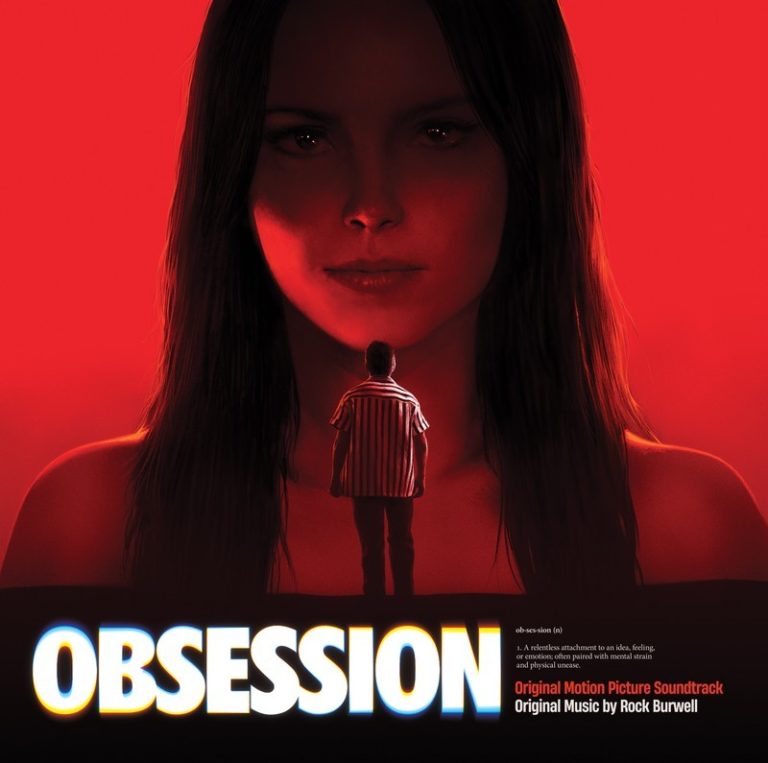
Rock Burwell just stepped fully into the world of film scoring. Waxwork Records, in partnership with Back Lot Music, has released ‘Obsession Original Motion Picture Soundtrack,’ Burwell’s dread-inducing score for the summer’s breakthrough film, out now on vinyl, CD, and cassette. The score runs on smart synth work and atmospheric ambient clouds.
It’s a milestone moment for the composer. ‘Obsession’ marks Burwell’s debut as a feature film composer, developed in close collaboration with director Curry Barker. The two built it out of a creative partnership that began when they met through a mutual music project in Los Angeles. Zach “Rock” Burwell is an American film composer, music producer, and singer-songwriter, and a platinum-selling producer with credits across multiple genres.
Burwell describes a score built on unease. “A big focus while composing Obsession was the idea of exploring the uncanny valley, finding the space where emotions get warped into something disorienting, where you’re no longer sure what’s real,” he says. He and Barker spent long stretches crafting the balance between warmth and dread, nostalgia and estrangement, even the expansiveness of love against something like claustrophobia. “Part of what made it all so exciting was the willingness to take risks, using hard cuts and loudness in ways that feel almost confrontational. Discomfort was always the goal.”
The film itself premiered in the Midnight Madness program at the Toronto International Film Festival. It follows a hopeless romantic who finds himself getting exactly what he asked for, only to discover that some desires come at a dark, sinister price. The score captures every bit of that tension.
Obsession Original Motion Picture Soundtrack Tracklisting:
- Obsession
- Sandy
- Nikki
- One Wish Willow
- Make a Wish
- R U OK
- Can You Sleep With Me?
- Research
- Cat’s Out of the Bag
- Love is in the Air, Pt. 1
- Date Night
- Go Back to Sleep
- If You’re Having Trouble with the Door
- What’s the Verdict?
- Hansel
- Into Darkness
- I Can’t Be Nikki
- You Wished for This
- The Letter
- One Wish Willow (Revisited)
- You Only Get One
- Billionaire
- Why Don’t You Love Me?
- Mirror Shot
- Bear
- Love is in the Air, Pt. 2
Tyler, the Creator Brings Camp Flog Gnaw Back To Dodger Stadium This November
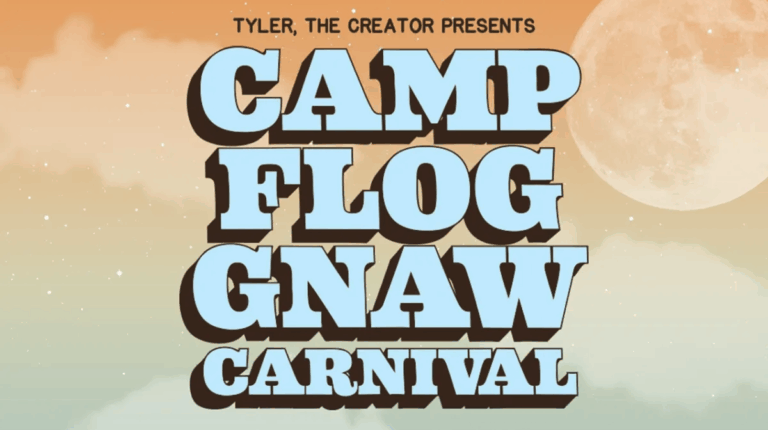
Camp Flog Gnaw is coming back. Tyler, the Creator has announced 2026 dates for his annual carnival, returning to Dodger Stadium in Los Angeles on November 14-15. The weekend marks a return to the event’s semi-traditional mid-November slot, after last year’s edition was pushed back a week when heavy rains swept across Southern California.
Tickets go on sale at 11 am Pacific on June 11, with two-day passes set at $395 and VIP options starting at $705. Payment plans are also available for a limited time, letting fans put down 25% or 50% of their pass and cover the rest in equal biweekly or bimonthly installments.
The lineup is yet to be announced.
BIGBANG Reunite For A 31-Date 20th Anniversary Stadium Tour
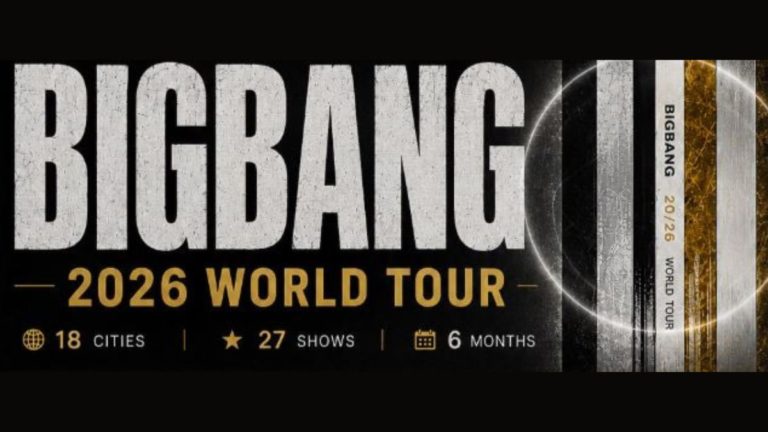
One of K-pop’s biggest names is back together. Legendary trio BIGBANG have announced a 31-date stadium tour across Asia, North America, Europe, and Australia, building off their memorable reunion set at Coachella. Promoted by AEG Presents, the trek celebrates the group’s 20th anniversary and marks the first time G-DRAGON, TAEYANG, and DAESUNG have toured together since 2017, making it one of the biggest K-pop events of the year.
The run opens with three hometown shows August 21-23 at Goyang Stadium in South Korea. From there the routing hits Oakland-Alameda County Coliseum, MetLife Stadium in East Rutherford, London’s Tottenham Hotspur Stadium, Taipei Dome, Sydney’s Accor Stadium, Hong Kong’s Kai Tak Stadium, Kyocera Dome Osaka, Tokyo Dome, and Jakarta International Stadium before wrapping February 27 and 28 with a two-night stand at Kaohsiung National Stadium in Taiwan.
The group last released new music in 2022 with the single “Still Life,” and broke through in 2006 with their debut ‘Big Bang Vol. 1.’ Two decades on, they remain one of the genre’s most influential acts. The official tour title and ticketing details will arrive later, and fans can sign up via BIGBANG’s official b.stage platform for updates.
BIGBANG Tour Dates:
Aug. 21, 2026 – Goyang, KR @ Goyang Stadium
Aug. 22, 2026 – Goyang, KR @ Goyang Stadium
Aug. 23, 2026 – Goyang, KR @ Goyang Stadium
Sept. 5, 2026 – Oakland, CA @ Oakland-Alameda County Coliseum
Sept. 11, 2026 – East Rutherford, NJ @ MetLife Stadium
Sept. 19, 2026 – Paris, FR @ Stade de France
Sept. 26, 2026 – London, UK @ Tottenham Hotspur Stadium
Oct. 10, 2026 – Taipei, TW @ Taipei Dome
Oct. 11, 2026 – Taipei, TW @ Taipei Dome
Oct. 17, 2026 – Singapore @ National Stadium
Oct. 24, 2026 – Hanoi, VN @ Mỹ Đình National Stadium
Oct. 25, 2026 – Hanoi, VN @ Mỹ Đình National Stadium
Oct. 31, 2026 – Sydney, AU @ Accor Stadium
Nov. 7, 2026 – Bangkok, TH @ Rajamangala National Stadium
Nov. 13, 2026 – Hong Kong @ Kai Tak Stadium
Nov. 14, 2026 – Hong Kong @ Kai Tak Stadium
Nov. 15, 2026 – Hong Kong @ Kai Tak Stadium
Nov. 27, 2026 – Osaka, JP @ Kyocera Dome Osaka
Nov. 28, 2026 – Osaka, JP @ Kyocera Dome Osaka
Nov. 29, 2026 – Osaka, JP @ Kyocera Dome Osaka
Dec. 5, 2026 – Nagoya, JP @ Vantelin Dome Nagoya
Dec. 6, 2026 – Nagoya, JP @ Vantelin Dome Nagoya
Dec. 13, 2026 – Tokyo, JP @ Tokyo Dome
Dec. 14, 2026 – Tokyo, JP @ Tokyo Dome
Dec. 15, 2026 – Tokyo, JP @ Tokyo Dome
Dec. 26, 2026 – Fukuoka, JP @ Mizuho PayPay Dome FUKUOKA
Dec. 27, 2026 – Fukuoka, JP @ Mizuho PayPay Dome FUKUOKA
Jan. 9, 2027 – Kuala Lumpur, MY @ TM Stadium Nasional
Jan. 16, 2027 – Jakarta, ID @ Jakarta International Stadium
Feb. 27, 2027 – Kaohsiung, TW @ Kaohsiung National Stadium
Feb. 28, 2027 – Kaohsiung, TW @ Kaohsiung National Stadium