Home Blog Page 40

Craft Recordings Drops Nine Essential Limited-Edition Vinyls for Record Store Day 2026

0

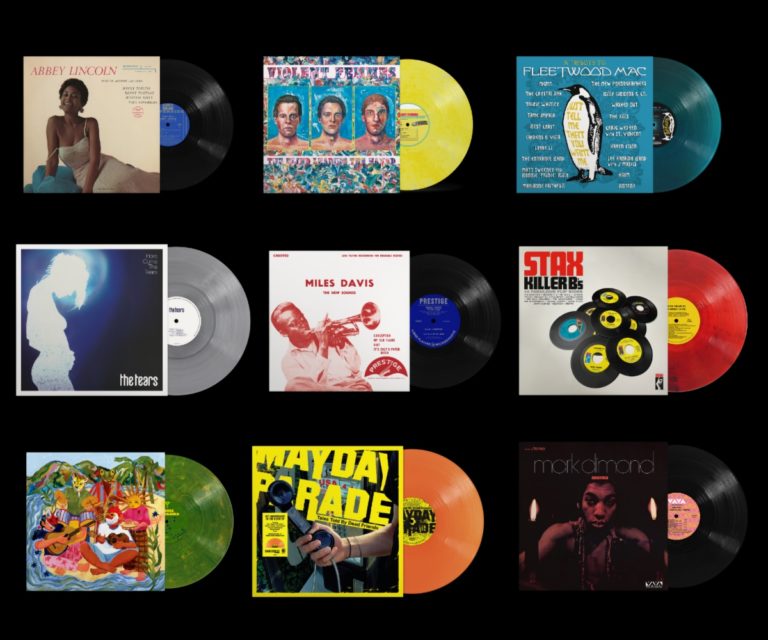
Record Store Day 2026 is here, and Craft Recordings has shown up with nine titles that cover serious ground. From mono jazz reissues to cult Latin classics to indie tribute compilations making their vinyl debut, this is a lineup that rewards the committed digger and the casual browser equally. Get to your nearest participating independent record store now.

The jazz selections alone justify the trip. Abbey Lincoln’s 1957 sophomore LP ‘That’s Him!’ arrives in a rare mono mix on 180-gram vinyl, mastered all-analog by Kevin Gray at Cohearent Audio and limited to just 4,200 copies. Accompanying Lincoln on the original recording were Sonny Rollins, Kenny Dorham, Wynton Kelly, Paul Chambers, and Max Roach, a lineup that speaks for itself. JazzWise called it “a key work in Lincoln’s discography,” and this pressing gives it the treatment it deserves.

Miles Davis gets equally serious attention. ‘The New Sounds,’ his 1951 solo debut for Prestige Records, returns in its original 10-inch format for its 75th anniversary, mastered all-analog from the original mono tapes by Jeff Powell at Take Out Vinyl and limited to 4,900 copies. A young Sonny Rollins appears here too, alongside Art Blakey and a 19-year-old Jackie McLean making his recorded debut. This is Davis before the legend fully calcified, confident and exploratory and already impossible to ignore.

On the Latin side, Markolino Dimond’s 1971 debut ‘Brujería’ returns to vinyl for the first time in more than 50 years. A salsa dura masterpiece produced by Harvey Averne, Larry Harlow, and Johnny Pacheco, the album blends progressive jazz with Afro-Cuban rhythms and features a remarkable cast including legendary vocalist Angel Canales, bassist Andy Gonzalez, and a coro that includes Héctor Lavoe and Ismael Quintana. Limited to just 1,500 copies on 180-gram vinyl, this one will move fast.

The Jazz Dispensary crew delivers ‘Magia Brasileira,’ a freshly curated Brazilian compilation pressed on eye-catching “Brazilian Shimmer” vinyl, a green, yellow, and gold blend housed in a jacket designed by São Paulo-based artist Fernanda Peralta. Featuring Dom Um Romão, Bola Sete, Flora Purim, João Donato, and more, it’s a rousing collection of mid-century samba and funk-drenched jams limited to 6,000 copies.

For the rock and pop contingent, the lineup is equally strong. ‘Just Tell Me That You Want Me: A Tribute to Fleetwood Mac’ makes its first-ever vinyl appearance, a 2-LP set on Translucent Sea Blue vinyl featuring 19 covers from HAIM, Tame Impala, St. Vincent, MGMT, The Kills, Lykke Li, Best Coast, and more. Originally released in 2012, it hit the Billboard 200’s Top 50 and peaked at number 15 on the Top Rock Albums chart. AllMusic called it “an unusually satisfying tribute album,” and hearing it on vinyl for the first time is reason enough to celebrate.

Mayday Parade’s ‘Tales Told by Dead Friends’ turns 20, and the career-launching EP returns on Translucent Orange 10-inch vinyl, limited to 2,500 copies. Violent Femmes’ 1986 album ‘The Blind Leading the Naked,’ produced by Talking Heads’ Jerry Harrison and featuring the Stooges’ Steve Mackay on horns, gets its own pressing on “Candlelight Swirl” vinyl. And ‘Here Come the Tears’ by The Tears, the short-lived reunion project of Suede’s Brett Anderson and Bernard Butler, finally gets its first-ever vinyl reissue. Rounding things out is ‘Stax: Killer B’s,’ a rare B-sides compilation from the legendary soul label featuring Johnnie Taylor, Eddie Floyd, and Booker T. & The M.G.’s.

Nine titles, all available now at participating independent record stores. This is what Record Store Day is supposed to feel like.

Craft Recordings Record Store Day 2026 Releases:

Abbey Lincoln – ‘That’s Him!’ (1-LP, Mono, 180-gram vinyl, limited to 4,200 copies)

Miles Davis – ‘The New Sounds’ (10-inch LP, Mono, limited to 4,900 copies)

Mayday Parade – ‘Tales Told by Dead Friends’ (10-inch EP, Translucent Orange Vinyl, limited to 2,500 copies)

Various Artists – ‘Just Tell Me That You Want Me: A Tribute to Fleetwood Mac’ (2-LP, Translucent Sea Blue Vinyl, limited to 3,700 copies)

Jazz Dispensary – ‘Magia Brasileira’ (1-LP, “Brazilian Shimmer” Vinyl, limited to 6,000 copies)

Markolino Dimond – ‘Brujería’ (1-LP, 180-gram vinyl, limited to 1,500 copies)

Violent Femmes – ‘The Blind Leading the Naked’ (1-LP, “Candlelight Swirl” Vinyl)

The Tears – ‘Here Come the Tears’ (first-ever vinyl reissue)

Various Artists – ‘Stax: Killer B’s’ (rare B-sides compilation)

Toronto Indie Folk Trio The Couriers Open Their Hearts on Debut Single “Smooth Skin”

0

The Couriers have arrived with “Smooth Skin,” and the Toronto indie folk trio make an immediate impression. Lifted from their self-titled debut album, the track is acoustic-leaning, intimate, and quietly romantic, built on finger-picked guitar, hushed dynamics, and harmonies that stack with real warmth. It’s the kind of song that doesn’t announce itself loudly but stays with you long after it’s done.

The origin story is genuinely unexpected. “Smooth Skin” was inspired by a line from a video game character who mistakenly believed he was a ghoul. Vocalist and guitarist Stephen Edwards explains: “Once the title was cemented, the song quickly evolved into a story about a love interest lost to time.” That shift from absurdist source material to tender romantic reflection says a lot about how The Couriers work, finding the emotional truth in unlikely places and letting it breathe.

The song carries extra weight as a landmark moment for the band. “This was the first ever song written to be played by The Couriers,” Edwards shares. “Hence, it seemed fitting that it should appear as the first track on our debut album.” As an opening statement, it does exactly what a first track should, establishing the band’s voice clearly and confidently without overreaching.

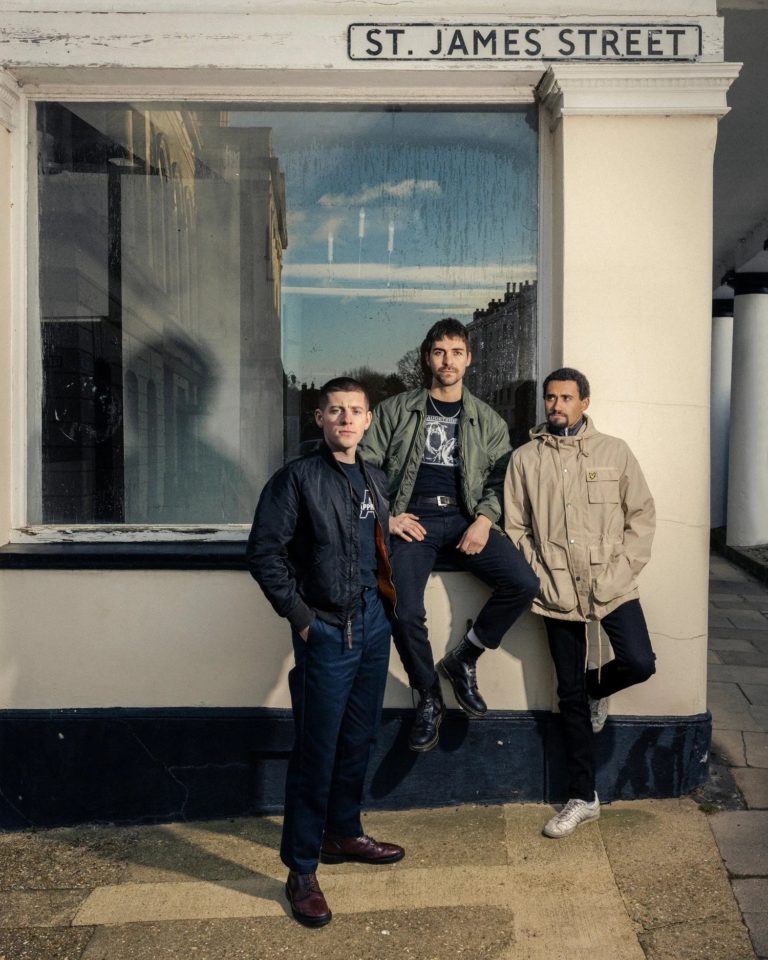
Stephen Edwards on guitar and vocals, Mateja Lasan on drums, and Bronson Aguiar on bass bring a decade-long creative partnership to every note of the record. That history is audible in how naturally the three voices and instruments move together. The restraint here is a choice, not a limitation, and it’s the right one. The harmonies carry the emotional weight of the song without the arrangement ever pushing too hard.

“Smooth Skin” is a quietly captivating introduction to a band that understands the power of understatement. The Couriers’ self-titled debut album is out now on all major streaming platforms.

Queens of the Stone Age Bassist Michael Shuman Gives Jennifer Paige’s “Crush” a Dark, Cinematic GLU Makeover

0

Michael Shuman has been quietly building something that demands full attention. GLU, his genre-blending solo project, is out now with a bold reimagining of Jennifer Paige’s 1998 pop hit “Crush,” and it’s a genuine statement. Darker, more cinematic, and planted firmly in GLU’s modern sonic landscape, the cover preserves the original’s vulnerability while pulling it somewhere entirely new.

Shuman is direct about why “Crush” made sense. “The music side is the fun part, where you augment it to a completely different landscape, giving a totally different perspective to the original,” he explains. “Crush is an amazing pop song, but was produced at a time where I don’t think it got its due.” The reimagining gives the song room it never had, and the video delivers on every promise the audio makes.

The release also comes with significant news. GLU has signed a brand new recording deal with FLG (Skunk Anansie, Corella, As It Is), adding serious infrastructure to a project that’s already proven it can move without it. This is a year of momentum for Shuman, and the pieces are falling into place fast.

GLU first surfaced in early 2023 with debut EP ‘My Demons’, a raw excavation of struggle, addiction, loss, and childhood trauma. The project found Shuman writing outside his comfort zone from the start, building from beats, synths, and lyrics rather than guitar riffs. “I wanted to do something that scared me,” he’s said. “Something that felt fresh, and fully on my own terms.” That instinct paid off immediately.

The 2025 single “Boogie Man” pushed things further. An infectious, dance-forward track drawing comparisons to Jamiroquai, Gorillaz, and Mac Miller, it landed a major sync placement in MLB The Show ’25 alongside Kendrick Lamar and De La Soul, and pushed GLU past three million global streams. BBC Radio 1 and 6 Music both came on board, with press from NME and Rolling Stone cementing the project as something operating well beyond side-project territory.

GLU has toured with The Kills, Blood Red Shoes, and Miles Kane, and has headlined its own UK dates. With a new record deal, a striking new single, and a full year of activity ahead, GLU is running at full speed. “Crush” is out now, and it’s only the beginning.

New York Alt-Pop Singer Scarlett Macfarlane Goes Down the Rabbit Hole on “Winter’s Whisper”

0

Scarlett Macfarlane has a new single out, and “Winter’s Whisper” is exactly the kind of track that refuses to sit still. The New York alt-pop artist blends rockabilly-tinged energy with pop immediacy and a surrealist edge drawn straight from Lewis Carroll, creating something playful, eerie, and genuinely hard to categorize. Produced by Grammy-winning Scott Jacoby, it sounds like nothing else in her lane right now.

The song started simply enough, a magical winter walk as the initial image, but Macfarlane let the concept pull her somewhere stranger. “Words like ‘magic’ and ‘wonderland’ took me down a not-so-proverbial rabbit hole,” she explains. What emerged is a commentary on reality itself, how bizarre and uncontrollable and occasionally wonderful life actually is. “This world, life itself, is filled with fantasy,” she says. “It can be all at once transformed by the cast of characters you encounter throughout your own zany story.”

Production details make “Winter’s Whisper” work on multiple levels. Eerie Halloween-adjacent synth textures give the track its off-kilter atmosphere, while layered call-and-response vocals, subtly panned left and right, create a genuine sense of internal dialogue. The bridge in particular rewards a good pair of headphones. Macfarlane put it simply: “I’ve tried to sit still through it. I can’t. I haven’t met anyone who can.”

The single belongs to a 15-song collection written and recorded in a single creative burst, each track standing independently while sharing a common emotional thread. After years of performing other people’s words, from glossy pop to fronting a rock band, Macfarlane writes entirely from her own perspective now. That shift is audible in every second of “Winter’s Whisper.”

This is an artist fully in command of her own voice, and “Winter’s Whisper” makes a compelling case for paying close attention to whatever comes next.

Liverpool Trip-Hop Duo Dealer’s Choice Announce Themselves With Debut Single “Some Kind Of Way”

0

Dealer’s Choice have made their entrance, and it’s a confident one. The Liverpool-based duo of cousins Joe McHugh and Barry Mullaney release their debut single “Some Kind Of Way” now, a dreamy, trip-hop-tinged introduction that signals something genuinely worth watching. Lush instrumentation, introspective lyrics, and a sound that sits comfortably between alternative and electronic without belonging entirely to either.

The pair bring complementary backgrounds to the project. McHugh has spent nearly a decade as a prominent DJ in Liverpool’s music scene under the name Jack Trades, holding down regular spots at Motel and Teddy’s. Mullaney comes in as an accomplished musician and producer, previously releasing music as Deadbeat Drew to national press attention in Ireland, with Hot Press calling him “one of the more exciting up-and-coming producers in Ireland.” Together, the chemistry is immediate.

Both originally from County Mayo in the west of Ireland, the duo’s perspective on Irish identity from inside the UK gives their writing a distinctive layered quality. Barry puts it plainly: “A lot of the lyrics used so far have been from before I made the move to Liverpool from Ireland, that I could never really find a way of completing. So, working with Joe, the songs were given a fresh pair of eyes, and this basically became the foundation for Dealer’s Choice.”

Drawing inspiration from LCD Soundsystem, Yard Act, and The Avalanches, Dealer’s Choice blend danceable nu-disco grooves with lyrics shaped by rural Irish upbringing and the particular clarity of observing home culture from a distance. “Some Kind Of Way” captures that balance with ease, a debut single that feels fully formed.

A five-track EP arrives this summer. Dealer’s Choice are only getting started.

Jim Jones All Stars Unleash Feral New Album ‘Cat Fight’ and Hit the Road

0

Jim Jones All Stars don’t make polite records. ‘Cat Fight’ is out now via Silver Arrow Records, and it arrives exactly as advertised, twelve tracks of claws-out, feral rock and roll that sounds like it was recorded in a room that didn’t have enough exits. Produced by Chris Robinson of The Black Crowes, this is the band operating at full, glorious intensity. Listen here.

The album pulls from a rich and rowdy lineage. Little Richard’s primal energy, the straight-up fury of MC5 and The Stooges, Stones-y leather-clad grooves, and Bond-theme brass all collide across these twelve tracks with complete conviction. “Make It Rain” opens the set like a detonation. “Born 2 Ride” mows down John Barry sophistication with a Steppenwolf biker boot. “Cat Fight,” the title track, struts like Tom Jones getting loud with Booker T & The MG’s.

The guest list is equally serious. Chris Robinson contributes vocals, Chuck Prophet adds guitar, and Gloria Jones brings her own iconic presence to the record. Robinson’s wife Camille designed the artwork. Recorded at Bakerland Studios in Leeds and West Eleven Studios in London, the album was mixed by Jim Jones himself and mastered by Nick Page at Forking Paths Mastering in Los Angeles.

Classic Rock called their previous work “filthier than a mechanic’s rag, sleazier than a Soho spiv.” Rolling Stone compared the band to “the blow of a hammer on the fingers.” ‘Cat Fight’ gives both publications even more to work with. This is the kind of rock and roll record that doesn’t ask permission and doesn’t need to.

‘Cat Fight’ is out now on CD, limited edition red vinyl, and digital download via Silver Arrow Records. The band hits the road with remaining UK dates this spring and summer.

‘Cat Fight’ Tracklist:

Make It Rain

Exiled

Born 2 Ride

I’m On Fire

Goin’ Higher

Bekolah

Cat Fight

Gashman

Drink Me

Chubby

Luv U

Let U Go

2026 Tour Dates:

April 23 – Norwich, UK – The Waterfront Studio

April 24 – Exeter, UK – The Cavern

July 3 – Sheffield, UK – Yellow Arch Studios

July 5 – Cambridge, UK – Portland Arms

UK Punk Trio Grade 2 Bares It All on New Album ‘Talk About It’

0

Grade 2 have a lot to say, and ‘Talk About It’ is where they say all of it. The Isle of Wight punk trio, Sid Ryan, Jack Chatfield, and Jacob Hull, deliver their fourth album via Hellcat Records, a twelve-track chronicle of love, loss, and the grinding work of growing up inside a band. This is their most direct and emotionally honest record yet, and it lands hard.

The lead single “Standing In The Downpour” sets the tone immediately. Written like a conversation between old friends, it traces the arc from rowdy seaside-town adolescence to the harder work of finding your footing as an adult. It’s defiant without being cheap about it, a punk track with real texture and a hook that sticks. Grade 2 have always had the energy. Here, they’ve matched it with genuine songwriting depth.

The album title says everything. “It became ‘Talk About It,’ which sums up the whole album,” frontman Sid Ryan explains, “touching on every emotion that you feel while being in a band, from love to loss to personal turmoil to ambition. It’s a coming-of-age story about Grade 2 entering adulthood.” Twelve years since they first cranked amps as schoolkids, they’ve earned every word of it.

The band’s resume backs up the confidence. Festival slots at Rock am Ring, shared stages with Rancid and Slipknot, and a self-titled 2023 LP that announced them as one of modern punk’s most compelling acts. ‘Talk About It’ doesn’t rest on any of that. It pushes forward, harder and more focused than anything they’ve done before.

‘Talk About It’ is out now via Hellcat Records. Grade 2 hits Europe this spring, with dates running through June.

‘Talk About It’ Tracklist:

Cut Throat

Hanging Onto You

Standing In The Downpour

Better Today

Talk About It

Don’t Worry About Me

Crash And Burn

Smugglers Haven

Rotten

Wasteland

Otherside

2026 Tour Dates:

April 25 – Dusseldorf, Germany – Zakk

April 30 – Jena, Germany – F-Haus

June 18 – Dessel, Belgium – Plein Air

June 20 – Zurich, CH – Stadion Letzigrund

TOMORA, The Debut Duo of The Chemical Brothers’ Tom Rowlands and AURORA, Drops ‘Come Closer’

0

TOMORA has arrived, and the debut album ‘Come Closer’ is everything the mystery surrounding this project promised. Tom Rowlands of The Chemical Brothers and Norwegian artist AURORA have made something genuinely singular here, twelve tracks that pull from wigged-out 1960s psychedelia and push toward sounds that feel built for decades that haven’t happened yet. The title track video is out now, and it delivers.

The duo didn’t exactly announce themselves quietly. TOMORA’s name appeared on the Coachella 2026 lineup with zero context, triggering immediate speculation. Then came “Ring The Alarm” in December, and the conversation shifted fast. SPIN, Brooklyn Vegan, and Stereogum all took notice, with Stereogum calling it “a high-octane build… urgent vocal swirls… seesawing between euphoria and panic.” DJ Mag flagged its “intense bass and beat oscillations capped with an infectious vocal hook.”

The album is out now via Capitol Records, available digitally and physically on CD, standard black vinyl, and a limited-edition colour vinyl LP. The duo describe ‘Come Closer’ plainly and perfectly: “We made it without obligation or expectation, just a joy in creation. It’s the sound where we meet, the landing zone of our musical escape pods.”

‘Come Closer’ doesn’t sound like a collaboration between two separate artists finding common ground. It sounds like a duo that locked into something real and chased it as far as it would go. The range across these twelve tracks is remarkable, from dancefloor-ready momentum to tender, beautifully constructed downtempo moments like “The Thing,” which surfaced early on the limited white label vinyl release.

Dancefloors and festival fields are already paying attention. ‘Come Closer’ is out now on Capitol Records.

‘Come Closer’ Tracklist:

“Please”

“Come Closer”

“A Boy Like You”

“Ring The Alarm”

“My Baby”

“Have You Seen Me Dance Alone?”

“Somewhere Else”

“I Drink The Light”

“Wavelengths”

“Side By Side”

“The Thing”

“In A Minute”

Micah McLaurin’s “How Can I” Video Captures the Raw Weight of Self-Acceptance

0

The video for “How Can I” is out, and Micah McLaurin isn’t holding anything back. The soul-baring single now has a visual to match its emotional weight, a direct expression of what it means to hold onto yourself when the people closest to you refuse to see you clearly. This one hits differently.

Produced by Fernando Garibay (Lady Gaga, Whitney Houston, Kylie Minogue) and co-written with Poo Bear and Simon Wilcox, “How Can I” carries serious pop pedigree without losing its personal core. The track is already on Spotify’s All New Pop playlist and landed on Apple Music’s New Music Daily and New In Pop. McLaurin puts it plainly: “Being human comes in all shapes and shades, we all deserve to be happy and to walk in our own truth.”

The song builds on real momentum. McLaurin was featured in Spotify Wrapped’s Best of Fresh Finds Pop 2025, driven largely by the viral surge of his Latin-infused single “Remember Me,” which earned two official remixes from Majestic and Until Dawn, both hitting Music Week’s Pop Club Chart at number six. Before that, “Satisfied” and “Baboom” both cracked the Top 10 of the same chart.

McLaurin’s reach extends well beyond the studio. He’s collaborated with creative director Nicola Formichetti, designer Zaldy, producer duo PhD, and worked alongside brands including Dolce & Gabbana, Alexander McQueen, and Vivienne Westwood. That kind of cross-industry pull doesn’t happen by accident, it reflects an artist operating at a genuinely distinctive level.

“How Can I” lands as one of McLaurin’s most direct and affecting releases to date, a pop track with real emotional stakes and production that earns every second of its runtime. Watch the video now.

Top 7 Mistakes to Avoid When Partnering With a Data Annotation Company

0

By Mitch Rice

Partnering with a data annotation company looks simple at first. You send data. You get labels back. In practice, this step shapes model accuracy, bias, and long-term cost. Many AI teams run into trouble because they treat annotation as support work instead of system design.

You may still ask a basic question: what is data annotation company work responsible for? The answer shows up later in model failures, rework, and missed deadlines. That is why teams read data annotation company reviews, question past results, and think carefully before choosing a partner. Small decisions here tend to surface when fixing them costs the most.

<h2>Treating Data Annotation As A Simple Task

Many teams see annotation as manual cleanup work that is junior and fast. That view leads to problems. Rules stay vague or undocumented, review steps get skipped, and speed matters more than consistency.

When annotators guess, models learn noise. When rules shift mid-project, accuracy drops without warning. Ask yourself: Could two people label the same sample and reach the same result today? If the answer is no, the model will struggle later.

<h3>Where This Goes Wrong In Real Projects

This mistake often shows up as:

  • Good training metrics, weak real use results
  • Constant retraining with little improvement
  • Long debates about what a label was supposed to mean

Teams then blame the model. The issue started earlier.

<h3>What To Do Instead

Treat annotation as part of system design. That means:

  • Writing clear label definitions before work starts
  • Adding examples for edge cases
  • Reviewing early batches before scaling
  • Updating rules when models fail in production

A strong data annotation partner, like Label Your Data, challenges unclear instructions and flag gaps before they spread across the dataset.

<h2>Choosing Vendors Based On Price Alone

Pricing usually reflects process depth. When rates drop too far, something gets removed. Common tradeoffs appear as fewer review steps, shortened training for annotators, and loose enforcement of rules. These gaps show up as noisy labels. Models trained on that data need more retraining, and engineering time gets burned fixing issues that should not exist.

<h3>What Price Comparisons Miss

Most teams compare vendors by cost per label. That metric hides quality. A better comparison looks at:

  • Cost per usable label
  • Time spent on rework
  • Delay caused by failed training runs

A cheaper batch that needs relabeling costs more than a higher-priced batch that works the first time.

<h3>When Paying More Makes Sense

Higher rates make sense when data is complex or sensitive, errors carry legal or safety risk, and edge cases matter more than averages. In these cases, quality pays for itself.

<h2>Skipping Clear Annotation Guidelines

Annotators need direction. When rules stay loose, people fill gaps with personal judgment. That leads to different labels for the same data, edge cases handled at random, and silent drift across batches. Early results may look fine. Problems surface once datasets grow.

<h3>How To Write Rules That Hold Up

Strong guidelines share a few traits:

  • One clear definition per label
  • Visual or text examples for tricky cases
  • Explicit instructions for what not to label
  • Version numbers with change notes

Treat guidelines like product specs. Update them when behavior changes.

<h3>How To Test Your Guidelines

Before scaling, ask two annotators to label the same small batch and review every disagreement. Rewrite the rules until confusion drops. This step saves weeks later.

<h2>Ignoring Quality Control Methods

Without checks, mistakes pass through unnoticed. You often see conflicting labels for the same pattern, annotators drifting from the original rules, and accuracy dropping with no clear cause. By the time models fail, tracing the source takes time.

<h3>Quality Checks You Should Expect

Basic controls are not enough. Strong setups include:

  • Second pass reviews on a sample of work
  • Agreement checks between annotators
  • Logged errors with clear categories
  • Feedback sent back to annotators fast

These steps slow things slightly. They prevent costly rework later.

<h3>What You Can Do Right Now

Before scaling, ask for recent quality reports, review disagreement rates, and request examples of fixed errors. If a partner cannot show this, quality likely depends on luck.

<h2>Overlooking Domain Knowledge

Some data needs context. Without it, labels can look correct while meaning the wrong thing. This may show up when medical images are labeled without clinical input, legal text is tagged without proper context, or technical logs are labeled by people who do not understand the system. Errors in these cases do not look obvious. They surface later as strange model behavior.

<h3>How To Match Expertise To The Task

Use subject experts when errors carry safety or legal risk, labels depend on professional judgment, or small details change outcomes. Use trained generalists when rules are clear and visual, labels rely on pattern recognition, and risk stays low. Mixing both often works best: experts define the rules, generalists scale the work.

<h2>Treating Annotation As A One-Time Project

Most teams label data once, then move on. That works only for static problems. In real systems, user behavior shifts, sensors change, new edge cases appear, and models expose blind spots. Old labels stop matching reality. Accuracy drops even if the model code stays the same.

<h3>What Ongoing Annotation Looks Like

A strong data annotation outsourcing company treats annotation as upkeep. That includes:

  • Reviewing failed predictions
  • Adding new labels for missed cases
  • Updating rules based on real usage
  • Refreshing datasets on a schedule

This keeps training data aligned with how the system gets used.

<h3>How To Plan For Long Term Work

Before launch, budget time for label updates, define who owns rule changes, and set checkpoints tied to model errors. This planning costs little, but it avoids rushed fixes later.

<h2>Poor Communication With The Annotation Team

Silence creates repeated errors. You often see:

  • The same mistake across batches
  • Annotators guessing instead of asking
  • Rules applied differently over time

When questions go unanswered, people fill gaps on their own.

<h3>Where Communication Usually Fails

Common breakdowns include:

  • Feedback shared weeks later
  • No clear owner for rule questions
  • Changes sent verbally and never written down

Each gap adds friction. Accuracy slips without obvious signals.

<h3>How To Fix This Without Extra Process

You do not need more meetings. Start with a weekly review of top errors, a shared document for rule changes, and fast answers to edge case questions. Short loops beat long reports.

<h2>Conclusion

Most annotation problems do not come from tools or models. They come from how teams plan, review, and communicate labeling work. Each mistake on this list creates small gaps that grow once systems reach real users.

If accuracy matters to you, start with the basics. Review your rules. Check your quality process. Talk to the people labeling your data. The fastest gains often come from fixing what already exists.