


Pearl Jam’s 2015 headlining set at the Global Citizen Festival on Central Park’s Great Lawn was never just a concert. The Seattle rock legends brought their full catalog and their convictions to a crowd of thousands of activists, tearing through “Alive,” “Better Man,” and “Do the Evolution” before closing with covers of Bob Marley’s “Redemption Song,” John Lennon’s “Imagine,” and Neil Young’s “Rockin’ in the Free World.” The night’s defining moment came during the encore, when Eddie Vedder was joined on stage by Beyoncé for a duet on “Redemption Song,” a collision of two artists at the peak of their powers, on a night built around something bigger than music.
Québécois Math Rock Duo Angine de Poitrine Is Breaking Every Formula AI Tries to Follow
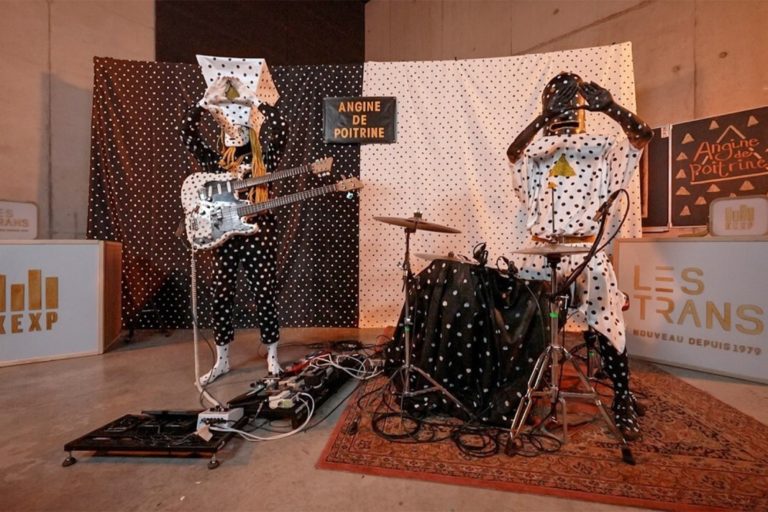
Essayist Will Francis took a close look at Angine de Poitrine, the Québécois experimental rock duo whose elaborately dissonant math rock has been quietly breaking the internet, and his conclusion is pointed: their music is so structurally unpredictable that generative AI simply can’t replicate it. As Francis puts it, AI is trained on the formulas that dominate modern music, and Angine de Poitrine have deliberately walked away from all of them. The ripple effect has been real, with YouTube musicians including Charles Cornell and a very exasperated Rick Beato both responding to fan requests to weigh in on the duo’s KEXP performance.
Watch Motörhead’s 2015 Resurrection Fest, One of the Last and Loudest of Lemmy’s Life

This one matters. Motörhead’s performance at Resurrection Fest in Viveiro, Spain in the summer of 2015 is one of the final recorded concerts of Lemmy Kilmister’s life, and he spent every second of it proving exactly why Motörhead were unlike anything else in rock. Flanked by Phil Campbell and Mikkey Dee, Lemmy tears through an uncompromising set of classics including “Damage Case,” “Stay Clean,” “Ace of Spades,” and “Overkill,” his thunderous Rickenbacker bass and gravelly roar holding the Spanish crowd completely in hand. It’s raw, it’s loud, and it’s irreplaceable.
Video: The Killers Bring the House Down in a Triumphant Las Vegas Homecoming Set

Few bands carry a city the way The Killers carry Las Vegas, and their headlining set at the Life is Beautiful Festival in September 2023 made that connection impossible to ignore. Filmed professionally at the festival’s 10th anniversary celebration in downtown Las Vegas, this performance captures Brandon Flowers commanding a massive crowd through a set full of stadium-sized anthems, with the band’s signature blend of heartland rock, new wave, and post-punk revivalism hitting harder than ever on home turf.
Lizwi and Tommy Veanud Deliver a Transcendent Afro House Single With ‘UNqamlezo’
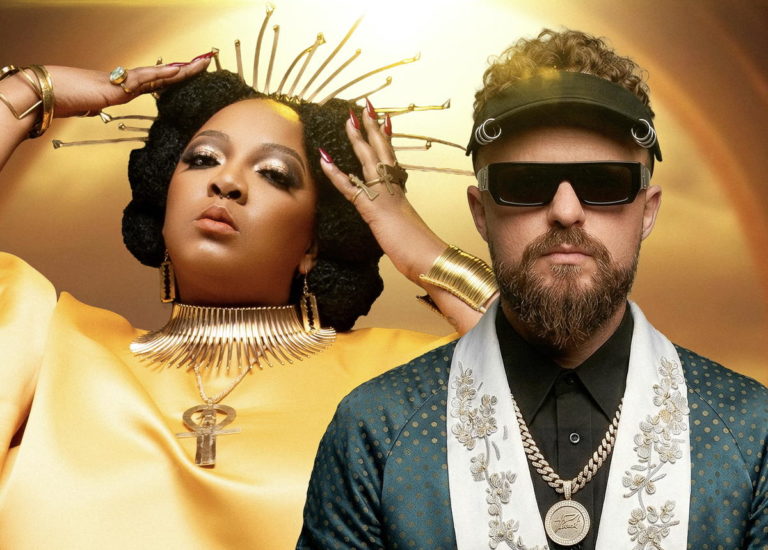
Two of Afro House’s most distinctive voices have connected on something genuinely powerful. Lizwi and Tommy Veanud release ‘UNqamlezo’ on April 30 via TV Recordings, a track built on organic percussion, tribal rhythms, and rich melodic layering that pulls from the deepest wells of African music tradition. Pre-save it here.
The track is sung in IsiZulu, with ‘UNqamlezo’ translating as “The Cross.” It carries a message of faith, protection, and presence, with Lizwi’s raw, emotionally charged vocals driving every moment. The production builds a hypnotic atmosphere where spiritual weight meets dancefloor momentum, and the two elements don’t compromise each other. This one earns both.
Lizwi’s standing in Afro House is well established. Early collaborations alongside Da Capo, a release on Armada Music, and consistent support from Black Coffee set the foundation. Her catalogue spans MoBlack, Get Physical, and more. Her 2024 collaboration with Joezi, “Amathole,” generated significant online traction and led to a Russian-language version with Filatov & Karas that pulled strong radio support. She’s played over 200 shows across Russia and toured the UAE, Saudi Arabia, Thailand, Bali, Mykonos, and beyond.
Tommy Veanud is the alias of Artem Dunaev, also known as Prime Punk, a DJ and producer with over 15 years of experience and more than three million streams under the Tommy Veanud project. Beatport chart support has been consistent, with backing from Hugel, Meduza, and Marco Carola. He performed at Ultra Europe in 2024 and has toured across 12 countries and 25 cities, from Ibiza and Amsterdam to Tokyo and Goa.
Faouzia Takes Her Cinematic ‘Film Noir’ World on a Major International Tour

Faouzia has announced the Film Noir Tour, her first international run in four years, and it covers serious ground. The Winnipeg-born vocalist, songwriter, and classically trained multi-instrumentalist kicks things off June 17 in Berlin before moving through Amsterdam, Paris, and London, then sweeping across North America through July and August.
‘Film Noir,’ her debut independent album, is the spine of this whole run. The 11-track record has already pulled in over 110 million global streams, charted on Apple Music’s Top Pop Albums chart, and landed her on the cover of Spotify’s Pop All Day playlist. “UNETHICAL” went viral. “PORCELAIN” announced her independence. “PEACE & VIOLENCE” added another dimension to a record that sounds like nothing else in pop right now.
The touring resume backing this up is substantial. Faouzia has collaborated with John Legend, Kelly Clarkson, David Guetta, Galantis, Alan Walker, and most recently Illenium and G.E.M. on “Still Breathing.” Variety spotlighted her as an Artist to Watch and called her “an international artist in the truest sense.” In 2024, she was a finalist on China’s hit competition series Singer, making her the second most-streamed international artist in that country behind Taylor Swift.
The Film Noir Tour includes festival stops at Montreux Jazz Festival, Lollapalooza, and Outside Lands, plus three Canadian dates: Vancouver on August 3, Toronto at The Danforth Music Hall on August 19, and Montreal at Beanfield Theatre on August 21. Tickets go on sale to the public Friday, April 24 at 10AM local time, with artist, venue, and Spotify presales running April 21 through 23..
Film Noir Tour Dates:
06/17/2026 – Berlin, Germany – Heimathafen Neukölln
06/19/2026 – Cologne, Germany – Luxor
06/20/2026 – Brussels, Belgium – Botanique
06/23/2026 – Amsterdam, Netherlands – Melkweg
06/25/2026 – Paris, France – Alhambra
06/29/2026 – London, United Kingdom – Islington Assembly Hall
07/12/2026 – Montreux, Switzerland – Montreux Jazz Festival*
07/28/2026 – Detroit, MI – The Shelter
07/30/2026 – Chicago, IL – Lollapalooza*
08/01/2026 – Minneapolis, MN – Fine Line
08/03/2026 – Vancouver, BC – Hollywood Theatre
08/05/2026 – Seattle, WA – Neumos
08/07/2026 – San Francisco, CA – Outside Lands Music Festival*
08/09/2026 – Los Angeles, CA – El Rey Theatre
08/12/2026 – Atlanta, GA – Vinyl
08/14/2026 – Washington, DC – Union Stage
08/16/2026 – Boston, MA – Royale
08/17/2026 – Brooklyn, NY – Warsaw
08/19/2026 – Toronto, ON – The Danforth Music Hall
08/21/2026 – Montreal, QC – Beanfield Theatre
*Festival performance, not included in ticket onsale
SiriusXM’s “99% Invisible” and BBC Studios Announce New Series Exploring America Through 100 Objects

SiriusXM and BBC Studios today announced a major new original series, “A History of the United States in 100 Objects,” produced by BBC Studios Audio and the award-winning team behind SiriusXM’s acclaimed podcast about the hidden design and architecture shaping everyday life, “99% Invisible.”
Hosted by “99% Invisible” creator Roman Mars and premiering on May 19, “100 Objects” echoes the BBC’s 2010 landmark series, “A History of the World in 100 Objects,” by telling the story of America not through a single narrative, but through 100 distinct and surprising objects.
Each episode examines an ordinary object from America – sometimes overlooked, sometimes discarded – to uncover the human stories, contradictions, and cultural forces it reflects: a gold coin retrieved from a shipwreck in 1857 that triggered a financial panic; an antebellum schoolbook that became an instrument of Black liberation; a tiny screw that shows how the US created a hidden industrial empire; and 97 more. Blending meticulous reporting with immersive storytelling, “100 Objects” poses a central question: what if the objects that rarely make the history books say more about our country than those that do?
Throughout the series, Mars will be joined by a wide-ranging group of celebrated contributors, including historians, journalists, and acclaimed podcasters, as well as individuals with personal connections to the stories being told.
The project brings together some of the most respected voices in narrative storytelling for a rare, large-scale collaboration, including: “Radiolab” founder Jad Abumrad; Dan Taberski, investigative journalist and host of “Hysterical,” “Missing Richard Simmons,” and “9/12”; Song Exploder creator Hrishikesh Hirway; former MythBuster Adam Savage; current “Radiolab” co-host Latif Nasser; historian and New Yorker writer Jill Lepore; National Book Award winner Imani Perry; and a whole host of Peabody Award-winning journalists and producers, including Jack Hitt and The Kitchen Sisters, with additional contributors to be announced.
“The history of America can’t be captured in a single story,” explains Roman Mars. “So instead, we’re telling one hundred. By looking closely at the things we’ve made – and the things we’ve thrown away – we’re hoping to reveal a richer, more complicated picture of who we are.”
Helen Pendlebury, BBC Studios Audio’s Commercial & Content Partnerships Director, says, “SiriusXM and the ‘99% Invisible’ team are the perfect partners for this ambitious project which will reflect the best of all of us”.
“Roman Mars and the team behind 99% Invisible have a rare ability to take the seemingly ordinary and reveal something profound,” said Adam Sachs, SiriusXM’sSVP of Podcast Content. “Partnering with BBC Studios on a project of this scale allows us to bring that storytelling to an even broader audience.”
Beginning May 19, new episodes of “A History of the United States in 100 Objects” will drop every Friday in the “99% Invisible” feed on the SiriusXM app and wherever podcasts are available. Episodes will additionally be available a week early for SiriusXM Podcasts+ subscribers. More information available at siriusxm.com/podcasts-plus-subscription.
“100 Objects” is produced for SiriusXM by BBC Studios Audio with Roman Mars and the “99% Invisible” team. The series is executive produced by BBC Studios Audio’s Annie Brown (producer of the groundbreaking “1619” history series for The New York Times) and Courtney Harrell (producer of Wondery’s award-winning “9/12” series). The EP for SiriusXM is Kathy Tu.
“99% Invisible” is distributed on the SiriusXM Podcast Network, and SiriusXM Media, the company’s advertising division, has exclusive ad sales rights to the podcast. The SiriusXM Podcast Network, the #1 podcast network by reach, represents more of the top 20 podcasts than any other network* and reaches 1 in 2 U.S. podcast listeners each month.
Blow by Blow: The Jeff Beck Story Is Getting the Biography It Deserves

Jeff Beck never made it easy on anyone, including the people trying to write about him. That changes July 14 when ‘Blow by Blow: The Jeff Beck Story’ arrives from Da Capo Press, a full narrative biography built from roughly 30 hours of interviews with the late guitarist himself, plus extensive conversations with collaborators, friends, and family.
Brad Tolinski and Chris Gill are the right people for this. Tolinski spent over 25 years as editor-in-chief of Guitar World, the best-selling musician’s magazine in the world, and previously co-wrote ‘Eruption,’ the critically acclaimed oral history on Eddie Van Halen. Gill worked alongside him. Together, they know how to get guitar legends talking.
Beck’s story is genuinely one of a kind. Six decades of music, zero compromises, and a career that somehow included Luciano Pavarotti, Kelly Clarkson, and Guns N’ Roses without ever feeling incoherent. Jimmy Page once said Beck “shifted the whole sound and face of electric guitar music.” This book finally gives that legacy the depth it’s earned.
Beck himself put it plainly: “I’m an awkward son of a bitch when it comes to doing the expected.” That quote alone tells you why a biography this thorough took this long, and why it’s worth the wait. The hardcover runs 400 pages and retails for $32.50, with ebook and audiobook editions also available.
‘Blow by Blow: The Jeff Beck Story’ is available for preorder now at major retailers.
Discord as a DevOps Dashboard: Centralizing System Logs and API Integrations with Dedicated Profiles
By Mitch Rice
Discord is no longer a mere chat program. It has, over time, proved to be a valuable resource to the developers and technical groups, especially the DevOps processes, where speed and real-time updates become quite important.
In many modern setups, teams choose to use Discord accounts for sale when they want to quickly organize multiple environments and manage different system activities more efficiently. This helps them save time and keep their workflow structured from the start.
Discord is commonly used today to monitor system activity, get real-time updates, and keep abreast of servers, deployments, and the performance of applications. It serves as a central hub where all pertinent updates may be observed without the exchange of different tools.
Due to its basic structure and real-time communication capabilities, Discord is currently also utilised as a simple dashboard to perform DevOps-related tasks. It assists the teams to remain organised, quicker in responding to the changes in the system and manages the technical work processes in a more effective manner.
Discord in Modern DevOps Systems
Many developers are now using Discord as an easy and efficient tool in DevOps procedures. Rather than leaving their system management with complex dashboards, teams turn to Discord to keep updated and manage their systems in real time.
It is fast, and this is one of the key reasons. Alerts, messages, and updates are seen immediately, and this assists the teams in responding fast when something alters. Be it a deployment update or a system notification, all of it can be posted in a single location immediately.
The second is that it can be set up easily. Developers are able to establish channels of various activities such as server updates, logs or team discussions. This maintains all these in order and the manner in which everything in each section of the system can be easily followed.
Due to these characteristics, Discord is emerging as a viable answer to the teams that seek a simple, fast, and systematic manner to address DevOps communication and monitoring.
Centralized System Logs in Discord
System logs are an important way of keeping track in the DevOps workflow. Discord allows this much more easily, enabling teams to post logs in particular channels, thereby keeping all the information there, easily trackable.
Rather than monitoring various tools, developers can see updates, errors and system activity within Discord in real time. This saves time; it also makes the entire team updated without additional effort.
Another way logs can be arranged is through teams creating different channels based on various systems or environments. To give an example, deployment updates can go through one channel, whereas errors or performance problems could go through a different one. This simplifies the process of locating and interpreting vital details in a short period of time.
On the whole, a Discord-based centralised log can enhance visibility, maintain clarity, and simplify the process of monitoring activity in the system when developing and running it.
API Integrations and Automation Workflows
Discord can be easily integrated with other tools, which is among the best things about this software. APIs, webhooks, and bots have become a frequent tool used to automate the work of teams in the sphere of DevOps, and Discord can fit into this play group well.
To illustrate, whenever a new update is released or anything in the system alters, a notification can be automatically posted in a Discord channel. This implies that developers need not perform a manual check of everything; they receive updates in real-time in a single location.
Automation aids in minimising routine work as well. Bots can perform other tasks such as sending alerts, sharing logs or notifying the team about system status instead of repeating the same checks several times. This spares time, and everything runs smoothly.
In general, API integrations with Discord help workflows run more quickly, easily, and with teams.
Real-Time Monitoring and Alerts
It is crucial to be at the appropriate time when staying updated in DevOps work. Discord can assist teams in doing so, as it gives real-time notifications to channels, making sure that all the people are aware of what is going on immediately.
In other words, as a server fails or a certain update is installed, a message will be displayed in real-time on Discord. This enables team members to come in fast to check the situation and act in case of necessity. It eliminates the necessity to refresh dashboards regularly or monitor several tools.
Teams may also establish various channels with various kinds of alerts, such as performance updates, errors or overall system activity. This makes all arranged in order and understandable.
Due to this fact, Discord allows keeping an eye on things and does so rather easily and quickly, which helps teams react in a timely manner and ensures that their systems operate smoothly.
Future of Discord in DevOps
As technology continues to be refined, Discord will make even better use in DevOps. Trends are toward more automation and real-time systems, and Discord would be a good fit in such a workflow.
It can be centralised in the future, and all system updates, alerts, and communication occur simultaneously. Rather than having numerous tools used, teams can use Discord to monitor and oversee their systems in a single, easy place.
It also may integrate better with sophisticated technologies, such as AI-driven systems capable of sending intelligent notifications and updates. This will facilitate the teams to know what is going on and react swiftly.
Discord is becoming, in general, not a mere chat tool https://discord-zone.com
but a useful tool in managing present-day development and operations work.
Conclusion
DevOps workflows have become easy and handy with the use of Discord. It assists teams to be up-to-date, maintain logs related to systems, and get real-time alerts without the use of complex tools.
Daily tasks can be made easier and more structured with Discord through tracking system activity, automation and integrations. It also allows teams to react more quickly, be mobile, and be able to store everything in a single place.
With the ongoing increase in the development process, such tools as Discord will become a larger part of ensuring smooth and efficient workflow.
Data and information are provided for informational purposes only, and are not intended for investment or other purposes.
How Video Game Rewards Keep Players Coming Back for More
By Mitch Rice
Video games have mastered the art of keeping players engaged long after the initial thrill fades. At the heart of this retention lies a carefully designed reward system that taps into fundamental human psychology. Whether it’s unlocking a rare item, leveling up a character, or hitting a jackpot in a slot-style mini-game, these mechanics create a loop that feels both satisfying and unpredictable.
The gaming industry has borrowed heavily from behavioral science, particularly concepts around variable rewards and progression systems. Players return not just for entertainment, but because the structure of rewards triggers anticipation and a sense of achievement. This approach extends beyond traditional console games into mobile apps, online platforms, and even casino-style gaming experiences where the mechanics of chance and skill intersect.
Looking at how these systems work helps explain why certain games hold player attention while others fade quickly. From daily login bonuses to tiered achievement tracks, developers use data-driven strategies to balance challenge with gratification. The result is an environment where players feel encouraged to return, not through manipulation, but through well-crafted engagement that respects their time while delivering consistent moments of excitement.
The Psychology Behind Gaming Reward Systems
Variable ratio reinforcement schedules, where rewards arrive at unpredictable intervals, are known to keep players engaged longer than fixed reward patterns. This unpredictability can help maintain strong engagement in video games. Dopamine is believed to play a role, as the brain responds to the anticipation of possible rewards.
Intermittent rewards are thought to produce stronger habits compared with consistent schedules. This has been observed in controlled studies within behavioral psychology. Modern games such as Destiny 2 and Diablo IV use unpredictable loot drops to encourage continued play. The timing and size of the next big payout remain uncertain, which is why players remain engaged even after multiple attempts.
Developers apply these methods through several systems. Daily login bonuses encourage consistency. Achievement tracks show progress. Loot boxes introduce chance. Each one targets a different part of the reward cycle.
Core Reward Mechanics That Drive Player Retention
Progression systems are among the most dependable tools in game design. Experience points, skill trees, and level-up systems give a visible sense of movement. Every session counts toward something larger.
Cosmetic rewards add another layer. Skins, emotes, and character customization options allow expression of identity without affecting gameplay balance. These rewards are personal, which increases their meaning.
Time-gated rewards create scheduled engagement. Daily quests and limited-time events encourage regular return within a specific window. This structure often shifts occasional participants into steady users.
Social rewards use competition and cooperation to drive retention. Leaderboards, guild achievements, and co-op milestones connect individual progress to a wider community. Some players continue regular participation due to community standards or collective goals.
How Casino Games Apply Similar Reward Structures
Casino gaming uses many of the same psychological principles found in video games. Slot machines operate on variable reward schedules that mirror loot box mechanics. The spin outcome is uncertain, and that uncertainty drives continued play.
Progressive jackpot systems show concrete anticipation in online casinos. A well-known case occurred in 2024, when a player at Borgata Online Casino in New Jersey won a large payout on a progressive slot. The jackpot counter updates in real time, and players often watch as the number rises across sessions.
This feature works like experience bars in top video game franchises. The visible growth seen on sites offering major progressive slots can motivate higher player participation as the prize pool increases.
Platforms offering jackpot slot games implement loyalty programs and achievement-style rewards that resemble video game progression systems. Players earn points and receive bonuses for consistent engagement. The online gambling market has experienced notable growth in recent years, with expectations of continued expansion. This method is believed to increase retention across both gaming and casino settings.
Balancing Engagement With Player Well-Being
As reward systems grow more advanced, ethical questions follow. Developers face real pressure to design systems that engage without crossing into harmful territory. The line between compelling design and addictive design is a topic of active debate across the industry.
Transparency has become a growing response. Several US states now require publishers to disclose the probabilities of acquiring specific in-game rewards through loot boxes. This matches regulatory approaches seen in casino gaming, where regions like New Jersey and Pennsylvania mandate clear display of payout rates.
Spending limits and time-played warnings now appear in both major game titles and regulated casino platforms. These tools give players more control over their own participation. The slot machine market has also seen increased activity, with many expecting further expansion in the coming years.
The Future of Reward Systems in Gaming
Adaptive reward systems are gaining ground. These systems use player data to adjust difficulty, pacing, and reward frequency based on individual behavior. The goal is to keep each player interested without causing frustration or burnout.
Blockchain technology gives players digital rewards backed by transparent ownership records. Each item is tied to a unique token on a public ledger. This prevents item duplication, unlike standard database-driven games where developers control supply.
Platforms integrating blockchain show users exactly how many copies of an item exist. This transparency leads players to place higher worth on rare items, since they can confirm scarcity themselves. Limited-edition digital collectibles on blockchain-supported platforms are often seen as more desirable compared with standard virtual rewards.
Cross-platform progression is another growing trend. Rewards earned in one game or ecosystem can carry over to others. This creates a broader sense of investment and makes leaving a platform far less likely.
Regulatory frameworks in several US states require disclosure of reward probabilities in titles with purchasable randomized content. Recent years have seen more states legalizing online casino gaming, with ongoing discussions in others as the industry continues to evolve.
Industry direction now leans toward lasting engagement. Developers and casino platforms are both moving toward models that prioritize long-term player satisfaction. Future reward systems will need to build player trust, not just player time.
Data and information are provided for informational purposes only, and are not intended for investment or other purposes.