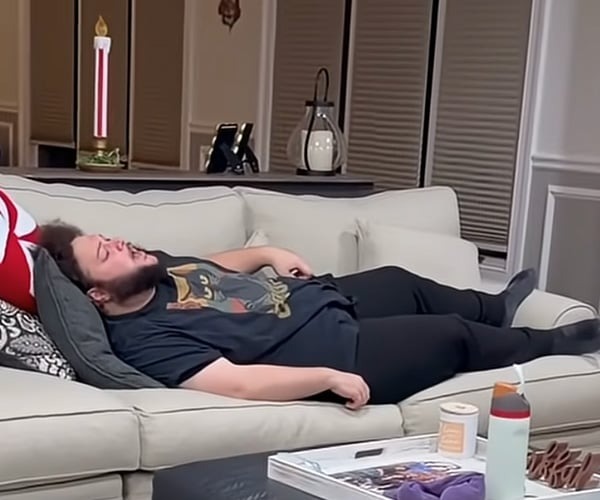
Andy Kaufman turned a children’s song into performance art on Van Dyke and Company in 1976, recruiting four audience volunteers who had no idea what they were walking into. The comedian galloped onstage with a record player, lip synced his way through “Old MacDonald Had a Farm” while directing the confused participants to handle various animal sounds, then galloped right back off once the track ended.
Brock Phillips Debuts With “Something Else” Via Local Hay Records
Dynamic singer-songwriter Brock Phillips releases his debut song “Something Else,” out via Local Hay Records. Leaning into his melodic sensibilities, Phillips explores a familiar, temporary relationship becoming more permanent.
“I went through over 200 songs and narrowed it down to one – ‘Something Else’ as the track to introduce myself with,” shares Phillips. “This is just the beginning!”
The song written by Phillips alongside Brad Clawson and Jacob Durrett was produced by Scott Cooke. An upbeat track with an electric guitar motif leading the way, “Something Else” hooks from the start. A classic pop country song with a unique storyline, the new track marks a strong start for the triple threat singer-songwriter / producer.
Signed to Local Hay Records and Big Loud Publishing, Phillips has been immersed in music all his life. Wearing many musical hats out of both passion and necessity, he began his journey studying music in high school before continuing to Berklee College of Music, where he began creating his own personal style and sound influenced by Chris Stapleton, John Mayer, Kings of Leon and Ariel Posen.
Canadian-born singer-songwriter / producer Brock Phillips has been immersed in music all his life. Wearing many musical hats out of both passion and necessity, Phillips began his journey studying music in high school before continuing to Berklee College of Music, where he began creating his own personal style and sound influenced by Chris Stapleton, John Mayer, Kings of Leon and Ariel Posen. Returning to Canada, Phillips took his skills to Vancouver, booking weekly residencies at clubs and bars that morphed into opening gigs for multi-platinum artists like Dallas Smith, Josh Ross, and MacKenzie Porter. In 2024, Phillips relocated to Nashville and inked a publishing deal with Big Loud Publishing/Local Hay.
Blues Guitar Icon Robben Ford Unveils New Album “Two Shades of Blue”
Robben Ford returns in exceptional form with “Two Shades of Blue”, a record defined by its sophistication, taste, and timeless musicality. The new studio album will be released on March 27th, 2026, via Provogue/Artone.
The album opens exquisitely with the brittle groove of “Make My Own Weather”. “That’s one of my favorite straight-up, slamming blues things I’ve ever written”, says Ford. “It’s about a guy reclaiming his freedom. I tried to create the rumble of a motorcycle with the rhythm guitar”.
Robben Ford is a man in motion. Scan the five-time Grammy nominee’s back catalogue – a half-century hot-streak that darts between jazz, rock, fusion and blues – and you’ll find a musician in a constant state of metamorphosis. Spin new album “Two Shades of Blue” – a transatlantic modern classic that shapeshifted as the sessions unfolded – and you’ll feel the risks taken and rules broken. “I have that curse”, smiles the 74-year-old guitarist. “I don’t have two records that sound the same…”
With a new album around the corner, Robben feels at the top of his game right now. To be released on March 27th, 2026, on Provogue / Artone, “Two Shades of Blue” is not the album Ford was planning to make – but it’s all the better for it. Tracked in the U.S. and U.K. with two different crack-squad bands, this album paints with his inimitable palette, from the low-slung funk-blues of lead single “Make My Own Weather” to skyscraping instrumentals that even test the limits of a player ranked amongst the 100 Greatest Guitarists Of The 20th Century by Musician Magazine.
From his early days, Ford was a special talent. The 60’s saw him backing Mississippi harp wizard Charlie Musselwhite and stretching those skills across Los Angeles with jazz giant Jimmy Witherspoon, before he fell in with the fearless adventurism of saxophonist Tom Scott’s esteemed ‘70s fusion outfit, The L.A. Express.
That lineup’s blazing skills saw them recruited by Joni Mitchell for two classic albums (“the most formative two years of my musical life”), before Ford stepped out with rock royalty on George Harrison’s Dark Horse tour. That collaborative streak would continue throughout his career, from Bonnie Raitt to Bob Dylan. “I’m out there on the bandstand and this rocket ship takes off”, he recalls of his mid-’80s debut with jazz talisman Miles Davis. “For my solo, I put my head down and played every note I knew, as fast as I could. I look up, and Miles just goes: ‘Yeah’. And I’m like, ‘OK, he likes it’”.
“Two Shades of Blue” was loosely sparked by Ford’s move to London, where his antennae picked up the echoes of a sadly departed British blues-boomer. In the same period, having launched the Robben Ford Guitar Dojo with partner Milam Kelly Roberts, he felt the burning urge to explore the instrument’s outer limits.
“The way this album started, I planned it as a tribute to Jeff Beck”, he recalls. “Meanwhile, the Guitar Dojo had reinvigorated my playing, so writing instrumental music became fresh for me again. I didn’t own a Stratocaster, so I literally went out and bought one for this project. Then Daniel Steinhardt from That Pedal Show put together a new pedalboard for me, along the lines of what Jeff Beck was using. I wanted to do something different, set myself a challenge”.
Loading into Eastcote Studios with engineer George Murphy, the chemistry is palpable, with Ford’s guitar and vocals leading a first-call band that takes in drummer Ianto Thomas (Mark Knopfler), keys man Jonny Henderson (Otis Grand), bassist Robin Mullarkey (Paloma Faith) and a brass section comprising of Paul Booth (saxophone), Ryan Quigley (trumpet) and Trevor Mires (trombone). “Great Cats”, smiles Ford. “London has been incredible for finding musicians. This place is loaded, even better for me than Nashville or L.A.”. The album also features the incredible talents of bassist, Darryl Jones (The Rolling Stones), keyboardist Larry Goldings and Gary Husband on drums for the instrumental songs, “The Fire Flute”, “The Light Fandango” and “Feeling’s Mutual”.
“I still love to play”, he considers. “I’ve kept writing better music and become more acquainted with what it is to make a record. The fact that I’m all over the place musically has confused some people over the years. But I always need a change. I always want to do something different. And I’ve been that way since the very beginning…”
Tracklist:
1. Make My Own Weather
2. Jealous Guy
3. Perfect Illusion
4. Black Night
5. Two Shades of Blue
6. The Fire Flute
7. The Light Fandango
8. Feeling’s Mutual
Punk Rock Veterans Ultrabomb Return With New Single “Artificial Stars”
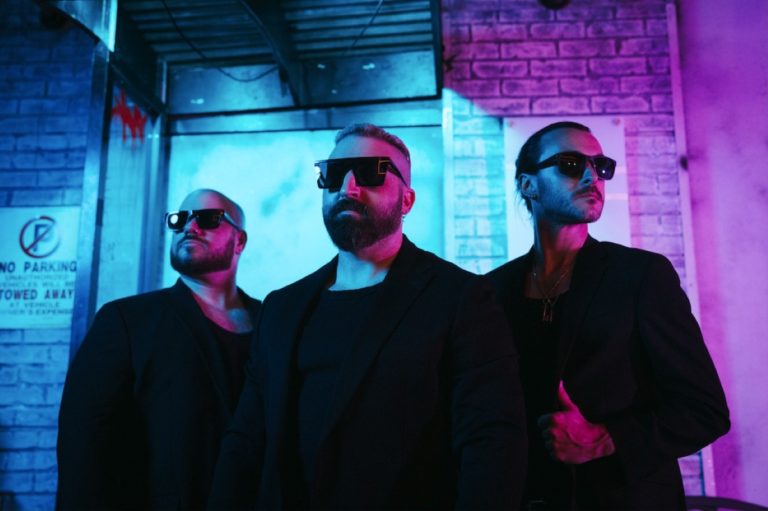
Ultrabomb share “Artificial Stars,” the first release from their forthcoming full-length album ‘The Bridges That We Burn,’ arriving April 3, 2026 via DC-Jam Records and Virgin Music Group. The track delivers the band’s signature mix of urgency, melody, and grit, channeling decades of lived punk experience while exploring isolation, endurance, and the instinct to keep moving forward. As Greg Norton puts it, the song reflects a world where the stars feel distant, yet the reach toward them never stops.
Purity Ring Captivate Live on KEXP
Purity Ring deliver a spellbinding live session for KEXP, performing four immersive tracks recorded in the station’s iconic studio. Featuring Megan James on vocals and Corin Roddick on instrumentals, the set flows through “many lives,” “red the sunrise,” “place of my own,” and “the long night,” with host Cheryl Waters guiding a performance that highlights the duo’s crystalline melodies, heavy low-end, and emotional precision.
Indie Folk Duo Sweet Petunia Share Banjo Driven New Single “Good Part”
Sweet Petunia has released their new single “Good Part” on Righteous Babe Records. Driven by lilting banjos, brazen guitars, and pounding drums, “Good Part” is the quintessential Sweet Petunia track and a rousing label debut from members Madison Simpson and Mairead Guy.
“‘Good Part’ was written after a particularly emotional night at the college house a lot of our friends lived in,” Simpson remembers. “The house was nearly always in total disrepair – dishes piled up in the sink with a leaking tap, records skipping on the record player while nobody paid attention – and I absolutely loved being there. Most of the song is about how I felt I was being neglected by somebody I loved dearly, mirroring the ways in which their house was also not cared for. The chorus reflects the betrayal I was feeling, and the plugged-in instrumentation (electric guitar, drums) we decided on adds to this emotional turmoil.”
The Muppets Return To The Stage With Sabrina Carpenter For New TV Special
The Muppet Show spirit is back in full force as Kermit, Miss Piggy, and the entire Muppet gang reunite for a brand new special event filmed inside the original Muppet Theatre, this time joined by special guest Sabrina Carpenter. Packed with music, comedy, and the kind of carefully unplanned chaos only The Muppets can deliver, the special brings classic backstage antics together with modern pop energy, promising songs, sketches, and delightful derailments. Premiering February 4 on Disney+ and ABC, the event marks a joyful return to familiar felt-lined mayhem, and I am here for it.
Conan O’Brien Fails To Break Nick Offerman During Stone-Faced 2008 Audience Moment
During a May 2008 episode of Late Night with Conan O’Brien, Conan O’Brien paused mid show to investigate a single, unmoving presence in the audience who refused to laugh at anything. That presence turned out to be Nick Offerman, locked into an unblinking stare that immediately became funnier than the jokes themselves. Conan, clearly rattled, called out the situation in real time, noting that the show was doing just fine, thank you, and yet this one man had not cracked so much as a polite smirk. The bit spiraled into a perfect slow burn, with Conan trying harder, the audience laughing louder, and Offerman remaining gloriously unmoved, unknowingly delivering one of the most memorable reaction performances in late night history without saying a word.
Google Nano Banana as Digital Fashion: AI Clothing Designs
By Mitch Rice
The fusion of technology and fashion has always sparked innovation, and with the rise of artificial intelligence (AI) and nanotechnology, the potential to create groundbreaking designs is at an all-time high. Imagine a concept like the Google Nano Banana, a digital fusion of nanotechnology and AI—transforming the fashion industry in ways previously unimagined. By using AI image generation, we can explore how this concept could inspire the creation of futuristic, nanotech-inspired outfits and accessories.
In this exploration, we’ll look at how nanotechnology could influence fashion designs and how AI can bring these ideas to life in the digital realm.
AI in Fashion: Revolutionizing Creativity
Artificial intelligence is rapidly changing the landscape of many industries, and fashion is no exception. AI tools now have the ability to generate intricate patterns, colors, and textures with unprecedented speed and accuracy. Designers are using AI to create pieces that push the boundaries of traditional fashion, making digital fashion a viable alternative to physical clothing.
For example, AI-generated fashion collections are gaining popularity in virtual worlds, with digital designers using algorithms to create unique, innovative pieces. In the case of the Google Nano Banana, AI can help bring futuristic designs to life by interpreting nanotechnology’s role in fashion, producing digital garments and accessories that could never be made with traditional materials.
Key Aspects of AI in Fashion:
- AI-powered tools analyze data trends, historical designs, and current aesthetic preferences to generate new ideas.
- Generative adversarial networks (GANs) allow designers to experiment with endless variations of design styles and materials.
- Virtual fashion, created entirely through AI, eliminates the constraints of physical fabrics, allowing for limitless creativity.
Nanotechnology as Design Inspiration
Nanotechnology, which involves manipulating matter at an atomic or molecular scale, has been a driving force in various industries, from medicine to manufacturing. But it’s in the world of fashion that nanotech could truly redefine how we perceive clothing and accessories.
Incorporating nanotechnology into fashion could lead to highly functional, self-assembling garments, responsive fabrics, or clothing that can adapt to environmental factors like temperature, humidity, or even light. Imagine a “Google Nano Banana” fashion piece—an AI-designed garment or accessory that incorporates nanotech features. This piece could have properties such as:
- Adaptive Fabrics: Similar to how nanotechnology is used in smart fabrics, a Google Nano Banana-inspired design could feature clothing that adjusts its texture or color based on the environment or user preferences.
- Self-Cleaning: Just like nanotech-enabled surfaces in various products, the fabrics could repel dirt and stains, making the clothing incredibly practical.
- Nanostructural Patterns: Nanotech-inspired fashion could incorporate microscopic patterns or textures, creating highly intricate designs that only become visible up close, adding an element of surprise and fascination.
Key Aspects of Nanotechnology in Fashion:
- Nanotech materials that react to light, temperature, or touch could result in garments that are both functional and highly stylish.
- Nanotech-inspired textures or finishes could offer designs that look radically different from traditional fabrics, creating completely new visual aesthetics.
- Nanotech could introduce interactive elements, allowing clothing to change appearance or perform different functions based on the user’s needs.
Digital Clothing and AI-Powered Art: The Next Fashion Frontier
The concept of digital fashion is booming, especially in virtual environments like video games, social media platforms, and virtual reality (VR). In this space, fashion isn’t restricted by fabric or physical construction, which opens up new realms of possibility for designers. AI-generated digital clothing allows for the exploration of ideas that would be impossible to realize in the physical world.
With the Google Nano Banana concept, AI-powered art can take the principles of nanotechnology and translate them into digital garments or accessories that embody these futuristic characteristics. Designers could create virtual fashion shows or limited-edition outfits for avatars, demonstrating how a banana-inspired digital garment could be reimagined into a fashion-forward piece using nanotech and AI-driven art.
Digital clothing powered by AI can also be used for interactive, hyper-realistic representations in augmented reality (AR) or VR spaces, allowing users to “wear” these pieces in virtual environments. The concept of a digital “Google Nano Banana” accessory could become the ultimate fusion of fashion, technology, and virtual reality.
Key Aspects of Digital Clothing and AI-Powered Art:
- Virtual clothing is not bound by the constraints of physical materials, enabling AI-generated designs to break traditional rules of fashion.
- AI-generated fashion can be personalized, allowing users to create custom outfits and accessories for their avatars or digital personas.
- Augmented and virtual reality platforms can showcase AI-designed digital fashion, creating immersive experiences for fashion lovers in virtual worlds.
How AI is Transforming the Fashion Industry
AI’s impact on the fashion industry is profound, from designing new collections to streamlining production processes. The use of AI in fashion is evolving rapidly, allowing for increased creativity, sustainability, and customization in design.
Incorporating nanotechnology into fashion design, AI can produce visuals of garments that aren’t just trendy, but functionally advanced, such as clothing with health-monitoring capabilities or self-repairing fabrics. Other Image models like Flux kontext Image model, AI could create an entirely new visual aesthetic, where the clothing or accessory integrates subtle nanotech-inspired motifs or patterns, creating a piece that is both innovative and beautiful.
Key Aspects of AI’s Transformation in Fashion:
- AI for Trend Prediction: AI helps designers understand upcoming trends, analyzing consumer data to predict what styles, colors, and materials will be popular in the future.
- Sustainability: AI can help create sustainable fashion by designing garments with fewer materials or finding ways to recycle old clothing efficiently.
- Customization: AI tools enable designers to personalize clothing to specific measurements or preferences, enhancing the user experience.
The Future of Fashion with AI and Nanotechnology
The Google Nano Banana concept offers an exciting glimpse into the future of fashion. By using AI to design nanotech-inspired garments, we open up endless possibilities for innovation. Digital fashion and AI-generated designs are reshaping how we think about clothing and accessories, moving beyond mere aesthetics to functional, adaptive, and environmentally sustainable creations.
Data and information are provided for informational purposes only, and are not intended for investment or other purposes.