Home Blog Page 413

The Secret History of Auto-Tune

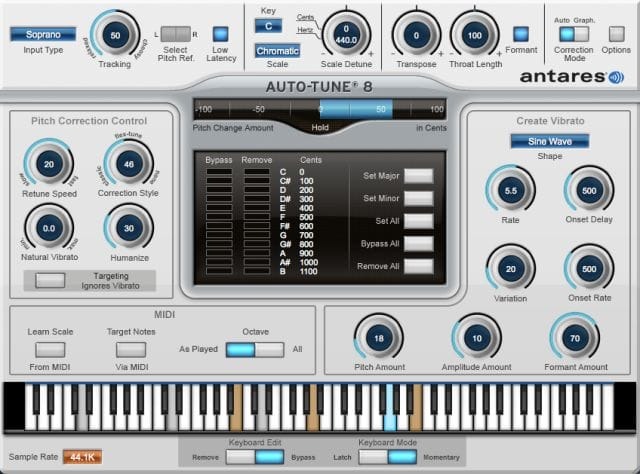
It started as a joke. In 1996, Andy Hildebrand, a former oil industry engineer turned music tech innovator, was told by a colleague’s wife she wished there was a way to sing perfectly in tune. Hildebrand, who knew his way around some heavy-duty math, went to work — and a year later, on September 19, 1997, Auto-Tune was born. Instead of a clunky vocoder or talk box, it used a smart autocorrelation algorithm to nudge wayward notes to the nearest perfect pitch. Studios loved it because it could quietly clean up vocal takes. Singers loved it because they could hit “record” without fearing that one bad note would ruin the magic.

But then came Cher. In 1998, she took a subtle studio tool and turned it into a pop culture earthquake. On “Believe,” producers cranked Auto-Tune’s retune speed to the max, slicing away all the natural slides between notes. The result? A robotic, futuristic vocal that sounded like nothing else on the radio. Fans thought it was a vocoder. Producers smirked. Labels panicked. Cher didn’t care — she told them they could take it out “over her dead body.” And so, the “Cher effect” was born.

From there, Auto-Tune became a part of the studio. Daft Punk made it sleek and shiny on “One More Time.” Radiohead made it eerie and alien on Amnesiac. Eiffel 65 rapped through it. Suddenly, the question wasn’t who used Auto-Tune — it was how they’d twist it next.

Enter T-Pain. By the mid-2000s, the Florida singer/rapper had taken Auto-Tune and wrapped an entire career around it. To him, it was an instrument. His voice became the hook, the melody, the glue that held songs like “Buy U a Drank” together. Everyone wanted the sound. Lil Wayne grabbed it for “Lollipop,” Snoop Dogg slid it into “Sexual Eruption,” Kanye West built a whole album (808s & Heartbreak) around it.

By the time the Black Eyed Peas hit #1 with “Boom Boom Pow” in 2009, Auto-Tune was the sound of the charts. Pop, hip-hop, R&B, country, raï, trap — every genre found a way to make it their own. Faith Hill, Shania Twain, and Tim McGraw quietly kept it in their live toolkit. Vince Gill, Trisha Yearwood, and Martina McBride proudly left it at home.

And it didn’t stop. Future and Young Thug bent Auto-Tune into the wavy, melodic heart of modern trap. Travis Scott, Lil Uzi Vert, and Playboi Carti followed, pushing it into stranger and more atmospheric territory. In North Africa, raï singers fused it with traditional rhythms. In clubs, DJs snapped it onto voices like another synth line.

Today, Auto-Tune is everywhere — and almost invisible. It’s in stadium anthems and bedroom demos, Grammy winners and TikTok hits. It’s still a safety net. It’s still a paintbrush. And, more than 25 years later, it’s still making people argue about whether it “ruined music” or just changed it forever. Andy Hildebrand probably just smiles. After all, it only took a math problem and a good joke to change the sound of the world.

What Is Virtual IOP? How It Works and Who It Helps

0

By Mitch Rice

Questions Answered in This Article:

  • How Virtual IOP Works in Practice
  • How Effective Is Virtual IOP Compared to In-Person?
  • How Long Should Virtual IOP Be?

If you’ve been searching for flexible, effective mental health or addiction treatment options, you may have come across the term virtual IOP. But what is virtual IOP, and how does it compare to traditional in-person care?

A Virtual Intensive Outpatient Program (IOP) is a structured form of treatment delivered entirely online, designed for people who need more than standard outpatient therapy but don’t require inpatient or residential care. Using secure video conferencing, virtual IOP programs bring therapy sessions, group support, and individualized care directly to your home.

In this guide, we’ll explore what makes IOP virtual program so effective, how long they typically last, and whether they can truly be as impactful as in-person treatment. You’ll also discover what to expect, common conditions treated, and how to find virtual IOP programs near you.

How Virtual IOP Works in Practice

A virtual intensive outpatient program functions much like an in-person IOP, but without the need to travel to a facility. Participants typically log in to a secure platform several days per week for multiple hours per session.

Here’s what a typical week in virtual IOP might include:

  • Group therapy sessions focused on building coping skills, communication, and peer support.
  • Individual therapy to address personal challenges such as anxiety, depression, or substance use.
  • Psychoeducation classes on topics like relapse prevention, emotional regulation, and healthy relationships.
  • Family therapy to strengthen support systems and address interpersonal issues.

Because these services are delivered through virtual care, people can access evidence-based treatment programs without disrupting their work, school, or family responsibilities.

How Effective Is Virtual IOP Compared to In-Person?

One of the biggest questions people have is: “Is virtual IOP effective as in person?”

Research suggests that the effectiveness of virtual IOP can be comparable to, and in some cases even better than, in-person programs—particularly for individuals who thrive with flexibility and fewer logistical barriers. Here’s why:

  • Consistent Attendance: Without commuting, people are less likely to miss treatment sessions.
  • Comfortable Environment: Being in a familiar space can make it easier to open up during therapy.
  • Access to Specialists: You can connect with licensed professionals regardless of geographic location.

Of course, every person’s needs are different. For some, in-person connection is vital. But for many, virtual treatment meets the same levels of care as traditional IOP while offering more convenience.

How Long Should Virtual IOP Be?

The length of a virtual intensive outpatient program depends on your individual treatment plan, diagnosis, and progress. Most virtual IOP programs last between 6 and 12 weeks, with sessions held 3–5 days per week for 2–4 hours each day.

Factors that can influence duration include:

  • Severity of mental health conditions or substance use challenges
  • Progress toward treatment goals
  • Recommendations from your treatment center team

Some people step down from IOP to a lower outpatient treatment level after completion, while others may need extended support to ensure long-term stability.

Conditions and Challenges Treated in Virtual IOP

Virtual IOPs are not just for substance use recovery—they can address a wide range of mental health challenges.

Common concerns addressed include:

  • Anxiety and depression
  • Bipolar disorder
  • Trauma and PTSD
  • Substance use disorders
  • Co-occurring disorders (mental health + addiction)

Because these programs are evidence-based and led by licensed clinicians, you can expect a high standard of intensive treatment tailored to your unique needs.

Advantages of Virtual IOP You Might Not Expect

You might already see the obvious benefits—like convenience—but there are other, less obvious perks to virtual intensive outpatient programming:

  • Privacy and discretion: No one sees you walking into a clinic.
  • Personalized care: Access to niche specialists who may not be available locally.
  • Continuity of care: Easier transitions from inpatient or partial hospitalization to outpatient care.
  • Cost savings: No travel or relocation expenses.

If you’re considering virtual IOP programs near me, ask the provider whether they offer hybrid options—allowing you to mix virtual and occasional in-person visits. This can combine the best of both worlds.

Choosing the Right Virtual IOP Program

Not all treatment centers offering virtual care are the same. When evaluating your options, consider:

  • Licensing and accreditation of the program
  • Experience in treating your specific condition
  • Whether they use evidence-based therapeutic methods
  • The quality of technology and privacy safeguards
  • Availability of ongoing support after completion

Example: At Cornerstone Healing Center, programs are designed to blend clinical expertise with personalized attention, ensuring that every participant receives comprehensive, compassionate care—no matter where they log in from.

Virtual IOP vs. Other Levels of Care

It’s important to know where virtual IOP fits among other treatment options:

  • Outpatient treatment: 1–2 sessions per week, less intensive
  • Intensive outpatient programming (IOP): Multiple sessions weekly, high engagement
  • Partial hospitalization program (PHP): Full-day programming, 5+ days per week
  • Inpatient/residential: 24/7 care for acute stabilization

If you’re asking, “Is IOP better than PHP?”—it’s not a matter of better or worse. It’s about matching the level of care to your needs. Virtual IOP is ideal if you require intensive treatment but still want to live at home.

Explore Your Virtual IOP Treatment Options Now

What is virtual IOP if not an opportunity to receive high-quality, evidence-based care from the comfort of home? Whether you’re facing anxiety, depression, addiction, or a combination of challenges, virtual intensive outpatient programs offer flexibility, accessibility, and proven effectiveness.If you’re ready to explore whether virtual IOP is right for you, Cornerstone Healing Center can guide you every step of the way. Call (480) 863-0241 today to speak with our admissions team and discover the treatment path that meets your needs—wherever you are.

Data and information are provided for informational purposes only, and are not intended for investment or other purposes.


Immersive Design: How Puzzles and Props Transform Escape Rooms into Unforgettable Experiences

0

By Mitch Rice

Escape rooms have evolved from simple puzzle boxes into fully immersive narrative adventures. At the heart of this transformation lies thoughtful design — where architecture, storytelling, and interactive elements blend seamlessly.

The most successful escape rooms don’t just challenge players; they transport them to another world. And the key to achieving this? Exceptional escape room puzzles and props that engage the senses and spark curiosity.

For designers, architects, and creative minds, escape rooms offer a unique playground where spatial design meets interactive storytelling. Let’s explore how innovative puzzles and meticulously crafted props elevate these experiences from ordinary to extraordinary.

The Psychology of Escape Room Design

A well-designed escape room is more than just a locked door and a timer — it’s a carefully constructed environment that plays with perception, logic, and emotion.

Studies show that immersive spaces activate memory and problem-solving skills more effectively than traditional games.

  • Spatial storytelling — The layout guides players through a narrative, with each puzzle acting as a plot point.
  • Cognitive flow — Challenges should escalate in difficulty, keeping players engaged but not frustrated.
  • Sensory engagement — Textures, sounds, and even smells deepen immersion.

Architects and designers can borrow principles from theater, game design, and even theme parks to create spaces that feel alive.

Puzzles That Tell a Story

The best escape rooms integrate puzzles so naturally that solving them feels like uncovering secrets rather than cracking codes. Here’s how:

1. Environment-Integrated Puzzles

Instead of padlocks and riddles on paper, modern escape rooms use physical interactions — rotating mechanisms, hidden compartments, or even augmented reality elements. For example:

  • A bookshelf that slides open when the right books are arranged.
  • A vintage radio that transmits clues when tuned correctly.

These puzzles don’t just challenge the mind — they make players feel like they’re part of the story.

2. Multi-Stage Challenges

Linear puzzles can feel predictable. Instead, designers are using nonlinear, layered puzzles where solving one element reveals another. This creates a sense of discovery and teamwork.

For instance:

  • A map with invisible ink that only appears under UV light.
  • A music box that plays a tune, which then becomes the code for a safe.

3. Tech-Enhanced Interactions

From motion sensors to RFID-triggered events, technology allows for puzzles that react to players’ actions in real time. Imagine:

  • A portrait whose eyes follow movement, hinting at a hidden switch.
  • A door that unlocks only when all players stand in the right positions.

These innovations make the space feel dynamic and responsive.

Props That Bring the World to Life

Puzzles alone aren’t enough — props sell the illusion. The difference between a generic “spy mission” and a Cold War-era bunker lies in the details:

1. Authentic Materials

  • Weathered wood, aged metal, and hand-written notes add realism.
  • Replica artifacts (like an “ancient” diary or a “classified” dossier) deepen immersion.

2. Functional Aesthetics

Every prop should feel like it belongs — not just as decoration, but as something players can interact with. A few standout examples:

  • A grandfather clock with a secret compartment.
  • A “broken” phone that, when repaired, plays a crucial message.

3. Lighting and Sound Design

  • Flickering lanterns, distant whispers, or sudden blackouts heighten tension.
  • Directional audio can guide players without breaking immersion.

The Future of Escape Room Design

As escape rooms grow more sophisticated, we’re seeing trends like:

  • Hybrid physical-digital experiences (projection mapping, AR puzzles).
  • Adaptive difficulty (AI adjusting puzzles based on player performance).
  • Multi-room narratives (expanding beyond 60-minute games).

For designers, the challenge is balancing innovation with intuitive gameplay — so that even the most elaborate setups remain solvable (and fun).

Why This Matters for Architects and Designers

Escape rooms are a testament to how environment shapes experience. The same principles apply to retail spaces, museums, and even offices — where interactivity and storytelling can transform user engagement.

For those looking to explore cutting-edge escape room puzzles and props, the intersection of design and gameplay offers endless inspiration. The most memorable spaces aren’t just seen; they’re experienced.

Data and information are provided for informational purposes only, and are not intended for investment or other purposes.
Rihanna’s Isolated Vocals For “American Oxygen”

“American Oxygen,” released by Rihanna in 2015, is a patriotic-themed track reflecting on the American dream and a changing nation. Written with Alex da Kid, Candice Pillay, and Sam Harris — it drew inspiration from Bruce Springsteen’s “Born in the U.S.A.” First streamed on Tidal and later released on iTunes, the song blends social commentary with anthemic production.

5 Latest Romantic Movies on Netflix Not to Miss Out On

0

By Mitch Rice

Netflix has become a go-to place for movie lovers, offering a wide selection of films across every genre imaginable. If you’re in the mood for love, romance, and heartwarming stories, there are several romantic films that are currently gaining attention. 

From passionate connections to personal growth, these movies promise to touch your heart. Here are five romantic movies on Netflix that you shouldn’t miss.

1. My Oxford Year

This movie brings together a love story and a journey of self-discovery. My Oxford Year follows Ella, an American student who wins a prestigious fellowship to study at Oxford University. 

She is excited about the opportunity, but things take an unexpected turn when she meets Jamie, a charming and talented professor. The two grow closer as they navigate their differences and face personal struggles.The story beautifully balances the challenges of academia with the blossoming of a romantic relationship. 

My Oxford Year is a perfect watch for those who enjoy seeing characters evolve both emotionally and intellectually, all while surrounded by the stunning scenery of Oxford. It’s a recent release, so if you cannot find it in your library, you can use Surfshark Netflix VPN to access the title. 

2. The Life List

The Life List brings a fresh perspective to the romantic genre by combining it with a sense of adventure and personal reflection. The plot revolves around the main character, Sophie, who has lived her life following a strict set of rules. 

She has avoided taking risks and never stepped outside her comfort zone. After a life-changing event, Sophie decides to go on a journey to fulfill a list of things she always wanted to do but never dared to try.

As she embarks on her adventures, Sophie meets various people, including a love interest who challenges her views on life. The chemistry between Sophie and her romantic partner adds depth to the film. 

The story highlights themes of personal growth, self-discovery, and the importance of stepping out of your comfort zone. If you’re someone who loves seeing characters grow and evolve, this movie is a must-watch.

3. La Dolce Villa

La Dolce Villa is a tale of passion, second chances, and rediscovering love. The story centers around Isabella, a successful woman who returns to her family villa in Italy after many years. 

The villa, which once held many happy memories, is now a place of quiet and solitude. Isabella reconnects with her past, including an old flame who still holds a special place in her heart.

This film beautifully captures the magic of Italy, offering stunning visuals of the Tuscan countryside and charming villas. The romance in La Dolce Villa is understated but powerful. 

It’s not just about love between two people, but also about reconnecting with one’s roots and the idea that it’s never too late to find happiness. The movie’s gentle pacing allows viewers to fully immerse themselves in the emotional journey of the characters.

4. Our Little Secret

If you enjoy suspense mixed with romance, Our Little Secret is the movie for you. The story follows Emily, a young woman who is in a relationship with a man who has a mysterious past. 

As their relationship deepens, Emily begins to uncover secrets that her partner has been hiding. These secrets put their love to the test and raise questions about trust, loyalty, and the consequences of keeping things hidden.

Our Little Secret is more than just a typical romance. It adds layers of mystery and intrigue, making it stand out in the genre. The chemistry between the lead characters is palpable, and the tension that builds as secrets are revealed keeps you hooked. This movie is perfect for anyone who loves romantic dramas with a touch of suspense and emotional depth.

5. It Ends With Us

Based on Colleen Hoover’s best-selling novel, It Ends With Us is a deeply emotional story that tackles tough topics like love, abuse, and personal strength. The film follows Lily Bloom, a young woman who falls in love with a charming and passionate man named Ryle. 

However, as their relationship unfolds, Lily begins to notice warning signs and struggles with whether she should stay in the relationship or break free.

The beauty of It Ends With Us lies in its honest portrayal of love’s complexities. It doesn’t shy away from addressing difficult issues, and it shows how people can grow stronger through painful experiences. 

The movie is both heartbreaking and inspiring, offering a nuanced look at relationships and the importance of choosing one’s happiness.

Conclusion

Netflix continues to offer a wide range of romantic movies, each with its own unique charm and emotional depth. From the beautiful landscapes of My Oxford Year to the emotional rollercoaster of It Ends With Us, these films promise to keep you engaged and moved. 

Whether you’re looking for a lighthearted romantic adventure or a story that dives deep into the challenges of love, there is something for everyone on this list. So, grab some popcorn, get comfy, and enjoy these touching romantic stories that will leave you reflecting on the beauty of love and life.

Data and information are provided for informational purposes only, and are not intended for investment or other purposes.

53 Amazing Facts About Jerry Garcia: A Tribute for His Anniversary

On August 9, 1995, the world lost Jerry Garcia, a musician whose influence extended far beyond the Grateful Dead’s storied three-decade run. More than a guitarist and vocalist, Garcia was a cultural touchstone—an artist, innovator, and reluctant icon of the 1960s counterculture. His music was a blend of bluegrass, rock, folk, blues, and jazz, often stretched into uncharted territory through fearless improvisation. Yet Garcia’s life was as complex as his playing: filled with personal challenges, creative reinvention, and enduring curiosity. On the anniversary of his passing, we celebrate his extraordinary journey with 53 fascinating facts, mixing beloved milestones with lesser-known details that show the man behind the legend.

  1. Jerry Garcia was born Jerome John Garcia on August 1, 1942, in San Francisco’s Excelsior District.
  2. He was named after American composer Jerome Kern.
  3. His father, a professional musician, died in a fishing accident when Jerry was just five.
  4. At age four, Garcia lost most of his right middle finger in a wood-chopping accident.
  5. As a child, he took piano lessons but was more drawn to the banjo and guitar.
  6. His earliest musical inspiration came from his grandmother, who played country and bluegrass.
  7. Garcia attended the San Francisco Art Institute before fully committing to music.
  8. He was influenced by the writings of Jack Kerouac, introduced to him by artist Wally Hedrick.
  9. Garcia co-founded the Grateful Dead in 1965, evolving from a jug band called Mother McCree’s Uptown Jug Champions.
  10. The name “Grateful Dead” came from a random dictionary entry Garcia stumbled upon.
  11. He wrote or co-wrote classics like “Dark Star”, “Uncle John’s Band”, and “Scarlet Begonias”.
  12. Garcia never played a song the same way twice, valuing improvisation above all.
  13. The Dead performed 2,314 concerts over 30 years.
  14. Garcia’s guitar cues often came from rhythm guitarist Bob Weir.
  15. He considered John Coltrane one of his greatest musical influences.
  16. The Dead’s 1987 album In the Dark became their best-selling record.
  17. Garcia was ranked 13th on Rolling Stone’s “100 Greatest Guitarists” list in 2003.
  18. He played pedal steel guitar on Crosby, Stills, Nash & Young’s hit “Teach Your Children.”
  19. Garcia formed the Jerry Garcia Band as his main side project.
  20. He was a founding member of the bluegrass supergroup Old & In the Way.
  21. Collaborated extensively with mandolinist David Grisman, blending folk and jazz.
  22. Played on over 50 studio albums for other artists, from Jefferson Airplane to Warren Zevon.
  23. Experimented with early ambient music alongside Ned Lagin.
  24. Built a reputation for genre-crossing, from reggae to electronic music.
  25. Garcia was married three times and had four daughters.
  26. His second wife, Carolyn “Mountain Girl” Adams, was a former Merry Prankster.
  27. He credited marijuana for sparking one of his most joyful early experiences.
  28. He struggled for decades with heroin addiction and health problems.
  29. Survived a diabetic coma in 1986, which forced him to relearn guitar.
  30. Enjoyed sketching and painting, with his artwork later exhibited and sold worldwide.
  31. Designed neckties, clothing, and even hotel room décor featuring his art.
  32. Was known for telling friends, “I’m not the leader of the Grateful Dead,” despite public perception.
  33. In 1987, Ben & Jerry’s released Cherry Garcia, the first ice cream named after a musician.
  34. A species of cockroach was named Cryptocercus garciai in his honor in 1998.
  35. An asteroid discovered in 1985 was named Jerry Garcia after his death.
  36. Garcia Amphitheater in San Francisco’s McLaren Park was named after him in 2005.
  37. His likeness inspired the animated “God” character in NBC’s God, the Devil and Bob.
  38. Seattle band Soundgarden recorded “Jerry Garcia’s Finger” in tribute.
  39. He’s estimated to be the most recorded guitarist in history, with over 15,000 hours of playing preserved.
  40. The annual Jerry Day festival celebrates his life in his childhood neighborhood.
  41. Garcia owned around 25 guitars over his career, many custom-made.
  42. His iconic “Wolf” guitar, built by Doug Irwin, sold for nearly $790,000 in 2002.
  43. His “Tiger” guitar fetched $957,500 at the same auction.
  44. In 2017, Wolf sold again for charity, raising $1.9 million for the Southern Poverty Law Center.
  45. Garcia’s favorite amp, a McIntosh MC2300 nicknamed “Budman,” was used for two decades.
  46. His final main guitar, “Lightning Bolt,” was crafted from 19th-century rosewood salvaged from an opium bed.
  47. Garcia often swapped out pickups yearly to keep his tone fresh.
  48. He was known to experiment with MIDI synthesizers on guitar in the 1990s.
  49. Despite failing health, Garcia continued to tour until a month before his death.
  50. He died of a heart attack on August 9, 1995, at a rehab facility in Forest Knolls, California.
  51. His ashes were divided between the Ganges River in India and San Francisco Bay.
  52. Garcia was inducted into the Rock and Roll Hall of Fame in 1994 but skipped the ceremony.
  53. The Jerry Garcia Foundation, run by his wife and daughter, continues his commitment to art, music, and humanitarian causes.

Jerry Garcia’s story is not just the history of a musician, but of an artist whose work transcended categories. His openness to exploration—whether in sound, life, or art—left a permanent mark on American culture. Even decades after his passing, Garcia remains an enduring symbol of musical curiosity, generosity, and fearless improvisation. His songs still roll on, as alive and unpredictable as the man who played them.

Photo Gallery: Dwayne Gretzky, Choir! Choir! Choir!, and Super Dogs at Toronto’s Budweiser Stage on August 7, 2025

0

All photos by Mini’s Memories. You can contact her through Instagram or X.

Beats Before the Bell: The Role of Entrance Music in Muay Thai

0

By Mitch Rice

In Muay Thai, the fight starts long before the first punch. The moment a fighter steps toward the ring, the crowd is already locked in. Every cheer, every drumbeat, every note builds a story before gloves even touch. Entrance music is more than background noise. It is an announcement, a statement, and sometimes a little psychological warfare.

Some fighters stick to traditional Thai music, carrying on cultural roots that stretch back centuries. Others blast hip-hop, rock, or pop hits that signal their personality and strategy. If you want to follow these moments from anticipation to final bell, sites like https://www.thsport.live/scoremuay-thai.html give fans a clear look at the results once the music fades and the action begins.

Why the Walk-In Matters

Entrance music sets the stage. In combat sports, it is as much a part of the spectacle as the fight itself. The right song can fire up the crowd, intimidate an opponent, or focus a fighter’s mind. It is the soundtrack to confidence.

Muay Thai walk-ins often blend tradition and modern flair. The wai kru ram muay, a pre-fight ritual dance, might be performed with live traditional instruments. Then, as the fighter climbs the ring steps, the music might shift to something unexpected. That mix keeps fans guessing and makes each entrance unique.

Choosing the Right Track

Selecting walk-in music is a personal decision. For some fighters, it is tied to their heritage. For others, it is about finding a rhythm that matches their fighting style. The tempo and tone matter. A slow, haunting melody can create tension. A fast, pounding beat can pump up both fighter and fans.

Some popular approaches include:

  • Cultural identity – Thai classical instruments or regional folk songs.
  • Hype factor – energetic pop or hip-hop tracks with strong bass.
  • Mind games – unexpected or ironic choices to throw off the opponent.

The song is not just heard. It is felt. The bass vibrates through the venue, syncing the crowd’s heartbeat to the fighter’s pace.

Music as a Psychological Tool

Entrance music can shape the mental landscape of the fight. A loud, aggressive track might give a fighter a surge of adrenaline. A calm, steady song might center them, blocking out nerves.

Opponents can feel that energy too. Walking toward someone while their chosen anthem blasts can be intimidating. The crowd’s reaction, amplified by the music, can boost one fighter’s confidence while planting doubt in the other.

Memorable Muay Thai Entrances

Like any live performance, some walk-ins become legendary. A fighter might be remembered for a stunning knockout, but fans also recall the night they walked in to a perfectly chosen track.

One example is the blend of traditional Thai percussion with a modern electronic drop, merging heritage with present-day flair. Another is when a fighter uses a song tied to a personal story, making the moment feel intimate even in a roaring stadium.

These moments linger. Just like a hit song on the radio, a well-executed entrance can stick in the minds of fans for years.

The Crowd Connection

Music is one of the fastest ways to connect with people. In Muay Thai, it creates an immediate bond between fighter and audience. Even if fans do not understand the lyrics, they understand the feeling.

Crowds often clap, sing, or chant along. That shared rhythm builds energy in the venue, creating a wave the fighter can ride into the first round. It also makes the event more memorable for everyone watching.

Following the Story Beyond the Music

The entrance is only the opening chapter. After the walk-in, the fight begins, and the story unfolds in real time. Fans who follow live scores and results get the full arc—from music and mood to punches and points.

That is why dedicated fight followers often pair the sensory thrill of the entrance with the data and detail of live score platforms. Watching a fighter’s walk-in is exciting. Seeing how that confidence or tension plays out over the rounds gives the complete experience.

Music Trends in Muay Thai

Over the years, trends in entrance music have shifted. While traditional sounds remain a cornerstone, fighters have embraced global genres. K-pop, EDM, reggae, and even classic rock have made their way into arenas.

This evolution mirrors the sport’s expanding reach. Muay Thai is no longer just a Thai tradition—it is an international phenomenon. And like any global stage, its soundtrack is diverse.

Final Bell, Last Note

When the fight ends, the entrance music might feel like a distant memory. But in many cases, it is what hooked the crowd from the start. It is part of the narrative, the style, and the showmanship that make Muay Thai so compelling.

Whether you are ringside or following from afar, paying attention to the beats before the bell adds a richer layer to the experience. It is the art before the art of fighting.

Data and information are provided for informational purposes only, and are not intended for investment or other purposes.

Top 7 Computer Monitoring Software for Home and Office Use

0

By Mitch Rice

Concerned that your employees are wasting time when they are at home? Or maybe you would want to know what your kids are up to on the family PC when you are not around? You are not the only one. As remote work has become our new reality, our screens have been on the rise, and the online danger hangs in the air every time we enter cyberspace, computer surveillance software is becoming the new norm in both the corporate and home environments.

Be it an employer coping with the inefficiency of the working team or a parent in need of a safer online experience for their child, computer monitoring software will be the solution. They have these tools which allow them to monitor activities on the screen, spy on them, and even record their keystroke without the user being aware of such activities.

This article will not only bring out the best 7 computer monitoring software in the market, but we have selected the best of the best based on their features, reliability, and user-friendliness. And, a tip before you see the list, the best 2 items in this list are simply priceless when it comes to stealth mode, data discovery, and complete control remotely. It doesn’t matter whether one is concerned about employee productivity or child safety; there is something here to arouse the interest of the readers.

What to Look For in a Computer Monitoring Tool

Monitoring software is not the same, and it is necessary to select the one that will be good, depending on your needs. What you want to watch out for when choosing a good tool is:

  • Stealth Mode: The software must be able to operate in the background unseen, such that users are not left with the reasoning.
  • Keylogger Support: It must capture all the keystrokes, whether text in a chat room or any password, and give you an insight into the digital behavior to the max.
  • Screen Lock / Live Screenshots: Find programs that will take a screenshot or stream live activity, particularly at the time of work or when browsing something dangerous.
  • File Access Tracking: An excellent way to monitor is to track files created, edited, copied, or deleted, which is ideal in case of sensitive files.
  • Remote Dashboard: Ideally, you need to see all the reports and the action on the fly via a dashboard on the internet, even when you are miles away.
  • OS compatibility: Check that the software is compatible with Windows 11/10/8.1/8/7 which remain the most popular operating systems in use today.

In 2025, such aspects as secure monitoring, productivity tracking, time management functionality, and remote access will not be optional qualities but basic and fundamental ones. In case of a business or a home, get the first line of defense against people nosing around in your accounts by using stealth surveillance.

MoniVisor by ClevGuard – The All-in-One Stealth Monitoring Powerhouse

You may be monitoring your remote workforce, want to monitor your digital partner, or simply make sure your teen is not getting involved in some dangerous virtual activities. In all cases, MoniVisor will offer you full visibility with no invasiveness. This tool is made by ClevGuard, a well-established company in the field of digital security, which makes the software superior in terms of stealth and capability of functioning on any Windows computer unnoticed.

Its important characteristics are:

  • Real-time activities watching via live screen viewing
  • Logging of file activity to follow opens, edits, and deletes.
  • Reports of the use of web and apps, which show time use on each platform
  • Control of remote devices without any contact with the computer
  • Auto screenshot with exporting without publicizing the evidence greatly

The dashboard of MoniVisor is unobtrusive, simple, and privacy-compliant.

FamiGuard Monisen – Corporate-Level Monitoring for Personal and Business Use

FamiGuard Monisen is a powerful computer spy software that uses flexible scheduling and multi-user capability. The tool can be incorporated socially and professionally to suit both an individual and an employer. As such, this tool can be used as a parent to control the screen time of your child or as an HR manager tracking your workforce.

Distinctive characteristics:

  • Special screen recording policies by days or hours
  • USB tracking to track and check data transfers and malicious activity
  • Chat and email surveillance on WhatsApp, Skype, and Gmail, among others.
  • Micromanagement-free screenshot intervals of visibility
  • History logs can also be downloaded and printed to give total control over the digital trail..

It is an anti-time theft solution used by John, a human resources (HR) director, to minimize time theft among hybrid teams. Monisen runs silently in the background, is virus-immune, and offers lifetime updates, which means that it is one of the most trustworthy Windows surveillance tools available on the market.

FlexiSpy – Ideal for Deep Tech Users

In case you want access even deeper into the systems, FlexiSpy provides some of the tools that are used by specialists in cybersecurity. It would also be possible to enable the microphones, remotely log into the cameras, and even listen to calls as well as Data messages, thus it would be the perfect spyware that would suit parents who are tech-savvy or even private detectives.

The cost of this power is in the steep learning curve, and FlexiSpy is not the best application to use by casual users. Nevertheless, it is unsurpassed by people who want to be the masters of the device and even know how to handle it properly.

Net Nanny – Best for Parental Control and Kid Safety

Net Nanny is an old brand when it comes to child safety and parental control. It is full of features that the user will appreciate:

  • The control of the screen time
  • Blocking and filtering of a website.
  • Warnings on profane words or searches

It is, however, not fit to track businesses or employees since they are not stealthy and do not provide sufficient reporting. Anyway, it is one of the best choices that worried parents can make to encourage healthy screen practices at home.

Teramind – Enterprise-class Behavior Analysis

Teramind is enterprise-oriented, and it can provide behavior-based alerts, as well as insider threat detection, and productivity heatmaps. It is most suitable for companies that require upscaling monitoring among dozens or hundreds of employees.

You’ll get:

  • Data profiler
  • Productivity scoring
  • Advanced role-based monitoring

Nevertheless, it is difficult to configure, and it sounds like a business-to-business plan, which is not very good in the case of individual entrepreneurs or, more likely, even families.

ActivTrak – Productivity Insight Visual Dashboards

It should not feel alien to data visualization and team performance reports enthusiasts, as ActivTrak makes a good candidate. It emphasizes:

  • Time tracking
  • Workflow insights
  • Distracted detection through productivity reports

Even though it is an entirely appropriate tool to collaborate with remote teams and transparency-oriented companies, ActivTrak does not allow stealth mode, i.e., it is ineffective in silent or inconspicuous monitoring.

Quick Setup Guide: Get Started in 3 Simple Steps

Step 1: Select Your Tool and Sign Up for an Account

Start with the selection of software that suits you best. MoniVisor by ClevGuard is the most suitable when you have the need to track in real-time, be invisible, and have stealth capabilities, whereas FamiGuard Monisen is the best option when you just need to monitor the schedule and manage the business activity. After you have chosen the preferred tool, proceed to the official website, create your account with the help of your email, and select the preferred subscription plan that aligns with your intentions. 

Step 2: Installing the Software and Being Put in Stealth Mode

After creating your account, you will need to go to your dashboard, where the file to install will be obtained. Install it on the targeted Windows and go through the step-by-step process to activate all the necessary permissions. When setting up, make use of the stealth mode so that the software can run without any notice, like icons or notifications. It is installed quickly and safely, there is no rooting or jailbreaking as well, and the program cannot be detected by the device user after it is configured.

Step 3: Log In and Begin Monitoring from Your Dashboard

Your installation is complete, and you are in silent mode. Log in to your dashboard via any browser or device. This central hub puts the activity of the target computer totally under your control and knowledge. Now you can track live screen sessions, get a history of browsing, keystroke logs, app use, as well as file transfer and downloads in real time. The interface is easily accessed and comes with constant updates to provide you with constant information wherever you are.

Final Thoughts

Most businesses are done through computers and monitoring through those computers in 2025 does not mean spying anymore; it is rather about taking care of the individual being supervised, personal safety, and the integrity of the organization. As a parent who wants your child to be a cautious digital citizen or an employer who needs to root out distractions and information leaks, the use of a proper monitoring tool will enable you to make the right choice without crossing the privacy line.

Such invisible but super-effective monitoring is what the users of ClevGuard need, and MoniVisor is their number one solution due to its stealth features and real-time capabilities. In the meantime, FamiGuard Monisen turns out to be an ideal universal device suitable in any context, whether at the family and business level, since it also provides sophisticated tracking capabilities, yet in a simple package.

Data and information are provided for informational purposes only, and are not intended for investment or other purposes.

Songwriting in 2025 Is Weirder Than You Think

0

By Mitch Rice

Imagine this: a songwriter hums a rough tune into an AI tool, layers it with a looping Afro-percussion beat, and drops in a spoken-word sample lifted from a late-night movie. Within minutes, a chorus takes shape-raw, unexpected, and full of character.
This is “weird songwriting,” and it’s quickly becoming the signature sound of 2025.


Far from being a gimmick, this new approach is giving artists an edge, helping them break creative blocks, stand out in a crowded market, and connect with audiences in surprising ways. In this article, we’ll explore the trends driving this shift and show you how to put them into practice.

Part 1. Defining “Weird” in 2025 Songwriting

In 2025, “weird” doesn’t mean random or unpolished-it’s a deliberate creative strategy. Today’s most interesting tracks are born from:

  • Non-linear workflows – Ideas don’t follow the old verse-chorus-verse template; they might start from a beat, a sample, or even a sound effect.
  • Cross-genre and cross-cultural elements – Afro-drill meets hyperpop, folk blends with synthwave, city pop collides with phonk.
  • Human-AI co-creation – Machines suggest melodies, rhythms, and lyrics, while humans bring the emotional and narrative core.
  • Speed and iteration – Songs can go from concept to shareable demo in hours, enabling more experimentation and rapid feedback.

It’s not chaos – it’s craft, shaped by a willingness to push boundaries and embrace tools that expand what songwriting can be.

Part 2. 3 Forces Reshaping Songwriting

1) AI Co-writing Turns into On-the-Fly Improvisation

Songwriters aren’t staring at a blank page anymore-they’re feeding AI with tightly scoped prompts that split a song into emotion, metre, and hook ideas.

Think of the model as an improve partner: you throw cues, it riffs back options in seconds, and you keep the bits that spark.

You no longer need full formal training to get a workable demo. Music theory still helps, but the bottleneck has shifted to iteration speed and editorial judgement-selecting, trimming, and refining the best ideas from rapid AI variations.

Original AI music maker can take text prompts or a hummed motif and return melody drafts or stems within minutes, which you can then edit and arrange further.

How to apply:

  • Write 20 mood-based hook prompts with clear syllable counts and BPM.
  • Generate variations and keep the most authentic rhythm/rhyme.
  • A/B test the top 3 against different grooves before finalising lyrics.

2) Short-form “Micro-hooks” for Viral Potential

Platforms like TikTok and Instagram Reels have become decisive in music discovery and chart performance. According to Billboard, 84% of songs that entered the Billboard Global 200 in 2024 first went viral on TikTok. That tells us that short loops – especially 7 – 12-second micro hooks – can be more impactful than a full verse.

TikTok users are 74% more likely to find and share new music via short‑form platforms than the typical short – form user. These tiny, instantly recognisable loops-often sync’d to hand‑gesture dances or quick cuts-are tailor‑made for algorithmic virality.

How to apply:

  • Build three chorus versions: original speed, slowed, and chopped.
  • Match each version’s BPM to current short‑video trends.
  • Upload them as clips to platforms like TikTok or Reels, then expand the one with highest replay rate into a full track.

3) Global Genre Blending as the New Normal

What used to be rare mashups – Afro-drill with folk melodies, hyperpop laced with acoustic ballads, or city pop riding on phonk basslines – are now at the heart of charting tracks. Streaming culture and global collaboration tools mean a producer in Lagos can swap stems with a singer in Tokyo overnight, turning local rhythms into worldwide hooks.

For artists, blending genres isn’t just an artistic choice – it’s a visibility strategy. Genre-melding is no longer experimental – it’s mainstream. Latin streaming trends exemplify this: Regional Mexican music grew 60% in U.S. on – demand audio streams in 2023. Cross-cultural hybrids naturally feel fresh, broaden audience reach, and stand out in algorithm-driven playlists. The key is balance: keep one familiar anchor while introducing a rhythm or instrument that feels unexpected but organic.

How to apply:

  • Choose one core genre to anchor your track.
  • Add one regional rhythm (e.g. Afrobeat swing, reggaetón dembow, or Japanese city-pop bounce).
  • Layer in an unexpected instrument (like a koto riff in a drill beat or steelpan in hyperpop).
  • Share a 30-second snippet with trusted listeners to ensure the blend feels coherent, not gimmicky.

Part 3. Ethics & Cultural Boundaries

New creative freedoms also bring new responsibilities. As AI tools, short-form platforms, and cross-cultural collaborations become central to songwriting, artists need to ensure that their work is not only innovative, but also respectful and transparent.

1.  Consent First

If you’re using AI-generated voices, samples, or spoken-word snippets, make sure they come from a source you can legally use. For vocal models, get explicit permission from the voice owner – especially if the tone or delivery could be mistaken for a real person. AI music generators are safe for original creation, but you should still keep a record of what was generated and when.

  • Licensing for Micro-hook Samples

Many viral short-form tracks start with a sample or loop. Before you build your 7–12-second hook, confirm that every sound-whether it’s a drum fill, vocal chop, or movie clip-is cleared for commercial use. A single unlicensed sample can block distribution on streaming platforms.

  • Cultural Respect in Genre Blending

When incorporating elements from another culture-be it an Afrobeat rhythm, a Japanese koto riff, or Latin percussion-learn the origin, context, and traditions behind them. Credit your sources where possible. Respectful integration makes your track feel authentic and helps avoid accusations of cultural appropriation.

By pairing innovation with these safeguards, you protect both your creative reputation and your ability to release and monetise your music globally.

Following these principles keeps your “weird” songwriting fresh, fair, and future-proof.

Conclusion

By 2025, the way we create music has transformed beyond recognition. AI co-writing has moved from novelty to everyday tool, short-form micro-hooks have become launchpads for global hits, and cross-genre blending is no longer the exception-it’s the rule. These shifts aren’t just changing how songs are made; they’re redefining how artists connect with audiences and how music travels across cultures.

The common thread? Speed, accessibility, and a willingness to experiment. Whether you’re using AI to draft a melody, crafting a 10-second viral loop, or mixing rhythms from opposite sides of the globe, the tools are in your hands – literally.

Your next step: Pick one idea from this article and try it today. Hum into an AI tool, cut a micro-hook for TikTok, or fuse two genres you’ve never combined before. The weirder, the better-because in 2025, ‘weird’ is the new normal. And that’s exactly what will set you apart.

Data and information are provided for informational purposes only, and are not intended for investment or other purposes.