The NFL and GLAAD present the fifth annual ‘A Night of Pride with GLAAD’ on Friday, February 6th at the NFL Culture Club, celebrating inclusion, authenticity, and belonging in sports during Super Bowl week. Presented by Smirnoff and supported by Novartis, the event will be hosted by NFL Network’s Kimmi Chex and feature performances by Young Miko, Durand Bernarr, Ruby Ibarra, and DJ Lady Ryan.
The evening remains one of the NFL’s signature LGBTQ-focused moments of Super Bowl week, bringing together athletes, creators, and cultural figures. Guests include TV personality Ariana Madix, New York Jets defensive tackle Khalen Saunders, NBC Sports’ Matthew Berry, former NFL player R.K. Russell, NFL Brand Ambassador Ryan Mitchell, rock trio The Warning, NFL Chief Marketing Officer Tim Ellis, and GLAAD President and CEO Sarah Kate Ellis. GLAAD rewrites the script for LGBTQ acceptance as a dynamic media force that tackles tough issues to shape the narrative and provoke dialogue that leads to cultural change.
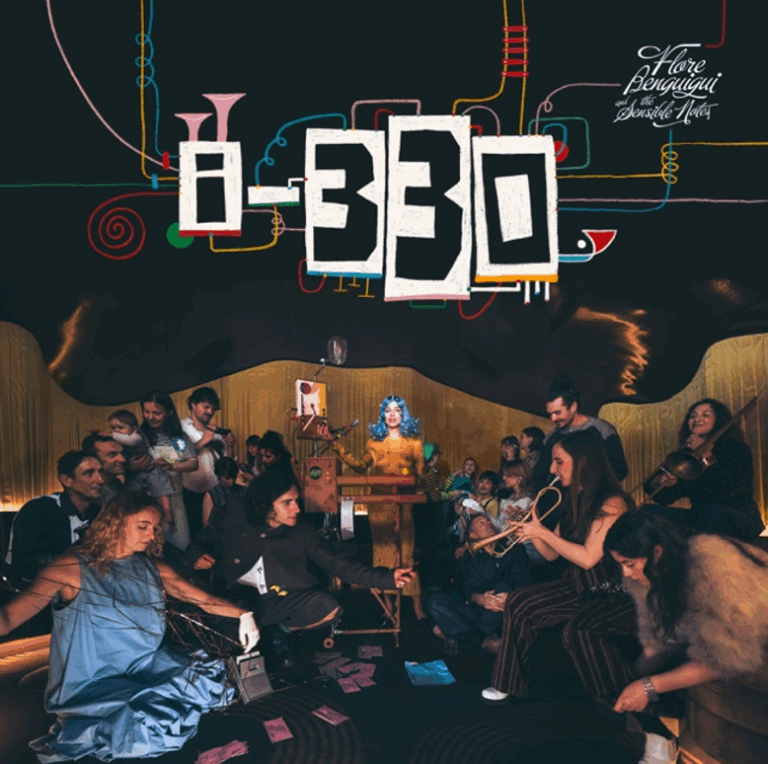
Step aboard the machine to stir-up the time i-330: the debut album by Flore Benguigui – former singer of L’Impératrice – and her band The Sensible Notes, to be released on March 13, 2026 via Decca Records France. Returning to the jazz that shaped her, Flore explores, alongside her musical partners, the great eras of jazz and French pop – from Nat King Cole to Barbara – blending timeless standards with forgotten gems. Her soft yet disarming voice unfolds in a universe where acoustic instruments converse with shimmering synthesizers, building bridges between past and present.
Listen now to their reinterpretation of “Didn’t I Tell You So?”, a little-known standard originally performed by the Nat King Cole Trio.
“Jazz is a very democratic musical form. It comes out of a communal experience. We take our respective instruments and collectively create a thing of beauty.” This quote from the legendary author of We Insist!, Max Roach, perfectly captures what unfolded during the making of Flore Benguigui’s (not quite) solo debut album, i-330.
It is the story of an artist reclaiming her creative power and sharing her love for a music that encourages emancipation. It is also the story of a dystopian science-fiction novel published in Russia in 1920 – at a time when jazz was thriving in America: We by Yevgeny Zamyatin. In a world where human beings are reduced to numbers in order to dissolve into the collective, the protagonist D-503 falls in love with a rebellious woman, I-330. It is no coincidence that Flore Benguigui pays tribute to her through a “machine to stir up time,” a retro-futuristic sonic device designed by the female architecture and scenography collective Atelier Hors Forme – and more specifically by her sister, Fanny.
As Flore sings in the introduction, this machine does not travel back in time – certainly not! – but rather blends eras into a singular yet familiar mixture. “It’s jazz, but it’s fun,” she announces in her instantly recognizable voice, while playing organ, dulcitone and Mellotron. For the first time, Flore single-handedly performs all the instrumentation on a composition she carried from start to finish. A clear indication of what follows: the meeting of “1930s songs and singing synthesizers,” a collision of eras forming a largely Anglo-Saxon repertoire in which Flore delights in unearthing hidden treasures… only to reinvent them.
The journey began on the stage of Le Baiser Salé, where she has performed with her band for eleven years – a second home for the singer. Between arena tours with L’Impératrice, she found her breath again in this intimate venue cherished by jazz lovers. Then came Studio Pigalle: in the summer of 2025, twelve tracks were recorded live over five days, answering a need for sonic spontaneity and embracing rough edges and imperfections. Surrounded by upright and grand pianos, synthesizers and vintage microphones, Flore healed the wounds left by a demanding chapter with L’Impératrice. She was joined by a team with contagious energy, embodying the most joyful and accessible side of jazz. “Just because you play jazz doesn’t mean you have to be cerebral or elitist,” Flore emphasizes. “This album is the exact opposite – it was made with joy and kindness.”
She is joined by three long-time companions: Pierre-François Maurin (double bass), Charles Tois (piano) and Maxime Mary (drums). Rozann Béziers handles trombone and brass arrangements. Julie Varlet plays trumpet, Jeanne Michard shines on tenor saxophone, and Aurélie Tropez on clarinet. Mixing and mastering were handled by Jennifer Gros (Voyou, Jade, Lenny Kravitz), Marie Pieprzownik and Bénédicte Schmitt. Production and synthesizers are by English musician Nicky Green. Add graphic designer Clara Vallino and stylist Lola Dubas, and the team is predominantly female – still rare enough to be worth noting. Together, this joyful tribe forms The Sensible Notes – a reference to the major seventh, a tension note frequently used in jazz to color chords and call for resolution. In French, this interval is called a note sensible – a term that does not exist in English, where “sensible” means “reasonable.” And if there is one music that escapes rationality, it is jazz: a boundless territory constantly demanding exploration, reinvention and freedom. Something Flore fully embraces.
Drawing from swing as much as bebop, blurring analog and synthetic lines, and infusing pop energy into sometimes century-old compositions, i-330 breathes new life into these songs. The album features jazz and soul divas such as Ella Fitzgerald, Billie Holiday and Dionne Warwick. The raw vulnerability of Chet Baker appears in Blue Room and in an Everything Happens to Me twisted through a vocoder. We also dance to echoes of Nat King Cole and linger in the shadow of Benny Goodman. The tone is set early with More Understanding Than a Man, a mischievous feminist track by Margo Guryan. Traumatized by tours with trombonist Bob Brookmeyer – once her husband – Guryan crafted her music in a DIY spirit. With this song, Flore returns “to the river,” as Guryan put it, toward a safe place she longed for. When she sings Barbara’s words over a minimalist backdrop, she feels them down to her spine: “I will take the road again, the world amazes me / I’ll warm myself beneath another sun.” At the heart of the album lies La Chanson de Simon from Les Demoiselles de Rochefort, a film that obsessed Flore as a child and which she now reinterprets, drifting away from the original lyrics to let melodic emotion take over.
Melodic emotion… Beyond the deeply feminist DNA of an artist engaged for years against all odds, these two words could define every track on i-330. “Listening to an album from start to finish has become an almost militant act,” Flore Benguigui notes. But listening to this one also means retreating, for twelve tracks, into a groovy yet poetic space-time where nothing else matters – except the vibration of our feelings, so often bruised.
Tracklist
i-330 Machine à remuer le temps (Flore Benguigui)
More Understanding Than A Man (Margo Guryan)
What A Little Moonlight Can Do (Harry M. Woods)
Everything Happens To Me (Matt Dennis & Tom Adair)
Didn’t I Tell You So?(Unknown)
Dis, quand reviendras-tu ? (Barbara)
The Blue Room (Lorenz Hart & Richard Rodgers)
Goody Goody (John Herndon Mercer & Matt Malneck)
Riffin’ At The Bar-B-Q (Nat King Cole)
Chanson de Simon(Jacques Demy / Michel Legrand)
Till Then (Eddie Seiler, Sol Marcus, Guy Wood)
Louisiana Fairy Tale (Haven Gillespie, Mitchell Parish, J. Fred Coots)
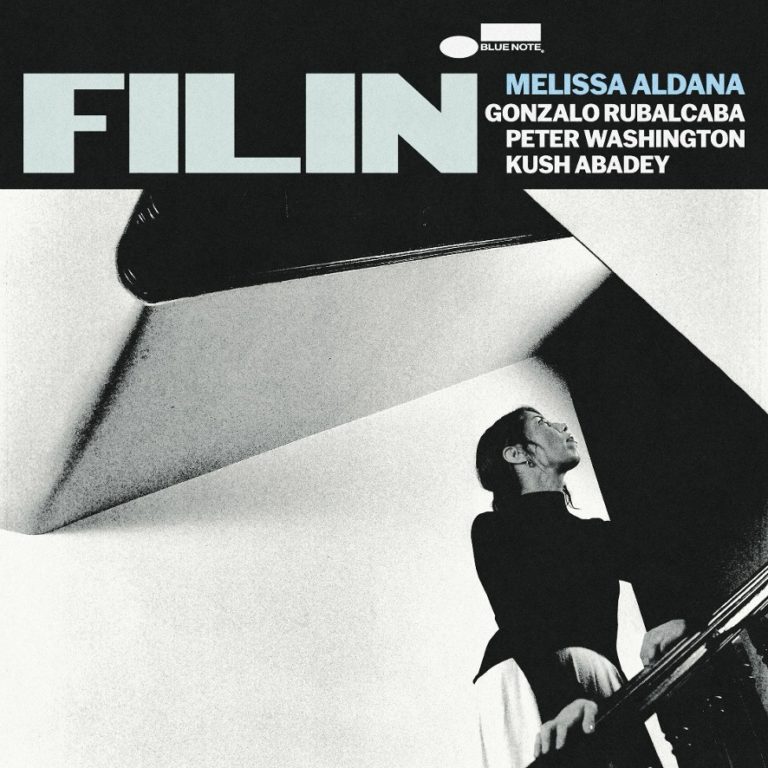
Saxophonist Melissa Alanda has shared her stunning rendition of “Little Church,” a piece by Brazilian composer Hermeto Pascoal that first appeared on the 1971 Miles Davis electric album Live-Evil. It’s the second single to be revealed from Aldana’s forthcoming ballads album Filin featuring pianist Gonzalo Rubalcaba, bassist Peter Washington, and drummer Kush Abadey. Produced by Don Was, the album also features a special guest appearance by vocalist Cécile McLorin Salvant on two tracks.
In Aldana’s hands, “Little Church” is pure poignant lyricism, devoid of the eerie surreality that defines the Miles version. “This is my favorite track on the album,” says Aldana, “and a song I’ve been playing for a little while with my own band. I just had to record it. I was really thinking hard about how to approach it, and the first person who came to mind was Wayne Shorter.”
For as long as she’s been a recording artist, the Chilean-born saxophonist has wanted to make a ballads record. With archetypes like John Coltrane’s classic 1963 LP Ballads as her North Star, Aldana saw a slow-tempo project as a way to advance her lifelong quest for sound.
“I transcribe Sonny Rollins, Wayne Shorter, John Coltrane, Joe Henderson, Lester Young, Charlie Parker, and Don Byas, among many others. For them the sound itself is a tool to express an emotion,” she explains. “Every single note is a whole world. So there is a technical side to playing, but then there is this mystical side of sound that… I still don’t know exactly what it is.” A ballads record, she believed, would help her burrow deeper into the essence of her sound.
The end product is both enthralling and unlike anything else in Aldana’s catalog. Throughout these eight tracks, six of which are drawn from Cuba’s Filin music tradition, the ensemble enacts a stirring emotional minimalism that glows with a quiet intensity and places paramount importance on Aldana’s radiant delivery of the melody. This music moves slowly, simmering forward with great deliberation and restraint, which is all the more impressive once you consider the runaway virtuosity these players are capable of.
Perhaps most remarkable, however, is the fact that this incredibly patient program is never less than compelling; like great cinema, it holds its audience rapt without bells and whistles. When Aldana solos, she plays in a way that contrasts the longform harmonic probings she’s best known for. Her improvising here is mellifluous and moves like gossamer, with a newfound focus on accenting the core tunefulness. “I wasn’t trying to play the perfect jazz solo,” she says. “I was just trying to play inside the band — to leave space and be as present as I could, let the songs breathe. I’m older too, so I might be feeling less like I have something to prove. I also just felt in my gut that I wanted to do a ballads record,” she adds, “that I have something to say.”
MELISSA ALDANA – TOUR DATES:
Feb. 11-12 – Bebop Club – Buenos Aires, Argentina
Feb. 14 – Festival de Jazz de San Juan – San Juan, Argentina
Feb. 16 – Teatro Nescafe de las Artes – Santiago Chile
Mar. 17 – Music Center De Bijloke – Ghent, Belgium
Mar. 18 – Fasching – Stockholm, Sweden
Mar. 19 – Teatro Sociale – Bergamo, Italy
Mar. 20 – Zig Zag Bar – Berlin, Germany
Mar. 21 – Köln Philharmonie – Köln, Germany
Mar. 24 – Teatro Metropolitan – Catania, Italy
Mar. 25 – Teatro Golden – Palermo, Italy
Mar. 27 – Menorca Jazz Festival – Menorca, Spain
Mar. 28 – Clarence Jazz Club – Málaga – Spain
June 5-7 – Jazz Showcase – Chicago, IL
June 19-21 – Birdland – New York, NY
Visit melissaaldana.net for a full list of Aldana’s tour dates including performances with the Gerald Clayton Quintet at the Village Vanguard (Feb. 24-March 1) and the all-star tour Coltrane 100: Both Directions At Once featuring Joe Lovano, Nduduzo Makhathini, Linda May Han Oh, and Jeff ‘Tain’ Watts (April 8-18).
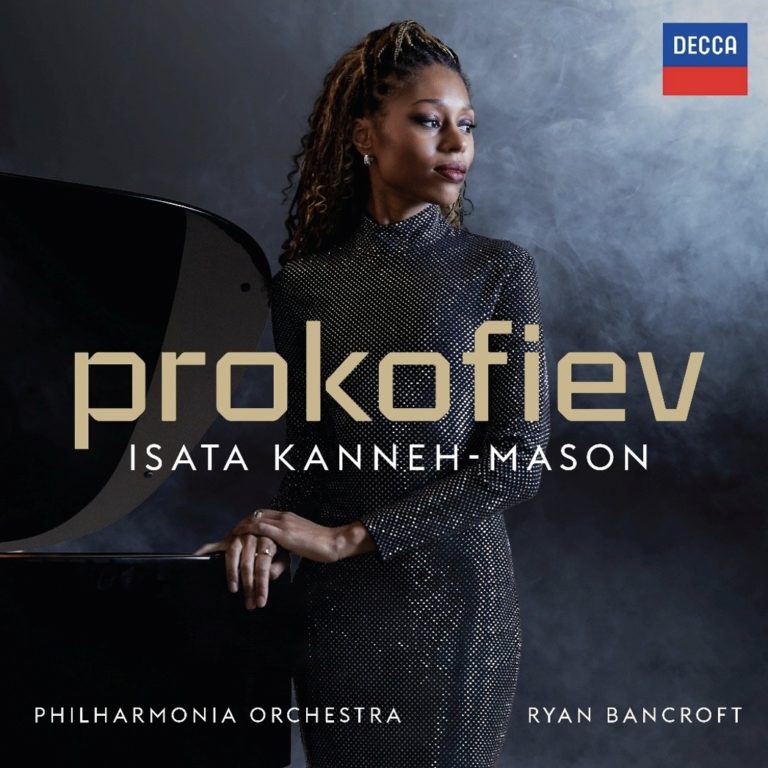
Decca Classics announces Prokofiev, the new album from pianist Isata Kanneh-Mason, released on 10 April 2026. The recording stems from a long and personal relationship with the composer’s music, which reached a major public milestone when she made her BBC Proms solo debut in 2023, performing Prokofiev’s Piano Concerto No. 3.
The eldest of the famous musical siblings, Isata recalls at the time: “I’m playing Prokofiev’s Third Piano Concerto, one of my favourites, completely crazy and very rhythmic.”. “That’s something I really relate to, the patterns and precision.” She first heard the concerto at the age of 18 through a YouTube performance by Yuja Wang. “I instantly fell in love with it and dreamed about playing it,” she says. “It was another eight years before I started learning it properly, but I listened to it constantly. It’s always exciting to bring this piece to new people. The music speaks to a place deep inside of me. I feel very free when I perform it.”
The concerto has been a key part of Isata Kanneh-Mason’s concert life. She has performed it with orchestras across the UK, Europe, and North America, including the City of Birmingham Symphony Orchestra, Royal Liverpool Philharmonic Orchestra, BBC Scottish Symphony Orchestra, Bergen Philharmonic Orchestra, Bremer Philharmoniker, Barcelona Symphony Orchestra, Toronto Symphony Orchestra, and the Royal Philharmonic Orchestra on tour in the United States, and brought it to a wide national audience at the BBC Proms.
A significant milestone came with performances of the concerto in Toronto under the baton of Ryan Bancroft, followed by her BBC Proms debut with the BBC National Orchestra of Wales. These performances directly informed the recording, which was made with Bancroft and the Philharmonia Orchestra, bringing a shared performance history into the studio.
Prokofiev places the Concerto at the centre of a wider programme exploring the composer’s piano music across different periods and styles. Alongside the concerto, which moves between dreamy lyricism, percussive rhythms and dazzling virtuosity, the album includes early pieces such as the Toccata, Ten Pieces for Piano and the striking Sonata No. 3, works that already show Prokofiev’s restless imagination and rhythmic bite. These sit alongside piano transcriptions from Romeo and Juliet and Cinderella, where pointed energy and humour contrast with moments of tenderness and lyrical ease, as well as music from The Love for Three Oranges, whose March and Scherzo capture the composer’s satirical edge. Completing the programme is Troika from Lieutenant Kijé, a piece full of colour and character that reflects Prokofiev’s gift for memorable melody and vivid storytelling.
Highlights of Isata Kanneh-Mason’s 2026 season include concerto appearances with the Prague Radio Symphony Orchestra at the Rudolfinum, performing Rachmaninoff’s Piano Concerto No. 3, followed later in the summer by further performances of the same work with the Budapest Festival Orchestra at the Gstaad Festival and at La Chaise-Dieu. Alongside these orchestral engagements, she undertakes an extensive international solo recital tour, appearing across Europe and the UK at the Società Filarmonica di Trento, Brucknerhaus Linz, De Bijloke in Ghent, the Norwegian National Opera in Oslo, Buxton Festival, Bold Tendencies in London, Snape Maltings, and with the Oxford Philharmonic Orchestra at Merton College Chapel. In North America, highlights include recitals presented by the Isabella Stewart Gardner Museum in Boston, the Philadelphia Chamber Music Society, the St Louis Symphony Orchestra, and the Howland Chamber Music Circle in Beacon, New York. In June, she is joined by members of her family for chamber concerts at the Royal Welsh College of Music and Drama in Cardiff, Wigmore Hall, Perth Concert Hall, and Munich’s Herkulessaal.
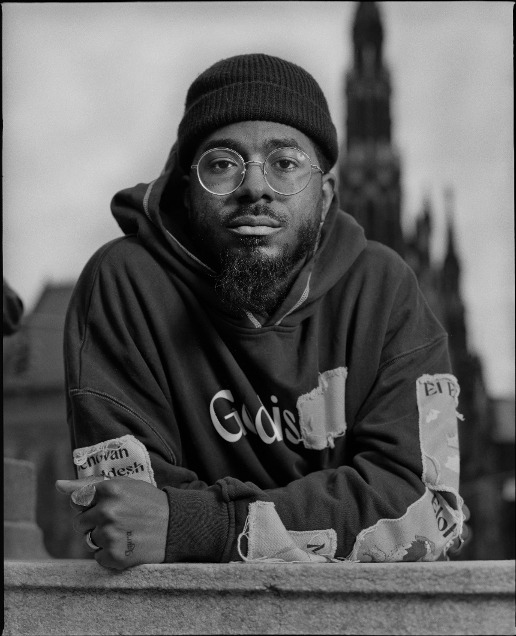
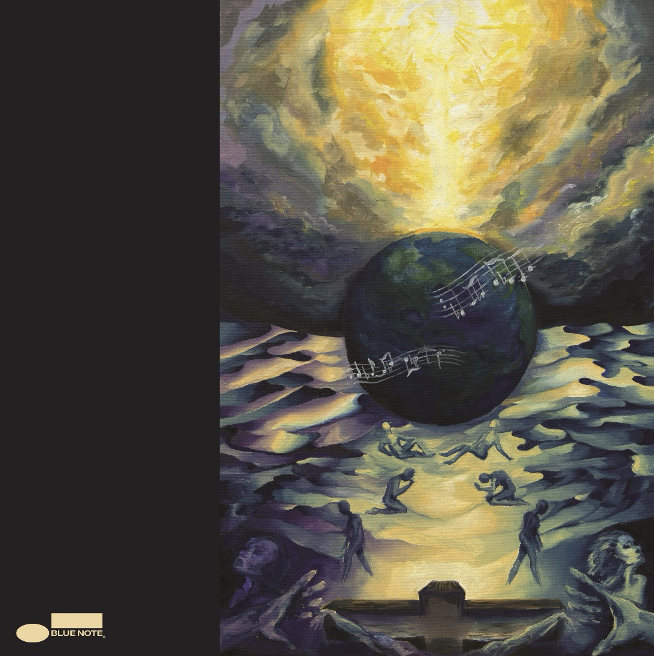
Vibraphonist Joel Ross has released his 5th Blue Note album Gospel Music, a sonic interpretation of the biblical story and an exploration of his faith that delivers a message of hope and love. The album features an expanded sextet line-up of Ross’ band Good Vibes with Josh Johnson on alto saxophone, Maria Grand on tenor saxophone, Jeremy Corren on piano, Kanoa Mendenhall on bass, and Jeremy Dutton on drums.
An homage to an array of influences, Gospel Music follows the arc of the grand biblical story. Each composition carries the emotional weight of the story of creation, the fall, and salvation, corresponding to biblical texts that Ross includes in the liner notes. At the center of it is the desire that we meditate on the meaning of the ultimate sacrifice that defines a faith in Christ that calls on its practitioners to love God and others. Playing in this band mirrors that very attitude.
Ross wants us to listen for the ways that the band practices what some of our best minds have preached. He wants us to achieve the kind of clarity he has achieved in his sound, where the music remains “technically difficult.” But with the lessons of The Parable of the Poet and nublues in tow, Good Vibes has moved into a place where the complex can be offered more clearly. The complex can offer sound as meditative space for us to reconsider ourselves as we relate to others. Ross’ message is reflected in the way he leads a band and creates space for them sonically. “If there’s anything I do talk to the band about, it’s about that, making sure we’re making space for everyone and supporting everyone. Because that’s what we’re supposed to do.”
Gospel Music revisits the intricacy of the vibraphonist’s earlier records and the directness and accessibility of the later, producing a sound that is unmistakably Joel Ross while reintroducing himself and the good news simultaneously. It is released in a moment where he has been deepening his study and exploration into the theological and historical depths of his faith over the last several years. Returning to some of his older unreleased compositions and seeing them in light of new experiences, he has created an album which reveals more of his person. “This is probably the boldest example of trying to share what I believe is the good news as well as in homage to where I’m coming from,” he explains.
This identity is equally grounded in the world of jazz pedagogy as it is in the sounds of the Black church in Chicago. While he gravitated toward the former, Chicago gospel was an inescapable element of the sonic community that shaped him. “I’m coming from the Black church in Chicago, playing gospel music,” Ross reminds us.
Ross will be touring extensively across the U.S. and Europe this year behind the album’s release including a week at the Village Vanguard (Feb. 10-15) and a 4-night run at the Jazz Showcase in his hometown of Chicago (Apr. 2-5). Visit iplayvibes.com for more tour details.
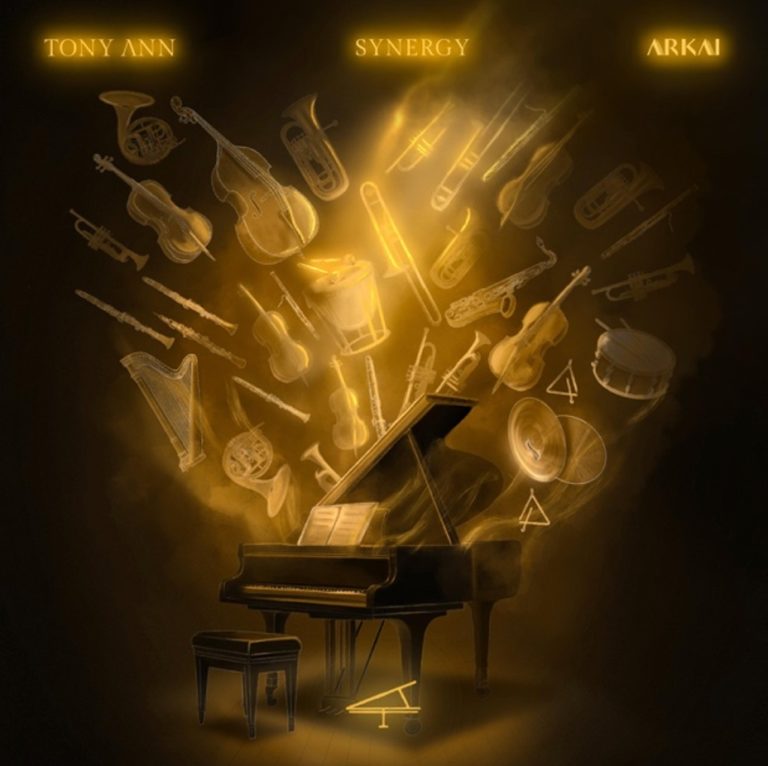
SYNERGY sees Tony Ann team up with GRAMMY-nominated, genre-defying electroacoustic duo ARKAI to reimagine fan favourites from his EMOTIONS collection within a symphonic setting. Featuring standout tracks such as ICARUS, RAIN, and DESIRE, the collaboration amplifies the emotional core of Ann’s compositions in an electrifying new form, driven by powerful string lines that bridge neoclassical solo piano and cinematic (different word) pop.
The album ebbs and flows dynamically, with ARKAI’s modern, cinematic soundcomplementing Ann’s distinctive melodic sensibility to create a coherent and immersive sonic journey. Virtuosic yet accessible, SYNERGY offers a compelling entry point into the emerging pop-classical scene, spotlighting a new generation of artists forging their own paths within an exciting and evolving genre.
Tracklist 1. RUSH OF LIFE (feat. ARKAI) – Orchestral Version 2. ICARUS (feat. ARKAI) – Orchestral Version 3. LOST (feat. ARKAI) – Orchestral Version 4. RAIN (feat. ARKAI) – Orchestral Version 5. EUPHORIA (feat. ARKAI) – Orchestral Version 6. GRIEF (feat. ARKAI) – Orchestral Version 7. COURAGE (feat. ARKAI) – Orchestral Version 8. PULSE (feat. ARKAI) – Orchestral Version 9. DESIRE (feat. ARKAI) – Orchestral Version
RAIN (feat. ARKAI) – Orchestral Version finds Tony Ann further refining his cinematic language, expanding the emotional nuance of the original solo piano work through rich orchestration. The piece unfolds with fluid, repeating figures that shimmer like falling droplets, creating a sense of calm that gradually deepens into quiet intensity. Subtle harmonic shifts and sustained string textures allow the music to breathe, while gentle dynamic swells evoke both reflection and release. Through careful orchestration and evolving tension, Ann transforms RAIN into an immersive arrangement that balances intimacy and scale, capturing the quiet power and inevitability of nature in motion.
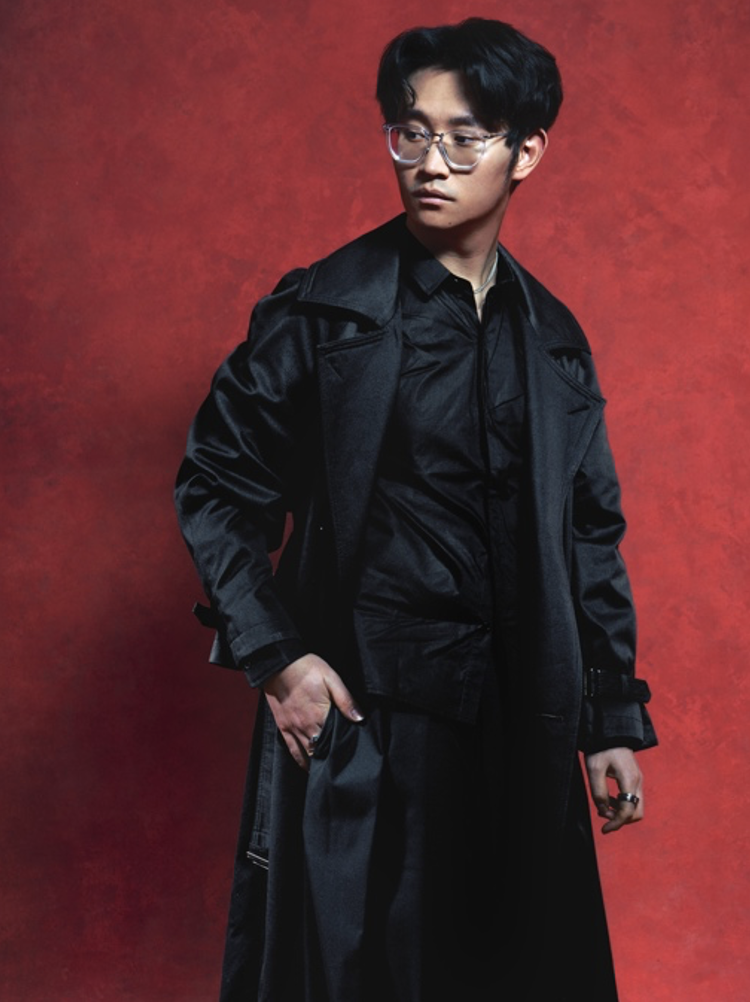
Tony Ann is a virtuoso solo pianist who seamlessly blends contemporary and classical styles. A harmony connoisseur, he pushes the boundaries of neoclassical and popular music, creating emotionally rich compositions using the full range of the piano’s 88 keys.
With over 1 billion views, 300 million streams, and more than 6 million followers on social media, Tony has captivated a global audience and inspired a new generation through his viral “#playthatword” series and his acclaimed debut album EMOTIONS (Deluxe) released with Decca Records France (Universal Music Group).
Tony’s world tour continues to sell out venues across the globe, from Helsinki to Kuala Lumpur, Chicago to Melbourne, São Paulo to Bilbao. In 2024, he received multiple standing ovations at sold-out concerts in prestigious venues such as the Olympia in Paris and the Barbican in London.
Tony’s critically acclaimed album 360° showcases the emotional and stylistic range that defines his artistry. Following this, he will release a collaborative orchestral project with genre-defying duo ARKAI, reimagining Tony’s most beloved compositions through additional instrumentation.
His single ICARUS was recently certified diamond, with over 50 million streams (excluding France), affirming his global impact.
Praised by the press, Tony was named “the new piano star” by Les Échos. His recognition continues to grow across the music industry, with increasing support from media and fellow artists alike.
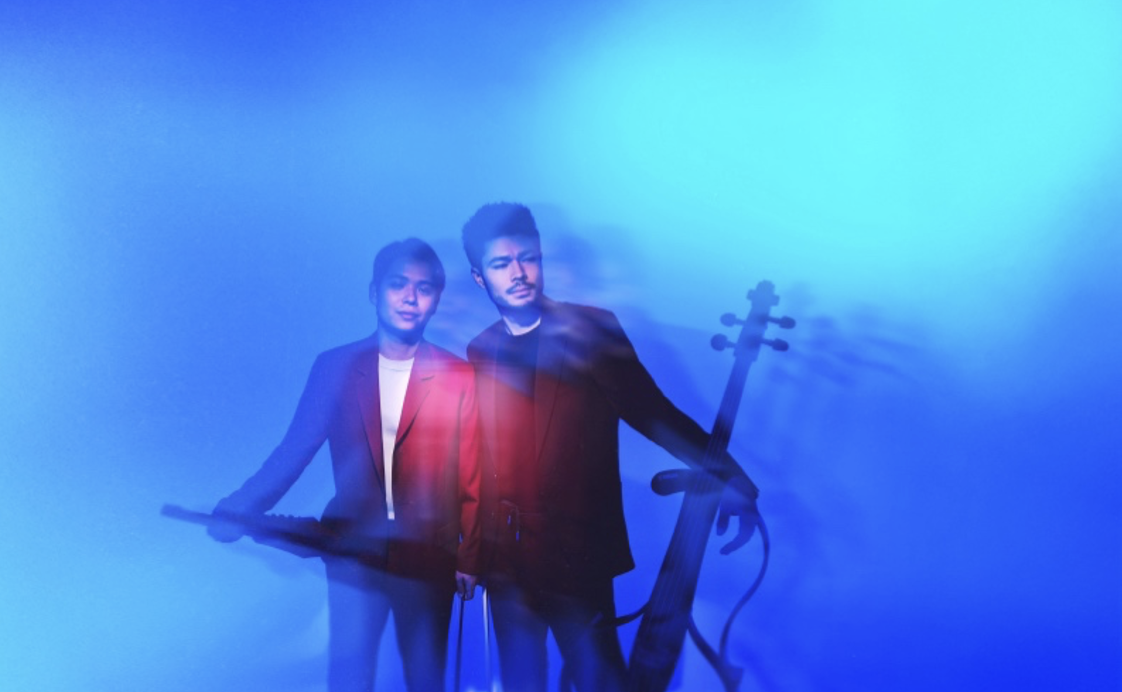
“We are an electro-acoustic duo, a bridge between worlds,” explains cellist Philip Sheegog. “That’s the defining characteristic of ARKAI.” Violinist Jonathan Miron, the other half of the duo, continues, “The best way to describe us is probably Hans Zimmer meets 2CELLOS.”
Together, they form ARKAI, a GRAMMY-nominated, genre-defying duo that bridges the classical and the contemporary, weaving cinematic soundscapes with electrifying virtuosity into epic performances around the world.
Jonathan and Philip merge their classically trained, Juilliard-honed artistry with a bold, genre-blending vision, the acoustic and electronic, the intimate and the cinematic. The duo has released two albums, Crossroads (2024) and the freshly GRAMMY-nominated Brightside (2025) and built their striking visual identity through a series of stunning videos and performances on prestigious stages, from the EMMY Awards to the GRAMMY Museum to a Lakers playoff game to a virtual TED Talk reaching 30,000 people.
Since first performing together in 2018, ARKAI has been a self-contained unit—writing, producing, mixing, and crafting every visual with fearless creativity. The duo has also collaborated with notable artists, including celebrity violinist Lindsey Stirling, GRAMMY and Oscar-winning pianist Jon Batiste, chart-topping pianist Tony Ann, and renowned photographer David LaChapelle. Jonathan sums up the purpose behind ARKAI: “It’s all about inspiring people to live fuller, more beautiful lives.”
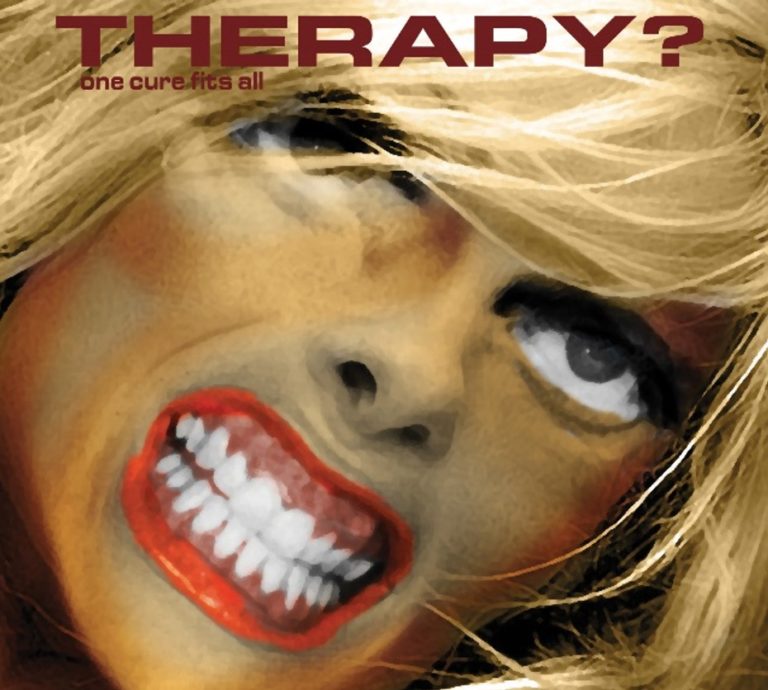
Mercury Studios is proud to announce the release of a lavish 20th anniversary reissue of Therapy?’s beloved eleventh studio album, One Cure Fits All, out March 27. Newly remastered under the supervision of the band, the album will be available as a deluxe double-CD edition featuring an exclusive second disc of rare B-sides and demos for every song on the album.
In addition, One Cure Fits All will be released on vinyl for the first time ever, pressed on black vinyl and a red variant. The red vinyl will be available as a D2C exclusive through the band’s official store, Mercury Studios Store, and uDiscover. Long unavailable on streaming platforms, this newly remastered edition will finally bring the album to streaming services worldwide.
One Cure Fits All was remastered from the original source files under the supervision of the band. The second disc of the 2CD package features 4 B-sides, including “Crazy Cocaine Eyes,” “Hard Work Hope,” “Play On,” and “Freeze The Remains,” in addition to a plethora of album demos. These 4 B-sides have previously only been available digitally and are making their first appearance on CD.
Northern Irish alternative rock band Therapy? formed in Larne in 1989 and is known for its lacerating lyrics, tuneful angst, pummeling drums, and inventive—often abrasive—musicality. One Cure Fits All was originally released on Spitfire Records on April 24th, 2006. Over the course of its career, Therapy? has released 16 albums and sold over two million albums worldwide. The trio has had numerous UK top 40 singles, earned a Mercury Music Prize nomination, played Top of the Pops, and has been honored by the Kerrang! Awards. Therapy? has performed at festivals such as Knebworth, Hellfest, Sonisphere, Wacken Open Air, and Donington, the latter at Metallica’s request.
In the early 1990s, Therapy? signed to A&M Records, releasing four critically acclaimed albums celebrated for their polished, anthemic sound. Following their major-label era, the band briefly expanded its lineup to include a cellist before returning to its lean and mean trio configuration for One Cure Fits All. The album was produced by Pedro Ferreira, who was coming off a major success after producing The Darkness’ UK chart-topping Permission to Land.
The production sheen of One Cure Fits All recalls the band’s major-label years, pairing some of its catchiest songwriting with the heft-and-hooks sensibility that defined their most popular period. Folded within this welcomed familiarity is the moodiness that characterized the band’s later work, making One Cure Fits All the perfect then-and-now summation of the band’s sound. The album features the band’s current lineup: founding vocalist and guitarist Andy Cairns, bassist Michael McKeegan (both of whom appeared on the breakthrough 1994 album Troublegum), and drummer Neil Cooper.
DELUXE 2CD TRACK LISTING: CD1 1. Outro 2. Sprung 3. Deluded Son 4. Into The Light 5. Lose It All 6. Dopamine, Serotonin, Adrenaline 7. Unconsoled 8. Our White Noise 9. Private Nobody 10. Rain Hits Concrete 11. Fear of God 12. Heart Beat Hits 13. Walk Through Darkness
CD2 1. Play On 2. Crazy Cocaine Eyes 3. Hard Work Hope 4. Freeze The Remains 5. Sprung (Pingle Farm Demo 2005) 6. Deluded Son (Pingle Farm Demo 2005) 7. Into The Light (Pingle Farm Demo 2005) 8. Lose It All (Pingle Farm Demo 2005) 9. Dopamine, Serotonin, Adrenaline (Pingle Farm Demo 2005) 10. Unconsoled (Pingle Farm Demo 2005) 11. Our White Noise (Pingle Farm Demo 2005) 12. Private Nobody (Pingle Farm Demo 2005) 13. Rain Hits Concrete (Pingle Farm Demo 2005) 14. Fear of God (Pingle Farm Demo 2005) 15. Heart Beat Hits (Pingle Farm Demo 2005) 16. Walk Through Darkness (Pingle Farm Demo 2005)
LP Side A 1. Outro 2. Sprung 3. Deluded Son 4. Into The Light 5. Lose It All 6. Dopamine, Serotonin, Adrenaline 7. Unconsoled Side B 1. Our White Noise 2. Private Nobody 3. Rain Hits Concrete 4. Fear of God 5. Heart Beat Hits 6. Walk Through Darkness
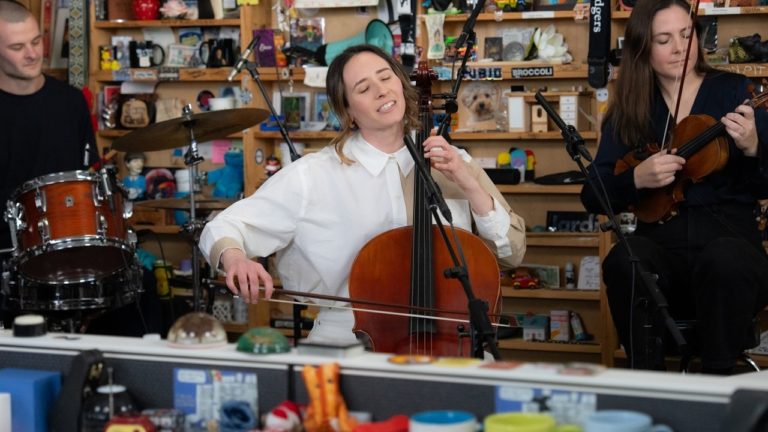
Seattle indie folk project Ollella brought their string-driven sound to NPR Music’s Tiny Desk Concert series this week as part of a celebration of Tiny Desk Contest entrants. Fronted by Ellie Barber on vocals and cello, the seven-piece ensemble performed four songs including “Lava,” which explores where childlike wonder goes as we age, and “At Rest,” featuring a sweeping solo from upright bassist Kelsey Mines. NPR’s Dora Levite, who had previously seen Ollella fill Seattle venues with just cello and upright bass, noted that Barber often describes the project as “a collaborative project across the city” rather than simply a band. The performance marks a full circle moment for Ollella, who submitted to the Tiny Desk Contest multiple times over the years. Barber’s playful, occasionally melancholic approach guided by strings resonated through the intimate NPR Music headquarters setting.
Touring has always required a leap of faith. Artists trust venues to be safe, borders to be navigable, and audiences to gather in good spirit. Right now, that trust feels strained.
Across the music industry, artists and their teams are reassessing what it means to tour the United States amid rising political tension, highly publicized acts of violence involving immigration enforcement, and increasing uncertainty for foreign nationals. Conversations that once centered on routing and promotion are now shaped by deeper concerns about safety, values, and responsibility.
A heightened sense of anxiety and uncertainty
Many artists describe a low-level but persistent anxiety about touring in the U.S. The concern is not limited to one city or state, but rather a broader feeling of unpredictability. Touring requires constant movement through airports, border crossings, highways, and public spaces. When artists no longer feel confident about what to expect at any given stop, that uncertainty becomes exhausting.
For international artists, especially those from immigrant or marginalized communities, the fear is more acute. Heightened enforcement and scrutiny can turn routine travel into a source of stress, even when all paperwork is in order.
Weighing ethics against opportunity
The U.S. remains one of the most important touring markets in the world. It offers financial stability, exposure, and long-term career growth. But many artists are struggling with whether moving forward feels ethically aligned during moments of public grief, protest, or fear.
Some feel that continuing as if nothing has changed risks appearing indifferent to what communities are experiencing on the ground. Others wrestle with the idea that canceling shows removes spaces for connection and healing. There is no single right answer, and that tension weighs heavily on artists making these decisions.
Responsibility to crews and collaborators
Touring is never a solo endeavor. Artists are responsible not only for themselves, but for their crews, band members, and local workers who help bring shows to life. When safety feels uncertain, artists are forced to consider whether they are asking others to take on risks they may not be comfortable with.
This sense of responsibility has led some artists to pause or cancel tours rather than place their teams in difficult positions, particularly when alternative routes or markets are available.
Pressure from audiences and communities
Artists are also navigating expectations from fans and communities who are paying close attention to how public figures respond in moments of crisis. For musicians whose work is closely tied to social justice, migration stories, or community advocacy, the pressure to act in alignment with those values is strong.
At the same time, artists know that canceling shows can disappoint fans who rely on live music for connection and joy. Balancing solidarity with accessibility is a deeply personal and often painful calculation.
A changing definition of success
Ultimately, many artists are rethinking what success looks like right now. Momentum, revenue, and exposure still matter, but so do peace of mind and integrity. For some, stepping back from touring is not about retreat, but about choosing sustainability over urgency.
The road will always be part of an artist’s life. The question many are asking now is not whether to tour the U.S., but whether this is the right moment to do so – and at what cost.
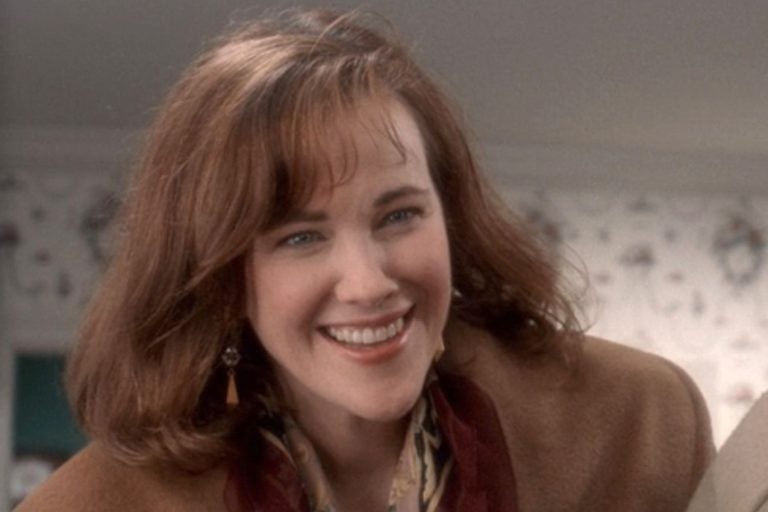
The death of Catherine O’Hara at 71 leaves a particular kind of silence. Her work never shouted for attention, yet it stayed with people for decades, resurfacing in moments of grief, laughter, and recognition. From the raw inventiveness of Second City and SCTV to the emotional precision of Moira Rose, O’Hara made comedy feel humane and interior. She played foolishness without cruelty, sadness without sentimentality, and ambition without vanity. What remains is not just a body of work, but a sense of companionship, the feeling that someone deeply observant was standing just off to the side, watching the same world and quietly telling the truth about it.
71 Things You May Not Have Known About Catherine O’Hara
She portrayed the Virgin Mary in her first school play
She was the sixth of seven children
Her father worked for the Canadian Pacific Railway
Her mother was a real estate agent
She grew up in Toronto
She was raised Catholic
She graduated from Burnhamthorpe Collegiate Institute
She worked as a waitress at Second City before joining the troupe
Joe Flaherty once told her to stick to waitressing
She auditioned again anyway and was hired
She joined Second City in 1974
She was initially terrified of improv
Her improv strategy was “when in doubt, play insane”
She was an original cast member of SCTV
She won an Emmy as part of the SCTV writing staff
She turned down Saturday Night Live before appearing on air
Robin Duke took her SNL slot
She never regretted leaving
She disliked living in New York
She made her film debut in Double Negative
She worked with Martin Scorsese in After Hours
She played Delia Deetz in Beetlejuice
She reprised that role in 2024
She played Kate McCallister in Home Alone
She reprised that role in Home Alone 2
She voiced Sally in The Nightmare Before Christmas
She collaborated repeatedly with Christopher Guest
She improvised most of her dialogue in Guest films
She co-wrote songs for A Mighty Wind
She sang onscreen with Eugene Levy
She called Levy a lifelong creative partner
She married Beetlejuice production designer Bo Welch
They married in 1992
They had two sons
She used humor to resolve arguments
She described sarcasm as marital glue
She has situs inversus
Her internal organs are reversed
She held dual Canadian and American citizenship
She was honorary mayor of Brentwood, Los Angeles
She remained close with Macaulay Culkin
She attended his Walk of Fame ceremony
She joined Schitt’s Creek in her 60s
She helped shape Moira Rose’s voice
She insisted Moira wear wigs
The wigs reflected Moira’s mood
She won an Emmy for Schitt’s Creek
She also won a Golden Globe
And a SAG Award
She thanked Eugene and Dan Levy in her Emmy speech