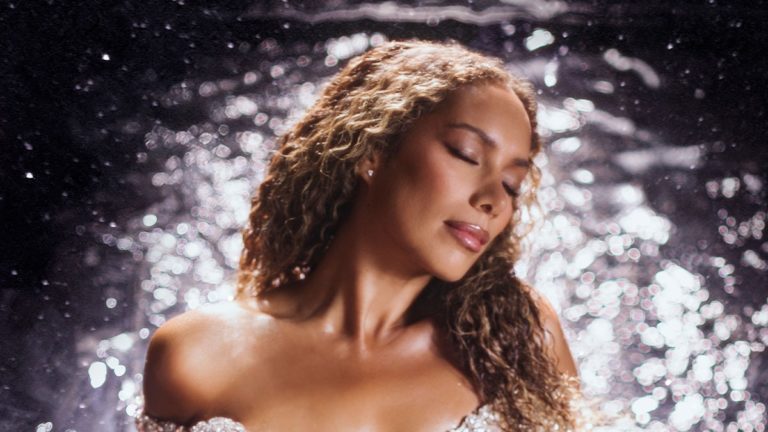
Grammy-nominated and record-breaking Christmas sensation Leona Lewis will light up Voltaire at The Venetian Resort Las Vegas this holiday season with A Starry Night, a new Christmas spectacular beginning in November. The powerhouse vocalist, performing her first-ever live shows in the United States, will transform the glitz and glam of Voltaire into a winter wonderland during a set of 33 exclusive performances running from November 1st through January 3rd.
Presales start on Wednesday, July 30th at 10 am local time ahead of the general sale on Friday, August 1st. Vibee VIP Concert & Hotel Experience packages will also be available. A Starry Night is intended for all ages. General admission tickets start at $75.
Delivering an enchanting evening of career-spanning records including “Bleeding Love,” “Better In Time,” and her new Christmas classic “One More Sleep,” Lewis’s impressive vocals will be on full display inside the intimate venue with a show designed to capture the spirit of the season. The Christmas spectacular, filled with heartfelt hits and holiday cheer, will offer guests of all ages a one-of-a-kind theatrical experience not to be missed.
“I’m elated to bring this show to Voltaire as it’s been years in the making, made specially for my fans,” said Leona. “Christmas has always been such a special time for me and my family and there’s nothing quite like the energy of Las Vegas during the holidays. I cannot wait to take the stage and spread some holiday magic!”
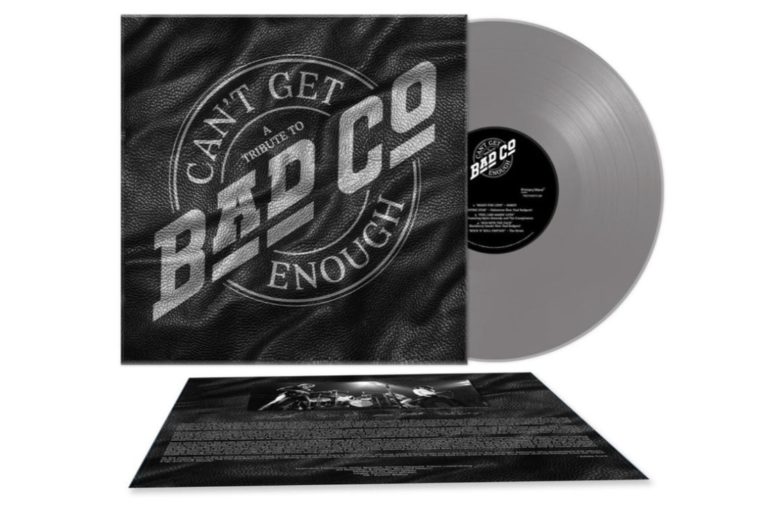
The Struts put their signature spin on Bad Company’s timeless anthem “Rock ‘n’ Roll Fantasy,” the first single from the upcoming tribute album Can’t Get Enough: A Tribute to Bad Company, arriving October 24th via Primary Wave.
“We are so thrilled for the British music legends, Bad Company, to finally be getting their well-earned induction to the Rock Hall. It’s been a real pleasure to pay homage to them with our cover of ‘Rock ‘n’ Roll Fantasy’ and I hope they enjoy it as much as we loved recording it,” shares The Struts’ Luke Spiller.
This is the first-ever band-approved tribute album, honoring the 2025 Rock and Roll Hall of Fame induction and celebrating the 50th anniversary of one of rock’s most iconic bands. It features contributions from legendary and contemporary artists across rock, country, and Americana, including The Pretty Reckless, Charlie Crockett, Slash, Hardy, Def Leppard, and others, offering fresh interpretations of Bad Company’s classic songs.
Both frontman Paul Rodgers and drummer Simon Kirke also appear on several tracks, performing alongside these artists. The tribute album is executive produced and curated by Gary Spivack (Danny Wimmer Presents), who programs all U.S. rock festivals.
Ready for Love – Bad Company, Hardy
Shooting Star – Bad Company, Halestorm
Feel Like Makin’ Love – Bad Company, Slash, Myles Kennedy and the Conspirators
Running with the Pack – Bad Company, Blackberry Smoke, Paul Rodgers featuring Brann Dailor
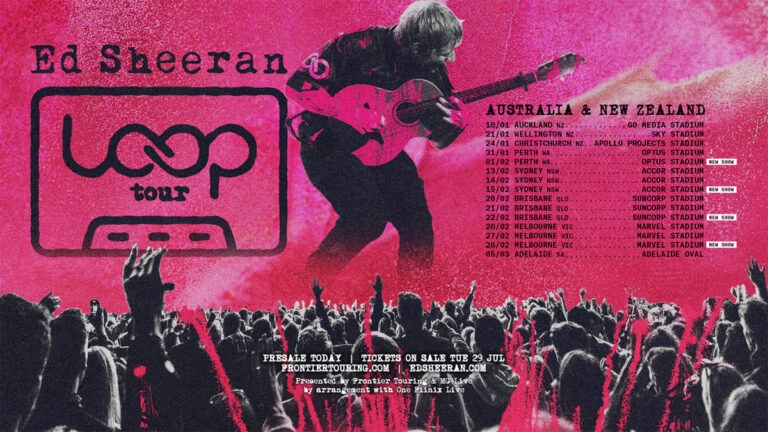
Due to overwhelming demand, Ed Sheeran has added four more shows to his Australian and New Zealand Loop Tour in 2026, presented by Frontier Touring and MG Live.
Having sold over 2.5 million tickets across Australia and New Zealand to date, Sheeran’s Loop Tour sees the beloved singer returning to our shores with a new live show that’ll follow the release of his new album, Play, out Friday, September 12th. Performing at stadiums in Auckland, Wellington, and Christchurch (his first show there in 11 years), before heading to Perth, Brisbane, Sydney, Melbourne, and Adelaide, Ed’s new live show promises to be filled with surprises, new music, as well as his biggest hits.
Presales for all shows are underway, with staggered times, ahead of the general sale on Tuesday, July 29th.
Led by lead singles “Azizam,” “Sapphire,” and “Old Phone,” Play marks the beginning of a fresh new chapter for Sheeran. The singer-songwriter’s latest work is an explorative, technicolor pop album that captures the fun, chaos, and heart of an artist reinvigorated by life and travel. Promising all-new stage production centred around the joyful, expansive sound of Play, the upcoming stadium shows will incorporate new visuals, intimate acoustic moments alongside his renowned loop pedal performances, and the full stadium sing-alongs only Ed Sheeran can deliver.
Inspired by musical cultures from around the globe – particularly Indian and Persian cultures and their surprising melodic connections to the Irish folk tradition he grew up with through shared scales, rhythms and melodies – Play encompasses an eclectic and borderless sound. On the album, Sheeran has teamed up with producers and musicians from across the globe, showcasing his limitless musicianship.
Ed Sheeran The Loop Tour 2026 Australian/New Zealand Dates:
Jan 16 – Auckland, NZ @ GO Media Stadium Jan 21 – Wellington, NZ @ Sky Stadium Jan 24 – Christchurch, NZ @ Apollo Projects Stadium Jan 31 – Perth, WA @ Optus Stadium Feb 1 – Perth, WA @ Optus Stadium Feb 13 – Sydney, NSW @ Accor Stadium Feb 14 – Sydney, NSW @ Accor Stadium Feb 15 – Sydney, NSW @ Accor Stadium Feb 20 – Brisbane, QLD @ Suncorp Stadium Feb 21 – Brisbane, QLD @ Suncorp Stadium Feb 22 – Brisbane, QLD @ Suncorp Stadium Feb 26 – Melbourne, VIC @ Marvel Stadium Feb 27 – Melbourne, VIC @ Marvel Stadium Feb 28 – Melbourne, VIC @ Marvel Stadium Mar 5 – Adelaide, SA @ Adelaide Oval
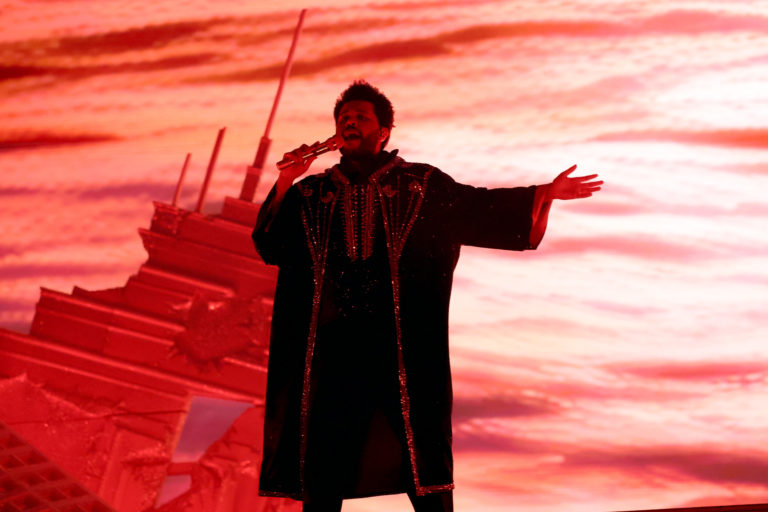
From the opening notes of The Abyss, Abel Tesfaye drew 50,000 fans into a world designed to mesmerize. His return to Toronto marked a full-circle moment—scarlet-lit, stadium-sized, and rich with gratitude. The Weeknd guided the audience through a 40-song narrative that shimmered with memory, power, and an otherworldly sense of control.
The stage design revolved around a towering LED structure that morphed into a hallway, a skyline, a mirror—always alive, always watching. Every moment flowed seamlessly, a testament to Tesfaye’s mastery of sequencing and set design. Dancers in flowing red robes moved with an eerie stillness, channeling the tension of a fever dream. Their presence felt theatrical and ritualistic, adding depth to the world Tesfaye built note by note.
After Starboy, he removed his mask, revealing himself like a character stepping from myth into reality – whatever that is, as we know so little about him compared to other pop stars living on social media. The gesture echoed the Super Bowl moment that introduced many to his full creative vision—knowing, deliberate, and timed with precision. From After Hours to Save Your Tears, Tesfaye held the crowd in a trance, always in motion, always tethered to something larger than the sum of lights and beats.
The stretch from São Paulo to Save Your Tears carried a BPM pocket that sent shockwaves through the stadium floor. In this sequence, Tesfaye connected the emotional core of his catalog to the rhythm of a packed dancefloor. Each drop hit with the clarity of intention and the thrill of freedom.
Throughout the night, he moved like someone guiding a story, not just performing one. His voice soared across Wicked Games, Timeless, and House of Balloons with the same wounded clarity that first earned him a devoted following in Toronto. That connection remained strong as he paused to reflect on watching Blue Jays games in the very stadium where he now stood, bathed in gold light.
The concert featured over two dozen songs with more than a billion streams, but the show never relied on numbers alone. Every moment felt earned, shaped by Tesfaye’s vision and carried forward by the crowd’s devotion. With each song, he invited fans deeper into the narrative – even coming off-stage to have members of the audience sing along with him – one full of neon reflections, masked silhouettes, and music that moves from club to cathedral.
Toronto Mayor Olivia Chow presented Tesfaye with a key to the city ahead of his shows, and declared this weekend “The Weeknd Weekend.” In response, Tesfaye pledged support for new creative voices in Toronto, backing it with Live Nation to support the the Boys & Girls Club of West Scarborough and The Weeknd’s alma mater of Birchmount Park Collegiate Institute to create spaces for youth to connect, create and thrive. That generosity extended into the performance itself—designed not to prove anything, but to share everything. To bring you along for the ride, and to remind you that he’s the kind of guy that will always have a second location to take you to when going out – and you’ll love it.
With this first of four nights at the Rogers Centre, The Weeknd expanded his legacy while anchoring it firmly at home. After several past cancelations in the city for reasons not his doing, It was a coronation lit by every voice, every strobe, and every memory brought into the present, knowing he’s only 35 and 6 albums in. After last night, it’s proof he’s just getting started.
A great guitar riff carries more than melody. It sets tone, defines identity, and often becomes the heartbeat of a song. Some riffs spark movements. Others turn young listeners into lifelong players. All of them make a mark that keeps echoing through music history.
Here are 20 guitar riffs that changed everything—from tone to technique to culture.
Chuck Berry – “Johnny B. Goode” (1958) A rock and roll blueprint. Berry’s riff brought lightning to the fretboard and paved the way for electric guitar as a lead instrument.
The Rolling Stones – “(I Can’t Get No) Satisfaction” (1965) Keith Richards plugged a fuzz pedal into the mainstream with this hypnotic, swaggering hook. The riff says everything before the lyrics begin.
The Kinks – “You Really Got Me” (1964) Raw, distorted, and razor-sharp. Dave Davies’ power-chord riff opened the floodgates for hard rock and punk.
Jimi Hendrix – “Purple Haze” (1967) With blazing tone and a tritone intro, Hendrix introduced a psychedelic vocabulary that still expands minds and possibilities.
Cream – “Sunshine of Your Love” (1967) Eric Clapton’s fat, descending riff blends blues and power, delivering a groove that locks in deep.
Led Zeppelin – “Whole Lotta Love” (1969) Jimmy Page’s riff roars with primal force. It helped define the riff as a central force in hard rock storytelling.
Black Sabbath – “Iron Man” (1970) Tony Iommi’s menacing riff slowed things down and added weight, creating a foundation for what would become heavy metal.
Deep Purple – “Smoke on the Water” (1972) Built on four notes and pure attitude. Ritchie Blackmore delivered a riff every beginner plays and every arena still loves.
David Bowie – “Rebel Rebel” (1974) A glam rock anthem driven by a slinky, strutting riff. One of Bowie’s most guitar-forward tracks, it became a rite of passage for rock fans.
AC/DC – “Back in Black” (1980) Angus Young carved a riff so crisp and confident, it became one of the most iconic openers in hard rock history.
Michael Jackson – “Beat It” (1982) Eddie Van Halen’s solo is legendary, but Steve Lukather’s opening riff sets the fire. A pop song with a rock heart and serious edge.
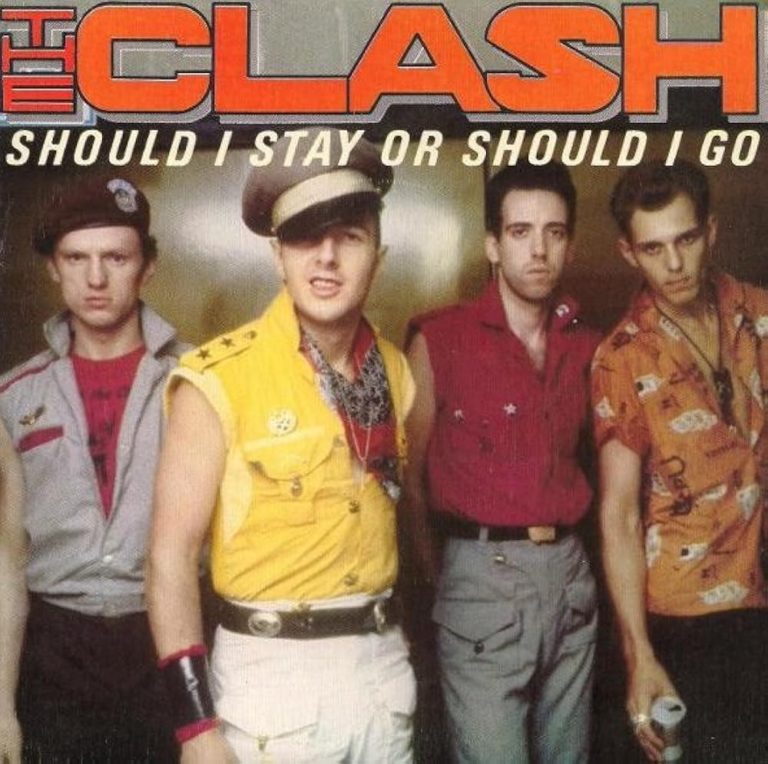
The Clash – “Should I Stay or Should I Go” (1982) Simple and punchy. Mick Jones created a call-and-response riff that keeps energy high and crowds moving.
Guns N’ Roses – “Sweet Child O’ Mine” (1987) Slash’s opening riff began as a warmup and became one of the most beloved intros in rock. Bright, melodic, unforgettable.
Metallica – “Enter Sandman” (1991) James Hetfield’s tight, chugging riff set the tone for a new era of metal—arena-sized and instantly gripping.
Nirvana – “Smells Like Teen Spirit” (1991) Kurt Cobain’s riff cracked the mainstream open for grunge. Fuzzy, loose, and explosive—it turned disaffection into a roar.
Rage Against the Machine – “Killing in the Name” (1992) Tom Morello’s riff flips funk and metal into protest. Built on power and precision, it still energizes movements and mosh pits.
Radiohead – “Just” (1995) Johnny Greenwood’s jagged riff twists, turns, and erupts with restless tension. A reminder that complexity can still rock hard.
The White Stripes – “Seven Nation Army” (2003) Jack White wrote a riff that’s now chanted in stadiums, protests, and clubs around the world. Minimalist. Monumental.
Arctic Monkeys – “I Bet You Look Good on the Dancefloor” (2005) Alex Turner’s scrappy, high-speed riff helped launch a new wave of British guitar bands with energy and wit.
Tame Impala – “Elephant” (2012) Kevin Parker fused fuzz and groove into a hypnotic stomp. A psych-rock standout that roars across generations.
These riffs continue to inspire players and producers alike. They aren’t just parts of songs—they’re part of the musical DNA that shapes how guitars are played, loved, and remembered.
A music video holds powerful potential. It showcases your artistry, brings your song to life, and invites audiences into your world. With a thoughtful strategy, your video can grow beyond the initial drop and become a long-term asset for your music career.
Here are 10 ways to help your music video go further:
1. Create a Campaign Timeline Every strong release begins with a plan. Map out your content for the days and weeks around the video launch—teasers, countdowns, behind-the-scenes footage, and follow-ups all help create a sense of story and anticipation.
2. Prioritize Vertical Formats Short-form, vertical video thrives on platforms like TikTok, Instagram Reels, and YouTube Shorts. Clip standout moments from your music video and repackage them into eye-catching snippets that are easy to share.
3. Design a Strong Thumbnail and Title A striking visual and clear title spark curiosity and clicks. Use a vibrant, high-quality frame from the video and choose a title that’s memorable, searchable, and reflects your style.
4. Upload Natively to Key Platforms Each platform has unique strengths. Upload directly to YouTube, Facebook, and Instagram for stronger reach, better autoplay performance, and access to platform-specific tools like tagging and monetization.
5. Engage With Your Fans Your video is a great conversation starter. Ask viewers what their favourite moment was, or encourage them to recreate a scene. Respond to comments and repost fan content to create a two-way connection.
6. Use Captions and Subtitles Captions help more people access your video, especially when sound is off. They also make your lyrics and storytelling more memorable. Include subtitles in multiple languages to reach international audiences.
7. Include a Clear Call to Action Guide your viewers with purpose. Include a call to stream the full song, follow your profile, or join your mailing list. Pin a comment with next steps and links to keep the momentum going.
8. Collaborate With Creators Invite dancers, animators, editors, and influencers to put their spin on your video. Their versions introduce your music to new circles and help your visuals live in fresh, creative spaces.
9. Pitch the Video to Blogs and Playlisters Music writers and curators love standout visuals. Reach out with a short pitch, high-quality stills, and a private link in advance of your public release. Coverage from blogs and playlist brands adds credibility and reach.
10. Keep It Alive With Follow-Up Content Your video keeps working long after launch day. Share director’s cuts, cast shoutouts, bloopers, or acoustic versions inspired by the original. Every post adds life to the campaign and deepens fan connection.
A music video is more than a moment—it’s an opportunity. With these ten tips, you’re setting your visuals up for lasting impact, creative growth, and audience discovery.
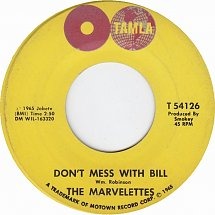
Released in 1966, “Don’t Mess with Bill” gave The Marvelettes their final Top 10 hit, reaching #7 on the Billboard Hot 100. Written by Smokey Robinson and sung by Wanda Young, it’s a smooth, sassy plea to keep hands off her man. And no, “Bill” wasn’t Smokey.
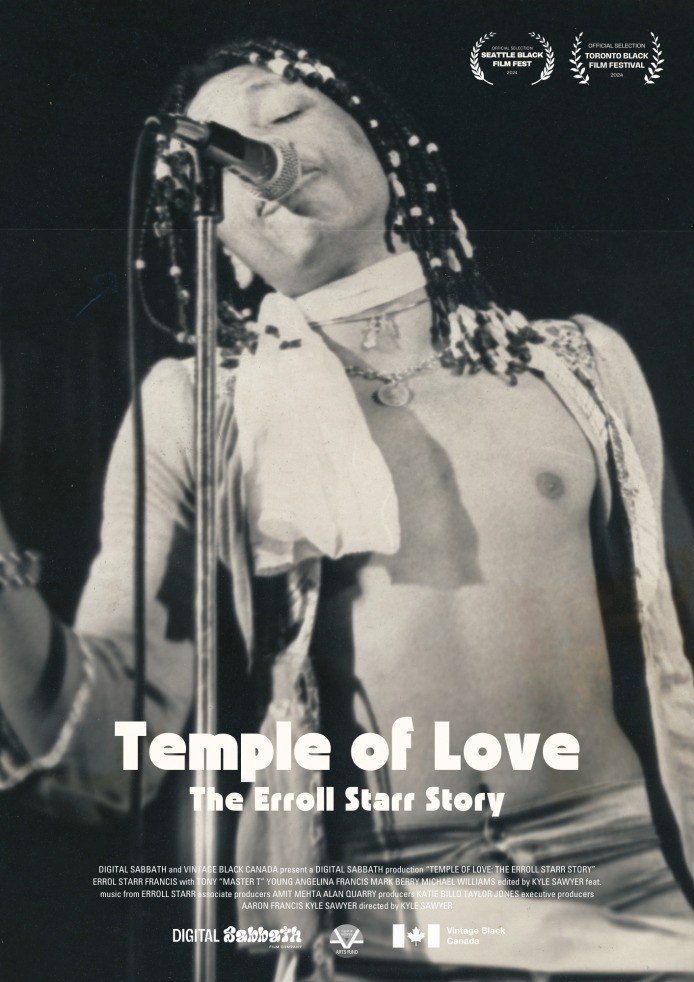
Juno Award-winning artist Erroll Starr Francis has long been a force in Canadian music, his voice echoing across decades and genres. Now, his remarkable story is reaching new audiences through the acclaimed short documentary, Temple of Love: The Erroll Starr Story—and through the powerful new sounds of his band, TRIBZ.
Temple of Love— Produced independently by executive producer Aaron T. Francis (Vintage Black Canada) and directed by Kyle Sawyer and Katie Billo of Digital Sabbath — chronicles Starr’s meteoric rise in the 1980s, his quiet retreat from the spotlight, and his triumphant return as the front man of TRIBZ. More than a music doc, the film is a story of erasure, resilience, and reclamation, unpacking the unspoken rules of race, genre, and cultural memory in Canadian media. Featuring commentary from Tony “Master T” Young, Michael Williams, and music executive Mark S. Berry, the film paints a rich portrait of one of Canada’s most dynamic and misunderstood voices.
Festival & Screening Highlights (2024):
Winner: Best Canadian Short – Northwest International Documentary Festival (Edmonton)
Official Selections: Toronto Black Film Festival, Seattle Black Film Festival, Hamilton International Film Festival
Academic & Community Screenings: Wilfrid Laurier University, Princess Cinemas Waterloo
Now playing on Air Canada in-flight entertainment (June–Dec 2024)
As the film continues its celebrated festival run and reaches global audiences via Air Canada, Erroll Starr’s musical journey is far from over. With TRIBZ—a genre-defying Indigenous blues-rock collective rooted in Six Nations and Hamilton—Starr electrifies stages with powerful vocals, lived history, and soulful truth. The band’s latest single, “Long Black Cadillac,” is a gritty fusion of Southern soul, Indigenous power, and classic blues-rock, channeling decades of experience and ancestral rhythm into something both timeless and urgent. TRIBZ features Erroll Starr (vocals), Earl Johnson (guitar), Donny Hill (bass), and Dave Davidson (drums). “Long Black Cadillac.”
In tandem with the film, the Temple of Love album has been reissued independently, offering a chance to revisit the tracks that first set a standard for Black excellence in Canadian rock and soul. Stream the reissued album: Temple of Love Album: https://errollstarr.hearnow.com/temple-of-love]
Both the film and the band share a commitment to truth-telling, heritage, and rhythm. Temple of Love offers a look back at Starr’s singular path, while TRIBZ points boldly forward. Together, they capture the full spectrum of what it means to rise, reflect, and reclaim.
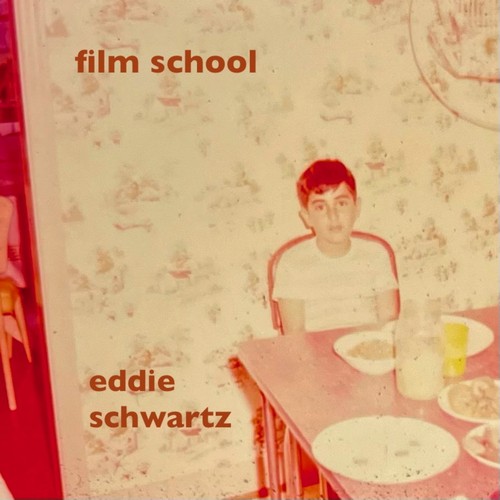
For decades, Eddie Schwartz has remained one of the most respected figures in the music world—an iconic Canadian songwriter, producer, performer, and rights advocate whose songs have echoed across generations. With his new single “We Win,” Eddie marks a bold and inspiring return to his roots as a solo artist, leading into the release of his new EP Film School, both out now. The project showcases the full spectrum of his brilliance: lyrical poignancy, musical craftsmanship, and the indomitable spirit that has defined his legacy.
A Member of the Order of Canada and the Canadian Songwriters Hall of Fame, Eddie Schwartz is the architect behind enduring hits like “Hit Me With Your Best Shot,” popularized by Pat Benatar, and “All Our Tomorrows,” later covered by Joe Cocker. His catalog spans more than 200 recorded songs and over 65 million physical sales worldwide—long before streaming platforms entered the conversation. With Film School, Eddie adds a powerful new chapter to his discography and creative journey.
The lead single “We Win” pulses with optimism and resolve, themes that mirror the artist’s own return to songwriting after a prolonged pause. “We’ll break down the walls, we’ll tear up the rules / Come out swinging, fighting, not afraid to lose,” Eddie sings in the chorus—his words now layered with personal and cultural meaning. “We get up off our knees / We stand up and believe / No matter how the story ends, we win.” Delivered with trademark sincerity, “We Win” feels as timely as it is timeless.
“These songs didn’t come easily,” Eddie writes in his artist notes. “After stepping away from writing, I wasn’t sure I’d ever return. But with encouragement from my wife Joanne and friends in Nashville and beyond, I found my way back.” His creative rebirth is deeply felt throughout Film School, a collection of mostly new songs that channel reflection, purpose, and an undiminished creative spark.
Born in Toronto in 1949, Eddie Schwartz holds a degree in music and English literature from York University. He first made his mark in the band Icarus alongside industry titans Bob Ezrin and Ben Mink, before launching a solo career that led to multiple hit singles and an enduring role as one of Canada’s great musical exports. “Hit Me With Your Best Shot” may have been dismissed by a publisher early on, but Benatar’s iconic recording turned it into a cultural lightning rod. Eddie, ever gracious, always let the music speak for itself.
His songs have been recorded by an astonishing roster: Paul Carrack, The Doobie Brothers, Carly Simon, America, Donna Summer, Rita Coolidge, Rascal Flatts, and Mountain, among many others. As a producer, his credits include the Doobie Brothers’ Cycles, Carrack’s Groove Approved, and his own albums, all resonating with an unmistakable blend of craftsmanship and soul.
Film School arrives not only as an artistic statement but also as a deeply personal one. “After a number of years doing the Nashville-style co-writing every day—two songs a day, five days a week—I burned out,” Eddie reflects. “The blank page stayed blank for a long time.” His ability to re-engage with songwriting—on his own terms—underscores the quiet power behind “We Win” and the entire EP.
From the cinematic textures of the title track to the soul-stirring honesty of “We Win,” every note on Film School reveals a master returning to form. “I wrote these songs slower than before. But every line, every melody came from a real place,” Eddie notes. “I wanted the music to reflect what I’ve lived through and what I still believe in.”
That belief has extended far beyond music. Eddie’s work as a global music creators’ advocate has earned him deep admiration. As past president of the International Council of Music Creators and the Songwriters Association of Canada, and as president of Music Creators North America, Eddie has shaped policy and fought for the rights of the creative community worldwide.
SOCAN recognized his impact with their Cultural Impact Award, while his induction into the Canadian Songwriters Hall of Fame remains a testament to his artistry and influence. Still, despite the accolades, Film School reminds audiences why Eddie Schwartz is—first and foremost—an artist.
“I wrote ‘We Win’ as a song of hope,” he says. “I hope people hear it and feel the power of standing up again. Because there’s always a reason to try again, to keep moving forward.” With Film School, Eddie Schwartz continues to do just that—creating music that uplifts, empowers, and endures.