

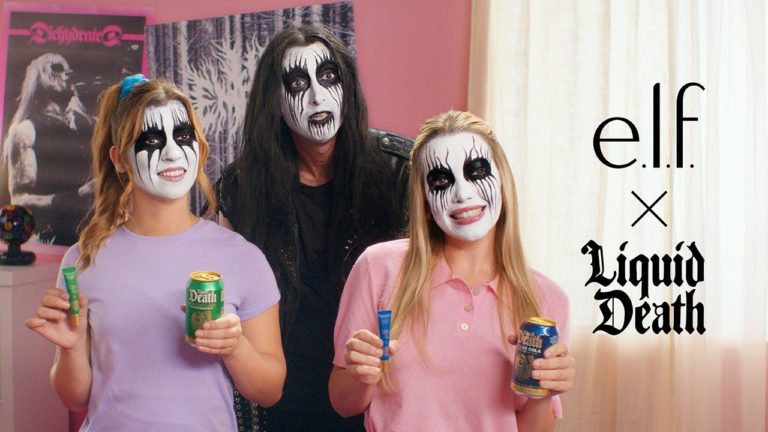
Liquid Death and e.l.f. Cosmetics have reunited for a follow-up collaboration with Lip Embalm, a limited-edition lip moisturizer inspired by Liquid Death’s signature drink flavors. The launch is accompanied by a darkly comic promo video featuring e.l.f. spokesperson Glothar, portrayed by Roth Gibbs, who delivers an over-the-top musical warning about the perils of dry lips. The collection includes six flavors – Severed Lime, Killer Cola, Sweet Reaper, Mountain Water, Rest In Peach, and Doctor Death – and is formulated with ingredients like hyaluronic acid and squalene, offering lightweight moisture and a sheer finish in compact, on-the-go packaging.
Bruno Mars Sets the Record for Largest Single-Day Ticket Sales in Live Nation History Across North America, Europe, and the UK
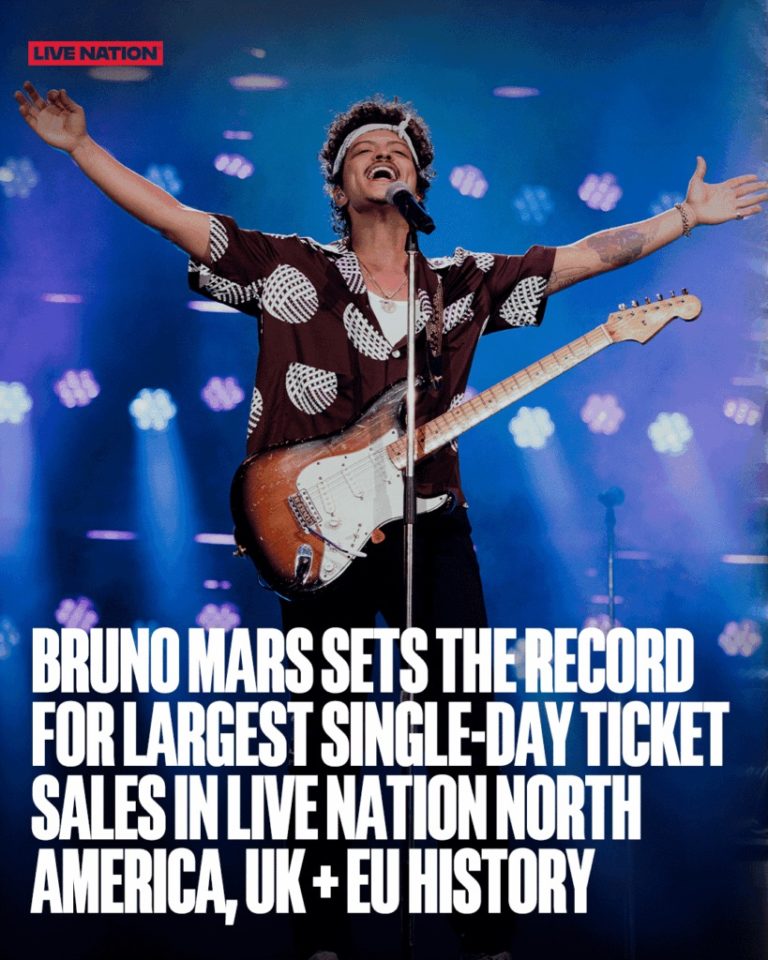
Bruno Mars has launched his first-ever full stadium run with “The Romantic Tour,” setting new benchmarks across the global touring industry. The tour delivered the largest single-day ticket sales in Live Nation history across North America, Europe, and the UK, signaling an unprecedented level of demand. At the same time, it established a new Ticketmaster record, moving 2.1 million tickets in a single day.
Spanning 70 shows across three continents, “The Romantic Tour” marks Mars’ first full headline tour in nearly a decade. The scale and speed of ticket sales reflect the sustained global pull of an artist whose live performances remain a major cultural draw. The tour follows the success of the 24K Magic World Tour, which itself ranked among the highest-grossing tours of its era.
With stadiums at the center of this new chapter, Mars returns to the road at a level that underscores both longevity and momentum. “The Romantic Tour” positions him firmly among the most dominant live performers in the world today, combining mass appeal, consistent demand, and record-setting reach on a global scale.
Folger Theatre Unveils Full Lineup For 2026 Reading Room Festival
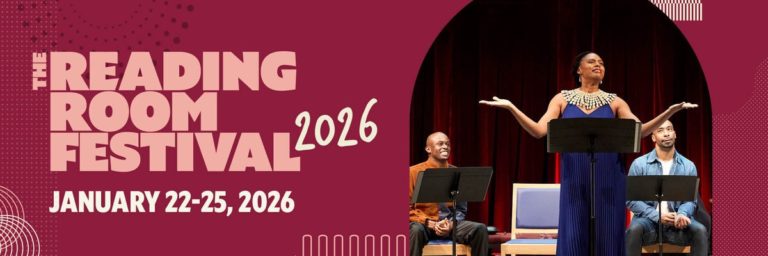
Today, Folger Theatre announces the complete lineup of events included in the fourth annual Reading Room Festival, a public celebration exploring how Shakespeare’s works are adapted, translated, and reimagined for the stage today. The Reading Room Festival will take place January 22–25, 2026, at the Folger Shakespeare Library.
“The talks, workshops and panels will explore the depths of translation, the musicality of Shakespeare and the richness of adaptation that flows from it,” shared Karen Ann Daniels, Director of Artistic Programs. “We’ve learned in the first three years how much our audiences like to step into the practices of creativity themselves. So, we’re doing just that—but with music too!”
This year’s lineup of fully staged readings leans into how music pairs naturally with Shakespeare and includes new works and adaptations by Alexa Babakhanian, Alberto Bonilla, Barbara Fuchs, and Marcus Gardley. Each staged reading boasts casts featuring many DC actors, and every reading will also be accompanied by post-show conversations led by critics and scholars.
Additional programming includes hands-on creative workshops, gallery talks in the Folger’s exhibition halls, panel discussions with artistic leaders, and special events where the public, artists, and scholars can all gather.
Other highlights of the Reading Room Festival 2026 include:
- Shakespeare as a Starting Point: The free opening night discussion, a collaboration with Signature Theatre, will examine how composers, playwrights, and adaptors of the American musical have drawn inspiration from Shakespeare. DC theater artists will perform and discuss selections from Play On!, Kiss Me Kate, West Side Story, and other Shakespeare-inspired musicals.
- Programming for Young People: The Reading Room Festival will host a family-friendly reading of Lope de Vega’s Fuente Ovejuna, adapted by Barbara Fuchs. The reading will be preceded by a free hands-on crafting workshop for the audience to make props to be used in the play.
- Seven Ages of Music: A Community Workshop: Participants are invited to contribute to the co-creation of an original new song inspired by Jaques’ “Seven Ages of Man” speech from Shakespeare’s As You Like It. This playful and participatory exploration of music making will be led by actor and musician John Sygar.
The Reading Room Festival 2026 will welcome more than 40 actors and musicians from the Washington, DC community to perform in these four staged readings. In addition, several members of the yearlong Folger Institute workshop, “Shakespeare and Black Performing Women,” will be participating in this year’s festival as panel moderators. This workshop of theater makers and scholars is convened by Karen Ann Daniels and Patricia Akhimie, Director of the Folger Institute and author of Shakespeare and the Cultivation of Difference: Race and Conduct in the Early Modern World. Visit the Reading Room Festival page to see all participants.
Single tickets for staged readings, panels, talks, and workshops are on sale for $20 each, and free student rush tickets are available 30 minutes before each reading with a valid student ID. Tickets for Fuente Ovejuna are $20 per adult and free for children under 12 (children under 18 must be accompanied by an adult); the crafting workshop beforehand is free for all. There are still a limited number of All-Access Passes available for $125, which include tickets to all four staged readings, invitations to the parties throughout the weekend, and access to the workshops and conversations. The full lineup of events is detailed in the schedule below. Reading Room Festival All-Access Passes and tickets for individual staged readings are available at www.folger.edu/readingroom or by contacting the Folger box office at (202) 544-7077.
Interested members of the press are invited to request tickets for readings and events by January 16 via email at press@folger.edu. The press kit is available at: www.folger.edu/readingroom-presskit/.
Folger Theatre wishes to thank Premiere Season Sponsors Dr. Bill and Evelyn Braithwaite, Season Sponsors Andrea “Andi” Kasarsky, Helen and David Kenney, and Scott and Liz Vance, Production Sponsors Nancy and Steve Howard, Contributing Sponsors Celia and Keith Arnaud, Artist Sponsors Karl K. and Carrol Benner Kindel, with special thanks to Share Fund.
About Folger Shakespeare Library
The Folger Shakespeare Library makes Shakespeare’s stories and the world in which he lived accessible. Anchored by the world’s largest Shakespeare collection, the Folger is a cultural organization where curiosity and creativity are embraced, and conversation is always encouraged. Visitors to the Folger can choose how they want to experience the arts and humanities, from interactive exhibitions to captivating performances, and from path-breaking research to transformative educational programming. The Folger welcomes everyone to connect in their own way—from communities throughout Washington, DC, to communities across the globe. Learn more at www.folger.edu.
The award-winning Folger Theatre in our nation’s capital bridges the arts and humanities through transformational performances and programming that speak inclusively to the human experience. Under the leadership of Artistic Director Karen Ann Daniels, Folger Theatre continues its legacy through exciting interpretations and adaptations of Shakespeare and expands the classical canon through cultivating today’s artists and commissioning new work that is in dialogue with the concerns and issues of our time. Folger Theatre thrives both on its historical stage and in the community, engaging audiences wherever they happen to be. For more on Folger Theatre, please visit www.folger.edu/theatre.
Reading Room Festival 2026
Folger Theatre’s Reading Room Festival returns for the fourth year, with staged readings, panel discussions, workshops, and community celebrations. Uniting artists, scholars, and audiences in a celebration of creative community, the festival explores interpretations that illuminate the multifaceted nature of Shakespeare’s stories.
DAY 1: Thursday, January 22
| 7:30pm | SHAKESPEARE AS A STARTING POINT: Shakespeare and the American Musical |
| Folger Theatre Artistic Director Karen Ann Daniels and Signature Theatre’s Artistic Director Matthew Gardiner lead a lively discussion around Shakespeare’s impact on American musical theater. Exploring the different ways composers have been inspired by Shakespeare’s works, with specific emphasis on Stephen Sondheim, this talk will be accompanied by live performances of selections from Play On!, Kiss Me Kate, West Side Story, and more. Signature’s Director of Artistic Development Anika Chapin joins the conversation as well. |
DAY 2: Friday, January 23
| 6:45pm | Gallery Talk: “Making Myths: The Legacies of William Shakespeare, Queen Elizabeth, and American Actors” |
| Guided by Folger Associate Director of Exhibitions Operations Nicole Bryner, visitors will explore the exhibition halls to learn about the ways contemporary portraiture of Queen Elizabeth perpetuated a self-cultivated myth of the monarch, the ways Shakespeare’s life was mythologized in the Regency era, and the ways American Shakespearean actors created mythic selves to leave their own mark on theatrical history. Myths will be busted! | |
| 8pm | Staged Reading: Cymbeline: A Telenovela Melodramatic Western |
| Original Concept and Idea by Alberto Bonilla Music composed by Anthony De Angelis Adaptation of Shakespeare’s text of Cymbeline by Alec H. Wild Spanish adaptation of text by Alberto Bonilla Original Spanish translation of Cymbeline by D. Eudaldo Viver (1884) Directed by Nadia Guevara | |
| Alberto Bonilla shifts the setting of Shakespeare’s Cymbeline from a mythic Roman-occupied ancient Britain to the American Southwest, circa 1893, at the height of the American cowboy myth, a powder-keg of conflict between class and race: farmers against ranchers, frontier pioneers from the East vs. the Mexican and Indigenous populations. The wounds of the American Civil War are still fresh, and the country is trying to unite with the expansion of the railroad connecting East and West. Focusing on the core family conflicts in Shakespeare’s late romance, this bilingual adaptation features high-stakes drama, gritty fights, and intimate moments—all the twists and turns associated with both Latin American melodramas and Shakespearean tragicomedies. | |
| After the performance, Rafael Ulloa, Deputy Publisher of Tiempo Company, will lead a conversation with members of the creative team and cast. |
DAY 3: Saturday, January 24
| 10:30am | Fuente Ovejuna Hands-On Craft |
| Join us in the Great Hall for a morning of crafting. Participants can choose to create their own mini-protest sign or a fashionable sheep headdress—or both! | |
| Afterwards, bring your creation to the Reading Room at 11:30am for the world premiere of Fuente Ovejuna by Lope de Vega, adapted by Barbara Fuchs and directed by Kelsey Mesa. This family-friendly adaptation invites young audiences to imagine what solidarity looks like, with interactive elements such as audience participation and songs. | |
| This workshop is free for all participants. | |
| 11:30am | Staged Reading: Fuente Ovejuna by Barbara Fuchs |
| By Lope de Vega Adapted by Barbara Fuchs Directed by Kelsey Mesa World Premiere | |
| In the little town of Fuente Ovejuna life rolls merrily along, with sheep to tend and weddings to plan. But when the Comendador, the town’s governor, decides that everything belongs to him, life is turned upside down. What to do? How to resist? This family-friendly adaptation of Lope de Vega’s Spanish Golden Age classic Fuente Ovejuna invites young audiences to imagine what solidarity looks like, with interactive elements such as audience participation, songs, and crafts to engage children while emphasizing themes of justice, unity, and resistance to tyranny. |
| 2pm | Discussion: Diversifying the Classics |
| Join Diversifying the Classics founder and director Barbara Fuchs and founding member Laura Muñoz, for a conversation about the project’s mission to uplift early modern Spanish-language drama, related dramaturgical work, and adaptation initiative Golden Tongues. This conversation will be moderated by director Kelsey Mesa. | |
| Since 2014, Diversifying the Classics has sought to foster awareness and appreciation of Hispanic classical theater in Los Angeles and beyond, expanding the canon to include the heritage of US Latino communities. Its multiple initiatives include original translations, performances, K-12 classroom education, and a database of scholars prepared to guide theater professionals approaching new and underrepresented texts. |
| 8pm | Staged Reading: LEAR |
| Translation/adaptation/remix by Marcus Gardley Directed by Hana S. Sharif Original text by William Shakespeare Commission by Play On Shakespeare | |
| Set in San Francisco’s Fillmore District during the 1960s, LEAR reimagines Shakespeare’s tragedy of loyalty, love, and madness as a modern parable about the erasure of a Black neighborhood. Once a thriving center of Black art, music, and culture, the Fillmore becomes the site for a King Lear adaptation about an aging real estate mogul, his three daughters, and the threat of urban renewal. This modern-verse translation by Obie Award–winning playwright Marcus Gardley offers a poetic reckoning with history, progress, and patriarchy. | |
| After the reading, award-winning theater artist, novelist and educator Ifa Bayeza will lead a conversation with members of the creative team and cast. | |
| 10:30pm | Reception: Lear’s Libations |
| Following the performance of LEAR, All- Access Pass holders and festival artists gather for food music and drinks. |
DAY 4: Sunday, January 25
| 11:30am | Community Workshop: Seven Ages of Music |
| Explore the connections between verse and musical rhythm in this participatory, all-ages workshop. Using the famous “Seven Ages of Man” speech from Shakespeare’s As You Like It, actor and musician John Sygar will lead participants in learning the basic structure of iambic beats in Shakespeare’s text, engaging in a musical conversation, and co-creating a unique and improvised composition. | |
| 1:30pm | Conversation: The Two Shakespeares: Myth and Mortal |
| Folger Director Dr. Farah Karim-Cooper and Folger Theatre Artistic Director Karen Ann Daniels sit down to discuss how Shakespeare is perceived today. Why are so many people compelled by the “authorship” question? How did a working playwright become a mythological genius? And how can we play with perceptions around him and his works to create new meaning? | |
| 3pm | Staged Reading: Dark Lady: A Musical Theater Work |
| Book, Lyrics, and Music by Alexa Babakhanian Directed by Rebecca Martínez | |
| What would happen if it were discovered that Amelia Bassano, a Venetian Jew and the first woman poet published in England, was the real author of Shakespeare’s plays? And what if this literary secret was revealed by Elizabethan characters existing in a modern-day alternate reality? Discover the Dark Lady, Shakespeare’s muse in his Sonnets, who has been hiding in plain sight for over 400 years. Alexa Babakhanian’s humorous, whimsical musical creates a dynamic score of beatboxing, hip hop, classical, and pop music to highlight the interplay between these two great dramatists and poets. | |
| After the reading, current Folger Long-Term Public Humanities Fellow JaMeeka Holloway, who is an award-winning director, producer, and cultural strategist based in Durham, North Carolina, will lead a conversation with members of the creative team and cast. | |
| 5pm: | Exit, Pursued by a Beer |
| The artists and guests say a final farewell to the festival with a traditional toast on the stage. |
Neotraditional Country Band Midland Returns With New Song “Marlboro Man”
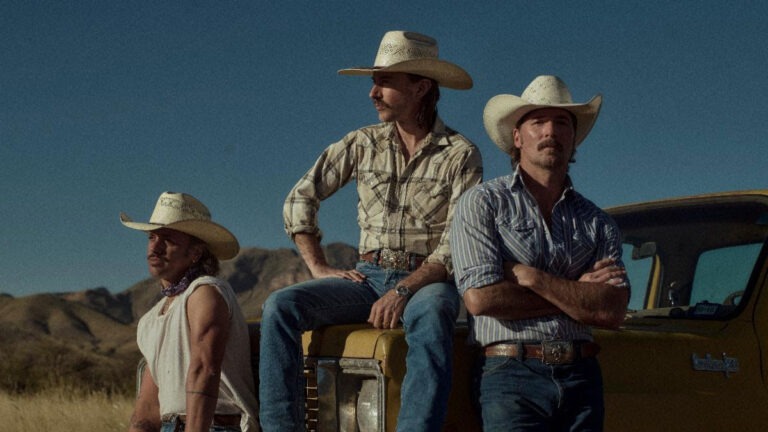
Midland are back with their new song “Marlboro Man,” released via Big Machine. Written by Dean Dillon, Tim Nichols, and Josh Thompson, and produced by Trent Willmon, the track leans into classic country storytelling, tracing the freedom, grit, and isolation of a life spent chasing the road. Frontman Mark Wystrach describes the song as deeply personal, saying, “‘Marlboro Man’ is a soaring ballad that reflects on the 12-year journey of this band and how the road has left its scars like old leather.”
He continues, “On the road, images of home haunt us at every turn and the landscape is filled with vistas of the same old regrets, yet the sun continues to come up, the bus marches on and the cycle continues.” Wystrach adds, “‘You always strive to learn and grow, but the core of a man never changes from summer to snow as we keep riding on along, mile after mile, to get to the next show — like that damn Marlboro Man.'” The release arrives alongside an official music video directed by Justin Clough, shot in Wystrach’s hometown of Sonoita, Arizona, capturing the band in constant motion across desert roads, on horseback, motorcycles, and in vintage vehicles, mirroring the song’s restless spirit.
Milwaukee Rap Rockstar DC The Don Signs With Republic Records
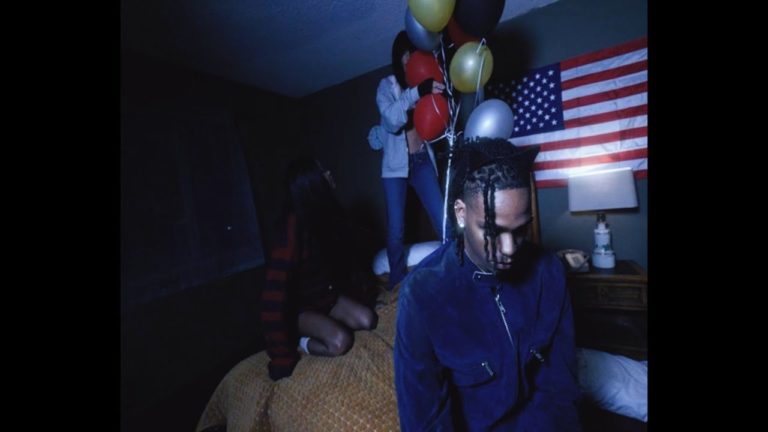
DC The Don has signed with Republic Records, marking a major milestone for the Milwaukee artist as he enters a new phase of his career. The deal formalizes years of steady momentum built through a genre-fluid approach that pulls from hip-hop, punk, pop, and rock, earning him a devoted following and a reputation for versatility. Republic Records leadership describes DC The Don as a songwriter-driven artist with a sound that moves freely across styles, positioning the partnership as a long-term creative alignment.
To mark the announcement, DC The Don has released his new single “Lie2Me,” his first official release under the Republic banner. Produced by LouieOTK, the track flips a playful sample from electronic duo ear’s 2025 song “Real Life,” pairing melodic delivery with emotional tension. The single reflects a refined direction while staying true to the shapeshifting instincts that defined his earlier work, from SoundCloud releases to boundary-blurring projects that resisted easy categorization.
“Lie2Me” also arrives with a new music video directed by The Window, which centers on the pull of a connection that feels almost unreal in its intensity. The release serves as the first glimpse of DC The Don’s upcoming project, ‘the rumors are true,’ and sets the tone for what follows. With a major-label platform now in place, the new chapter builds directly on the creative control and identity he has cultivated from the start.
Ghanaian Artist Lamisi Shares New Single “Come” From ‘Let Us Clap’

Lamisi has shared “Come,” the second single from her forthcoming album ‘Let Us Clap,’ marking a new phase in her collaboration with producer and musical director Wanlov the Kubolor. Released via Real World Records, the track brings Lamisi’s soulful vocal style into dialogue with contemporary production, weaving traditional northern Ghanaian rhythms with modern textures. The song reflects Lamisi’s ongoing commitment to social change, rooted in her work leading the Lamisi Fata Foundation, which supports girls and young women in northern Ghana.
On “Come,” Lamisi draws inspiration from everyday village exchanges, translating call-and-response conversation into music built around rhythm and interaction. She describes the song as being about generosity balanced with dignity and healthy boundaries. Across ‘Let Us Clap,’ handclaps form the core of the music, reshaping long-standing women’s clapping traditions into compositions that combine organic grooves with electronic processing, shifting tempos, and heavily treated vocals. The result feels grounded in heritage while moving deliberately forward.
Wanlov the Kubolor describes the project as forward-looking music shaped by where people come from, rather than nostalgia. Known for his work across hip-hop, film, and activism, he brings a satirical and socially engaged sensibility to the album. For Lamisi, the record also carries personal urgency, reflecting on how access to education and opportunity remains uneven for girls in her home region. Through ‘Let Us Clap,’ she centers women’s voices, turning rhythm, collaboration, and collective movement into tools for empowerment.
Why Crypto Refuses to Die: A 2026 Look at an Industry That Won’t Go Quiet
By Mitch Rice
Every few years, crypto is pronounced dead. A crash hits, headlines turn hostile, regulators step in, and social media moves on to the next shiny thing. And yet, here we are in 2026, still talking about it, still building on it, still using it. Crypto didn’t fade away, it just got quieter, leaner, and more practical. This article looks at why the industry keeps surviving its own funerals, how it adapted in 2026, and why it remains relevant even without the hype.
Crypto Has Been “Dead” Before
If you’ve followed crypto long enough, you’ve seen this movie already. Bitcoin “dies” during bear markets. Ethereum is declared broken every time gas fees spike. Entire sectors collapse, from ICOs to NFTs to overleveraged lending platforms. What people often confuse is price with relevance. Markets crash, technologies rarely disappear overnight. The internet didn’t die after the dot-com bubble. It just stopped being a casino for a while. Crypto’s crashes tend to flush out weak projects and unrealistic promises. What survives is slower, more boring, and far more resilient.
Speculators Left, Builders Stayed
One of the most significant shifts between earlier cycles and 2026 is who remains active. The loudest voices from the hype years moved on. Influencers, pump groups, and overnight “experts” largely vanished when easy money dried up.
What stayed behind were developers, infrastructure teams, and long-term companies. Wallet providers improved security. Blockchains focused on stability rather than headline features. Payment rails, custody tools, and on-chain identity have quietly matured, marking the point where crypto starts to grow up. Not when everyone is talking about it, but when fewer people are watching.
Regulation Didn’t Kill Crypto, It Shaped It
For years, people framed regulation as crypto’s executioner. In reality, it became its filter. By 2026, most major jurisdictions had more straightforward rules. Exchanges faced leverage limits and reporting standards. Auditors examined stablecoins, and custodial services operated with real accountability.
That scared off shady operators, but it also made crypto usable for more people. Institutions finally knew where the lines were. Retail users had better consumer protections, and builders stopped guessing what might be illegal next year. Crypto didn’t escape regulation. It learned how to exist alongside it.
2026 Is Less Hype, More Utility
Crypto in 2026 is quieter, and that’s a good thing. Instead of chasing the following narrative, users care about reliability. Can this network stay online? Are fees predictable? Is custody safe? Does this actually solve a problem?
We’re seeing more real-world usage. Cross-border payments that actually settle quickly. Tokenized assets with legal backing. On-chain systems that integrate with existing finance instead of trying to replace it overnight. The industry didn’t disappear. It narrowed its focus.
Crypto Is No Longer Just an Investment
One reason crypto refuses to die is that it has stopped being about price alone. People still trade, of course, but that’s no longer the whole story. Crypto now functions as infrastructure. It’s a settlement layer. A way to move value without permission. A tool for financial access in places where traditional banking is limited or unstable.
Even people who don’t care about “crypto culture” use it indirectly behind apps, wallets, remittance tools, and digital identity systems. When something becomes infrastructure, it’s much harder to kill.
Self-Custody Became a Survival Skill
One of the clearest lessons from past collapses is simple: if you don’t control your keys, you don’t control your assets. By 2026, self-custody is no longer a niche concept. It’s a fundamental skill for anyone serious about crypto. Centralized platforms still exist, but fewer people unquestioningly trust them.
Hardware wallets became more user-friendly and less intimidating. Tools like the Tangem hardware wallet helped bridge the gap for everyday users who want security without complexity. Tapping a card feels a lot more natural than managing seed phrases on sticky notes.
If you’re still relying entirely on exchanges, this cycle has already taught that lesson the hard way. Using a hardware wallet like Tangem isn’t about paranoia. It’s about owning what you actually paid for.
Why Crypto Still Matters Going Forward
Crypto survives because it solves problems that haven’t gone away. Money still moves slowly across borders. Financial access is still uneven. Trust in institutions rises and falls. People still want alternatives, especially during uncertainty. The industry doesn’t need universal belief. It only needs enough people to see real value in it, and it has already reached that point. Crypto in 2026 isn’t loud. It isn’t trendy. It doesn’t promise overnight wealth. What it offers instead is optionality. A parallel system that keeps running whether it’s fashionable or not, and as long as that option exists, crypto isn’t going anywhere.
For individuals who choose to stay involved, the focus is simpler now. Use fewer platforms. Understand custody. Reduce unnecessary risk. Keep control in your own hands. A secure hardware wallet like Tangem fits naturally into that mindset, not as a speculative tool, but as a practical one. Crypto doesn’t need hype to survive anymore. It has already proved it can outlast the noise.
Data and information are provided for informational purposes only, and are not intended for investment or other purposes.
Barry Adamson Releases SCALA!!! Soundtrack Celebrating London’s Wildest Cinema
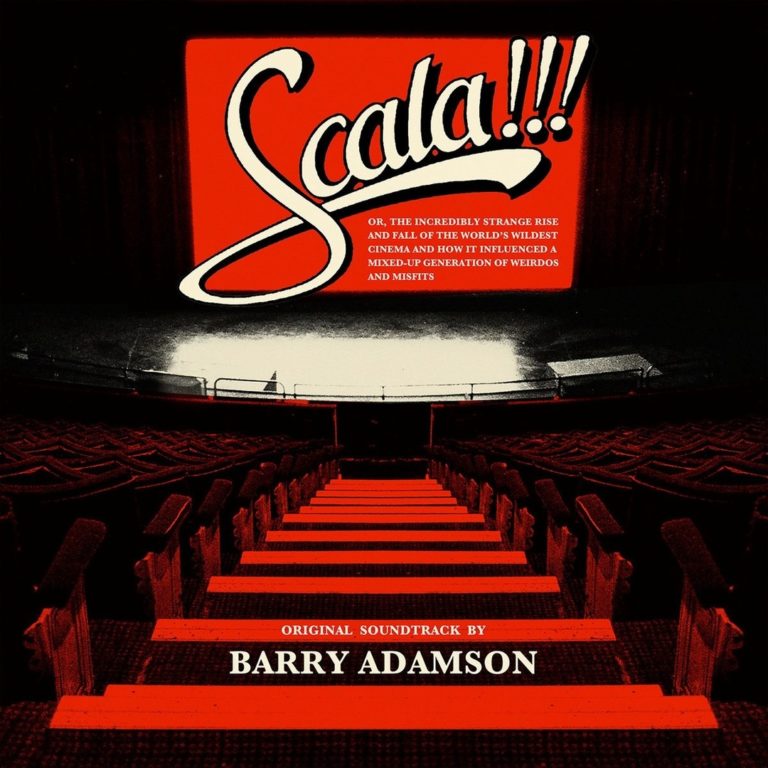
Barry Adamson has released ‘SCALA!!!’, his score for the documentary SCALA!!! Or, the Incredibly Strange Rise and Fall of the World’s Wildest Cinema, out now via Mute on limited edition “banned blood” vinyl, CD, and digital formats. The 22-track album soundtracks the rise and fall of London’s legendary Scala cinema, capturing its anarchic energy, late-night chaos, and deep emotional pull. Tracks like “Scala Cats” nod to the cinema’s resident felines, as inseparable from the venue’s mythology as the all-night screenings, sticky floors, and unruly crowds.
Adamson’s score brings his noir, cinematic instincts to a setting that helped shape generations of filmmakers, artists, and music fans. Running from 1973 to 1993, the Scala became a cultural hub through its boundary-pushing programming, double features, and auteur showcases spotlighting figures such as John Waters, Russ Meyer, Derek Jarman, and David Lynch. The documentary features interviews with regulars, staff, and artists including Adamson himself, reflecting on how the cinema’s fearless approach influenced creative lives well beyond its walls.
Often described as a master of the soundtrack form, Adamson uses SCALA!!! to move fluidly between menace, playfulness, and melancholy, mirroring the cinema’s unruly spirit. Across his career, from Magazine and The Birthday Party to Nick Cave & the Bad Seeds and a wide-ranging solo catalog, Adamson has built a reputation for narrative-driven composition. His work for film, dance, and stage continues that tradition here, translating the Scala’s legacy into music that feels lived-in, unpredictable, and deeply evocative.
Croatian Death Metal Trio In Dakhma Unleash Sepultura Cover “Territory”
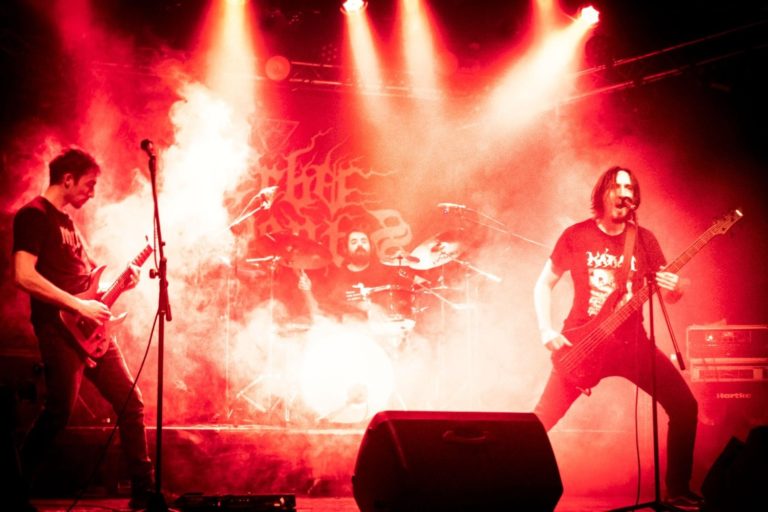
In Dakhma have released their take on “Territory,” revisiting the Sepultura classic through a heavier, more suffocating death metal lens. Originally released on Sepultura’s 1993 album ‘Chaos A.D.,’ the song is reworked with dense atmospheres, tight rhythmic control, and an unrelenting intensity that aligns closely with In Dakhma’s approach to the genre. The band describes Sepultura as a formative influence, pointing to the song’s themes of borders, conflict, and propaganda as ideas that still carry weight today.
Rooted in old-school death metal while incorporating ritualistic and modern elements, In Dakhma draw thematic inspiration from mortality, ancient practices, and societal collapse, a direction reflected in both the music and visuals. The accompanying video for “Territory” adopts a stripped-down, DIY style that mirrors the band’s direct and uncompromising sound. Known for their high-energy live shows, In Dakhma continue to build momentum within the Balkan metal scene, positioning themselves as a rising presence driven by conviction and atmosphere.