Home Blog Page 47

Ted Nichols, 1928–2026: The Music Composer Who Gave Scooby-Doo Its Heartbeat

0

Here’s one for the ages. Literally.

Ted Nichols died on January 9th at 97 years old, in Auburn, Washington, after a long battle with Alzheimer’s. And if that name doesn’t immediately ring a bell, I promise you his music does. You heard it every Saturday morning. You heard it when the gang split up to search the haunted house. You heard it when Shaggy and Scooby ran — again — from whatever rubber-masked villain was chasing them down a corridor.

That propulsive, perfectly calibrated underscore that made Scooby-Doo, Where Are You! feel like an actual adventure? That was Ted Nichols.

Born Theodore Nicholas Sflotsos in Missoula, Montana, in 1928 — a name he’d legally simplify to Ted Nichols by 1948 — his path to cartoon immortality was anything but straight. Navy swing band in Corpus Christi. Air Force Bandsmen Training School commander, recruiting musicians from Juilliard. Youth symphony director. Barbershop singer at Disneyland, occasionally having coffee with Walt Disney himself on Main Street. Minister of music at a 4,000-seat church in California.

And then, through a chance introduction via a choir member, he met William Hanna. And everything changed.

From 1963 to 1972, Nichols was the musical engine of Hanna-Barbera — composing, conducting, arranging for The Flintstones, Jonny Quest, Space Ghost, Birdman, Wacky Races, Josie and the Pussycats, and dozens more. His Scooby-Doo cues were so well constructed, so modular and intelligent, that music editors were still cutting them into new Scooby episodes as late as 1985. Sixteen years of continuous use. That’s not filler music. That’s craft.

He was 97. He lived a full, extraordinary, genuinely remarkable life. He got to hear his music come out of televisions in living rooms across the world for decades. Not many composers get that.

Doo-be-doo-be-doo, Ted. Rest well.

How The Gemini 3.1 Pro API Can Help Music Teams Create Smarter Content Workflows

0

By Mitch Rice

Music teams are under constant pressure to publish more content across more channels, often on tighter timelines than ever before. A single release can require artist bios, campaign briefs, press materials, social copy, audience messaging, and internal planning documents. For labels, managers, media teams, and music marketing departments, the real challenge is not just creating content. It is creating repeatable systems that make content production faster and easier to manage.

That is why the Gemini 3.1 Pro Preview API is worth attention. Not because music teams will use it like a consumer-facing app, but because it can be integrated into internal tools, editorial workflows, and content operations systems that support campaign execution at scale.

Why Music Teams Need Smarter Content Workflows Today

The Growing Pressure To Publish Across More Channels

Modern campaigns no longer live in one place. Teams need coordinated messaging for streaming platforms, social media, newsletters, press outreach, and artist-owned channels. That creates a content workload that quickly becomes difficult to manage through manual drafting alone.

Why Manual Content Operations Slow Campaigns Down

Many music organizations still rely on fragmented processes: notes in one place, release information in another, approvals over email, and copy revisions spread across multiple documents. That approach works for small volumes, but it becomes inefficient when teams are handling frequent releases or managing multiple artists at once.

Where AI Fits Into Modern Music Marketing Workflows

In this context, AI is most useful when it supports the workflow behind the scenes. Instead of replacing creative direction, a model API can help transform structured inputs into draft materials, summaries, outlines, and internal content assets that move campaigns forward more efficiently.

How The Gemini 3.1 Pro API Supports Content Planning And Execution

Generating Draft Ideas For Artist Campaigns

When integrated into a planning system, the API can help turn release details, genre positioning, target audience notes, and campaign objectives into usable draft angles. That could include early press themes, rollout concepts, or structured briefing materials for marketing teams.

Summarizing Research, Interviews, And Release Notes

Music teams often work with scattered source material, including artist interviews, release documents, historical notes, and market research. The Gemini 3.1 Pro Preview API can be integrated into internal workflows that summarize these materials into shorter, usable formats for campaigns, media planning, or editorial preparation.

Turning Raw Inputs Into Usable Marketing Copy

This is where API integration becomes practical. A team can build a workflow that takes approved source inputs and converts them into first-draft captions, promo copy, internal summaries, or content frameworks. For teams exploring integration paths, resources like the Gemini 3.1 Pro API page are useful when evaluating model access and workflow fit.

Practical Use Cases For The Gemini 3.1 Pro API In Music Organizations

Social Captions, Press Angles, And Promo Copy

The API is well suited for language-heavy support tasks that begin with existing information. It can help systems generate campaign variations, rewrite messaging for different channels, or create consistent first drafts that humans later review and refine.

Audience Research And Content Personalization

Music marketing increasingly depends on understanding segments, scenes, and audience behavior. Integrated into internal research tools, the model can help interpret notes, summarize fan feedback, or organize campaign observations into more actionable formats.

Internal Workflow Support For Labels, Managers, And Media Teams

The strongest use cases are usually operational rather than public-facing. Labels and media teams may integrate the API into dashboards, planning systems, or editorial tools that help staff move from raw information to organized campaign materials more efficiently.

What Teams Should Know About Gemini 3.1 Pro Preview API Access

How The Preview Model Fits Early Workflow Testing

Preview access can be useful when teams want to test workflow concepts before committing to a broader implementation. This is especially relevant for internal use cases such as summarization, draft generation, and campaign planning support.

What To Consider Before Wider Team Adoption

Adoption should start with workflow design, not with hype. Teams need to decide where model output is genuinely useful, which steps require review, and how the system should handle sensitive information or inconsistent source material.

Why Output Review Still Matters In Creative Environments

Even strong model output should not move directly into publication without editorial oversight. In music marketing and PR, tone, accuracy, artist positioning, and timing all matter. The API can improve speed, but final judgment should remain with human teams.

How To Think About Gemini 3.1 Pro API Pricing And Cost

Comparing AI Workflow Costs With Manual Content Production

For most organizations, the useful comparison is not whether AI is free or expensive. It is whether integrated workflow support can reduce repetitive drafting and organizational overhead. In that sense, Gemini 3.1 Pro API pricing should be viewed as part of a broader content operations budget.

When Gemini 3.1 Pro API Pricing Makes Sense For Growing Teams

The model becomes more practical when a team manages frequent campaigns, recurring content tasks, or multiple contributors. If internal systems repeatedly generate drafts, summaries, or planning outputs, then Gemini 3.1 Pro API cost may be justified by time savings and faster coordination.

How To Estimate Gemini 3.1 Pro API Cost Across Recurring Campaigns

A useful approach is to estimate how often the API will be called inside a workflow: campaign planning, briefing summaries, copy drafts, and internal revisions. Teams evaluating access and implementation details often review documentation around pricing, usage, and setup through sources such as the Gemini 3.1 Pro API page before building production workflows.

Best Practices For Using The Gemini 3.1 Pro API In Music Content Workflows

Use Clear Inputs And Structured Prompts

Integrated systems perform better when the source material is organized. Release metadata, approved artist descriptions, campaign goals, and audience notes should be structured clearly before being passed into the model.

Build Repeatable Workflows Instead Of One-Off Experiments

The real value comes from consistency. A label or media team gets more from the API when it is built into recurring editorial or planning processes rather than treated as an occasional experiment.

Keep Human Review In The Final Approval Stage

No content workflow in music should be fully automated from input to publication. The API can support faster drafting and better organization, but human review is still necessary for nuance, tone, and campaign alignment.

Why The Gemini 3.1 Pro API Deserves Attention From Music Teams

The Gemini 3.1 Pro API matters because it gives music organizations a way to strengthen internal content operations without pretending that creative strategy can be fully automated. Its value comes from integration: supporting the systems that help teams summarize information, prepare drafts, organize campaign materials, and move faster across repeated content tasks.

For labels, managers, media teams, and music marketers, that makes it less of a novelty and more of an infrastructure decision. When integrated thoughtfully, supported by editorial review, and evaluated against real workflow needs, it can become a useful part of a smarter content production process.

Data and information are provided for informational purposes only, and are not intended for investment or other purposes.


Simple Plan and Smash Mouth Are Headlining the 2026 Gatineau Hot Air Balloon Festival

0

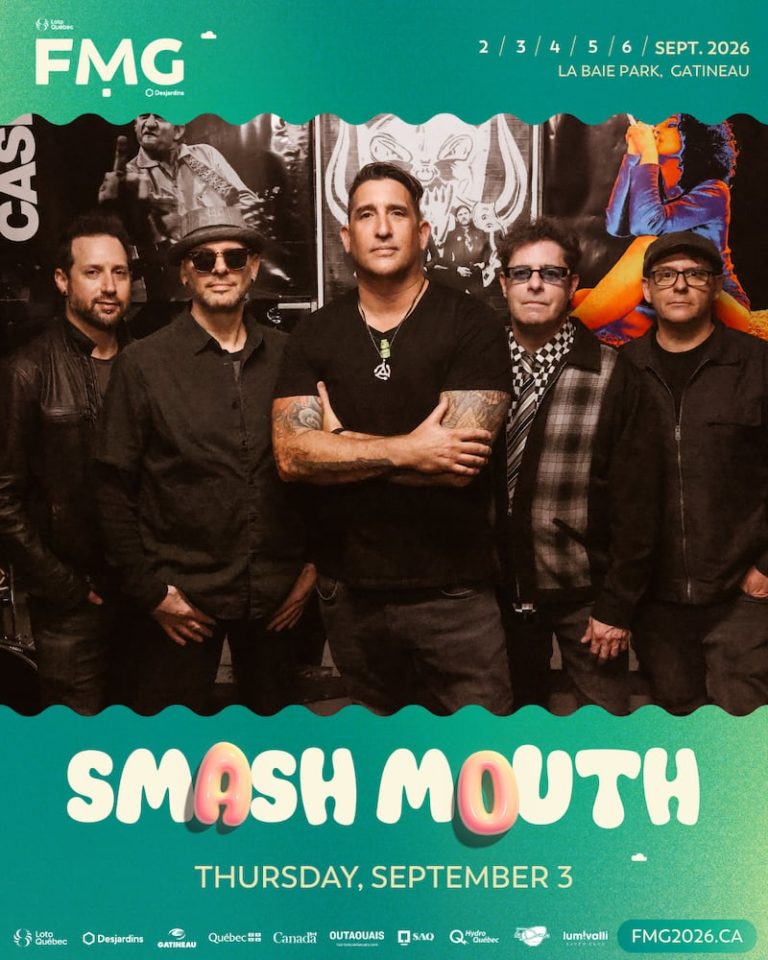
The 2026 Gatineau Hot Air Balloon Festival has its headliners, and they hit hard. Running September 2nd through 6th in Gatineau, QC, the five-night event brings together Simple Plan, Smash Mouth, Matt Lang, and DJ Mike Demero for a lineup that covers pop-punk, rock, country, and club energy under open skies.

Simple Plan takes the stage Friday, September 4th. The Montreal-bred pop-punk institution has spent over 20 years building a catalog that has moved more than 10 million records worldwide and crossed 1 billion streams. Hits like “I’m Just a Kid,” “Welcome to My Life,” and “Summer Paradise” featuring Sean Paul have made them one of the most enduring acts in the genre, and their live show delivers every time.

Smash Mouth headlines Thursday, September 3rd. The GRAMMY-nominated, multi-platinum Californian rock band brings “All Star,” “Walkin’ on the Sun,” and “I’m a Believer” to the festival stage, along with material from their forthcoming album ‘Mercury Comet’, due in 2026. Quebec country artist Matt Lang opens the festival Wednesday, September 2nd, carrying over 70 million streams and 150,000 tickets sold across sold-out tours. DJ Mike Demero, with 1.7 million social media followers and festival credits alongside Loud Luxury and Alan Walker, sets the stage for Simple Plan on Friday night.

Beyond the concerts, festival pass holders can catch evening hot air balloon launches at approximately 6:30 pm Wednesday through Sunday, free morning launches Thursday through Sunday at around 6:30 am, the Michel Quesnel Pharmacist Fireworks display nightly, and the Beauce Carnaval Amusement Park on site throughout.

Five-day passes start at $69.99 plus taxes and fees at fmg2026.ca, presented by Loto-Québec in collaboration with Desjardins. Additional artists will be announced in the coming weeks.

RAYE and Hans Zimmer Deliver an Orchestral Pop Showstopper With “Click Clack Symphony”

0

RAYE and Hans Zimmer have combined forces on “Click Clack Symphony,” a track from RAYE’s album ‘This Music May Contain Hope’ that puts the full weight of the Nashville Music Scoring Orchestra behind her pop instincts. Arranged by Hendric Buenck and Russell Emanuel of Bleeding Fingers Music, the result is a genuinely cinematic piece of music, the kind that fills a room and demands to be heard loud.

Leonid Radvinsky, 1982–2026: The Reluctant Billionaire Who Rewired the Creator Economy

0

Leonid Radvinsky, 1982–2026: The Reluctant Billionaire Who Rewired the Creator Economy

And a word about getting screened.


Here’s something worth sitting with for a moment.

Leonid Radvinsky died this past week at 43. Forty-three. Born in Odesa, raised in Chicago, graduated Northwestern with an economics degree, and quietly — almost invisibly — built one of the most consequential platforms in the history of online media. He was worth $4.7 billion at the time of his death. He gave almost no interviews. You probably couldn’t have picked him out of a lineup.

And yet.

In 2018, he paid a relatively modest sum for a majority stake in a scrappy little British subscription site called OnlyFans that most people hadn’t heard of. Then a pandemic happened, the entire world went indoors, and suddenly everyone had heard of OnlyFans. Creators — millions of them — found a direct line to their audiences and their income that bypassed every traditional gatekeeper. No record label. No studio. No agency taking their cut. Just a creator, a camera, and a subscriber willing to pay.

Was it primarily a porn platform? Yes. Obviously yes. Let’s not be coy about that. But it was also something genuinely new: a model that handed economic power directly to individual creators at a scale nobody had managed before. Love it, hate it, clutch your pearls about it — the architecture of it mattered. Other platforms noticed. The whole creator economy shifted.

By 2024, OnlyFans was processing $7.2 billion in transactions annually, paying out $5.8 billion of that to creators. That’s not a footnote. That’s a seismic redistribution of money in the media landscape.

Radvinsky’s early career was messy and not exactly something you’d put on a Christmas card. His philanthropy, though, was genuine — cancer research, Ukraine relief, animal welfare. He and his wife backed a $23 million cancer research grant program. Given what ultimately took him, that lands with particular weight.

He was 43 years old.

Which brings me to the part I really need you to hear.

Forty-three is not old. It is not even close to old. And cancer doesn’t care how old you are, how wealthy you are, or how quietly you prefer to live your life.

If you have been putting off a colonoscopy, a mammogram, a PSA test, a skin check, or any other screening your doctor has been gently (or not so gently) suggesting — please stop putting it off. Book the appointment this week. Not next month. This week. Caught early, so many of these cancers are treatable. Caught late, the math changes brutally and fast.

Radvinsky reportedly donated to Memorial Sloan Kettering Cancer Center. He understood the stakes. Make sure you do too.

Rest easy, Leo. You changed the internet more than most people will ever know.

Liverpool Post-Punk Survivors Cassius Wolf & Das Abs Return With Charged New Single “I Can’t Reply”

0

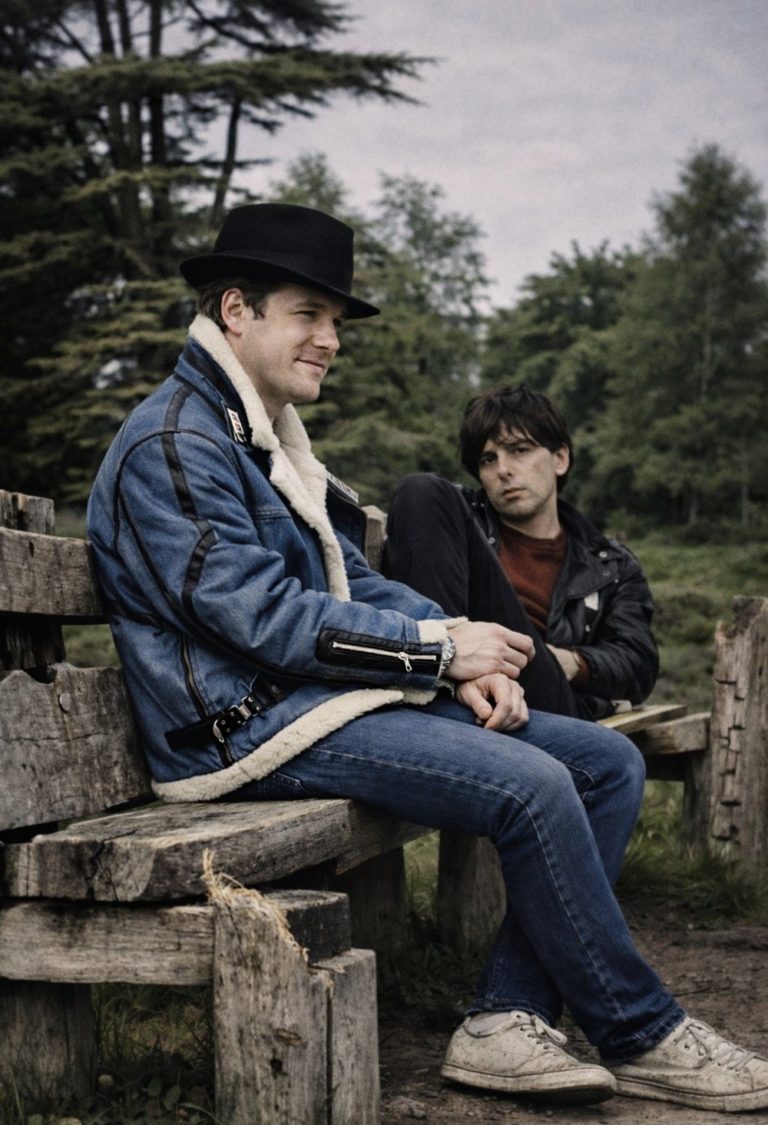
Two school friends who came up together in Liverpool’s original post-punk scene have something worth hearing again. Cassius Wolf & Das Abs, formed in 1978 by Cassius Wolf and Don Watson, are back with “I Can’t Reply,” a new single drawn from restored cassette archive recordings and reworked for 2026. The track sets the tone for their upcoming album ‘An Afternoon in Bedlam’, due May 29th.

Wolf and Watson came up in the thick of it. They worked together at the legendary Liverpool club Eric’s, surrounded by the energy of Echo & the Bunnymen, OMD, and The Teardrop Explodes. That environment shaped a sound built on punk attitude, melodic instinct, and independent thinking. Decades later, those same values are driving their return.

“I Can’t Reply” is built around a throbbing bassline, urgent drums, and sharp melodic guitar work. The track traces the moment a relationship’s communication collapses entirely, when conflict spirals past the point of response. The repeated refrain does not suggest avoidance. It captures paralysis. It is post-punk doing exactly what post-punk does best, finding the emotional truth inside the noise.

‘An Afternoon in Bedlam’ draws from the darker romantic textures of The Cure and Depeche Mode alongside the experimental restlessness of Can and Velvet Underground. Recorded from a home studio environment with full creative control across songwriting, production, and visuals, the album reflects the band’s broader mission under what they call “PCore,” a movement championing artists who continue pursuing creative ambitions later in life.

The Raccoons’ Long-Lost Music Finally Goes Digital With New Covers From Contemporary Artists

0

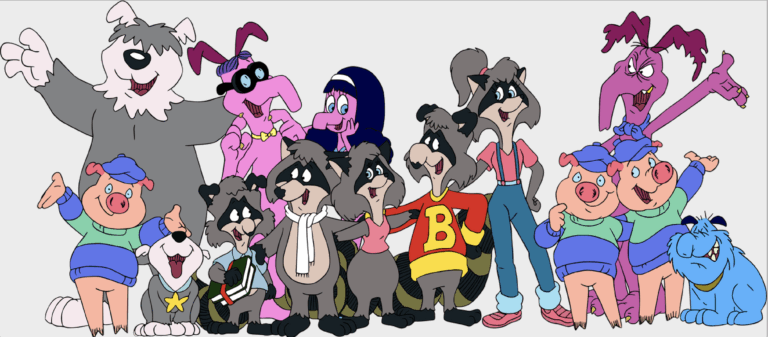
Forty years after the Evergreen Forest first came to life on Canadian television, the music of The Raccoons is finally getting its digital moment. In partnership with 604 Records, the newly remastered soundtracks from the beloved CBC animated series are arriving online for the first time, paired with brand-new recordings from contemporary artists. The rollout begins April 22nd, Earth Day, with Lisa Lougheed’s iconic recording of “Run With Us” hitting all streaming platforms alongside its original music video.

The first full album release, ‘Evergreen Nights’, arrives June 5th and features a fresh take on “Run With Us” by Fionn, the Billboard No. 1-charting alternative duo from Vancouver. Subsequent 2026 releases will spotlight additional albums from the series, including three original musical albums and two storybook albums, all previously only available on vinyl and each expanded with exclusive bonus material. This is the first official release of any kind since 1988.

604 Records co-founder Jonathan Simkin, who came aboard after creator Kevin Gillis approached him about the project, put it plainly: “Diving into this project has really underscored for me just how far ahead of its time Raccoons was.” Gillis calls the strategy of pairing legacy recordings with new interpretations “a unique power play that is sure to inspire fans, both existing and new.”

The original series ran on CBC from 1985 to 1991 and broadcast in over 180 countries, featuring original music by Lougheed, Leo Sayer, Rita Coolidge, Rupert Holmes, Dottie West, Curtis King Jr., and Stephen Lunt. Recently remastered from 35mm film to 4K, the show is currently streaming on Crave and Roku in Canada, ITVX and BritBox in the UK, and across numerous international platforms.

“Run With Us” arrives digitally on April 22nd. ‘Evergreen Nights’ follows on June 5th via 604 Records.

Irish Guitar Virtuoso Paul Sherry Drops “Peace In Mind” Video From His Acclaimed Fourth Album

0

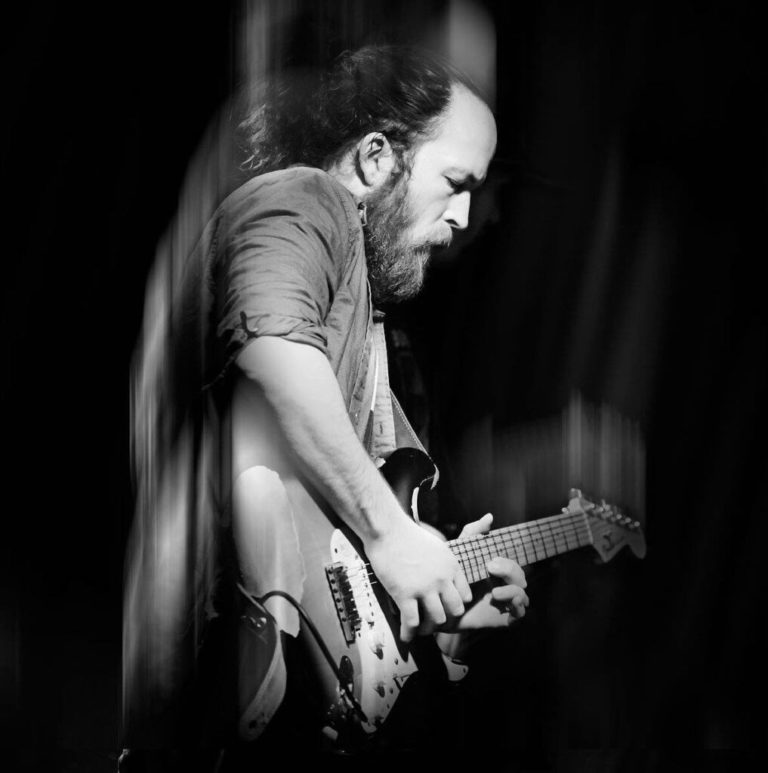
Paul Sherry has been building something real. The Irish guitarist and songwriter now shares the official video for “Peace In Mind,” the title track from his fourth album, released earlier this year to widespread critical praise. The video premiered March 20, arriving as the record continues to earn serious attention on both sides of the Atlantic.

‘Peace In Mind’ has already pulled in a four-star review from RNR Magazine, coverage in Hot Press, The Irish Post, the Belfast Telegraph, and back-to-back No. 1 singles on the UK’s Future Hits Top 40 Radio. That kind of momentum does not happen by accident. It follows 2021’s ‘Let It Flow’, which earned RTÉ Lyric FM’s Album of the Week, and finds Sherry again working with producer Rocky O’Reilly, drummer Davy Cassidy, and bassist Paul McCabe on a ten-song collection full of blues-rock grit and genuine depth.

The song draws its philosophy from American writer Alan Watts. Sherry puts it plainly: “Peace In Mind is a song about how everyday we can really flow creatively and emotionally, or struggle. As we all walk our own paths in life, we are all just trying to find peace in mind wherever we can.” The video, filmed by Brendan McElroy of Pixil Media on location in County Monaghan, brings that interior search to life in haze and atmosphere.

The track lands with weight and warmth, a blues-rooted slow burn that earns every quiet moment. Sherry’s guitar work is instinctive and unhurried, the kind of playing that prioritizes feel over flash. It is the sound of someone who has spent years developing a voice and knows exactly how to use it.

Best known as lead guitarist for the Gráinne Duffy Band, Sherry has also logged sessions and collaborations with Marc Ford, Dale Davis, Arron Sterling, Jorgen Carlsson, Kenny Aronoff, and Justin Stanley.

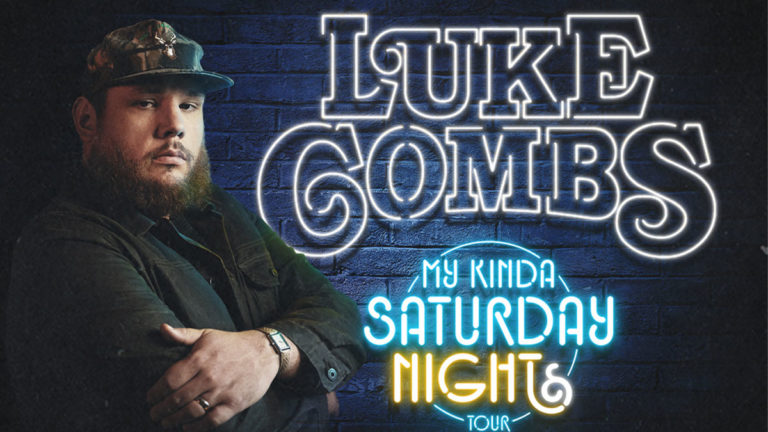
Luke Combs Breaks Allegiant Stadium Record With 70,921 Fans on ‘My Kinda Saturday Night’ Tour Opener

0

Luke Combs walked into Allegiant Stadium on Saturday night and rewrote the record books. The country superstar drew 70,921 fans to the Las Vegas venue for the opening night of his “My Kinda Saturday Night” Tour, setting the highest single-concert attendance mark in the stadium’s history.

That number lands above some serious benchmarks. Super Bowl LVIII drew nearly 62,000 in 2024. Garth Brooks sold over 65,000 tickets in 2021. George Strait packed in over 69,000 in December 2024. Taylor Swift brought around 68,000 per night during The Eras Tour in 2023. Combs topped them all, in a 360-degree in-the-round setup that put the audience at the center of everything.

The tour launch came one day after Combs released his new album, ‘The Way I Am’, a 22-track project he co-produced with Jonathan Singleton and Chip Matthews. The record goes deep into the personal, balancing vulnerability with anthemic reach. It includes a collaboration with Alison Krauss and showcases the kind of storytelling that has made Combs one of country music’s most consistent forces.

The Las Vegas moment was bigger than one record. The previous day, Combs visited the future site of his Category 10 multi-level entertainment complex, a partnership with Opry Entertainment Group opening this fall at the Flamingo Las Vegas, 3555 Las Vegas Boulevard South, directly on The Strip.

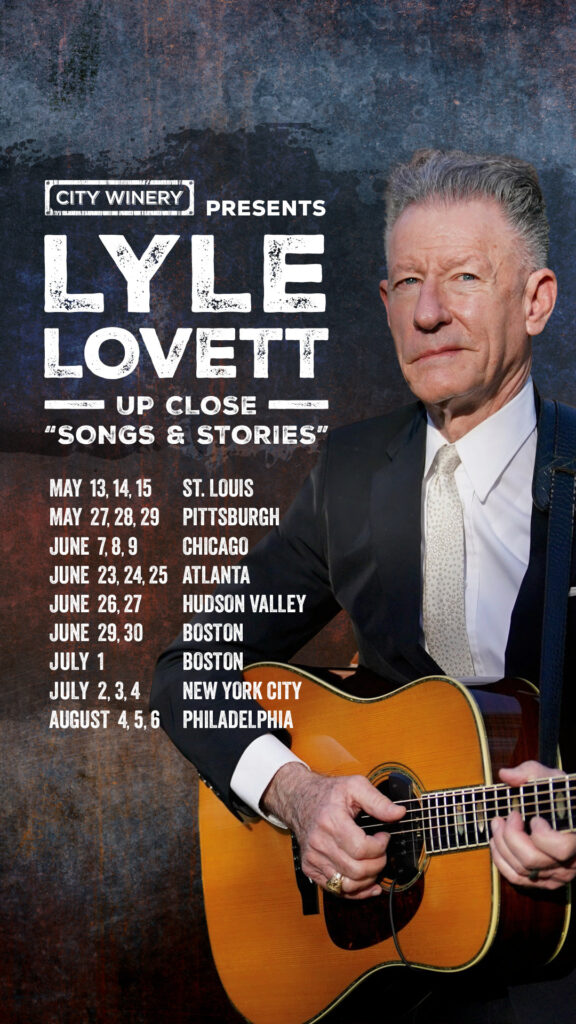
Lyle Lovett Takes His “Songs and Stories” Tour to City Winery Venues Across America

0

Lyle Lovett has always done things on his own terms. The four-time Grammy winner and Texas State Musician is bringing his “Songs & Stories” Tour to City Winery venues across the country this spring and summer, with 23 intimate performances across eight cities. This is a rare, up-close setting for an artist of Lovett’s standing, and that rarity is precisely the point.

Across a career spanning 14 albums, Lovett has quietly built one of the most distinctive catalogs in American music. His work draws from country, folk, jazz, and swing without being defined by any one of them. He earned the Americana Music Association’s inaugural Trailblazer Award for exactly that kind of boundary-pushing songwriting. The man does not fit into a box, and he never tried to.

City Winery’s listening-room format is the right stage for this tour. These are not arena shows. They are nights where Lovett revisits songs from across his celebrated catalog and shares the stories behind them, the kind of access that does not come around often. Tickets are extremely limited at each venue.

The performances are the thing. Lovett’s voice, his storytelling, and his catalog together in a small room make for something genuinely special. This is American songwriting at its most lived-in and assured, delivered the way it deserves to be heard.

“Songs & Stories” Tour Dates:

May 13, 14, 15 — St. Louis, MO, City Winery St. Louis

May 27, 28, 29 — Pittsburgh, PA, City Winery Pittsburgh

June 7, 8, 9 — Chicago, IL, City Winery Chicago

June 23, 24, 25 — Atlanta, GA, City Winery Atlanta

June 26, 27 — Hudson Valley, NY, City Winery Hudson Valley

June 29, 30 — Boston, MA, City Winery Boston

July 1 — Boston, MA, City Winery Boston

July 2, 3, 4 — New York, NY, City Winery New York

August 4, 5, 6 — Philadelphia, PA, City Winery Philadelphia