

French Dark Pop Artist Bliss My Heart Returns With “Sugar Kapel” Alongside Cliff Estatof

French Dark Pop artist Bliss My Heart returns alongside producer Cliff Estatof with “Sugar Kapel,” following the acclaimed single “Sinner Sinner” released last June. The new track dives deeper into sensuality and unveils a more dance-driven, synth-forward dimension of their collaboration, pulsing through sharp Simmons drums and the unmistakable resonance of a Rickenbacker guitar with a distinctly 80’s Dark Wave atmosphere. Marking a new chapter in the Bliss My Heart x Cliff Estatof era, “Sugar Kapel” strengthens their signature with Cleopatra Records. Bliss My Heart’s project emerged in 2020 by Jen Wolf in Paris with the EP ‘Morning Star’, inspired by Bauhaus, Trisomie 21 and The Sisters of Mercy. Four singles followed between 2021 and 2022 before she stepped away for two and a half years to tour the world as a tour manager and founded her own booking agency BMH PROD. Her return in early 2025 with “Suffer Well,” produced by Estatof, marked a new spiritual beginning. Cliff Estatof is the singer, composer and sound architect of SPACE CALL, the industrial neo-metal band behind the cult albums ‘Superstar’, ‘Synchrotron’ and ‘Eating Slowly’. A multi-instrumentalist, filmmaker and visual artist named Pixel Artist of the Year from 2022/2023/2024, he released the heroic-fantasy tale ‘LONGANSS’ in 2025 and is currently merging his artistic world with Bliss My Heart.
Seahaven Celebrate ‘Winter Forever’ 15th Anniversary With Tour And New Song “Long Goodbye”

Seahaven hit the road in early 2026 to celebrate the 15th anniversary of ‘Winter Forever’ with a tour that performs the album in its entirety for the very first time. Originally released in November 2011 via Run For Cover Records, the record arrived during a formative moment for the American emo and alternative revival, blending atmospheric guitars, raw emotion and introspective lyricism that stood apart from their peers. Alongside the tour announcement, the band released “Long Goodbye,” their first new music tied to the anniversary era. Due to overwhelming demand, a Houston date was added on February 10, while shows in Phoenix, San Diego, Los Angeles and Chicago have officially sold out. The band shares: “This record is held in a very special place for us. We’re excited to celebrate this anniversary with everyone that has come to enjoy it over the years.”
North American Tour Dates: (w/ Commoner & Flycatcher on select dates)
01/21 – Santa Ana, CA — Observatory
01/22 – Phoenix, AZ — Valley Bar (SOLD OUT)
01/23 – San Diego, CA — House of Blues Voodoo Room (SOLD OUT)
01/24 – Los Angeles, CA — Teragram Ballroom (SOLD OUT)
01/25 – San Francisco, CA — The Chapel
01/29 – Chicago, IL — Subterranean (SOLD OUT)
01/30 – Ann Arbor, MI — Blind Pig
01/31 – Toronto, ON — The Garrison (LOW TICKET WARNING)
02/02 – Cambridge, MA — The Sinclair
02/03 – Allentown, PA — Archer Music Hall
02/04 – New York, NY — Racket
02/05 – Philadelphia, PA — The Foundry @ The Fillmore (LOW TICKET WARNING)
02/06 – Columbus, OH — A&R Music Bar
02/07 – Nashville, TN — DRKMTTR
02/09 – Dallas, TX — Dada (NEW DATE)
02/10 – Houston, TX — White Oak Music Hall (NEW DATE)
02/11 – Austin, TX — 29th Street Ballroom
02/12 – San Antonio, TX — Paper Tiger (LOW TICKET WARNING)
UK Tour Dates:
04/20 – Nottingham, UK — Bodega Social
04/21 – Glasgow, UK — Nice N Sleazy
04/22 – Manchester, UK — YES Manchester
04/23 – Leeds, UK — Belgrave Music Hall
04/24 – Bristol, UK — Exchange
04/25 – London, UK — Oslo Hackney
James Taylor, Chris Botti And Lisa Fischer To Perform At The Nearness Of You Concert

The Nearness of You Concert returns for its fifth edition on Monday, February 9, 2026 at Jazz at Lincoln Center’s Appel Room in New York City at 7:30 pm. The all-star benefit event honors the memory of 15-time GRAMMY Award-winning saxophonist Michael Brecker while supporting cancer research at Columbia University Herbert Irving Comprehensive Cancer Center. Hosted by Susie Essman, the concert features performances by James Taylor, Chris Botti, Lisa Fischer, inaugural poet Richard Blanco and special guests, with a post-concert celebration following at 9:00 pm. Previous events have raised more than $5 million and featured Paul Simon, Elvis Costello, Diana Krall, Chaka Khan, Wynton Marsalis, Dianne Reeves, Branford Marsalis and Christopher Cross.
Concert proceeds support the pioneering work of Azra Raza, MD and Siddhartha Mukherjee, MD, DPhil at HICCC. “Join us for an inspiring evening where music and medicine unite to advance the future of cancer research, bringing new treatments and hope to countless patients around the world. Together, we can help drive the science that saves lives,” said Mukherjee, 2011 Pulitzer Prize Winner and Associate Professor of Medicine at Columbia University Vagelos College of Physicians and Surgeons. Raza, Clinical Director of the Edward P. Evans Center for Myelodysplastic Syndromes, added: “Our goal is audacious but simple: never let cancer start. Find the first cell, and you save a life.” Co-producer Susan Brecker, Michael Brecker’s widow, said: “I am humbled and fortunate to be able to honor Michael with this concert. It presents an opportunity for all of us to support the vital research to end cancer in our lifetimes.”
Bluegrass Band Big Richard Share “Millionaire” Ahead Of ‘Pet’ Album Arriving February 6

Colorado bluegrass band Big Richard just released “Millionaire,” their new single and label debut ahead of ‘Pet’ arriving February 6 via Signature Sounds. The track tackles greed and corruption through a David Olney song originally released in 1991 that remains wildly topical nearly 35 years later. ‘Pet’ marks the four-women quartet’s sophomore album and debut for Signature Sounds, recorded live to tape to capture the fervor of their explosive live shows. “Big Richard is so much about our energetic delivery, and so I think it’s been really important for us as a group to figure out how to do that for a record,” says mandolin and guitar player Bonnie Sims. The band succeeded in translating their live kinetic harmonies and string virtuosity to record, delivering a fierce, provocative rejoinder to what troubles them and the world right now.
Since exploding onto the Colorado scene in 2021, the band has been slapping hard on the festival circuit, working up stamina on nationwide headlining tours, and leaving a wake of die-hard Big Richard Heads across the country swooning for their honest songwriting, chilling vocals and fiddle-driven barn-burners. GRAMMY and Emmy Award-winning cellist Joy Adams explains the recording approach: “Our live performances are so raw and so gritty, and I think that our sound never really flourished in that digital landscape. [Recording live to tape] we were all in the same room together, very close together, with a lot of mic bleed, etc. And the energy was insane. It felt so good to record this way. Even on the first day, we were like ‘wow, this sounds like our band.’ And to do something that’s very real and gritty and has little mistakes in it just feels alive and human.” Unapologetically outrageous and provocative, the band’s name winks at the ‘big dick’ energy Big Richard reclaims from male bluegrass bands, making music for the 21st century’s twisted cultural unease.
The Kid LAROI Releases ‘BEFORE I FORGET’ With Lithe, Andrew Aged And Clara La San

The Kid LAROI just dropped ‘BEFORE I FORGET’, his first full-length album in two years, out now via Columbia Records. The 15-track project follows three singles that introduced the album: “A COLD PLAY,” “A PERFECT WORLD,” and “BACK WHEN YOU WERE MINE.” ‘BEFORE I FORGET’ marks a powerful turning point for the 22-year-old artist, built on vulnerability and emotional clarity that runs through every song. The album showcases LAROI’s distinctive songwriting and genre-bending prowess at new heights, with features from Lithe on “RATHER BE,” Andrew Aged on “5:21AM,” and Clara La San on “THE MOMENT.” LAROI kept his statement about the record simple and direct: “BEFORE I FORGET is about the music. Nothing else. That’s what I want people to hear.” This raw honesty translates into an album that strips away everything except what matters most, giving listeners an intimate window into his world through introspection and sonic experimentation.
The new album follows 2023’s ‘THE FIRST TIME’, whose deluxe edition arrived in 2024 with five additional tracks including “NIGHTS LIKE THIS PART 2” and fan-favorite “GIRLS.” LAROI had a massive 2024 that included The First Time Tour across Europe, North America and Australia, plus releases like “APEROL SPRITZ” and “SLOW IT DOWN” featuring Quavo. His 2025 kicked off with “ALL I WANT IS YOU” and “HOW DOES IT FEEL” before ‘BEFORE I FORGET’ arrived. Since logging a record-setting hold at the top of the Billboard Hot 100 with “Stay” alongside Justin Bieber in 2021, LAROI has captivated audiences worldwide with tracks like “Let Her Go,” “Diva” featuring Lil Tecca, “Go” featuring Juice WRLD, and “Without You.” His 2020 debut mixtape ‘F*ck Love’ reached number three on the Billboard 200, and he earned a Best New Artist nomination at the 64th GRAMMY Awards in 2022. ‘BEFORE I FORGET’ solidifies LAROI as one of the most compelling voices shaping music today, continuing to push creative boundaries with every new project.
BEFORE I FORGET Tracklist:
- ME + YOU
- JULY
- PRIVATE
- COME DOWN
- RATHER BE (feat. Lithe)
- A PERFECT WORLD
- 5:21AM (feat. Andrew Aged)
- A COLD PLAY
- THE MOMENT (feat. Clara La San)
- NEVER CAME BACK
- THANK GOD
- I’M SO IN LOVE WITH YOU
- MAYBE I’M WRONG
- HER INTERLUDE
- BACK WHEN YOU WERE MINE
Fender Unveils Fender Studio Pro And Connected Music Creation Ecosystem With New Interfaces
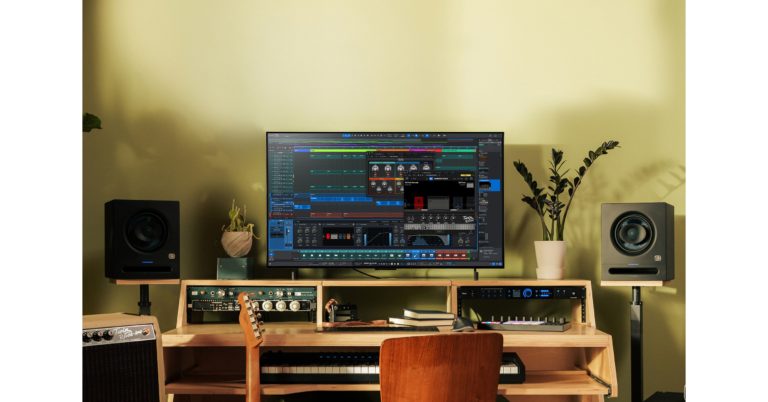
Fender Musical Instruments Corporation just launched Fender Studio as a new brand that unifies PreSonus Studio One Pro and its recording interfaces under the Fender name. Starting now, Studio One Pro becomes Fender Studio Pro, while the Quantum and AudioBox Go lines transition to the Fender Quantum Series and Fender AudioBox Go. The move connects PreSonus hardware and software with Fender’s legacy in tone and musical expression, creating a comprehensive music creation ecosystem that spans from studio to stage.
Fender Studio Pro 8 arrives with a modernized interface, native Fender amp and effects plugins, a new channel overview for faster mixing workflows, updated samplers and AI-powered audio-to-note conversion for layering sounds. The Mustang and Rumble Native plugins deliver 57 guitar and bass amp models and hundreds of effects exclusively in the Fender Studio app and Fender Studio Pro. GRAMMY-nominated Producer of the Year Alissía praised the integration: “Having authentic Fender amps and pedals built straight into the DAW is a game-changer. Fender Studio Pro delivers true analog warmth with a seamless workflow.” The software transforms how ideas get captured, shaped and turned into professional-quality productions without breaking creative flow. An exclusive collaboration filmed at the legendary Power Station at Berklee NYC shows Nile Rodgers and Alissía bringing a musical idea to life using Fender Studio Pro, demonstrating the comprehensive music creation tools from initial concept to polished production.
The hardware lineup scales to meet different needs. Fender Quantum LT ($149.99-$499.99 USD) offers three streamlined, affordable interfaces with custom low-latency drivers, MAX-HD microphone preamps with 75dB of gain, Fender-optimized instrument inputs and high-power headphone monitoring. Fender Quantum HD ($599.99-$1,099.99 USD) delivers professional-quality recording with high-definition MAX-HD preamps, ultra-low-latency drivers and 32-bit/192kHz high-performance converters. Fender AudioBox Go ($99.99 USD) brings compact, versatile 2×2 USB-C recording for musicians, podcasters and content creators who need professional-quality capture wherever inspiration strikes. Fender Motion Controllers ($269.99-$349.99 USD) put Fender Studio Pro at players’ fingertips with instant access to timeline navigation, session controls and an Add button for instruments and effects, available spring 2026.
All existing PreSonus customers transition to the new MyFender platform, replacing MyPreSonus. The platform serves software and hardware customers plus the wider universe of Fender customers who purchase guitars, amps and effects. PreSonus continues serving creators with industry-leading audio solutions like the Eris Monitors, StudioLive Series III SE Mixers and AirXD Loudspeakers. Fender Studio Pro pricing starts at $199.99 USD for a perpetual license, with monthly subscriptions available at $19.99 USD. The Fender Studio 1.2 app update remains free to download and introduces a unique transmit feature that sends Fender Studio sessions directly to Fender Studio Pro 8.
Lakeview Drop ‘Can’t Live Without’ And Announce Historic European Festival Run

Country-rock duo Lakeview just dropped ‘Can’t Live Without’, a track that pushes deeper into the sound Jesse Denaro and Luke Healy have been building since they started turning heads in Music City. The song tackles the pull of things we know we should probably leave behind, whether that’s a habit or a person who gets under your skin. Denaro and Healy put it plainly: sometimes the hardest move is walking away from something that feels good, even when you know it’s the right call. The honesty lands without pretense, and the music backs it up with the kind of grit and melody that makes Lakeview stand out in a crowded field.
The duo made waves in 2025 when they became the first country act to play Germany’s Wacken Open Air, the world’s largest heavy metal festival. Now they’re taking that momentum overseas again, locking in performances at four major European rock festivals in 2026: Sweden Rock Festival, Download Festival, Graspop, and Alpen Flair Festival. No other country band has pulled off a slate like this, and Lakeview isn’t stopping there. They’ve also booked a full run of headline dates across Europe, hitting cities like Oslo, Dublin, Belfast, Glasgow, London, Bristol, Zurich, Cologne, and Munich. This marks their third European trip in just two years, and according to the band, it’s their biggest international tour yet. They’re promising a revamped show with new music woven in, calling it a level up from what they’ve delivered before.
2026 LAKEVIEW EUROPEAN TOUR DATES:
6/5/2026 John Dee – Oslo, Norway
6/6/2026 Sweden Rock Festival – Gothenburg, Sweden*
6/8/2026 Grand Social – Dublin, Ireland
6/9/2026 The Limelight 2 – Belfast, Ireland
6/11/2026 King Tut’s – Glasgow, United Kingdom
6/12/2026 Download Festival – Donington, United Kingdom*
6/13/2026 229 – London, United Kingdom
6/14/2026 Exchange – Bristol, United Kingdom
6/16/2026 Exil Club – Zurich, Switzerland
6/17/2026 Club Volta – Cologne, Germany
6/18/2026 Graspop – Dessel, Belgium*
6/20/2026 Alpen Flair Festival – Natz, Italy*
6/21/2026 Ampere – Munich, Germany
*festival appearance
Drip Casino Review for Canada Players – Huge Bonuses, Fast Payouts & Secure Play
Drip Casino leans heavily into gameplay freedom, giving players instant access to thousands of slots, live tables, and familiar favourites without clutter or confusion. Desktop or mobile, the experience stays smooth, responsive, and easy to control.
What really keeps players scrolling is variety with purpose. Local-friendly payments, CAD support, and promotions shaped for Canadian tastes combine with a strong game lineup to create momentum. It feels less like browsing a casino — and more like jumping straight into the action.
Games
Beyond the impressive overall numbers, what truly defines the Drip Casino experience is the quality and recognisability of the games themselves. The platform focuses on proven titles that are already well known among Canadian players, combining strong gameplay mechanics with solid winning potential. Instead of overwhelming users with obscure releases, the lobby features a balanced mix of modern slots, timeless table games, and engaging live casino favourites.
Below is a closer look at some of the standout games currently available at Drip Casino, giving a clearer sense of what players can expect once they enter the gaming lobby.
| Game Title | Game Type | Key Features | Why Players Choose It |
| Book of Dead | Video Slot | High volatility, expanding symbols, free spins feature | Popular for its high win potential and classic adventure theme |
| Starburst | Video Slot | Low volatility, expanding wilds, frequent payouts | Ideal for relaxed sessions with steady gameplay |
| Gonzo’s Quest | Video Slot | Avalanche reels, multipliers, bonus rounds | Chosen for its fast-paced mechanics and engaging bonus features |
| Mega Moolah | Progressive Slot | Network jackpot, life-changing prize pools | Attracts players aiming for multi-million dollar jackpots |
| Blackjack Classic | Table Game | Low house edge, flexible betting limits | Favoured by strategic players and beginners alike |
| European Roulette | Table Game | Single zero wheel, balanced odds | A reliable choice with improved player-friendly rules |
| Baccarat Pro | Table Game | Simple betting structure, quick rounds | Often preferred by high-stakes and experienced players |
| Lightning Roulette Live | Live Casino | Random multipliers up to 500x, live dealer format | Combines traditional roulette with high-impact excitement |
| Crazy Time | Live Game Show | Multiple bonus rounds, interactive features | Perfect for players seeking entertainment-driven gameplay |
Together, these titles reflect the overall direction of Drip Casino’s game library: familiar, polished, and built around player demand. Whether the goal is steady slot play, classic table strategy, or immersive live casino action, Canadian players will find a well-rounded selection that suits both casual sessions and longer, more involved gameplay.
Account Registration Process
Creating an account at Casino Drip feels less like paperwork and more like stepping through the front door of a polished gaming space. In just a few moments, players enter their basic details, confirm their email, and unlock full access to the platform — no delays, no unnecessary steps. The process is smooth and reassuring, setting the tone for everything that follows.
Once inside, the Drip Casino login experience remains just as seamless. Secure, encrypted connections quietly protect personal and payment data in the background, while a clean, well-structured dashboard puts everything within reach. Bonuses, transaction history, and responsible gaming tools are all neatly organised, giving players a sense of control, confidence, and comfort from the very first session.
Drip Casino Promo Code Details
The bonus system at Drip Casino is structured to support both new registrations and long-term play, combining upfront value with ongoing incentives.
- Welcome Bonus: 100% match on the first deposit up to CA$1,000, plus 100 free spins on selected slot games, activated by entering a valid Drip Casino promo code during registration.
- Wagering Conditions: The matched bonus is typically subject to a 35x wagering requirement, while winnings from free spins are capped to ensure clear and transparent terms.
- Weekly Reload Bonus: Returning players can receive reload offers of up to 50%, with a maximum bonus amount of CA$500 on eligible deposits.
- Cashback Offers: Regular promotions include cashback deals of up to 10%, credited on net losses during specific promotional periods.
- Seasonal Promotions: Special bonuses tied to holidays or major calendar events, often featuring additional free spins or deposit matches.
- Loyalty Rewards: Ongoing gameplay earns points that can be exchanged for bonus credits, extra free spins, or entry into exclusive casino tournaments.
Together, these promotions create a layered bonus structure that rewards players not only for signing up, but also for staying active and engaged over time.
Payment Methods
Drip Casino supports a solid range of secure payment options suited to Canadian players. Deposits are usually instant, while withdrawals are processed efficiently, typically within 24 to 72 hours, depending on the chosen method.
Below is a snapshot of the most popular payment methods and their key details.
| Payment Method | Minimum Deposit | Withdrawal Time |
| Interac | CA$20 | 24–48 hours |
| Visa | CA$10 | 2–3 business days |
| Mastercard | CA$10 | 2–3 business days |
| Bitcoin | CA$25 | Up to 24 hours |
| Ethereum | CA$25 | Up to 24 hours |
This mix of traditional and cryptocurrency options gives players flexibility, whether they prefer familiar banking tools or faster digital transactions. The casino itself does not usually charge fees, although external providers may apply their own.
Security Measures Framework
Play with confidence from the first click. Drip Casino is built to protect every move you make, combining advanced SSL encryption with constant security monitoring that works quietly in the background. Your data stays locked down, your transactions stay private, and your focus stays exactly where it should be — on the game.
Control is part of the experience, not an afterthought. Drip Casino’s responsible gaming tools put power back in your hands, letting you set limits, manage spending, or step away whenever you choose. It’s a smarter, safer way to play — without breaking the flow or the excitement.
Customer Support Availability
Questions shouldn’t slow you down — and at Drip Casino, they don’t. Help is always within reach thanks to fast, responsive customer support available via live chat and email. Even during peak hours, replies typically arrive in under five minutes, so issues with payments, bonuses, or gameplay never interrupt the momentum.
Prefer instant answers? The built-in FAQ section has you covered. From Drip Casino login help to verification steps and promotion rules, everything is clearly laid out for quick resolution. Less waiting. More playing. That’s support designed around your experience.
Conclusion
Drip Casino delivers a refined and engaging online casino experience for players in Canada. With a generous welcome offer, a game library of over 3,500 titles, dependable payment methods, and responsive customer support, the platform offers consistency and quality across the board. Modern security measures and responsible gaming tools reinforce trust, making Drip Casino a well-rounded choice for long-term play.
FAQ
What is Drip Casino and who can play there?
Drip Casino is an online gambling platform designed for Canadian players, offering slots, table games, live casino titles, and local-friendly banking options.
How does the Drip Casino promo code work?
A Drip Casino promo code is entered during registration to unlock the welcome bonus, which usually includes a matched deposit and free spins.
Is the Drip Casino login process secure?
Yes, the Drip Casino login system uses SSL encryption to protect accounts and secure personal information.
What payment methods are available at Casino Drip?
Casino Drip supports Interac, Visa, Mastercard, and cryptocurrencies such as Bitcoin and Ethereum, with fast and reliable processing.
Can winnings be withdrawn quickly from Drip Casino?
Most withdrawals at Drip Casino are completed within 24 to 72 hours, depending on the payment method and verification status.
Data and information are provided for informational purposes only, and are not intended for investment or other purposes.
6 Best Coin Value Apps Free By AI
By Mitch Rice
Finding the true value of old coins used to require expensive appraisals and hours of research. Today, advanced coin value apps have revolutionized how collectors identify and evaluate their treasures.
After testing dozens of coin identifier apps, we’ve identified the 6 most reliable options available right now. These AI-powered tools deliver professional-grade results without the professional price tag.
The Best Coin Value Apps Free
1. CoinKnow – Top Recommended
CoinKnow represents the cutting edge of AI-powered coin identification technology. Launched in 2025, this coin value app has quickly become the gold standard for serious collectors who demand precision.
What sets this coin scanner app apart is its remarkable ability to detect rare error coins automatically. It’s one of only two apps worldwide that can identify doubled dies and missing mint marks—errors that can multiply a coin’s value by hundreds or even thousands.
The app uses advanced AI to deliver Sheldon Scale grading within a 2-point accuracy range, the tightest margin available in any mobile coin identifier app. It goes beyond basic identification by classifying copper colors (red, red-brown, brown) and detecting proof finishes (CAM/DCAM), features that significantly impact coin values.
Daily free scans are available without constant subscription prompts, which shows the developers’ confidence in their product. The interface feels professional yet remains accessible, making complex numismatic information easy to understand.
For collectors seeking hidden treasures in their collections, CoinKnow’s error detection is invaluable. As a newer coin value app, the user community is still growing, but the technology inside is already industry-leading.
2. CoinValueChecker
CoinValueChecker excels as both a coin identifier app and a coin value platform. This coin value app understands that knowing what you have is only half the equation—understanding what it’s worth in today’s market completes the picture.
The AI-powered recognition claims 99% accuracy across more than 300,000 U.S. coin types. Like CoinKnow, it automatically detects valuable error coins including doubled dies and missing mint marks, putting serious money-making potential in your hands.
What makes this coin scanner app exceptional is its robust market intelligence features. Real-time price trend charts show you whether values are rising or falling, while auction tracking with customizable alerts notifies you when similar coins sell.
The collector leaderboards add a competitive element that makes coin collecting more engaging. Portfolio tracking monitors your collection’s total value over time, helping you make smarter investment decisions.
Both website and mobile versions ensure you can check coin values from any device. This flexibility makes CoinValueChecker the most versatile coin value app for collectors who treat their hobby as an investment.
The feature-rich interface might overwhelm absolute beginners, but intermediate collectors will appreciate the depth. For anyone serious about understanding coin markets, this coin identifier app delivers insights that rival professional dealers.
3. CoinSnap
CoinSnap has earned its reputation as the most approachable coin value app for newcomers to numismatics. The interface prioritizes simplicity without sacrificing the power of AI technology, making professional coin identification accessible to everyone.
This coin scanner app delivers results in seconds with a straightforward process: snap photos of both coin sides and receive instant identification. The AI recognizes 240,000+ coin types with claimed 99% accuracy, covering everything from common pennies to rare collectibles.
Beyond basic identification, CoinSnap provides comprehensive details including the coin’s name, year, denomination, country of origin, and current market value. The app distinguishes between Mint State and Proof coins, a crucial distinction that significantly affects pricing.
Minting error detection adds extra value, using AI to spot irregularities that could mean your coin is worth far more than expected. The collection management tools let you organize coins by series and track your total portfolio value effortlessly.
For anyone just starting with coin collecting, this coin identifier app removes intimidation from the learning process. Free features are surprisingly robust, though ads appear in the free version.
While CoinSnap excels with common coins, serious collectors pursuing rare specimens may eventually need more specialized tools. It’s the perfect entry-level coin value app that grows with you as your knowledge expands.
4. Coinoscope
Coinoscope takes a unique visual approach that makes it stand out among coin scanner apps. Instead of providing one answer, it shows you visually similar coins, letting you compare and choose the best match—an approach that works remarkably well for international coins.
This free coin identifier app covers coins from the last 200 years across virtually every country. The visual matching system powered by AI helps identify foreign coins that other apps might miss, making it invaluable for inherited collections or international finds.
The app functions like a specialized search engine for numismatics, combining image recognition with an extensive global database. When you photograph a coin, the coin value app presents multiple possibilities ranked by visual similarity.
Community features set Coinoscope apart from purely algorithmic coin scanner apps. You can buy and sell coins directly with other collectors, creating a marketplace alongside the identification tools.
Historical information accompanies each coin, helping you understand the context and significance beyond just monetary value. This educational element makes coin collecting more meaningful and engaging.
The completely free model with no subscription pressure is refreshing in a market full of paywalls. For travelers, expatriates, or anyone with diverse international coins, this coin identifier app provides unmatched global coverage without asking for your credit card.
Manual selection from the results list takes slightly more time than instant AI identification. Precision with extremely rare coins can be limited, but for general international coin identification, Coinoscope delivers reliable results.
5. CoinIn
CoinIn enters the market promising coverage of over 270,000 coins from around the world. This extensive database makes it one of the most comprehensive coin value apps by sheer numbers, covering coins across different eras and regions.
The app’s AI considers multiple factors including material type, creation period, and current condition when identifying coins. This multi-factor analysis aims to provide more nuanced identification than simple visual matching.
CoinIn markets itself as a one-stop coin scanner app for all collecting needs. The developers emphasize lightning-fast identification designed to save hours of manual research flipping through reference books.
However, transparency requires acknowledging that user experiences with this coin identifier app have been mixed. Multiple reviewers report accuracy issues where the app correctly identifies coin type but struggles with specific years, values, and detailed specifications.
Some collectors have expressed frustration with the subscription model and reported difficulties canceling trials. These concerns suggest approaching CoinIn as a supplementary tool rather than your primary coin value app.
For casual collectors exploring a large variety of coins without needing pinpoint precision, the extensive database offers value. The AI technology shows promise, but execution currently lags behind competitors like CoinKnow and CoinValueChecker.
If you choose to try this coin scanner app, we recommend using it alongside other tools to verify results. The large database is genuinely useful, but cross-referencing with more established apps provides better confidence in valuations.
6. Coin ID
Coin ID positions itself as an all-in-one coin identifier app combining identification, grading, and educational resources. The AI-powered platform claims to support over 150,000 coins from ancient to modern collections.
This coin value app provides instant identification by photographing both sides of your coin. The recognition system identifies country, denomination, and key details, then displays relevant information including history and current market value.
Advanced features include AI-assisted grading that estimates your coin’s condition on professional scales. Collection management tools help you organize and categorize your coins while tracking total portfolio value over time.
The app includes an AI numismatist feature where you can ask questions and receive expert-style guidance. Educational resources with articles, checklists, and guides help beginners learn proper grading and collecting techniques.
User reviews for this coin scanner app are polarized. Positive feedback praises the extensive database and user-friendly identification process, while negative reviews mention concerns about the free trial automatically converting to paid subscriptions.
The in-app camera has received criticism from some users who prefer capturing photos with their phone’s native camera first. Image quality significantly affects AI accuracy, so good photography technique matters with any coin identifier app.
For collectors who want comprehensive features in a single platform, Coin ID offers legitimate value. The educational content is particularly helpful for newcomers learning numismatic fundamentals and proper coin handling.
We recommend carefully reviewing subscription terms before committing to paid features. The free version provides enough functionality to evaluate whether this coin value app meets your specific needs.
Choosing Your Ideal Coin Value App
Different collectors have different needs, and the right coin scanner app depends on your goals. Serious collectors pursuing rare coins and error varieties should prioritize CoinKnow or CoinValueChecker for their superior AI accuracy and error detection capabilities.
Understanding Coin Value App Limitations
Even the most sophisticated AI-powered coin scanner app provides estimates rather than definitive appraisals. These tools excel at identification and ballpark valuations but cannot replace expert human evaluation for high-value coins.
Condition grading significantly affects value, and subtle differences between grades can mean hundreds or thousands of dollars. While AI technology improves constantly, experienced professional graders still see nuances that algorithms miss.
Market values in coin identifier apps typically represent average prices across multiple sales channels. Actual selling prices vary based on buyer demand, seller reputation, auction house, and dozens of other factors.
For coins potentially worth over $500, investing in professional grading from PCGS or NGC adds credibility and often increases market value. These services provide tamper-evident encapsulation and universally recognized grades that serious buyers trust.
Data and information are provided for informational purposes only, and are not intended for investment or other purposes.