

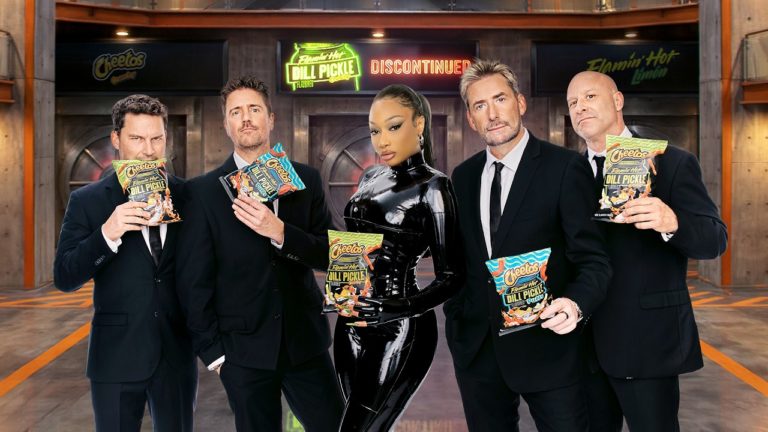
The crossover nobody saw coming just dropped. Megan Thee Stallion and Nickelback have linked up for “Pickle’s Back,” an official music video built around Cheetos Flamin’ Hot Dill Pickle, and it is exactly as chaotic and committed as that sentence sounds. The video tells what it calls “thee incredible almost true story” of how Megan got her Cheetos back, and the result is the kind of branded content that actually delivers.
Ingrid Andress Knows Your Move Before You Make It on New Song “Taillights”
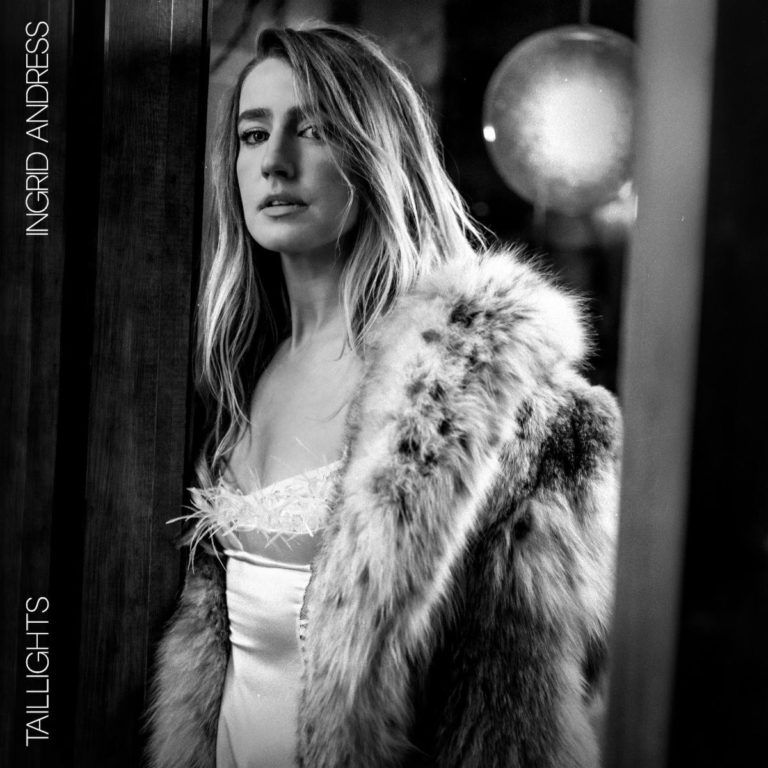
Multi-Platinum singer-songwriter Ingrid Andress has a new song out today, and it arrives with the kind of earned confidence that only comes from lived experience. “Taillights” is out now, written by Andress and Lydia Sutherland alongside producer Paul DiGiovani, who also shares a production credit with Andress on the track. Listen here.
The song captures something specific and sharp: the moment you recognize a player’s moves because you’ve run them yourself. Andress puts it plainly: “‘Taillights’ is a song I wrote about the fact that you kind of see a one-night stand coming when you yourself have had plenty. Essentially this is game recognizing game and saying you can’t trick a trickster.” That self-awareness gives the track genuine weight. It lands with wit and emotional precision, a standout addition to an already formidable catalog.
“Taillights” follows “Now I Know,” released earlier this year and co-written with longtime collaborators Derrick Southerland and Sam Ellis, the same team behind her Multi-Platinum No. 1 debut single “More Hearts Than Mine.” Both tracks are pointing toward Andress’s third studio album, the follow-up to ‘Good Person’ and her landmark debut ‘Lady Like.’
Those records set the bar high. ‘Lady Like’ broke the record as the highest-streaming country female debut album of all time, earned GRAMMY nominations for Best Country Album, Best Country Song, and Best New Artist, making Andress the only country artist nominated in a Big Four category that year. ‘Good Person’ landed on Rolling Stone’s 100 Best Albums of the Year and produced the GRAMMY-nominated, Platinum No. 1 “Wishful Drinking (with Sam Hunt).”
Andress also has her “Low-Key Sessions” tour on the way, a six-city intimate run she curated directly from fan submissions on social media. The stripped-down shows will feature unreleased music and a scaled-back production format. Tickets are on sale now at ingridandress.com/tour.
Low-Key Sessions Tour:
5/8 – Newport, KY – The Southgate House Revival – Sanctuary
5/9 – Grand Rapids, MI – The Stache
5/10 – Indianapolis, IN – HI-FI Indy
5/13 – Omaha, NE – Slowdown
5/14 – Des Moines, IA – xbk
5/15 – Minneapolis, MN – 7th St. Entry
Mike Vernon, Producer Who Helped Define the British Blues Boom, Dead at 81
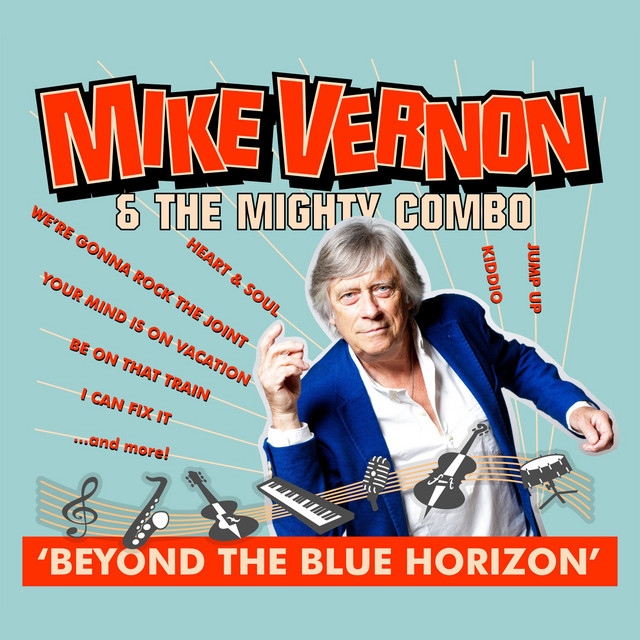
Mike Vernon, the English record producer, label founder, and studio owner whose instincts and dedication to raw, live-sounding recordings helped shape the British blues boom of the 1960s, died on March 2 at his home in Andalucía, Spain. He was 81. His daughter Alexis confirmed the news.
Vernon’s fingerprints are on some of the most important recordings in British rock history. His production of John Mayall’s ‘Blues Breakers with Eric Clapton’ in 1966 captured Clapton’s searing Les Paul tone in a way that changed everything, and is still considered one of the defining moments in British guitar music. The following year, Mayall’s ‘A Hard Road’ introduced Clapton’s replacement, Peter Green, to the world. When Green left to form Fleetwood Mac, he specifically asked Vernon to produce them because he valued what Vernon called “the earthy, homely feel” of his recordings. The resulting work, including the self-titled debut, ‘Mr. Wonderful’, ‘English Rose’, and the UK chart-topping instrumental “Albatross,” forms one of the most celebrated runs in blues-rock history.
Vernon also oversaw David Bowie’s 1967 self-titled debut and its follow-up single “Love You Till Tuesday,” and went on to produce Ten Years After, Robben Ford, and Climax Blues Band, alongside studio sessions with blues legends Freddie King, Otis Spann, and Champion Jack Dupree. In the mid-1960s, he and his brother Richard founded Blue Horizon Records, initially to reissue obscure American blues recordings in the UK, and later to champion a new generation of British blues artists. In 1971, the brothers opened Chipping Norton Recording Studios in Oxfordshire, which produced Gerry Rafferty’s platinum-selling ‘City to City’, debut albums by Duran Duran and Radiohead, and early records by Level 42.
My SiriusXM Show This Week
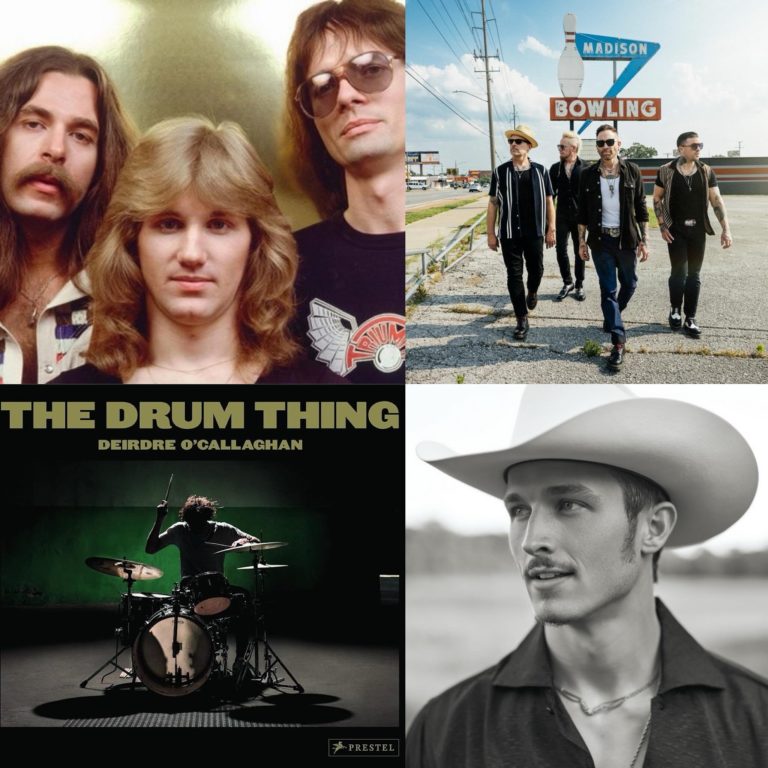
My SiriusXM show: Interviews with Rik Emmett of Triumph (tour in 2026!); the amazing rock band Lit; Deirdre O’Callaghan, the brilliant photographer and author of The Drum Thing; country star Spencer Hatcher! Sat 8am + 2pm + 7pm, Sun 12pm, Wed 2pm + 7pm, Channel 167 + On Demand any time on the SiriusXM app.
How Streaming Actually Pays Artists in 2026. It’s Confusing.
How Streaming Actually Pays Artists in 2026
The numbers are bigger than ever – and understanding them is a genuine adventure.
The Headline Number Is Remarkable
In March 2026, Spotify released its annual Loud & Clear report with a genuinely exciting figure: the platform paid out a record $11 billion to the music industry in 2025, bringing its cumulative all-time payouts to $70 billion. At the summit of Spotify’s royalty distribution system are 80 artists worldwide generating more than $10 million in annual royalties. Some 1,500 artists generated over $1 million last year, while more than 13,800 artists generated at least $100,000 – nearly double the number achieving that milestone back in 2015.
The streaming economy has genuinely created pathways to sustainable careers that simply didn’t exist before. The exciting challenge is learning how to navigate it.
What Streaming Actually Pays Per Play
No platform pays a fixed rate per stream – they pay a constantly shifting fraction of a pooled revenue system – and in 2026 that looks roughly like this:
Spotify pays roughly $0.003 to $0.005 per stream on average. Apple Music pays $0.006 to $0.007 per stream. Tidal leads the industry with an average rate of $0.012 to $0.013 per stream. At the other end of the scale, YouTube Music sits at approximately $0.00069 per stream – but offers unmatched discovery reach in return.
In plain terms, Spotify pays approximately $3,000 to $5,000 per million streams. Apple Music typically pays between $7 and $10 per 1,000 streams – on average about 1.5 to 2 times more per stream than Spotify. However, this does not necessarily mean artists earn more money on Apple Music, since Spotify has a significantly larger user base.
Each platform has its own strengths. The smart move is being on all of them.
Why It’s Genuinely Tricky to Calculate What You’ll Earn
Here’s where things get fascinating – and yes, a little confusing. The complexity isn’t a bug; it reflects a genuinely intricate global system moving enormous amounts of money. Understanding it is one of the most valuable things an artist can do for their career.
1. The Pro-Rata Pool Model
Music streaming platforms use a system called the pro-rata revenue model, also known as proportional revenue sharing. The more streams an artist has relative to the total platform streams, the larger their share of the royalty pool. This is why two artists with the same number of streams can earn different amounts.
Your per-stream rate shifts every month depending on total platform revenue, total streams across the platform, listener geography, and subscription type. Recording royalties across major services are stabilizing – with a global average of $3.41 per 1,000 streams in 2024, down only slightly from 2023’s $3.46. Stability is a genuinely good sign for long-term planning.
2. Free Tier vs. Premium – Location Matters Too
Premium streams generate significantly higher payouts than ad-supported streams. Spotify allocates about 65 to 70% of its revenue to rights holders, while Apple Music consistently pays a fixed rate of 52% across all labels. A stream from a premium subscriber in a high-income country is worth considerably more than a free-tier stream elsewhere. This is actually a great incentive to build engaged, paying fans – quality of audience genuinely moves the needle.
3. The Money Flows Through a Chain – And That Chain Is Worth Understanding
When someone streams a song, the money follows a chain: the DSP collects revenue, pays out a portion as royalties to rights holders, the distributor takes a cut for delivering the music to platforms, the label receives its share, and the label pays artists and producers according to their split agreements.
If the label is a major record company, the artist split on streaming royalties can range from 13% to over 20%. For indie labels, the split can be as high as 50%. Independent artists using flat-fee distributors keep the largest share of all – one of the genuine advantages of going independent in 2026.
4. Two Separate Royalty Systems – Both Worth Collecting
This is one of the most exciting things to get right, because many artists are leaving money on the table without realising it. Every stream triggers two completely separate payments from two entirely different systems.
Two separate royalties are triggered: the master (recording) royalty, which goes to whoever owns the sound recording, and the publishing royalty, which goes to songwriters and composers via publishers and performing rights organizations like ASCAP, BMI, or SESAC.
Publishing royalties typically account for an additional approximately 20% of total streaming revenue. If you wrote the song AND recorded it as an independent artist, you can collect both – but only if you’ve registered with both a distributor and a publishing administrator like Songtrust or the Mechanical Licensing Collective. Getting this set up is one of the highest-return administrative tasks any independent artist can do.
The 1,000-Stream Threshold: What It Means and How to Work With It
Since April 2024, Spotify has required a track to reach 1,000 streams within a 12-month window before it enters the recorded music royalty pool. Spotify has been clear that there is no change to the size of the music royalty pool being paid out to rights holders – the policy redirects tens of millions of dollars annually to increase payments to eligible tracks, rather than spreading it into $0.03 payments that often don’t even reach artists due to distributor minimum payout thresholds.
The practical upside: 99.5% of all streams are of tracks that have at least 1,000 annual streams, and each of those tracks earns more under this policy. For artists already building momentum, the pool they’re drawing from is healthier than ever.
The honest complexity: with over 202 million tracks on Spotify, an estimated 87% of all tracks currently fall short of the 1,000-stream mark. For newer artists, this makes the promotional push around a release more important than ever – getting past that threshold is the gateway to monetization. The good news is that Apple Music and Tidal do not apply the same threshold, so diversifying across platforms remains a smart strategy from day one.
AI, Fraud, and the Industry’s Active Response
The newest and fastest-moving challenge in the streaming economy is the rise of AI-generated content and streaming fraud – and the industry is responding with impressive speed and coordination.
Deezer estimated in April 2025 that 18% of the content uploaded to their platform every day is AI generated. Some of this is legitimate creative use of AI tools by real artists. A growing portion involves bad actors generating fake tracks and using bots to harvest royalties – a problem that has now reached criminal prosecution level. A North Carolina man pleaded guilty after creating hundreds of thousands of songs with AI and using automated bots to fraudulently stream them billions of times, obtaining more than $8 million in royalties.
The platforms are fighting back energetically. Spotify removed more than 75 million spammy tracks over the past year and is rolling out a new spam filter to identify bad actors mass-uploading tracks. Spotify is also testing Artist Profile Protection – a new feature that lets artists review songs before they appear on their profile, adding a checkpoint to stop fraudulent uploads at the source.
The broader industry has united around the issue too. The Music Fights Fraud Alliance now includes Universal Music Group, Warner Music Group, Sony Music Entertainment, Spotify, Amazon Music, and YouTube Music, working through coordinated information sharing and joint strategies to enhance identification and prevention of fraudulent activity.
The Bottom Line for Artists in 2026
Streaming has built the largest, most accessible music distribution system in history. In 2025, independent artists and labels accounted for half of all royalties paid by Spotify – a genuinely historic shift in how music industry revenue is distributed.
The complexity is real – the pro-rata model, the two-royalty system, the threshold rules, the platform differences, the AI landscape – but every layer of it is learnable. The artists thriving in 2026 are the ones who treat understanding the system as part of their craft. The money is there. Knowing how to claim it is the work.
12 Artists Who Celebrate Their Roots Through Music
Music is memory made audible. For these twelve artists, the songs they carry are inseparable from the cultures, languages, and landscapes that shaped them. Whether weaving ancestral prayers into blues rhythms or bringing mariachi to Broadway, each has made their heritage a living, breathing force in their work — not a relic, but a reason to sing.
Nelly Furtado — Portuguese–Azorean Heritage
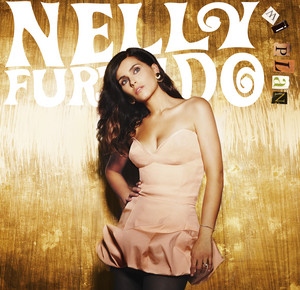
Born to Azorean immigrant parents in Victoria, BC, Nelly Furtado grew up singing Portuguese at home and performing in a Portuguese marching band as a teenager. Her 2003 album Folklore was a deliberate plunge into that heritage, while songs like “Onde Estás” — sung entirely in Portuguese — echoed the fado tradition her father loved. She has said, “There are so many things I loved about growing up Portuguese — the aesthetics, the smell of incense, the beautiful songs.” In 2014, the President of Portugal awarded her the Commander of the Order of Prince Henry in recognition of her cultural ambassadorship.
Donita Large — Cree & Métis Heritage
Saddle Lake First Nation singer-songwriter Donita Large grew up surrounded by Métis, country, and gospel music, and went on to create what she describes as “folk with Indigenous sizzle.” Her debut single “Going to Walk That Line” shot to #1 on the Indigenous Music Countdown in 2021, and her 2026 album The Ancestors — produced with Grammy-winning Chris Birkett — blends folk, blues, rock, and Cree traditional sounds to honour the stories of Treaty Six Territory. Her breakthrough single “Ancestors in My Bones” opens with a Cree prayer recited by her father, anchoring her contemporary artistry in lived tradition.
Linda Ronstadt — Mexican–American Heritage
Despite reigning over American rock and pop for a decade, Linda Ronstadt insisted her true root music was always Mexican. “Most people in rock ‘n’ roll come from blues or from traditional Black church gospel, but I learned rancheras,” she has said. Her 1987 album Canciones de Mi Padre — sung entirely in Spanish — sold over 10 million copies and became the best-selling non-English-language album in U.S. history, earning a Grammy for Best Mexican/Mexican-American Album. Added to the Library of Congress National Recording Registry, it was a love letter to the family songs her grandfather brought from Sonora, Mexico.
Beyoncé — Black Southern & Creole Heritage
Beyoncé has built a substantial part of her artistic legacy on celebrating her Black Southern heritage — from her Houston Creole roots to the broader HBCU tradition. Her 2024 album Cowboy Carter was described by Billboard as a tribute to her Southern heritage that also educates on the crucial history of Black influence in country music. Her song “Black Parade,” released on Juneteenth 2020, drew praise for referencing Southern roots, African ancestry, and the West African Orishas, with Beyoncé writing: “Being Black is your activism. Black excellence is a form of protest.”
Shakira — Colombian & Lebanese Heritage
Born in coastal Barranquilla with a Lebanese father and Colombian mother, Shakira has spent her career weaving both heritages into everything she does. The Los Angeles Times noted that she proudly displays her roots through lyrics in Spanish and choreographies based on the belly dance she learned in childhood. Her Super Bowl 2020 performance alone spanned Latin rock, Arabic belly dancing, mapalé, salsa, and champeta — a cultural map of the Caribbean. In 2025, Barranquilla used her lyric “En Barranquilla se baila así” as the official slogan of its UNESCO-recognized Carnaval.
Carlos Santana — Mexican & Afro-Latin Heritage
Carlos Santana grew up hearing his father play violin in a mariachi band in Jalisco, Mexico, before crossing the border to San Francisco and fusing traditional Mexican son and bolero with African rhythms and American rock. He has described his music as rooted in the belief that “the Aztec and the African are in every note.” His Grammy-winning Supernatural (1999) brought that vision to a new generation, and he has spoken extensively throughout his career about his pride in Mexican culture and its spiritual dimensions.
Gloria Estefan — Cuban Heritage
Gloria Estefan fled Cuba with her family as a baby and grew up in Miami, where Cuban rhythms, conga, and the sounds of exile shaped her childhood. With Miami Sound Machine she helped bring conga, salsa, and Afro-Cuban rhythms into the global mainstream. Her 1993 Spanish-language album Mi Tierra — a tribute to her Cuban roots — won the Grammy for Best Tropical Latin Album. She has said that making the album was her way of giving her daughter a connection to a homeland she herself never got to know.
Ricky Martin — Puerto Rican Heritage
Ricky Martin rose to international fame as a global pop star, but has always insisted his identity is rooted in Puerto Rico. His crossover hit “La Copa de la Vida” became the anthem of the 1998 FIFA World Cup, and his subsequent Spanish-language work consistently returned to the rhythms of salsa, bomba, and plena. He has spoken about the pride he feels in representing Puerto Rico on the world stage, and his philanthropy through the Ricky Martin Foundation has focused intensely on child welfare in Puerto Rico, especially in the aftermath of Hurricane Maria.
Alicia Keys — Harlem & African-American Heritage
Alicia Keys grew up in Hell’s Kitchen and Harlem, steeped in the musical traditions of Black New York — gospel, jazz, blues, and soul. Her debut album Songs in A Minor (2001) was a deliberate homage to that legacy, blending classical piano with R&B in a way that honoured both church music and street rhythms. She has said that Harlem gave her “the voice, the fight, and the faith” that define her artistry, and her ongoing engagement with African musical traditions shows a commitment to roots that extends well beyond her home borough.
Céline Dion — Québécois & French-Canadian Heritage
The fourteenth child of a working-class family in rural Québec, Céline Dion began singing in her parents’ piano bar at age five, deeply immersed in the chanson tradition of French Canada. Long after achieving global stardom in English, she has returned repeatedly to French-language albums celebrating her Québécois roots, winning the Juno Award for French-Language Album and speaking passionately about the duty to preserve French language and culture. She has called the music of her childhood “the compass that always brings me home.”
Joni Mitchell — Prairie Canadian Heritage
Joni Mitchell grew up on the prairies of Saskatchewan and Alberta, and the wide, open landscapes of the Canadian West run as a deep current through her entire catalogue — from the folk songs of her early career to the jazz orchestrations of her later work. She has spoken about the flat horizon of her youth as the source of her sense of “looking at things from a long distance” — a quality that defines her songwriting voice. Her memoir-in-song approach throughout her career reflects the specific light, loneliness, and freedom of the prairie in ways no other writer has matched.
Dolly Parton — Appalachian Heritage
Dolly Parton was born the fourth of twelve children in a one-room cabin in the Smoky Mountains, and she has made the music and storytelling traditions of Appalachia central to everything she has created. Her songs brim with mountain imagery, hardscrabble dignity, and the pentatonic scales of old Appalachian folk music — even when she is playing stadiums. Her 2001 bluegrass album Little Sparrow was a deliberate return to those roots, and she has said, “I was raised with very little, but I was raised with everything.” In 2022 she was inducted into the Rock and Roll Hall of Fame in acknowledgment that her country roots had always transcended genre.
These twelve artists remind us that celebrating heritage through music isn’t nostalgia — it’s one of the most radical acts of artistic honesty a performer can make. Their roots are not a constraint. They are the source.
How You Can Support the JUNO Awards and Your Music This Weekend, Even If You’re Not Nominated
The JUNO Awards are back, and the spotlight is on nominees like Justin Bieber, Tate McRae, and The Weeknd. The weekend also brings the entire Canadian music community together, with artists across the country contributing to the energy, conversation, and celebration.
Start by being active online. Share your favourite Canadian songs, highlight artists in your scene, and celebrate the wins as they happen. Post clips, reactions, and recommendations. When audiences are tuned in, your voice helps shape what they discover.
Support your peers in a meaningful way. Repost nominations, send messages of encouragement, and spotlight artists whose work you respect. Community builds through consistency, and moments like this amplify that connection across the industry.
Use the attention around the weekend to share your own work. Release a live clip, post a performance, or talk about what you are creating right now. Increased visibility across Canadian music brings more listeners, and sharing your story helps them find you.
Take part in events happening around the awards. Showcases, industry gatherings, and local performances create opportunities to connect, collaborate, and build relationships. These spaces often lead to the conversations that shape future projects.
Celebrate both legacy and emerging artists. Honours for artists like Joni Mitchell and Nelly Furtado reflect decades of influence, while new nominees step into national recognition. Supporting both strengthens the full spectrum of Canadian music.
Tune in and stay engaged. Watch the broadcast, share your reactions, and keep the conversation going throughout the weekend. Collective attention helps elevate the entire scene and extends the reach of every artist involved.
The JUNOs highlight where Canadian music stands today and where it is heading next. Every artist contributes to that story, and this weekend is a chance to be part of it in real time.
Official JUNO Awards website: junoawards.ca
CBC Music: www.cbcmusic.ca/junos
JUNO TV: junotv.ca
SOCIAL MEDIA
X: @TheJUNOAwards Instagram: @TheJUNOAwards TikTok: @TheJUNOAwards
Facebook: TheJUNOAwards // @CanadianMusicHallofFame YouTube: @TheJUNOAwards #JUNOS
Ska-Punk Veterans Big D And The Kids Table Unleash “Whiplash” From Upcoming 12th Album
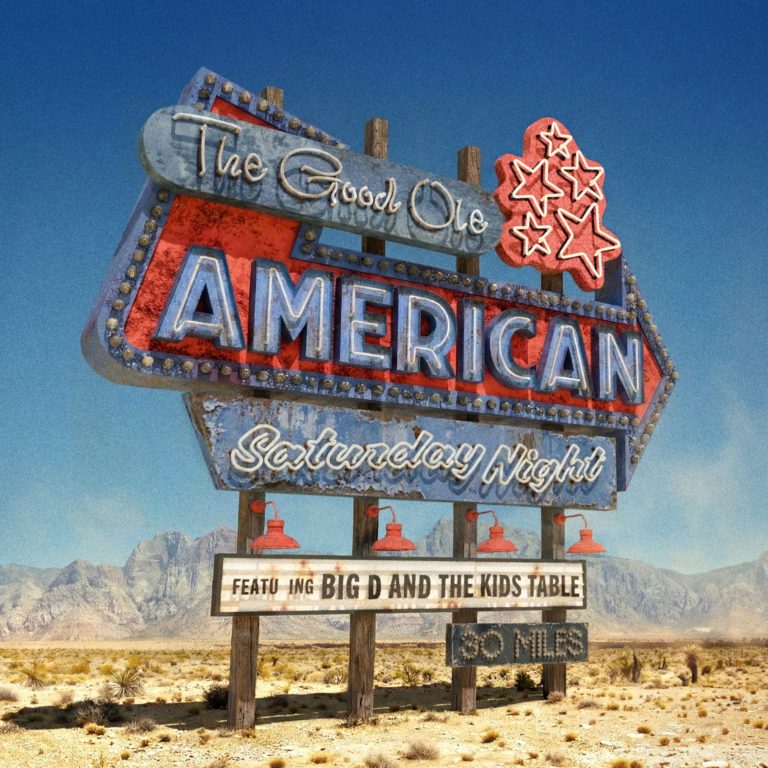
Five years is a long time to wait for new Big D And The Kids Table music, and “Whiplash” makes clear the Boston ska-punk institution used that time well. The new single arrives with an official video today and serves as the first taste of ‘The Good Ole American Saturday Night,’ their 12th full-length album, due June 12 via SideOneDummy Records. Produced by Joe Gittleman of The Mighty Mighty Bosstones and Matt Appleton of Reel Big Fish, the record reunites the band with two of their most trusted collaborators, Gittleman previously helmed the fan-favorite ‘Strictly Rude,’ while Appleton engineered and produced 2021’s ‘Do Your Art.’
“Whiplash” is pure BIG D, turning a moment of domestic chaos into a high-energy, sing-along catharsis. Vocalist David McWane keeps the setup delightfully straightforward: “What would you do if you walked into a room and saw your roommate in bed with your girlfriend? Well, if you want to know the rest of the story, cue up Whiplash.” The broader album carries the same spirit, driven by a simple but forceful message: love more, find joy, build community, and lose yourself completely in a live show.
McWane frames the band’s philosophy with characteristic bluntness: “We like being the incorrigible, rabid Anthrax of the ska scene. We don’t want to be Metallica.” More than 30 years in, that freedom is still the engine.
Earl Sweatshirt, MIKE, And SURF GANG Drop “Leadbelly” Ahead Of Double Album ‘POMPEII // UTILITY’
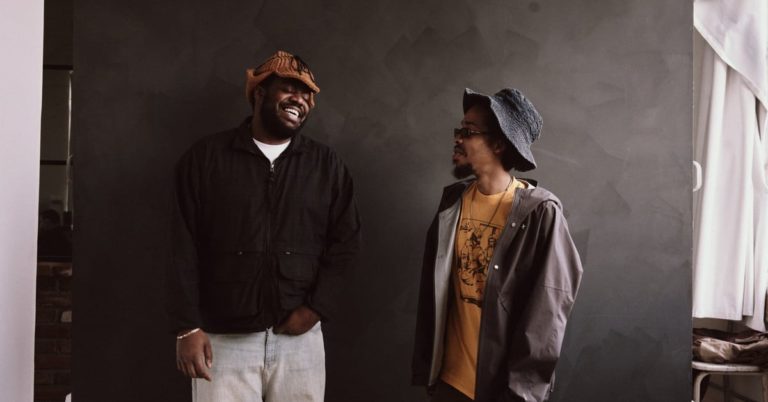
Earl Sweatshirt, MIKE, and SURF GANG have shared “Leadbelly,” the second single from ‘POMPEII // UTILITY,’ their double LP arriving April 3 via 10k/Tan Cressida/SURF GANG Records. Structured as two distinct sides, MIKE on POMPEII and Earl on UTILITY, the album is held together by SURF GANG’s Harrison, evilgiane, Elipropperr, and Flea Diamonds, whose frenetic, distinctly online production gives both rappers new creative ground to move through. Every piece of visual art on the project comes from sculptor and Earl’s childhood friend Sharif Farrag, keeping the whole thing firmly within the community that built it.
The friendship between MIKE and Earl stretches back to 2016, producing collaborations on MIKE’s ‘weight of the world’ and Earl and The Alchemist’s ‘VOIR DIRE’ before this full collaborative project finally took shape with SURF GANG as the connective tissue. The album draws on African and diasporic traditions of collective, iterative storytelling, and both artists are clear about what that means. Earl said it directly: “I feel obligated to put a lot into it because of the gift of getting to do this.” MIKE framed it as shared responsibility: “We all have ownership in a sense. It’s like there’s a pot, and we’re responsible for putting things back into that pot.”
Secret shows in Los Angeles, New York, and London have been announced via their website. The ‘Home on the Range’ tour follows, launching June 9 in Riverside with 26 U.S. stops and support from the album’s guests, before heading to Europe. Australian and New Zealand dates in May include a performance at Sydney Opera House as part of Vivid LIVE Festival.