


Angine de Poitrine have delivered something genuinely extraordinary with their performance of “Sarniezz” in Saguenay, captured for Télé-Québec’s FAB series and directed by Jean-Marc E. Roy. The Quebec duo performed the track in the landscapes of their home region, and the result is exactly what their growing global fanbase has come to expect: a baroque sonic carnival, part trance, part storm, part something that has no name yet. The KEXP full performance video has already racked up 11 million views, Scott’s Bass Lessons and Jazz Musician React channels are losing their minds over the band’s musicality, and commenters from Indonesia to Eastern Europe are reporting full-blown obsession. Angine de Poitrine aren’t just a band worth watching. They’re becoming a phenomenon.
Irish Nu-Metalcore Force Following The Signs Deliver a Rallying Cry on EP ‘Evolve’
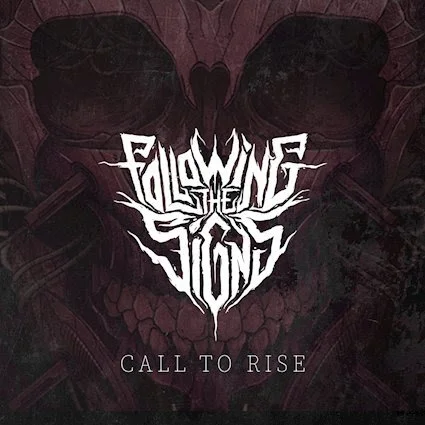
Following The Signs have been building toward this moment since forming in Cork in 2018, and ‘Evolve’ delivers on every promise they’ve made along the way. The Irish nu-metalcore outfit’s new EP is out now, five tracks of crushing metalcore, nu-metal groove, and progressive muscle that position the band as one of modern heavy music’s most purposeful rising forces. This isn’t aggression for its own sake. There’s a message running through every breakdown.
Lead single “Call To Rise” sets the tone immediately. Written as a rallying cry for those living under oppression, whether imposed by individuals, systems, or governments, the track operates on two complementary levels simultaneously. One frames humanity’s struggle to survive in a hostile world. The other reflects the growing unrest of modern society, where corruption and the erosion of freedom point toward inevitable confrontation. Punishing riffs, towering breakdowns, and searing vocals are balanced by atmospheric passages that mirror both the fury and the determination at the song’s core.
‘Evolve’ builds on the foundation laid by debut album ‘Conflictions’ and singles including “Birthright” and “Stand Tall,” pushing into sharper and more ambitious territory. The EP expands on themes of societal pressure, survival, and rebellion with a focus and urgency that feels earned rather than performed. Following The Signs aren’t reaching for relevance. They’re writing from the middle of the realities they’re describing.
Their growing international footprint backs up the momentum. Recent shows in Warsaw and Kraków, Poland, saw the band perform to their largest audiences yet, a clear signal that their reach is extending well beyond the Irish scene. Five members, one direction, and a sound that resonates across borders. ‘Evolve’ is out now.
‘Evolve’ Tracklist:
Stuck In Place
Call To Rise
Break The Frame
Evolve
Infectious
Theatrical Rock Duo HeyBobby! Build a Complete Cinematic Universe With Debut Album ‘The Unclouding of Otilla Vanilla’

HeyBobby! have arrived with something genuinely ambitious. ‘The Unclouding of Otilla Vanilla’ is out now, a 12-track rock opera from the duo of Gina Del Vecchio and Bobby Peek that introduces a bold new voice in rock storytelling. This isn’t an album that sits quietly in a playlist. It builds a world, populates it with fully realised characters, and invites listeners to step inside completely. Listen here.
The narrative at the centre of the album is compelling and uncomfortably familiar. Otilla Vanilla is a young singer searching for meaning and identity within an industry built on dreams. When she attracts the attention of the powerful Vivienne St. Clair, known as “Big Shooter,” the line between empowerment and exploitation begins to blur fast. What will she sacrifice to be seen? It’s a question the album keeps asking, and never answers too easily.
Each of the twelve tracks pairs with a corresponding visual episode, combining AI-driven imagery with traditional artistic design to extend the narrative beyond sound. HeyBobby! are upfront about their use of artistic artificial intelligence in the visuals, framing it not as a shortcut but as a genuine creative tool, one that expands what rock narrative can be in a modern multimedia landscape. Broken 8 called it “a seamless collision of traditional rock craftsmanship and cutting-edge visual storytelling.” The Further described it as “a complete multimedia universe where rock and theater converge.” Both descriptions land accurately.
At its core, ‘The Unclouding of Otilla Vanilla’ is built on real instruments, real voices, and real emotion. The cinematic arrangements and richly layered songwriting give the album its weight, while the episodic visual component gives it its reach. Together they form something that operates well beyond the boundaries of a standard rock debut.
HeyBobby! have positioned themselves at the intersection of rock, theatre, and cinematic storytelling with total commitment. ‘The Unclouding of Otilla Vanilla’ is out now, and the universe it creates is worth exploring in full.
Isle of Wight Indie Trio Ugly Ozo Confront Burnout and Depression Head-On With New Single “hi, how are you?”

Ugly Ozo don’t make comfortable music, and “hi, how are you?” isn’t a comfortable single. Out now via REX RECS, the new track from Jessica Baker and her Isle of Wight trio confronts depression and emotional exhaustion with the kind of directness that only comes from writing through genuine pain. Formed just a year ago, ugly ozo are already operating at a level that most emerging acts take years to reach. Listen here.
Baker wrote the single during a period of burnout, when daily life had flattened into something hollow and grey. “This track is kind of like a conversation between myself and my inner rival,” she explains, “like I’m playing tug of war between self-doubt and determination.” That internal tension is exactly what makes the song work. It doesn’t resolve neatly, and it doesn’t try to. Jessica is joined by her sister Boo Baker on bass and Tristan Northard on drums, a trio with chemistry that punches well above their short timeline together.
The band’s debut EP ‘stargirl’ in 2025 earned them acclaim from DIY, Dork, The Line of Best Fit, CLASH, Rough Trade, Notion, and Under The Radar. Radio support came from BBC 6 Music’s Iggy Pop, Chris Hawkins, Nathan Shepherd, and Amy Lamé, alongside Radio X’s John Kennedy and KEXP’s Cheryl Waters. A sold-out Shacklewell Arms headline slot followed. The momentum behind ugly ozo has been building fast, and “hi, how are you?” keeps it moving.
REX RECS, the independent label founded by producer Macks Faulkron of North London’s REX Studio, is home to Caroline Polachek, Confidence Man, Daniel Avery, and Picture Parlour among others. Ugly ozo sit comfortably in that company, pushing the boundaries of what indie can hold with electrifying live energy and songwriting that refuses to look away from the difficult stuff.
A second EP arrives this spring, and festival appearances are stacking up. “hi, how are you?” is out now, and ugly ozo are just getting started.
2026 Tour Dates:
May 3 – Leeds – Gold Sounds Festival
May 23 – Nottingham – Dot to Dot Festival
May 24 – Bristol – Dot to Dot Festival
Norfolk Singer-Songwriter Harry Jordan Steps Out Solo With Debut EP ‘This Beautiful Life’

Harry Jordan has spent years helping other artists find their sound. Now, with debut solo EP ‘This Beautiful Life’ out now, he’s stepping fully into his own. The Norfolk-based singer-songwriter, producer, and engineer has built something deeply personal here, six songs reflecting on his years living in Leeds, recorded DIY in his old basement and finalised at his own Bam Bam Studios. It’s raw, restrained, and quietly powerful.
The title track carries significant emotional weight. Jordan wrote it in response to losing a close friend to suicide, and has since lost two more friends the same way, including someone he describes as an older brother figure. “I often wish he could have seen the world and everything he had to live for differently,” he shares. In tribute to his friend’s love of music in its rawest form, Jordan recorded almost every part in a single take, capturing the innocence of playing something for the first time. It’s a deeply moving artistic choice, and it shows.
The EP draws from a rich pool of influences including Wilco, Big Thief, Neil Young, Alex G, Justin Vernon, and Sparklehorse, resulting in an open-hearted homage to the classic indie songbook. Jordan handles everything here, writing, producing, engineering, mixing, and performing, with drummer Josh Ketch, a longtime collaborator, the sole exception. The lean, thoughtful approach to composition mirrors the emotional honesty running through every lyric.
Jordan first came to attention as co-frontman of cult indie band Eades, earning acclaim from The Guardian, NME, FADER, and BBC 6 Music. He’s since built Bam Bam Studios into a respected residential recording space, with The Big Moon, Sam Tompkins, Brown Horse, Our Girl, and Far Caspian among those passing through. He’s shared stages with Wolf Alice, Wunderhorse, Ride, Black Country New Road, and Amyl And The Sniffers. The critical infrastructure around Harry Jordan is substantial, and ‘This Beautiful Life’ gives it something genuinely worthy to champion.
Writing became catharsis. “It opened up a door of creativity for me using writing as a form of catharsis and healing,” Jordan explains. That process is audible across the EP, music that doesn’t flinch from grief but finds light inside it. ‘This Beautiful Life’ is out now, and Jordan celebrates its release tonight at Voodoo Daddy’s in Norwich.
Live Dates:
April 18 – Norwich – Voodoo Daddy’s (EP Launch Show)
Demob Happy Deliver Their Most Fearless Record Yet With Fourth LP ‘The Grown-Ups Are Talking’

Demob Happy have made their boldest record yet, and ‘The Grown-Ups Are Talking’ is out now via their own Milk Parlour Records. Recorded at the legendary Rancho De La Luna studio in Joshua Tree with Dave Catching (Queens of the Stone Age, Eagles of Death Metal), the fourth LP from Matthew Marcantonio, Adam Godfrey, and Thomas Armstrong is an album forged in personal loss, radical independence, and the strange creative clarity that follows both. Fifteen songs recorded in nine days. Every second of it counts. Listen here.
The Guardian reached for the Beatles and described the result as “seedy and funky and excellent.” The Line of Best Fit called it “a rousing swirl of riffs, a rhythm backbone built to make the earth shake.” Classic Rock heard “funky Beatles-y atmosphere with stabbing sides of garage-sizzled riffing.” Kerrang flagged “rock swagger.” The consensus is clear, and it’s well earned. Lead singles “Who Should I Say Is Calling?,” “No Man Left Behind,” and “Power Games” laid the groundwork, and the full album delivers on every promise they made.
Frontman Marcantonio is direct about what the record cost and what it gave back. “From recording at Rancho (15 songs in 9 days), which was a dream, to starting our own label and going independent, to writing through a lot of personal change, it’s very gratifying to reach the other side in one piece and get it out there.” Going independent mid-career takes nerve. ‘The Grown-Ups Are Talking’ sounds like a band that made that leap and landed running.
Demob Happy have been building toward this moment for years. Tour supports alongside Jack White, Royal Blood, and Death From Above 1979 have sharpened them into a live act of genuine force. BBC Radio 1, BBC 6 Music, and Radio X have all come on board. NME, DIY, DORK, The Independent, CLASH, and Kerrang have all lined up behind them. The infrastructure around this band is as solid as the music, and the music right now is exceptional.
‘The Grown-Ups Are Talking’ is out now physically and digitally via Milk Parlour Records. The band hits the UK hard this spring with a run of dates through May.
‘The Grown-Ups Are Talking’ Tracklist:
Power Games
No Man Left Behind
Judas Beast
Miracle Worker Pt. 1
Miracle Worker Pt. 2
Don’t Hang Up
Who Should I Say Is Calling?
Something’s Gotta Give
Little Bird
Give It All To Me
2026 Tour Dates:
April 22 – Norwich, UK – Arts Centre
April 23 – Brighton, UK – Concorde 2
April 24 – London, UK – The Garage
April 29 – Bristol, UK – Thekla
April 30 – Manchester, UK – Night & Day Cafe
May 1 – Sheffield, UK – Hallamshire Hotel
May 2 – Glasgow, UK – Audio
May 9 – Newcastle, UK – The Grove
Shillong Teer Chart Numbers with the Highest Appearance Rate
By Mitch Rice
The popularity of the Shillong Teer game has grown rapidly among enthusiasts who enjoy analyzing number patterns and tracking historical results. One of the most discussed topics among players is identifying the Shillong Teer chart numbers with the highest appearance rate. By studying past outcomes and trends, players attempt to understand which numbers appear more frequently and how these patterns may help in making informed predictions.
If you regularly follow the Shillong Teer Chart, analyzing frequently appearing numbers can provide valuable insights into recurring trends and historical performance. Many experienced followers use past data from the Shillong Teer Previous Result records to identify numbers that have consistently appeared over time.
Understanding the Shillong Teer Chart
The Shillong Teer game is based on archery, where the final results depend on the total number of arrows hitting the target. The last two digits of the arrow count determine the winning number. Over time, these results are collected into a chart format, commonly known as the Shillong Teer chart.
This chart helps users track:
- Daily winning numbers
- Weekly and monthly trends
- Frequently appearing numbers
- Rarely occurring numbers
- Pattern-based number analysis
Players often rely on the Shillong Teer Result List to compare recent results with historical data and identify numbers that show repeated appearances.
Why Appearance Rate Matters
The appearance rate refers to how often a specific number appears within a selected period. Some numbers may repeat multiple times in a month, while others rarely show up. Tracking these frequencies helps enthusiasts identify “hot numbers” that appear more consistently.
By analyzing the appearance rate, users can:
- Discover recurring trends
- Compare short-term and long-term number behavior
- Improve statistical analysis
- Build better prediction strategies
Although no method guarantees results, studying historical trends remains one of the most popular approaches among Shillong Teer followers.
Most Frequently Appearing Shillong Teer Numbers
According to long-term chart observations, certain numbers tend to appear more often than others during different periods. These high-frequency numbers often attract attention because of their recurring presence in the Shillong Teer chart.
Some commonly observed repeating number ranges include:
- 12
- 27
- 45
- 68
- 82
- 94
These numbers may vary over time, which is why regularly checking updated charts is essential. Reviewing the latest Shillong Teer Previous Result data can help users track whether these numbers continue their strong appearance rate.
How to Analyze Shillong Teer Chart Trends
Successful chart analysis requires more than simply looking at recent results. Consistent tracking and comparison over extended periods can reveal stronger patterns.
1. Study Historical Results
The first step is reviewing old result charts to identify repeating numbers. Using historical data from the Shillong Teer Result List helps determine which numbers appear frequently over weeks or months.
2. Compare Weekly Trends
Sometimes a number may dominate for a short period before disappearing. Weekly comparison allows users to notice temporary trends and sudden changes in number frequency.
3. Identify Hot and Cold Numbers
- Hot Numbers: Numbers appearing repeatedly within a short period
- Cold Numbers: Numbers that have not appeared for a long time
Many players believe balancing hot and cold number analysis improves prediction strategies.
4. Track Number Cycles
Certain analysts believe numbers move in cycles. A number that disappears for weeks may suddenly reappear multiple times. Studying these cycles through the Shillong Teer chart can help identify possible repeating sequences.
Importance of Consistent Chart Monitoring
Regular monitoring is essential for anyone interested in Shillong Teer number analysis. Since trends constantly change, relying on outdated data can lead to inaccurate conclusions.
By checking updated charts daily, users can:
- Follow emerging number trends
- Spot high-frequency numbers quickly
- Compare current and past patterns
- Improve data-based predictions
The best way to stay updated is by reviewing the latest Shillong Teer Chart and analyzing recent results consistently.
Tips for Better Shillong Teer Number Analysis
Here are some useful tips for improving chart-based analysis:
- Keep a personal record of frequently appearing numbers
- Compare monthly and weekly result patterns
- Focus on long-term trends instead of single-day results
- Avoid depending entirely on random guesses
- Use historical charts for deeper statistical observation
Many experienced followers believe disciplined tracking provides better insights than relying solely on luck.
Final Thoughts
Understanding the Shillong Teer chart numbers with the highest appearance rate can help enthusiasts gain deeper insights into recurring trends and historical number behavior. While no prediction method guarantees success, studying patterns through the Shillong Teer Previous Result, reviewing the Shillong Teer Result List, and analyzing the latest Shillong Teer Chart can improve overall number analysis strategies.
Consistent observation, trend tracking, and statistical comparison remain key techniques for identifying frequently appearing numbers. As trends evolve over time, staying updated with the latest results and charts is essential for anyone interested in Shillong Teer analysis.
Data and information are provided for informational purposes only, and are not intended for investment or other purposes.
High-Quality Disposable Experience Made to be used by modern people
By Mitch Rice
In the rapidly expanding market today, users are seeking devices that have more than just simple functionality. It has become a must that performance, reliability and convenience are considered when selecting the right product. Disposable devices manufactured today have been equipped with new features that aim at providing a smooth and consistent experience. It is here that Kado Bar would shine through its innovation coupled with simplicity in order to fulfill daily needs.
The brand aims at offering high-quality and easy-to-use devices without compromising on the performance. It has a friendly user-friendly mode and is detail-oriented and thus continues to appeal to its users, who appreciate both convenience and quality.
Intelligent Design and Innovative Features.
A good design must provide comfort, efficiency and ease of use. Kado Bar products are designed in a modern manner that provides a comfortable grip and easy usage. The design is small and can be carried, as well as used on a daily basis.
The incorporation of intelligent features to enhance the overall experience is one of the main highlights. These characteristics are meant to introduce improved control and easier means of using the device without any difficulties. The concentration is on providing a compromise between high technology and user-friendly functionality.
Dependable Workability in Daily life.
One of the essential features of any disposable device is consistency. Users want to have a hassle-free performance during their initial experiences until the final use and this is where Kado Bar Rizz provides a reliable user experience. It is designed in such a way that it would keep the output constant so that the performance would not degrade with time.
The internal system is streamlined to deliver a consistent and fulfilling experience, without the problems of inconsistency or lower efficiency often found. This allows it to be a dependable alternative among the users who would like to use a device that works in real-life scenarios.
Flavor Experience and Satisfaction.
The quality of flavor is one of the key factors in user satisfaction, and high-quality devices are aimed at providing a rich and balanced experience. In the case of Kado Bar, it is about offering pleasurable and untroubled flavor delivery, which should be constant during the usage.
The diversity is that the user can find various profiles depending on their interests. The flexibility and the balance provided by the device add to the overall experience, making every session enjoyable and satisfying.
Portable and Easy to use.
One of the key factors that make disposable devices so popular is convenience. An ideal device must be set up and maintenance-free. Kado Bar Rizz is made to be simple so that the users can have a hassle-free experience.
It is portable, as it is small and light and can be carried anywhere at home or even on the move. This degree of portability guarantees users that they can depend on the device whenever they need it without any hassle.
Durability and Construction Quality.
One of the factors to consider in selecting a quality device is durability. The powerful construction and robust parts guarantee that the device works efficiently in the long term. Kado Bar is aimed at providing products that are durable and at the same time efficient and consistent.
The general design is based on attention to details, so the users will get a reliable product that will be up to their expectations. This policy towards quality assurance gains trust and satisfaction among users.
Conclusion
Current disposable devices are ever-changing, with superior performance and improved convenience. Kado Bar is a good alternative to consider when one seeks to experience the high-end experience due to its emphasis on innovation, reliability, and ease of use.
The brand creates products such as Kado Bar Rizz, which emphasize its focus on consistency and convenience. To users who prefer a simple and yet effective one, it provides a good mix of performance and convenience, making it a viable option to use in everyday life.
Data and information are provided for informational purposes only, and are not intended for investment or other purposes.
19 Live Albums That Take You There
There is a version of every great band that only exists in a room, on a night, in front of people. The studio record is a document of intention. The live record, when it’s done right, is a document of electricity. And electricity is very hard to fake.
These 19 records don’t just capture performances. They capture presence. Put your headphones on, close your eyes, and you are genuinely somewhere else. That’s a rare thing. That’s worth celebrating.
James Brown, Live at the Apollo (1962)
Start here. Always start here. This is the foundation document of live performance as an art form. Brown understood that a concert was a negotiation between a performer and a crowd, and nobody in history has ever won that negotiation more completely. The Apollo audience doesn’t give it up easy. Brown takes it anyway.
Johnny Cash, At Folsom Prison (1968)
The most dangerous room any of these records was made in. Cash walks into a prison full of men who have nothing to lose and leans into every bit of it. The crowd’s reaction to “I shot a man in Reno just to watch him die” is one of the most remarkable moments in recorded music. You feel the electricity and the edge of it at the same time.
The Who, Live at Leeds (1970)
Frequently and correctly called the greatest hard rock live album ever made. The Who in 1970 were a band that seemed genuinely capable of destroying themselves and everything around them through sheer force of performance. This record captures that feeling without a single moment of artifice. It is relentless from the first note.
The Allman Brothers Band, At Fillmore East (1971)
Few bands have ever been this locked in, this completely fluent in each other’s musical language. The jams feel inevitable rather than meandering. “Whipping Post” alone justifies the existence of the live album format.
Aretha Franklin, Live at Fillmore West (1971)
Aretha Franklin in a room has a looseness and a joy that few live records manage to capture. This performance crackles with spontaneity. When Ray Charles shows up unannounced, the whole thing becomes almost too good to be real.
Deep Purple, Made in Japan (1972)
Ritchie Blackmore, Jon Lord, Ian Gillan and the rest play like they have something to prove and all the time in the world to prove it. Hard rock improvisation pushed about as far as it can go without falling apart entirely.
Donny Hathaway, Live (1972)
Criminally underappreciated outside serious music circles. Hathaway doesn’t perform for an audience, he performs with one. The crowd interaction on this record is unlike anything else in the canon. By the end of “The Ghetto” the room has become a single organism and Hathaway is its heartbeat.
Sam Cooke, Live at the Harlem Square Club, 1963 (released 1985)
Sam Cooke had a polished, sophisticated public image carefully cultivated for crossover appeal. Then somebody pointed a microphone at him in a sweaty club in Miami and captured something raw and unguarded that his studio records never quite touched. This is the version of Sam Cooke that the people in that room never forgot.
Rolling Stones, Get Yer Ya-Ya’s Out! (1970)
The Stones at Madison Square Garden in 1969, right at the peak of their sleazy, dangerous, utterly magnetic era. Keith Richards looks like he shouldn’t be standing up. The band plays like the world is ending. It all hangs together in a way that shouldn’t be possible and somehow is.
Neil Young and Crazy Horse, Live Rust (1979)
Few live records capture the feeling of a performance that could go sideways at any moment and somehow never does. Young and Crazy Horse play with a looseness that borders on ragged, and that looseness is exactly the point. “Cortez the Killer” stretches out into something genuinely hypnotic.
Cheap Trick, At Budokan (1978)
A band that was doing decent business in North America travels to Japan and discovers they are enormous. The crowd hysteria on this record is almost comical in its intensity. Cheap Trick, to their credit, rises to meet it and delivers one of the most purely enjoyable live records ever committed to tape.
Talking Heads, Stop Making Sense (1984)
David Byrne walks out alone with a boombox and an acoustic guitar and builds an entire world over the course of an evening, adding musicians one by one until the stage is full and the whole thing has become something close to a religious experience. Jonathan Demme’s film captures it beautifully but the record holds up completely on its own.
Thin Lizzy, Live and Dangerous (1978)
Phil Lynott understood stagecraft the way very few rock frontmen ever have. This record documents a band firing on every cylinder, with the twin guitar attack of Scott Gorham and Brian Robertson hitting harder in a live setting than it ever did in a studio. A quintessential hard rock document that holds up without a wrinkle.
Iron Maiden, Live After Death (1985)
The sheer scale of what Maiden achieved in the mid-eighties is captured here in full. This is a band that had outgrown arenas and was filling them anyway, with a production that matched the ambition of the music. Bruce Dickinson as a frontman is a force of nature on this record.
Bruce Springsteen, Live 1975-85 (1986)
A five-record set that covers a decade of one of the great live acts in rock history. Springsteen and the E Street Band built their reputation show by show, night by night, and this collection documents why. The performances range from intimate to enormous and every single one of them is fully committed.
Daft Punk, Alive 2007 (2007)
Electronic music has a complicated relationship with live performance, and then there is this. Daft Punk built a pyramid, filled it with lights, and delivered a seamlessly mixed set that redefined what a live electronic experience could feel like. The crowd noise on this record is a phenomenon in itself.
The Band, The Last Waltz (1978)
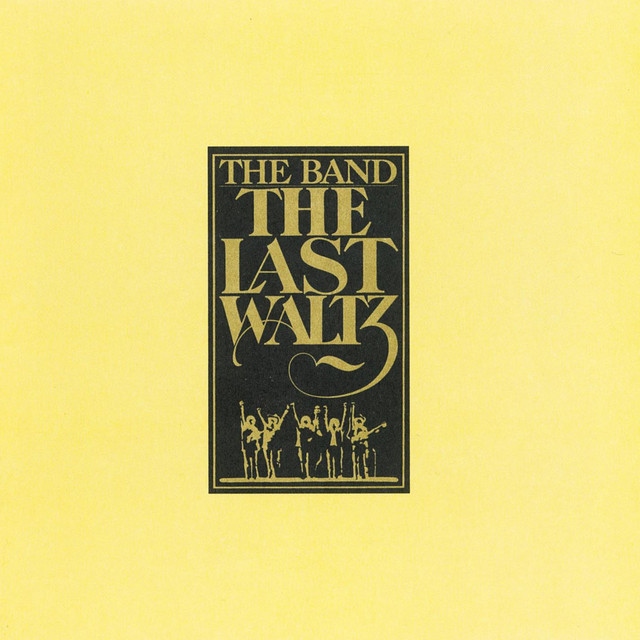
A farewell concert that knew it was a farewell concert, which gives the whole thing a weight and a tenderness that most live records never approach. The guest list reads like a fantasy and somehow every performance delivers. Martin Scorsese filmed it. Robbie Robertson produced it. The results speak entirely for themselves.
Nirvana, MTV Unplugged in New York (1994)
Kurt Cobain walks into a television studio a few months before his death and delivers a performance that feels like a genuine act of vulnerability. The choice of covers, the candles, the hushed intensity of it all, adds up to something that transcends the format completely. This is not an acoustic showcase. It is a farewell that nobody in the room fully understood yet.
Genesis, Three Sides Live (1982)
Often overlooked in conversations about the great live records, which is genuinely puzzling to anyone who has spent time with it. The Phil Collins era Genesis live was a different proposition than the record-buying public expected, looser and more adventurous than the studio work suggested. “In The Cage” and “Turn It On Again” in a live setting hit with a force that rewards every minute of attention you give them.
The Role of Producers in Shaping Artist Identity
When you think about what makes David Bowie Bowie, the alien theatricality, the chameleonic restlessness, the sheer audacity of the thing, how much of that belongs to Bowie himself, and how much belongs to Tony Visconti or Brian Eno?
Not a trick question. Actually one of the most fascinating puzzles in all of popular music, and one that doesn’t get nearly enough thought.
We have a weird relationship with producers in rock and pop history. We celebrate the artist. We buy the artist’s name on the ticket. We follow the artist on every platform. And the producer? They get a small-print credit on the back of the LP, if you even flip it over.
But spend some time digging into the actual mechanics of how records get made, and something uncomfortable becomes clear: the producer isn’t just the person who runs the board. Very often, they’re the person who figures out who the artist is.
Not who the artist wants to be. Who they actually are, the version of them that connects with the world at large. That’s a profound distinction.
Rick Rubin and the Art of Clearing Away
By the early 1990s, Johnny Cash was considered a relic. Country radio had moved on. His label had dropped him. He was, by the music industry’s cold arithmetic, finished.
Then Rick Rubin came along and basically removed everything. No elaborate arrangements, no Nashville gloss, no commercial calculation. Just Cash, an acoustic guitar, and a microphone sitting in Rubin’s living room, singing songs he cared about.
The result was the American series. Suddenly, Johnny Cash wasn’t a nostalgia act. He was a monument. A figure of gravity and hard-earned wisdom. A man whose voice carried the weight of everything he’d survived.
But none of that was invented. Rubin didn’t manufacture an identity for Cash. He excavated one. He stripped away decades of industry expectation until what was left was just the truth of the man. That’s producing as archaeology.
George Martin and the Sound of Possibility
George Martin was a classically trained musician working at EMI’s Parlophone label in the early 1960s, who signed a noisy rock-and-roll band from Liverpool that nobody else wanted.
He could have simply pointed microphones at the Beatles and captured what they played live. That would have been fine. Serviceable. Forgettable.
Instead, he became a collaborator in the deepest sense. He heard what they were reaching for, sometimes before they could articulate it themselves, and he built the sonic architecture to get them there. String quartets on “Eleanor Rigby.” Backwards tape loops on “Tomorrow Never Knows.” The entire orchestral psychedelic dream world of Sgt. Pepper’s.
The Beatles were already brilliant. Martin helped them become something that had never existed before.
What’s remarkable is that the relationship ran both ways. The Beatles pushed Martin past his classical instincts. Martin pushed the Beatles past their Hamburg pub rock origins. They created each other’s best work together. That’s the producer relationship at its finest: not a hierarchy, but a genuine creative dialogue.
Quincy Jones and the Architecture of Michael Jackson
Michael Jackson before Quincy Jones: a gifted child star, a Motown product, beloved by millions, operating largely within a defined commercial lane.
Michael Jackson with Quincy Jones: Off the Wall, Thriller, Bad. Arguably the most commercially and artistically dominant run in pop music history.
What changed? Jones didn’t change Jackson’s voice. He didn’t change his movement or his charisma. What he did was build a sound world sophisticated enough to hold all of Jackson’s complexity: the vulnerability alongside the sexuality, the tenderness alongside the aggression, the Black American musical tradition alongside the universal pop appeal.
Jones understood that Jackson contained multitudes, and he designed records capacious enough to contain them all. Thriller isn’t just a hit record. It’s a statement of identity. Jones heard that before the world did.
When It Gets Complicated
This isn’t always a heroic story, because the producer relationship can also calcify. It can constrain. It can define an artist in ways that follow them for the rest of their career, for better and for worse.
Think about Phil Spector’s Wall of Sound. Magnificent, yes. But every artist who worked with Spector, the Ronettes, the Crystals, Ike and Tina Turner, ended up serving the sound as much as the sound served them. The identity on those records is as much Spector’s as it is theirs.
The New Landscape
What’s happening today is genuinely different and worth paying attention to.
Producers like Jack Antonoff have become brand identifiers. If your album is produced by Antonoff, audiences arrive with certain expectations: a kind of expansive, emotionally direct, Americana-adjacent indie-pop sensibility. His fingerprints are on Lorde, Taylor Swift, Lana Del Rey, Bleachers. They’re all distinct artists, but there’s a connective tissue, a sonic family resemblance, that comes entirely from him.
And then there’s the rise of the producer-as-artist: Metro Boomin, Pharrell, Max Martin. These aren’t invisible hands anymore. They’re the headliners. The artists who record over their beats are, in some configurations, their featured guests. The identity question has flipped completely.
What This Means for How We Listen
The way credit gets assigned in popular music has always been a useful simplification. We accept it because it’s easier to have a face on the poster, a single name to attach to the feeling.
The truth is messier and more interesting. The records that have shaped our lives were almost always acts of collective imagination. An artist’s identity isn’t something they carry fully formed into a studio. It gets discovered, refined, sometimes invented, in collaboration with producers who deserve far more recognition than they typically receive.
Next time something genuinely moves you, where the sound and the artist feel perfectly matched and you can’t imagine either one without the other, take a moment to look at the production credits. There’s almost certainly a name there that changed everything.