


Bon Jovi kicked off the 2000s with “It’s My Life,” a global anthem that brought Tommy, Gina, and the talk box roaring back. It topped charts across Europe and gave the band a whole new generation of fans. Because sometimes a line, a hook, and a highway are all you need.
How VCE Physics Tutors Help Build Confidence and Improve Results
By Mitch Rice
For many students, VCE Physics is one of the most challenging subjects on the Victorian Certificate of Education journey. With its complex formulas, abstract concepts, and demanding problem-solving tasks, it’s no surprise that students often feel overwhelmed.
But the good news is that the right support can make all the difference — and this is where a skilled VCE physics tutor comes in. In this post, we’ll explore how VCE Physics tutors help students build confidence, improve their academic results, and ultimately unlock their potential.
Personalised Learning Tailored to Individual Needs
In a typical classroom, teachers have to cater to the needs of 20–30 students at once. This makes it difficult to address every student’s specific challenges. A private VCE Physics tutor, however, can provide personalised attention that focuses on a student’s unique learning style, pace, and weaknesses.
Tutors identify where a student is struggling, whether it’s mastering Newton’s laws, understanding electromagnetism, or applying motion equations, and tailor their teaching accordingly. By filling in gaps in understanding, tutors ensure students build a strong foundation, making the more advanced topics less intimidating.
Breaking Down Complex Concepts
Physics is a subject that builds upon layers of prior knowledge. If a student misses one key idea, it can create a domino effect of confusion across topics. A good VCE Physics tutor knows how to break down complex concepts into simple, digestible parts.
For example, instead of presenting wave theory as a series of dense formulas, a tutor might use everyday analogies, visuals, and hands-on experiments to make it more relatable. This approach not only enhances comprehension but also helps students retain information more effectively.
Developing Effective Problem-Solving Skills
Success in VCE Physics isn’t just about memorising theories — it’s about applying them to solve real-world problems. Tutors help students develop strategic problem-solving techniques, teaching them how to break down questions, identify what’s being asked, and apply the right formulas.
Through guided practice and feedback, students learn to approach physics problems with confidence rather than fear. Over time, they build a toolkit of techniques that serve them well not just in exams, but in future studies or STEM careers.
Boosting Confidence and Reducing Exam Anxiety
One of the most transformative benefits of working with a VCE Physics tutor is the boost in self-confidence students experience. Regular sessions allow students to ask questions without judgment, make mistakes in a safe environment, and celebrate small victories along the way.
As students become more competent, their confidence grows — and with it, their ability to tackle practice exams, SACs (School-Assessed Coursework), and the final VCE exam with reduced anxiety. This psychological shift can dramatically improve performance and results.
Providing Exam Preparation and Strategy
Tutors don’t just teach physics — they teach students how to succeed in VCE Physics exams. This includes helping students:
- Develop time management strategies during exams
- Practice past exam questions and understand examiners’ expectations
- Learn how to structure answers to maximise marks
- Identify common traps and mistakes to avoid
With targeted exam preparation, students can walk into their VCE exams feeling well-prepared and confident.
Encouraging a Growth Mindset
Perhaps one of the most lasting impacts of a good tutor is their ability to help students develop a growth mindset. Instead of seeing mistakes as failures, students learn to view them as opportunities for improvement. This mindset encourages persistence, resilience, and a more positive attitude toward learning — all of which contribute to long-term success, both in physics and beyond.
Final Thoughts
VCE Physics can seem like an uphill battle, but with the right support, students don’t have to face it alone. A dedicated physics tutor offers personalised guidance, strengthens understanding, boosts problem-solving skills, and builds the confidence students need to succeed.
Whether a student is aiming to improve their grades, prepare for university studies, or simply overcome their fear of physics, investing in a VCE Physics tutor can be a game-changer — transforming struggle into success.
Data and information are provided for informational purposes only, and are not intended for investment or other purposes.
87 Facts About Connie Francis
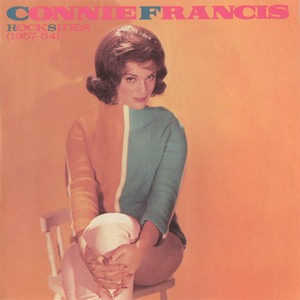
Connie Francis has passed away at 87.
She gave us “Who’s Sorry Now?,” “Stupid Cupid,” “Everybody’s Somebody’s Fool,” and “Where the Boys Are”—and along the way, she became the first woman to top the Billboard Hot 100, sell 200 million records, and sing her way into history in 15 languages.
Ron Roberts, her longtime friend and president of Concetta Records, shared the heartbreaking news with fans first—just the way Connie would have wanted it.
She was pop’s first queen. A voice like no other. And through every high and low, she kept singing.
Here are 87 facts to celebrate the life, the legacy, and the unforgettable voice of Connie Francis.
1. Connie Francis was born Concetta Rosa Maria Franconero on December 12, 1937.
2. She sold more than 200 million records worldwide.
3. In 1960, she was the most successful female artist in the U.S., U.K., Germany, Italy, Japan, and Australia.
4. She became the first woman to hit #1 on the Billboard Hot 100.
5. She was also the first woman to have three #1 singles on that chart.
6. Her grandfather immigrated from Reggio Calabria in 1905.
7. She grew up in Newark, New Jersey, and then Brooklyn before returning to New Jersey.
8. She learned fluent Yiddish from her mixed Italian-Jewish neighborhood.
9. She later recorded in Yiddish and Hebrew.
10. Her father encouraged her to sing at pageants, contests, and neighborhood events.
11. She played the accordion before happily giving it up.
12. Arthur Godfrey convinced her to change her name to Connie Francis.
13. She sang demonstration records to pitch songs to other singers.
14. She attended Arts High School in Newark and graduated salutatorian in Belleville.
15. She appeared on NBC’s Startime Kids between 1953 and 1955.
16. Her first single, “Freddy,” was released because an exec’s son shared the name.
17. Her first nine solo singles were commercial flops.
18. She provided the singing voices in two 1950s films—Rock, Rock, Rock! and Jamboree.
19. Her duet “The Majesty of Love” with Marvin Rainwater sold over a million copies.
20. MGM nearly dropped her, even after “The Majesty of Love.”
21. She nearly left music to study medicine at NYU.
22. Her dad insisted she record “Who’s Sorry Now?” during what was to be her final session.
23. She didn’t like the song but recorded it just before the tape ran out.
24. Dick Clark premiered it on American Bandstand on January 1, 1958.
25. She only realized it was her song mid-broadcast—and celebrated like it was New Year’s Eve.
26. “Who’s Sorry Now?” hit #1 in the U.K. and #4 in the U.S. by April 1958.
27. She was voted “Best Female Vocalist” on American Bandstand four years in a row.
28. Neil Sedaka and Howard Greenfield pitched her ballads—but she wanted something livelier.
29. She rejected their songs until Sedaka reluctantly played “Stupid Cupid.”
30. She immediately said, “That’s my next hit.”
31. “Stupid Cupid” reached #14 in the U.S. and #1 in the U.K.
32. She earned two gold records in 1959 for “Lipstick on Your Collar” and “Frankie.”
33. Her 1959 album Connie Francis Sings Italian Favorites was recorded at Abbey Road.
34. That album stayed on the charts for 81 weeks and peaked at #4.
35. The single “Mama” hit #8 in the U.S. and #2 in the U.K.
36. She went on to release seven more “favorites” albums in various languages.
37. “Where the Boys Are” became her signature song and a movie theme.
38. The film introduced the concept of Spring Break in Fort Lauderdale.
39. She was one of the first American artists to regularly record in other languages.
40. She recorded in 15 languages total.
41. She also sang in Romanian live in 1970.
42. She learned foreign songs phonetically when needed.
43. She was fluent in Italian and Spanish.
44. “Everybody’s Somebody’s Fool” became the first Hot 100 #1 by a female artist.
45. Its German version, “Die Liebe ist ein seltsames Spiel,” topped the West German chart.
46. She had two more #1 hits in West Germany: “Paradiso” and “Barcarole in der Nacht.”
47. Radio Luxembourg ended broadcasts with her song “It’s Time to Say Goodnight.”
48. She was named Europe’s most popular artist in 1960.
49. She was beloved even behind the Iron Curtain.
50. She was featured on state-owned labels in the USSR and Yugoslavia.
51. “Don’t Break the Heart That Loves You” was her third U.S. #1 hit.
52. She performed for U.S. troops in Vietnam in 1967.
53. She published For Every Young Heart, her first book, in 1963.
54. She performed for Queen Elizabeth II in Glasgow in 1963.
55. “Vacation” in 1962 was her final U.S. top 10 hit.
56. She found success on the Adult Contemporary and Country charts in the 1960s.
57. She competed at Sanremo in 1965 and again in 1967.
58. She recorded “Tie a Yellow Ribbon” as a response song in 1973.
59. In 1974, she survived a traumatic assault and won a major lawsuit.
60. Her case helped reform hotel security practices.
61. She recorded disco versions of her hits in 1978.
62. She released versions of those songs in Italian, Spanish, German, and Japanese.
63. She lost her voice completely after nasal surgery.
64. She regained her voice in 1981 after several surgeries.
65. That same year, her brother George was murdered by Mafia hitmen.
66. She said his death gave her strength to move forward.
67. Her 1981 album I’m Me Again featured the AC charting title track.
68. She resumed touring and appeared on American Bandstand’s 30th Anniversary Special.
69. She was misdiagnosed with bipolar disorder and ADD in the 1980s.
70. She was hospitalized multiple times due to the wrong medications.
71. She later said her issues stemmed from PTSD related to her assault.
72. She attempted suicide in 1984.
73. Her 1984 memoir Who’s Sorry Now? became a New York Times bestseller.
74. In 1989, she released Where the Hits Are, re-recording 18 of her classics.
75. In 1992, her remix medley became a hit in Germany.
76. “Jive, Connie” earned her Germany’s “Best Comeback of the Year.”
77. She released a live album from Trump’s Castle in 1996.
78. She performed again in Las Vegas in 2004.
79. She sold out the Castro Theatre in San Francisco in 2007.
80. She performed in the Philippines on Valentine’s Day 2008.
81. She co-headlined with Dionne Warwick in Las Vegas in 2010.
82. She published her second memoir Among My Souvenirs in 2017.
83. She retired in 2018 and lived in Florida.
84. In 2025, her 1962 song “Pretty Little Baby” went viral on TikTok.
85. She hoped to attend a Cousin Brucie event in July 2025 but was hospitalized.
86. She passed away on July 16, 2025, at age 87.
87. She once said not marrying Bobby Darin was the biggest mistake of her life.
Connie Francis wasn’t just a voice—she was a force. From heartbreak to hope, from pop charts to foreign languages, from tragedy to triumph—she sang through it all.
Thank you, Connie. We’ll never be sorry we loved you.
Common Mistakes & Breaches When Using No Deposit Bonus Codes
By Mitch Rice
Being in a situation in which you need to balance entertainment with abiding by the rules may feel a bit awkward. However, any type of fun activity that also involves consistent expenditures will come with a few caveats. This is where we find ourselves with online gambling.
Given how vast, interesting, and outstanding these opportunities can be at times, it’s no wonder that knowing how to traverse your options can feel a bit overwhelming at times. However, things tend to appear more complicated than they are, making the process of having this kind of fun quite easy-hearted.
At the same time, there are circumstances when mistakes and blatant abuses can derail your fun and turn digital gambling into an overly complicated mess. This is why an article like this can clear the waters on one of the most popular circumstances in online gaming: the usage of the no deposit bonus.
With a well-established reputation as the alpha bonus offer in this industry, it’s easy to see why it has such a strong pull for players of all levels of experience. However, using it properly requires a bit of prior knowledge, especially if you’re not too keen on analysing fine print.
In this article, we will bring forth the most common mistakes that you can make with your no deposit offers, but will also highlight some fundamental strategies that can help you succeed going forward!
1. Multi-Account Usage
This is as simple as it gets: it’s a blatant violation of any online casino’s rules to have more than just one account. It does not matter if you create one accidentally in cases like forgetting that you’ve already created an account with a different email/phone number or doing so in order to benefit from the bonus multiple times.
As such, intention is in the same category as an honest mistake. You need to be careful about which online casino you join without taking a look at its bonuses. Once you become a funded player (you have at least one deposit made), you will lose eligibility for this category of bonus, which may turn you towards multi-account strategies.
The truth is that it is perfectly possible to create multiple accounts, especially if you have multiple phone numbers and emails. However, getting paid will always require you to prove your identity, and this is when the casino will catch you red-handed.
Consequently, you don’t want to make such a mistake, especially if you’re doing it deliberately. It’ll get you banned from the casino’s digital premises, not to mention losing your bonus!
2. Collusion
This is much harder to implement in the world of online casino gameplay. It is so for multiple reasons.
One would be the fact that many online casinos provide no deposit advantages for slot gaming only, which is a single-player-only game type. Another one would be the fact that no deposit bonuses yield too little money to split with your co-conspirator.
Since this type of strategy requires the idea of colluding with someone else to create controlled outcomes, some players do it in games like poker because it allows them to go through a wagering requirement in an easier manner.
It is safe to say that online casinos detect this kind of strategy quite easily because their pattern recognition systems are top-notch. Moreover, they are not the type to bank too much on ideas like provable cause. If they feel like they have conclusive evidence of collusion, they will take unilateral action, annul any bonus you have, and ban you for life.
3. VPN Usage for Strictly Restricted Jurisdiction
This may sound harmless, but forcing your way into playing at an online casino that is not supposed to accept your registration is a bad decision going forward. These online casinos must be strict about their clientele for one simple reason: legislation demands it.
Some online gambling authorities from markets like the UK, specific American states (where digital gambling is legal), and even some offshore regulators ask that player bases are from specific countries. Local legislation regarding online gambling is what tends to inform this kind of decision-making.
As a result, VPN usage is strictly forbidden. You may think that the casino has no idea that you’re from a restricted nation, but eventually, it can find out. That would be because you’d have to use a verifiable phone number or, eventually, tie a payment method that is in your name – a payment method that is registered in a restricted country.
In fact, there are more tech-driven methods of finding out your IP, as shown by an article on the use of an API for address leaks.
Since your home jurisdiction will eventually become visible, VPN usage to access the site, register, and redeem a bonus would quickly become futile. Like the case of multiple accounts, the casino will eventually realise that you’re breaking its rules.
4. Incorrect Bet Usage
This is a very straightforward case: you need to play the no deposit bonus as intended. If the casino demands that every hand you play must be worth $0.1, you are not to override this decision.
Any different bet used with the house’s money will mean that the house will retract its bonus by nullifying it.
Please note that this is applicable to the rules regarding its wagering process. In general, the biggest mistake would be to try to cash out on the bonus before completing the wagering process. However, using incorrect bet values during this process can also have the same bonus-annulling effects.
5. Simultaneous Bonus Activation
This is yet another simple situation that will lead to bonus annulment unless the casino specifically permits it.
We’re talking about the situation in which you activate two bonuses at a time. If you’re currently playing with a no deposit bonus, just know that the online casino will nullify it if they see that you’re trying to stack a deposit bonus on top of it.
In fact, you’re likely going to see a notification that tells you that you have another bonus in progress and that activating another one would lead to forfeiting the current one. Make sure you complete your bonuses by one in order to extract full value from all of them.
Best Practices for Proper Usage
As promised, we return with some clear advice regarding how you should play your online casino offers that require no deposit. Please note that these are standard tips that should be helpful, especially if you’re new to online gambling and its incentivisation protocols!
- Use the bonus as intended — it doesn’t get as simple as that! Each online casino bonus will come with a set of instructions (rules) mentioned in its terms and conditions. A good practice would be to also check with the overall bonus policy in order to make sure that you’re not missing rules that apply to every no deposit bonus provided by that casino. Simply put, there is no workaround for these demands, so respect them to the tee!
- Keep your bets consistent — both in the gameplay and the wagering process, it would be a good idea to stick to a strategy that is within the rules. This strategy means consistency, which is always good if you just want to complete a formality. We are not trying to cramp your style – we just want you to remember that playing it safe is a good choice
- Take care with the wagering requirements — the rollover, otherwise known as the wagering requirements, is a fail-proof protocol for a casino to avoid paying for the winnings that you receive by playing for free. It’s as simple as that. However, they are still possible to complete, which should inform your decision to complete them in games that have as much contribution as possible (100% for slots, in most cases). Make your life easier!
Conclusion
Now that we’ve reached the conclusion of this article, there is yet another optimal practice that we need to mention: play responsibly! A no deposit bonus can kickstart your knack for online gambling, which can turn into a case of addiction if left unattended.
Please understand that the psychology of gambling addiction is a slippery slope, so gamble as responsibly as possible!
Offline Reading: How to Save Articles and Books on Your Phone
By Mitch Rice
Let’s get honest. You’re halfway through a captivating article on the psychology of time perception, or maybe page 143 of a post-apocalyptic thriller—and then it happens. No signal. No Wi-Fi. No bars. Just that spinning loader mocking your thirst for knowledge. Offline reading used to be an afterthought, a footnote in the digital experience. Now, it’s a survival tactic for travelers, commuters, and attention optimizers alike.
So how do you stay informed, inspired, or simply entertained when the network goes dark? You save it all before it disappears. Let’s break it down—tactically, creatively, and unpredictably.
Article Hoarding: How to Save What You Read Before It Vanishes
First, the facts. According to a 2024 Pew Research Center survey, 76% of smartphone users read articles weekly on their phones, but only 31% know how to save content for offline use. That means nearly half are stuck re-Googling, reloading, or simply giving up.
To get ahead of the game, you need tools. You need habits. You need backup plans. Here’s how to make your phone a fortress of saved reading:
- Use Reader-Mode Browsers: Firefox Mobile, Samsung Internet, and others offer “Save for Offline” buttons—tap once, access forever. Okay, maybe not forever, but until you delete your cache.
- Pocket: Ah yes, the minimalist’s digital nightstand. Articles, videos, even Twitter threads—Pocket gobbles them up. Works on Android, iOS, and even integrates with your browser. Sync over Wi-Fi, read offline on a train in the Alps.
- Safari Reading List (iPhone): If you’re in the Apple ecosystem, use what’s baked in. Tap the share icon, add to Reading List, and voilà. Bonus: It auto-downloads when on Wi-Fi, no extra effort.
- Instapaper: Similar to Pocket, but with a more stripped-down reading interface. Especially good for distraction-free reading and annotation.
And let’s not ignore the old-school option: screenshots. Yes, crude. Yes, effective.
Long-Form Love: Saving Entire Books for Offline Reading
Short reads? Handled. But what about digital books—the thick, juicy stuff that doesn’t fit in five scrolls? E-books have their own universe of tools, formats, and quirks. But saving them for offline access is easier than ever, if you know the lay of the land.
Here’s how to tackle it:
- FictionMe: Among novel websites, this is a strong choice for serialized fiction, often available for offline reading after syncing over Wi-Fi. Of course, you can read books online or download them for offline access. This reading app is especially useful if you love ongoing stories or episodic novels.
- Apple Books & Google Play Books: Both allow you to download any purchased (and most free) titles straight to your device. Once downloaded, they live on your phone, even if you’re in a signal black hole.
- Kindle App: Maybe obvious, maybe underrated. The Kindle app lets you download your purchased titles or even side-loaded content (PDFs, MOBI files) for offline reading.
Pro tip: Don’t wait until you lose signal to check your download status. Always open your book once online—some apps require a one-time authentication before they let you read in airplane mode.
Build a Reading Vault: Tools That Do It All
You’re not just a reader. You’re a curator. A collector of curiosities. A digital archivist, perhaps? Either way, you need systems. The best tools for reading do more than display text—they organize, sync, and let you highlight your way into brilliance.
Let’s run through the heavy-hitters:
| Tool | Best For | Offline Capability |
| FictionMe | Readings of fiction | Yes |
| Instapaper | Articles with notes/highlights | Yes |
| Kindle | Books, PDFs | Yes |
| Evernote | Web captures with tagging | With Premium Plan |
| Notion | Saving web clippings | Workaround needed |
| Articles & videos | Yes | |
Not all tools are created equal. Some are feather-light; others are bloated with features. The best advice? Pick two—one for short-form, one for long-form. Keep it lean.
Offline, But Not Out of Touch: Creative Ways to Organize What You Read
Here’s a truth bomb: downloading content is only half the battle. Organization matters more than you think. While you can simply open the Fictionme app, if you have a huge reading list, managing those books is a must. Imagine hoarding 58 articles and 17 books, only to lose them in a jungle of app folders and forgotten links.
Here’s a new kind of online reading tip: treat your saved content like you treat your pantry. Label it. Date it. Rotate it.
Some unpredictable—but useful—strategies:
- Theme Days: Mondays for science, Thursdays for fiction, Sundays for random rabbit holes.
- Tag With Emojis (yes, even offline): Use for writing-related content, for self-improvement, for research.
- Voice Notes with Articles: Read an article, record your thoughts in a voice memo. Helps retention, adds personal context.
Why It All Matters: Reading in a Noisy, Connected World
Offline reading is more than a convenience—it’s an act of digital resistance. It’s choosing stillness over scroll. Focus over frenzy. When everything’s built to ping and distract, your saved reading list becomes a refuge. A vault of thought.
According to Statista, the average screen time on smartphones has jumped to 4.8 hours per day in 2024, but only 13% of that is spent on reading. Let that sink in.
The opportunity? Turn downtime into deep time. Commutes, airplane mode hours, waiting rooms—these are secret reading sanctuaries. If you’ve saved wisely, they become pockets of growth.
Final Thought: Save Like a Squirrel, Read Like a Monk
No Wi-Fi? No problem. Whether you’re deep in the woods or just dodging a spotty metro signal, your smartphone can be more than a distraction machine. It can be your personal library. Your curated museum of knowledge. But only if you plan ahead.
Offline reading isn’t a workaround. It’s a power move. Use it.
And remember—your future self, bored in a waiting room with 5% battery and zero signal, will thank you.
Data and information are provided for informational purposes only, and are not intended for investment or other purposes.
5 Surprising Facts About Neil Young’s ‘Everybody Knows This Is Nowhere’
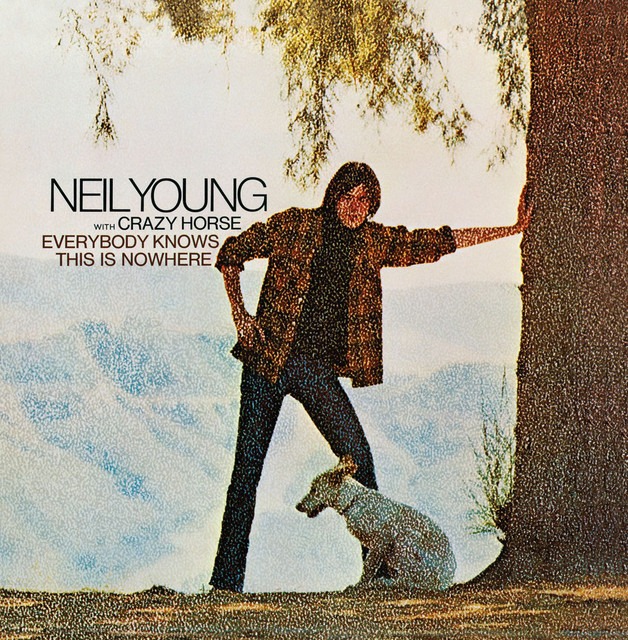
When Everybody Knows This Is Nowhere rolled out in May 1969, Neil Young wasn’t looking for polish—he was chasing the raw edge of a feeling. Teaming up with Crazy Horse, a barroom-tight crew of cosmic cowboys, he captured lightning in a mason jar. No overdubs. No overthinking. Just stripped-down songs that move like horses across open ground—free, stubborn, and somehow perfectly in tune.
Here are five backporch truths from the record that turned fuzzed-out folk rock into wildfire.
1. “Cinnamon Girl,” “Down by the River,” and “Cowgirl in the Sand” came out of one fevered day
Young had a 103-degree flu, a weird taste in his mouth, and a guitar in D modal tuning beside his bed. By nightfall, he had written three songs that would define his sound for decades. The riffs flowed. The lyrics flickered. The whole thing felt like a dream you remember in melody. That’s not luck—it’s something more magical.
2. The solos stretch for miles, but the band locked them in on the first try
Young brought no demos. No maps. He’d show up, play the tune once or twice, and Crazy Horse followed him straight into the heart of the song. Tracks like “Cowgirl in the Sand” and “Down by the River” feel endless, but every groove came together live in the room, on instinct. You can almost hear the dust settling between takes.
3. Danny Whitten’s guitar lines swirl like wind through trees
Whitten didn’t just play rhythm—he moved the whole band. His riffs in “Cowgirl in the Sand” twist, ripple, then vanish, always pulling Crazy Horse in new directions. Young said Whitten didn’t repeat himself, just changed the air around him. The band stayed loose, ready to follow wherever he wandered.
4. “Cinnamon Girl” has a one-note solo—but every note says something different
One note, bent, stabbed, and rung out with tremolo. It became one of Young’s most iconic solos. He didn’t want flash. He wanted feel. In his head, each repetition had a slightly different shape, like skipping stones with your eyes closed. It’s simple, sure—but it echoes for miles.
5. “Round and Round” was recorded while everyone thought they were just rehearsing
Robin Lane didn’t know she was cutting a master take—just sitting with Neil, stoned and strumming, while six mic booms hung from the ceiling like curious birds. The song fades in and out like campfire talk, with guitars whispering across the stereo field. It’s one of Young’s most intimate moments—tangled, tender, and completely unplanned.
Everybody Knows This Is Nowhere doesn’t push—it lingers. It’s the hum of an amp, the silence after a verse, the joy of a band still discovering its own sound.
5 Surprising Facts About Aerosmith’s ‘Rocks’

When Rocks hit on May 3, 1976, Aerosmith came in swinging with diamond teeth and a thunderous growl. The record spills over with swagger, danger, and distortion, written in a freezing warehouse and fueled by gold records and black market chemistry. Every track drips with sweat and stardust. This is the sound of five wild cards chasing a sound so big, it cracked the sky.
Here are five glorious truths behind the album that raised the stakes for rock ’n’ roll excess.
1. “Back in the Saddle” galloped out of a six-string bass and a drug-fueled haze
Joe Perry plugged into a Fender Bass VI and out came that filthy, galloping riff. He was deep in the clouds, channeling Peter Green, writing like a cowboy possessed. Tyler added whips, coconuts, bells, and screams that could break mirrors. The song kicks open the doors and demands attention—spurs first.
2. “Combination” put Perry on the mic and every vice in the lyrics
Perry stepped up with verses about heroin, cocaine, designer threads, and his own reflection. “Walkin’ on Gucci, wearin’ Yves St. Laurent” sounded like gospel in snakeskin. Tyler called it Perry’s sharpest lyric, cut from real life and luxury. They traded lines like outlaws splitting the loot.
3. The whole album started in a freezing warehouse with zero rules
The band set up shop in the Wherehouse, outside Boston, surrounded by concrete, cold air, and towered amps. With a mobile studio parked outside and distortion as the game plan, they blasted sound off the walls until the walls fought back. Everything was tracked live, loud, and loose. No filters. No ceiling.
4. “Sick as a Dog” swapped instruments mid-track—in one live take
Hamilton started it. Perry joined in. Then halfway through, guitars and basses were tossed like cards, and Tyler finished the song with the bass in his hands. One take, all heart, no edits. It swings like a Byrds tune and hits like a bar fight. That kind of chaos only works when everyone’s locked in.
5. Rocks meant diamonds, danger, and full-blast glory
Five jewels on the cover, each one a tribute to a band member and the molten madness they captured. Slash rode his bike home with the album echoing in his skull. James Hetfield studied it like scripture. The riffs, the tones, the sneer—they all hit with the force of a jet engine wrapped in leather and glitter. The sound of a band living fast and recording faster.
Rocks doesn’t whisper or hint. It roars with velvet teeth and burns with full-throttle soul. It shaped generations and soundtracked every hotel lamp tossed out a window. But you don’t really need lights when diamonds like these shine forever.
5 Surprising Facts About Green Day’s ‘Dookie’

February 1, 1994. Dookie hits shelves. It’s loud, snotty, catchy as hell, and destined to blast out of every teenager’s bedroom window until the walls fall down. Green Day didn’t ask for permission—they kicked the door in with three chords and a middle finger. This was punk rock with pop hooks, spit-polished in Berkeley but ready to take on the world.
Let’s rip into five dirty, loud, and little-known facts that make Dookie more than just a punk classic—it’s a freakin’ grenade.
1. That bass line on “Longview”? Yeah, Mike wrote it tripping on acid.
Dirnt came up with the now-iconic groove while peaking on LSD. He couldn’t remember it the next day, so the band made him jam it on repeat until it locked back in. The result? A stoner anthem about TV, weed, and—you guessed it—self-love. Slacker punk perfection.
2. Billie Joe’s amp had a name—and it was Pete.
Armstrong hunted down a Marshall Plexi 1959SLP and cranked it until it screamed. That wall of fuzzed-out glory? All Pete. They weren’t chasing vintage warmth or studio sheen. They wanted loud. Billie said it best: “We were just trying to go from loud to louder.”
3. The cover art started with poop jokes and ended in East Bay chaos.
The title Dookie came from tour food-induced diarrhea. Artist Richie Bucher turned the joke into a punk playground: monkeys throwing bombs, Patti Smith’s armpit, Black Sabbath’s ghost lady, and a plane dropping poop on a cartoon Telegraph Ave. Every inch oozes Bay Area grit.
4. “Basket Case” kicks off with anxiety—and no bass or drums.
That opening verse? Just Billie and his palm-muted guitar, no rhythm section in sight. When the full band crashes in, it’s like panic hitting you all at once. The song’s about spiraling out, but it still hits like a sing-along from hell. It even sneaks in a nod to a male prostitute. Punk with brains.
5. “F.O.D.” ends with an acoustic kiss-off and a secret Tré Cool solo.
The last proper track starts quiet—just Billie and six strings. Then it explodes into one last “screw you” with full distortion. But wait for it: after a pause, Tré sneaks in a hidden track, “All By Myself,” a ridiculous bedroom ode to—you guessed it again—masturbation. Dookie doesn’t fade out. It finishes with a laugh.
Dookie didn’t save punk. The genre didn’t need saving. But it made it fun, fast, and undeniable again. It turned every garage into a stage and every dropout into a frontman. 30 years later, it still rocks like a hot slice of pizza at 2 a.m.
5 Surprising Facts About Neutral Milk Hotel’s ‘In the Aeroplane Over the Sea’

It came out quietly on February 10, 1998—just a little lo-fi album from a band with a long name and even longer dreams. But In the Aeroplane Over the Sea by Neutral Milk Hotel took its own strange, spiraling path to legend. Full of singing saws, surreal lyrics, and a sound that could melt cassette tape, it feels like a ghost story told from inside a dream—and it still inspires reverence in indie circles everywhere.
1. Anne Frank inspired dreams that felt real
After reading The Diary of a Young Girl, Jeff Mangum became deeply emotionally affected and began having recurring dreams. He imagined traveling back in time to rescue Anne Frank, and those vivid visions sparked songs like “Holland, 1945” and “Ghost.” Rather than tell her story directly, Mangum wove her memory into a swirling, symbolic universe of loss, longing, and love.
2. The drums were recorded in the kitchen
Pet Sounds Studio—aka a Denver house—turned every room into a sonic playground. Jeremy Barnes’ drums were tracked in the kitchen because it had the best natural reverb. Microphones were taped to walls and tucked into cabinets. The result is a raw, booming resonance that sounds like it’s echoing through a half-remembered memory.
3. The album cover started as a thrift-store postcard
The famous drum-faced woman floating at sea came from a vintage postcard Jeff Mangum picked up in a thrift store. Graphic designer Chris Bilheimer (who also worked with R.E.M.) modified it with surreal flair. He added dirt smudges, adjusted colors, and turned it into something out of a sepia-toned fever dream.
4. The singing saw wasn’t just background texture
Julian Koster didn’t play the saw as a novelty—he used it to express emotion the same way others might use vocals or strings. The eerie, wailing tones on tracks like “In the Aeroplane Over the Sea” and “Two-Headed Boy Pt. Two” came from real-time takes, recorded with care to preserve their ghostly shimmer.
5. The horn parts were written like sad symphonies
Producer Robert Schneider wrote the initial horn arrangements with a piano, favoring melancholy melodies. Then Scott Spillane added chaotic, celebratory layers, like circus marches on the verge of collapse. The combination gave the album its emotional whiplash—triumphant and mournful all at once.
In the Aeroplane Over the Sea has no secrets—it just whispers them in riddles and distortion. It’s an album that feels handcrafted and haunted, like something you might find in a box of forgotten letters. Every time you spin it, it opens a new trapdoor into someplace beautiful and bizarre. Turn it up. Let the saw sing. And don’t forget to breathe.
Apple Music Super Bowl LIX Halftime Show Starring Kendrick Lamar” Earns 4 Emmy Nominations, Breaks Viewership Records

The Apple Music Super Bowl LIX Halftime Show Starring Kendrick Lamar has earned four Emmy nominations as part of the 77th Emmy Awards. The acclaimed show became the most-watched halftime performance of all time in February 2025, drawing an eye-popping 133.5 million viewers. It was produced by Roc Nation and Jesse Collins Entertainment.
The record-breaking show scored nominations in Outstanding Variety Special (Live), Outstanding Directing For a Variety Special, Outstanding Music Direction, and Outstanding Choreography (Variety/Reality).
“These four nominations are a testament to the collaboration between all involved in making this performance a reality,” Roc Nation CEO Desiree Perez states. “Kendrick’s show truly became a cultural moment that elevated the halftime show to new heights. We’re so proud and thankful to Roger Goodell for his continued trust and partnership.”
Lamar’s Super Bowl LIX Halftime Show performance featured special guest performers and appearances, including SZA, Samuel L. Jackson, Mustard and Serena Williams.
The Emmy recognition underscores Roc Nation’s longstanding success in curating game-changing Super Bowl Halftime performances for the NFL and comes after the organization executive produced Usher’s dazzling performance in 2024.