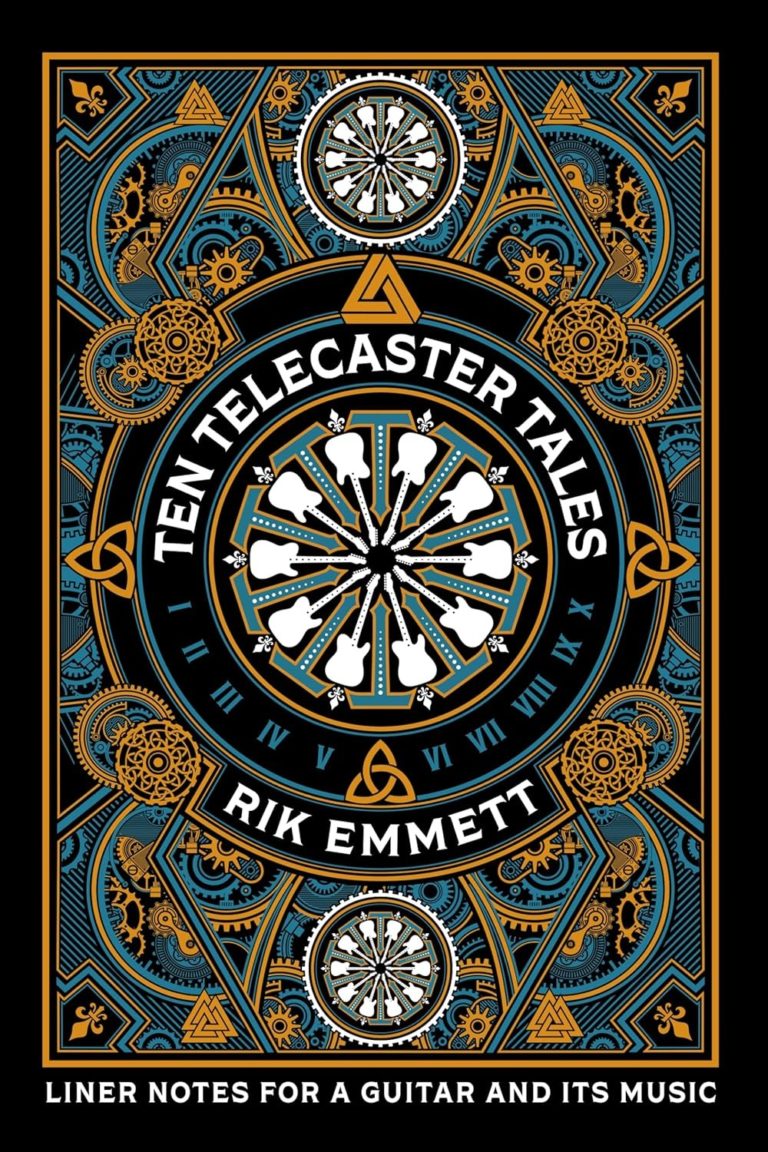
Ten Telecaster Tales remakes the idea of the “concept album.” This book about guitar music is arguably the most comprehensive attempt at liner notes in the history of electric instrumental fingerstyle guitar albums.
In his latest offering, Rik Emmett delves into the creative process ― the roots, influences, philosophy, and spirituality involved in writing and recording. Even the story behind these stories explores creativity: Emmett dreamed of, then commissioned, a one-of-a-kind Telecaster-style guitar ― wrote for it, then recorded with it.
Playfully, beautifully, Ten Telecaster Tales goes on a journey of artistic revelation: The storytelling inherent in solid musical composition translates into an entertaining narrative about the process behind the songs, and how compositions turn into recordings. A generous amount of fairytale mythology is sprinkled throughout ― despite the whole project’s assimilation by digital technology. The notion of a “telecaster tale” implies something “vintage” at its heart. Humanity glues the layers together.
Ten Telecaster Tales became the next logical step for Emmett after publishing his memoir, Lay It On The Line. It represents the evolution of his life story into a combination of musical composition, guitar playing, and prose. After all, writing has always been the solid backbone and lifeline of his multifaceted journey.
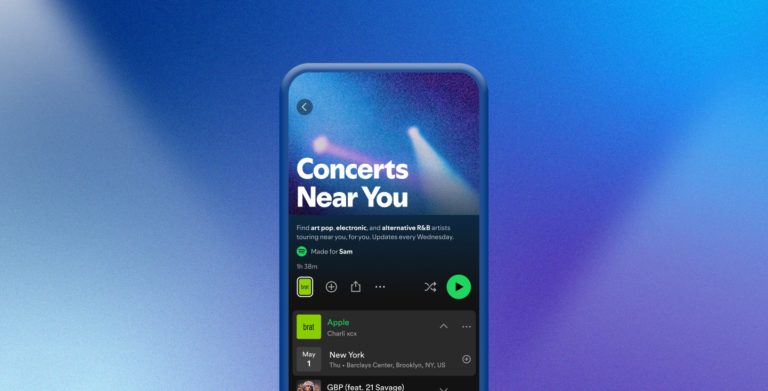
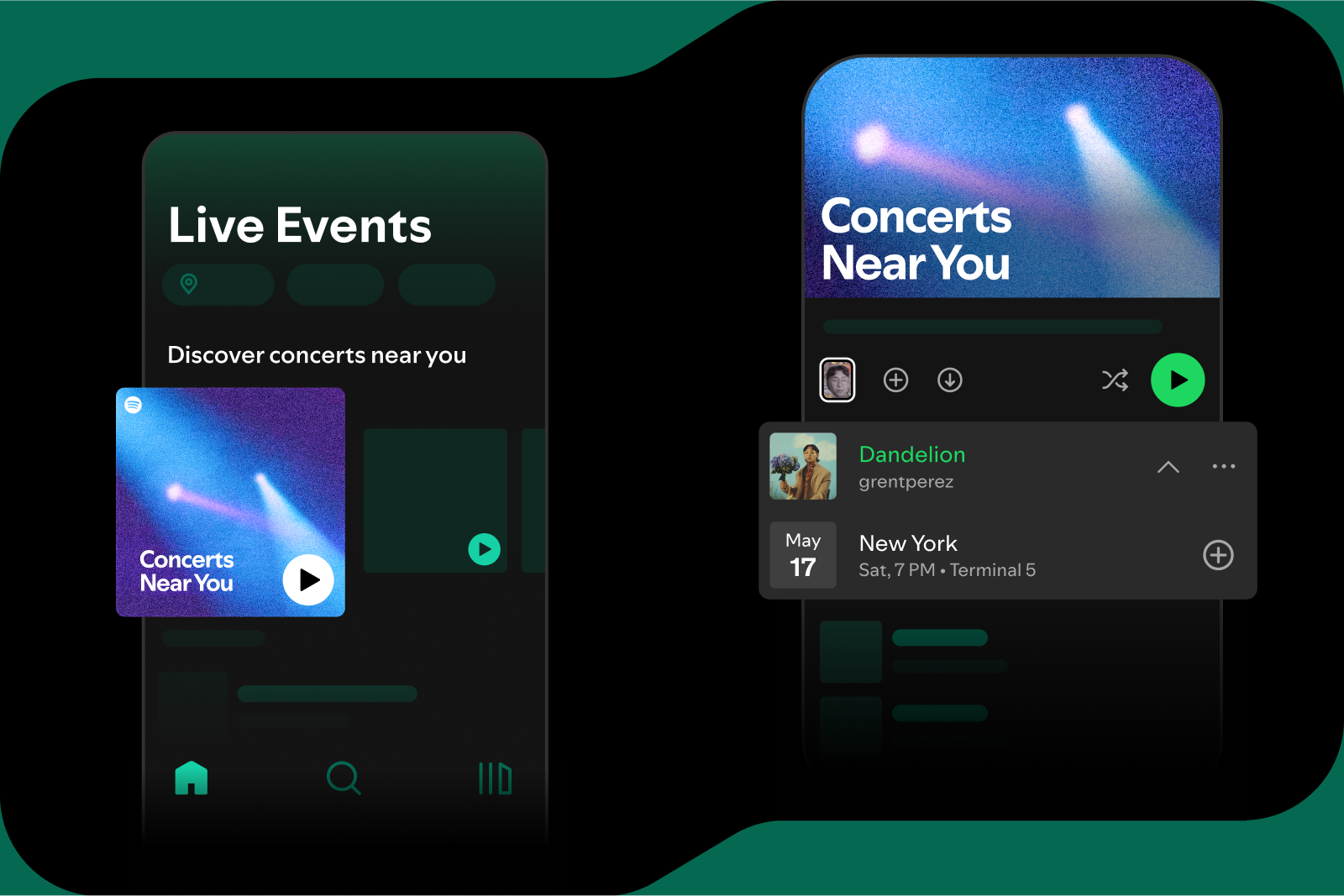
Inspired by your listening habits, Concerts Near You is updated on Wednesdays with 30 songs from artists performing nearby. Concerts Near You gives users access to full event details and ticket links directly from expandable track rows in the playlist. And since live music is better with friends, both the playlist and the event info listed within it are easily sharable, so you can plan to attend a concert together.
“There’s nothing worse than realizing that your favorite artist played your town last week,” said Charlie Hellman, Vice President, Global Head of Music Product at Spotify. “Concerts Near You solves for that. This new playlist not only makes it easier for fans to find shows nearby, but it also gives artists a powerful new way of selling more tickets and filling venues with the audiences who love their music most.”
Stay in the loop with the latest concert updates by following these easy steps:
Make sure your location is up-to-date via the “Live Events” section of the Spotify app.
Have push notifications turned on to receive reminder messages for your favorite artists.
Follow your favorite artists on the app to get their latest show updates.
Just search for “concerts” on Spotify to find your playlist on your own personalized Live Events feed.
Explore Concerts Near You to start filling your 2025 with unforgettable shows.
Apple TV+ announced that the global phenomenon “Ted Lasso” is officially returning back to the football pitch for a fourth season that will reunite the team behind the history-making, multi-Emmy Award-winning comedy series, with Jason Sudeikis reprising his award-winning role as the celebrated coach Ted Lasso.
“As we all continue to live in a world where so many factors have conditioned us to ‘look before we leap,’” said star and executive producer Sudeikis, “in season four, the folks at AFC Richmond learn to LEAP BEFORE THEY LOOK, discovering that wherever they land, it’s exactly where they’re meant to be.”
“‘Ted Lasso’ has been nothing short of a juggernaut, inspiring a passionate fanbase all over the world, and delivering endless joy and laughter, all while spreading kindness, compassion and unwavering belief,” said Matt Cherniss, head of programming for Apple TV+. “Everyone at Apple is thrilled to be continuing our collaboration with Jason and the brilliant creative minds behind this show.”
“Ted Lasso” season four adds Emmy Award winner Jack Burditt (“Nobody Wants This,” “Modern Family,” “30 Rock”) as executive producer under a new overall deal with Apple TV+. Sudeikis stars and executive produces alongside Brendan Hunt, Joe Kelly, Jane Becker, Jamie Lee and Bill Wrubel. Brett Goldstein serves as writer and executive producer alongside Leanne Bowen. Sarah Walker and Phoebe Walsh will serve as writers and producers for season four, and Sasha Garron co-produces. Julia Lindon will write for season four, and Dylan Marron will serve as story editor. Bill Lawrence executive produces via his Doozer Productions, in association with Warner Bros. Television and Universal Television, a division of NBCUniversal Content. Doozer’s Jeff Ingold and Liza Katzer also serve as executive producers. The series was developed by Sudeikis, Lawrence, Kelly and Hunt, and is based on the preexisting format and characters from NBC Sports.
After its global debut on Apple TV+, “Ted Lasso” broke records and quickly earned praise and acclaim, with season one becoming the most Emmy-nominated comedy series in its first season, and landing rare back-to-back Outstanding Comedy Series Emmys for its first two seasons on air.
Apple TV+ offers premium, compelling drama and comedy series, feature films, groundbreaking documentaries, kids and family entertainment, and is available to watch across all your favourite screens. After its launch on November 1, 2019, Apple TV+ became the first all-original streaming service to launch around the world, and has premiered more original hits and received more award recognitions faster than any other streaming service in its debut. To date, Apple Original films, documentaries and series have been honoured with 553 wins and 2,562 award nominations and counting, including multi-Emmy Award-winning comedy “Ted Lasso” and historic Oscar Best Picture winner “CODA.”
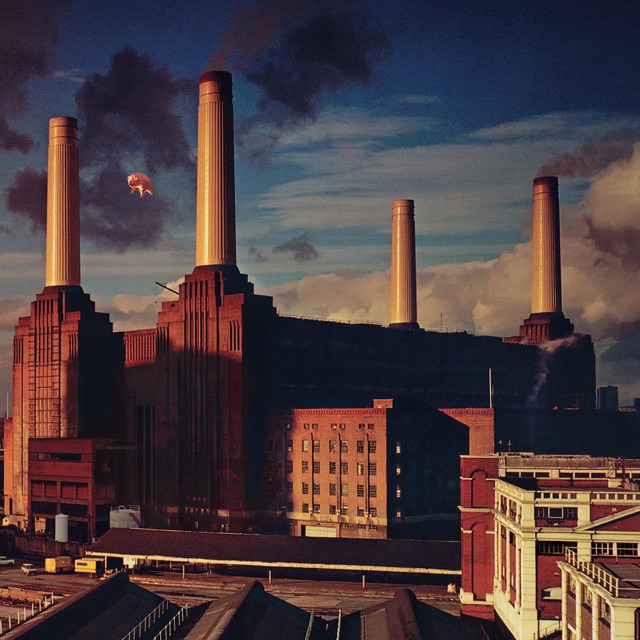
Pink Floyd’s Animals, released on January 21, 1977, stands as one of the band’s most conceptually daring and visually unforgettable albums. Packed with long-form compositions and Orwellian themes, the album continues to spark fascination decades after its release.
1. A Pig Balloon Caused Airport Panic To photograph the cover, Pink Floyd launched a 40-foot helium-filled pig balloon named Algie between the chimneys of Battersea Power Station. On the second day of shooting, the pig broke loose and floated over Heathrow Airport, delaying flights and prompting alarm. It landed safely in Kent and was returned by a farmer whose cows had been spooked.
2. A Hidden Guitar Solo Only Exists on 8-Track Snowy White was invited to record a guitar solo for “Pigs on the Wing” after a Gilmour part was accidentally erased. This version of the song never appeared on vinyl or cassette but was included on the 8-track release. White later joined the band on the Animals tour, making his mark in Floyd history.
3. Two Tracks Were Recycled and Reimagined “Dogs” and “Sheep” were originally performed live as “You’ve Got to Be Crazy” and “Raving and Drooling.” These earlier versions were considered for Wish You Were Here before being reshaped to fit the concept of Animals. Their transformation helped unify the album’s themes of control, rebellion, and power.
4. The Album’s Concept Flips the Script on Orwell While Animal Farm focuses on totalitarianism, Animals takes aim at capitalism. Pigs represent powerful elites, dogs reflect aggressive enforcers, and sheep symbolize the public. In this version, the sheep rise up and defeat the dogs, creating a storyline rooted in resistance and unexpected power shifts.
5. The Pig Returned at the 2012 Olympics During Danny Boyle’s “Isles of Wonder” film for the London Olympics opening ceremony, a pig balloon floated over Battersea Power Station once again. This moment paid tribute to Animals and its iconic cover, linking a piece of rock history to a global audience.
Pink Floyd’s Animals remains a powerful reflection of societal structures, using animal metaphors to explore themes of control, manipulation, and rebellion. Its lyrics continue to resonate in conversations about power, class, and resistance. Decades later, the album feels just as vital — a reminder that music can challenge, provoke, and inspire all at once.
This volume tells the fascinating story of how one of the most iconic buildings of the Victorian era came into being. Bringing material and archival evidence to life, it gives voice to its makers: from artisans and engineers to royalty and policy makers. This extraordinary piece of architecture reveals itself as a gateway to a new understanding of the political, artistic and scientific aspirations of a generation whose legacy still shapes the social and cultural landscape of today.
This groundbreaking study takes one of London’s most iconic buildings and deconstructs it to offer new insights into the society that produced it. As part of the new cultural quarter built in South Kensington on the proceeds from The Great Exhibition of 1851, the Royal Albert Hall was originally intended to be a ‘Central Hall of Arts and Sciences’. Prince Albert’s overarching vision was to promote technological and industrial progress to a wider audience, and in so doing increase its cultural and economic reach.
Placing materiality at its core, this volume provides an intellectual history of Victorian ideas about technology, progress, and prosperity. The narrative is underpinned by a wealth of new sources – from architectural models and archival materials to 19th century newspapers. Each chapter focuses on a particular element of the Royal Albert Hall’s construction, chronicling the previously overlooked work of a host of contributors from all walks of life, including female mosaic-makers and the Royal Engineers.
Lighting, ventilation, fireproofing, ‘ascending rooms’, cements, acoustics, the organ, the record-breaking iron dome, and the organisation of internal spaces were all attempts to attain progress – and subject to intense public scrutiny. From iron structures to terracotta, from the education of women to the abolition of slavery, in the making of the Royal Albert Hall scientific knowledge and socio-cultural reform were intertwined.
This book shows, for the first time, how the Royal Albert Hall’s building was itself a crucible for innovation. Illustrious techniques from antiquity were reimagined for the new mechanical age, placing the building at the heart of a process of collecting, describing, and systematising arts and practices. At the same time, the Royal Albert Hall was conceived as a ‘manifesto’ of what the Victorians thought Britain ought to be, at a crucial moment of its socio-economic history: a symbolic cultural hub for the Empire’s metropole.
This is the Royal Albert Hall: a central piece of the puzzle in Britain’s march towards modernity.
Dr. Simona Valeriani is based at the Victoria and Albert Museum in London, where she is a senior lecturer. She is an historian of architecture and technology with a background in building archaeology. This book is the result of a long standing interest in the topic (see the V&A display ‘Building the Royal Albert Hall’, 2017) and of a prestigious Leverhulme Trust Fellowship (2018-2020).
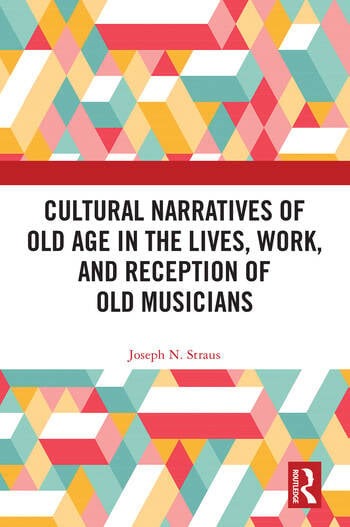
Operating largely within the world of European-American classical music, Cultural Narratives of Old Age in the Lives, Work, and Reception of Old Musicians by Joseph Straus discusses the creative work of old musicians—composers, performers, listeners, and scholars—and how those forms of music- making are received and understood. Like everything else about old age, music-making is usually understood as a decline from a former height, a deficiency with respect to a youthful standard. Against this ageist mythology, this book argues that composing oldly, performing oldly, and listening oldly are distinctive and valuable ways of making music—a difference, not a deficit; to be celebrated, not ignored or condemned.
Instead of the usual biomedical or gerontological understanding of old age, with its focus on bodily, cognitive, and sensory decline, this book follows Age Studies in seeing old age through a cultural lens, as something created and understood in culture. This book seeks to identify the ways that old musicians (composers, performers, listeners, and scholars) accept, resist, adapt, and transform the cultural scripts for the performance of old age. Musicking oldly (making music in old age) often represents an attempt to rewrite ageist cultural scripts and to find ways of flourishing musically in a largely hostile landscape.
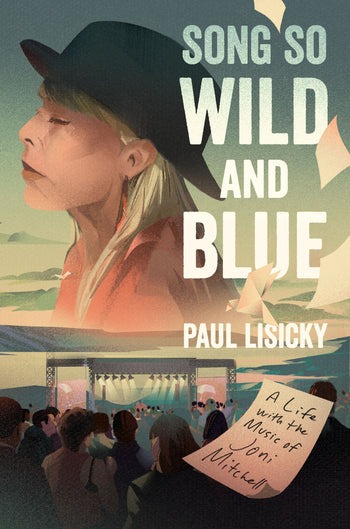
?From the celebrated novelist and memoirist, a gorgeous account of how Joni Mitchell’s work has shaped his writing throughout his life.
From the moment Paul Lisicky heard Joni Mitchell while growing up in New Jersey, he recognized she was that rarity among musicians—a talent whose combination of introspection, liberation, and deep musicality set her apart from any other artist of the time. As a young man, Paul was a budding songwriter who took his cues from Mitchell’s mysteries and idiosyncrasies. But as he matured, he set his guitar aside and turned to prose, a practice that would eventually take him to the Iowa Writers’ Workshop and into the professional world of letters.
As the decades passed, Paul’s connection to Mitchell’s artistry only deepened. Joni’s music was a constant, a guide to life and an artist’s manual in one. As Paul navigated love and heartbreak and imaginative struggles and the vicissitudes of a creative career, he would return again and again to the lessons found in Joni’s songs, to the solace and challenges that only her musicianship could give.
Song So Wild and Blue is a gorgeously written, beautifully intimate, and unique tribute to the woman who shaped generations of creators and thinkers. Lisicky offers his own coming-of-adulthood as testimony to the power of songwriting and staying true to your creative vision. A guide to life that is part memoir, part biography, and part homage, Song So Wild and Blue is a joy for devoted Joni enthusiasts, budding writers, and artists of all stripes.
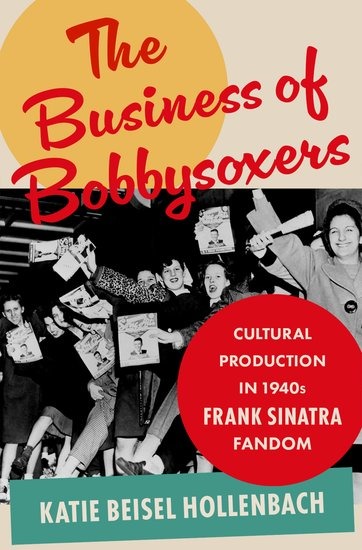
Katie Beisel Hollenbach’s The Business of Bobbysoxers reconsiders the story of American popular music, celebrity following, and fan behavior during World War II through close examination of “bobbysoxers.” Preserved in popular memory as primarily white, hysterical, teen girl devotees of Frank Sinatra clad in bobby socks and saddle shoes, these girls were accused of displaying inappropriate behavior and priorities in their obsessive pursuit of a crooning celebrity at a time of international crisis. Author Katie Beisel Hollenbach peels back the stereotypes of girlhood idol adoration by documenting the intimate practices of wartime Sinatra fan clubs, revealing a new side of this familiar story in American history through the perspective of the bobbysoxer.
In World War II America, fan clubs and organizations like Teen Canteens offered a haven for teenage girls to celebrate their enjoyment of popular culture while cultivating relationships with each other through media icons and the entertainment industry. Many of these organizations attempted to encourage diverse memberships, influenced in part by Frank Sinatra’s public work on racial and religious tolerance, and by Sinatra’s own identity as an Italian American. Away from the critical public eye, these communities offered girls a place to safely explore and discuss issues including civil rights, politics, the war, patriotism, internationalism, and professional development in the context of their shared Sinatra fandom. With these broader social and political complexities in mind, The Business of Bobbysoxers shines a light on musical fan communities that provided teenage girls with peer groups at a critical moment of personal and historical change, allowing them to creatively express their desires and imagine their futures as American women together.
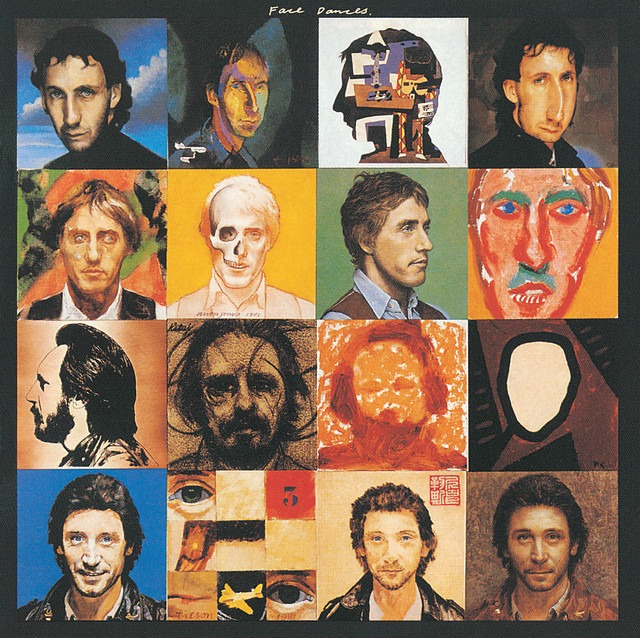
When Face Dances was released in 1981, The Who were stepping into a new era—still unmistakably them, but changed forever by the loss of drummer Keith Moon. With Kenney Jones behind the kit and Warner Bros. as their new U.S. label, this ninth studio album delivered a mix of slick production, spiritual searching, and power-pop hooks that marked the band’s evolution. It gave us “You Better You Bet,” one of their last major hits, and an album cover unlike anything they’d done before. But behind the music and the legacy, Face Dances holds a few secrets you might not know…
1. The Album Title Was Almost Just “The Who” Before it was known as Face Dances, the album was simply going to be self-titled—a bold move for a band nearly two decades into their career. Pete Townshend later renamed it after jokingly referring to a friend’s rhythmic teeth-clenching as “face dances.” The term also echoes the “Face Dancers” from Frank Herbert’s Dune, something Townshend realized only after the fact.
2. The Cover Art Was Curated by a Sgt. Pepper’s Legend Pop artist Peter Blake, the mastermind behind The Beatles’ Sgt. Pepper’s cover, returned to rock iconography by assembling 16 British painters to each create a portrait of The Who’s members. The resulting grid of 16 paintings gave Face Dances a distinctly modern-art twist. Artists included David Hockney, Richard Hamilton, and Blake himself.
3. “You Better You Bet” Was the First MTV Rerun When MTV launched in August 1981, “You Better You Bet” became one of the channel’s very first videos—and the first to be played twice. Its high-rotation status gave the band a new kind of exposure in the video age, helping the track climb to #1 on the Billboard Top Tracks chart.
4. John Entwistle Wrote “The Quiet One” to Retire a Classic Entwistle penned “The Quiet One” specifically to replace “My Wife” during live shows. He was tired of the older tune and wanted something fresh that also showcased Kenney Jones’s drumming. While it only lasted through the Face Dances and 1982 tours, it gave fans a rare look at Entwistle stepping out from his famously silent stage persona.
5. “Don’t Let Go the Coat” Hints at Pete’s Spiritual Anchor Though its meaning is debated, many listeners see “Don’t Let Go the Coat” as Pete Townshend’s musical homage to spiritual teacher Meher Baba. The title mirrors Baba’s advice to “hold fast to the hem of my robe.” Others interpret it as a personal cry for support during Townshend’s battles with addiction—making the track one of the most emotionally layered in The Who’s catalog.
Face Dances may not carry the same mythic weight as Who’s Next or Quadrophenia, but its place in The Who’s journey is undeniable. It was a bold continuation, a nod to their past, and a step into the uncertain future. With its layered meanings, visual artistry, and quietly defiant spirit, Face Dances is a reminder: even legends aren’t done evolving.
Vermont-based singer-songwriter Reid Parsons (they/she) announces the release of their debut full-length album, Back to Back, out now. Deeply inspired by architecture, Parsons has created an evocative and emotionally eloquent musical universe on this highly anticipated orchestral-folk record, showcasing their ability to weave elements of jazz, blues, classical, soul, and funk into emotionally rich narratives.
Today, Parsons shares the album’s title track and first single, “Back to Back.” The song explores the dynamics of a relationship where physical closeness is balanced with the reality of time apart. “The song reflects an understanding and acceptance of the unique ways partners connect and coexist,” Parsons says. “It celebrates the stability and comfort found in our individual strengths and the enduring nature of our bond.” With its thoughtful lyrics and gently rhythmic bossa nova groove, the track exudes warmth and intimacy, encapsulated beautifully in the refrain: “It means I got yours and you got me.”
“Music has always been where I can build a world to embrace all parts of myself,” Parsons explains. Their debut album, meticulously sequenced for vinyl, was tracked direct-to-tape by renowned engineer Ben Collette (Phish’s Trey Anastasio, Susan Tedeschi, Sharon Jones) at Burlington’s iconic Tank Recording Studio.
Parsons is a fearless and freewheeling musician whose work veers into jazz, blues, classical, soul, funk, rock, pop, and country with reverence and grace. This vibrant patchwork is threaded together by fine song craft, a well-developed production aesthetic, elegantly expressive vocals, and impressionistic and concise lyrics.
“I strive to write from a place of simplicity. I want to leave space for interpretation, to build a room for others to process, to emote, to have their own experiences in,” she says. Parsons grew up in Moretown, Vermont, a tiny town of 1,500, and the Green Mountain State has profoundly shaped them as an artist and a person. “I am so lucky to live here and to have been raised here. The lush explosion of nature in the summer, the harsh winters, the space to breathe, and the slow pace are all part of my creative flow,” they say.
Parsons’s earliest memories are of her and her older sister belting ‘N Sync’s No Strings Attached and Christina Aguilera’s Stripped, punctuated by obsessive spells of watching the 1993 film version of Tchaikovsky’s “The Nutcracker” on VHS. Family car rides consisted of her father playing the harmonica and drilling ear training exercises to pass the time. Chores were always done to an eclectic soundtrack of Lucinda Williams, Stevie Wonder, Patsy Cline, and Steely Dan.
Parsons began piano lessons at age five and picked up the saxophone a few years later, beginning a lasting obsession with blues and jazz. They taught themself guitar at summer camp, where they began writing songs. When they returned home, they began performing at the now-defunct Purple Moon Pub, known for sending off local legend Grace Potter.
Parsons’s music invites comparisons to Anaïs Mitchell, Frazey Ford, Bonnie Raitt, and Susan Tedeschi, yet their distinctive, architectural approach to songwriting remains uniquely their own. Back to Back was partially funded through a crowdfunding campaign, with the remainder supported by Parsons’s work in farming—a testament to their dedication and grassroots approach.
Back To Back by Reid Parsons 1. Back to Back 2. Get Out of Bed 3. Lightbulb 4. Heavy Load 5. Show Me You Love Me 6. Holiday 7. I’m On Fire 8. Figure It Out 9. Same Old Shit 10. Where Are You Now