Home Blog Page 57

The Killers and Janelle Monáe Headline Inaugural Freely Fest in Nashville

0

Nashville’s Bridgestone Arena is set to host the inaugural Freely Fest on April 8, 2026, a groundbreaking event launched by the nonpartisan nonprofit Freedom Forum. The festival features a heavy-hitting lineup including The Killers, T-Pain, Dominic Fike, Janelle Monáe, and Avery Anna, all coming together to celebrate the power of music and the First Amendment. Freedom Forum Chair and CEO Jan Neuharth emphasizes that the event aims to shine a light on freedom of speech as a foundational right that fuels global culture and creative expression. Beyond the live performances, the festival will stream globally, ensuring that its message of “purposeful entertainment” and the defining anthems of the First Amendment reach a worldwide audience.

The one-day event is designed to be more than just a concert, incorporating artist storytelling and interactive experiences that bring First Amendment freedoms to life. Fans attending the arena experience can access VIP packages that offer premium lounge settings, all-inclusive hospitality, and exclusive merchandise. Tickets for the historic gathering go on sale this week, following a specialized presale that began on December 18, 2025. As Freedom Forum marks over three decades of defending the rights to speech, press, and assembly, Freely Fest stands as their latest major initiative to inspire a new generation to value and protect the fundamental liberties that allow the music industry to thrive.

John Corabi Embraces Rock’s Enduring Spirit with Solo Debut ‘New Day’

0

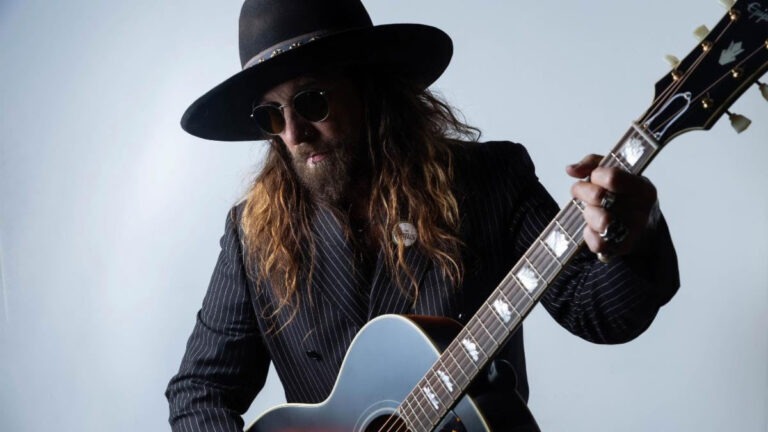
Rock icon John Corabi has announced the release of his first-ever full-length solo album of original material, ‘New Day’, arriving April 24, 2026, via Frontiers Music Srl. Recorded in Nashville and produced by the multi-platinum Marti Frederiksen, the record is a soul-infused journey through classic ’70s rock, blending organic musicianship with Corabi’s signature commanding vocals. The title track, out now alongside a nostalgic official music video, serves as an upbeat anthem for self-reinvention, encouraging listeners to find beauty in life’s smaller moments. Featuring an elite roster of contributors including Guns N’ Roses’ Richard Fortus and Blackberry Smoke’s Charlie Starr, the album provides a timeless, instrument-driven sound that showcases Corabi’s masterful songwriting and authentic rock-and-roll heart.

The project marks a pivotal milestone for Corabi, integrating fan-favorite singles like “Così Bella” and “Your Own Worst Enemy” into a cohesive collection that honors the melodic grandeur of early influences like Queen and Boston. To bring the new material to the stage, Corabi will embark on the “European Shuffle Tour” in February and March 2026, with key stops at London’s Underworld and the Belfast Empire. Backed by an all-star band featuring members from Whitesnake, Tesla, and Winger, these performances promise to capture the high-energy spirit of the Nashville sessions. As 2026 approaches, ‘New Day’ stands as a testament to Corabi’s enduring legacy and his unwavering passion for creating music that is as deeply personal as it is powerful.

From Audio Files to Searchable Text: How AI Transcription Works

0

By Mitch Rice

Why We Record So Much Audio—and Rarely Revisit It

Most people record more audio than they ever go back to. Meetings get saved “just in case.” Voice notes stack up on phones. Interviews, lectures, and online talks end up in folders with sensible names—and then stay there.

Recording feels easy. Almost automatic. Pressing play later is different. It takes time, attention, and a decision to sit through something from beginning to end. That moment often never comes.

The issue isn’t that these recordings lack value. It’s that audio is difficult to return to once the moment has passed. You can’t skim a conversation the way you skim a document. You can’t jump straight to what you need without guessing. Even when you’re sure the information is there, finding it can feel like more effort than it’s worth.

So audio becomes passive. It gets stored, not used. What starts as a useful record slowly fades into background material—something you remember exists but rarely touch again. That pattern helps explain why searchable text has started to change how people deal with recorded audio.

The Real Bottleneck of Audio: Linear Time

Audio’s main limitation has very little to do with sound quality or recording tools. It comes down to time. Audio forces information to be consumed in a fixed order. Once you press play, you move at the speaker’s pace, second by second.

Text behaves differently. A document lets you jump around. You can search for a phrase, skim headings, or confirm a detail without reading everything. Audio doesn’t offer that flexibility. Even a short recording can feel heavy when you’re looking for one specific moment. You rewind, fast-forward, listen again—and sometimes miss it anyway.

This difference shapes behavior. People will usually skim text, even when they’re busy. With audio, many postpone listening altogether. The information is technically available, but practically out of reach. That’s why recordings often get kept “just in case,” rather than actively reused.

From MP3 Audio to Searchable Text: What Actually Changes

Transcription is often described as a simple conversion: speech turned into writing. But searchable text represents a more practical shift. It changes how information can be accessed after the recording is over.

Searchability breaks audio out of its linear constraint. Instead of listening from start to finish, you can jump straight to what matters. A name, a decision, a specific phrase—what used to require minutes of scrubbing through a recording can now take seconds.

This is where turning an MP3 audio file to text becomes useful for reasons beyond the file itself. The value isn’t in the conversion. It’s in what comes after. Once spoken content can be searched, it stops behaving like something you replay and starts behaving like something you reference.

That difference is why searchable text feels distinct from older transcripts. It’s less about creating a record and more about creating a way back into the information.

From Speech to Text: A Plain-English Look at AI Transcription

Modern transcription works by recognizing patterns in spoken language rather than matching words one by one. Earlier systems relied on rigid rules and limited vocabularies. When speech didn’t fit those expectations, accuracy fell apart quickly.

Today’s systems rely more on probability and context. They look at how sounds usually form words, how words tend to appear together, and how sentences behave in everyday speech. Meaning is inferred across phrases, not isolated at the word level. That shift is what allows transcription to handle natural, imperfect speech more reliably.

Segmentation plays a big role as well. Speech doesn’t arrive neatly packaged, but modern systems are better at identifying pauses, sentence boundaries, and speaker changes. Without that structure, transcripts would be exhausting to read.

This doesn’t make transcription flawless. But it does explain why it’s now dependable enough to support searching and referencing. The improvement comes from systems adapting to how people actually speak, rather than forcing speech into strict templates.

Why Modern Transcripts Feel Easier to Read

Older transcripts often looked like walls of text. Even when the words were correct, reading them felt like work. Everything blended together, and finding your place took effort.

Modern transcripts are structured differently. Sentences break more naturally. Speaker changes are clearer. The layout follows the rhythm of conversation without copying its messiness. That makes it easier to scan, pause, and return without losing context.

Once transcripts become easier to read, it’s tempting to treat them as complete stand-ins for the original conversation. That assumption is useful—but it’s also where limits start to appear.

Where AI Transcription Still Falls Short

Despite the progress, transcription still struggles with real-world complexity. People interrupt each other. They change topics mid-sentence. Much of what’s understood in conversation is implied rather than spoken.

Noise remains a factor. A quiet room produces very different results from a crowded space. Accents, informal phrasing, and tone-dependent meaning can introduce ambiguity. In many cases, the issue isn’t mishearing—it’s missing context.

Knowing these limits matters. Transcripts work best as aids: tools for locating information, reviewing decisions, or recalling key points. They’re most effective when paired with human judgment, not treated as complete replacements for listening.

When Audio Becomes Searchable, Work Habits Change

When recordings become searchable, people use them differently. Instead of replaying entire meetings or rewatching long videos, they look for specific moments. Audio shifts from something you consume in full to something you consult when needed.

Meetings become references rather than archives. Interviews turn into sources you can return to quickly. Long recordings begin to behave more like written material. It’s not surprising that platforms like SoundWise exist in response to this shift. As expectations change, people increasingly assume that spoken information should be as accessible as text.

What’s changing isn’t just the technology. It’s the role audio plays in everyday work. Once recordings can be searched and referenced, they stop sitting idle and start getting used.

Conclusion: From Recordings to Reference Material

Audio has always carried useful information, but its format limited how that information could be reused. Listening takes time and attention—resources that are often in short supply. As a result, many recordings were saved with good intentions and rarely revisited.

Searchable text changes that balance. By breaking audio out of its linear constraint, transcription allows spoken content to function more like a document—something you can return to, search through, and work with deliberately. The shift isn’t about replacing listening. It’s about giving recorded audio a second life after the moment has passed.

Data and information are provided for informational purposes only, and are not intended for investment or other purposes.


Logan Wedgwood’s Sounds Escape Explores Emotional Landscapes on ‘Electric Love’

0

Logan Wedgwood’s Sounds Escape Explores Emotional Landscapes on ‘Electric Love’

Logan Wedgwood, Sounds Escape,

Auckland-based multi-instrumentalist Logan Wedgwood has unveiled his latest transportive project under the moniker Sounds Escape with the release of the stunning new album ‘Electric Love’. Born from the isolation and uncertainty of the 2020 pandemic, the project marks a triumphant return for Wedgwood, a former touring drummer who stepped away from the music scene in 2009 to focus on his young family and business career. After finding “salvation” in the daily ritual of teaching himself guitar, Wedgwood evolved rough riffs into intricate, cinematic compositions that bridge the gap between fragile melodies and thunderous, forty-instrument arrangements. ‘Electric Love’ serves as a visceral document of this journey, offering listeners a “rollercoaster” of rhythm and sound designed to be an immersive, emotional experience.

The album’s leading single, “Exploding Stars,” acts as the definitive entry point into Wedgwood’s ambitiously layered style, capturing the tension and release that define the Sounds Escape sound. Whether it is a single, wandering guitar line or a dense wall of orchestral sound, every arrangement is led by feeling rather than traditional structure, making it the perfect companion for late-night reflection or an atmospheric film score. Following the success of his debut anthology ‘Voices’, this new collection solidifies Sounds Escape as a standout in the modern instrumental genre. By turning the “rug pulled out from under him” into a creative catalyst, Wedgwood has crafted a body of work that invites the audience to find their own connection within the silence and the noise.

Austin Michael Drowns Heartbreak in Traditional Anthem “Why Not Whiskey”

0

Former rodeo star turned country newcomer Austin Michael is proving that his grit isn’t just for the arena with the release of his new single, “Why Not Whiskey.” A raw, honky-tonk-driven anthem, the track pairs traditional country swing with a barroom realism that touches on everything from shattered relationships to outrunning the pain. Co-written with heavyweights Joe Clemmons and Shane Minor, “Why Not Whiskey” serves as the fourth preview to his highly anticipated 13-track collection, ‘Lonestar’, which is out March 6th. The song highlights Michael’s transition from a 15-year-old viral sensation on ‘American Idol’ to a formidable Nashville songwriter, blending the self-reliant ethos of his Texas upbringing with a vulnerable, troubadour-inspired edge that has already amassed over 17 million streams.

‘Lonestar’ marks a definitive coming-of-age for the 22-year-old artist, who spent years sleeping in his car in Nashville to knock on doors for a chance to be heard. The album features a lineup of powerful previews including “Back on a Barstool,” “Hard Earned Heartache,” and “Whiskey on a Wildfire,” each detailing the winding road from a Texas ranch to the stages of Music City. Having already shared the spotlight with icons like Justin Moore and Chris Young, Michael’s straight-shooting storytelling is anchoring him as one of the most authentic voices in the modern neotraditional movement. Whether he’s roping on national television or delivering a “bottom-of-the-glass” confessional, Michael remains rooted in the independence of his “Lonestar” identity, offering a collection that is as much about perseverance as it is about country music.

Michael Bublé’s ‘Christmas’ Becomes Canada’s Christmas #1 Album

0

Michael Bublé has officially reclaimed his throne as the king of the holidays, as his 2011 blockbuster album ‘Christmas’ returns to #1 on the Canadian Albums Chart. This resurgence ends Taylor Swift’s impressive ten-week reign at the top spot, proving the enduring power of Bublé’s festive classic more than a decade after its initial release. With over 16 million physical copies sold worldwide and billions of streams to date, ‘Christmas’ remains a global phenomenon that continues to define the holiday season for millions of listeners. This return to the summit caps off a landmark 2025 for the Canadian icon, who earlier this year received a hero’s welcome while hosting the JUNO Awards in his home province of British Columbia.

Beyond the charts, Bublé’s year has been defined by significant global milestones and heartfelt community service. Just weeks ago, he performed for His Holiness the Pope in Vatican City, a “bucket-list” moment he described as one of the greatest honors of his life. Returning home to Vancouver, Bublé spent time volunteering at the Greater Vancouver Food Bank, surprising local clients while distributing Senior’s Program Packs. From the world’s most spiritual stages to hands-on charity work in his local community, Bublé’s 2025 has been a powerful testament to his status as a global superstar with a deep commitment to human connection.

Andradite Explores the Edge of Fragility and Fury with ‘Ruined’ EP

0

Cologne-based modern metal act Andradite has released their debut EP ‘Ruined’, a direct and unfiltered exploration of self-hate, trauma, and the chaotic process of release. Driven by the creative core of frontwoman Coco, the band has carved out a unique sonic identity that oscillates between crushing, down-tuned breakdowns and the ethereal shimmer of dark industrial synths. This five-track collection serves as a powerful document of the band’s growth, anchored by Coco’s versatile vocal presence that transitions seamlessly from bottomless, visceral shouts to fragile, crystal-clear cleans. As bassist Sudi and guitarist Mia note, the diversity of ‘Ruined’ reflects an intense musical journey, intentionally moving through different emotional landscapes to create a vision that hits hard precisely because it refuses to hide its scars.

Scott Bradlee and Casey Abrams Deliver Spontaneous Jazz Magic with “Santa Claus Is Comin’ to Town”

0

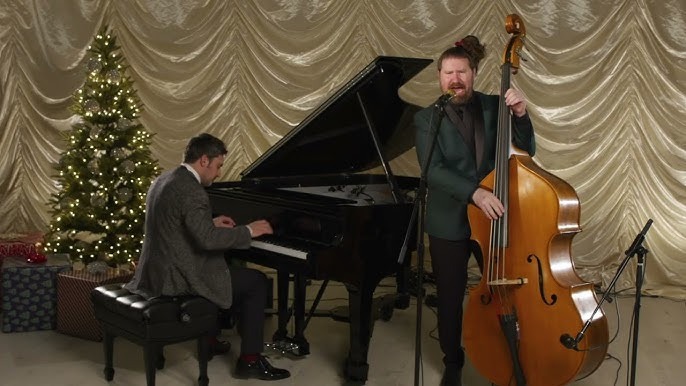
Postmodern Jukebox mastermind Scott Bradlee has reunited with his longtime collaborator and ‘American Idol’ standout Casey Abrams for a high-energy, jazzy reimagining of “Santa Claus Is Comin’ to Town.” Released just in time for the 2025 holiday peak, the track features Abrams’ signature gritty vocals and virtuosic upright bass work, turning the seasonal staple into a lively, spontaneous jam session. Bradlee, the architect behind PMJ’s “vintage-meets-modern” revolution, provides the perfect piano foundation for Abrams to shred, proving once again why this duo is a fan-favorite powerhouse within the collective. This release follows a prolific year for Bradlee, including his new ‘Lounge Language Models’ album and the ‘Magic, Moonlight & Mistletoe’ tour, adding a final burst of festive spirit to a record-breaking 2025.

Stage Lights, HD Cameras, and Skin Confidence in the Music Industry

0

By Mitch Rice

Stage lights hit differently now. Sharper. Brighter. Less forgiving. HD cameras catch details no one used to notice, or at least no one used to replay in slow motion on a giant screen. For musicians, this shift changed more than visuals. It changed how confidence gets built before stepping on stage.

This is not about perfection. Not even close. It’s about comfort. About knowing that when the camera zooms in mid-chorus, your face doesn’t pull you out of the moment. Because once that happens, the performance slips. Not dramatically. Just enough to feel it.

The New Reality of Being Seen

Back in the day, a concert felt distant. Fans saw the artist, sure, but from far away. Now faces appear ten feet tall on LED screens. Every expression amplified. Every shadow visible.

That changes behavior. Not in a shallow way. In a practical way. Artists prepare differently because the environment demands it. Skin reacts to lighting. Sweat reflects. Texture reads stronger on camera than in real life.

And here’s the part that doesn’t get said out loud: performers watch themselves back. Clips circulate. Screenshots live forever. Confidence has to survive not only the stage, but the replay.

Confidence Is Part of the Performance

Musicians talk a lot about sound checks and rehearsals. Less about how they mentally prepare to be seen. Yet appearance feeds directly into presence.

When someone feels distracted by how they look, attention splits. Part stays with the music. Part drifts to self-monitoring. That tension shows.

Artists who feel settled in their skin tend to move more freely. Faces stay expressive. Energy flows outward instead of inward. That’s not vanity. That’s stage psychology.

Confidence works like muscle memory. If something feels off, it interrupts the rhythm.

What HD Cameras Really Changed

High-definition cameras did one big thing: they removed blur.

Blur used to soften edges. It forgave fatigue. It hid uneven texture. Now everything appears crisp. Honest. Sometimes uncomfortably honest.

This forced a recalibration. Makeup techniques changed. Lighting setups adjusted. Skin routines became more intentional. Not heavier. Smarter.

Performers started thinking in terms of consistency. How does my skin look under white light? Under blue? After an hour on stage?

Those questions matter when the job involves being watched from every angle.

Offstage Decisions That Support Onstage Calm

Here’s where the conversation often gets simplified. People assume artists chase trends. Reality feels more grounded.

Most performers want predictability. They want to know how their face behaves under pressure. That includes stress, travel, late nights, dry air, and constant movement between climates.

Professional support plays a role here. Some artists rely on dermatologists and aesthetic specialists to keep things stable rather than dramatic.

This is where products like Restylane enter the picture. Not as a spotlight grabber. More like maintenance. The goal stays subtle. Familiar. Camera-friendly without erasing expression.

Because skin confidence works best when it doesn’t demand attention. When it simply removes one layer of worry.

Not Just a Celebrity Issue

Strip away fame and the situation feels familiar. Video calls. Livestreams. Content creation. Social media clips. Everyone lives a bit on camera now.

People notice things they never paid attention to before. Lines when smiling. Shadows under eyes. Uneven tone under artificial light.

The reaction mirrors what performers experience. A pause. A distraction. A slight dip in confidence.

Musicians just happen to face this at scale. The lesson transfers easily: comfort shows. Discomfort leaks.

Why Skin Confidence Isn’t About Looking Younger

This matters. A lot.

Artists don’t aim to freeze their faces. Expression drives performance. Emotion lives in movement.

Skin confidence means reliability. Knowing your face responds the way you expect it to. Knowing lighting won’t exaggerate something unexpected. Knowing your expressions still read clearly from the back row and the front row camera.

That’s the difference between control and obsession. Control supports creativity. Obsession kills it.

The Backstage Mirror Moment

Every performer has it. That quiet minute before stepping out. Looking at their reflection. Checking in.

That moment can go two ways. Either reassurance or doubt.

When reassurance wins, the artist steps out lighter. Focused. Present.

When doubt creeps in, it lingers. It shows in posture. In restraint. In hesitation.

Skin confidence plays a role in tipping that scale. Not alone. But significantly.

Preparation Over Pressure

The strongest performers build systems.

They don’t react emotionally to every change. They rely on routines that stabilize how they feel.

That might include:

  • consistent skin care
  • professional consultations when something shifts
  • understanding how lighting affects appearance
  • avoiding last-minute changes

The system removes guesswork. Guesswork fuels anxiety.

Music, Identity, and Visibility

Music asks for vulnerability. Real vulnerability. Faces tell stories before lyrics land.

When artists trust their appearance, vulnerability feels safer. They lean into emotion instead of guarding themselves.

HD cameras didn’t create insecurity. They exposed it. They also forced better solutions. Thoughtful ones.

What Audiences Often Miss

Fans focus on sound. They should. That’s the point.

But behind every performance sits preparation that protects the artist’s mental space. Skin confidence belongs there alongside vocal warm-ups and technical checks.

The audience may never notice the work. That means it worked.

A Broader Takeaway

Stage lights reveal more than faces. They reveal how preparation shapes confidence.

The music industry just happens to live under the brightest lights available. What artists learn applies everywhere else.

Comfort supports presence. Presence supports performance. Performance connects people.

No drama needed. No perfection required. Just readiness.

And when the lights go up, that readiness shows.

Data and information are provided for informational purposes only, and are not intended for investment or other purposes.