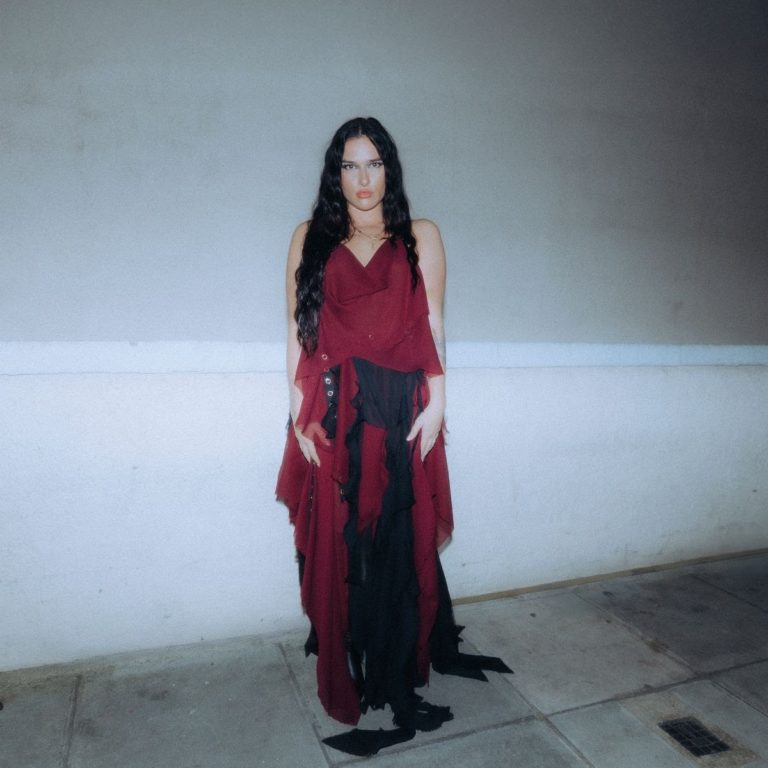
The vibrant singer Sabrina Kennedy has released her new single ‘Witch Of The West’ on all streaming platforms today, November 26. The powerful track, which is also available to purchase on 7” vinyl, is a rock anthem reminiscent of the likes of Hole and Garbage. The song reflects on her Boston roots while charting her move to London’s Portobello Road and the reputation of a witch she gained for reading tarot at Chiltern Firehouse parties. The song was cowritten and produced by the Grammy winning producer and Killing Joke bassist Youth, who connected with Kennedy after he championed her 2023 single ‘Magic & Mayhem’ on the producer panel radio show Jukebox Judgement and discovered their shared interest in the mystic and supernatural.
Regarding ‘Witch Of The West,’ Sabrina Kennedy shared the specific inspiration, saying, “‘Witch Of The West’ is a satirical and mystical fantasy around people’s perceptions of me. I lived on Portobello Road and read tarot at parties and got a reputation for having ‘powers’. A footballer I’d met broke his leg and asked if I hexed him. Then a certain singer didn’t like her boyfriend talking to me. She messaged him: “stay away from that witch of the West” (West London) – so I had my title. But really it’s about being misunderstood, other people’s misconceptions, and staying true to yourself.” The 7” vinyl also features an exclusive B Side, which is an acoustic version of her 2019 debut single ‘Hold Tight,’ a tumultuous song about dealing with the trauma of her father’s death, now delivered as a powerful emotive performance.
The new single follows her first UK tour in 2025, which included intimate headline shows and instores at locations like London’s Rough Trade West, Manchester’s Vinyl Resting Place, and RPM Music in Newcastle. Kennedy, who recently relocated from London to Newcastle, grew up on the US East Coast with adoptive Irish Italian parents, embracing the role of outsider after many visits to nearby Salem during her childhood. Her unique sound, which blends dark R&B laced pop with punchy punk rock, has been featured on the soundtracks of Love Island and Made In Chelsea, and she has been championed by publications like Kerrang and Wonderland. Her life as a modern day witch has also been captured in the multi award winning short film Sabrina Kennedy Witch, Reborn, directed by Maria Shevtsova.
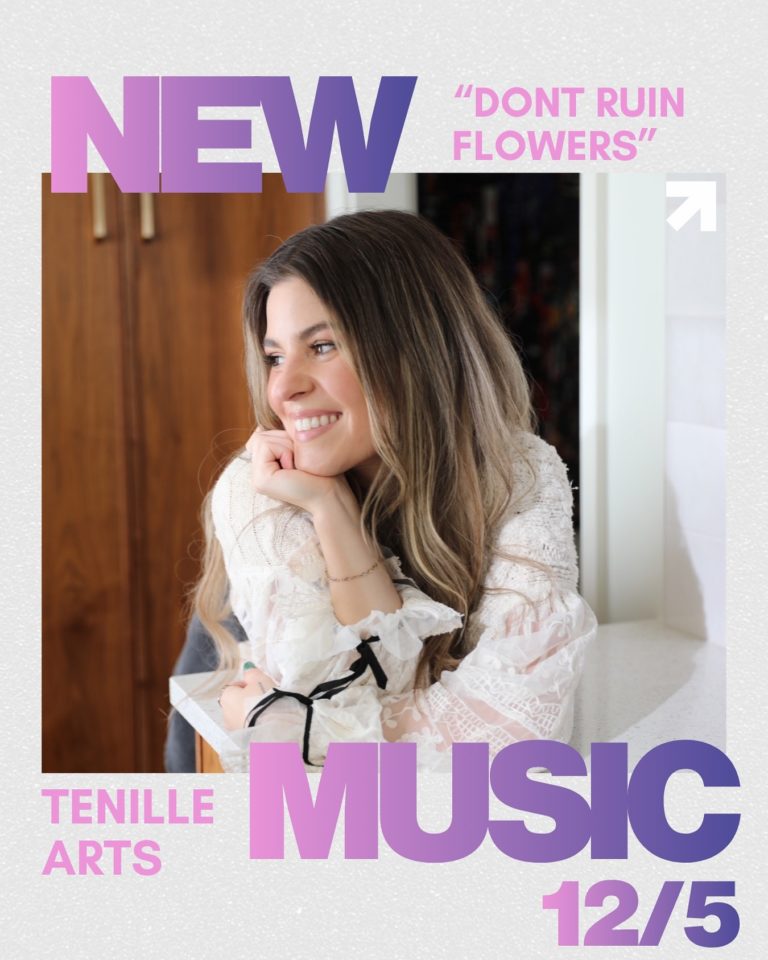
The highly successful country artist Tenille Arts has officially inked an album deal with ONErpm via her management company, Dreamcatcher Artists. The first single from this new partnership, “Don’t Ruin Flowers,” is slated as a major priority for the collaboration. Arts, who recently completed a world tour opening for Luke Bryan and Walker Hayes and her own headline tour backed by AEG in the UK, has been consistently writing new material for this exciting next project. The full length album announcement is planned for summer 2026.
Dreamcatcher CEO Powell Hedley expressed his enthusiasm for the collaboration, stating, “Emmanuel Zunz and his Team at ONErpm have been passionate about Tenille for several years. They stepped up in a profound manner—clearly showing that they understand what it takes to make a meaningful impact for Tenille on a global scale. We are committed to ensuring we have the tools and team necessary so that our artists’ dreams are met. We are grateful to our investors, our team and ONErpm for making this exciting moment possible. Onward and Upward!”
Arts wrote the moving single “Don’t Ruin Flowers” with Ryan Kohn and Lydia Sutherland, with Kohn also handling the track’s production. The official music video for the single is set for release early in December. Arts holds a significant place in history as her single “Somebody Like That” is still the only No. 1 country song written, produced, and performed by all females. She brings forward a double platinum record, two gold records, and has amassed nearly one billion global streams, positioning her strongly for this next chapter.
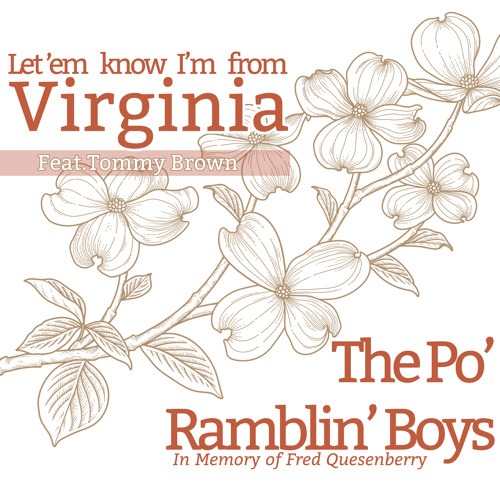
The award winning bluegrass group The Po’ Ramblin’ Boys have released their latest single, “Let ’em Know I’m From Virginia,” featuring Tommy Brown, available today on all major streaming platforms via Sound Biscuit Records. This powerful track, written by Glenn Alford and Jerry Newberry, is a heartfelt tribute to the life and enduring legacy of James Frederick Quesenberry—known simply as “Fred” to those who loved him. Fred was a longtime supporter, travel companion, and chosen family to the band’s frontman, C J Lewandowski.
For C.J. Lewandowski, this song hits particularly close to home. Fred entered C.J.’s life after the loss of Fred’s wife and quickly became a constant presence: a mentor, confidant, and father figure. A longtime bluegrass fan, Fred traveled often with the band, ran their merch table, and became part of their family in every sense. By 2013, Fred and C.J. were living together in Sevierville, Tennessee, side by side in work and in life. When Fred’s health began to decline, C.J. was there to care for him, encouraging him to rest, stay close to home with his beloved dogs, and find peace surrounded by the music and people he loved most. Fred passed away in 2024, just a day before his 82nd birthday, leaving behind a legacy of kindness, faith, and quiet strength that continues to inspire the band. The song’s emotional weight and authenticity are heightened by the vocals of Tommy Brown, father of the band’s banjo player Jereme Brown, and founder of the group Tommy Brown and the County Line Grass in 1991. For The Po’ Ramblin’ Boys, “Let ’em Know I’m From Virginia” is much more than a song; it is a profound tribute to the people who shape us, the places that define us, and the love that never truly fades.
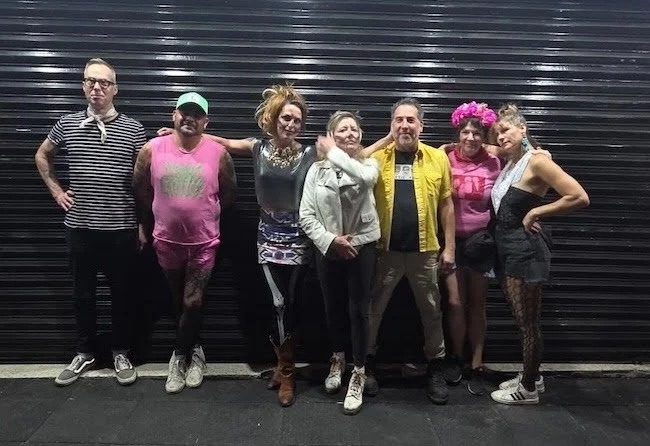
Astoria, Oregon’s Beta Voids are currently busy making noise that truly does not care what you think, locating themselves somewhere between the flailing limbs of early LA hardcore and the sax stabbed chaos of no wave. Their debut EP, ‘Scrape It Off’, sounds like a busted tape deck loaded with Redd Kross riffs, Contortions paranoia, and enough caffeine to keep a circle pit going until dawn. It is the kind of record that smells faintly of beer, hairspray, and old xerox ink, creating a perfect relic of a scene that never really died, it just relocated to a damp coastal basement. The album is full of chaotic, adrenaline soaked punk that nods to Redd Kross, Black Flag, and James Chance, while spinning out into its own dangerous orbit.
Across ‘Scrape It Off’, Mandy Grant and Carrie Beveridge front the storm with twin voiced intensity, a volley of shrieks, sneers, and sly melodic hooks that recall Poly Styrene and Penelope Houston with the voltage cranked dangerously high. Every track is its own small riot, a sweaty mix of jagged guitars, sax chaos, and drums that sound like they were recorded in the back of a van doing eighty down a hill. ‘Baby’s In Detox’ is a wild, two minute collision of screeching sax and tangled guitar, presenting a panic attack with rhythm and a smirk, where the dual vocals trade off like a fight breaking out in stereo. ‘M O T H E R’ swings harder into straight ahead rock, with a grimy Iggy and the Stooges pulse and a bassline that sounds like it is trying to escape the mix. It sits somewhere between Vancouver’s Subhumans and The Sonics, a nasty middle ground of sneer and stomp, while ‘Brain Malfunction’ packs the furious chops of Angry Samoans and the twitchy swing of The Minutemen, like a gear shifting punk car chase scored by caffeine and bad decisions.
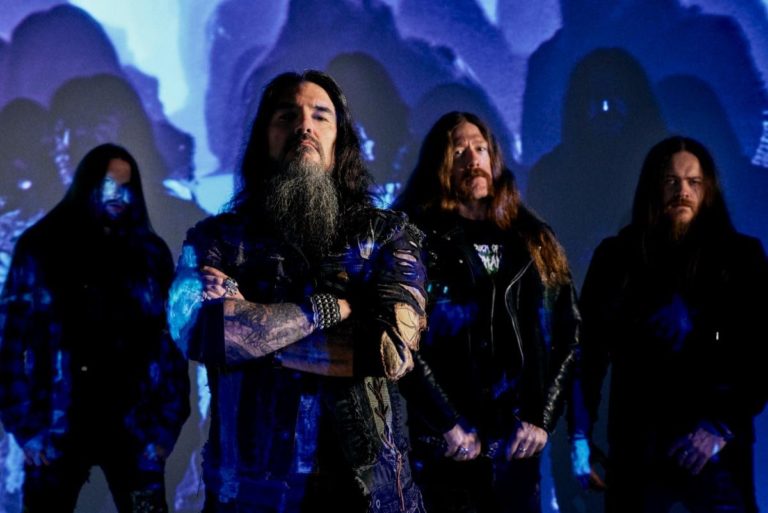
Bay Area icons MACHINE HEAD return to Europe in April/May 2026 with a blistering run of An Evening With headline shows, unleashing three unrelenting hours of molten metal, raging pits, and life-affirming sing-alongs. Fresh from levelling Bloodstock Open Air in August 2025 and continuing to support the release of their colossal new album UNATØNED, the band will storm across the continent with no support, just pure, undiluted MACHINE HEAD all evening.
The UK leg takes in Glasgow, Manchester, Wolverhampton and London. Tickets go on sale Thursday 27th November at 9am local time from Live Nation and the band’s official website.
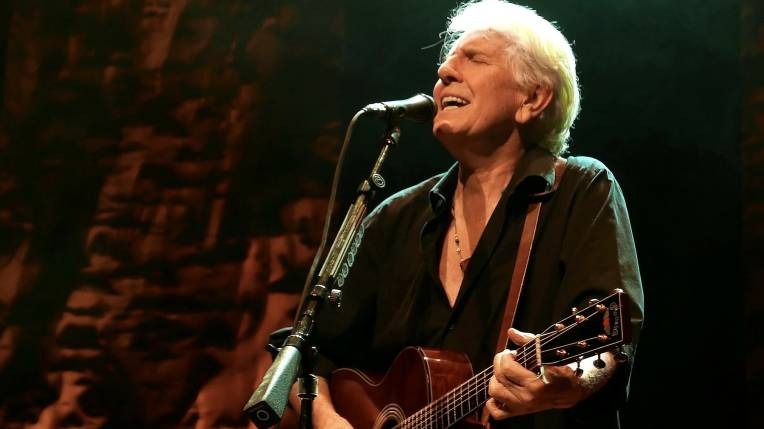
Legendary singer songwriter Graham Nash is set to return to the stage next year for more live dates, accompanied by his talented band featuring Todd Caldwell on keyboards and vocals, Adam Minkoff on bass, drums, guitars and vocals, and Zach Djanikian on guitars, mandolin, drums and vocals. These gigs will find Nash tackling material from throughout his iconic and lasting career, which has earned him two Rock & Roll Hall of Fame inductions. The live dates come on the heels of the release of Nash’s latest studio album, Now, which came out in 2023 as his first record in seven years. The tour begins in April and spans across the East Coast and down into Florida.
In addition to his 2026 tour schedule, Nash will participate in the 45th annual John Lennon Tribute Concert coming up on December 12 at Town Hall in New York City. He will be joined by a fantastic lineup of musicians, including Judy Collins, Suzanne Vega, Shawn Colvin, and Jimmy Webb, among others. At the Lennon event, Judy Collins will also be recognized as the recipient of the 2025 John Lennon Real Love Award. Collins commented on the honor, saying, “John Lennon has been both a personal hero and a beacon of light whose influence transcends time. His legacy lives on, illuminating our path forward and reminding us of the power music hold to create change. It is truly an honor to be celebrating his enduring impact in support of Theatre Within.” A previously unheard archival collection, Live At Fillmore East, 1969 from CSNY, is also out now.
Graham Nash 2026 Tour Dates
December 12—New York, NY—Town Hall
April 4—Lansdowne, PA—Lansdowne Theatre
April 6—Ridgefield, CT—Ridgefield Playhouse
April 8—Tarrytown, NY—Tarrytown Music Hall
April 10—New London, CT—Garde Arts Center
April 11—New Brunswick, NJ—State Theatre
April 14—Annapolis, MD—Maryland Hall
April 15—Charlottesville, VA—Paramount Theater
April 17—Myrtle Beach, SC—The Carolina Opry Theater
MUSCLE SHOALS, ALA. — Following in a famous father’s footsteps isn’t easy at the best of times. It’s even harder when the shoes you have to fill belong to someone whose life, legend and legacy loom as large as those of Rick Hall.
For the bulk of his 85 years, Hall was the fearless, fearsome founder and president of the iconic FAME Studios in Muscle Shoals, Alabama. A multi-talented visionary, he rose from humble, hardscrabble beginnings to become one of the most innovative and influential figures in 1960s music. As the father of the swampy Muscle Shoals sound, Hall produced and/or published career-making hits for everyone from Aretha Franklin and Wilson Pickett to Shenandoah and The Osmonds, garnering a wealth of well-deserved awards along they way. It’s fair to say he put the tiny town of Muscle Shoals on the map, kickstarting the music-centric economy that fuels its tourism engines to this day.
But there was also a dark side to Hall. Hardened and fuelled by a lifetime of tragedy, trauma and betrayal, he was an uncompromising, headstrong maverick with a massive chip on his shoulder. His fiery temper, coupled with a burning need to prove everyone else wrong, destroyed relationships with business partners, musicians, friends and employees. In the 2013 documentary Muscle Shoals: The River That Sings, none other than Keith Richards refers to Hall as a “tough guy” and “a type of maniac.” Long story short: He was complicated. And when he died in 2018, he couldn’t be replaced by just anybody.
Good thing Rodney Hall isn’t just anybody. He’s Rick’s youngest son. He’s been part of the FAME family since birth. He officially joined the business in 1991, assisting in publishing and engineering. Now he’s the president and co-owner. And under his tenure, FAME has maintained his father’s legacy and built upon it, continuing to host influential artists like Drive-By Truckers, Jason Isbell, Tim McGraw, Steven Tyler, Demi Lovato, The Raconteurs, St. Paul And The Broken Bones and, most recently, Marcus King.
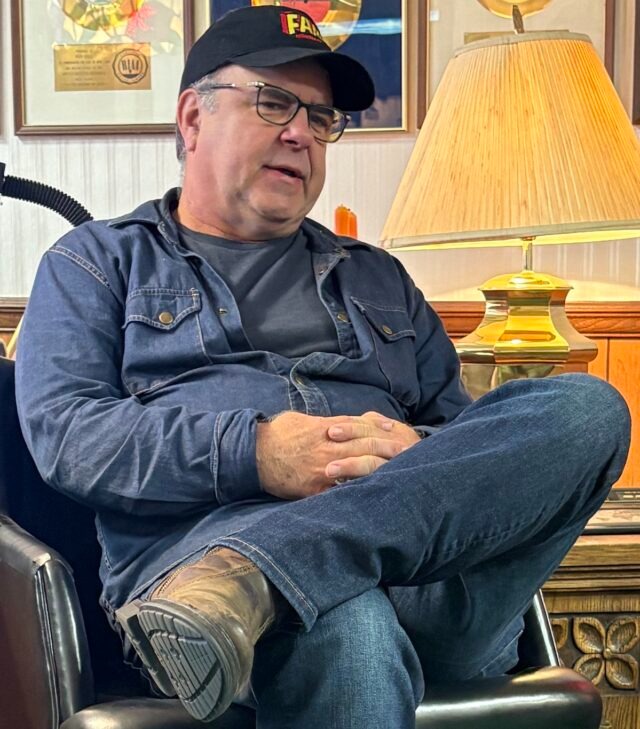
Just before the Muscle Shoals: Low Rhythm Rising exhibit opened a couple of hours up the road in Nashville’s Country Music Hall Of Fame And Museum, Hall sat down in his father’s second-floor corner office with me and a few other reporters to discuss the display, his unique upbringing, the challenges of running a music company in the age of AI, why the hell his dad isn’t in the Rock And Roll Hall Of Fame and much more. He didn’t pussyfoot around any tough questions or walk on eggshells when it came to speaking frankly about his father. Guess he’s the right guy to fill those boots after all.
You must have some amazing memories of growing up in this environment.
Yeah, absolutely. You know, at that time back in the ’70s, there weren’t all the hotels there are now. This was a dry county. So the artists would usually stay at our house. On our land, we had some mobile homes where they would stay — we called them hospitality trailers. And they were nice trailers, but they were trailers nevertheless. So yeah, the artists were always around and it was very interesting to see. At one point we lived really close to the studio and right by the park. So the artists would come to our baseball games and our football games.
At what point did you realize that yours was not a typical family?
Really, I was about four. My dad at that point, he had done Aretha Franklin, Wilson Pickett. The day I was born, he was in the studio doing Wilson Pickett. That week he did Mustang Sally and Land Of 1000 Dances and Funky Broadway. That music didn’t resonate with a four year old. But when he did The Osmonds… Well, all the girls at my school were going crazy. The Osmonds were at my house and the girls were all coming climbing up the fence and peeking through the holes and we had to hire security guards. That’s when it really kicked in.
And also, Mac Davis spent a lot of time at the house. So did Wilson Pickett and a lot of them. But Mac especially; he did 13 albums here. So he was here a lot. I would see him at our house and a couple of weeks later, he’d be on Johnny Carson’s show. And my other friend’s parents and their friends worked at the junk yard. So those two things were when it really kicked in.
But really, FAME was a secret inside the music business for decades because we were a production publishing house for the major record labels. So we were making all this music, but we weren’t the one with our name on the records most of the time. We did have some — we have a record deal with Capitol Records for a while. But for the most part, we were doing records for other people. So it was kind of kept hush-hush — and even here, when artists were in town, we didn’t never let anybody know until they were gone. We still don’t. But it’s hard to keep it under wraps these days with social media. Steven Tyler came here in 2018 or 2019, and we had it all set up for him to come into the hotel through the back door and nobody would ever see him. Well, he didn’t want to go in the back door. He wanted to go in the front door. And within 15 minutes, he was all over social media and there was 400 people standing out in the parking lot. And we had security and the whole thing. But that’s the only two times that’s ever happened — that time and The Osmonds.
What’s your reaction to the Muscle Shoals: Low Rhythm Rising exhibit?
Oh, it’s a complete honour to be in the Country Music Hall Of Fame. You know, we’ve got a few things in the Rock And Roll Hall Of Fame. That’s an honour as well. But this is special because it’s highlighting Muscle Shoals and what we’ve done in the world. And my dad is included in this.
When the museum people came to you asking for things, what were the logistics? Was there a lot of back and forth and negotiation over some things that maybe you didn’t want to part with because they were still in use?
Absolutely. Yeah. The biggest one of those was the piano that Aretha played on her first hit records. Everybody calls it ‘the Aretha piano,’ which drives me crazy because it’s not just the Aretha piano. That’s the Patches piano, that’s the Wilson Pickett piano, that’s the Etta James piano. But everybody has to call something something. They also call our Wurlitzer ‘Spooner’s Wurlitzer.’ A lot of people played that Wurlitzer, but obviously Spooner (Oldham) played some of the most recognizable records. So yeah, the piano was a big thing. But we have so much stuff after 65 years that we don’t have room for it. Probably a decade ago, we donated most of our paper stuff — royalties paperwork, contracts, letters, all that kind of stuff — to the Rock And Roll Hall Of Fame.
What do you want people who see the exhibit to take away from the experience?
You know, I think the biggest thing is just to educate them on what happened here and what’s still happening here. What’s still happening here is just as important or more important to me. I mean, what happened here was amazing, incredible, and I tell people all the time we’re standing on the shoulders of giants. For us to be able to do what we do wouldn’t be possible without these guys. So, for the younger demographic, the exhibit is to educate them. The fans, I think, can just revel in what happened and enjoy it.
Your dad wrote in his autobiography that it was a dangerous time, but the studio was a safe haven where blacks and whites could work together in musical harmony.
You know, It’s funny; you talk to these guys, like (Swampers’ bassist) David Hood or some of the guys that were here during that time, and they get really frustrated ’cause they’ll go, ‘You know, it wasn’t about race. It wasn’t a thing.’ And I go, ‘David, that’s the whole point. It wasn’t about race. And that wasn’t going on everywhere else. But in the studios it was. And that’s why it’s important. That’s why people talk about it.’
LIttle Richard with Rick Hall (right).
Do you think your father has been given all the credit and respect that he deserve? You talked about FAME being kind of a secret. And I think to some degree, Rick remains that. For instance, why isn’t he in the Rock And Roll Hall Of Fame?
Good question. I’d like to know that too. I’m obviously biased, but in my mind, he’s definitely not been given the respect that he deserves in a lot of areas, because you’re looking at a man that started out with nothing. You know, less than nothing. His mother left him at three, became a prostitute. He was raised by his father, who was a sawmiller and a sharecropper and just lived really, really poorly. And he brought himself up and became a musician, a songwriter. He had, you know, dozens of hit records as a songwriter, a producer, a studio owner, a record label owner, and all these things, and did it in the middle of a cotton field. You know, I mean show me a story that’s more powerful than that.
You’ve obviously followed in your father’s footsteps and have had wonderful success in your own right. But your upbringing, obviously, was much different than his.
Absolutely. And, you know, while I was brought up a lot differently than him, I was brought up in a lot of the same ways as him. He wanted us to work. He didn’t want to give us anything. We never were given a car. We earned everything we ever had. This is kind of a funny story: When I was about 12, he gave us five cows apiece. And we were going to raise those cows, that’s how we were going to put ourselves through college. We had to raise those calves and sell them. So I had a chequebook at 12 and became a businessman. But yeah, he wanted us to work on the farm. He wanted us to be ready like he was — as bad as we didn’t want to be. But we were building barb-wire fences. We were working cows. We were raising all kinds of animals. It was a totally different level than what he was, obviously, because we were also living in a 10,000-square-foot house. So there’s a lot different, but at the same time, he wanted us to learn that same work ethic. And I think that we all did that.
What advice do you think your father would give this next generation of artists and musicians?
Well, that’s a good question, because I’m not sure what advice I would give them. I don’t know what he would think about AI. Well, I do know what he would think — he would hate it. He would. He hated computers. He used to say computers are a fad. They’re going to go away. I think he would tell them the same thing he would have told them a long time ago, which is to learn as much as you can. If you want to be in the music business, learn as many disciplines as you can — learn to engineer, learn to play an instrument, learn to write songs, learn to do it all. Then you can find the one that works best for you, but you’ll know how to do all of it. And he knew how to do everything. I mean, he was great at promoting records to radio stations. He had a knack for doing all that kind of stuff. He was a used car salesman. He could sell ice to an Eskimo.
Rick Hall’s office.
Do you hear his voice in your head when you’re thinking of what to do?
Yeah, I mean, can’t escape him here. (Gestures around the room)
You mentioned AI. As you know, we’ve gone from an era when musicians needed places like this to record, to now, when you don’t even need to play an instrument; you can hit a couple of buttons on your phone, upload something and be done. How do you deal with that? What kind of changes have you had to make to keep this studio as a viable ongoing operation in this era?
Obviously, you have to keep up. The onslaught that’s about to happen, I believe it’s going to make Napster look pretty silly in terms of how it’s gonna affect the music business. Now, I do believe that the music industry has gotten a little more ahead of it than they did with Napster, where they just said, ‘We’ll sue them.’ And just lost their way. Now at least they’re trying to think a little bit differently.
But I believe that here in Muscle Shoals, great musicianship and great songs and great singers will always win the day. That’s always been what we were striving for. And that’s still what we do to this day. You’re not going to hear a lot of sampling coming out of here. You’re not even going to hear a lot of synthesizers. You know, you hear some, but we’re more about organic, real instruments. Ultimately, and unfortunately, I think humans are going to become a niche. I believe that’s where we’re headed. But that’s the niche we want to be in. And I think that that is a niche that will always be around.
You also have the publishing aspect of the business along with the recording aspect. Are you more focused on one or the other right now? What’s your vision and what are your goals?
That’s a good question. One thing that kind of bugs me about the whole Muscle Shoals thing is we’ve been here for 65 years, 365 days a year, 24 hours a day, and no other entity’s been here more than 15 years at a time. The reason, I believe, is because we’ve been diversified. My dad had a publishing company, had record labels, and a recording studio. He had his productions and songwriting. So, back in the ’80s and ’90s, when the studio business was — pardon my French — shit, we were killing it in the publishing world. When one thing was down, another was up. And I want to get them all up. That’s the goal. The thing we have now that we have not had in the past that is a great asset is now we have the income stream of tourism and merchandise. After the (2013 Muscle Shoals: The River That Sings) documentary, that became a thing. Before the documentary, people would show up time to time and wanted to see the studio. But after the documentary, they just started lining up.
Why was recording down in those decades?
Well, lots of things happened. In the late ’70s, disco came along. Soul music became disco, basically. My dad and the musicians here in town weren’t that sold on disco and weren’t that into it. And my dad had gotten sick. He had some pancreas issues in the mid-’70s and kind of dropped out. He stopped producing for a couple of years. And then when he came back, he was having trouble getting in because disco had come along and it wasn’t his thing.
Also, there was some people that came to town who were international publishing people, and they stole a bunch of money from Muscle Shoals Sound. So that hurt them, and they sold their business in ’85. And a lot of people started leaving. From about ’78 to 2001, if somebody had success here as a songwriter or an artist or musician, they immediately moved to Nashville. So we were losing people. All that happened. So the studio business kind of just flattened.
This studio is bricks and wood and wires, and you could take it apart and you could rebuild it somewhere else, but I don’t think it would have the same sound. So what are the factors that make this place special? Is it the weather, the landscape, the people?
It’s mostly the panelling. Yeah. That wood. (laughs) Really, I think it’s several things. The number-one thing is the people. The musicians are one thing that is very important to keeping the legacy going. Spooner is still around, David Hood is still around, Clayton Ivey is still around. A lot of the guys that were the key players back in the day are still around, and we make special efforts to book them on sessions with younger guys that can learn from them and carry the legacy on to the next group, ’cause we work differently than other places. We’re a lot more laid back. So yeah, I think people is a lot of it.
Going back to the Muscle Shoals documentary: Did you like it?
For the most part, the documentary was amazing. There were a couple of minor things. I will say this: The Swampers weren’t those four guys until the documentary. The Swampers, up until that time, had just been a big group of studio musicians in Muscle Shoals, and then all of a sudden it became those four guys. But those four guys actually never played on a record without other guys. Anyway, that’s here and there, but that’s one of the things that that did come up. And there were a couple things like that. For example, in the documentary, it seems like my dad produced When A Man Loves A Woman, but he did not. And it seems like he wrote Patches and he did not. He just loved Patches. And he helped When A Man Loves A Woman get the record deal with Atlantic, but he didn’t actually produce it. But those are minor, minor things.
After all the artists who have recorded here, are there still people on your wish list? If we could wave a magic wand and make anyone appear in the studio, who would it be?
You know, Prince would be good, if you could do that. For me, personally, I was just a big Prince fan growing up. Me and my brothers were. I don’t know that my dad was that big of a fan.
Was your dad ever able to be happy? In the documentary, he talks about being motivated by betrayal and tragedy and wanting to show everyone. You can see how that makes someone strive and achieve what he did, but it doesn’t necessarily make for a happy life. At the end of his life, was he able to relax and feel he’d accomplished what he set out to do?
Yeah, he was. He did become much happier as he mellowed. But every once in a while he would still go, ‘I just need one more hit.’ It never went away.
Still, it must have been nice as his son to see him age that way.
It was. Well, sometimes it was. It depends. Sometimes it was frustrating. Somebody would bring him an artist, and he’d say stuff like, ‘Well, all they need is a producer.’ Meaning all they need is HIM as a producer. So if anything came in the door, he felt like he was the one that should do it. And you know, it’s hard to argue. But it wasn’t easy to co-produce with and collaborate with him. He was going to be in charge at the end of the day, so you just had to know that going in.
Do you think that might be part of the reason why he hasn’t necessarily gotten the respect you were talking about? Because he was perceived as being difficult?
Maybe. He definitely was difficult. I mean, I think anybody that worked with him would tell you he was hard to work for. But also anybody that worked with him will now tell you how much they learned from him. But I’ve sat in that chair just miserable, just getting beat up over things. He would tear you down and then bring you back up, tell you how you could do it. But yeah, he was hard on people. That was his way.
Would he be happy about the Muscle Shoals exhibit? Or would he be in there telling them how they should have done it?
Oh, no. He would have loved it. You know, he won a Lifetime Achievement Award at the Grammys and that same night, The Beatles got one, and The Isley Brothers, and that was the highlight of his career. The Americana Awards gave him a Lifetime Achievement Award that he was really proud of, and then the Grammys and, you know, I wish he would have gotten in the Rock And Roll Hall Of Fame before he passed, but he’s in the Country Music Hall Of Fame.
MUSCLE SHOALS, ALA. — Hallowed ground is in the eye — and sometimes the ear — of the beholder.
Your idea of a holy place might be a church, a shrine or some other place of worship — somewhere that sacred songs are sung and heaven feels a little bit closer. For others, it might be a historical site or monument — a spot where heroes and icons made history or changed the world as we know it. But when I think of hallowed ground, I naturally think of the musical landmarks where all of the above occurred — world-famous recording studios.
Thanks to my job, I’ve had the pleasure and privilege of visiting more than a few of these magical sites. I have stood in the cathedral-like magnificence of Capitol Studio A in Hollywood while Phil Everly told me about touring with Buddy Holly. I’ve lounged in the womb-like confines of Jimi Hendrix’s Electric Lady Studios in Greenwich Village, listening to rare Pink Floyd recordings. I’ve toured Sun Studio in Memphis and stood where Elvis did. I’ve seen inside Nashville’s historic RCA Studio B, where countless country hits were tracked. I’ve walked the zebra crossing in front of London’s Abbey Road. I’ve perused the gear inside Third Man Records’ mastering stuite in Nashville. And each time, I’ve felt the aura of the place, the electrical charge that still hangs in the air from everything that’s happened there.
Recently, I got to cross more names off my studio bucket list when I was offered a trip to Muscle Shoals, Alabama, the home of two of the south’s most famous and influential recording facilities — FAME Studios and Muscle Shoals Sound Studio — along with a preview tour of Muscle Shoals: Low River Rising, a new exhibit at the Country Music Hall Of Fame And Museum about two hours up the road in Nashville. Obviously, I knew a fair amount going in — along with all the music, I’ve seen the 2013 documentary Muscle Shoals: The River That Sings more than once. And I have read plenty of books on the artists who recorded there and the musical history of the region (including Peter Guralnick’s 1986 offering Sweet Soul Music, the definitive tome on the tale — at least, until fellow Canadian Rob Bowman’s new book Land Of 1,000 Sessions arrives next year). But obviously, the best way to learn about a place is to go there, see it for yourself and talk to people who know the inside story. So that’s what I did. And here are 20 things I learned on my pilgrimage:
1 | Neither studio is actually located in the city it’s named for.
Rick Hall’s FAME Studios (it stands for Florence Alabama Music Enterprises) is really situated in the neighbouring city of Muscle Shoals, while Muscle Shoals Sound Studio can be found in nearby Sheffield. Confused? Don’t be; FAME took its name from its first home, while MSSS was named for the members of the Muscle Shoals Rhythm Section (later The Swampers), who opened their own studio after leaving FAME over a contract dispute. And just for the record, Florence, Sheffield and Muscle Shoals are part of a quad-city community commonly known as The Shoals. The fourth city? Tuscumbia. But ‘The Tuscumbia Sound’ doesn’t really have a ring to it, does it?
2 | FAME was originally located in a cotton field.
Nowadays, it’s surrounded by far more modern businesses — including a Pizza Hut right next door, a CVS in the rear, and both an AutoZone and a Walgreens across the street. To be honest, that seems weird — like seeing a McDonald’s on top of Mount Rushmore. (In fact, the McDonald’s is around the corner and three blocks up, past the Dunkin’.) Muscle Shoals Sound, meanwhile, is in a quieter area, with a church just down the block and a cemetery across the road. So at least you know they aren’t bothering the neighbours.
3 | Everyone who’s anyone has recorded at FAME and Muscle Shoals Sound.
You probably already know about Aretha Franklin and Wilson Pickett and The Rolling Stones and Paul Simon and The Staple Singers. But the list of artists who cut tracks here is an almost endless who’s who of music: Bob Dylan, Rod Stewart, Eric Clapton, Glenn Frey, Carlos Santana, Julian Lennon, Boz Scaggs, Bob Seger, Willie Nelson, Lynyrd Skynyrd, Gregg Allman, Duane Allman, Dire Straits, James Brown, George Michael, Jimmy Buffett, Joan Baez, Linda Ronstadt, Cat Stevens, Traffic, Joe Cocker, Lulu, John Hammond, Leon Russell, Laura Nyro, JJ Cale, Bobby Womack, Tony Joe White, Mac Davis, Canned Heat, Johnny Rivers, Paul Anka, Jose Feliciano, Lloyd Price, Kim Carnes, Dr. Hook, Delbert McClinton, Phoebe Snow, Levon Helm, Eddie Rabbit, Southside Johnny & The Asbury Jukes, John Prine, Helen Reddy, Roger McGuinn and Chris Hillman, Jerry Jeff Walker, The Oak Ridge Boys, the Amazing Rhythm Aces, The Osmond Brothers, Steve Cropper, Bobby Blue Bland, Alabama, Mink DeVille, Clutch, Sawyer Brown, Duane Eddy, John Hiatt, Widespread Panic, Melissa Etheridge, Chris Stapleton, Lana Del Rey, The Black Keys, Jason Isbell, Drive-By Truckers, The Raconteurs and even Jimmy Cliff — to name just a few.
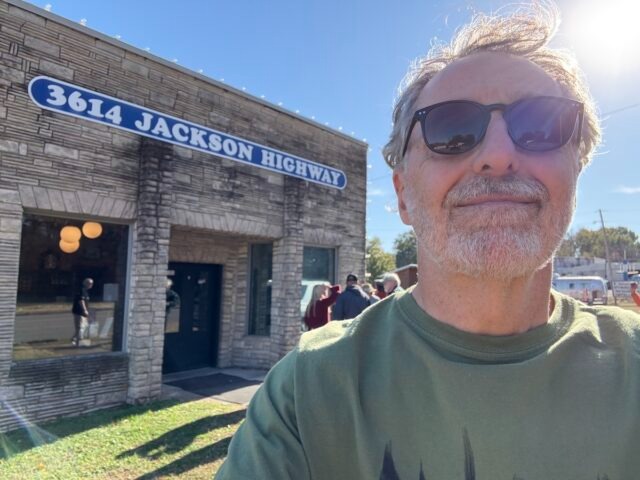
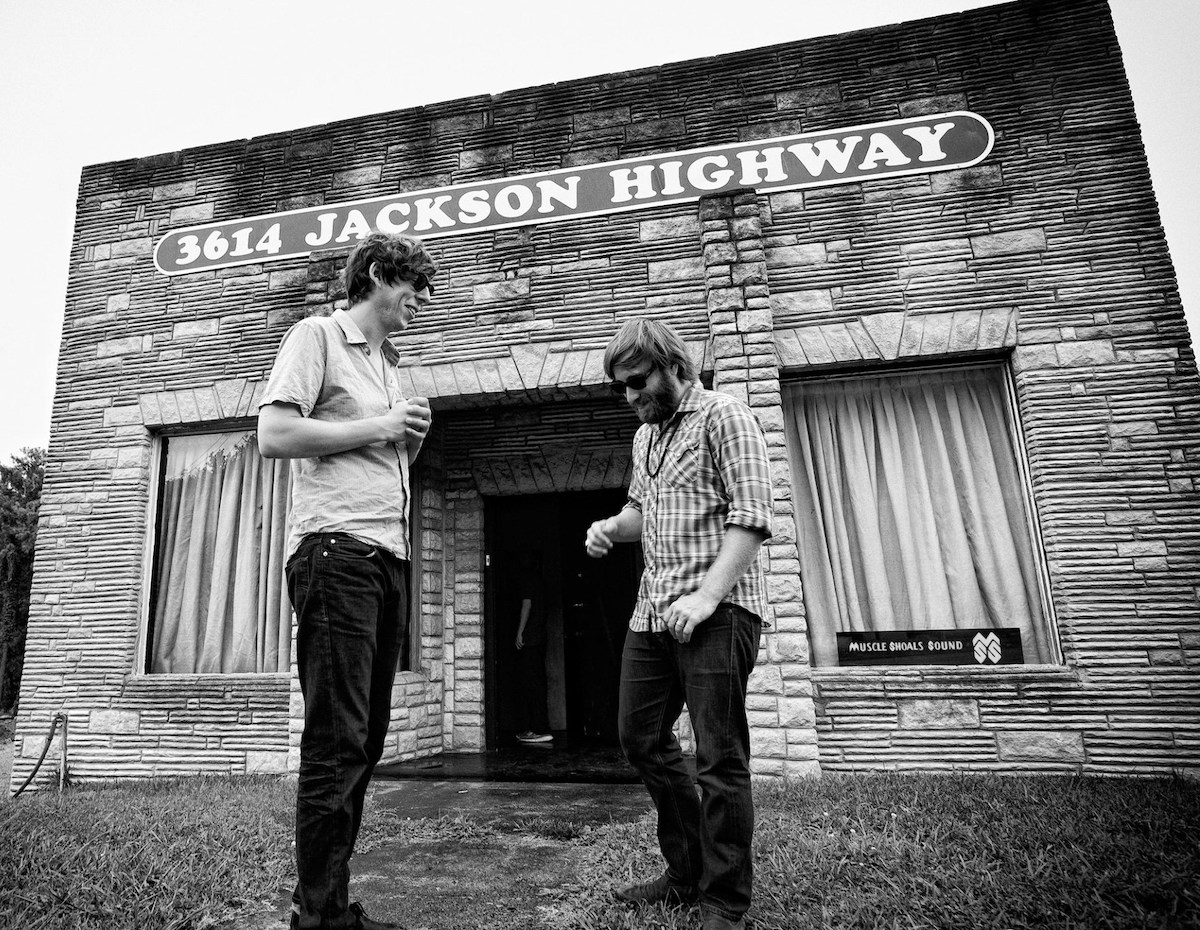
4 | The album cover for Cher’s 3614 Jackson Highway album inspired the iconic Muscle Shoals Sound Studio sign.
The album art for the singer’s sixth studio album — the first full-length LP recorded at studio in 1969 — is a black-and-white photo with her front and center, backed by The Swampers (guitarist Jimmy Johnson, bassist David Hood, drummer Roger Hawkins and keyboardist Barry Beckett), producer Tom Dowd and backup singers (including Donna Jean Thatcher, who went on to sing for The Grateful Dead under her married name Godchaux). Above them is the album title (and the studio’s actual address) encased in a blue-ish cigar-shaped sign. In reality, the building had no sign. The graphic was created by an artist. (You can see the actual street number in the left-hand window.) Being no fools, The Swampers soon ordered a sign to match the album art.
5 | The Rolling Stones paid a grand total of $1,009.75 to record Wild Horses at Muscle Shoals Sound on Dec. 4, 1969.
They paid $877.50 for 13.5 hours of studio time at $65 per hour (with Swampers guitarist Johnson behind the board); $40 for three 1″ reels of multi-track recording tape; $10 for a reel of 1/4” tape (for the mixed-down recordings); and $2.25 for three empty 5” tape reels (presumably to hold copies of the finished songs from the 1/4” tape). A facsimile of the invoice — made out to their then-manager Allen Klein’s ABKCO Industries — is prominently displayed in the studio. If they paid about the same for the other two songs they cut during their three-day visit — Brown Sugar and You Gotta Move — MSS made about $3,000. You can watch them recording in the studio in the 1970 documentary Gimme Shelter.
6 | FAME has been operating at the same location since 1961. Muscle Shoals Sound? Not so much.
The original Jackson Highway facility closed in 1979 and the owners relocated to a newer and larger facility nearby, which they sold in 1985. Even though the original building was no longer a working studio, acts like Band Of Horses and The Black Keys rented it to record there for a time. Eventually, the building housed an electronics retailer, then a used-appliance store. By 2013, it had apparently been empty for some time and was in danger of being demolished.
7 | The 2013 documentary Muscle Shoals: The River That Sings changed everything.
Directed by Greg Calamier, the film offered a reverent, revealing and somewhat romanticized version of the Muscle Shoals story. It rightly focused on OG / GOAT Hall, but also featured interviews with most of The Swampers (some in front of their abandoned building) and many artists who recorded there. When it was released, tourists began to flock to the studios. Hall, who had refused to allow tours to keep the facility from turning into a museum, relented when he saw how much money could be made. “After the documentary, they just started lining up,” says FAME’s current president and co-owner Rodney Hall, Rick’s son. Meanwhile, Muscle Shoals Sound Studio was rescued from wrecker. The Muscle Shoals Music Foundation, chaired by the younger Hall, bought the building and eventually restored it to its former glory, recreating it as it was during The Swampers’ heyday while also embracing the tourists. “We restored it do its original state, right down to this ugly orange carpet,” laughs Judy Hood — wife of Swampers bassist David, the last surviving member of the group — while sitting in the building’s basement lounge. “They don’t make carpet like this anymore. There’s a pretty good reason for that.”
8 | Dr. Dre helped save Muscle Shoals Sound.
Yes, that Dr. Dre — the N.W.A co-founder and producer / mentor of Snoop Dogg and Tupac. The Compton g-funk icon was moved by seeing the Muscle Shoals documentary, Judy Hood says. “Three months to the day after we signed the papers for this building, Dr. Dre saw the documentary in a small theatre in Santa Monica, California. He knew all about most of the Shoals music, but he didn’t know the back stories. And he was so captivated that he decided that night on the spot to start a philanthropic wing of Beats Electronics and to call it Sustain The Sound. And the mission to Sustain The Sound would be to take iconic facilities like this one and restore them. So by the next week he had people from his office talking to us about how we could get this deal done.” Eventually, Beats donated between $700,000 and $1 million to aid in the restoration, which was completed in 2017. More importantly than the money, “his heart was in it,” Hood says.
9 | Muscle Shoals Sound isn’t much bigger than it looks in pictures.
The building is longer than it is wide, but even so, it’s cozy, to be diplomatic. The studio occupies most of the main floor, with the control room at the back, and the tape machine out in the hallway by the back door. It’s so cramped that artists often listened to playbacks and mixes while standing outside on the rear stairwell — “the listening porch,” as it’s known. The publishing offices were located downstairs, along with a musicians’ lounge (complete with bar) found behind a secret hidden door (the studio used to be located in a dry county).
10 | Muscle Shoals Sound has a bathroom right in the middle of the recording studio.
Supposedly, Mick Jagger and/or Keith Richards locked themselves in there during their session to finish the lyrics to Wild Horses (though given their proclivities at the time, one suspects they were also up to other things behind that closed door). There’s a toilet seat mounted above the washroom door, pointing toward the floor like an upside-down horseshoe — because “the good shit flows down,” as one of The Swampers supposedly quipped.
11 | Swampers bassist David Hood’s gear is still in the studio — and still in use.
In the corner Hood used to occupy (right next to the drum booth, of course), you’ll still find his amp, tuner and some basses — right under an acoustic tile on which he wrote ‘David Hood was here from 1969-1978 playing bass. Underneath, a sign has been added: ‘And in February 2019 for Nicole Too,’ presumably referring to singer Nicole Atkins’ Italian Ice album, which was recorded there.
12 | Paul Simon thought The Swampers were black Jamaicans.
In 1973, the legendary singer-songwriter was interested in recording at Muscle Shoals Sound with The Swampers after hearing them behind The Staple Singers on I’ll Take You There. “I don’t know the exact story, but either Paul or his manager called (Stax Recods’) Al Bell… and said he wanted to record with the black Jamaican musicians who played on I’ll Take You There,” bassist Hood has said. “As I understand it, Al said, ‘I can give you their number, but they’re mighty pale.’ ” Perhaps Simon was confusing them with The Harry J. All Stars, the actual Jamaican band whose 1969 song The Liquidator has, well, let’s say something in common with the Staples’ 1972 recording. In any case, Simon cut much of his Rhymin’ Simon album there with The Swampers — including the hits Kodachrome and Loves Me Like A Rock — and also used the band on his next album Still Crazy After All These Years. Clearly, he got beyond the pale.
13 | Lynyrd Skynyrd’s Sweet Home Alabama — the song that made The Swampers famous — was not cut in Muscle Shoals.
In 1971 and ’72, Ronnie Van Zant and co. cut an album — including early versions of Free Bird, Gimme Three Steps, Simple Man and other future classics — at Muscle Shoals Sound with Swampers guitarist Johnson producing. But those recordings were shelved, and the band later recut them with producer Al Kooper in a Georgia studio for their 1973 debut (Pronounced ‘Lĕh-‘nérd ‘Skin-‘nérd). When it came time to record their sophomore album, 1974’s Second Helping, the band wanted to thank The Swampers for their early support and penned the now-familiar verse — “Now, Muscle Shoals has got the Swampers / And they’ve been known to pick a song or two (Yes, they do) / Lord, they get me off so much / They pick me up when I’m feelin’ blue / Well, now, how ’bout you?” The night they recorded it in Georgia, they phoned Muscle Shoals Sound, recalls Judy Hood. “Roger (Hawkins, The Swampers’ drummer) answered the phone, and the guys were like, ‘Hey, we just wrote a verse in this song for you.’ And Roger said, ‘Oh, that’s nice.’ Later on he laughed and said, ‘They just made my whole career, and all I could say was, ‘That’s nice.’ ” But nobody could have guessed at the time it was going to become so famous. It immortalized The Swampers. Anywhere we go in the world, everybody knows The Swampers.”
14 | Mavis Staples names Swampers bassist Hood in I’ll Take You There.
At about the 1:50 point in the song — when Hood switches from the song’s signature bassline to play a brief spotlight higher up the neck — Staples gently eggs him on: “David, little David, easy now, come on little David.” Most people think she’s saying “Baby” or “Lady” — including the folks who created the official lyric video for the song below — but if you listen closely on a good stereo or hear it with the vocals boosted and more isolated (as you do on the studio tour), you can hear it pretty clearly.
15 | George Michael first recorded Careless Whisper with The Swampers.
In 1983, the Wham! frontman arrived at Muscle Shoals Sound with Atlantic Records producer Jerry Wexler to cut his new track. It seemed logical — Michael was influenced by soul, Wexler had a relationship with the studio, and The Swampers were at the top of their game — but the results weren’t up to snuff. The Muscle Shoals Sound version of Careless Whisper sounds more like the ’70s than the ’80s. It feels slightly slower, smoother and slinkier. Michael, unsatisfied with the version, recut it a few weeks later in London. The original eventually surfaced on the B-side of a 12″ single.
16 | FAME’s Rick Hall was something of a packrat.
Along with all the musical instruments, recording gear, records and awards you’d expect to find in a recording studio, FAME is jam-packed with mementoes of Hall’s life and career covering every wall and surface: Pictures and letters, promo items and souvenirs, an antique gramophone and barber chair, liquor bottles, even a gold-plated ceremonial revolver and Hall’s old flip-phone. And as Rodney Hall pointed out, they’ve already donated most of their old paperwork — contracts, royalty statements, letters and more — to The Rock And Roll Hall Of Fame. Still, “we have so much stuff after 65 years that we don’t have room for it,” he says, admitting even he doesn’t know everything that’s in the place. “You open a drawer and something falls out. I open a filing cabinet and I’ll be in there for three or four hours.”
17 | Even in death, the notoriously difficult Rick Hall’s employees are still a little scared of him.
Among the countless items inhabiting Hall’s office is an old toolkit, sitting on the floor against the wall behind his barber chair, and under a framed picture of Hall with Capricorn Records co-founder Phil Walden and former U.S. president Jimmy Carter. The toolbox has been there for years, our guide mentioned. On a recent tour, a woman asked him what exactly was in it. He didn’t know, he replied; he’s never opened it. Why not? He pointed out the hand-written label on the box: Hands Off — Rick’s Tools. “I ain’t touching that,” he said.
18 | If you ask nicely, Rodney Hall might show you FAME’s tape vault.
I did, and he did. And while it was tinier than I expected — one small office-sized room — it was a sight to behold: Metal shelves stuffed with tape boxes containing original recordings of Wilson Pickett, Gregg Allman, Duane Allman, Jason Isbell, Steven Tyler, Waylon Jennings, Candi Staton, Clarence Carter and more. Hall let me take a couple of souvenir photos, but asked me not to print them, so I won’t.
19 | You can still record in the same room as Aretha Franklin or The Rolling Stones — using the same gear and even some of the same session players.
Based on their rich legacies, I would have assumed that both FAME and Muscle Shoals Sound would be out of reach for the average musician. But folks at both facilities told me they’re open for all kinds of business — and more affordable than comparable studios in Nashville (though prices have gone up since the Stones’ days). FAME books tours early in the morning and late in the afternoon to stay out of the way of musicians — there was a group working in the main studio during my visit — while MSSS is primarily open for tours, but books sessions in the evening, and on Sundays and Mondays.
20 | There’s plenty to do in The Shoals besides visiting studios.
I honestly didn’t know what to expect when I arrived in the area. But I know this: I didn’t expect to stay in a music-themed Renaissance resort — complete with a revolving restaurant at the top of a tall tower, one of the world’s largest collections of Rolling Stones memorabilia on site, and a TV station that broadcasts the Muscle Shoals doc 24/7. I also didn’t expect to find that the area has plenty more fantastic restaurants serving up everything from southern cuisine to sushi, along with cool bars, boutique hotels, a charming downtown and plenty of parks. Another thing I discovered: I can still put away a 14-oz New York steak. This was my first visit; it won’t be my last.
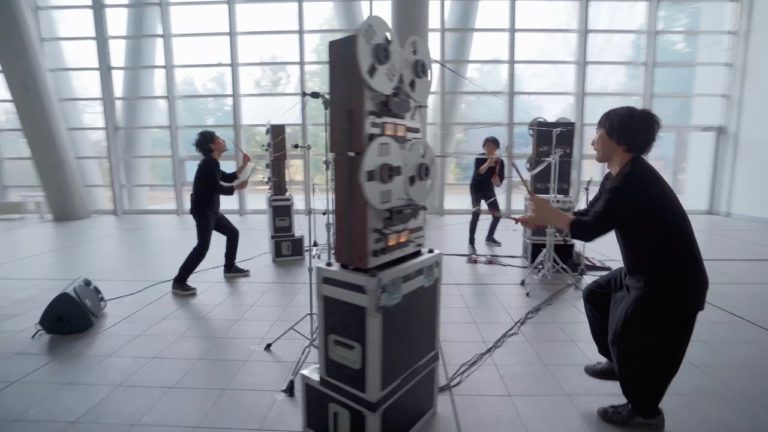
Imagine the joy of creating a brand new instrument out of old technology! The unbelievably talented musicians of the Open Reel Ensemble have just done exactly that, achieving a wonderfully catchy new sound by building what they call the Tape Tap Triangle. This ingenious setup involves stretching magnetic reel to reel tape across a triangular frame, allowing the players to tap the tape directly with drumsticks to produce percussive rhythms.
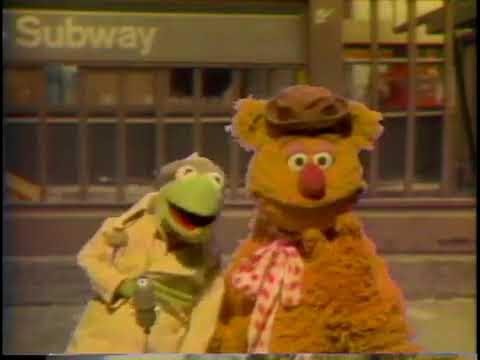
In the 1978 PBS holiday special Hip Hip Parade, reporter Kermit the Frog and Fozzie Bear hilariously went behind the scenes of the Macy’s Thanksgiving Parade and provided fantastic running commentary on all the sights. This classic special featured the duo touring the floats and giant balloons featured that year, including a fun look at the Sesame Street float.