Home Blog Page 6

Stranger Cole, Jamaican Ska and Reggae Pioneer, Dies at 83

0

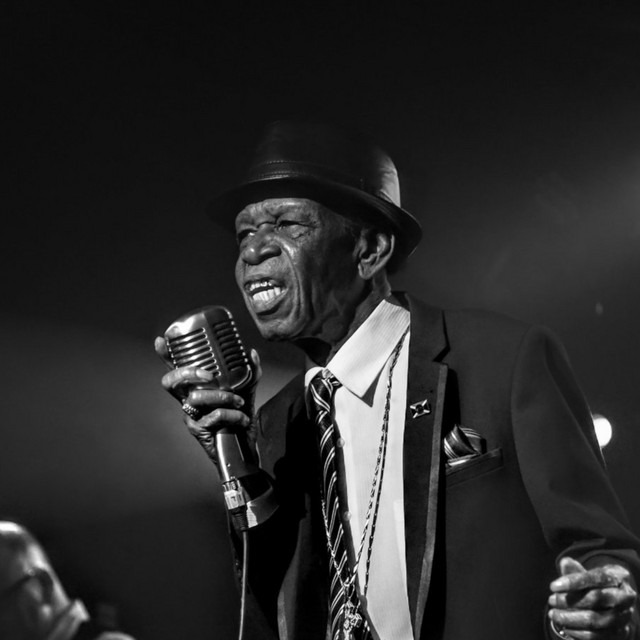
Stranger Cole, the Jamaican singer whose recording career stretched across more than six decades, from the birth of ska to the present day, and who long claimed to have made the very first reggae record, has died at the age of 83. He passed away on June 11, 2026, at Kingston’s University Hospital of the West Indies, in the same city where his story began.

Born Wilburn Theodore Cole in Kingston on June 26, 1942, he came by his memorable nickname early. His family took to calling him “Stranger” because, as they saw it, he didn’t resemble anyone else among them. The name stuck, and it would follow him through a lifetime of music.

Cole first made his mark not as a performer but as a writer, penning “In and out the Window,” a hit for Eric “Monty” Morris. That success opened the door to his own recording debut in 1962, and he wasted no time, scoring immediately with singles like “Rough and Tough” and “When You Call My Name,” a duet with Patsy Todd, for the legendary producer Arthur “Duke” Reid. More hits followed through the mid-1960s, and he worked with a who’s who of Jamaican production talent along the way, including Clement “Coxsone” Dodd, Prince Buster, Bunny Lee, Lee “Scratch” Perry, and Sonia Pottinger.

Duets became something of a signature for him, reportedly born of his shyness about singing alone. He recorded with Ken Boothe, Gladstone Anderson, Hortense Ellis, and most enduringly with Patsy Todd, with whom he cut a long string of sides as “Stranger & Patsy.”

His place in music history rests in large part on one song. Cole was credited with creating the first reggae record with his 1968 hit “Bangarang,” recorded at Duke Reid’s studio with engineer Bunny “Striker” Lee, saxophonist Lester Sterling, and keyboardist Lloyd Charmers. It remained a point of pride he defended for the rest of his life.

In 1971 Cole emigrated to the United Kingdom, where he toured tirelessly, before moving again in 1973 to Canada, settling in Toronto. There he lived a quietly remarkable second life, working as a machinist in the Tonka Toy factory and later opening a record store, the first Caribbean shop in the city’s Kensington Market, helping to seed a Caribbean-Canadian cultural community that endures today. He released his debut album, “Forward” in the Land of Sunshine, in 1976, following it with a steady run of records, many on his own label.

He never truly stepped away from music. In 2006 he released Morning Train, a collaboration with Jah Shaka and his first album in two decades, and in 2009 he appeared in the documentary Rocksteady: The Roots of Reggae, reuniting with fellow legends of the era to record a new album of the same name. He was still performing in his eighties, taking the stage with The Steadytones as recently as 2024.

His musical legacy carried into the next generation. His sons followed him into the business, with Squiddly drumming for the likes of Ziggy Marley and Mutabaruka, and Marcus, known as KxritoXisen, producing music for his father.

From the first stirrings of ska to the global spread of reggae, Stranger Cole was there for all of it, a foundational voice who helped shape the sound of Jamaica and carried it to the world.


Three Free Tools Sitting on Your Phone Right Now That EVERY Artist Should Be Using

The artists getting found in 2026 aren’t necessarily more talented than you. They don’t have better songs, better hair, or some cosmic stroke of luck the rest of us missed. They built their infrastructure before their last release instead of scrambling during it.

The most powerful discovery tools in music right now are free, and most of them are already sitting on your phone. Not pay-to-play. Not gatekept. Free. The only catch is that almost nobody uses them the way they were designed to be used. So let’s fix that today.

Spotify for Artists, and the Tab You’re Ignoring

Most of us open Spotify for Artists after a release, look at the stream count, feel something, and close it. That’s the least valuable thing it does. The numbers are the scoreboard, not the playbook.

The real gold lives a couple of taps deeper. Your Audience tab tells you exactly which cities your listeners are concentrated in, their age and gender breakdown, and which other artists they stream alongside you. That is targeting data brands pay advertisers serious money to approximate, and you’re getting it for nothing. Those top three cities? That’s your next tour routing, right there.

Then there’s Discovery Mode, which is widely misunderstood, so here’s exactly how it works. When you enable it, you accept roughly 30% lower royalties on selected songs in exchange for increased algorithmic promotion. Specifically, if a listener hears your song through Radio or Autoplay because of Discovery Mode, Spotify keeps 30% of that stream’s royalty and you receive the remaining 70%, while any stream from their own playlist, library, or your profile still earns the full royalty. It’s a trade, not a trick. The smart move is selective. It can make sense for catalog tracks that have plateaued or new releases where early momentum is critical, but applying it to your highest-earning songs will cut your overall revenue, so use it on a track or two, not the whole catalog.

TikTok Search Insights, Because TikTok Is a Search Engine Now

Most artists post a clip, write a caption, sprinkle on ten hashtags, and wait. Here’s the shift many have missed: TikTok stopped being only a feed algorithm and quietly became one of the biggest search engines on earth, especially for music discovery. People type “sad night drive music,” “undiscovered artists like Frank Ocean,” and “new indie R&B” into that search bar millions of times a day.

TikTok’s Creator Search Insights shows you the exact words and phrases real users are typing in your category right now, complete with which ones have high search volume and low competition. That’s not guesswork, that’s a map. Find three phrases with strong volume and thin competition, then build your next few posts around those exact phrases written naturally into the caption as sentences, not buried as hashtags. You show up at the precise moment someone’s intent is highest. That’s the whole game.

Chartmetric’s Free Tier, the Industry’s Best-Kept Secret

You may never have heard of this one, which is a shame, because it’s one of the most powerful free tools in the business. Chartmetric is a data aggregator that pulls an artist’s streaming numbers, playlist adds, social growth, audience demographics, and press coverage into one place. It’s what A&R departments, managers, and playlist curators use to size up artists, and it has a free tier you can sign up for today.

Here’s why it matters for getting heard. Forget the mega-playlists with two million followers that you’ll never crack. Use Chartmetric to find three artists who sound like you and sit two or three years ahead of where you are, then look at which playlists are actually adding them. Filter to the ten-thousand-to-hundred-thousand-follower range, the working playlists run by real humans who still read their emails. Export that list. You’ve just built a pitching shortlist grounded in evidence instead of hope.

This Is Infrastructure, Not Hacks

None of this is a growth hack or a shortcut. This is infrastructure, the quiet plumbing underneath every artist who seems to get discovered “out of nowhere.” They built the stack first. They knew their cities, their search phrases, and their realistic playlist targets before they ever hit upload.

You can start this afternoon, for free, with the apps already in your pocket. Open the Audience tab. Pull three search phrases. Build one pitching list. That’s it. Discovery doesn’t happen by accident, but it isn’t reserved for the lucky or the well-funded either. It goes to the prepared, and being prepared is something you get to choose.

Why Ireland Produces So Many World-Class Artists

0

This August, the world’s biggest celebration of Irish music comes home to a city that knows exactly what it’s holding. Fleadh Cheoil na hÉireann 2026 takes place in Belfast from Sunday, August 2 to Sunday, August 9, the first time the host city is the island of Ireland’s only UNESCO City of Music. Established in 1951, the Fleadh runs every August with qualifying performers from all over the globe descending on a single Irish town to showcase the very best of traditional music in all-Ireland competitions. That it lands in Belfast this year feels less like a coincidence and more like an overdue homecoming.

All of which raises a question worth chewing on. How does one small island keep producing such a staggering, wildly disproportionate share of the world’s great musicians? From U2 to Van Morrison, Sinéad O’Connor to The Cranberries, Hozier to Snow Patrol, the hits keep coming. Here’s what’s actually behind it.

Music Is Woven Into Daily Life

The first thing to understand is that in Ireland, music isn’t something that happens only on a stage. It happens in the corner of the pub, at the kitchen table, at the wedding and the wake. Traditional music is a living, participatory thing passed hand to hand across generations, and the Fleadh itself is built around exactly that ethos. When qualifying takes you from a local session all the way to an all-Ireland final, music stops being a spectator sport and becomes a craft that ordinary people pursue seriously from childhood. That depth of grassroots participation creates an enormous talent pool long before anyone signs a record deal.

Turning Struggle Into Song

There’s also something deeper at work, rooted in history. Ireland’s story is one marked by hardship, emigration, conflict, and loss, and Irish music has always been the vessel for processing all of it. The Troubles, the Famine, mass emigration, the ache of leaving home, these run like a thread through the country’s songbook. Irish artists have a long tradition of taking pain and turning it into something beautiful and universal, whether it’s the political fury of “Zombie,” the spiritual yearning of Van Morrison, or the quiet heartbreak of a Damien Rice ballad. That instinct to convert struggle into song gives the music an emotional honesty that travels far beyond the island’s shores. It’s hard to fake, and audiences everywhere feel it.

A Culture That Prizes Storytelling

Ireland’s reputation as a land of writers, poets, and talkers is no accident, and it feeds directly into the music. This is the country of Yeats, Joyce, Beckett, and Heaney, where a way with words is practically a national inheritance. That literary tradition shows up in the lyricism of Irish songwriters, who tend to treat words with unusual care. The line between Irish poetry and Irish songwriting has always been blurry, and the music is richer for it.

Real Infrastructure That Backs Talent

Inspiration alone doesn’t build careers. Ireland, and Belfast in particular, has invested in the unglamorous infrastructure that lets raw talent develop into something sustainable. The shining example is the Oh Yeah Music Centre, a converted bonded whiskey warehouse in Belfast’s Cathedral Quarter that has done more for the city’s musicians than any glossy concert hall. It opened its doors in 2007, growing out of a 2005 conversation between Belfast music industry figures and Snow Patrol, whose frontman Gary Lightbody championed the idea of a nexus to unite the city’s scene.

What makes Oh Yeah matter is what it actually provides. The centre offers affordable rehearsal and recording space, a live venue, a songwriting room, mentoring, and youth programmes, all built on a mission to “Open Doors To Music.” It runs the annual Sound of Belfast festival and the Northern Ireland Music Prize, and houses the only permanent popular music exhibition in Northern Ireland, free to visit. Over the years its stage has hosted everyone from Elbow and The Undertones to Lisa Hannigan, Foy Vance, and Duke Special, and its compilation albums like ‘The Oh Yeah Sessions’ have given homegrown bands a leg up exactly when they needed it. It’s a venue, a hub, a safe space, and a launchpad all at once, and it sits neatly at the centre of Belfast’s identity as a UNESCO City of Music. When a place builds something like that, the talent doesn’t just appear. It’s nurtured.

The Sum of Its Parts

So why does Ireland produce so many world-class artists? Because all of these forces compound. A culture where music is participatory and everyday. A history that taught people to turn pain into beauty. A literary heritage that prizes words. And real institutions that catch talent and help it grow. Put those together on one small island and you get a musical output that punches a thousand times above its weight, generation after generation.

There’s no better place to witness all of this in action than at the Fleadh itself. Fleadh Cheoil na hÉireann (fleadhcheoil.ie) takes place in Belfast, August 2–9, 2026. For more information visit fleadhcheoil.ie, visitbelfast.com, and discovernorthernireland.com.

Video: Joni Mitchell Performs “Coyote” For Bob Dylan And Roger McGuinn At Gordon Lightfoot’s Home In 1975

0

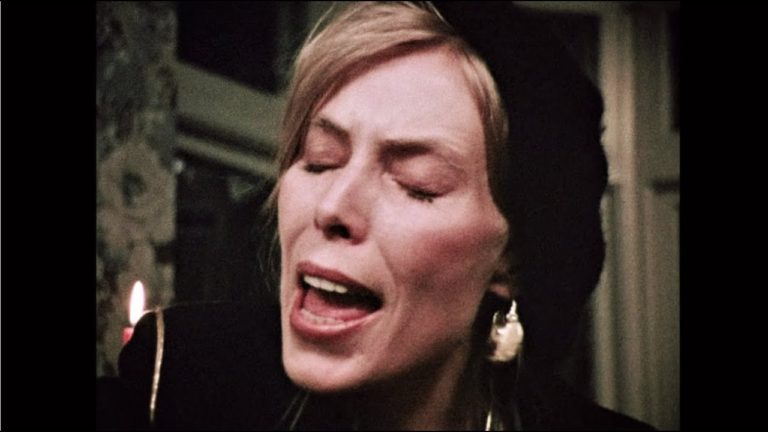
This is one of those moments you can hardly believe was caught on film. In 1975, during the Rolling Thunder Revue, Joni Mitchell sat down at Gordon Lightfoot’s home and performed “Coyote” for a room that included Bob Dylan and Roger McGuinn. The footage comes from Martin Scorsese’s Netflix documentary ‘Rolling Thunder Revue: A Bob Dylan Story,’ and it’s pure magic. Mitchell delivers the song with the singular phrasing and unmistakable chord work that set her apart from everyone in her era, and the look on every face in the room says it all, a circle of legends watching one of the greatest songwriters of her generation at the height of her powers. It’s an intimate, electric glimpse of a “Hejira” classic taking shape among friends.

Bay Area Punks Spiritual Cramp Bring Their Paranoid Energy To A Six-Song KEXP Session

0

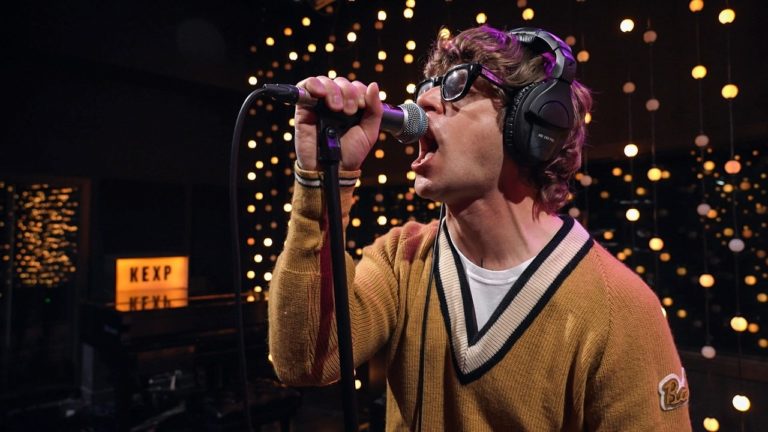
Spiritual Cramp are one of the most exciting punk bands going, and this KEXP session makes the case in six tight songs. Recorded in the KEXP studio, the Bay Area crew tears through “Automatic,” “You’ve Got My Number,” “Dog In A Cage,” “Young Offenders,” “Slick Rick,” and “Jerk It Out” with the kind of charisma and high-energy poise that’s made their live shows a must-see. Frontman Michael Bingham leads a six-piece lineup that pulls from hardcore, indie, post-punk, and garage rock, with more than a few Clash-style “London Calling” vibes in the mix. Their 2025 record ‘Rude’ was an album-of-the-year contender for plenty of listeners, and this performance shows exactly why, confident, charismatic, and proof that rock and roll is alive and well.

Video: Harry Styles Brings His Spellbinding New Single “Aperture” To The Live Lounge

0

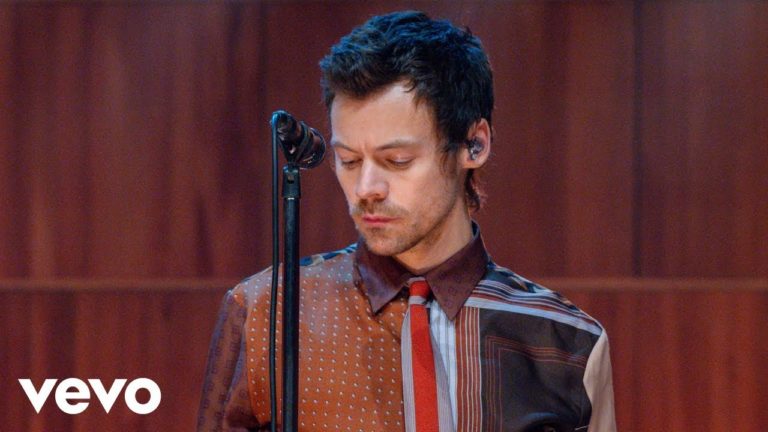
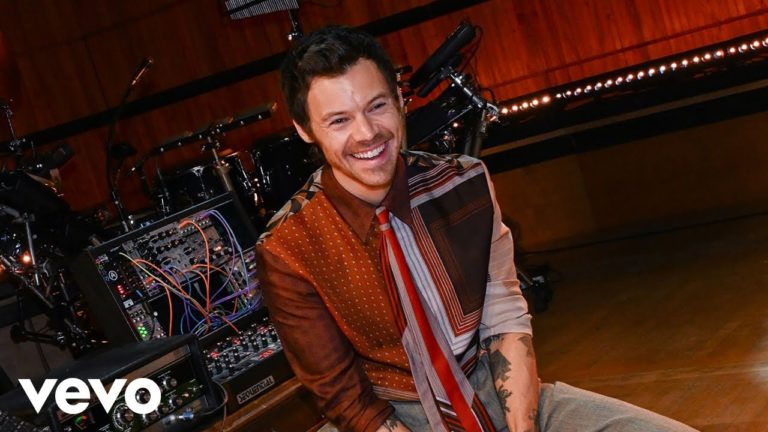
Harry Styles is giving “Aperture” room to breathe. The pop star brought his new single to the BBC Radio 1 Live Lounge, turning in a version that fans are calling his best yet. The arrangement is lush and expansive, built on a standout intro and a vocal that sounds fresher and freer than ever.

Video: Rogue Wave Return With A Five-Song Live Session For KEXP

0

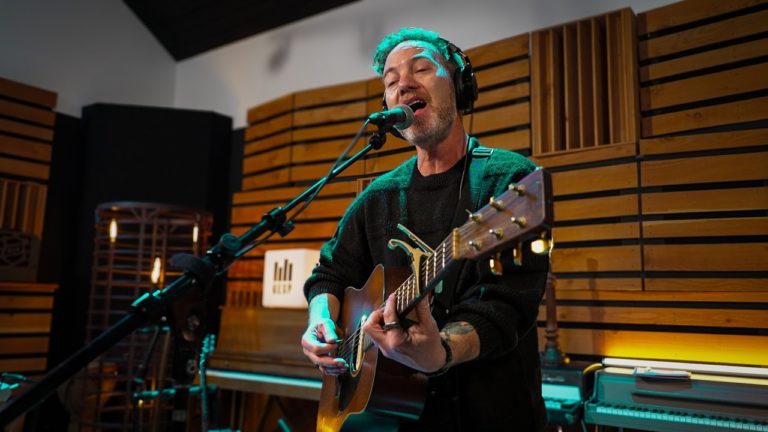
Rogue Wave are back, and the welcome is overdue. KEXP captured the indie favorites live at 25th Street Recording in Oakland during Noise Pop 2026, running through a five-song set that spans fresh arrangements of old favorites and a couple of inspired covers. Zach Rogue leads the band through “Bird On A Wire,” “Falcon Settles Me,” “Endless Shovel,” “Aesop Rock,” and a closing take on The Stone Roses’ “She Bangs The Drums,” backed by Pat Spurgeon, Graham LeBron, Masanori Christianson, and Jon Monahan.

Video: Daryl Hall & John Oates Light Up New York With Their Complete 1985 Liberty Concert

0

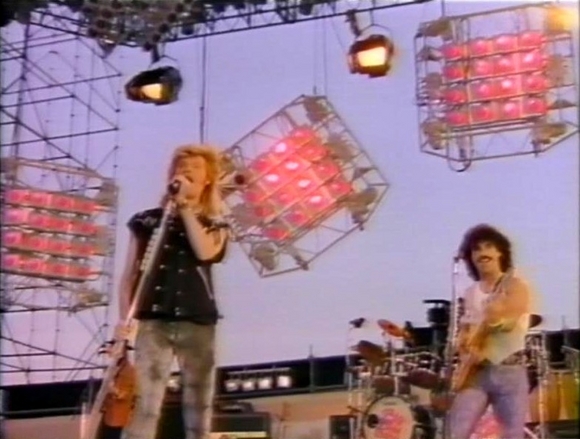
This one’s a time capsule. Hall & Oates’ complete 1985 Liberty Concert in New York captures the duo at the absolute peak of their powers, ripping through a setlist stacked with hits like “Out Of Touch,” “Rich Girl,” “Maneater,” and “You Make My Dreams.” Daryl Hall and John Oates are in commanding form, backed by a phenomenal band featuring G.E. Smith and Tom Wolk, the kind of players who turn a great show into an unforgettable one.

Video: Harry Styles Makes A Tears For Fears Classic His Own With “Everybody Wants To Rule The World” In The Live Lounge

0

Harry Styles knows his way around a cover. The pop star stopped by the BBC Radio 1 Live Lounge to take on Tears For Fears’ “Everybody Wants To Rule The World,” bringing his signature warmth to the 80s classic. He leans on relaxed vocals and a full-band arrangement that lets the song breathe, with his control the standout and drummer Sarah Jones driving the whole thing with serious energy.

Video: Rob Zombie Unleashes Theatrical Chaos At The UK’s Download Festival In 2014

0

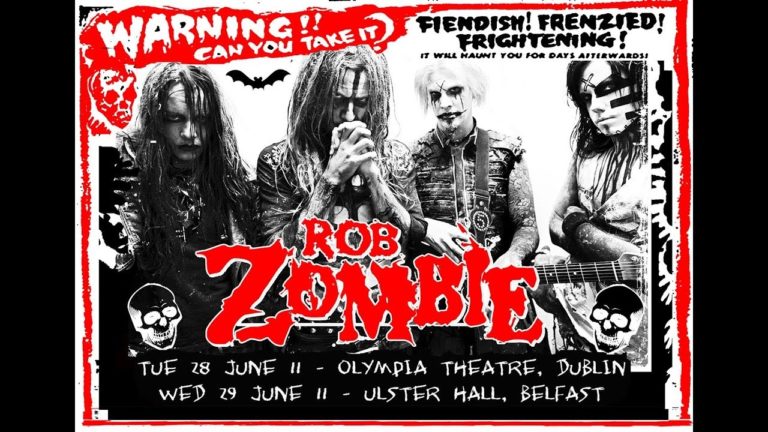
Rob Zombie picked the perfect day for it. On a fittingly spooky Friday the 13th in June 2014, the master of industrial horror rock brought his signature theatrical chaos to the massive crowd at the UK’s legendary Download Festival. Taking over the main stage at Donington Park, Zombie and his band delivered a high-octane set packed with fan favorites, a full-frontal assault on the senses complete with ghoulish stage props, frantic energy, and the sleazy, grinding riffs that have defined his career. The setlist ran through his catalog of macabre hits, igniting the audience with anthems like “Superbeast,” “Living Dead Girl,” and the White Zombie classic “More Human Than Human.”