Home Blog Page 628

5 Unknown Facts About Peter Gabriel’s 1978 Album ‘Peter Gabriel’ (aka Scratch)

Released on this day, June 2, 1978, Peter Gabriel (often called Scratch) was his second solo album after leaving Genesis—and it was full of bold choices. With Robert Fripp as producer and a willingness to explore both structure and sound, Gabriel turned experimentation into a work of art. Here are five surprising facts about the album that made it stand out—then and now.

1. The Album’s Title Isn’t Really “Scratch”—But Fans Gave It One
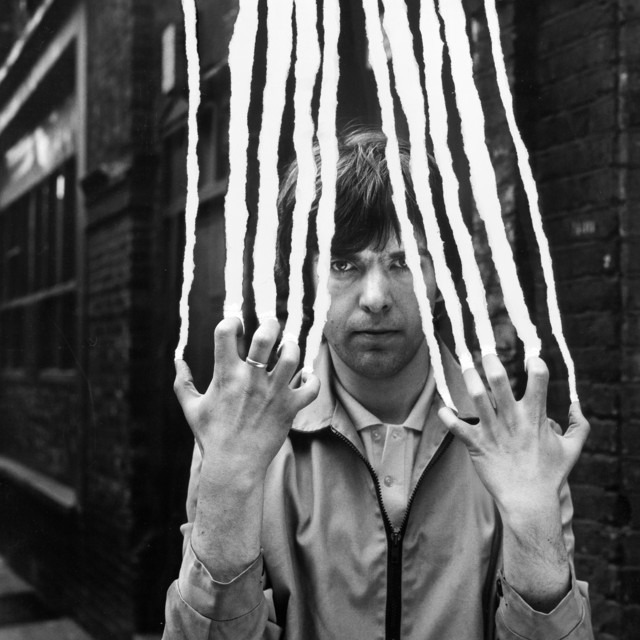
Peter Gabriel released his first four solo albums under the same name—Peter Gabriel. To tell them apart, fans gave them nicknames based on their cover art. This one? Scratch, thanks to the striking Hipgnosis-designed artwork that shows Gabriel scraping his own image apart. The effect was done with torn paper, Tipp-Ex (White Out to North Americans), and a lot of clever photography. Gabriel didn’t need a title—he had a visual story.

2. Robert Fripp Didn’t Want Full Credit—So He Got Creative With It
King Crimson’s Robert Fripp produced the album but felt that Gabriel had such a strong creative hand in it, he shouldn’t take full credit. His suggestion? “Produced by Robert Fripp for Peter Gabriel.” It was Fripp’s way of saying, “This isn’t all me—this is Peter’s vision too.” Fripp also introduced techniques like “secret reverb” (if you could hear it, it was too loud) and used Frippertronics on the haunting track “Exposure.

3. “On the Air” Was About a Fantasy Radio Star Named Mozo
Gabriel’s song “On the Air” introduced Mozo, a lonely outsider who builds a new identity on shortwave radio. It was more than a song—it was part of a bigger universe Gabriel had imagined, with fragments of Mozo’s story appearing across future albums. “On the Air” became the sound of someone escaping into static and wires to become something more. Gabriel even explored turning Mozo into a film character.

4. “D.I.Y.” Was Inspired by Punk’s Spirit—but Done Gabriel’s Way
Rather than mimic the Sex Pistols, Gabriel channeled their do-it-yourself energy into something more acoustic and structured. He wrote “D.I.Y.” as a response to the punk wave but kept it uniquely his own, filled with time signature changes and playful musical details. The song even includes a processed voice spelling out “do it yourself.” The message? You have the power to create, and you don’t need permission.

  1. 5. Creative Tension Sparked the Album’s Raw Sound
    Fripp and Gabriel didn’t always agree. They debated arrangements, argued over synths, and even clashed on vocal takes. Gabriel wanted lightness, Fripp wanted rawness. That friction didn’t break the project—it shaped it. Songs like “White Shadow” and “On the Air” show the results of those push-pull moments: intricate, unpredictable, and totally unique. It wasn’t polished—it was alive.
  2. Peter Gabriel may have come from friction and left turns, but it laid the foundation for everything that followed. The experiments with texture, character, and sonic space became part of Gabriel’s creative DNA. That willingness to explore—musically and emotionally—would eventually lead to the refined, global, and groundbreaking sound of So in 1986. Every scratch, glitch, and whispered lyric on this album was a step toward something even bigger. Massively bigger.


60 Legendary Left-Handed Musicians Who Changed Music Their Own Way

Lefties make up just 10% of the world’s population, but they’ve given us some of the most unforgettable music of all time. From soul-shredding guitar solos to thunderous drumming and genre-bending creativity, these 25 left-handed musicians prove that greatness doesn’t follow the rules—or the dominant hand. Here’s to the legends who flipped instruments, rewrote norms, and rocked the world… left-handed.

Albert King
Played a Flying V guitar upside-down and became one of the most influential blues players of all time. His signature sound influenced Clapton, Vaughan, and Hendrix.

Al McKay
The groove-master behind Earth, Wind & Fire’s rhythm section. His left-handed guitar playing powered hits like “September” and “Boogie Wonderland.”

Ashley MacIsaac
The Canadian fiddler plays left-handed with fiery flair, bringing Cape Breton-style music to global stages with punk-rock intensity.

Barbara Lynn
A pioneering R&B artist who wrote, sang, and played left-handed guitar on her own tracks, including the classic “You’ll Lose a Good Thing.”

Bun E. Carlos
As drummer for Cheap Trick, Carlos brought left-handed swing and precision to arena-ready power pop hits throughout the ’70s and ’80s.

Carl Philipp Emanuel Bach
Though not confirmed as left-handed, his father, J.S. Bach, once noted his left hand was more developed, suggesting early left-hand dominance.

Cheyenne Kimball
The teen pop-rock prodigy played left-handed guitar and delivered emotionally resonant performances as a solo artist and member of Gloriana.

Charlie Watts
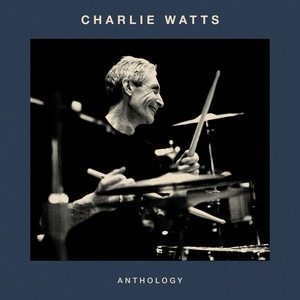
The Rolling Stones drummer led with elegance and restraint. A jazz-lover at heart, his left-handed tendencies helped create the band’s signature groove.

Courtney Barnett
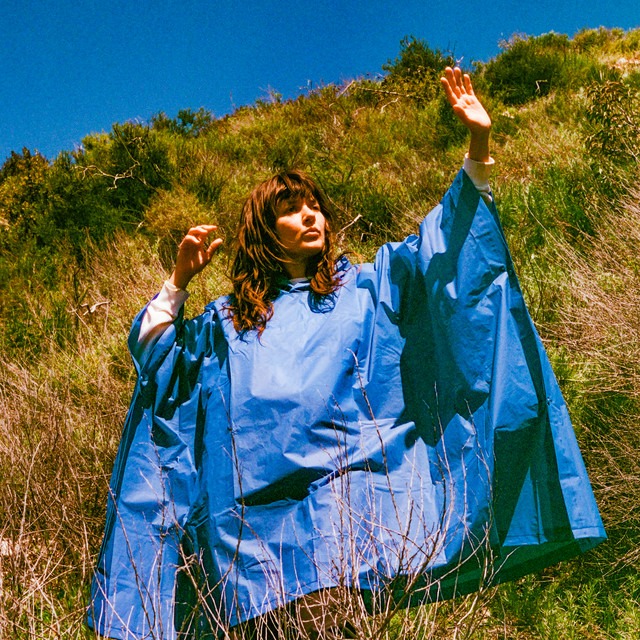
The Aussie indie rock star strums a left-handed guitar with deadpan brilliance and sharp-witted lyrics that have earned her global acclaim.

David Bowie
Naturally left-handed but taught himself to play right-handed due to the scarcity of left-handed guitars in post-war Britain. A true shapeshifter.

Dennis Wilson
The only surfer in the Beach Boys and a left-leading drummer who brought a unique swing and later wrote one of the band’s most emotional tracks, “Forever.”

Dick Dale
The King of Surf Guitar played left-handed with breakneck speed and power, influencing generations of guitarists with songs like “Misirlou.”

Dominic Howard
Muse’s powerhouse drummer is left-handed, and his dynamic, theatrical playing style anchors the band’s towering space-rock sound.

Doyle Bramhall II
Plays guitar left-handed with the strings upside-down, creating a smooth, expressive blues-rock tone that’s unmistakably his own.

Elliot Easton
Lead guitarist for The Cars, Easton’s left-handed solos were crisp, stylish, and catchy—perfectly matching the band’s polished new wave vibe.

Elizabeth Cotten
Created her own fingerpicking style by playing a right-handed guitar upside-down. Her folk classic “Freight Train” is a masterclass in subtlety.

Eric Gales
A blues-rock phenom who plays guitar left-handed and upside-down, praised for his explosive solos and emotional phrasing.

Ernie C
The lead guitarist for Body Count, Ernie’s left-handed shredding brought heavy political power to Ice-T’s metal band.

Gerald Casale
As a founding member of DEVO, Casale brought left-handed bass grooves to new wave with satirical edge and robotic style.

Greg Sage
The Wipers’ frontman played blistering, emotional punk guitar left-handed and inspired the grunge movement along the way.

Gruff Rhys
Welsh songwriter and Super Furry Animals frontman who strums left-handed while crafting dreamy, surreal psych-pop soundscapes.

Jo Callis
Best known for his work with The Human League, this left-handed multi-instrumentalist added depth to the synth-pop world of the ’80s.

Jimi Goodwin
The Doves frontman is a lefty who switches instruments with ease—playing bass, guitar, and drums during the band’s soaring Britpop anthems.

Jimi Hendrix
The most iconic left-handed guitarist of all time. Flipped and restrung his guitar, changing the sound of rock forever with “Purple Haze” and “Voodoo Child.”

Joe English
As drummer for Paul McCartney & Wings, English played with dynamic left-handed style on hits like “Listen to What the Man Said.”

Joan Armatrading
The British singer-songwriter writes and plays guitar left-handed, delivering heartfelt, genre-crossing songs since the 1970s.

John Lennon
While not fully left-handed, Lennon was ambidextrous and often sketched and performed actions with his left hand—including some iconic guitar work.

John Cale
As a member of the Velvet Underground, Cale added haunting left-handed viola and bass playing to the band’s avant-garde sound.

Justin Bieber
Bieber is ambidextrous but usually strums guitar with his left hand. His lefty acoustic performances have become a signature of his live shows.

Kurt Cobain
A proud left-handed guitarist who made grunge mainstream. He played a flipped Fender Jaguar and inspired millions with his raw sound.

Malina Moye
One of the few left-handed women to break through in rock guitar, blending funk, blues, and soul with fiery stage presence.

Maria Taylor
Singer-songwriter Maria Taylor plays guitar left-handed, blending delicate melodies and heartfelt lyrics across indie-folk and pop records.

Mdou Moctar
This Niger-born guitarist fuses traditional Tuareg melodies with left-handed shredding, gaining global acclaim for his desert-blues sound.

Michael Stipe
The R.E.M. frontman writes left-handed and occasionally plays guitar that way too—bringing unique phrasing to the band’s introspective anthems.

Mike Bordin
Faith No More’s drummer plays open-handed and left-dominant, giving their explosive songs extra punch. Also backed Ozzy Osbourne live.

Miley Cyrus
Left-handed by birth, Miley was trained by her dad to play guitar right-handed, but she continues to favor her left for most tasks.

Omar Rodríguez-López
From The Mars Volta to At the Drive-In, Omar’s left-handed chaos turns every guitar line into a trip through the unknown.

Otis Rush
A Chicago blues legend who played guitar left-handed with the strings upside-down. His slow-burn solos influenced Eric Clapton and Stevie Ray Vaughan.

Paul Gray
The late Slipknot bassist laid down thundering, complex riffs with his left hand, adding depth to the band’s furious sound.

Paul McCartney
The world’s most famous left-handed bassist. McCartney flipped his Hofner violin bass and wrote the soundtrack to generations.

Phil Collins
A lefty who played a reversed drum kit in Genesis, later becoming a global solo superstar with hits like “In the Air Tonight.”

Richard Barth
A 19th-century composer and violinist noted for favoring his left hand—an unusual trait for classical musicians of his time.

Ringo Starr
Though he drums on a right-handed kit, Ringo leads with his left, creating a unique, swingy feel that defined the Beatles’ rhythm section.

Robin Campbell
The UB40 guitarist is a proud lefty who’s kept the band’s reggae-pop grooves flowing for decades with his smooth strumming style.

Shawn Lane
A legendary shredder known for his speed and soul, Lane was a lefty who influenced modern virtuosos despite his tragically short life.

Slim Whitman
Country singer and yodeling legend who played left-handed, inspiring Paul McCartney’s early guitar style.

Stella Parton
Younger sister to Dolly, Stella plays guitar left-handed and has released dozens of albums blending country, gospel, and folk influences.

Stewart Copeland
The Police’s drummer is ambidextrous but often leads with his left hand, adding energy and polyrhythms to the band’s sound.

Tim Armstrong
As the gritty voice behind Rancid, Tim plays guitar left-handed and keeps punk alive with raspy vocals and ska-infused riffs.

Tony Iommi
Heavy metal’s godfather. After a factory accident, Iommi customized his guitar to play left-handed and helped launch Black Sabbath.

Toronzo Cannon
Chicago blues guitarist and CTA bus driver turned star, Cannon’s left-handed fretwork has lit up stages with power and heart.

Zacky Vengeance
Avenged Sevenfold’s co-lead guitarist brings powerful left-handed rhythm work to some of the 2000s’ biggest metal anthems.

They flipped guitars, rethought rhythms, and carved their names into music history—left-hand first. And while right-handers may dominate the charts in numbers, these southpaws dominate in style, sound, and soul.


5 Surprising Facts About Charlie Watts That Make Him Even Cooler Than You Remember

Before there were pyrotechnics, tour buses, and 60,000 fans singing “Jumpin’ Jack Flash,” there was a quiet, jazz-obsessed kid from Wembley with a banjo head for a drum and a dream of playing like Chico Hamilton. Charlie Watts never chased the spotlight—he brought dignity and swing to it instead. Here are 5 fun and surprising things about the man behind the drum kit that prove his story is just as fascinating as his beat.

1. He Didn’t Even Want to Be a Rock Drummer—At First
Charlie Watts grew up with jazz in his bones. His earliest heroes weren’t rockers—they were bebop giants like Charlie Parker and Jelly Roll Morton. When someone first asked him to play rhythm and blues, he thought they meant jazz played slowly. He joined the Rolling Stones almost reluctantly, never chasing stardom but eventually helping to define it with every understated stroke. His approach brought a jazz sensibility to rock and roll—and made him utterly irreplaceable.

2. He Sketched Every Bed He Slept In on Tour
Starting in 1967, Watts began drawing the hotel beds he slept in on the road. By the early 2000s, he’d filled over a dozen diaries. These weren’t doodles but meditations. While others partied after shows, Watts quietly opened his sketchbook, documenting his strange and temporary homes. It was one of many ways he stayed grounded, showing the inner life of a man who always kept one foot in the real world, even as his band soared through history.

3. He Designed the Rolling Stones’ Tour Stages and Album Art
Before joining the Stones, Charlie worked as a graphic designer, and he never stopped using that eye for detail. He created early album art and even designed the stage sets for some of the band’s biggest tours—including the lotus-shaped stage for their 1975 U.S. tour. He wasn’t just keeping time on the drums—he was shaping the band’s visual identity, proving that rhythm isn’t limited to music alone.

4. He Never Learned to Drive—But Loved Collecting Cars
While the rest of the Stones raced around in sports cars, Charlie had a different approach. He collected classic cars, not to drive them, but to admire their beauty. He never got a driver’s license. His garage was like a museum of elegance and engineering—because to Charlie, the shape of a Ferrari mattered more than its speed. It was another example of how he appreciated artistry in all its forms, even with the engine off.

5. He Turned Down the Playboy Mansion for the Game Room
During the band’s famously hedonistic 1972 U.S. tour, the Rolling Stones were invited to the Playboy Mansion. While others mingled with models, Charlie made a beeline for Hugh Hefner’s game room. That was his style—cool, quiet, and happily uninterested in the chaos around him. He once said he’d never fit the rock star stereotype, and he never tried to. That refusal to perform offstage is part of what made him so admired on it.

Charlie Watts wasn’t flashy, but he was unforgettable. Whether designing stages, sketching hotel beds, or quietly anchoring one of the greatest rock bands in history, he always did it his way—calmly, tastefully, and with absolute precision. He didn’t need drum solos to make an impact. All he needed was a snare, a suit, and a sense of style that never wavered.

Aloe Blacc and 2ŁØT Channel Memento Mori in Bold New Single “Immortal”

0

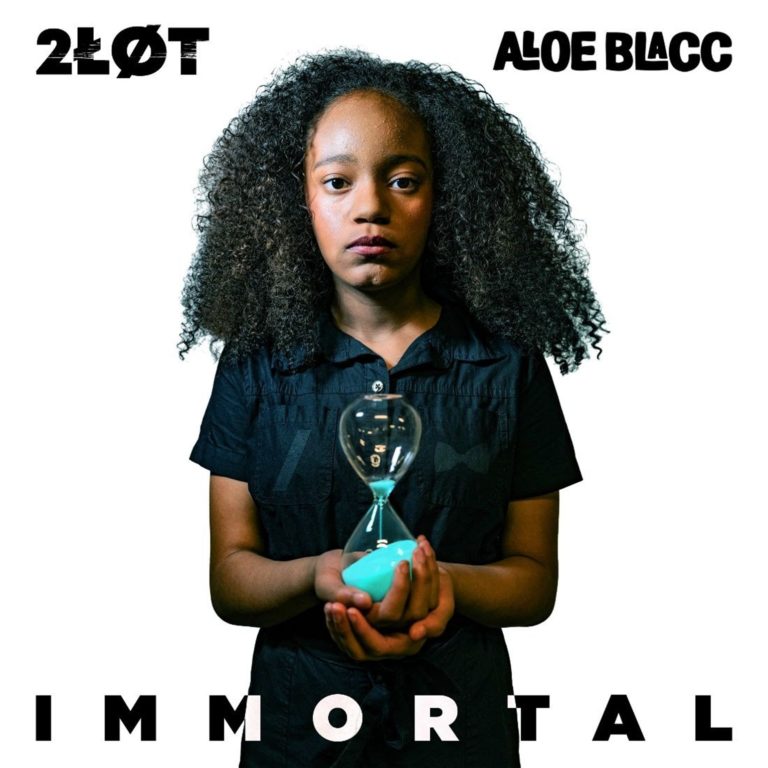
The emerging genre-bending outfit 2ŁØT has teamed up with GRAMMY-nominated artist Aloe Blacc to release “Immortal,” a bold new single inspired by the ancient philosophical concept of memento mori—a Latin phrase meaning “remember you must die.” Far from morbid, the song is a rallying cry for courage and clarity, urging listeners to reflect on life’s impermanence and ask a single transformative question: What would I do if I weren’t afraid?
 
Fusing 2ŁØT’s genre-defying sound with Aloe Blacc’s soul-stirring voice, “Immortal” is both a spiritual provocation and a musical revelation. The track draws its power from the timeless reminder that tomorrow is never guaranteed—and dares the listener to live fully, bravely, and with purpose. “‘Immortal’ is about unlocking the part of you that’s waiting to be set free,” says Rudy Love Jr. of 2ŁØT. “It’s a reminder that fear is the biggest barrier between you and your true calling. If you knew your time was short, what would you change?”
 
“From a lyrical standpoint, it’s one of the strongest songs I’ve been a part of writing,” reflects Aloe Blacc. “This line—‘when I tumble over, the broken pieces fit together better in the end’—reminds me of the Japanese art of kintsugi, where broken pieces are mended with gold. The broken parts of us, when they’re healed, become the strongest parts of us.

Earlier today, Aloe Blacc and 2ŁØT appeared on KTLA in Los Angeles for the first live performance of their new single “Immortal.” The stripped-down set offered a raw, intimate take on the track’s powerful message, paired with a short on-air interview that gave viewers a behind-the-scenes look at the collaboration and the meaning behind the song.

“Immortal” builds on the conceptual foundation laid by 2ŁØT’s debut album Entropy, which draws from another powerful law of existence: the 2nd Law of Thermodynamics, which states that all systems tend toward disorder over time. Where Entropy explored how to make peace with chaos, Immortal calls for action—to transcend it.

With singles like “Never Knew You,” “Arrow of Time” (featuring Michael Kang of The String Cheese Incident), and “Call For Me,” 2ŁØT has built a body of work rooted in personal resilience, social impact, and philosophical depth. In April, the band released “Entropy (Paul Oakenfold Remix),” a euphoric reinterpretation of their title track by one of dance music’s most legendary producers. It marked the band’s entry into the global electronic scene, expanding their reach without compromising their core message.
 
On June 13–14th, Aloe Blacc and 2ŁØT will reunite to perform “Immortal” live at Somewhere Festival & Conference in Wichita, KS—one of the most socially conscious festivals in the country. The event will feature genre-spanning acts like Deadmau5, Flying Lotus, and Suki Waterhouse, as well as immersive tech, interactive art installations, and a community-driven conference. For more information and to purchase tickets, visit: somewhere-fest.com.
 
At the heart of Somewhere Festival is a shared ethos with 2ŁØT: that music can be a vehicle for meaning, connection, and social change. Festival organizers partner with nonprofits including The Phoenix, 1 Million Strong, Create Campaign, and others to offer real-world opportunities for impact—turning the festival into a launchpad for community action and dialogue.
 
“It’s about giving artists the space to create, but also the tools to build sustainable careers,” adds Rudy Love Jr. “The knowledge to make an impact, and the community to support them along the way.”
 
Grammy nominated Aloe Blacc has long been a voice for the people—a globally recognized singer, songwriter, and changemaker whose music uplifts, empowers, and unites. Best known for genre-defying anthems like the international smash “Wake Me Up” with Avicii, anthemic “The Man,” and the timeless “I Need A Dollar,” Blacc continues to inspire through sound and purpose. In 2025, Aloe Blacc returns with his most mission-driven work to date: a new full-length album titled Stand Together. Stand Together is both a celebration and a call to action, with Blacc’s signature soul and sincerity woven into every note. With powerful new music, renewed purpose, and a voice as vital as ever, Aloe Blacc stands at the center of culture and conscience in 2025—reminding the world that one good song really can change everything.
 
2ŁØT is a five-piece band known for their genre-defying sound, Electronic Jam Music (EJM). Formed during challenging times, the group combines elements of hip hop, soul, funk, jazz, rock, and electronic music. Comprised of members Rudy Love Jr. (vocals / keys), Omar Jawar (drums), Sage Judd (keys), Chase Koch (guitar), and Robert Trusko (bass), 2ŁØT is dedicated to advocating for social change, focusing on overcoming addiction, supporting youth, and criminal justice. Their mission is to activate and inspire audiences through both their music and their commitment to making a difference.
 

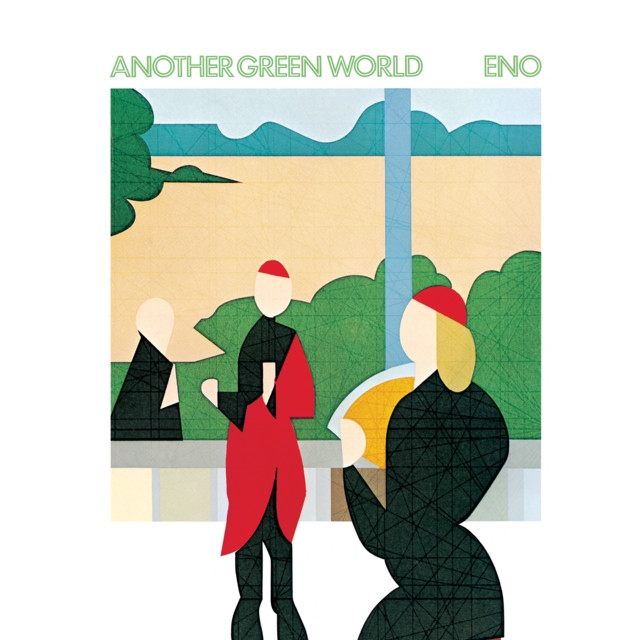
5 Surprising Facts About Brian Eno’s ‘Another Green World’

Brian Eno’s 1975 album ‘Another Green World’ didn’t chase trends or follow formulas. It explored sound the way a painter explores a blank canvas—slowly, curiously, with endless possibilities. With only five vocal tracks and a dream team of collaborators, this record became a quiet landmark in music history. Here are five facts that reveal how deep the creativity runs.

1. Phil Collins Was Given a Musical Puzzle to Solve

Before his solo career exploded, Phil Collins showed up to Eno’s sessions with nothing but his sticks and an open mind. Instead of handing him a chart, Eno gave him a list of numbers. Each one stood for a chord or sound. Alongside bassist Percy Jones, Collins turned the numbers into rhythm, using instinct and improvisation to build something that felt spontaneous and alive. It wasn’t about rules—it was about sound in motion.

2. John Cale’s Viola Added a Strange and Beautiful Layer

John Cale, already known for his work in The Velvet Underground, played viola on two tracks. His string parts brought a mysterious, elegant energy to the sessions. Cale’s background in classical and experimental music gave the album a texture that was rich and unpredictable. His contribution wasn’t flashy—it quietly shaped the emotional tone of the music.

3. Robert Fripp Turned a Science Lesson Into a Guitar Solo

When Eno asked Robert Fripp to record the guitar part for “St. Elmo’s Fire,” he described something very specific: the movement of electricity in a Wimshurst machine. Fripp picked up his guitar and created a sound that shimmered and surged with controlled energy. That solo became one of the most distinctive parts of the album. It captured Eno’s vision with a few minutes of fearless playing.

4. Some of the Most Vivid Tracks Were Just Eno, Alone in the Studio

Tracks like “The Big Ship” and “In Dark Trees” weren’t built by a band. They came from Eno layering sounds on his own. Using synthesizers, tape loops, and drum machines, he created entire environments. These pieces feel like quiet weather patterns, each one with its own mood and atmosphere. Eno treated the studio like an instrument, finding new ways to express feeling through sound.

5. The Lyrics Came From Gibberish That Turned Into Meaning

Eno didn’t start with written lyrics. He sang nonsense syllables over the music until the right sounds appeared. From those sounds, words began to form. It was like listening for the language hiding inside the melody. This method gave songs like “I’ll Come Running” and “Golden Hours” a loose, dreamlike quality. They sound like memories you can’t quite place but still recognize.

‘Another Green World’ feels like a walk through a place where music grows on trees and time stretches out in every direction. With each listen, new textures come forward, and familiar parts reveal new details. It’s not just an album—it’s a creative space that’s still open to anyone willing to explore it.

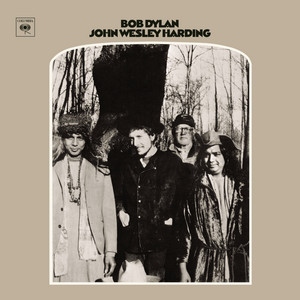
5 Surprising Facts About Bob Dylan’s ‘John Wesley Harding’

It was sparse. It was mythic. It was quiet, and then it wasn’t. Released at the tail-end of 1967, ‘John Wesley Harding’ found Bob Dylan trading in the psychedelic swirl of the era for something far more haunting. But behind its no-frills sound are stories worth turning the volume up for. Here are 5 things you might not know about this understated masterpiece.

1. Dylan Recorded the Whole Album in Under 12 Hours

Dylan wasn’t in the studio long—he didn’t need to be. The entire album was tracked in just three short sessions in Nashville, totaling less than 12 hours of studio time. Most artists need that much time just to set up the drums. With only bassist Charlie McCoy and drummer Kenny Buttrey backing him, Dylan knocked out songs like “All Along the Watchtower” in just a few takes. No overdubs. No frills. Just pure songwriting, straight to tape.

2. The Songs Were Not From ‘The Basement Tapes’

Although it was recorded just after the famous Basement Tapes sessions with The Band, none of the songs from ‘John Wesley Harding’ came from that legendary stockpile. Dylan had written a brand-new batch of songs, separate from the rambling, rootsy demos that would later surface. While the world assumed he’d raid the vault, he surprised everyone with a fresh set of parables, folk tales, and cryptic ballads that sounded like they came from a different century.

3. “All Along the Watchtower” Became More Famous Without Him

When Dylan first recorded “All Along the Watchtower,” it was just two minutes long, built on a simple three-chord cycle. No guitar solos. No explosions. Enter Jimi Hendrix. His version, released just months later, reimagined the track with stormy guitars and turned it into a rock anthem. Dylan was so blown away by Hendrix’s take that he began performing it more like Jimi than himself. It’s one of the rare times a cover version redefined the original artist’s own song on stage.

4. There Might Be Beatles Hidden in the Trees

Look closely at the album cover. No, closer. Rumors flew in 1968 that the knots in the tree bark behind Dylan contained hidden faces of the Beatles. Photographer John Berg was skeptical at first—until he turned the photo upside down and saw what everyone else was seeing. Was it intentional? He swore it wasn’t. But Dylan had met the Beatles by then, and he certainly loved a good puzzle. Whether it was divine coincidence or playful mysticism, fans have been squinting ever since.

5. The Title Spelled the Outlaw’s Name Wrong—and No One Knows Why

The real John Wesley Hardin was one of the most infamous gunfighters in the Old West. Dylan named the album after him but added a “g” to the surname—making it “Harding.” Was it a typo? A poetic twist? A deliberate distancing? To this day, Dylan has never explained it, and those close to him haven’t either. Wesley Stace, who later adopted the stage name John Wesley Harding, joked that “no one’s ever bothered to ask.” And that’s just the kind of mystery Dylan might appreciate most.

Linkin Park Electrifies UEFA Champions League Final Kick Off Show with Stunning Set

0

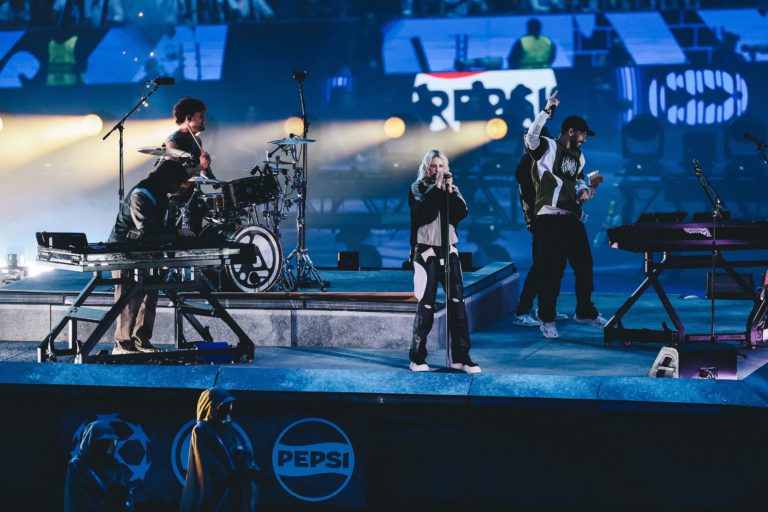
Global superstars LINKIN PARK delivered an exceptional headline performance at the Munich Football Arena for this year’s UEFA Champions League Final Kick Off Show presented by Pepsi. One of the world’s most iconic rock bands performed live, just minutes before the biggest match in European club football, with the eagerly awaited show providing an unforgettable experience for the thousands in the stadium and the millions watching around the globe.

The UEFA Champions League Final Kick Off Show presented by Pepsi took place in front of a sold-out crowd ahead of the epic encounter between Paris Saint-German and FC Internazionale Milano, with LINKIN PARK entertaining fans with an exhilarating performance, featuring fan favourite tracks, an iconic stage and world-class special effects.

LINKIN PARK recently made a triumphant return to the spotlight with the release of FROM ZERO, their first new music in seven years. The album hit the top of the charts across the globe and features #1 smashes “Heavy Is The Crown” and “The Emptiness Machine,” which surged as the biggest rock song of 2024 with over 250 million streams. Notably, as reported by Billboard, LINKIN PARK was the one-and-only rock band to cross over 2 Billion yearly streams in 2024. 

Now, the band has taken its brand-new era to new heights by uniting football and music fans with a mesmerising performance featuring a setlist representing the best of their legacy, past and present. Throughout the performance LINKIN PARK gave a typically energetic performance of iconic hits including “In The End” and “Numb”, as well as “Heavy Is The Crown” and “The Emptiness Machine” from their new FROM ZERO (Deluxe Edition) album, which launched on 16th May. Fans can catch LINKIN PARK on their From Zero World Tour now, with all dates and remaining tickets available at linkinpark.com/tour

The setlist also featured a segment of the track LINKIN PARK recorded to mark the official announcement in April, blending the band’s iconic sound with the culture of European football. Incorporating sounds inspired by UEFA Champions League football – the strike of leather, the whistle of a free kick, the sounds of the most passionate fans in the world – the segment was a direct nod to football fans in the stadium and around the world.

LINKIN PARK’s standout performance combined masked performers in flowing capes, dynamic flag choreography, and cutting-edge SFX to create a visually striking blend of music, movement, and design.

With historically deep roots in sport and music, Pepsi is proud to present the UEFA Champions League Final Kick Off Show each year by merging the worlds of football and music together to create one night of epic entertainment. The momentous event continues to showcase the most iconic artists and unites football and music fans alike through one compelling spectacle, embodying Pepsi’s ‘Thirsty For More’ global platform.

Art Garfunkel Performs Historic Tel Aviv Show Amid Missile Threats, Joined by Son Art Jr. and Aviv Geffen

0

In a moment of profound cultural significance, music icon Art Garfunkel took the stage last night in Tel Aviv’s Ha’Yarkon Park before a cheering crowd of over 50,000, becoming the first international artist to perform in Israel since the devastating attack at the Nova Music Festival in October 2023.

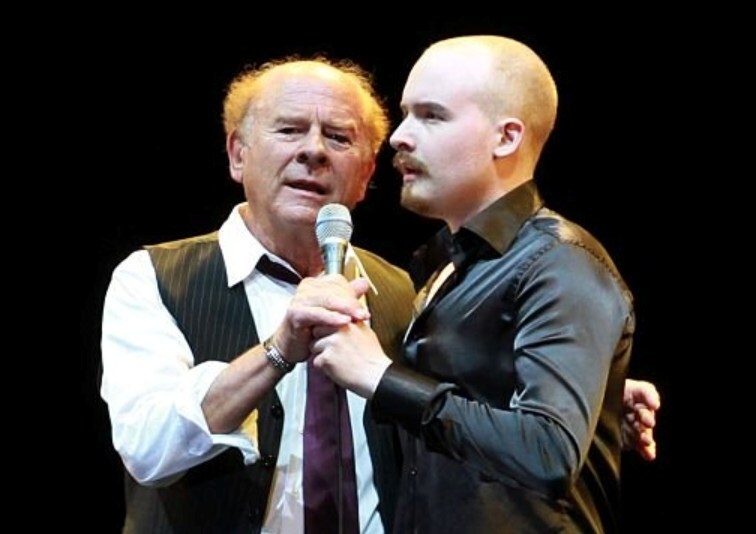
Garfunkel was joined by his son, Art Garfunkel Jr. Prior to Garfunkel and Garfunkel taking the stage air raid sirens were heard due to missile fire reportedly targeting the concert in Tel Aviv. The father and son duo proceeded with their performance against a backdrop of missile interceptions.

The emotional appearance of the family pair performing at Neshef Rock as Garfunkel & Garfunkel, soared on timeless classics including Bridge Over Troubled WaterThe Sound of Silence, and Mrs. Robinson, weaving a musical thread between generations, resilience, and hope.

The family duo’s most recent album, Garfunkel & Garfunkel Father and Son, is available worldwide from BMG. Art Garfunkel Jr. was reported by Rolling Stone as one of Germany’s most successful artists and continues to extend his own audience.

“I am happy to be here in Israel,” the 83-year-old performer told tens of thousands of cheering fans. “If Israel is in danger, the entire world is in danger,” Garfunkel told the audience. “We all must not allow fear to define or control us. I am here with my entire family. Music is my gift from God, and my son Art Jr. is carrying our torch of music forward.

Adding to the emotional weight of the evening, Garfunkel also performed The Boxer alongside Israeli rocker Aviv Geffen, uniting two eras of musical expression in a rare collaboration.

Art was accompanied by his wife of many years, Kathryn “Kim” Luce Garfunkel—who is currently launching a new design and licensing initiative—and their younger son, Beau. The Garfunkel family’s presence underscored the personal nature of this landmark event.

Notably, Garfunkel has largely stepped back from public appearances and media in recent years making this live concert from Israel a rare and powerful moment.

RISE Festival Unveils Massive New Stage ‘The Horizon’ for 10th Anniversary in Mojave Desert

0

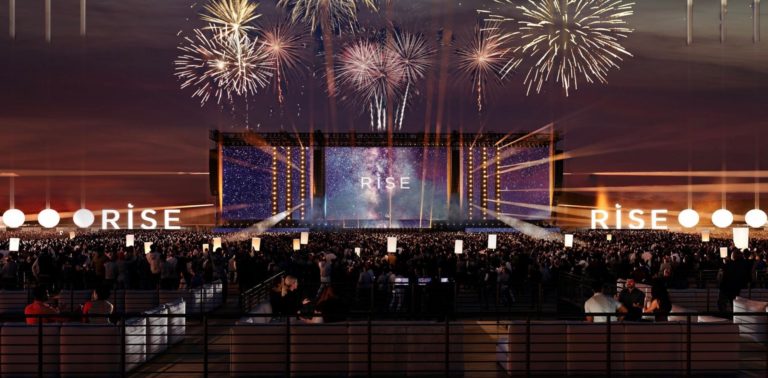
 In celebration of its 10th anniversary, RISE Festival is proud to unveil The Horizon – a sleek new massive open-air stage designed to rival the most iconic performance spaces in the world. Set against the vast expanse of the Mojave Desert, The Horizon makes its debut October 3 through 5, 2025, transforming the Jean Dry Lake Bed near Las Vegas into a breathtaking, high-impact concert environment.

Blending architectural vision with large-format production, The Horizon will host an incredible lineup of world-class talent, led by RÜFÜS DU SOLCalvin Harris, and John Mayer – each headlining a night of the festival’s three-day run.

Blending state-of-the-art production with architectural elegance, The Horizon introduces a dramatic new chapter for RISE – known for its iconic and inspiring Sky Lantern Ceremony. This year, the festival expands its footprint and its creative ambition, offering two exceptionally unique and immersive stages in an outdoor festival of art, music, and light.

With 18 separate screens spanning a stage more than 200 feet wide and anchored by 12 stadium towers, The Horizon is built to rival the most celebrated stages in the world – pairing panoramic sound design with immersive video and lighting. Designed to hold thousands in an open desert setting, the new stage brings headliner-scale performances to the Mojave Desert while preserving the spiritual energy that defines RISE.

“We are unbelievably excited to debut The Horizon,” said David Oehm, CEO of RISE Festival. “We have created something that doesn’t just house performances – it amplifies them and elevates them. It’s bold, breathtaking, and built for celebration.”

While The Horizon leads RISE into a new era, The Compass remains the centerpiece of the RISE experience. The longtime home of the RISE Sky Lantern Ceremony, the open air 360° Compass stage is surrounded by thousands of torches accented by comfortable lounges and gathering spaces for the collective sky lantern release beneath the stars.

With more than 40,000 sky lanterns released each night into the moonlit sky, many RISE guests are moved to tears by the remarkable sight of thousands of heartfelt messages gently ascending to the heavens.

Together, The Compass and The Horizon are two totally unique stages that will certainly create a once in a lifetime experience for RISE guests and will set the tone for the next decade of RISE.

Founded in 2014, RISE is the world’s largest sky lantern festival featuring a collective celebration that blends art, music, and light in an unforgettable shared experience in the Mojave Desert south of Las Vegas. Returning for its 10th anniversary October 3rd, 4th, and 5th, 2025, RISE is a luminous celebration of light, sound, and soul, bringing people together in a shared journey of elevation and joy. As a non-profit charitable event, RISE is a collective art project dedicated to advancing the arts through education, appreciation, and financial support for artists around the world. Visit www.RISEfestival.com for more information.

Vienna Sends Strauss’s “Blue Danube” to Space With Live Bryant Park Celebration

0

The Vienna Tourist Board is hosting a unique free event in New York’s Bryant Park on June 1 to celebrate a historic transmission into deep space.

In partnership with the European Space Agency (ESA) and the Wiener Symphoniker (Vienna Symphony Orchestra), Vienna will launch Johann Strauss II’s “The Blue Danube” waltz towards NASA’s Voyager 1. This interstellar broadcast is part of a larger celebration marking the 200th anniversary of Strauss’s birth and rectifies its omission from the original Voyager Golden Records.

Norbert Kettner, Director of the Vienna Tourist Board, said: “Stanley Kubrick’s 2001: A Space Odyssey made the ‘Danube Waltz’ the anthem of space – the omission of the most famous of all waltzes from the 1977 Voyager Golden Record is a cosmic mistake that we are correcting.”

The event is the culmination of Vienna’s “Waltz Space” campaign, which invited fans to symbolically send a note of the song into space, with 13,743 note sponsors. The campaign aims not just to commemorate Strauss’s birth, but to reinforce Vienna’s status as the music capital of the world, positioning it as a destination full of rich musical experiences.

The free event will take place in Manhattan’s Bryant Park from 1:00 to 5:00 PM: