Home Blog Page 631

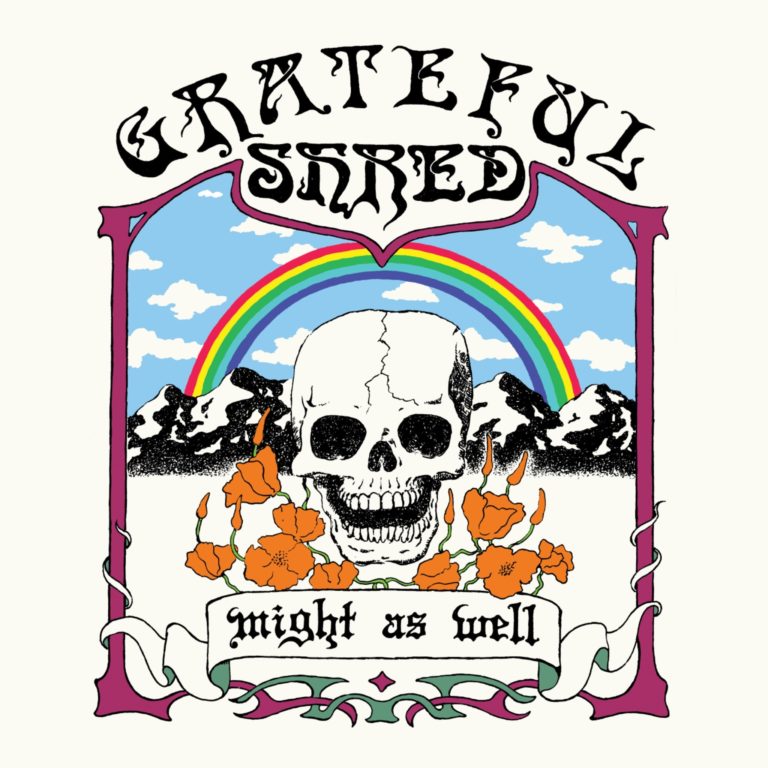
Grateful Shred Releases ‘Might As Well,’ Reimagining Unrecorded Grateful Dead Songs with Indie-Americana Flair

0

Defying conventional tribute-band boundaries, Grateful Shred delivers their first studio statement, Might As Well, out today via their Liberty Hair Farm Records imprint. The album resurrects eight Grateful Dead compositions that never received formal studio treatments, reengineering them through Shred’s lens of sun-bleached harmonies and freewheeling improvisation. Featuring vocals from acclaimed multi-instrumentalist Mikaela Davis, the project transforms archival blueprints into an indie-Americana odyssey.

The swampy strut of “Sweet Baby”—a Donna Jean Godchaux-penned rarity once relegated to mid-’70s Dead setlists—anchors the album with visceral immediacy. Mikaela Davis’ lead vocals smolder over a buoyant groove, while the band locks into a sweat-soaked Southern rock swing. 

Elsewhere, the album’s revelatory take on “Jack Straw” emerges as a standout moment, blending crisp vocal harmonies with the band’s signature loose-tight chemistry. Opening with a breezy, American Beauty-era shuffle, the track builds into a whirlwind of symbiotic groove, with guitarists Austin McCutchen and John Lee Shannon delivering a masterclass in controlled chaos, capturing Shred’s lightning-in-a-bottle musicianship.

The project, spearheaded by bassist/producer Dan Horne, was recorded at Glendale’s UHF Studio. Unfurling like a kaleidoscope of reimagined Dead lore, each additional track honors the Grateful Dead’s artistry while injecting Shred’s DNA– telepathic cohesion, pedal steel sheen, and an ironclad swinging rhythm section. “Sitting In Limbo” drips with dubby basslines and hazy organ textures, while “Jack A Roe” leans into ragged cowboy-ballad authenticity. “Cassidy” becomes a jangly, harmony-drenched anthem, and “Lazy River Road” floats on Laurel Canyon-inspired vocal layers. 

The release ignites the next leg of Grateful Shred’s Spring/Summer 2025 Tour, featuring this weekend’s two night album launch at San Francisco’s The Independent (June 6 + 7) and a homecoming finale at LA’s Fonda Theatre (June 13). Limited tickets remain at gratefulshredmusic.com.

Grateful Shred – Spring / Summer Tour Dates 

June 6 + 7 – San Francisco, CA – The Independent  

June 13 – Los Angeles, CA – The Fonda Theatre  

June 14 – San Diego, CA – The Observatory NP  

June 15 – San Luis Obispo, CA – Live Oak Music Festival  

August 1 – Oklahoma City, OK – The Zoo Amphitheatre  

October 16 – The Belly Up – Aspen, CO

October 17 – Cervantes Masterpiece Ballroom – Denver, CO

October 18 – Washington’s – Ft. Collins, CO

October 31 – The Capitol Theatre – Port Chester, NY 

** More dates to be announced soon!

Tickets for all tour dates are on sale now at gratefulshredmusic.com

Might As Well Tracklist:  

Jack Straw  

Sweet Baby  

Sitting In Limbo  

Next Time You See Me  

Cassidy  

Jack A Roe  

To Lay Me Down  

Lazy River Road  
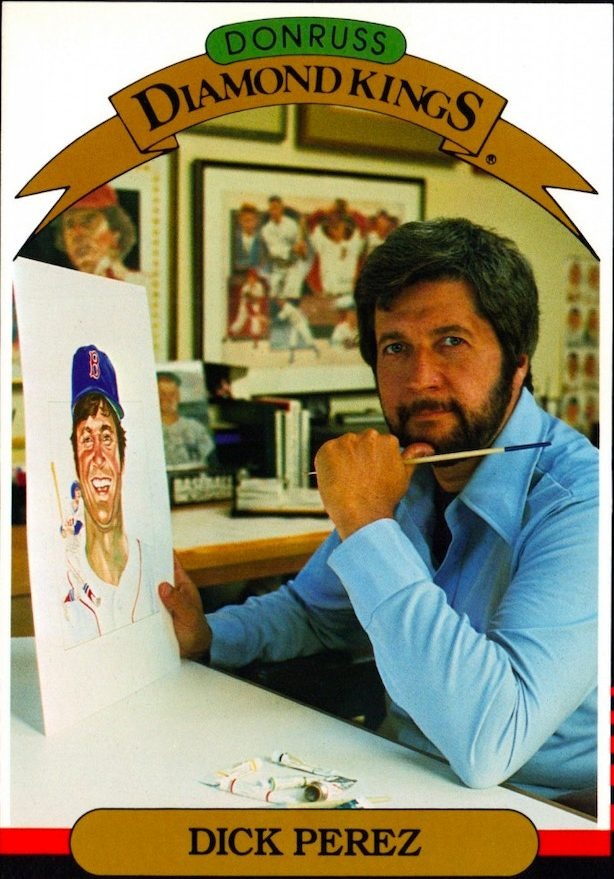
‘The Diamond King’ Documentary on Baseball Artist Dick Perez Now Streaming

0

The McCaw and Votiv have released their latest film The Diamond King online, available to rent or buy on Apple TV, Prime Video, Google TV and Kinema.

For over 20 years, Dick Perez was the official artist of the Baseball Hall of Fame, creating thousands of portraits that uniquely commemorated America’s most iconic pastime. The Diamond King delves into the remarkable life of Mr. Perez, telling a history of baseball through his life and work.

Narrated by actor John Ortiz (Will TrentBad Monkey), the film offers a profound look at Perez’s career, exploring his creative process and the meticulous care he invests in each portrait.

Featuring interviews with Perez himself, family members, fellow artists, and more, the film showcases his artistic vision and lifelong dedication to baseball. Perez was born in Puerto Rico and moved to the United States at a young age, growing up in Harlem, where he discovered his dual loves: baseball and art.

Dick’s early connection to the game eventually drove him to create some of the most iconic portraits in baseball history, blending realism with an emotive touch, resonating deeply with fans. His unique style celebrates both the athleticism and personal journeys of baseball’s greatest players.

Perez first gained widespread recognition in the 1980s via his collaboration with Donruss, creating the iconic Diamond Kings baseball card series, which revolutionized the art of sports cards. Through this and other projects, Perez’s work has graced the walls of the National Baseball Hall of Fame, private collections, and major sports exhibitions worldwide.

Viewers gain a deep appreciation for the skill, heart, and reverence that Perez pours into every brushstroke, making each piece not only a likeness, but a celebration of baseball’s heritage. For more insight, watch John Ortiz discuss the project on the MLB Network Podcast.

As Steve Kopian at Unseen Films said, “This film is so good that I suspect that it will end up on endless repeat on the MLB channel for years to come. What an absolute delight. Highly recommended for any baseball or art fan.”

Esperanto Communities from Canada and U.S. Unite for 2025 Binational Congress in Toronto

0

One diaspora community is eager to show that fraternity between Canadians and Americans is alive and well, regardless of what their politicians get up to. 

Esperanto-speakers from across the two nations will gather for the 2025 Esperanto Binational Congress (‘Dulanda Kongreso’ in Esperanto) this July, hosted by Esperanto-Toronto, and organized jointly by the Kanada Esperanto-Asocio (KEA) and Esperanto-USA. The theme of the Congress will be “Friendship across borders”. True to the reason for which the Esperanto language was created, the gathering seeks to bring together diverse people from across borders, to advance the cause of peace and mutual understanding.

“The congress will focus on themes of language and cultural connection, showcasing how Esperanto bridges gaps between diverse communities.” declared Garry Evans, KEA President. “During trying times such as these, Esperanto highlights how ordinary folks can get along harmoniously, no matter what mud the politicians might be slinging. The very reason Esperanto was invented as an international language was to promote peace, understanding and comraderie; if you look at our diverse community across North America, it is plainly evident that it has succeeded at this in spades.”

Esperanto-USA President Brandon Sowers noted “It is with a warm heart that American Esperantists accept the invitation to come to Toronto this year. We will hold a joint bi-national convention this summer with our Northern comrades in a show of solidarity of Americans with Canadians. Our community has always come together in the face of adversity. Today it is more important than ever to show that we, as people, can transcend petty politics in the spirt of friendship and community.”   

“Unlike ethnic languages, Esperanto belongs to no nation or national group.” noted Andy Blair of Esperanto-Toronto. “Anyone can become an Esperantist, and a member of our diaspora by

simply learning the language. The incredible thing is, the strength of community that has formed between us, despite Esperanto-speakers coming from all nations, and walks of life. “If unrelated people of every background, race, religion and nationality can come together in community so strongly across borders, I think it shows to our fellow Americans and Canadians that anything is possible, that we don’t have to follow the politics of division so prevalent today.” he added.

The Binational Congress, taking place at Toronto Metropolitan University July 5-14th, promises engaging presentations, discussions, music, book launches, cultural presentations, and networking opportunities… all in the language Esperanto. It will also feature a week-long crash course in Esperanto, the Nord-Amerika Somera Kursaro (NASK). Official exams will be held for those aiming to certify their language level, from post-beginner to advanced.

“Toronto’s vibrant, international environment offers an ideal setting for our gathering.” said Blair. “There are few, if any, cities in the world that are ore multicultural than Toronto. We welcome those curious about Esperanto, and language enthusiasts alike, to join us.”

Esperanto, an international auxiliary language created in 1887 by a poor Polish eye doctor named Ludwig Zamenhof, aims to foster understanding and peaceful communication among people from diverse nations with its easy-to-learn, logical structure. Never meant to replace any national language, but to supplement, Esperanto has evolved from a constructed language project into a vibrant global movement, connecting millions of speakers worldwide.

In Canada and the United States, Esperanto’s history starts before 1900 and continues to thrive. The Kanada Esperanto-Asocio and Esperanto-USA lead efforts to promote Esperanto language education and culture. In recent years, a combination of in-person and online events has drawn newcomers, infusing the movement with fresh energy and a growing base of younger enthusiasts.

Canada’s Walk of Fame and Stingray Launch 13th Annual RBC Emerging Musician Program with $100K+ in Prizes

0

Canada’s Walk of Fame has launched its 13th annual RBC Emerging Musician Program – now, in partnership with Stingray! – one of Canada’s most successful programs supporting aspiring Canadian musical artists, aged 15 to 35. A hugely important initiative that has supported over 65 winners over its span, including the likes of Faouzia, LU KALA, Tafari Anthony, Mattmac and more.

With total prizing valued at more than $100,000, the program provides up-and-coming musicians with cash prizes and opportunities to take their careers to the next level, including private studio time at the prestigious Metalworks Studios, showcase opportunities at Festival du Voyageur in Winnipeg, Manitoba and Departure Fest in Toronto, a creative workshop at Arthaus in Toronto, introductions to established and renowned artists, access to music industry professionals, exposure to audiences and media, as well as artist development and video funding. Submissions will be accepted until Sunday, July 13, 2025, at 11:59 p.m. EST.

Musicians between 15 and 35 simply need to submit an audio or video clip and fill out the submission form at emergingmusician.ca for their chance to win $20,000 (and much more)! Enter here.

The Starting Line Returns with ‘Eternal Youth,’ First Album in 18 Years, and Nationwide Tour

0

With all original members still intact since their 1999 formation, The Starting Line is back with Eternal Youth, their long-awaited fourth studio album – set for release on September 26, 2025. Marking their first full-length in 18 years and their first-ever self-release, the album will arrive on the band’s own newly launched label, Lineage Recordings.

Leading the way is “Sense of Humor,” the album’s debut single and a bold reintroduction to a band that has never sounded more focused. Made with a spirit of bolstered confidence, the longstanding band has built a composed foundation upon sonic agelessness and brutal honesty. The song exemplifies the pinnacle of The Starting Line’s finest melodic tact, while simultaneously tapping into the peaking adrenalin of an infinitely young heart.

Vocalist Ken Vasoli shares “Spending a quarter of a century with all our original members and spanning an 18 year gap between the most recent albums is not easy. There is an often unspoken trust and love for the result of us making music together all this time. We couldn’t have survived a life in the music industry without a proper sense of humor. This song reminds us what absurdities we’ve been faced with in life, and focuses on the original spirit of influences that brought us together in the first place. We are doing our best to tap into what feels timeless about music and boil our approach down to the essentials. We’re continuously honing and improving which is exhilarating when thinking of the future of this band. It feels like we make a great team.”

Fresh off their SOLD OUT annual hometown holiday gathering Reconnect, as well as performances at When We Were Young Festival, Slam Dunk, Let’s Go Fest, and more, the band will embark on the Eternal Youth Tour – their first full-scale headlining run in years. With dates selling out nationwide, the demand confirms what longtime fans already know: The Starting Line never left the hearts of the scene they helped build.

Eternal Youth tracklisting:

1. I See How It Is

2. Sense Of Humor

3. Blame

4. Circulate

5. Defeating The Purpose / Pivot

6. Eternal Youth

7. Curveball

8. Granted

9. Enjoyment

10. Humility

11. Benchmark

Upcoming tour dates:
Aug 22 | New York, NY @ Irving Plaza
Aug 23 | Boston, MA @ Paradise Rock Club
Aug 24 | Buffalo, NY @ Electric City
Aug 26 | Mckees Rocks, PA @ Roxian Theatre
Aug 27 | Detroit, MI @ Saint Andrew’s Hall
Aug 29 | Chicago, IL @ The Vic Theatre
Aug 30 | Nashville, TN @ Brooklyn Bowl Nashville
Aug 31 | Atlanta, GA @ The Masquerade
Sep 01 | Charlotte, NC @ The Underground
Oct 18 | Las Vegas, NV @ When We Were Young 2025
Oct 19 | Las Vegas, NV @ When We Were Young 2025
Oct 21 | Seattle, WA @ The Showbox
Oct 23 | San Francisco, CA @ The Regency Ballroom
Oct 24 | Los Angeles, CA @ The Novo
Oct 25 | Tempe, AZ @ Marquee Theatre
Oct 26 | San Diego, CA @ The Observatory North Park

PRESIDENT Unveils New Single “Fearless” Ahead of Download Festival Debut

0

PRESIDENT have revealed the next presidential address under the name of “Fearless.” The powerful single follows on from the multi-million streaming debut proclamation of “In The Name Of The Father.”

Operating at the intersection of heavy music, electronic experimentation, and cinematic atmosphere, PRESIDENT doesn’t conform to the traditional structures of genre or identity.

Prioritizing intent over image and shifting the spotlight away from those who have created this movement, firmly onto the music itself. PRESIDENT will make their debut at Download Festival on June 15.

George Jones Honored with Statue on Ryman Auditorium’s Icon Walk

0

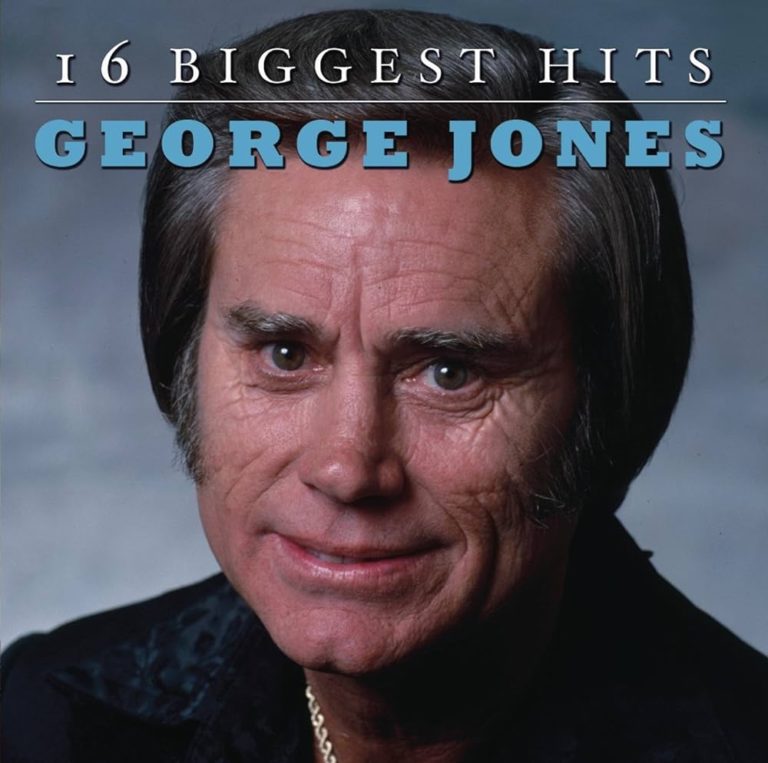
Ryman Auditorium unveiled the latest addition to its Icon Walk Tuesday, June 3, with a statue honoring George Jones, who is widely revered as one of the most influential voices in country music history. The detailed bronze likeness was added to the permanent outdoor exhibition on the historic venue’s grounds, ensuring the country music legend will forever remain part of the soul of Nashville.

Created to honor those who have made significant contributions to the historic venue and Music City, Jones’s statue joins the likenesses of icons Charley Pride, Loretta Lynn, Little Jimmy Dickens, and Bill Monroe. Jones’s beloved wife, Nancy, and daughter Susan attended the unveiling, along with country music star Jamey Johnson, who honored Jones during the ceremony.

“The Ryman was one of George’s favorite places to play music,” said Nancy. “He truly revered it as the ‘Mother Church’ and loved the acoustics. To have his legacy live on here permanently, and to see all the people who joined us today and continue to embrace him and his music, means so much to our family.”

The Ryman team collaborated once again with artist Ben Watts, the talent behind the existing four statues. Each statue takes approximately one year to complete and reflects the deep reverence for these trailblazers and their ties to the Mother Church of Country Music.

“Today, we add another legendary artist to the Ryman’s Icon Walk by bringing forth George Jones, who had a fabulous career and is revered as one of the greats,” said Ryman Hospitality Properties Executive Chairman Colin Reed. “The Ryman and the Opry were lucky to be a part of George’s story for so many years, so we feel it is only fitting to have George added here among these other stars who have made a lasting impression on country music.”

Visitors can find Jones standing at the northwest corner of the building near the venue’s driveway on Fifth Avenue next to the likeness of Charley Pride, Loretta Lynn and Bill Monroe, the Father of Bluegrass Music. Country music’s Little Jimmy Dickens stands atop the Ryman’s main steps facing Fourth Avenue, greeting each and every guest as they arrive.

A Grand Ole Opry member since 1956, Jones graced the Ryman stage across multiple eras of his life and career, contributing to the Opry’s rise as a cornerstone of country music. The statue unveiling coincides with celebrations surrounding the Opry’s 100th anniversary, marking Jones’ enduring place in its history.

5 Ways Sly and the Family Stone Changed Music Forever

You might not know his name off the top of your head, but Sly Stone helped shape the sound of modern music more than most people realize. As the frontman of Sly and the Family Stone, he brought together soul, rock, funk, gospel, and psychedelia into a bold, new musical language. The influence of their music stretches from the 1960s right up to what you hear in pop, hip-hop, and R&B today.

1. He Took Funk Further Than Anyone Before Him
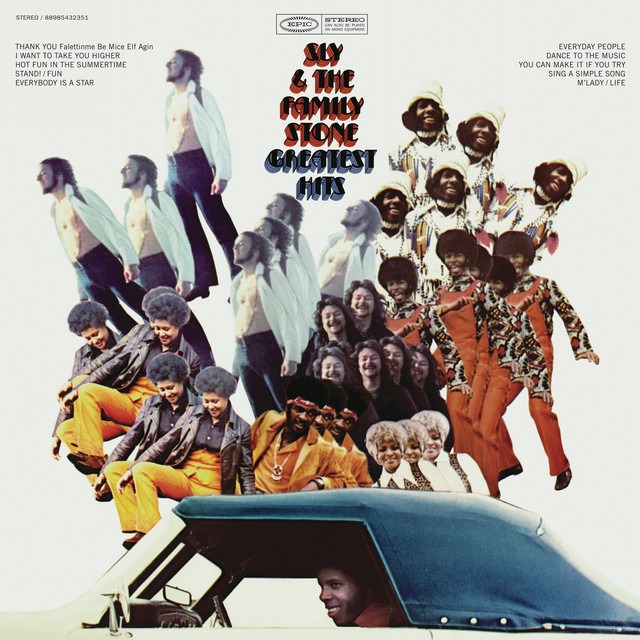
While James Brown laid the groundwork for funk, Sly Stone expanded it into something wilder, more colorful, and more inclusive. He layered it with distortion, psychedelia, horns, and joy. With hits like “Dance to the Music” and “Thank You (Falettinme Be Mice Elf Agin),” Sly created songs that demanded attention, both on the dance floor and in your soul. He made funk less about repetition and more about emotional release. His vision opened the door for artists like Prince, George Clinton, and even Daft Punk, who’ve built careers on blending genres and pushing sonic boundaries. Without Sly, funk wouldn’t be what it is—and pop music might never have learned how to truly groove.

2. He Formed the First Truly Integrated Band in Popular Music
In 1966, long before “diversity and inclusion” became buzzwords, Sly Stone formed a band that was both racially integrated and gender-diverse. At a time when America was torn apart by civil rights struggles and segregation, Sly and the Family Stone put Black, white, male, and female musicians on the same stage. They grooved together, with equal visibility and respect. It wasn’t a gimmick; it was a vision for what America could look like. This made them one of the most powerful symbols of unity in popular music, influencing everyone from The Beatles to Bruce Springsteen to contemporary artists like Alabama Shakes. The idea that bands could—and should—look like the real world? That started with Sly.

3. He Brought Social Commentary into the Funky Mainstream
Sly Stone proved that music could be political without being preachy, and that deep messages didn’t have to kill the party vibe. Songs like “Everyday People” and “Family Affair” tackled big issues like racism, class division, and family dysfunction with heart, wit, and danceable rhythms. He wrapped protest in groove, making serious subjects accessible to everyone. At a time when radio playlists were dominated by love songs and surf rock, Sly was out here singing about injustice, alienation, and the American dream—with a smile and a bassline that slapped. This approach paved the way for artists like Marvin Gaye, Stevie Wonder, and later Public Enemy and Kendrick Lamar, all of whom brought activism into their lyrics without ever losing their musical edge.

4. He Revolutionized the Rhythm Section
One of the most underrated revolutions in music came from Sly’s bassist, Larry Graham, who pioneered the slap bass technique while playing in the Family Stone. That signature “thump and pop” sound you hear in funk, disco, R&B, and even hip-hop? It starts here. Sly created an environment where experimentation was encouraged, and the result was a rhythm section that didn’t just support the music—it drove it forward like a freight train. Add to that Sly’s use of early drum machines and multi-tracking on There’s a Riot Goin’ On, and you’ve got the blueprint for decades of production innovation. Today’s producers owe a huge debt to the grooves Sly built from the ground up.

5. He Inspired Generations Across Genres
Sly and the Family Stone’s fingerprints are all over modern music. Prince borrowed their stage presence and genre-bending style. The Red Hot Chili Peppers adopted their funk-punk aggression. Hip-hop legends like Dr. Dre, A Tribe Called Quest, and Public Enemy sampled Sly’s beats and lyrics. Even modern pop artists like Bruno Mars, Janelle Monáe, and Anderson .Paak carry Sly’s DNA in their slick, funky sound. His ability to blur the lines between genres made it okay for artists to color outside the lines—and in doing so, he created a roadmap for generations of musicians to come. Sly’s music didn’t belong to one category, and now neither does anyone else’s.

Sly Stone may be gone, but his legacy is everywhere—in the basslines of your favorite songs, in the boundary-breaking bands you love, and in the idea that music can bring people together across race, gender, and background. He was that good.

82 Funky Facts About Sly Stone: Remembering the Genius Who Changed Music Forever

Today, the world lost one of its brightest, boldest, and most unpredictable musical visionaries. Sylvester Stewart — Sly Stone to the rest of us — died on June 9, 2025, at the age of 82. A funk pioneer, a soul preacher, a psychedelic superhero, and a genre-fusing genius, Sly was the mastermind behind some of the most joyful, radical, and influential music ever made.

He made us dance. He made us think. He made us get higher.

Here are 82 funky, fabulous, sometimes freaky facts about Sly Stone — the man who Falettinme Be Mice Elf Agin.

  1. Sly Stone was born Sylvester Stewart in Denton, Texas.
  2. He got the nickname “Sly” in grade school after a classmate misspelled his name as Slyvester.
  3. He grew up in Vallejo, California, in a deeply religious household.
  4. His family was part of the Church of God in Christ and encouraged musical expression.
  5. The Stewart kids formed a gospel group called The Stewart Four.
  6. Their first record came out in 1956 — Sly was just 13.
  7. Sly played multiple instruments by age 11: guitar, bass, keys, and drums.
  8. As a teen, he joined a doo-wop group called The Viscaynes — an integrated group that stood out.
  9. He briefly recorded solo under the name Danny Stewart.
  10. He studied music at Solano Community College in Vallejo.
  11. Sly worked as a DJ at San Francisco soul station KSOL in the ’60s.
  12. He famously played The Beatles and The Rolling Stones on air — unheard of at the time.
  13. He also worked as a producer for Autumn Records, helping shape the San Francisco sound.
  14. He produced early tracks for The Beau Brummels, The Great Society, and Bobby Freeman.
  15. Before the Family Stone, Sly played in a band called Sly and the Stoners.
  16. His brother Freddie played in Freddie and the Stone Souls.
  17. The two brothers merged their groups in 1966 to form Sly and the Family Stone.
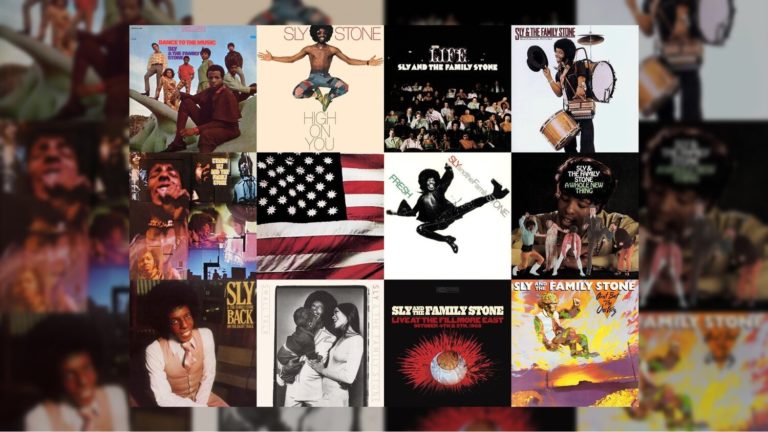
  18. Their debut album A Whole New Thing dropped in 1967 and didn’t chart — but critics loved it.
  19. “Dance to the Music” in 1968 changed everything — it was their first major hit.
  20. “Everyday People” hit #1 and became an anthem for unity in 1969.
  21. The Family Stone was racially integrated and co-ed — a revolution in its own right.
  22. They were one of the few bands that could headline Woodstock and play Harlem’s Summer of Soul.
  23. Sly coined the phrase “Different strokes for different folks.”
  24. Larry Graham invented slap bass — partly because they didn’t have a drummer at one point.
  25. “Thank You (Falettinme Be Mice Elf Agin)” was one of the first songs to feature slap bass.
  26. The song hit #1 in early 1970 and sold over a million copies.
  27. Sly carried a violin case full of drugs on tour.
  28. He often used PCP, which contributed to his increasingly erratic behavior.
  29. His band’s late arrivals and no-shows became infamous by the early ’70s.
  30. In 1971, There’s a Riot Goin’ On marked a darker, more introspective turn.
  31. That album used drum machines and overdubs — groundbreaking for the time.
  32. Sly often played most of the instruments himself.
  33. The Family Stone started falling apart in the early ’70s.
  34. Larry Graham was fired after a fistfight and replaced by Rustee Allen.
  35. Despite inner turmoil, Fresh (1973) was another critically acclaimed gem.
  36. “If You Want Me to Stay” remains one of Sly’s most beloved tracks.
  37. Small Talk (1974) was the last full Family Stone album of the classic era.
  38. Sly released solo records under the Family Stone name to satisfy his label.
  39. He appeared on Funkadelic’s Electric Spanking of War Babies in 1981.
  40. In 1983, he was arrested for cocaine possession in Florida.
  41. In the ’80s, he collaborated with Jesse Johnson, Bobby Womack, and Earth, Wind & Fire.
  42. His solo single “Eek-Ah-Bo Static Automatic” appeared on the Soul Man soundtrack.
  43. He co-wrote and produced “Just Like a Teeter-Totter” for The Bar-Kays.
  44. He was supposed to collaborate with George Clinton on Ain’t But the One Way — but didn’t finish it.
  45. A bootleg of late-‘80s demos reveals he was still writing brilliant stuff in hiding.
  46. He reunited briefly with the Family Stone in 1993 for their Rock Hall induction.
  47. He didn’t stay long at the mic — in true Sly fashion, he dipped out halfway through the speech.
  48. He made a surprise appearance at the 2006 Grammys with a giant blonde mohawk.
  49. He left the stage before the tribute finished — on a motorcycle, no less.
  50. His 2011 album I’m Back! Family & Friends featured Jeff Beck and Bootsy Collins.
  51. He said he never stopped writing — just stopped releasing.
  52. Sly was reportedly homeless and living in a van in Los Angeles for several years.
  53. He sued his former manager for $50 million in unpaid royalties and initially won.
  54. The verdict was overturned on appeal in 2015.
  55. Sly’s daughter Novena Carmel is a musician and a radio host on KCRW.
  56. His other daughter Phunne is the child of trumpet player Cynthia Robinson.
  57. His son Sylvester Jr. briefly pursued a career in music engineering.
  58. His cousin Moses Tyson Jr. is a gospel musician.
  59. Bootsy Collins called Sly “the most talented musician I know.”
  60. Doris Day once sang “Que Será, Será” with Sly at a piano.
  61. He once clashed with Charles Manson at Terry Melcher’s house — no joke.
  62. His influence can be heard in everyone from Prince to Public Enemy.
  63. “The most sampled man in funk” might be a title Sly secretly holds.
  64. His music appeared in films like Idle Hands, The Animal, and Varsity Blues.
  65. The Red Hot Organization’s Red Hot + Dance featured a remix of “Thank You”.
  66. Different Strokes by Different Folks was a 2005 tribute with The Roots, Maroon 5, and more.
  67. He released a funky Christmas single in 2023: “Santa Claus Is Coming to Town (2023 Mix)”.
  68. His autobiography, Thank You (Falettinme Be Mice Elf Agin), came out in 2023.
  69. He told Questlove in Sly Lives! that he finally found peace in life’s quiet moments.
  70. His band inspired Motown, P-Funk, and everything Prince ever did.
  71. He made soul political and politics soulful.
  72. He didn’t invent funk, but he supercharged it.
  73. He believed music could unify people before that idea was trending.
  74. He once said, “All the squares go home” — and the squares listened.
  75. He performed barefoot at Woodstock.
  76. His keyboard style blended gospel chords with psychedelic effects.
  77. He never fit the mold, and he never tried to.
  78. His signature phrase, “I want to take you higher,” was both spiritual and literal.
  79. He released only 10 studio albums — and nearly every one changed the game.
  80. He was unpredictable, unforgettable, and utterly himself.
  81. He taught the world that funk wasn’t just a sound — it was a feeling.
  82. And even in silence, his music will always speak volumes.

Sly and The Family Stone was a multicolored, multi-gendered, multi-everything burst of soul and sound that made the world dance and wake up at the same time. He broke rules. He broke barriers. And sometimes, he broke hearts. But one thing’s for sure:

He never stopped being Sly.

Rest in power, maestro. Thank you for falettin’ us be mice elf agin.Tools

Lottery Expert Said These Are The 5 Most Drawn Numbers

0

By Mitch Rice

kip the birthday dates and lucky charms. BoyleSports crunched the numbers to uncover the 5 most drawn lottery numbers.

The research looked into 1,007 draws dating all the way back to the 10th October 2015, with the latest draw being on the 31st of May 2025. 

BoyleSports found that the five most frequently drawn lotto numbers are:

37:  This number has been drawn 121 times, making it one of the most frequently appearing numbers in the draw. Its most recent appearance was on Wednesday, May 14, 2025, just 20 days ago.

52: Also drawn 121 times, number 52 tied for the top spot and last showed up in the lottery results on Wednesday, May 14, 2025, 20 days ago.

39: With 120 appearances, number 39 is close behind the leaders. It hasn’t been seen in the draw since Wednesday, April 16, 2025, which was 48 days ago.

58: This number has appeared 116 times, most recently making its presence known on Wednesday, March 26, 2025, 69 days ago.

27: With 115 appearances, number 27 last occurred on Saturday, May 10, 2025, 24 days ago.

42: Rounding out the list, number 42 has been drawn 115 times, with its last occurrence dating back to Wednesday, April 30, 2025, 34 days ago.

While the statistics reveal clear patterns in which numbers appear most often, it’s crucial to understand that lottery draws operate on pure chance. Past frequency doesn’t influence future outcomes – each number has an equal probability of being selected in every single draw, regardless of its historical performance.

That said, many players find value in analysing these trends when making their selections. Whether you prefer to follow the “hot” numbers that appear regularly or you’re someone who believes in probability patterns, this data can serve as one factor in your number selection strategy. Ultimately, your lucky numbers are just as likely to win as any others, but having insights into draw history can add an extra layer of consideration to your ticket choices.

Data and information are provided for informational purposes only, and are not intended for investment or other purposes.