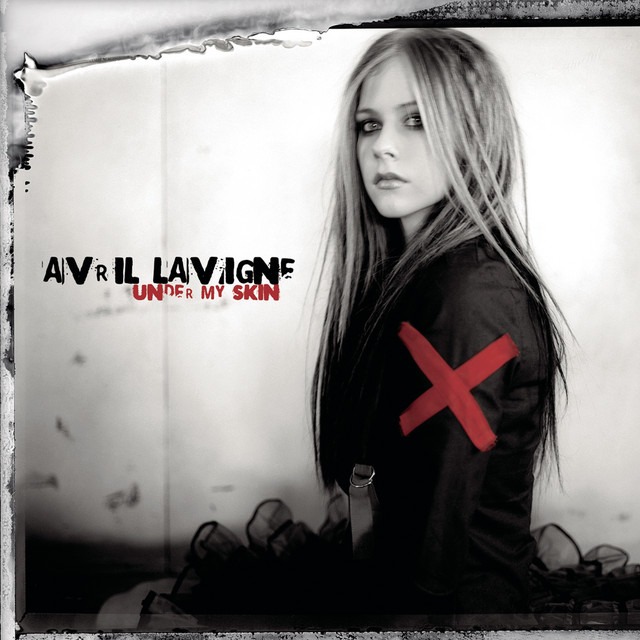
Before she was a pop-punk icon, Avril Lavigne was just a skater girl from Napanee with a notebook full of lyrics and a whole lot to say. In 2004, Under My Skin dropped like a gothic glitter bomb—darker, louder, and more emotionally raw than anyone expected. But beyond the hits and the eyeliner, this album has some wild behind-the-scenes stories. Here are 5 little-known facts that will make you want to spin it all over again.
1. The Album Was Born in a Malibu Beach House—With a Canadian Power Couple Behind It Forget fancy studios. Most of Under My Skin was written and recorded in a Malibu house owned by Chantal Kreviazuk and Raine Maida of Our Lady Peace. Lavigne and Kreviazuk first bonded over lunch after the 2003 SARS benefit concert in Toronto—and within days, they were writing non-stop in Maida’s home studio. The beach house became a creative haven and ground zero for Avril’s darker era.
2. “Nobody’s Home” Was Co-Written by Evanescence’s Ben Moody Ever wondered why “Nobody’s Home” sounds like it came straight from a haunted cathedral? That emotional wallop came courtesy of Ben Moody, fresh off his split from Evanescence. He not only co-wrote the track with Avril but also played guitar on it. It’s one of the rare moments where post-grunge, emo-pop, and Canadian angst collide perfectly.
3. Avril Directed the Sound By her second album, Avril wrote the words as usual, but also shaping the entire sound. She insisted on choosing guitar tones, drum arrangements, and song structures. Turns out, along with being the face of her career, she was the engine.
4. The “Nobody’s Home” Video Features Easter Eggs and a Moscow Tee In the emotional video for “Nobody’s Home,” Avril plays a runaway teen—but eagle-eyed fans caught some hidden gems. Her shirt has the Russian word “Москва” (Moscow), and the graffiti in the bathroom includes a heart with “A+D”—a sweet nod to then-boyfriend Deryck Whibley. Even in her most vulnerable moments, she kept the details personal.
5. “Take Me Away” Was Actually a Second Attempt at the Same Song Title The dramatic album opener “Take Me Away” wasn’t the first time Avril wrote a song by that name. An earlier version, co-written with The Matrix for Let Go, never made the final cut. But she clearly wasn’t done with the phrase. The Under My Skin version hits harder—more metal, more desperate, and way more Avril.
Under My Skin proved that Avril could evolve without losing her edge, could go darker without losing her spark. And nearly 20 years later, it still rocks just as hard. Time to crank it up and let those emo feelings back in—loud and proud.
Neil Young’s On the Beach, released on July 19, 1974, captures a moment suspended in emotional twilight. Part of the so-called “Ditch Trilogy,” it trades polish for feeling, control for rawness, and clarity for depth. While it now holds its place as a fan favourite and critical treasure, the album holds stories and turns few know. Let’s dig a little deeper into five lesser-known facts that drift along with the salty wind of On the Beach.
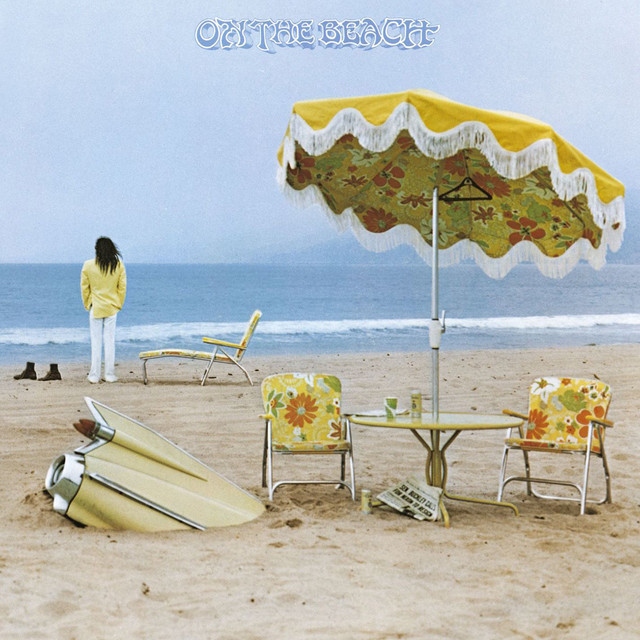
1. The Cadillac on the Cover Was Real—and Buried The iconic cover wasn’t a photomontage—it was fully staged. Neil Young and longtime collaborator Gary Burden hauled an actual 1959 Cadillac tail fin from a junkyard to the beach, stuck it into the sand, and added props like a yellow polyester jacket and local newspaper with the headline “Sen. Buckley Calls for Nixon to Resign.” The photo was shot on Santa Monica Beach by Bob Seidemann. Neil considered it one of his favorite covers, later saying the idea hit him like a “blot from the blue.” It matches the album’s tone perfectly: sunlit but somber, relaxed but haunting.
2. “Honey Slides” Fueled the Sessions Much of the album’s woozy atmosphere comes courtesy of “honey slides”—a mix of sautéed marijuana and honey introduced by Rusty Kershaw. The concoction reportedly hit like heroin and slowed the sessions to a dreamlike crawl. Musicians drifted in and out of consciousness while recording, which contributed to the album’s spaced-out mood. Neil later said, “A couple of spoonfuls of that and you’d be laid-back into the middle of next week.” The slow-motion feel of tracks like “Motion Pictures” can be traced directly back to the haze of the honey slides.
3. “Revolution Blues” Sparked Chaos in the Studio Inspired by Charles Manson, whom Neil had briefly known, “Revolution Blues” carried an undercurrent of paranoia and unease. Rusty Kershaw wanted the band to tap into that feeling and pushed them with wild theatrics. He smashed things in the studio to provoke a genuine sense of chaos, urging, “This is how you start a revolution!” The next take captured the mood perfectly, according to Kershaw. The song ended up as one of the fiercest, most electrified moments on the record—completely unlike the rest of the album’s tone.
4. The Side Order Was Reversed at the Last Minute Neil originally wanted the album to begin with “On the Beach” and end with “Walk On,” but producer David Briggs convinced him to flip the sides. Neil later admitted he regretted giving in, feeling that the album lost a sense of unfolding narrative. Interestingly, cassette and 8-track versions kept Neil’s intended running order. Fans today can argue both sides, but the decision shows how format and sequencing can shape a listener’s experience—and how a small choice leaves a lasting imprint.
5. “Ambulance Blues” Echoes Toronto’s Lost Haunts The closing track “Ambulance Blues” reflects on everything from political corruption to fading friendships, but it also contains a tribute to Toronto’s countercultural past. Lines like “Oh Isabella, proud Isabella, they tore you down and plowed you under” refer to a house where Neil and Rick James once lived at 88 Isabella Street. It was demolished in the ‘70s, and Neil immortalized it in song. The Riverboat, another Toronto reference, was where artists like Joni Mitchell, Gordon Lightfoot, and Simon & Garfunkel played—giving the song an emotional pull rooted in real places and memories.
On the Beach sways with heartbreak and reflection, sunshine and shadow. These hidden details help explain how a mellow album grew into something revered. It may have drifted into the world quietly, but the stories behind it still ripple across time.
When Closer was released on July 18, 1980, two months after Ian Curtis’s death, it was the end of Joy Division, and the beginning of their mythos. A desolate masterpiece that practically invented the vocabulary of emotional collapse in music, Closer is considered one of the greatest post-punk records ever made. But beyond the stark tombstone of its sound lies a collection of untold stories and fascinating footnotes. Here are five of them.
When Joy Division’s Closer landed on July 18, 1980, it became a farewell, a sonic tombstone, and the deepest echo of a voice already silenced. Released two months after Ian Curtis’s death, the album transformed grief into atmosphere, cementing its place as one of post-punk’s most chilling masterpieces. But beneath the frozen surface are stories you might not know. Here are five of them.
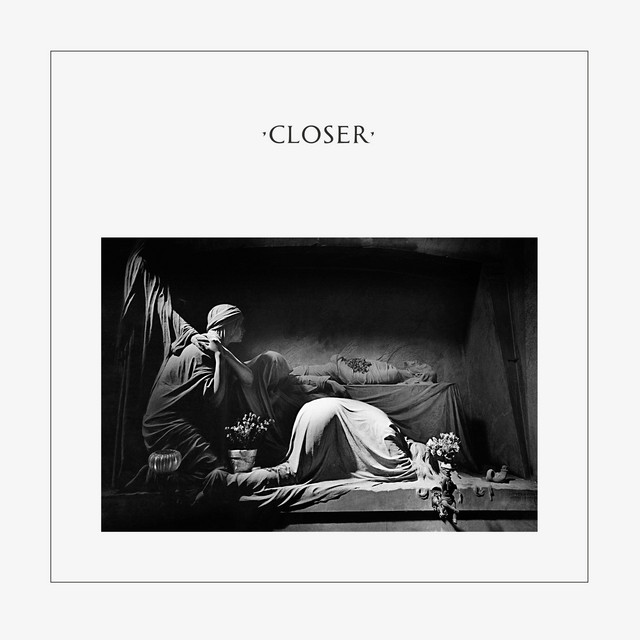
1. The Album Cover’s Tomb Was Pure Chance, Not a Plan The marble tomb that defines Closer’s artwork came from a 1978 photo of a sculpture in an Italian cemetery. Designers Peter Saville and Martyn Atkins had picked the image long before Ian Curtis died. After his death, Saville panicked, thinking people would assume it was a tasteless marketing stunt. But Factory Records moved forward, embracing the eerie coincidence. The result is one of the most haunting album covers in music history, made even more powerful by how accidental it all was.
2. Ian Curtis Described Writing the Lyrics as a Possession Bernard Sumner recalled Ian Curtis saying the words on Closer felt like they were writing themselves. Ian spoke of being trapped in a kind of whirlpool, dragged downward by forces he couldn’t name. This wasn’t poetic exaggeration. Songs like “The Eternal” and “Decades” carry that sensation of drowning in something far bigger than personal sadness. The lyrics came with a sense of inevitability, like Ian was merely the vessel through which they passed.
3. “Atrocity Exhibition” Was the Sound of Instrumental Role Reversal To break creative monotony, Bernard Sumner and Peter Hook swapped instruments during the writing of “Atrocity Exhibition.” Hook played guitar, Sumner played bass, and the result was a riff that felt off-kilter and dangerous. The title came from J.G. Ballard, whose psychological collapse stories matched the tone perfectly. When Martin Hannett mixed the track while Hook was out of the studio, he drenched the guitar in effects, flattening its violence. Hook was furious, but that tension remains baked into the track.
4. “Isolation” Survived a Studio Disaster Thanks to Hannett “Isolation” began with Stephen Morris’s electronic beat and Sumner’s high-pitched synth stabs. But disaster nearly struck when a junior engineer mishandled the master tape. Martin Hannett salvaged it through sheer sonic precision, and the end result became one of the band’s most forward-looking tracks. The crashing drums and eerie space within the mix opened a doorway to where New Order would eventually go. It’s a reminder that chaos can sometimes give birth to clarity.
5. Tony Wilson Had Poolside Dreams, Bernard Had Doubts When Closer was finished, Factory Records founder Tony Wilson told Bernard Sumner he’d be drinking cocktails poolside in Los Angeles within a year. Sumner laughed. Joy Division didn’t operate on dreams of stardom or chart glory. They created out of necessity, out of a need to express what couldn’t be said in daylight. While Closer did chart and win Album of the Year from NME, its power came from its refusal to conform. It was bleak, unflinching, and utterly committed to its vision.
Closer is a message in a bottle sent from the darkest corners of the human psyche. These lesser-known stories remind us that great records are shaped by accidents, panic, misunderstandings, and ghostly whispers. Step inside — just like Ian said.
With Father’s Day just around the corner, MULTI-PLATINUM hitmaker Nate Smith today (5/23) delivers “Dads Don’t Die” (Sony Music Nashville) – an unforgettably moving ballad celebrating the immortal power of love between father and child. Accompanied by a performance video, the two-pack includes a bonus version featuring GRAMMY-winning singer-songwriter Emily Weisband (a co-writer on the track). The latest in a series of monumental releases from Smith, “Dads Don’t Die” arrives as he kicks off a massive tour tonight as direct support for Jason Aldean’s FULL THROTTLE TOUR 2025.
A driving force in the Country genre, Smith takes his chart-topping career to the next level with “Dads Don’t Die.” Written by Marc Beeson, Allen Shamblin, and Emily Weisband, the piano-led track hits with a momentous impact thanks to Smith’s force-of-nature voice – a formidable instrument that’s found him hailed as a “vocal powerhouse” by Stereogum. After performing the song live, he received overwhelming support from fans, who soon clamored for an official release. With over 2.5 BILLION global career streams to date, Smith reveals that adding “Dads Don’t Die” to his hit-stacked catalog is an undeniable honor.
“I’ll never forget the day Emily [Weisband] sent me this song. I broke down in tears the very first listen. It hit me straight in the heart,” admits Smith. “‘Dads never die… they live on in us, and through us.’ I’d never heard it said quite like that. I’m incredibly close with my dad and beyond grateful he’s still here. The thought of losing him is my greatest fear. My heart goes out to everyone who has lost their father. I hope this song brings comfort, healing, and a little light to anyone walking through that pain. What makes this song even more powerful is how it gently touches on forgiveness. Whether you’ve lost your dad, miss him deeply, or are still working through things with him – I hope this song finds you. What matters is that it reaches the people who need it most. I truly believe this is the most meaningful song I’ve ever been a part of.”
Produced by Joel Bruyere, “Dads Don’t Die” came to life with a lineup of A-list session musicians, including guitarists Tim Galloway and Derek Wells. Driven by the striking piano work of Alex Wright, the song opens as Smith observes the painful aftermath of losing a loved one (“You can cover him in flowers / Carve his name into a stone / Let your brother have his toolbox / And keep his number in your phone”). At the gently soaring chorus, he delivers a soul-soothing message of reassurance (“Dads don’t die / They still make you laugh / Still make you cry / Still make you mad the day it dawns / That you were wrong and he was right”). With its lovely intertwining of introspection, nostalgia, and sorrowful outpouring, the track also provides plenty of much-needed perspective (“Even if they let you down sometimes / There’s gonna come a day you understand / That he was just a man and you turned out alright”). Graced with a gorgeous guitar solo at the bridge, “Dads Don’t Die” ultimately brings an unstoppable spirit of hope to one of life’s most heartbreaking moments.
On the bonus version of “Dads Don’t Die,” Weisband adds a new element of tenderness to the track’s intimate reflection. An in-demand songwriter whose credits include Gabby Barrett, Old Dominion, Carly Pearce, and many more, Weisband delivers the song’s second verse with a soulful urgency, then joins Smith for a heart-melting duet at the chorus.
“Dads Don’t Die” is Smith’s first introduction to new music since “Nobody Likes Your Girlfriend” – a collaboration with HARDY and spotlighted by Billboard, who praised it as a “slice of cut-to-the-bone, friend-to-friend honesty, wrapped in a country-rock package.” Since making his full-length debut with his GOLD self-titled LP (a 2023 release that emerged as the largest album debut from a new artist that year), he’s impressively earned three #1s at Country radio, with his latest single “Fix What You Didn’t Break” currently Top 10-and-climbing.
Directed by Kaiser Cunningham, the performance video for “Dads Don’t Die” affirms Smith’s deeply personal connection to the track and offers a glimpse at the fiery intensity he brings to every live show. With his past live experience including his headlining THROUGH THE SMOKE TOUR and SOLD-OUT WORLD ON FIRE TOUR in 2024 – along with supporting Thomas Rhett, Cole Swindell, and Morgan Wallen – he’ll next take the stage at arenas and stadiums across the country as part of Aldean’s FULL THROTTLE TOUR 2025.
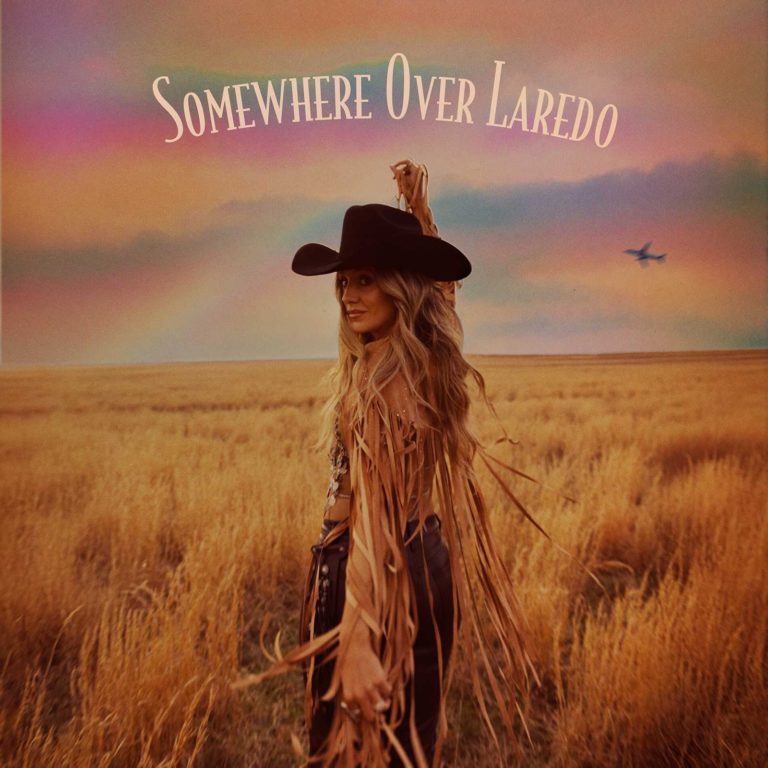
16x ACM, 9x CMA and Grammy Award-winning artist Lainey Wilson’s new single, “Somewhere Over Laredo,” is out today via BBR Music Group/BMG Nashville.
Written by Wilson, Trannie Anderson, Dallas Wilson and Andy Albert, the song honors the timeless classic “Somewhere Over The Rainbow” while showcasing Wilson’s poignant storytelling and authentic country sound, as she reflects on past love and pays tribute to small towns across the country.
Wilson will perform the song live for the first time at the 2025 American Music Awards this Monday, May 26, where she is nominated for Favorite Female Country Artist.
Officially impacting radio this Tuesday, May 27 via Broken Bow Records, fans will hear the new track as it world premieres across all major U.S. Country Radio Stations today.
The release adds to yet another triumphant year for Wilson, who won four awards at the 60th Annual ACM Awards earlier this month: Entertainer of the Year (her second consecutive win), Female Artist of the Year (her third consecutive win), Album of the Year (Whirlwind) and Artist-Songwriter of the Year. During the awards ceremony, she also debuted new song, “Trailblazer,” with Reba McEntire and Miranda Lambert, which she wrote with Lambert and Brandy Clark.
Additionally, Wilson is in the midst of her nearly sold-out Whirlwind World Tour, which includes stops at New York’s Madison Square Garden, Los Angeles’ Kia Forum, Nashville’s Bridgestone Arena, Austin’s Moody Center, Baton Rouge’s Raising Cane’s River Center Arena and Denver’s Ball Arena among many others. The upcoming dates follow the tour’s first leg-a completely sold-out extensive run across the U.K and Europe earlier this year.
Rising country musician Sam Williams gets vulnerable on catchy new track “Lose You Too” . This is the third offering from Sam’s forthcoming project Act II: COUNTRYSTAR, out July 11.
Penned by Sam, Emily Weisband (BTS, Camila Cabello, Dan+Shay), and Alysa Vanderheym (Kelsea Ballerini, Little Big Town, Jelly Roll) “Lose You Too” blends raw, honest lyrics over a glossy, country-pop production as Williams confesses, “I’ve already lost more than I thought I’d ever lose / I can’t lose you, too” – and yeah, it kinda wrecks you in the best way.
Of the track, Sam reflects, “Releasing a song you wrote in a different chapter of your life is a little uncomfortable, especially one that holds so much hope. Not gonna lie, it hurts to revisit this chapter… but “Lose You Too” still slaps. There’s a softness in this song that I’m proud of, and maturing means learning not to dim the parts of yourself that feel deeply. I’ve learned I can lose beautiful things, and still believe that the love I put into the world will come back around.”
“Lose You Too” will be featured on Sam’s forthcoming project Act II: COUNTRYSTAR, alongside previously released tracks “No Problem” and title track “COUNTRYSTAR.” The vibrant and daring seven-song project underscores Williams’ versatile songwriting skills. To bring this new sound to life, Sam collaborated with producer Nick Bailey, whose credits include Lana Del Rey, Quavo, Maroon 5, and Blake Shelton, and producer Yung Lan (Morgan Wallen, Lil Uzi Vert).
Up next, Sam will be taking over CMA Fest with multiple performances. He’s set to light up the Love and Acceptance at Category 10 on Monday, June 2, before taking over The Listening Room Cafe with Amanda Shires and Lawrence Rothman on Tuesday, June 3. He’ll also be performing at MCA’s Sounds Like Nashville Live at Skydeck on Broadway on Friday, June 6, before closing out the weekend at Hard Rock Cafe on Sunday, June 8.
Sam continues to push Nashville into bold new territory with his fearless creativity and boundary-pushing sound. With Act II: COUNTRYSTAR on the horizon, it’s clear that Sam is bringing a whole new energy to this three-act trilogy.
In the digital era, website security is paramount. For businesses and individuals managing multiple subdomains, securing each one individually can be cumbersome and costly. A wildcard SSL certificate offers a cost-effective solution by securing your primary domain and all its first-level subdomains with a single certificate. This article delves into cheap wildcard SSL certificates, highlighting top providers, their offerings, and the benefits of opting for this solution.
What Is a Wildcard SSL Certificate?
A wildcard SSL certificate is a digital certificate that secures a primary domain and an unlimited number of first-level subdomains. For instance, a wildcard certificate for *.example.com will secure www.example.com, mail.example.com, blog.example.com, and any other subdomain under example.com. This eliminates the need to purchase and manage separate certificates for each subdomain, streamlining the process and reducing costs.
Benefits of Cheap Wildcard SSL Certificates
Cost-Effective Security: Purchasing a single wildcard SSL certificate is more affordable than buying individual certificates for each subdomain.
Simplified Management: Managing one certificate for all subdomains reduces administrative overhead and the risk of errors. Enhanced Trust: Displaying HTTPS across all subdomains boosts user confidence and can improve search engine rankings.
Scalability: As your website grows and you add more subdomains, a wildcard certificate automatically covers them without additional costs.
Top Providers of Cheap Wildcard SSL Certificates
SSL2BUY
Overview: SSL2BUY offers a wide range of affordable wildcard SSL certificates from reputable Certificate Authorities (CAs) like Comodo, RapidSSL, and GeoTrust.
Example: The Comodo PositiveSSL Wildcard certificate is available for $26/year, providing domain validation and 256-bit encryption.
ClickSSL
Overview: ClickSSL provides budget-friendly wildcard SSL certificates with quick issuance times and strong encryption.
Example: The Comodo PositiveSSL Wildcard is priced at $45/year, offering unlimited subdomain coverage and a $10,000 warranty.
CheapSSLShop
Overview: CheapSSLShop offers competitive pricing on wildcard SSL certificates, catering to various business needs
Example: The GlobalSign Wildcard SSL certificate starts at $29/year, providing domain validation and robust encryption.
CheapSSLsecurity
Overview: CheapSSLsecurity offers affordable wildcard SSL certificates with quick issuance and strong encryption.
Example: The Comodo PositiveSSL Wildcard is available for $59.95/year, offering domain validation and a $10,000 warranty.
Factors to Consider When Choosing a Cheap Wildcard SSL Certificate
Validation Type: Wildcard SSL certificates typically offer Domain Validation (DV), which verifies domain ownership. For higher trust levels, consider Organization Validation (OV) or Extended Validation (EV) certificates, though they are less common for wildcard certificates.
Warranty: A warranty provides financial protection in case of a security breach due to a certificate flaw. Ensure the certificate offers a sufficient warranty amount.
Issuance Time: Consider how quickly the certificate is issued. Some providers offer instant issuance, while others may take longer.
Browser Compatibility: Ensure the certificate is compatible with all major browsers and devices to avoid trust issues.
Support: Opt for providers that offer 24/7 customer support to assist with any issues or questions.
How to Install a Wildcard SSL Certificate
Purchase the Certificate: Choose a provider and purchase the wildcard SSL certificate that fits your needs.
Generate a CSR: Generate a Certificate Signing Request (CSR) on your server for the primary domain.
Submit the CSR: Submit the CSR to the Certificate Authority (CA) for validation.
Install the Certificate: Once issued, install the wildcard SSL certificate on your server.
Verify Installation: Use online tools to verify that the certificate is correctly installed and covers all subdomains.
Conclusion
Opting for a cheap wildcard SSL certificate is a smart choice for website owners looking to secure their primary domain and unlimited subdomains affordably. By considering factors like validation type, warranty, issuance time, browser compatibility, and support, you can select the best certificate to meet your needs. Providers like SSL2BUY, ClickSSL, CheapSSLShop, and CheapSSLsecurity offer competitive pricing and reliable services to help you enhance your website’s security without breaking the bank.
As cyber threats continue to grow and user expectations for online security become higher, SSL certificates have transformed from a “nice-to-have” into a non-negotiable requirement for every website. But that doesn’t mean you have to break the bank. Thanks to competitive pricing and a wide range of Certificate Authorities (CAs), you can now find cheap SSL certificates that offer robust encryption, browser trust, and essential protection—without the high cost.
In this comprehensive guide, we’ll explore everything you need to know about cheap SSL certificates: what they are, how they work, who they’re ideal for, and where to get them at the best prices in 2025.
What Is an SSL Certificate?
An SSL certificate (Secure Sockets Layer) is a digital certificate that establishes a secure, encrypted connection between a website and a user’s browser. It ensures that data exchanged—like passwords, credit card numbers, and personal information—remains confidential.
When a website has an SSL certificate installed, the browser displays:
A padlock icon in the address bar
HTTPS instead of HTTP
Optional company details (with higher-level certificates)
All of this signals to users that the site is trustworthy and secure.
Why Do You Need an SSL Certificate?
No matter how large or small your website is, SSL certificates offer critical benefits:
Encrypt user data to prevent interception by hackers
Authenticate your website to prove it’s legitimate
Improve SEO rankings since Google prefers HTTPS sites
Avoid browser warnings that label your site as “Not Secure”
Boost user trust and increase conversion rates
What Are Cheap SSL Certificates?
Cheap SSL certificates are domain-validated (DV) certificates offered at low prices—sometimes even for free. Despite being affordable, they still use the same 256-bit encryption as higher-tier certificates.
What makes them cheaper is:
Minimal validation (domain ownership only)
Lower warranty amounts
Fewer or no add-ons like site seals or support
Shorter validity or fewer advanced features
For most blogs, small businesses, portfolios, and startups, these certificates offer everything needed to secure a site efficiently and affordably.
Types of Cheap SSL Certificates
When you’re shopping for cheap SSL certificates, here are the most common options available:
🔐 Domain Validated (DV) SSL Certificates
Fast issuance (within minutes)
Requires only email or DNS validation
Ideal for blogs, informational websites, personal projects
Price: $0 to $30/year
🌐 Wildcard SSL Certificates
Secure a domain and all its first-level subdomains (e.g., *.yourdomain.com)
Great value for dynamic websites
Price: $30 to $150/year
🧾 Multi-Domain (SAN) SSL Certificates
Secure multiple different domains under one certificate
Used by agencies, portfolio sites, or enterprise networks
Price: $60 to $200/year
Note: These cheap SSL certificates still offer solid encryption but are best suited for non-commercial or low-risk sites.
Top Providers for Cheap SSL Certificates in 2025
Here are the most trusted and affordable providers to buy SSL certificates without overspending:
1. SSL2BUY
Reseller offering certificates from Comodo, Sectigo, GeoTrust
Prices start as low as $5/year
Supports all major SSL types
2. Namecheap
Excellent reputation and user interface
PositiveSSL from Sectigo starting at $7.88/year
Free 1-year SSL with domain purchase
3. SSL.com
Easy-to-navigate platform
Offers free basic DV SSL for testing
Paid DV SSLs start from $14.95/year
4. GoGetSSL
Known for deep discounts
Offers cheap wildcard SSLs and multi-domain options
PositiveSSL Wildcard starts around $29/year
5. Let’s Encrypt (Free Option)
100% free DV SSL certificates
Requires manual renewal every 90 days unless automated
No customer support or warranties
Price Comparison: Cheap SSL Certificates (DV)
Provider
Certificate Name
Price (USD/year)
Warranty
Browser Support
SSL2BUY
PositiveSSL DV
$5 – $8
$10,000
99.9%
Namecheap
PositiveSSL
$7.88
$10,000
99.9%
GoGetSSL
RapidSSL DV
$8.50
$10,000
99.9%
SSL.com
Basic SSL DV
$14.95
$10,000
99.9%
Let’s Encrypt
Free SSL
$0
None
99.9%
Tip: Always look for multi-year options to save even more, as some resellers offer significant discounts for 2–5 year terms.
How to Buy Cheap SSL Certificates (Step-by-Step)
Step 1: Choose a Provider
Pick a reliable SSL provider based on your needs (number of domains, support level, warranty).
Step 2: Select Certificate Type
DV SSL for basic needs, Wildcard if you have subdomains, or SAN SSL if you own multiple websites.
Step 3: Generate a CSR
A Certificate Signing Request (CSR) is created via your hosting panel (like cPanel or Plesk).
Step 4: Complete Domain Validation
Usually done via email or DNS record verification for DV certificates.
Step 5: Install the Certificate
Use your host’s SSL tools or manually install it on the server.
Step 6: Redirect to HTTPS
Set up 301 redirects from HTTP to HTTPS and update internal links.
Who Should Use Cheap SSL Certificates?
Cheap SSLs are perfect for:
Small business websites
Personal blogs or portfolios
Nonprofits and community projects
Temporary or campaign-based websites
Development or staging environments
If you’re not collecting sensitive information or processing payments, a cheap SSL certificate offers more than enough protection.
When Not to Use a Cheap SSL Certificate
Avoid relying on cheap SSLs if you:
Handle credit card data or sensitive financial info
Operate a large e-commerce platform
Need Extended Validation (EV) for reputation or compliance
Require dedicated customer support and large warranty backing
In those cases, an OV or EV SSL from a premium provider is recommended.
With the right provider and a clear understanding of your needs, finding cheap SSL certificates that don’t compromise on security is entirely possible in 2025. They offer essential encryption, fast setup, and full browser compatibility—making them ideal for budget-conscious individuals and small businesses.
Whether you choose a $7/year PositiveSSL or a free Let’s Encrypt certificate, what matters most is taking action to secure your website. In a digital environment where users demand privacy and browsers penalize insecure sites, SSL is a smart and necessary investment—no matter your budget.
Data and information are provided for informational purposes only, and are not intended for investment or other purposes.
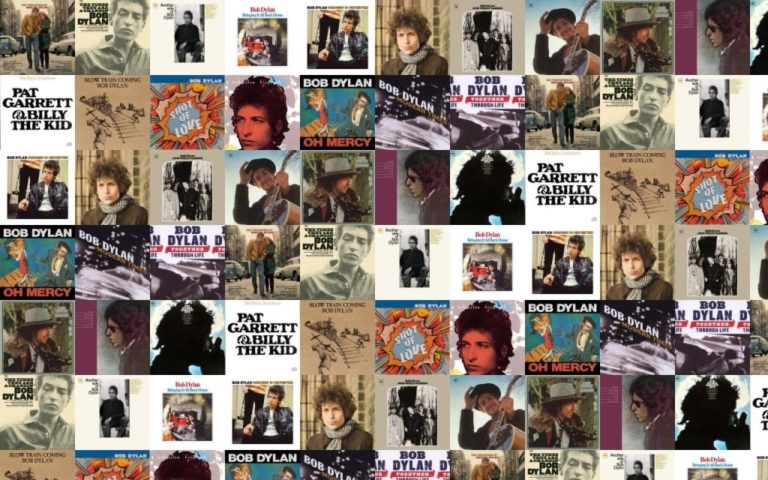
From Hibbing to Highway 61, from folk clubs to Nobel lectures, Bob Dylan has never stopped moving, questioning, or reinventing what a songwriter—and a song—can be. Whether you came for the protest anthems, the cowboy hats, or the Christmas album (!), there’s always another Dylan phase to discover.
Bob Dylan’s original stage name was Elston Gunnn—with three n’s.
He once played piano for Bobby Vee—twice—in 1959.
Dylan wrote his first original song, “Song to Woody,” as a tribute to his idol, Woody Guthrie.
His high school yearbook predicted he’d join Little Richard.
He claims the only person he ever wanted to meet in life was Elvis Presley.
The Beatles first heard The Freewheelin’ Bob Dylan in Paris and wore the record out.
He changed his name legally to Bob Dylan in 1962—his father signed the paperwork.
He nearly joined the Army just to get a free haircut.
He introduced the Beatles to marijuana in 1964.
He was the first rock artist to win a Pulitzer Prize (special citation, 2008).
Dylan didn’t speak for an entire week after JFK was assassinated.
He was once booed at the Newport Folk Festival—for playing electric guitar.
“Like a Rolling Stone” was rejected by Columbia Records’ execs for being “too long.”
Jimi Hendrix’s version of “All Along the Watchtower” made Dylan say, “That’s how it’s supposed to sound.”
His 1966 motorcycle crash might not have even happened—no ambulance, no hospital report.
He’s been on what’s called the “Never Ending Tour” since 1988.
He once released a 17-minute song about the JFK assassination…in 2020.
Dylan only made one Super Bowl ad—in 2014, for Chrysler.
He drew the original sketch for his Self Portrait album cover.
He learned to write songs by copying Hank Williams lyrics by hand.
He secretly married Carolyn Dennis in the 1980s and kept it quiet for over a decade.
He wrote “Knockin’ on Heaven’s Door” for a Western movie starring Kris Kristofferson.
Dylan turned down appearing at Woodstock.
He’s painted more than he’s released albums—his art has been shown in major galleries.
In 1965, he played nine songs in a row using the same four chords—and no one complained.
He once said he found religion through a song, not a preacher.
Dylan’s handwritten lyrics have sold for hundreds of thousands of dollars at auction.
He recorded a Christmas album in 2009 and donated all profits to charity.
He’s had the same bassist, Tony Garnier, for over 30 years.
Johnny Cash sent a letter to Broadside magazine defending Dylan before they even met.
Dylan once said his favorite rapper was…Eminem.
He’s covered Sinatra songs more than any other artist since 2015.
In his Nobel lecture, he cited Moby-Dick and All Quiet on the Western Front as literary influences.
He co-wrote songs with George Harrison that were never released.
His backup singers in the ’70s included Luther Vandross.
One of his biggest early gigs? A short scene on a BBC TV drama.
“Mr. Tambourine Man” was inspired by a real-life tambourine man named Bruce Langhorne.
He once called U2’s Bono “the voice of this generation—mine’s a bit more hoarse.”
His biggest hit in the 2000s? “Make You Feel My Love,” via Adele, Garth Brooks, and Billy Joel.
He once played harmonica on a Ramblin’ Jack Elliott album while eating a sandwich.
His memoir Chronicles: Volume One skips the ’60s almost entirely.
He was mistaken for homeless in Long Branch, NJ in 2009 and questioned by police.
Dylan said he doesn’t believe in following news but still reads The Economist.
He was the subject of Martin Scorsese documentaries twice.
Dylan reportedly doesn’t own a cellphone.
He once made a rap cameo on a Kurtis Blow album.
He used to mime along to Little Richard records in front of a mirror as a kid.
Dylan’s son Jakob Dylan is the lead singer of The Wallflowers.
His 1970 album Self Portrait was critically trashed—so he named his next album New Morning.
He wrote “Forever Young” as a lullaby for his son.
His biggest concert? Over 600,000 fans in Rio de Janeiro, 1990.
He was nominated for an Emmy for his song in Ted Lasso.
He once wrote a song with Sam Shepard.
He’s played over 3,000 shows on the Never Ending Tour.
He owns a whiskey brand—Heaven’s Door.
The “Judas!” heckle in Manchester was immortalized on tape… and Dylan shouted back.
He toured with the Grateful Dead and Tom Petty in the ’80s.
He once painted 32 iron gates and called it “visual music.”
He wrote 30 songs for a Broadway musical with the director of Girl from the North Country.
He said the one thing he regrets is… not learning piano properly.
Dylan’s childhood home in Hibbing, MN, still has its original mailbox.
He wrote “Tangled Up in Blue” while living in the Minnesota woods.
He’s been known to test his band with new arrangements—during the show.
He prefers to tour small venues instead of stadiums.
He wrote “Blowin’ in the Wind” in under 10 minutes.
He was awarded France’s Legion of Honour—after initial pushback from officials.
He owns thousands of vinyl records—and still prefers analog.
He once turned down a chance to join Paul Simon’s tour just to “stay home and cook.”
He appeared on MTV Unplugged—against his label’s advice.
The most covered Dylan song? “Blowin’ in the Wind,” with over 375 versions.
He told 60 Minutes he made a deal “with the chief commander… of this earth and the world we can’t see.”
Dylan’s handwriting is nearly illegible—his publishers often require a translator.
He wrote “Visions of Johanna” in a freezing hotel room with no heat.
He got married in secret—twice.
He once sent a thank-you note to a fan who returned a lost harmonica.
He never attended his Nobel Prize ceremony—but he sent Patti Smith.
Dylan says he never listens to his own albums after release.
He once wrote a song called “Wiggle Wiggle.” Critics did not love it.
His music has appeared in over 100 film soundtracks.
Dylan was once asked to write a James Bond theme. He politely declined.
His latest single hit #1 on the Billboard Rock chart—at age 79.
He says he writes best at 3 a.m.
Dylan has performed with everyone from The Band to Stevie Wonder to Norah Jones.
He’s the only songwriter to win an Oscar, Pulitzer, and Nobel Prize.
And finally… when asked if he’d ever retire, Bob Dylan said: “I’ll let you know when I get there.”
So happy 84th to the artist who made poetry sing and made pop music think. Here’s to the stories behind the songs, the secrets inside the bootlegs, and the magic of a career that keeps unfolding like a scroll from another time.
Critically acclaimed singer, songwriter and musician Sam Ryder has released his powerful new single “OH OK” alongside the beautiful B-side “Armour.” The single marks the second offering from this bold new musical chapter, and the latest flavor of Sam’s self-coined “Frontier Soul” genre. Both “OH OK” and “Armour” are out now via Artist Theory.
“OH OK” follows Sam’s first new single, “White Lies,” which racked up over half a million streams in its first week alone. With 20 million loyal followers across platforms, fans have organically discovered Sam’s authentic artistry, powerful vocals and infectious, magnetic presence.
After wrapping a successful North American tour in Los Angeles on May 21st, Sam also announced his biggest headline show to date at London’s massive Wembley Arena on November 6th. He also makes his Glastonbury debut at the iconic UK festival in June.
Co-written and produced by Sam Ryder, Kamille (Dua Lipa, JADE, Sia) and Steve Mac (Ed Sheeran, Sabrina Carpenter, Sam Smith) “OH OK” defiantly narrates the mixed emotions of moving on in a relationship, touching on themes of self-confidence and doing things on your own terms. It comes alongside the B-side “Armour,” a raw ballad that delves into the vulnerability of baring your soul and the quiet fear of removing emotional armour. “Armour” was co-written by Sam Ryder, Todd Clark (Noah Kahan, Dermot Kennedy) and Quinn Lewis.
Sam explains, “I wrote “OH OK” about jealousy, stoicism and the eternal, draining, rebound cycle at the end of a relationship. It’s about the universal feeling of making an ex jealous or being made to feel jealous by an ex and the ways in which we can claim our own power back while in that temporary space. Understanding the truth behind empty actions and acting rather than reacting seem to be the key to this, and I hope ‘OH OK’ serves as a reminder that if you’re going through it, this too shall pass.”
Discussing “Armour,” Sam continues “‘Armour’ was written about someone who used to be in my life, but who I went separate ways with. After a few months of reflection, I realized I wrote it about myself, or maybe even as a reminder to myself to forgive and keep letting go. Playing it live has been where I’ve found the song resonating with a wider audience and I’m excited to share it with the world.”
Laying the foundations for this new era both in the UK and Nashville, Sam deeply embedded himself in the cultural scene there, bringing his musical vision to life. Redefining his sound alongside an incredible team of collaborators, his musical journey evolved in parallel to his own path of self-discovery, resulting in his most vulnerable, intimate, and unfiltered work to date.
During lockdown, Sam caught the attention of millions on TikTok, including the likes of Justin Bieber, Alicia Keys, Sia and others. In 2023, he was nominated for an Emmy award for the song, “Fought & Lost” written for Ted Lasso, featuring Queen guitarist Brian May. After a dizzying couple of years that saw his hit single “Space Man” at the forefront of British airwaves and a #1 UK album, billions of streams, stadium performances and more, Sam took some time away to pause and reflect. Having reclaimed creative control, Sam is now making music on his own terms.