Home Blog Page 641

RBW Inc. Partners With NetEase Cloud Music to Expand K-POP in China

0

RBW Inc., a leading integrated content production company and home to top K-POP acts such as MAMAMOO, ONEUS, ONEWE, and PURPLE KISS, has entered into a strategic copyright partnership with NetEase Cloud Music, one of China’s most influential music streaming platforms. This collaboration is set to mark a new chapter in Korea-China music exchange and accelerate K-POP’s expansion into the Chinese market.

Under this partnership, RBW will provide access to its entire catalog on NetEase Cloud Music, including all group and solo releases from its artists—MAMAMOO’s Solar and Moon byul included. Future releases will also be rolled out as exclusives, offering earlier access to Chinese fans.

This alliance goes beyond conventional music distribution, aiming to foster deeper industry cooperation and cultural exchange between Korea and China. Built on mutual trust, the partnership reflects both parties’ commitment to long-term collaboration and shared strategic goals in the Asian music ecosystem.

With over 200 million monthly active users (MAU), NetEase Cloud Music stands as a dominant platform in China, particularly among the Gen-Z demographic born in the 1990s and 2000s. Through this partnership, RBW is expected to significantly enhance its connection with local fans and strengthen K-POP’s footprint in the region.

An RBW representative commented, “Our partnership with NetEase Cloud Music is a strategic collaboration built on trust—not just a copyright deal. We are committed to expanding the global competitiveness of K-POP through various forms of future cooperation.”

Robin Trower Announces 50th Anniversary Box Set for ‘For Earth Below’

0

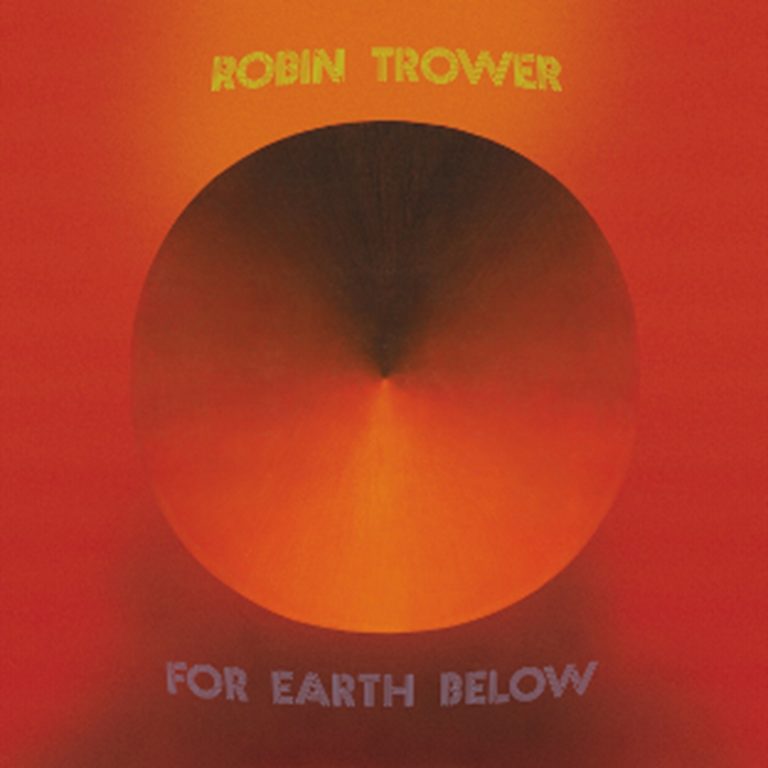
Chrysalis Records will mark the 50th anniversary of Robin Trower’s For Earth Below on 13 September with the album’s most ambitious reissue yet. Available digitally, as a four-CD set, and as a double-LP, the package contains a newly remastered version of the original 1975 mix, an extended 2025 stereo remix of the entire record, a trove of previously unheard outtakes, rarities, and BBC sessions, and—for the first time in full—a concert recorded at the Shrine Auditorium in Los Angeles on 16 March 1975. A 24-page booklet featuring fresh liner notes by veteran journalist David Sinclair rounds out the collection.

To whet appetites, Chrysalis has released “Alethea” in its 2025 stereo mix on all major streaming services, following last month’s teaser of “Shame the Devil” in the same format. These previews restore the expansive guitar tones, James Dewar’s soulful vocal nuances, and Bill Lordan’s newly recruited, funk-infused drumming that helped drive the album to No. 5 on the U.S. Billboard chart in 1975. Trower still cites the title track, “Gonna Be More Suspicious,” and “Shame the Devil” as personal highlights; Lordan recalls that the trio’s chemistry “felt instant, like we’d always played together.”

Disc three captures that chemistry in the studio with alternate vocals, a previously unreleased instrumental called “The Moody One,” and complete Top of the Pops and Live in Concert sessions from January 1975. Disc four transports listeners to the Shrine, where staples such as “Bridge of Sighs,” “Too Rolling Stoned,” and “Day of the Eagle” thundered alongside newer material. Altogether, the set offers 48 tracks, 34 of them never before issued.

Trower will support the release with a U.S. tour that opens 11 June at The National in Richmond, Virginia, winds through the Northeast and Midwest—including stops in Atlantic City, Boston, Buffalo, Detroit, and Chicago—and wraps 19 July at The Factory in Chesterfield, Missouri.

Pre-orders for all formats of For Earth Below—50th Anniversary Edition are live now, inviting both longtime devotees and new listeners to rediscover a blues-rock milestone in its most vivid form to date.

    “Alethea” (2025 Stereo Mix) – LISTEN HERE

    “Shame the Devil” (2025 Stereo Mix) – LISTEN HERE

US Tour 2025

    June 11 – The National, Richmond, VA

    June 13 – Penn’s Peak, Jim Thorpe, PA

    June 14 – Music Box at the Borgata, Atlantic City, NJ

    June 15 – Keswick Theatre, Glenside, PA

    June 17 – Hackensack Meridian Health Theatre at Count Basie Center for the Arts, Red Bank, NJ

    June 18 – The Wellmont Theater, Montclair, NJ

    June 20 – The Paramount, Huntington, NY

    June 21 – Bardavon, Poughkeepsie, NY

    June 24 – Tupelo Music Hall, Derry, NH

    June 25 – The Wilbur, Boston, MA

    June 27 – Aura, Portland, ME

    June 28 – Blue Ocean Music Hall, Salisbury, MA

    July 1 – Center for the Arts of Homer, Homer, NY

    July 2 – Babeville, Buffalo, NY

    July 3 – Palace Theatre, Greensburg, PA

    July 5 – MGM Northfield Park – Center Stage, Northfield, OH

    July 6 – Taft Theatre, Cincinnati, OH

    July 8 – Royal Oak Music Theatre, Royal Oak, MI

    July 10 – Brown County Music Center, Nashville, IN

    July 11 – Copernicus Center, Chicago, IL

    July 12 – Pabst Theater, Milwaukee, WI

    July 14 – Hoyt Sherman Place, Des Moines, IA

    July 16 – Uptown Theater, Kansas City, MO

    July 17 – Gillioz Theatre, Springfield, MO

    July 19 – The Factory, Chesterfield, MO

* Previously unreleased

Springsteen Unveils “Adelita” From Border-Themed Lost Album ‘Inyo’

0

Bruce Springsteen’s latest preview of “Tracks II: The Lost Albums” arrives today with “Adelita,” an ode to Mexico’s female “soldaderas” — who played a major role in the country’s fight for independence. Inspired to explore themes of this nature in the 1990s, during a series of motorcycle trips across the Southwest, Springsteen’s years in California saw him diving into both the history of the region (including “La Adelita,” the “corrido” that serves as this song’s namesake) and its contemporary events. “There was constant border reporting in the Los Angeles Times, so it was a big part of your life,” he remembered. The results appear for the first time on “Tracks II” as “Inyo” — a previously-unheard, ten-song thematic collection set throughout the border states of California and Texas (plus one detour to New Jersey). 

“‘Inyo’ was a record I wrote in California during long drives along the California aqueduct, up through Inyo County on my way to Yosemite or Death Valley,” recalled Springsteen. “I was enjoying that kind of writing so much. [On ‘The Ghost Of Tom Joad’ tour] I would go home to the hotel room at night and continue to write in that style because I thought I was going to follow up ‘The Ghost of Tom Joad’ with a similar record, but I didn’t. That’s where ‘Inyo’ came from. It’s one of my favorites.”

While primarily tracked as a solo record, “Inyo” does notably find Springsteen collaborating with mariachi musicians throughout — as heard on “Adelita.” These musicians include Luis Villalobos, Alberto Villalobos, Angel Ramos, Humberto Manuel Flores Gutierrez, David Glukh, Jorge Espinosa and Miguel Ponce. Thematically, several songs on the record examine the Mexican diaspora, how border crossing between Mexico and the U.S. has affected generations and the cultural losses endured as a result. It’s a musical thread that Springsteen first began to examine by covering Ry Cooder’s “Across the Borderline” on his 1988 Tunnel of Love Express tour. 

Listen to “Adelita”: https://brucespringsteen.lnk.to/Adelita

Pre-order “Tracks II: The Lost Albums”: https://brucespringsteen.lnk.to/TheLostAlbumsPR

“The Lost Albums” will feature seven previously-unheard Bruce Springsteen records in full: “Inyo” as well as “Perfect World” (listen to “Rain in the River”), “Streets of Philadelphia Sessions” (listen to “Blind Spot”), “Faithless” (listen to the title track), “Somewhere North of Nashville” (listen to “Repo Man”), “Twilight Hours” and “LA Garage Sessions ’83.” The set will arrive in limited-edition nine LP, seven CD and digital formats — including distinctive packaging for each previously-unreleased record, with a 100-page cloth-bound, hardcover book featuring rare archival photos, liner notes on each lost album from essayist Erik Flannigan and a personal introduction on the project from Springsteen himself. 

Tracks II: The Lost Albums 

LA Garage Sessions ’83

1. Follow That Dream

2. Don’t Back Down On Our Love

3. Little Girl Like You

4. Johnny Bye Bye

5. Sugarland

6. Seven Tears

7. Fugitive’s Dream

8. Black Mountain Ballad

9. Jim Deer

10. County Fair

11. My Hometown

12. One Love

13. Don’t Back Down

14. Richfield Whistle

15. The Klansman

16. Unsatisfied Heart

17. Shut Out The Light

18. Fugitive’s Dream (Ballad)

 Streets of Philadelphia Sessions

1. Blind Spot

2. Maybe I Don’t Know You

3. Something In The Well

4. Waiting On The End Of The World

5. The Little Things

6. We Fell Down

7. One Beautiful Morning

8. Between Heaven and Earth

9. Secret Garden

10. The Farewell Party

 Faithless

1. The Desert (Instrumental)

2. Where You Goin’, Where You From

3. Faithless

4. All God’s Children

5. A Prayer By The River (Instrumental)

6. God Sent You

7. Goin’ To California

8. The Western Sea (Instrumental)

9. My Master’s Hand

10. Let Me Ride

11. My Master’s Hand (Theme)

 Somewhere North of Nashville

1. Repo Man

2. Tiger Rose

3. Poor Side of Town

4. Delivery Man

5. Under A Big Sky

6. Detail Man

7. Silver Mountain

8. Janey Don’t You Lose Heart

9. You’re Gonna Miss Me When I’m Gone

10. Stand On It

11. Blue Highway

12. Somewhere North of Nashville

Inyo

1. Inyo

2. Indian Town

3. Adelita

4. The Aztec Dance

5. The Lost Charro

6. Our Lady of Monroe

7. El Jardinero (Upon the Death of Ramona)

8. One False Move

9. Ciudad Juarez

10. When I Build My Beautiful House

 Twilight Hours

1. Sunday Love

2. Late in the Evening

3. Two of Us

4. Lonely Town

5. September Kisses

6. Twilight Hours

7. I’ll Stand By You

8. High Sierra

9. Sunliner

10. Another You

11. Dinner at Eight

12. Follow The Sun

Perfect World

1. I’m Not Sleeping

2. Idiot’s Delight

3. Another Thin Line

4. The Great Depression

5. Blind Man

6. Rain In The River

7. If I Could Only Be Your Lover

8. Cutting Knife

9. You Lifted Me Up

10. Perfect World

Doc Pomus Celebrated With 6-CD Demo Box Set ‘You Can’t Hip A Square’

0

Marking the centennial of his birth, Omnivore Recordings will release an expansive collection celebrating the genius of Doc Pomus, the legendary songwriter behind classic hit records that shaped rock n’ roll including Elvis Presley’s “Viva Las Vegas,” Ray Charles’ “Lonely Avenue” and The Drifters’ “This Magic Moment.”

The 6-CD box set, You Can’t Hip A Square: The Doc Pomus Songwriting Demos, compiling a treasure trove of never-before-heard Doc Pomus demos will be released on August 15. The set includes performances from Pomus himself, longtime writing partner Mort Shuman, and a who’s who of legendary figures key to the development of rock n’ roll including Ellie Greenwich, Scott Fagan, Peter Anders, Mickey Baker, Phil Spector, King Curtis, Titus Turner, Toni Wine, Bobby Andriani, and many more.

To accompany today’s announcement, Omnivore Recordings has released a first glimpse of the collection with “Viva Las Vegas (demo),” performed by Mort Shuman.

Listen to “Viva Las Vegas (demo)”

A larger-than-life almost mythic figure in rock ‘n’ roll lore, Jerome Solon Felder—better known as Doc Pomus—was born June 27, 1925, in Brooklyn, growing up crippled by childhood polio. After buying Big Joe Turner’s “Piney Brown Blues” at a local record shop, his world was irrevocably altered, starting a lifelong obsession with blues music and writing songs. Adopting the alias Doc Pomus—a nod to St. Louis bluesman Doctor Clayton—he performed at Greenwich Village clubs from the mid-‘40s to mid-‘50s, then transitioned to songwriting. His first hit as a writer came in 1956 with Ray Charles’ “Lonely Avenue.”

Inducted posthumously into the Rock and Roll Hall of Fame in 1992, Pomus, alongside his most trusted collaborator Mort Shuman, created one of the most enduring catalogs of the Brill Building era, including “Save the Last Dance for Me,” “A Teenager in Love,” and “This Magic Moment,” along with a number of songs specifically written for Elvis Presley, among them “Viva Las Vegas,” “Little Sister,” and “Surrender.”

The six CD set contains 165 individual demos, many featuring Doc’s partner Mort Shuman on vocals and piano. The project began when Doc’s daughter Sharyn Felder discovered a closetful of demos while organizing her father’s archives. “I didn’t want them to end up in some dusty closet, never to see the light of day,” explains Sharyn, who contacted Cheryl Pawelski, co-founder of Omnivore.

“A project like this doesn’t come along very often,” says Pawelski. “I’m always grateful when someone like Sharyn entrusts me to help shape the legacy of a great figure like Doc Pomus. He had to overcome so much in his life just to get to the place where he could be the great writer he was, expressing that heartbreak and yearning.”

The CD-set package also includes a hardbound book which features a track-by-track analysis by Felder and Pawelski, along with essays by Felder, critics Geoffrey Himes and Peter Guralnick (one of Doc’s closest buddies), as well as TV producer/writer/historian Eddie Gorodetsky.

“What’s so impressive is the depth and breadth of Doc’s catalog,” Pawelski exclaims. “The demos he made with Mort were open to interpretation in any number of styles, which they had to be. The most fascinating, to me, are the ones that got left behind, the what-ifs, the songs that never saw the light of day… We want to bring those hidden gems to light.”

“Doc often claimed to have written more than 1,000 songs,” adds Felder. “Now I think he might have been underestimating. In the past few years, I’ve discovered demos for hundreds of songs I never even knew existed. He was the consummate songwriter in that he could write for any occasion or artist.”

After Alex Halberstadt’s critically acclaimed 2007 biography, Lonely Avenue: The Unlikely Life and Times of Doc Pomus and the Sharyn Felder-produced 2012 documentary A.K.A. Doc Pomus, there are further plans for a feature biopic as well as a planned box set sequel covering his later collaborations in the ‘70s and ‘80s with Dr. John, Willy DeVille, B.B. King and Lou Reed.

“The hope is my dad’s songs will be rediscovered, that people will get turned on to some they never knew,” Felder concludes.

Doc himself describes his thoughts on songwriting in a recorded interview, which appears on Disc Six in the collection. “There are always ideas deep inside me,” he says. “To me, it’s always a question of bringing them out. Sometimes a little event might be the catalyst, or a word might be the catalyst.  I have an amazing ability to meet women and get very crazy, and that’ll stimulate me into writing a couple of songs.”

For both long-time Doc Pomus fans and those about to discover him for the first time, “This Magic Moment” is here.

Jeremy Garrett Sets “Slow Train” in Motion Ahead of ‘Storm Mountain’ Release

0

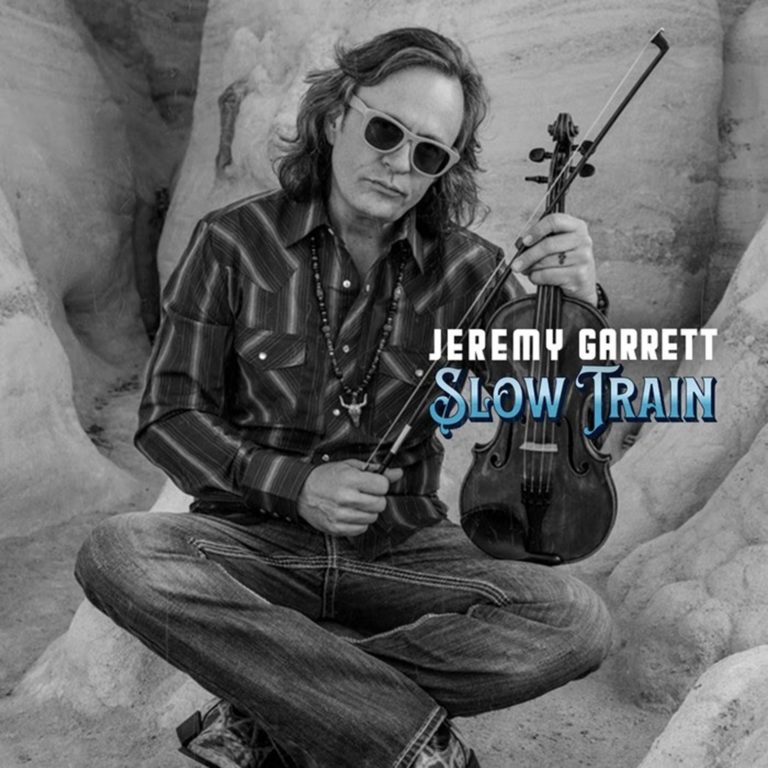
Jeremy Garrett, fiddle player & vocalist of The Infamous Stringdusters continues the rollout of Storm Mountain, the seventh solo release of his career and first album release off of the band’s imprint Americana Vibes. With the release set for June 27th, Garrett gives listeners his third offering off of the new album today with the release new single “Slow Train.” Fans can get an early listen with the track streaming exclusively on YouTube HERE, incentivizing his audience to subscribe for exclusive content and videos surrounding the release.

“Slow Train” will be available on all digital streaming platforms on May 30. Pre-save & listen HERE.

Storm Mountain follows Garrett’s well-received 2022 release River Wild and is an ode to his current life living “off the grid” in a cabin on 12 acres with his wife and eight-year-old daughter in a remote section of Theodore Roosevelt National Forest outside of Drake, Colorado. The collection of songs was inspired by the mountains he lives in and the idea that holds—whether it be living in joyous nature or the more pointed feeling one can have being surrounded by such intensity. Living in the mountains can be free and easy, yet an unforgiving place for those that aren’t prepared for the elements (and even if you are, it’s never completely easy). It was a metaphor he couldn’t resist when making the record.

“Slow Train” is a fiery tribute to one of Garrett’s personal bluegrass heroes, Larry Sparks. “This is pretty much a total tribute to one of my favorite bluegrass stars,” says Garrett. “Chris Luquette along with everyone plays the heck out of this track and sets it on fire! The bluegrass way!” 

The song opens with classic heartbreak with lyrics declaring, “I’m heartbroken and I’m feelin’ low-down / I’m sick and tired of the life I live around this old town.” It quickly shifts into a foot-stomping anthem about leaving the past behind and forging a new path. Featuring Garrett’s searing fiddle work alongside Ray Cardwell’s powerful tenor vocals and Josh Shilling’s robust baritone timbre, “Slow Train” is the antithesis of slow and is a buoyant ride through the a vulnerable terrain of lost love and new beginnings.

While bluegrass is often associated with light-hearted festival sets and late night picking sessions, Garrett aims to dig deeper with more serious, introspective subject matters and musical stylings that veer back into his more traditional lineage in gospel, country, and roots, “This is not a light-hearted record,” he explains, “Bluegrass is a lonesome music. I wanted this album to be more sophisticated than songs about trains and biscuits, to bring out the deeper content.”

Storm Mountain deals with such serious topics as a fall from grace (“Son of Perdition”), the bitterness of fate (“The Cold Hard Truth”), lost love (“Fly Away”), the meaning of life (“Anchor in the Deep”) and hopes for his daughter (“You’re Gonna Fly”). In addition, there are playful stabs at modern phenomena from social conventions (“Don’t Ask’) to UFOs (“Rosewell”).

“I love weird stuff like that,” he laughed. “I study quantum physics, too.”

Other highlights include surprising, idiosyncratic covers of songs by Mr. Mister’s Richard Page (“The Border”) and U.K. classic rock band Free (“Fire and Water”).

“I wanted to draw on something a little different than what I do with the ‘Dusters. These are songs that don’t quite fit in with the crowds we usually play for. When I go back to the band, I’m way better and more fulfilled for having done these solo records.”

Garrettt’s collaborators on the record include banjo player Ryan Cavanagh (“a picker’s picker”), guitarist Chris Luquette, singer Lindsay Lou (“The Border,” “You’re Gonna Fly,” “Son of Perdition”), songwriting partner Josh Shilling, fiddle players Luke Bulla and Casey Driessen (“Rosewell”), bassist Travis Anderson, tenor vocalist Ray Cardwell (“Slow Train”) and Stringdusters colleague Andy Hall on Resophonic guitar/dobro (“You’re Gonna Fly”). He recorded the album in a one-room studio outside of Fort Collins, CO, at the foothills of the mountains, before he added his parts at his own Storm Mountain home studio.

With groups like Yonder Mountain String Band, Leftover Salmon, String Cheese Incident and current phenom Billy Strings updating bluegrass for a new generation of listeners as “jamgrass,” the genre has exploded. Jeremy Garrett, known to the Infamous Stringdusters’ loyal fan base as either G-Grass or Freedom Cobra for his dynamic stage presence, has been at the forefront of the revival.

“Bluegrass is a durable music,” he said.” It’s been around for a long time. It’s down home and hardy and you can play it anywhere. You don’t even need electricity. The Dusters are a traditional bluegrass band that brought in the elements of extended soloing into the mix.”

At 48 years old, Garrett is relatively young for a bluegrass veteran and looks forward to performing his music live for audiences.  “When I write songs now, it’s from the standpoint of someone who’s been through some life experiences over the past 20 years. My goal is for this record to be uplifting at the same time as it’s more reflective in terms of healing.

“You need to have the music serve the song first and foremost, but I still throw down the fiddle because that’s what people expect.”

With the Dusters about to celebrate their 20th anniversary next year with a new album, Garrett looks forward to finding time for the occasional solo performance along with his “day job.”

His ultimate inspiration are guys like Larry Sparks (as portrayed in “Slow Train”), Del McCoury and the late Ralph Stanley, who have performed into their 70s, 80s and 90s.

“I want to play this music forever,” said Jeremy.  With Storm Mountain, he continues on that path.

Top 5 Mistakes to Avoid When Using a Hunting E-Bike: Tips for a Safer and More Efficient Ride

0

By Mitch Rice

Electric bikes have changed the way hunters approach their game. With the rise in popularity of the electric hunting bike, sportsmen now have access to quiet, low-impact transportation that covers ground quickly and efficiently. However, owning a hunting electric bike is not the same as using it correctly—and missteps can lead to frustration, costly repairs, or even a ruined trip.

Whether you’re riding a dual motor ebike, cruising forest trails on an off road electric bike, or navigating wetland paths with a beach cruiser electric bike, this guide walks you through five of the most common mistakes riders make—and how to avoid them. Along the way, we’ll share best practices for managing your electric bike properly, especially in rugged hunting environments.

Mistake #1: Failing to Fully Charge the Battery Before a Trip

Why It Happens:

One of the most frequent oversights among new and experienced users alike is assuming the battery has enough charge for a full hunting day. Riders may skip a full charge in favor of convenience, or they might misjudge how quickly certain terrain and gear loads drain the battery.

This is especially true for electric hunting bikes used in cold weather or uneven landscapes where the motor must work harder to maintain speed and torque.

Consequences:

  • Getting stranded in remote areas
  • Reduced power output during steep climbs
  • Shorter riding range than expected

Best Practices:

  • Charge the battery to full capacity before every trip, regardless of your expected distance.
  • Bring a spare battery, especially when hunting in backcountry zones without recharging options.
  • Monitor voltage output, not just battery percentage. Voltage drop can be an early warning sign of battery degradation.
  • If using a dual motor electric bike, understand that dual motors may deplete battery life more quickly than single-motor units, especially under load.

Mistake #2: Overloading the Bike Beyond Its Weight Limit

Why It Happens:

Hunters often need to carry gear, food, and eventually game. In many cases, this can exceed the manufacturer’s recommended payload. The issue becomes more severe with bikes like electric beach cruisers that prioritize comfort and design over utility.

Off road electric bikes and dual motor ebikes may handle heavier loads, but they still have limits. Mounting extra gear without consideration can result in uneven weight distribution or frame stress.

Consequences:

  • Frame damage or bending
  • Brake failure on downhill trails
  • Reduced motor performance and overheating
  • Increased tire wear and risk of flats

Best Practices:

  • Know your payload limit (typically found in the user manual). This includes the rider’s weight and all added gear.
  • Distribute gear evenly using rear racks, panniers, and frame bags.
  • For game transport, consider tow-behind trailers specifically designed for hunting electric bikes.
  • Avoid hanging heavy objects directly from the handlebars—they affect balance and can cause steering issues.

Mistake #3: Neglecting Routine Maintenance

Why It Happens:

Hunters often use their e-bikes seasonally and store them for long periods. It’s easy to overlook regular maintenance tasks, especially when the bike isn’t in constant use. Unfortunately, dirt, moisture, and inactivity can cause long-term damage.

This is particularly risky for riders who take off road electric bikes into mud, snow, or areas with brush and thorns.

Consequences:

  • Brake failure or reduced responsiveness
  • Chain and derailleur degradation
  • Tire cracking or tread separation
  • Battery corrosion or poor charging efficiency

Best Practices:

  • Inspect and clean your e-bike after every ride, especially after riding through mud or sand.
  • Check tire pressure and tread wear before every trip.
  • Lubricate the chain and drivetrain regularly to prevent rust and increase efficiency.
  • Store the battery indoors in a dry location during the off-season, and recharge it every few weeks even if not in use.
  • Schedule annual inspections or do them yourself: tighten bolts, test brakes, update firmware if applicable.

Mistake #4: Using Inappropriate Tires for the Terrain

Why It Happens:

Not all electric bikes for hunting come with tires suited for the specific terrain you’re navigating. Riders often assume factory tires are adequate for any trail type. In reality, electric beach cruisers and dual motor ebikes may come with comfort-oriented tires better suited to sand or pavement, not sharp rocks or muddy forest paths.

Consequences:

  • Slipping on wet surfaces or loose gravel
  • Getting stuck in soft terrain
  • Increased risk of punctures from thorns or debris
  • Faster tread wear

Best Practices:

  • For woodland and mountainous trails, switch to fat, knobby tires designed for grip and durability.
  • In sandy or marshy areas, opt for wide, low-pressure tires like those on beach cruiser electric bikes.
  • Use puncture-resistant tubes or tubeless setups with sealant for added protection.
  • If you anticipate multiple terrain types, consider modular tires or carry a repair kit with patches and a portable pump.

Mistake #5: Underestimating the Learning Curve of Technical Trails

Why It Happens:

Electric bikes add power and speed, but they don’t eliminate the need for rider skill—especially on narrow, uneven, or steep terrain. Riders often assume the motor will “carry them through” when in fact, poor technique can lead to accidents.

This is particularly relevant with dual motor electric bikes, which can accelerate more quickly than expected and require additional control.

Consequences:

  • Losing control on descents
  • Tipping over on tight turns
  • Collisions with branches or rocks
  • Falls due to improper dismounts or braking

Best Practices:

  • Practice on familiar trails before heading into remote hunting areas.
  • Learn proper weight shifting techniques, especially during climbs and descents.
  • Use motor assist modes wisely—low or medium assist provides better control in tricky areas.
  • When in doubt, walk the bike over technical terrain.
  • Don’t overload the handlebars with gear that might impact steering.

Bonus Tips for Getting the Most Out of Your Hunting E-Bike

Optimize Power Usage:

  • Use eco mode or low assist on flat or easy trails to conserve battery.
  • Save high assist or throttle use for steep hills or heavy hauling situations.
  • Understand your range under real-world conditions (weight + terrain + weather).

Know Local Rules:

  • Not all public lands allow motorized bikes. Know where electric hunting bikes are permitted and if specific class types (Class 1, 2, or 3) are required.

Carry Essential Tools:

  • Multi-tool with chain breaker
  • Patch kit and spare tube
  • Tire levers and portable pump
  • Small first aid kit
  • Backup GPS or printed map

Plan for Silence:

  • Avoid noisy add-ons or rattling gear.
  • Use camouflage tape or wraps to reduce glare and blend into the environment.
  • Brake gently to avoid startling nearby game.

Conclusion

The hunting electric bike is a valuable asset for modern outdoor sportsmen, providing access to terrain that’s difficult to reach on foot and allowing gear transport with minimal physical strain. But like any serious piece of equipment, it requires understanding, maintenance, and respect to function effectively in the field.

Avoiding these five common mistakes—insufficient charging, overloading, poor maintenance, the wrong tires, and underestimating trail difficulty—will not only improve your performance but also prolong the life of your investment. Whether you ride a beach cruiser electric bike, a dual motor electric bike, or a specialized off road electric bike, applying these best practices will help you ride further, safer, and smarter.

Data and information are provided for informational purposes only, and are not intended for investment or other purposes.

Tash Sultana Unveils Most Honest Work Yet With ‘Return to the Roots’ EP and 2025 Tour

0

Multi-instrumentalist, producer, and global sensation TASH SULTANA has just unveiled their most personal work to date with the new EP, RETURN TO THE ROOTS—a six-track collection that strips away the noise and dives straight into the heart of raw, unfiltered artistry.

“My goal for Return to the Roots EP,” explains TASH, “was to capture a feeling that I used to have when I played music for no other reason than pure, honest, unfiltered art.”

Today, TASH SULTANA also releases the official live performance visuals for the focus track and fan-favourite “Kiss The Sky”—a song that began as a spontaneous jam and quickly took on a life of its own. Cryptic yet deeply personal, the track’s raw energy first captured fans during a live set and has since evolved into a full-blown anthem. After resurfacing on TikTok earlier this year, teaser clips racked up over 3.5 million views, firmly cementing its place as a standout moment in TASH’s growing catalogue.

From the opening moments of “Milk & Honey”, the hypnotic looping and improvisational energy that defined TASH’s early sound makes a triumphant return on the new EP. The track sets the tone for an EP born in real time—raw, instinctive, and alive in the moment —free from expectation, bursting with feeling. Since its release, the single has gained serious traction, earning rotation on triple j, topping the AMRAP Metro Charts, drawing praise from Rolling Stone, and landing on major DSP playlists including Spotify’s The Local List and Apple Music’s Heaps Indie.

Midway through, the EP dives deep with “Hazard To Myself,” an unflinching meditation on mental health, medication, and the often-chaotic relationship between emotional extremes and creative brilliance. It’s a vulnerable and honest snapshot of an artist learning to embrace every side of themselves.

That emotional honesty swells in “Hold On,” a searing anthem of resilience in the face of battles—including their wife’s recent cancer diagnosis. Fierce, defiant, and deeply moving, it turns exhaustion into power and pain into purpose.

On “Unleash The Rage,” TASH breaks all expectations, delivering a rally cry for individuality and freedom. With roaring energy and primal clarity, it’s a celebration of existing outside the lines—and a rejection of the boxes the industry so often tries to impose.

The EP closes with “Ain’t It Kinda Funny”, a reimagined version of one of TASH’s earliest tracks. Now revisited as a duet with Dallas Green (City and Colour), the collaboration offers a soulful bridge between past and present—two artists honoring their roots while embracing the growth that time brings.

RETURN TO THE ROOTS is more than a body of work—it’s a statement. A reminder that art doesn’t have to be polished to be powerful. That vulnerability is strength. And that sometimes, the truest path forward is the one that circles back.

TASH reflects, “This is the best record I’ve made. Not because it’s perfect—but because it’s real.”

Rooted in authenticity and fuelled by instinct, this is TASH SULTANA, uninterrupted.

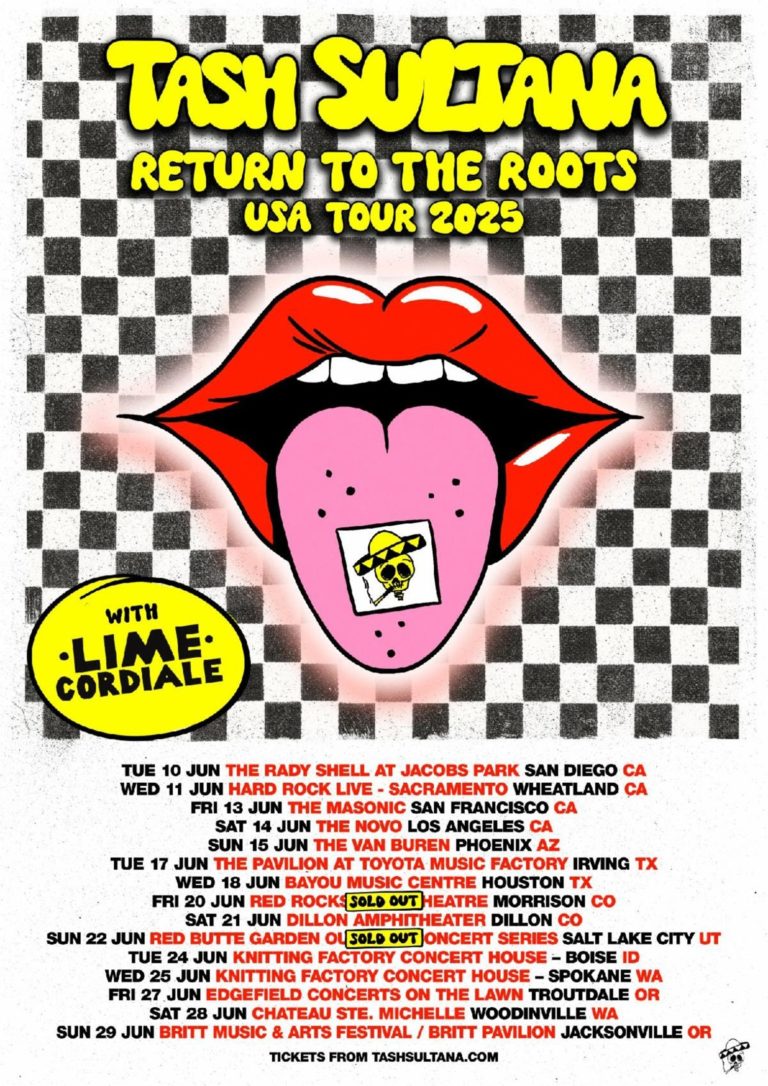
Hot off a lightning-fast sell-out at Red Rocks in Morrison, Colorado, TASH SULTANA is set to embark on a massive 2025 U.S. tour—bringing their genre-defying sound and electrifying live energy to stages across the country. This is more than a tour—it’s a full-throttle return to the raw, immersive performances that have captivated audiences worldwide.

TASH SULTANA ‘RETURN TO THE ROOTS’ U.S.TOUR
TUESDAY JUNE 10 | THE RANDY SHELL AT JACOBS PARK, SAN DIEGO, CA
WEDNESDAY JUNE 11 | HARD ROCK LIVE – SACRAMENTO, WHEATLAND, CA
FRIDAY JUNE 13 | THE MASONIC, SAN FRANCISCO, CA
SATURDAY JUNE 14 |THE NOVO, LOS ANGELES, CA
SUNDAY JUNE 15 | THE VAN BUREN, PHOENIX, AZ
TUESDAY JUNE 17 | THE PAVILION AT TOYOTA MUSIC FACTOR, IRVING, TX
WEDNESDAY JUNE 18 | BAYOU MUSIC CENTRE, HOUSTON, TX
FRIDAY JUNE 20 | RED ROCKS AMPHITHEATRE, MORRISON, CO SOLD OUT
SATURDAY JUNE 21 | DILLON AMPHITHEATER, DILLON, CO
SUNDAY JUNE 22 |RED BUTTE GARDEN OUTDOOR CONCERT SERIES,
SALT LAKE CITY, UT SOLD OUT
TUESDAY JUNE 24 | KNITTING FACTORY CONCERT HOUSE, BOISE, ID
WEDNESDAY JUNE 25 | KNITTING FACTORY CONCERT HOUSE, SPOKANE, WA
FRIDAY JUNE 27 | EDGEFIELD CONCERTS ON THE LAWN, TROUTDALE, OR
SATURDAY JUNE 28 | CHATEAU STE. MICHELLE, WOODINVILLE, WA
SUNDAY JUNE 29 | BRITT MUSIC & ARTS FESTIVAL – BRITT PAVILION, JACKSONVILLE , OR

Robert Earl Keen’s Fan Appreciation Weekend Returns for Three-Day Americana Bash at Floore’s

0

Leave it up to beloved Texas songwriter Robert Earl Keen to ensure that a party never ends. This year, his now-legendary Fan Appreciation Day will roll all the way through Labor Day weekend with three whole nights at Floore’s Country Store in Helotes, Texas. “Fan Appreciation Day is my favorite weekend of the year,” says Keen. “Spending three days with my fans at one of my favorite venues is the only way to close out Summer, if you ask me.” As it has been for the past four years, the all-day fiesta on Labor Day proper—Monday, September 1st—will be a free event full of yet-to-be-announced guests and a Robert Earl Keen Band performance for those lucky enough to win the ticket lottery. More on that below.

New additions for this year include a special outdoor ticketed show on Saturday, August 30th, featuring Keen and his band alongside some of his favorite next-generation Americana road dogs, American Aquarium and Silverada (formerly Mike & The Moonpies). On Sunday, August 31st, Keen will bring a crowd into the much more intimate indoor venue at Floore’s for an unforgettable guitar pull—or songwriter’s round, depending on where you’re from—featuring Keen, Lori McKenna, Steve Poltz, and American Aquarium’s BJ Barham.

The Fan Appreciation Day ticket lottery for the September 1st show is live now. Enter at this link. All other tickets, including the aforementioned VIP packages, go on sale this Friday, May 30th, at noon central time and can be found right here. A note for fans wanting to travel in from out-of-state, purchase of a 3-Day VIP or General Admission ticket guarantees access to Monday’s main event.

This Labor Day weekend will conclude quite the summer for the un-retired Keen, including a number of headline dates up and down the Western U.S., as well as supporting Tyler Childers at the Hollywood Bowl and Turnpike Troubadours at Red Rocks. A full list of Robert Earl Keen Band tour dates can be found below or at robertearlkeen.com.

This week also finds Keen hosting a brand new episode of Americana Podcast: The 51st State. For this 141st episode, Keen’s guests are Rodger and Jackie Chieffalo, founders and braintrust behind Ft. Worth’s CHIEFFALO Americana stores. Keen dives into Rodger’s background in vintage beaver hats and his knack for building restoration as well as Jackie’s inspiration in sourcing vintage apparel and what sustainable fashion means to the industry. To listen to this new episode, any of the previous 140, or to learn more about Americana Podcast, please visit americanapodcast.com.

Catch Robert Earl Keen On Tour:

June 27 – Fort Worth, TX – Billy Bob’s Texas
June 29 – Houston, TX – White Oak Music Hall – The Lawn!
July 2 – Corpus Christi, TX – American Bank Center Selena Auditorium!
July 4 – Kerrville, TX – 4th On The River
July 5 – Ruidoso Downs, NM – Ruidoso Downs Racetrack@
July 6 -Taos, NM – Kit Carson Park with Hayes Carll
July 8 – Fort Collins, CO – Washington’s Foco↑
July 9 – Colorado Springs, CO – Phil Long Music Hall↑
July 11 – Chandler, AZ – Showroom at Wild Horse Pass↓
July 12 – Tucson, AZ – Rialto Theatre↓
July 14 – San Luis Obispo, CA – The Fremont Theater↓
July 15 – Monterey, CA – Golden State Theatre↓
July 16 – Novato, CA – Hopmonk Tavern↑
July 17 – Grass Valley, CA – The Center for the Arts↑
July 19 – Redmond, OR – FairWell Festival
* with Willie Nelson & Family
^ with Turnpike Troubadours
# with Tyler Childers
! with Silverada
@ with Will Banister
↑ with Kolton Moore
↓ with Kolton Moore and The Clever Few

5 Surprising Facts About George Harrison’s ‘Living in the Material World’

George Harrison’s 1973 album Living in the Material World followed the enormous success of All Things Must Pass and the Concert for Bangladesh. It topped the charts, produced a #1 single, and reflected George’s spiritual path like never before. But behind the peaceful slide guitar and devotional lyrics are hidden stories, forgotten sessions, and one very unusual dinner photo. Here are five facts you probably didn’t know about this soulful masterpiece.

1. Harrison Played Every Guitar Part on the Album
For the first time in his solo career, George Harrison didn’t call on Eric Clapton or any other guitarists. Every rhythm, lead, slide, and acoustic part on Living in the Material World was played by George himself. His playing ranges from the ferocious blues of “Sue Me, Sue You Blues” to the delicate textures of “Be Here Now.” Biographers see this as the moment he fully stepped out of the Beatles’ shadow as a guitarist. He wasn’t trying to be loud—just honest and in complete control of his sound.

2. The Last Supper-Inspired Photo Was Taken in a Hollywood Lawyer’s House
Inside the album’s gatefold is a surreal photo of George and his band seated at a long banquet table, referencing The Last Supper. But it wasn’t shot in a studio—it was taken at the home of entertainment lawyer Abe Somer. Harrison dressed in black like a priest, complete with a gun holster. Photographed by Ken Marcus, the image includes symbolic details like a nurse with a baby carriage and a distant empty wheelchair. It’s a portrait of spiritual confusion and material excess—wrapped in humor and mystery.

3. He Gave Away Most of the Album’s Publishing Royalties
George Harrison donated the copyright of nine out of eleven songs on Living in the Material World to his Material World Charitable Foundation. This meant the royalties from the album went directly to causes he believed in. The foundation still exists today and funds projects related to education, poverty relief, and music preservation. For George, the message wasn’t just in the music—it was in the money too. He wanted the album to serve a higher purpose long after it left the charts.

4. “Give Me Love” Knocked McCartney Off the Top of the Charts
“Give Me Love (Give Me Peace on Earth)” became Harrison’s second U.S. #1 single in June 1973, replacing Paul McCartney’s “My Love” at the top of the Billboard Hot 100. It marked the only time two former Beatles held the #1 and #2 spots in America. George didn’t tour, promote, or even appear publicly to celebrate the song’s success. He let the music do the work while he chanted Hare Krishna and worked in his garden at Friar Park. The quiet Beatle was also the most quietly dominant.

5. The Album Features One of the First Uses of Kirlian Photography in Rock
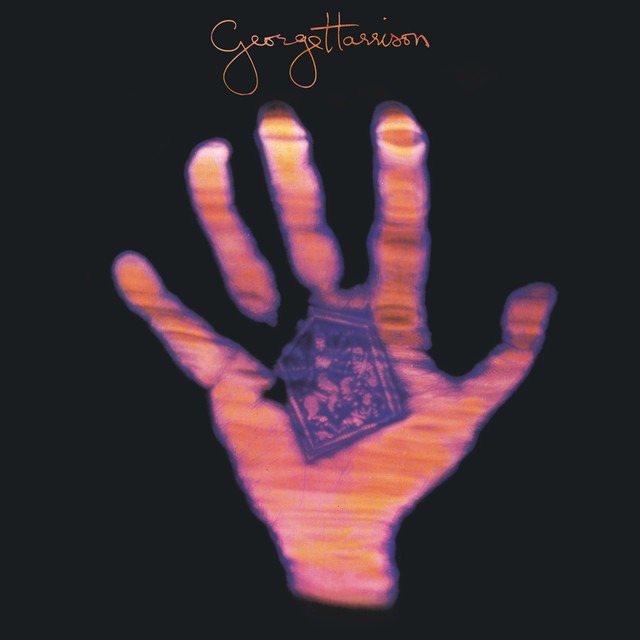
The glowing, supernatural image on the album cover isn’t a painting or a Photoshop trick. It’s a Kirlian photograph—a technique that captures energy fields around objects using high-voltage exposure. George had his hand photographed at UCLA’s parapsychology department while holding a Hindu medallion. On the back cover, he holds three U.S. coins. The contrast symbolized his inner tug-of-war between spiritual enlightenment and material entanglements, a theme that runs through every track on the record.

With fewer bells and whistles than All Things Must Pass, Living in the Material World went deeper instead of louder. It gave George a second #1 album and gave listeners a glimpse into his soul. For a man who wanted nothing more than peace on earth, this record brought him closer to heaven.

5 Surprising Facts About Peter Gabriel’s ‘Melt’ Album

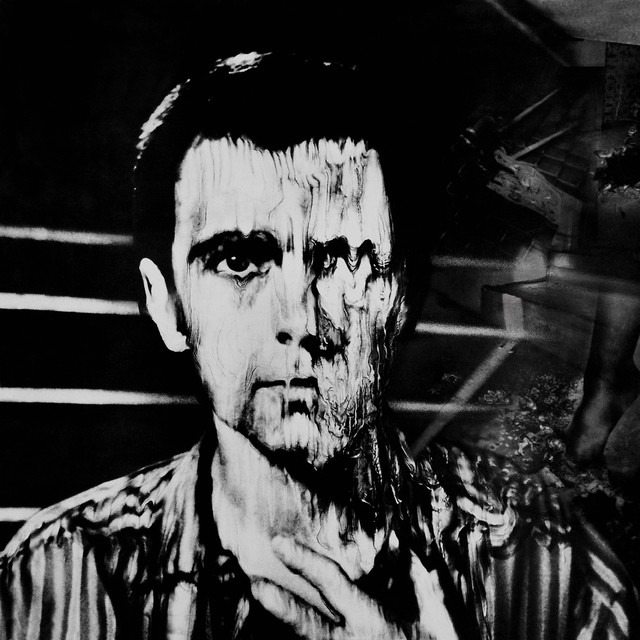
You know the album for “Games Without Frontiers” and “Biko.” You might even call it Melt without knowing that’s not its official name. But Peter Gabriel’s third solo record, released May 30, 1980, is one of the most innovative albums of its era—and its impact still echoes today. Here are 5 things you might not know about it.

1. The Iconic Drum Sound Was Born From a Ban on Cymbals
When Peter Gabriel told Phil Collins and Jerry Marotta not to use cymbals, it wasn’t a gimmick—it was a creative constraint. The result? A sound that would reshape the 1980s. With producer Steve Lillywhite and engineer Hugh Padgham, Collins stumbled upon what we now call “gated reverb.” It debuted on the track “Intruder,” and its thunderous, clipped echo became a staple of the decade’s biggest hits. Phil liked it so much, he used it on “In the Air Tonight.”

2. One of the Album’s Songs Was Almost Shelved Over a Guitar Solo
“I Don’t Remember” features the legendary Robert Fripp on guitar—but his wild, experimental solo didn’t go over well with label execs. One executive at Charisma Records thought it was too uncommercial for radio. So instead of being the A-side, the song got buried as the B-side to “Games Without Frontiers.” Fans eventually got to hear it in all its unfiltered glory, but not before a battle over what “radio-friendly” even meant.

3. The Album’s Melting Face Was Made With a Polaroid and Patience
That famous cover of Peter Gabriel’s face dripping into oblivion wasn’t computer-generated—it was handcrafted. The effect came from using a Polaroid SX-70 camera and physically smearing the image as it developed. Gabriel himself helped manipulate the shots. Storm Thorgerson of Hipgnosis said Gabriel’s willingness to look “unflattering” was part of what made him such an artistic force. The image stuck, and the album’s unofficial nickname, Melt, was born.

4. Kate Bush’s Voice Is on the Album—but She Wasn’t Credited at First
That haunting chorus of “Jeux sans frontières” on “Games Without Frontiers”? That’s Kate Bush. But Gabriel didn’t publicize her involvement until after the song became a hit. Steve Lillywhite, the album’s producer, guided her vocal takes while Robert Fripp argued they already had the perfect one. Bush completed her part in 30 minutes, but her identity remained a mystery to many listeners until the single climbed the charts.

5. Atlantic Records Thought the Album Was a Career Killer
Before Melt was released, Atlantic Records heard early mixes and passed. One executive reportedly asked, “Has Peter been in a mental hospital?” and dismissed “Biko” with, “What do Americans care about this guy in South Africa?” The album was dropped—only for Mercury to pick it up and release it in the U.S. After “Games Without Frontiers” charted, Atlantic scrambled to get Gabriel back. But he had moved on. Vindicated by fans, he never looked back.

Gabriel’s third solo album redefined what a rock record could be—sonically daring, politically fearless, and emotionally raw. It didn’t follow the rules. It made its own. And four decades later, Melt is still dripping with influence.