Home Blog Page 642

DORO Unleashes New Metal Anthem “Warriors of the Sea” and Sets Sail on Massive 2025 Tour

0

Legendary metal icon DORO unleashes a brand-new powerhouse anthem, “Warriors of the Sea,” released today via Rare Diamonds Productions / Rough Trade. This electrifying track is already capturing the hearts of rock and metal fans worldwide, delivering the fierce energy and passion that has defined DORO’s storied career.

With “Warriors of the Sea,” DORO channels a heartfelt intensity and unyielding power. “I wanted to create an anthem that goes straight to the heart,” DORO shares. “It’s a song that brings joy — on land and at sea, especially on one of the many metal cruises — and expresses a strong sense of unity.” The song features DORO’s unmistakable voice soaring over thunderous choirs, amplifying its epic atmosphere and uniting fans in a celebration of heavy metal spirit.

This new single perfectly embodies what DORO has stood for over decades: uncompromising heavy metal power , raw emotion, and a genuine connection with her audience. Whether you’re rocking out on land or sailing the waves of a metal cruise, “Warriors of the Sea” is the anthem to rally behind.

DORO Tour Dates:
31.05.25 DE – Köln – Metal Queen Metal Cruise SOLD OUT
01.06.25 DE – Köln – Metal Queen Metal Cruise LAST TICKETS
05.06.25 SE – Sölvesborg – Sweden Rock Festival
06.06.25 DE – Loburg – Wir leben laut Festival
14.06.25 FIN – Vaasa – Lisää Löylyä Festival
21.06.25 DE – Uelzen – Metal Air Uelzen
27.06.25 CZ – Spálené Poříčí – Basinfirefest
29.06.25 ES – Barcelona – Rock Fest Barcelona
11.07.25 DE – Wertheim – Burg Wertheim
13.07.25 BG – Mogilovo – Midalidare Rock in the Wine Valley
26.07.25 DE – Thalmässing – Pyraser Classic Rock Night
08.08.25 DE – Gersthofen – Rasenkonzerte
09.08.25 BE – Kortrijk – Alcatraz Festival
14.08.25 DE – Würselen – Burg Wilhelmstein
16.08.25 DE – Illingen – Burg Open Air 2025
23.08.25 CH – Aarburg – Riverside Festival
28.08.25 DE – Burgebrach – Sternenfestival
06.09.25 IL – St Charles – Arcada Theatre

WINTER MAGIC TOUR 2025
15.12.25 DE – Berlin – Huyxleys Neue Welt
16.12.25 DE – Kiel – Max
17.12.25 DE – Herford – Kulturwerk
19.12.25 DE – Mannheim – Maimarktclub
20.12.25 DE – Ulm – Roxy
21.12.25 DE – Nürnberg – Löwensaal

How Private Jet Aircraft Management Maximizes Safety and ROI

0

Owning a private jet symbolizes luxury, freedom, and convenience, but it also comes with significant operational responsibilities. From maintenance scheduling and regulatory compliance to staffing and financial oversight, managing an aircraft requires expertise and constant attention. That’s where private jet aircraft management services step in, offering comprehensive solutions that not only keep your aircraft operating safely but also help you maximize return on investment (ROI).

In this article, we’ll explore how private jet management enhances both safety and profitability, making it an essential service for any jet owner.


What Is Private Jet Aircraft Management?

Private jet aircraft management refers to the professional oversight of all aspects of owning and operating a private aircraft. This includes:

  • Flight operations

  • Maintenance coordination

  • Regulatory compliance

  • Pilot and crew staffing

  • Charter revenue management

  • Insurance and financial reporting

  • Hangar and fuel arrangements

Owners can choose full-service management or tailored solutions depending on their needs. These services are offered by specialized aviation companies that act on the owner’s behalf to streamline operations and reduce risk.


Maximizing Safety Through Professional Management

1. Maintenance and Compliance

A core pillar of aviation safety is proper maintenance. Professional management ensures your jet adheres to strict maintenance schedules and complies with FAA, EASA, or other aviation authority regulations. This includes:

  • Scheduled and unscheduled maintenance

  • Logbook management

  • Safety inspections

  • Airworthiness directives (AD) compliance

  • Service bulletin tracking

With private jet aircraft management, these tasks are handled proactively and meticulously, minimizing downtime and ensuring that your aircraft is always flight-ready.

2. Experienced Pilots and Crew

Recruiting and managing flight crews is a critical component of safe operation. Management companies hire only highly experienced pilots and cabin staff who meet or exceed industry standards. They handle:

  • Background checks and certifications

  • Recurring training programs

  • Health screenings

  • Simulator checks and emergency procedure drills

This guarantees your flight is not only safe but also operates with a level of professionalism expected in private aviation.

3. Operational Risk Management

From weather analysis to airport safety audits, private jet management teams conduct rigorous risk assessments before every flight. They monitor:

  • Weather conditions

  • Destination security

  • Fuel availability and alternate planning

  • Air traffic delays and rerouting options

These preemptive measures reduce the chance of in-flight issues or last-minute cancellations, ensuring the highest level of safety and reliability.


Boosting ROI with Strategic Jet Management

Beyond safety, private jet aircraft management can significantly impact your aircraft’s financial performance. Whether you’re using your jet personally or offering it for charter, professional oversight can increase ROI in several ways.

1. Charter Revenue Generation

Many management companies offer the option to charter your jet when it’s not in use. This offsets ownership costs and can generate significant revenue. They handle:

  • Marketing your aircraft through global charter networks

  • Scheduling flights and managing passenger services

  • Ensuring compliance with commercial regulations

  • Billing and client management

Because they work with brokers and high-end clients, professional managers can secure premium charter rates and ensure your aircraft remains active.

2. Optimized Operational Costs

Cost efficiency is another major benefit of private jet management. Professionals have access to industry discounts and strategic vendor relationships that reduce expenses like:

  • Fuel costs (via fuel programs)

  • Maintenance services

  • Hangar rentals

  • Insurance premiums

  • Crew training and benefits

Bulk purchasing and expert negotiation save you money across the board, which improves your long-term ROI.

3. Asset Preservation and Resale Value

Proper maintenance and usage tracking not only keep your aircraft safe but also preserve its value. Should you decide to sell or upgrade, a professionally managed aircraft with detailed maintenance records and a strong flight history will command a higher market price.


Choosing the Right Private Jet Management Company

The effectiveness of private jet aircraft management depends on the quality of the management provider. Here’s what to look for:

  • Certification and Credentials: Make sure the company holds an FAA Part 135 certificate (if offering charter) and has a strong compliance record.

  • Experience: Look for providers with a proven track record in managing aircraft similar to yours.

  • Transparency: The best companies offer detailed financial reporting, billing breakdowns, and real-time access to operational data.

  • Customization: Choose a provider that tailors services to your flying habits, aircraft type, and financial goals.

  • Global Reach: If you fly internationally, select a management firm with worldwide operational capability and multilingual staff.


Final Thoughts

Owning a private jet is both a lifestyle and an investment. To protect that investment and enjoy the full benefits of private aviation, professional private jet aircraft management is a smart and strategic choice. It provides peace of mind, ensures peak operational safety, and opens the door to meaningful financial returns through optimized costs and charter revenue.

Whether you’re a first-time jet owner or a seasoned aviation investor, partnering with an expert private jet management team can transform the complexity of ownership into a seamless, safe, and profitable experience.

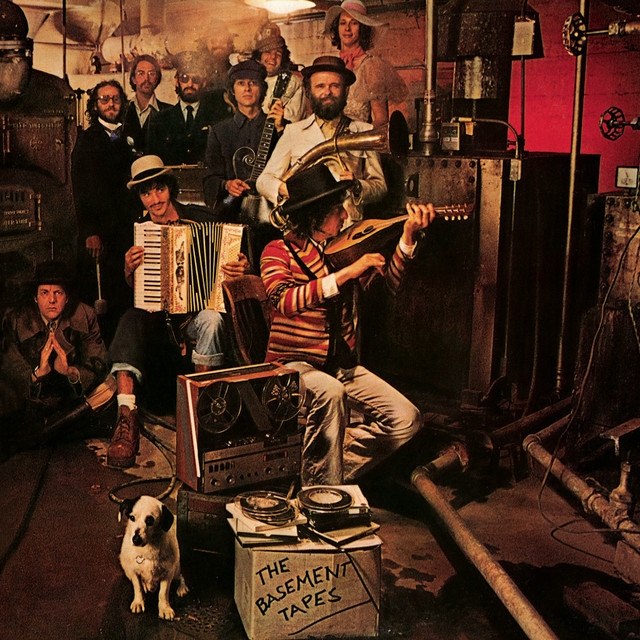
5 Surprising Facts About Bob Dylan and The Band’s ‘The Basement Tapes’

Bob Dylan and the Band made music in the late ’60s that still echoes through Americana, indie rock, and roots music today. ‘The Basement Tapes,’ released on June 26, 1975, carries stories that stretch far beyond what the surface tells you. Here are five facts about the sessions that shaped the album — and shaped the future of folk-rock in the process.

1. The Original Tracklist? Just the Tip of the Iceberg
The Basement Tapes album that landed in record stores in 1975 only showed part of the picture. More than 100 songs were captured during those mythic Woodstock sessions in 1967, but just 16 Dylan-led tracks made the cut. Columbia filled out the rest with eight Band recordings, some made years later. Imagine a vault so deep, it took 39 more years before fans got the full 6-disc treatment in The Basement Tapes Complete.

2. Dylan and the Band Turned a Basement Into a Sound Lab
Forget fancy studios. Dylan and the Band wired up the basement of “Big Pink,” their rented house in West Saugerties, NY, with borrowed mixers and microphones. With dogs underfoot, windows wide open, and chairs that creaked louder than cymbals, they crafted some of the most timeless songs ever written. The vibe was all about comfort, laughter, and a whole lot of unfiltered creativity.

3. They Wrote Songs So Good, Other Artists Couldn’t Wait
Before Dylan ever released these tracks himself, his songwriting did the talking. “You Ain’t Goin’ Nowhere,” “This Wheel’s On Fire,” and “I Shall Be Released” made their way to the Byrds, Julie Driscoll, and The Band’s own debut album Music from Big Pink. Publishing demos sent to other artists turned into chart hits — long before the world knew where the songs came from.

4. “Tears of Rage” Was Written on the Spot — Literally
One morning, Dylan handed Richard Manuel a freshly typed lyric sheet and asked if he had any music for it. Manuel sat down, matched the haunting words with a few chords, and just like that, “Tears of Rage” was born. No meetings, no rewrites, just spontaneous brilliance between two players who trusted each other’s instincts more than a recording contract.

5. The Basement Tapes Helped Invent Americana Before It Had a Name
With a mix of folk, blues, country, gospel, and straight-up surreal storytelling, The Basement Tapes laid the foundation for an entire genre. Long before “Americana” filled playlists and festival posters, Dylan and the Band were channeling a mythic version of America filled with outlaws, heartbreak, and humor. They didn’t follow a trend. They created one.

Dylan and the Band made songs that sounded like they came from the earth itself. Tucked away in the Catskills, they created a sound that echoed with ghosts, gospel, and good times. And once you’ve heard it, it’s hard to imagine a world without it. And that would be just silly.

Stereolab Return With First Album in 15 Years, ‘Instant Holograms On Metal Film’

0

Stereolab have released their first album in 15 years – Instant Holograms On Metal Film is out now on all major platforms. Speaking on the album’s creation, Tim Gane says: “The idea to record a new LP came into focus around spring/summer 2023 and we started recording in January 2024. There were no rehearsals, as usual. We started again from scratch. “Always a beginner” is my attitude to things, just feeling my way through. Music is just an exciting adventure and I don’t have any trepidation about doing it or presenting it to others. What comes out comes out.”

Laetitia Sadier adds: “I see everything as a continuum with no determined sections, that bears no relation to what has come before or will come after. In the case of Stereolab, Tim is primary composer. On this LP, I did, however, have much more musical input than before. And indeed I had had some practice through developing my own music over the past years, which surely nourished the sound and general configuration.”

Instant Holograms On Metal Film is co-released by the band’s own label Duophonic UHF Disks, and Warp Records. Featuring thirteen songs written by Laetitia Sadier and Tim Gane; performed by Laetitia, Tim, Andy Ramsay, Joe Watson and Xavi Mu-oz, who comprise the current touring line-up of the band and guest contributions by Cooper Crain and Rob Frye (Bitchin Bajas), Ben LaMar Gay (International Anthem), Ric Elsworth, Holger Zapf (Cavern Of Anti-Matter), Marie Merlet and Molly Hansen Read.

On working with Cooper Crain, Tim comments: “I’m a big fan of Bitchin’ Bajas and we had toured with then in the US in 2019 so got to know them well. When we decided to make a new record, he was the only person I had in mind and luckily he could do it. Just like (previous collaborators) John McEntire and Jim O’Rourke, he is an inventive musician as well as a great engineer/producer, and that’s what we like.”

In terms of the subject matter, lyric writer Laetitia summarises: “As the world falls apart, whether we are aware of it or not, we are already planting the seeds of what will come next. I think it is important to keep in sight what powerful creators we are, and how there is power available to us at this stage to choose what outcome we would like to see for this yet undefined future. The words seek to expose that this is what we do: we create. Our imagination is here to serve that purpose, and is the power we have to choose whatever it is we want to see come about. Some privileged people do not like the idea of sharing this power with the people at large.”

A Killer’s Confession Unleash Dark New Single “Hollow” Ahead of Machines Vs Monsters Tour With Static-X and GWAR

0

A Killer’s Confession, the band led by vocalist Waylon Reavis, released a new single and video “Hollow”, the follow up to the recently released track “In Case of Emergency” which featured Waylon’s former Mushroomhead bandmate Jason “JMann” Popson.

In discussing the new single, Waylon Reavis said, “Hollow” is the next chapter in a dark, psychological journey. Picking up where “Victim 1” left off, we meet Victim 2 and the lines between right and wrong blur.

He adds “As our protagonist descends deeper into his own judgment, there’s no turning back. “Hollow” asks: can we be saved once we become empty? Pulling us into the gray area between salvation and self-destruction.”

The band is hitting the road to run May 23rd – June 18th called “Machines Vs Monsters” Tour which is being headlined by STATIC-X with GWAR, DOPE and A KILLER’S CONFESSION rounding out the bill.

Tour Dates:

May
23 – Tucson, AZ – Rialto Theatre (GWAR not appearing on this date)
24 – Albuquerque, NM – Revel Entertainment Center
26 – Wichita, KS – Cotillion
27 – Des Moines, IA – Val Air Ballroom
28 – St. Louis, MO – The Pageant
30 – Minneapolis, MN – The Fillmore Minneapolis
31 – Davenport, IA – Capitol Theatre

June
1 – Grand Rapids, MI – GLC Live @ 20 Monroe
3 – Indianapolis, IN – Egyptian Room @ Old National Centre
4 – Fort Wayne, IN – Clyde Theatre
5 – Wheeling, WV – Capitol Theatre
7 – Wallingford, CT – The Dome at Toyota Oakdale Theater
8 – Buffalo, NY – Buffalo RiverWorks
9 – Toronto, ON – History
10 – Montreal, QC – MTELUS
11 – Hampton Beach, NH – Hampton Beach Casino Ballroom
14 – Myrtle Beach, SC – House Of Blues
15 – Raleigh, NC – The Ritz
17 – Kansas City, MO – Grinder’s
18 – Oklahoma City, OK – The Criterion

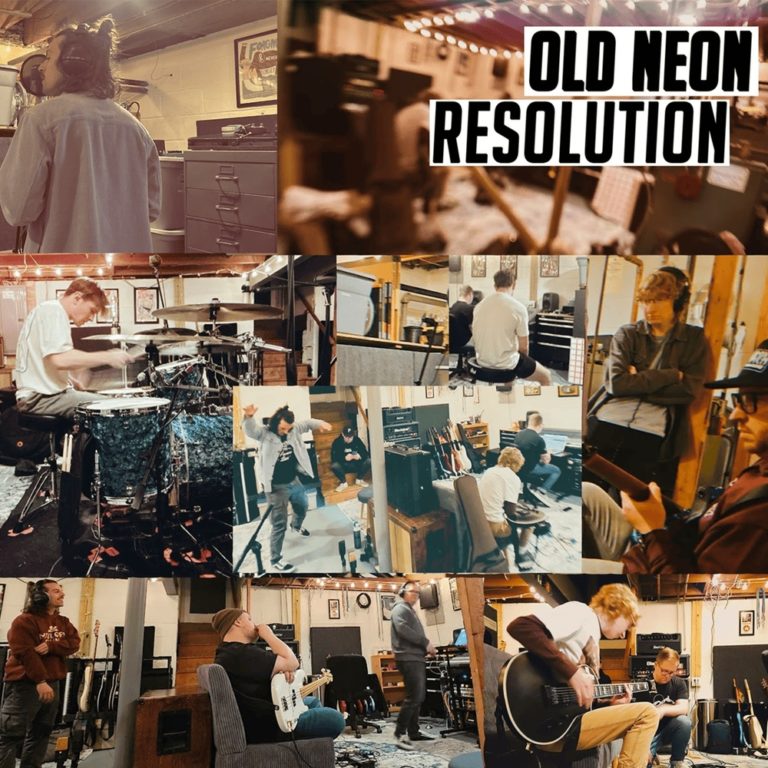
Old Neon Drop Explosive New EP ‘Resolution’ Featuring “Blizzard,” “Better Son,” and “Nobody’s Burden”

0

The wait is over for Resolution, the new EP from pop punk group Old Neon. Featuring recent singles “Better Son” and “Nobody’s Burden” and latest single “Blizzard”, the EP was produced / engineered by Matt Brasch and mixed by Nick Steinborn (The Wonder Years), in addition to mastering by Will Yip (Scowl, Balance & Composure, Movements, L.S. Dunes, The Menzingers).

“Resolution is about fighting and making things work,” explains drummer Zach Pollack. “Whether it’s regarding our internal struggles through making this EP, or the moments in time spoken to in the lyrics of each song – Resolution is about pushing forward when it’s really tough, because it’s worth it.”

Producer Matt Brasch continues: “Not only did the band make things work on this EP, they succeeded in stepping up their craft as songwriters and performers throughout the process. Months of workshopping different ideas went into writing and rewriting the songs. The details that came out of those efforts are what makes this EP so special. They dug deep for beautiful and explosive performances and even kept their minds open to making changes that stemmed from a few “mistakes.” Those specific changes quickly became some of my favorite parts of the EP. Old Neon pushed through grueling 13-hour days and did it all with passion… and the help of a bunch of Coke Zero, Wawa mac n cheese and jokes that had everyone in stitches. We’re so proud of how everything organically came together and that only happens when everyone is willing to work hard and battle for every idea.”

In-House vs Outsourced Development: A Cost Comparison That Actually Adds Up

0

By Mitch Rice

Today, software development is still the basis for project kick-offs across many industries. Yet, it requires a respective strategy on how to build your product – the decision which can be as vital as what you’re building. For both startups and established companies, the choice between in-house vs outsourced development remains a sharp one. With the need to implement cutting-edge products in an accelerated and cost-effective manner, entrepreneurs are reconsidering the way to invest their development budgets. Is hiring an in-house team worth the long-term commitment? Or does outsourcing deliver the flexibility and capacity needed to scale smartly? It all comes down to cost, and in this post, we’ll define what’s genuinely behind the numbers.

Why the in-house vs outsourced debate is still relevant in 2025

The development niche changes dynamically, but the core challenge is up for discussion: finding a harmony between control, flexibility, depth, speed, cost, and capability. Needless to say, new platforms and remote work have blurred some lines, but the option of in-house and outsourced software development still depends on the business concept and financial opportunities. As of today, more organizations seeking to streamline operational spending have made the cost factor take center stage again. The two models don’t relate only to rates or salaries – we should look deeper, at onboarding time, turnover, overhead, and scalability.

Cost Breakdown: In-House

Employing an in-house development team may seem like a safer and more efficient option at first glance, but upon closer examination, this strategy incurs a broad range of additional expenditures that increase the final budget.

Salaries

Proficient in-house developers demand competitive compensation. In the US, a mid-level software engineer can expect to earn $120,000 – $150,000 annually, excluding bonuses and equity. Hiring multiple specialists, such as backend, frontend, QA, and DevOps, can raise the needed budget pretty fast. Due to the tech talent shortages in 2025, salaries are high, especially in competitive markets.

Benefits

Aside from base pay, employers are responsible for a variety of perks. Health insurance, paid leave, 401(k) contributions, and other perks add up. On average, benefits account for 20–30% of total compensation, increasing a $120K salary to an outgoing of $156K – $ 170 K.

Equipment

For efficient work, your internal team requires not only good hardware but also software. There are subscriptions, cybersecurity tools, software licenses, and infrastructure maintenance. Thus, setting up a productive development environment can cost thousands per developer annually.

Onboarding

Successful hiring isn’t instant and requires a lot of time spent on interviews. Recruitment agency fees, background checks, training programs, and the onboarding process can delay development timelines by weeks or months. Moreover, every new hire adds to your HR and administrative overhead.

Cost Breakdown: Outsourcing

Outsourcing development has become a cost-effective approach for companies seeking rapid progress without long-term commitments. To get a clearer picture of potential expenses, you can use an outsourcing cost calculator – it provides an initial estimate tailored to your requirements and project specifics.

Hourly rates

Outsourcing rates vary by region and expertise. While US-based agencies may charge $100 – $200 per hour, top-tier developers in Eastern Europe, South America, or Southeast Asia often provide the same quality at $40 – $80 per hour. The geographic pricing difference allows businesses to achieve more value and top-quality service within the same budget.

Engagement models

The cost of outsourcing vs in-house is more flexible. This is due to the fact that outsourcing partners offer a range of engagement models (fixed-price, time-and-materials, or dedicated teams), allowing you to choose the setup that fits your budget and project aims. In contrast to in-house hiring, you are charged for what’s exactly done, with no need to pay for downtime or lengthy employment cycles.

Flexibility

Outsourcing lets you scale your team up or down without legal or contractual headaches. For instance, you can hire a UI/UX expert for just three weeks or an entire backend team for a six-month sprint. With outsourcing, you pay only for what you use, which keeps your development cost-efficient and project-focused.

Hidden Costs to Consider

Even the most transparent pricing models can conceal the cost of outsourcing vs in-house if you’re not scrutinizing them closely. The hidden costs on both sides can help you make an informed decision efficiently.

Communication overhead

Managing an external team can involve additional steps to ensure effective coordination and a cohesive partnership. No synchronization in expectations or vague documentation can require rework in the future. However, in case you opt for mature outsourcing partners, they will handle this risk with structured communication workflows and dedicated project managers.

Time zone challenges

Working across time zones may be considered a barrier, but in practice, it can be turned into an advantage if implemented correctly and managed effectively. Here, the initial setup may require planning for handoffs and overlaps, but in the long run, asynchronous development can accelerate delivery cycles with the right processes in place.

Turnover

Employee churn affects both in-house and outsourced teams. However, in-house turnover tends to be more disruptive. When a key developer leaves, the hiring cycle starts over. Outsourcing partners can equip you with bench strength and replace or provide more resources with minimal delay.

Quality & Scalability Factors

Cost is only one of the core aspects you should consider. Another point to think over is the ability to deliver high-quality code and scale your team efficiently, which directly impacts your project’s success.

In-house teams often possess a deep understanding of the product and institutional knowledge, which can enhance quality within a long-term partnership. Nevertheless, scaling with too much speed can be a complicated task, specifically if you’re limited by local hiring pools or internal bandwidth. Outsourcing providers can rapidly deploy experienced developers across various tech stacks, an advantage during high-growth phases or when working with tight deadlines. Moreover, lots of trusted outsourcing firms ensure that tried-and-true development flow, QA practices, and DevOps capabilities are in place.

When one model may be better long term

The proper choice is all about catering to your business goals. In-house development may be better suited for companies with resilient, long-term product roadmaps and a need for tight integration between tech and business teams. Conversely, outsourcing is a solid fit in dynamic environments, concentrating on agility, accelerated time-to-market, and specialized skills without long-term engagement.

Case Scenarios

The right choice can be made when deeply analyzing the size, needs, and stage of your business.

  • Startups benefit from outsourcing during early product development, necessitating faster deployment and budget control. They can validate ideas, implement Minimum Viable Products (MVPs), and scale without the burden of permanent hires.
  • Scale-ups often adopt hybrid models, keeping a lean in-house core team while outsourcing specialized functions or overflow work. This approach gives the best of both worlds, providing continuity with flexibility.
  • Enterprises may keep strategic development in-house but outsource legacy maintenance, integrations, or experimental initiatives. For them, outsourcing is a tool for optimizing internal capacity and innovation cycles.

Conclusion

Choosing between in-house and outsourced development is a strategic decision that impacts the entire product flow.

When evaluating the cost options of in-house versus outsourcing, businesses must look for more than surface-level comparisons and account for rates, perks, onboarding, and hidden friction points. 

  • For startups seeking fast delivery and predictable costs, outsourcing is often the smarter play. 
  • For organizations that prioritize deep product knowledge and control, in-house development may be worth the investment. 

In many cases, a hybrid model can arm your organizations with the maximum value from both of these models. Considering all of these factors, the right approach is the one that keeps your roadmap progress seamless while optimizing your financial resource allocation.

Data and information are provided for informational purposes only, and are not intended for investment or other purposes.


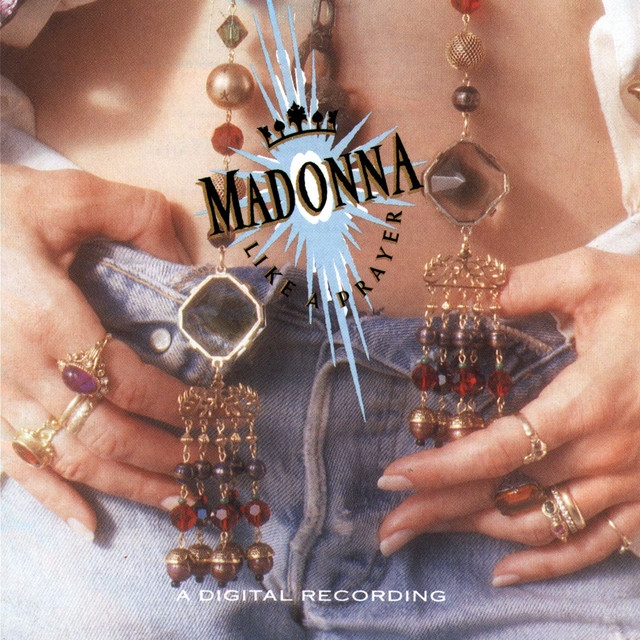
5 Surprising Facts About Madonna’s ‘Like A Prayer’

When Like a Prayer dropped on March 21, 1989, Madonna took a rosary, a Stratocaster, and a bottle of patchouli and made one of the boldest albums in pop history. Gospel choirs met sexual innuendo, and a Pepsi deal met the Vatican’s outrage. This album brought glitter to grief, prayer to the dancefloor, and turned spiritual struggle into stadium-shaking pop. These five facts tell the full story—holy, horny, and wholly unforgettable.

1. Prince Played on the Album in All His Purple Glory—No Credit Needed
Prince joined Madonna for “Love Song,” sent guitar magic for “Like a Prayer” and “Act of Contrition,” and dropped funk into “Keep It Together.” He and Madonna exchanged tapes from Paisley Park to L.A. in a long-distance musical seduction. No drama, no headlines—just two icons creating at their own frequency. No liner note needed when the fingerprints are that purple.

2. The Album Came With Patchouli Oil and a Message About Condoms
Every vinyl copy of Like a Prayer came scented with patchouli—because nothing says ’60s Catholic rebellion like incense from your local headshop. Alongside the spiritual perfume came an AIDS awareness insert about compassion, protection, and staying informed. This marked one of the first times a mainstream artist put safe sex literature in the hands of fans. Church, meet club. Club, meet conscience.

3. One Lyric Caused a Panic—and Madonna Kept It With a Smile
The lyric “I’m down on my knees, I wanna take you there” had producer Patrick Leonard sweating harder than a Sunday school teacher. He flagged it as too provocative. Madonna held firm. The lyric stayed, the controversy grew, and the song turned into a cultural explosion. No edits. No apologies. Just art meeting nerve.

4. The Video Sparked Global Outrage and Artistic Triumph
The “Like a Prayer” video featured Madonna with stigmata, a Black saint, and burning crosses—all set in a dreamlike church. Pepsi aired their commercial using the song, and within days, pulled the plug after protests. Madonna kept her $5 million, turned the controversy into iconography, and ignited a pop firestorm. MTV looped it, critics debated it, and fans felt something holy rise from the static.

5. The Choir Brought the Heavens To The Dancefloor 
Andraé Crouch and his gospel choir entered the studio after reading the lyrics line by line. Their harmonies brought uplift, spirit, and full-body chills to “Like a Prayer.” Meanwhile, Madonna recorded vocals through raw emotion and spiritual weight. Her voice cracked. The session became a sacred space where pop met prayer and every take held both joy and release.

Like a Prayer showed how pop speaks the language of faith, sex, grief, and growth—sometimes in the same verse. Madonna made an album where every track lives between confession and celebration. She used music to face her ghosts, question her church, and lift the roof with power chords and choirs. This wasn’t an ‘era’ like it would be called today—it’s a history-making gospel that still sings.

Vincent Mason Delivers Grit and Heart With New Single “Painkiller”

0


Rising Interscope/MCA Nashville/Music Soup songwriter and artist Vincent Mason strikes again with new song “Painkiller,” an electrifying, guitar-heavy track that blends high-energy country with lyrics about love and loneliness. Now available everywhere you stream and download music, “Painkiller” takes you on a journey of the perfect girl walking into your life and leaving a lasting impression when you need it most. Vincent co-wrote this track with hit makers Jessie Jo Dillon, Luke Laird, and Chase McDaniel. With a foot-stomping beat, soaring guitar riffs, and Mason’s unmistakable Southern drawl, the track captures the rush of new love and the unexpected way it can fix what’s broken.

“‘Painkiller’ is one of my favorite songs I’ve put out so far. I wrote this with one of my songwriting heroes, Luke Laird, and two of my favorite writers in town, Jessie Jo Dillon and Chase McDaniel,” shares Mason. “The record has a lot of different sides to it, and I’m excited to share this one first.”

This is the perfect follow-up to his recent releases this year, “Wish You Well” and “Waitin’ On You To Wear Off,” as it is the latest showcase of Mason’s unique ability to balance vulnerability and grit, delivering lyrics that hit home with a punch and a melody that sticks. “Painkiller” is proof that “the rising star keeps delivering hit after hit” (Country Now). His breakout single “Hell is a Dance Floor” racked up over 160 million streams and was just RIAA-certified Gold.

Mason has spent the majority of 2025 so far on his first headline tour, the Hell Is A Dance Floor Tour, which sold out during presales and added a second leg due to high demand. He continues on the road, joining Riley GreenLuke BryanJordan Davis, and Parker McCollum as an opening act for select dates in 2025, along with performances at festivals nationwide.

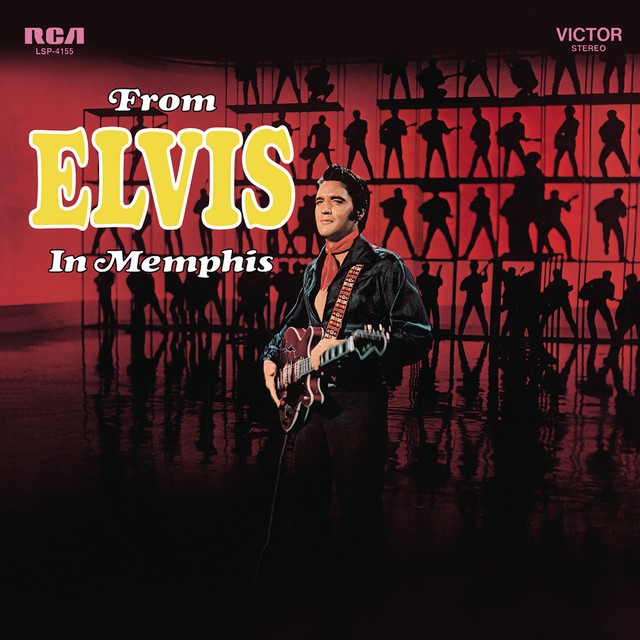
5 Surprising Facts About Elvis Presley’s ‘From Elvis In Memphis’

When Elvis Presley strolled into American Sound Studio in 1969—velvet voice, rhinestone swagger, and a cold in tow—he didn’t want to cut same old another album. From Elvis in Memphis became the King’s rebirth, a gritty, gospel-tinged, soul-splashed comeback that shoved him out of the Hollywood soundtrack haze and back into the artistic ring. Critics now call it one of the greatest albums of all time—but let’s dive into five lesser-known gems buried in its glittering legacy.

1. Elvis Nearly Didn’t Record “In the Ghetto” Because It Was Too “Controversial”
Mac Davis’ “In the Ghetto” had been floating around the studio, full of social bite and poetic grit. Elvis initially hesitated—worried the subject matter might upset his audience. But when producer Chips Moman threatened to hand it over to Rosey Grier instead, and Elvis’s inner circle gave him a nudge, he laid it down in 23 takes. That haunting piano and Presley’s trembling sincerity? A turning point, they call it.

2. The Memphis Boys Brought Their A-Game, But Elvis Came With a Cold
The house band at American Sound—Reggie Young, Gene Chrisman, Bobby Emmons, and more—were red-hot hitmakers. But when Elvis showed up for the first session, he was congested and croaky. You can actually hear the roughness in his voice on “Long Black Limousine.” Instead of stopping the show, they leaned into it. That rasp became part of the album’s raw, soul-drenched magic. Who needs perfection when you’ve got authenticity?

3. RCA Wanted Control—Elvis and Moman Fought for Freedom
Presley was signed to RCA, a label that preferred its stars to record under its roof. But Elvis refused to go back to Studio B in Nashville. Instead, he teamed up with Moman, and when Hill & Range tried to muscle in on publishing rights, Moman told them to pack up and leave. Elvis backed him fully. For one of the only times in his career, Elvis recorded exactly what he wanted—with the people he trusted.

4. Elvis Played Piano and Guitar on the Album—And Even His Team Was Shocked
On tracks like “I’ll Hold You in My Heart” and “After Loving You,” Elvis was singing, sure, and he was on keys and guitar, shaping the emotional tone of each track. It’s easy to forget that he was more than a velvet crooner. This wasn’t a Hollywood set, this is where he belonged. It was Elvis, hands on the strings, heart on his sleeve, proving to the world (and maybe to himself) that he still had it.

5. The Album Nearly Didn’t Happen—Until a TV Special Changed Everything
Before Memphis, there was The ’68 Comeback Special, where Elvis ditched the formula and plugged back into his roots. Originally slated to sing Christmas carols, Elvis tore through “Trouble” and “Guitar Man” in leather and fire. That special’s success was the shove he needed. And with From Elvis in Memphis, he kept that promise—one soulful, sweaty track at a time.

From Elvis in Memphis sounded like he was a man breaking free from a system, reclaiming his voice, and putting Memphis soul on a pedestal next to rock and country. It birthed “Suspicious Minds,” “Kentucky Rain,” and the chilling echo of “In the Ghetto”—songs that sounded like truth, not showbiz. This album reminded us he’d never left.