Home Blog Page 644

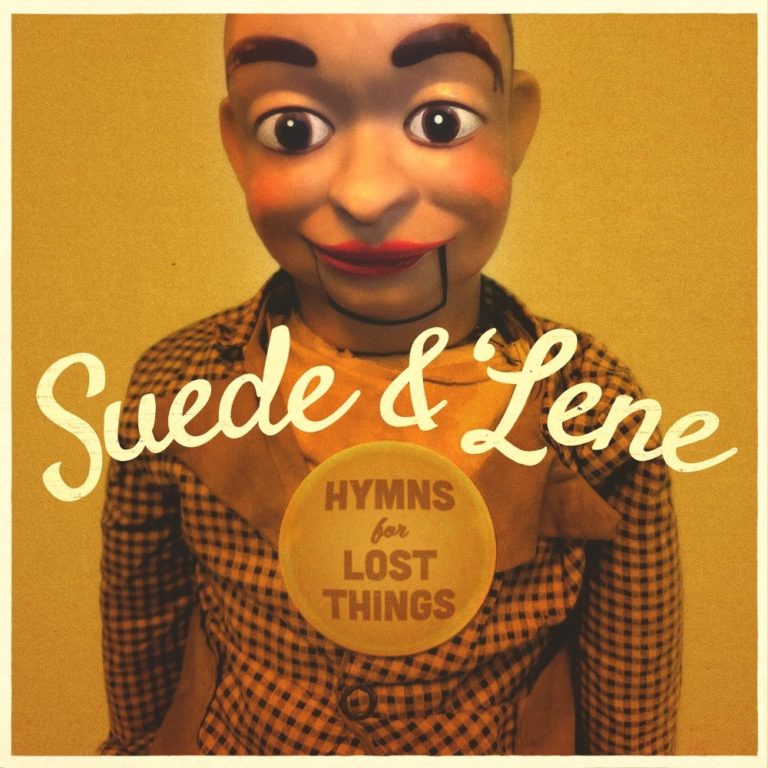
Suede & ‘Lene Share “B.O.T.T.” From Debut Album, Led by Angelo Petraglia and Eulene Sherman

0

SUEDE & ‘LENE – the Nashville-based band led by GRAMMY Award-winning songwriter/producer Angelo Petraglia (Kings of Leon, Patty Griffin, Emmylou Harris, Taylor Swift) and powerhouse frontwoman Eulene Sherman – have shared their newest single, “B.O.T.T.,” a track they describe as “a love letter that sounds like it was written in a rent controlled haunt on Amsterdam Avenue in New York City.”

Infused with smooth harmonies and wailing saxophone, “B.O.T.T.” paints a picture of a wine-filled summer night with a lover while an album of love and loss is playing low in the background on the stereo.

SUEDE & ‘LENE didn’t plan this. Not really. One minute, Angelo Petraglia, a seasoned Nashville songmaker and sonic architect known for his work with artists spanning Carrie Underwood, Taylor Swift, and Trisha Yearwood to Kim Richey, The Black Keys, and Peter Wolf, was firing off songs in the worn-in corner of their 100-year-old Nashville bungalow.

The next, Eulene Sherman, a classically-trained singer, actor, and frontwoman with such acclaimed combos as The Jane Shermans, was weaving harmonies, basslines and melodies into the mix. It wasn’t a band yet – just the buzz of two people with too much music in their heads to ignore it.But the songs wouldn’t stop. Coffee-fueled jam sessions turned into notebooks full of ideas. Somewhere along the way, the two New York City-born, Nashville transplants realized they weren’t just dabbling – they were building something special. Angelo and Eulene decided they wanted more. More sound, more voices, more dimension.

A handpicked group of crack players were enlisted to flesh out their songs with the same deliberate care that birthed them, veteran musicians like 3x GRAMMY® Award winning mandolinist Sam Bush (New Grass Revival, Lyle Lovett, Emmylou Harris) and pedal steel master Dan Dugmore (Linda Ronstadt, James Taylor).

What had started as a loose idea snowballed into an epic recording spree.

“It was coming fast,” Petraglia says, “it was really flowing.”

SUEDE & ‘LENE somehow narrowed their prolific chaos in the tightly focused 10 tracks that comprise their lively and inventive debut album.

From the autobiographical “Nashville ‘93”and slinky, insistent “B.O.T.T.” to the anthemic “Livin In The Country” and the Stooges-style rocker “I Was In a Cult,” SUEDE & ‘LENE have crafted a collection of songs that sounds like a collision of worlds – sweet but unpolished, intricate but impulsive, balancing razor-sharp instincts with raw, unvarnished intimacy and concise social commentary.

“A Message From Jane” may well be the LPs artistic centerpiece, introducing a fictional protagonist, “Jane,” whose arresting reflections on life pour out as she struggles with her life as a musical artist throughout the album.

“She’s trying to get that recognition, but not really feeling it all the time,” says Petraglia, “sometimes being used and experiencing the disappointment that comes with it. Hopefully, Jane’s still around.”

Concocted from the wisdom of experience, well-oiled skill, and just the right blend of confidence and humility, SUEDE & ‘LENE have fused their myriad talents and musical approaches into a truly remarkable debut album – inspired, modern, and, uniquely their own.

Summer Camp Music Festival Announces 25th Anniversary Loyalty Presale for 2026

0

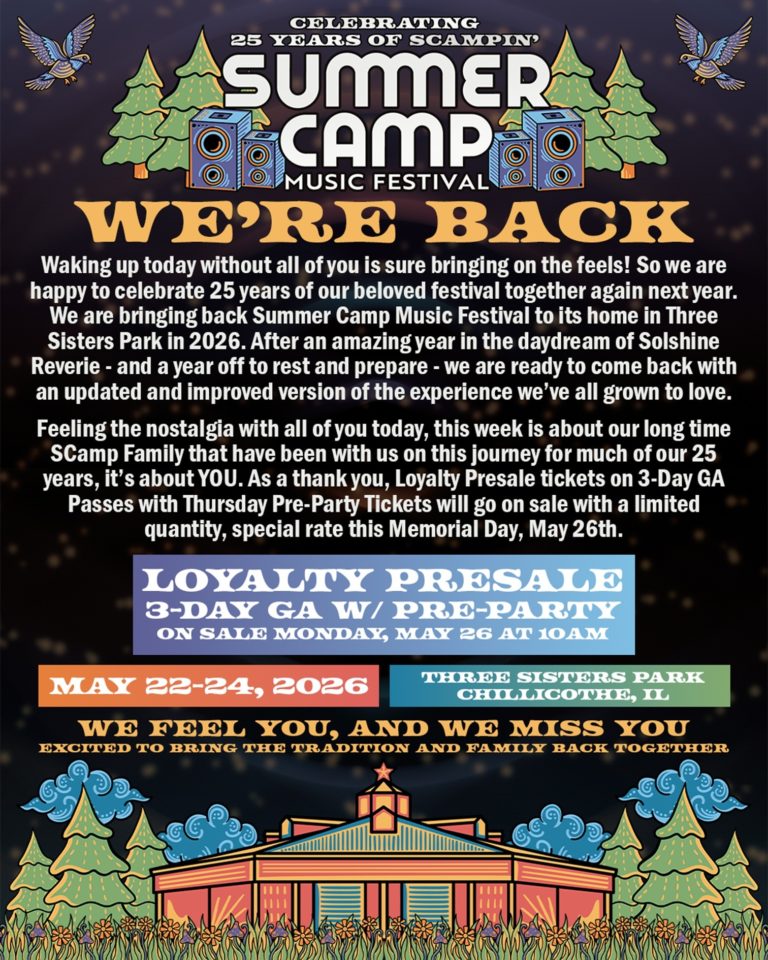
Summer Camp Music Festival is thrilled to announce that a Loyalty Presale for its highly anticipated 25th Anniversary celebration in 2026 will go on sale Monday, May 26 at 10:00 AM CT. This special release honors the festival’s deep-rooted tradition of taking place over Memorial Day Weekend at Three Sisters Park in Chillicothe, Illinois.

While the festival took a planned hiatus in 2025, organizers are offering fans a chance to secure their spot early for what is set to be one of the most memorable Summer Camp celebrations to date. The 2026 edition will mark 25 years of music, community, and connection, and will see the return of the multi-genre, multi-day experience that has become a cornerstone of the Midwest music scene and beyond.

The Loyalty Presale offering will include discounted 3-Day General Admission Passes with the inclusion of a Thursday Pre-Party ticket, available for a limited time and only while supplies last. These tickets are a thank you to the SCamp community for two and a half decades of support, and an opportunity for longtime fans to be part of the festival’s legacy year.

Ian Goldberg, Festival Founder, “Waking up today without all of you is sure bringing on the feels! So we are happy to celebrate 25 years of our beloved festival together again next year. We are bringing back Summer Camp Music Festival to its home in Three Sisters Park in 2026. After an amazing year in the daydream of Solshine Reverie – and a year off to rest and prepare – we are ready to come back with an updated and improved version of the experience we’ve all grown to love.

Feeling the nostalgia with all of you today, this week is about our long-time SCamp Family that have been with us on this journey for much of our 25 years, it’s about YOU. As a thank you, Loyalty Presale tickets on 3-Day GA Passes with Thursday Pre-Party Tickets will go on sale with a limited quantity, special rate this Memorial Day, May 26th.”

Chris Cheek’s ‘Keepers of the Eastern Door’ Melds Nature, Jazz, and Legacy with Bill Frisell and Analog Warmth

0

As European settlers moved westward from the Atlantic coast of North America, the Mohawk people – the easternmost tribe of the Iroquois Confederacy – became known as “Keepers of the Eastern Door” for their role as guardians against invasion from the encroaching colonizers.

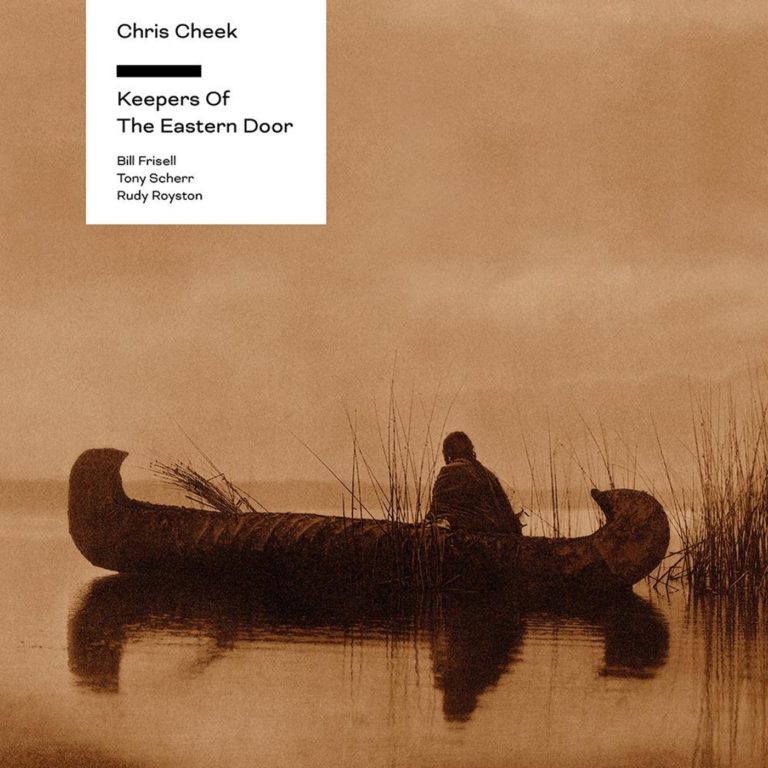
The outcome of that battle may seem inevitable from the historical perspective, but the tension at its heart, between those who respect and live in harmony with the land and those who view the Earth from a more rapacious perspective, persists. In “The Kutenai Duck Hunter,” the image by photographer and ethnologist Edward Curtis that graces the cover of his breathtaking new album, Keepers of the Eastern Door, acclaimed saxophonist and composer Chris Cheek sees those two parallel mindsets represented in the reflection of a canoe in the river as its occupant looks to the horizon – and an uncertain future.

These ideas lend richness and depth to Cheek’s stunning music throughout Keepers of the Eastern Door, out May 23, 2025 via Analog Tone Factory. The album features a remarkable all-star quartet, with Cheek joined by revered guitarist Bill Frisell, bassist Tony Scherr, and drummer Rudy Royston for a wide-ranging but harmonious repertoire including captivating originals and covers by everyone from The Beatles to Henry Purcell, Olivier Messiaen to Henry Mancini.

The idea for Keepers of the Eastern Door was born when Cheek was fascinated by another Curtis photograph, featuring a line of Native Americans on horseback dwarfed by the rock formations of Arizona’s Canyon de Chelly, at the St. Louis Art Museum. Cheek had grown up in the city, enjoying nature with his family. He realized that the same year that the sepia-tinged photo had been taken, the building in which he was viewing it had been built for the 1904 World’s Fair, aka the Louisiana Purchase Exposition – a celebration of the massive land acquisition that doubled the size of the United States.

“Having spent a lot of time in the outdoors growing up and then having lived in Boston and New York for many years, I found a schism between the natural world and the highly industrialized society that we live in,” Cheek says. “I started thinking about Keepers of the Eastern Door as a metaphor for people that try to preserve a way of life based on traditional values that are less materialistic and more respectful of our surroundings.”

These concepts were already stirring when Cheek was approached by fellow saxophonist Jerome Sabbagh and pianist/recording engineer Pete Rende, who had launched their new analog-focused label Analog Tone Factory in 2024 with Sabbagh’s Heart. Sabbagh and Rende suggested the idea of recording with Frisell, with whom Cheek shared a bit of history dating back to his years playing with the legendary drummer Paul Motian.

“When I discovered Bill as a student at Berklee,” Cheek recalls, “his sound and approach were so different that it changed how we heard and conceived of music. I still love Bill for how musical and honest he is. Everything he plays is an idea, never a lick or a riff. I think that’s what makes his playing so fascinating and engaging.”

With Frisell in mind Cheek invited Scherr and Royston to complete the line-up for the session. Both share storied histories with the guitarist, together and as members of two of Frisell’s longstanding trios – Scherr with drummer Kenny Wollesen, Royston with bassist Thomas Morgan. “There’s been a long tradition of horn players working with famous rhythm sections,” Cheek points out. “I wanted to play with people that were comfortable together, musically and personally, so there would be an immediate chemistry.”

Frisell, who met Cheek many years ago on a gig with Paul Motian, says,”There was a sound happening. I knew then that we had to play more. We did. And now, years later, it’s been wonderful to reconnect with him and two of my closest musical brothers. Tony Scherr and Rudy Royston. Thanks so much to Chris for bringing us all together with this beautiful music.”

The quartet convened at New York’s famed Power Station studio last November, with an approach suggesting the audiophile version of the modernist/traditional dichotomy that inspired the recording: an essentially live recording, with the band together in one room recording to analog tape, the philosophy behind Analog Tone Factory. For ultimate fidelity, the album was recorded live to two track on 1/2 inch tape at 30 ips on a custom tube Ampex 351 tape recorder, by famed engineer James Farber. It was mastered in the analog domain by the legendary Bernie Grundman.

“I think it’s a great idea,” Cheek says. “Recording to tape just sounds so much better; there’s a warmth and a depth that you just don’t get in a purely digital realm. I really admire Jerome and Pete for undertaking this.”

One of the master saxophonists of his generation, Cheek pairs strikingly with Frisell throughout Keepers of the Eastern Door. Both are melodically focused players and virtuosos who never feel the need to display their estimable chops. Their directness of expression and ability to coax vivid emotions from any material is brilliantly showcased, creating a cohesive sound even as Purcell’s 17th century art song “Lost Is My Quiet” leads into the ‘60s pop of The Beatles’ “From Me To You.” They’re ably supported by the sensitivity, deftness of touch and infallible instincts of Scherr and Royston.

Cheek’s three original compositions for the album sit comfortably alongside these masterful classics. In keeping with the “mirrored realities” notion of the album’s theme, for opener “Kino’s Canoe” the saxophonist made use of a technique that he has drawn from in the past: mirroring the melody and harmony of a popular song, then using that reversed material as the leaping off point for a new work built on unexpected phrases. An equally intriguing process rests underneath “Go On, Dear,” for which Cheek wrote a new melody based on the lyrics of a familiar standard.

Without being explicit, the music on Keepers of the Eastern Door beautifully captures a spiritual communion with the natural world and the possibility of a life in harmony with the planet that surrounds and nurtures us. “I’m reluctant to use the term spiritual,” Cheek concludes, “but that’s the term often used to describe a realm that exists but that we can’t see or quantify.” Native and traditional cultures acknowledge that dimension of reality that we’ve lost touch with today. Seeing that figure sitting in the canoe suggests to me a parallel world that supports the one that we can put our finger on, but is hard to talk about.”

Originally hailing from St. Louis, Missouri, Chris Cheek, born in 1968, is one of the most sought after saxophonists in the jazz world today, having played in the groups of legends such as Paul Motian, Charlie Haden, Steve Swallow and Bill Frisell. Known for his lyricism, and a warm, distinctive sound, he is a refreshingly individual musician, whose albums Saturday Songs (Sunnyside), I Wish I Knew, A Girl Named Joe, Vine, and Blues Cruise (Fresh Sound) have all received rave reviews internationally, and become favorites among players and listeners alike. He is also co-leader of the bands Rudder, the Bloomdaddies and Reeds Ramble. A long time member of Guillermo Klein’s Los Guachos, Chris has also recorded and performed with the big bands of Dafnis Prieto, Alan Ferber and Miguel Zenon.

Chris’ music encompasses a wide vista, firmly rooted in the jazz tradition with a foot towards the unknown. As Steve Swallow and Carla Bley put it: “On the one hand, he’s the very embodiment of gentle, graceful lyricism. But he’s unable to resist the urge to subvert. He’s a master of the sucker punch; just when he’s convinced you that things couldn’t be sweeter, he’ll play something that jolts you right back to real life, something as direct and succinct as an uppercut.” His colleague, composer Guillermo Klein says of Cheek: “[Chris] is one of my favorite people in this world. An amazingly gifted musician in constant communion with sound. For more than 20 years I’ve been blessed to share music with him, and I have to say that every note and phrase he played to date has been beautiful and meaningful.”

Analog Tone Factory is a new label that records exclusively to analog tape. Founded by saxophonist Jerome Sabbagh, and pianist and recording engineer Pete Rende, Analog Tone Factory uses the best of the technologies of today and yesterday alike to make great sounding records with some of the best musicians alive. Albums are available on all analog vinyl and reel to reel tapes, as well as CD and digital formats, including streaming. All AAA vinyl albums come with a download card for an uncompressed hi resolution 192/24 download.

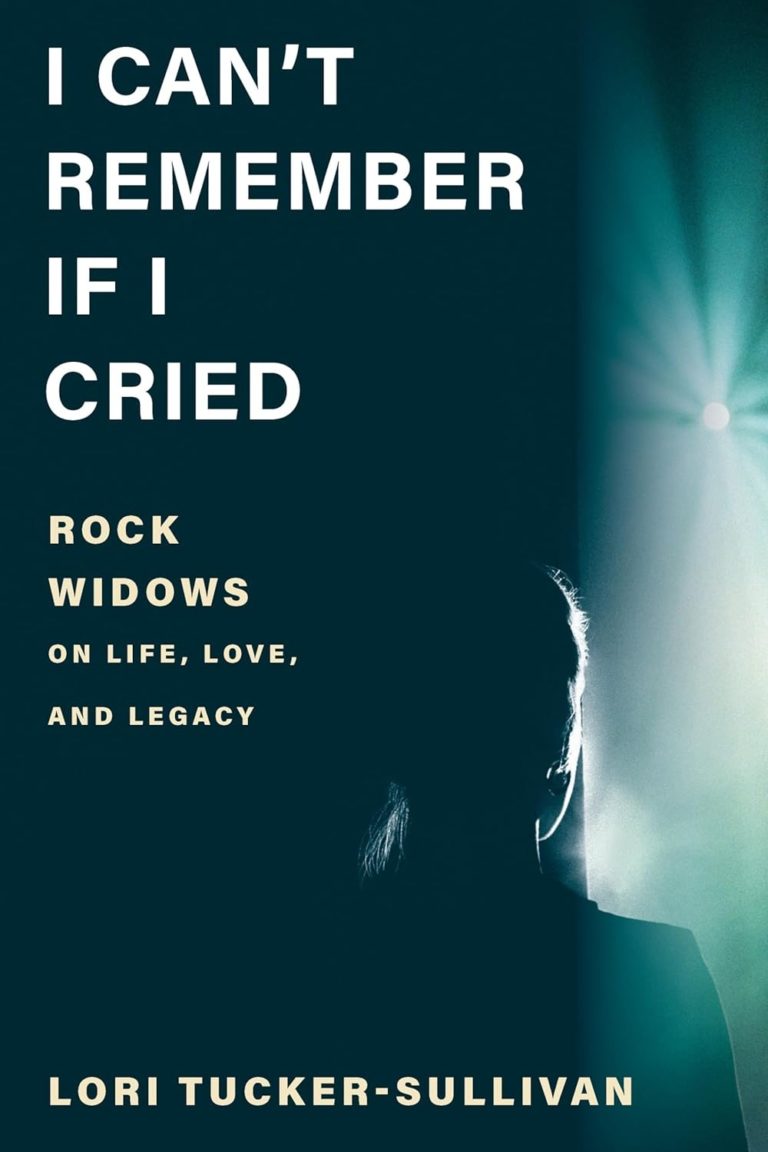
‘I Can’t Remember If I Cried’ by Lori Tucker-Sullivan Amplifies the Voices of Rock Widows

0

The stories of rock musicians who die young are the thing of lore and legend. Accidents, drug overdoses, plane crashes—all have taken the lives of male rock stars still in their primes. But what became of their widowed brides? How did they survive a loss so great? What is it like to have to share your grief with millions of strangers? And where are these widows today?

I Can’t Remember if I Cried is part music history, part memoir, based around interviews with rock widows conducted by Lori Tucker-Sullivan—who herself lost her husband in 2010. With each widow that Lori interviews, she learns lessons in love, forgiveness, coping, and moving on. The book is framed by the author’s own narrative to create a single thread that links the stories together to ultimately create a tale of how the author’s life is changed through her interactions with these amazing women.

Among the women profiled by Tucker-Sullivan:

  • Judy VanZant who, after losing husband Ronnie of Lynyrd Skynyrd, sued the re-formed band in order to protect her interests.
  • Sandy Chapin, widow of Harry Chapin, who has worked tirelessly to uphold Harry’s significant legacy around activism and hunger prevention.
  • Crystal Zevon, the ex-wife of Warren Zevon, who provides details of her abusive relationship with Warren and how she resolved her anger and grief.
  • Jamie Weiland, widow of Stone Temple Pilots’ Scott Weiland, speaking openly of Scott’s mental health, which at times kept him housebound for days.
  • Janna Leblanc, widow of Stevie Ray Vaughan, who shares the details of her visits with Stevie in rehab.

These women lived through the backstage chaos and the front-page headlines. Their stories remind us that behind every tragic chorus is someone still trying to find the bridge.

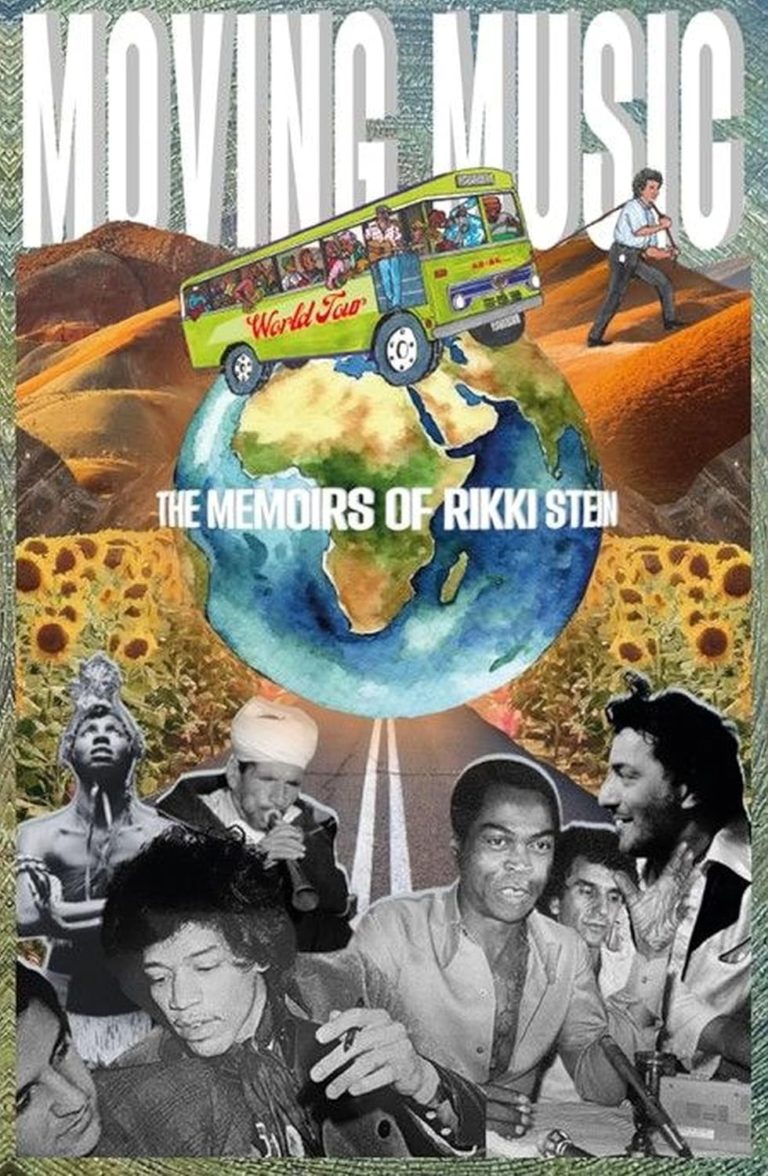
Rikki Stein’s ‘Moving Music’ Memoir Charts a Life on the Road With Legends

0

Renowned music manager, Rikki Stein, has spent nearly six decades moving musicians around the world, and this book recounts a lifetime of adventure on the road. Always in the right place at the right time, Rikki was part of the great countercultural moments of the last century, from Woodstock and the Vietnam War Moratorium March to the launch Glastonbury Festival.

Throughout this extraordinary time, Rikki has toured some of the world’s most iconic musicians and groups, from The Jimi Hendrix Experience, The Kinks, The Animals, The Yardbirds,The Moody Blues, Grateful Dead to managing the Nigerian superstar, Fela Kuti and many other iconic artists.

Full of extraordinary, sometimes hilarious, stories of life on the road, this memoir recounts the joys, frustrations and surprises of juggling logistics, local politics and the whims of his creative clients to deliver true, life-enhancing moments of moving music.

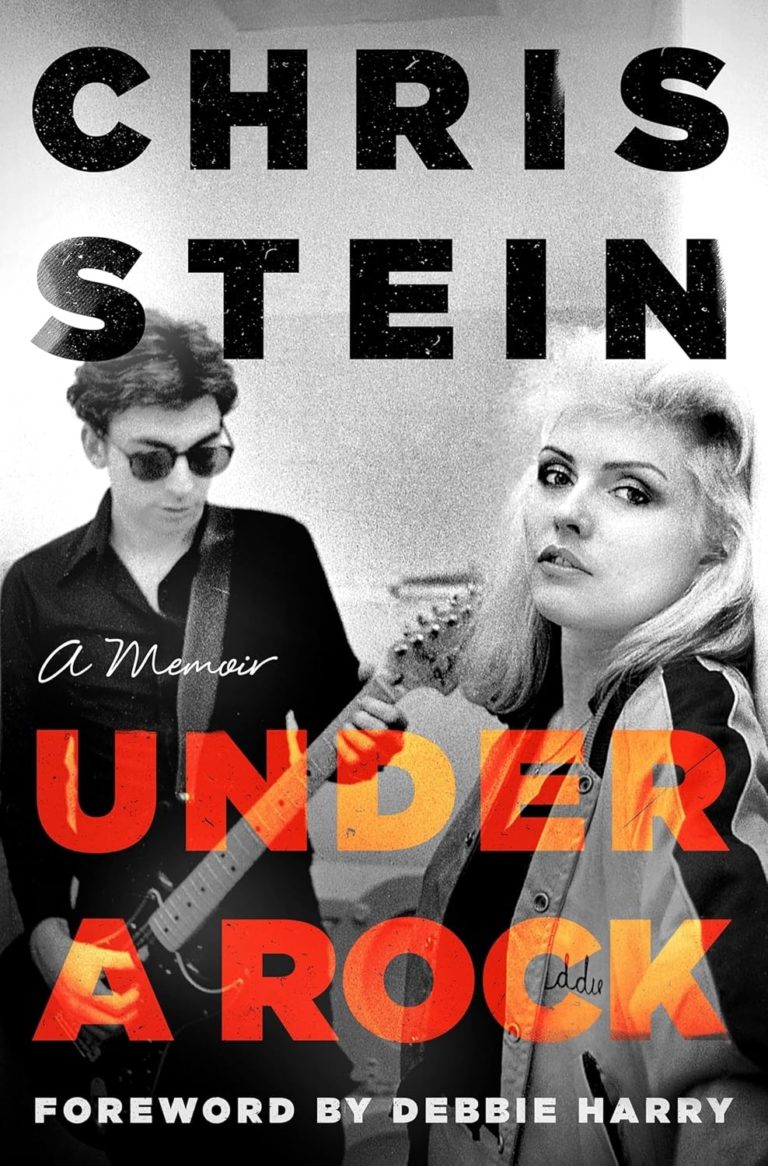
Chris Stein’s Memoir ‘Under a Rock’ Dives Into Blondie, Fame, and Downtown Chaos

0

Debbie Harry defined iconic band Blondie’s look. Chris Stein―her performing partner, lover, and lifelong friend―was its architect and defined its sound. “Parallel Lines”, their third album, catapulted to #1, sold 20 million copies, and launched singles like “Heart of Glass”, “Hangin’ On the Telephone,” and “One Way or Another”, providing the beat when Bianca Jagger and Halston danced at Studio 54 and the soundtrack to every 1970’s punk-soundtracked romance.

Chris Stein knows how to tell a story. Under A Rock is his nothing-spared autobiography. It’s about the founding of the band, ascending to the heights of pop success, and the hazards of fortune.

Famous names march through these pages―Warhol, Bowie, Jean-Michel Basquiat, and more–but you can get famous names anywhere. What you can’t get anywhere else is a plunge into the moments that made a giant 1980’s artistic sensation. Stein takes us there in this revelatory, propulsive, distinctive memoir.

36 Songs That Dialed – Literally – Into Music History

Back when phones clicked, clacked, and had cords that doubled as tripwires, musicians were already onto something—phones weren’t just for calling your crush. They were emotional conduits. Songs with phone numbers were direct lines to heartbreak, hookups, nostalgia, or pure chaos. Sometimes the numbers were real. Sometimes they were lies. But every one of them had one thing in common: they made us want to dial in and listen again.

Here are 36 of the greatest songs about phones, phone numbers, and the messy, glorious act of trying to reach someone on the other end.

1. “867-5309/Jenny” – Tommy Tutone (1981)
The gold standard. The number that launched a thousand prank calls. Tommy Tutone’s power-pop classic made 867-5309 the most famous seven digits in music history.

2. “Beechwood 4-5789” – The Marvelettes (1962)
Motown + teenage longing = phone number magic. This one came with harmonies so smooth, you wanted to call even if you had nothing to say.

3. “634-5789 (Soulsville, U.S.A.)” – Wilson Pickett (1966)
Need some loving? Wilson’s got the hotline. With a brass section that grooves like no other, this number connected straight to soul heaven.

4. “Pennsylvania 6-5000” – Glenn Miller Orchestra (1940)
Jazz, swing, and the actual phone number for the Hotel Pennsylvania in New York. It’s the earliest phone jam in pop culture.

5. “Memphis, Tennessee” – Chuck Berry (1959)
Chuck Berry’s tearjerker about trying to reconnect with a girl named Marie hits even harder when you realize she’s his daughter. Operator, we’ve got a plot twist.

6. “Party Line” – The Kinks (1966)
Remember when phones were shared? This jangly tune turns eavesdropping and missed connections into a British Invasion bop.

7. “Rikki Don’t Lose That Number” – Steely Dan (1974)
Smooth jazz, cryptic lyrics, and the most laid-back plea ever recorded. If someone gave you a number and told you not to lose it, this is the soundtrack.

8. “Telephone Line” – Electric Light Orchestra (1976)
Jeff Lynne took a heartbreak and added strings, harmonies, and an actual phone ring. The result? One of the most beautiful missed calls in history.

9. “Operator (That’s Not the Way It Feels)” – Jim Croce (1972)
A phone booth, a dime, and a broken heart. Croce turned post-breakup desperation into one of the most human songs ever written.

10. “Kiss Me Thru the Phone” – Soulja Boy ft. Sammie (2008)
Teen romance, ringtone culture, and a real number that thousands called. Soulja Boy had the whole world trying to leave voicemails.

11. “Your Call Is Very Important to Us. Please Hold.” – Sparks (2006)
Leave it to Sparks to make hold music into high art. It’s theatrical, satirical, and more accurate than your last two customer service calls.

12. “Telephone” – Lady Gaga ft. Beyoncé (2010)
Two icons dodging your call, killing your ego, and turning pop into a crime scene. The music video alone deserves its own hotline.

13. “Call Me” – Blondie (1980)
Giorgio Moroder made it disco, Debbie Harry made it immortal. You don’t need a number—just an attitude.

14. “Answering Machine” – The Replacements (1984)
Paul Westerberg screams into the void and gets a beep. This is what loneliness sounded like before text bubbles existed.

15. “Mr. Telephone Man” – New Edition (1984)
Smooth vocals, teenage confusion, and an extremely polite tech support call. Who knew fixing a line could sound this catchy?

16. “I’ll Shoot the Moon” – Tom Waits (1993)
From The Black Rider, it features a surreal monologue involving a number (392-7704), a missile launcher, and a heartbroken lunatic. Only Waits could make a missed connection sound like nuclear fallout.

17. “54-46 That’s My Number” – Toots & The Maytals (1974)
Spoiler: it’s not a phone number, it’s a prison number. But it’s been misdialed by listeners for decades, proving once again that reggae lies sometimes slap.

18. “0898 Beautiful South” – The Beautiful South (1992)
Not a song, but a whole album named after a now-defunct British premium rate code. Don’t call it. Just listen to the lush, sardonic pop inside.

19. “Don’t Push” – Sublime (1992)
Bradley Nowell drops 439-0116 like a burned-out love letter with a zip code. It’s SoCal ska-punk meets chaotic voicemail energy.

20. “Winter Warz” – Ghostface Killah (1996)
Ghostface casually throws out a 10-digit number (917-160-49311?) in the middle of a verse. No context, all style. Classic Wu-Tang mystery.

21. “Dirty Deeds Done Dirt Cheap” – AC/DC (1976)
Need revenge? Call 362-436. Angus and Bon Scott turned a fake number into the scuzziest hotline in rock.

22. “6060-842” – The B-52’s (1979)
A bathroom wall number leads to nowhere. Disconnected lines, dimes in the slot, and Tina waiting forever. It’s punk, weird, and pure B-52’s.

23. “5.7.0.5” – City Boy (1978)
Proof that even in the ’70s, Britain knew how to make a catchy phone number hit. It’s glam, clever, and somehow still rings today.

24. “Beechwood 4-5789” – Carpenters (1982)
Yes, they covered it. And yes, Karen Carpenter made it sound even more heartbreaking. It’s like calling your ex in three-part harmony.

25. “Long Tall Shorty” – The Kinks (1964)
More phone digits (4-2-4-6-8-9), more innuendo. If you’re squeamish, maybe skip this one—unless you’re into vintage scandal.

26. “Skandal im Sperrbezirk” – Spider Murphy Gang (1981)
Rosie has a phone and business is booming. German rock meets late-night calls in the red light district. Fantastisch!

27. “Bow E3” – Wiley (2007)
Grime legend Wiley drops a real UK mobile number and sets his voicemail to “wasteman suck ya mum, starr.” Instant legend status.

28. “Red Frame/White Light” – Orchestral Manoeuvres in the Dark (1980)
A tribute to a red telephone box and the band’s early days. 632-3003 was the number, and yes, fans have tried calling it.

29. “1-800-273-8255” – Logic ft. Alessia Cara & Khalid (2017)
The most important number on this list. A life-saving anthem that turned a suicide prevention hotline into a Billboard hit.

30. “I Got You / 634-5789” – Stu Gardner (1968)
A solid cover of the Pickett classic. Same number, different voice, all soul.

31. “634-5789 / Help” – Tina Turner (1988)
Tina brought her powerhouse voice to this number and gave it a whole new life. Even the operator had to stop and listen.

32. “(This Ain’t) No Thinkin’ Thing / 634-5789” – Trace Adkins (1997)
Country meets soul. Trace brings baritone swagger to the soul standard in a surprise double A-side.

33. “54-46 Was My Number / The Man” – Toots & The Maytals (1972)
Revisiting the same legendary digits. Toots can sing that number 100 times and it’ll still be a jam.

34. “I’ll Shoot the Moon” – Tom Waits (1993)
We’re repeating this one because frankly, it’s unhinged genius. Tom Waits answers the phone and chaos ensues.

35. “0898 Beautiful South” – The Beautiful South (1992)
Yes, again. It’s not a real number, but the band is so sarcastic, it feels like they meant to crash a telecom system.

36. “Skandal im Sperrbezirk” – Spider Murphy Gang (1981)
Worth repeating. It’s the German “867-5309” with way more edge and an economy that apparently prevails through the night.

Sometimes you call and no one picks up. Sometimes it’s disconnected. And sometimes, it becomes a hit single. These phone number songs remind us that music can make even the most mundane 7 digits feel like poetry. Just remember: always check the area code before you call. Some of these still might answer.


Know a Young Canadian Songwriter? This Award Could Change Everything

0

Hey folks,

Okay, most of us might be past the eligibility window for this one (unless you’re pulling off a serious reverse-aging trick), but I wanted to pass it along because you might know someone who fits the bill.

The Award for Young Canadian Songwriter—created by SOCAN Foundation in partnership with SiriusXM Canada—is now accepting submissions. It’s designed to celebrate emerging songwriters aged 21 and under who are crafting original songs in genres like folk, blues, rock and roll, hip-hop, R&B, and beyond.

Here’s the breakdown:

This is a great opportunity for a student, mentee, young collaborator, or maybe your incredibly gifted cousin who’s always playing guitar at family dinners. Share it forward—you never know whose path it might open.

P.S. If you are 21 or under and reading this… A) congrats on being way ahead of the game, and B) go for it!

8 Songs The Beatles Wrote About Each Other

0

Breakups are messy. Breakups between bandmates who changed the world? That’s songwriting gold. Even after The Beatles went their separate ways, they never truly stopped talking to each other—they just started using guitars and microphones instead of group chats and press statements. Whether it was affection, frustration, or playful jabs (depending on which member you asked), the Fab Four kept their complicated brotherhood alive in lyrics and melody.

Here are 8 songs The Beatles wrote at one another—proof that even when the band broke up, the music kept the conversation going, good and bad. Mostly bad. Until 1980.

1. “Too Many People” – Paul McCartney
From the album: Ram (1971)
Paul was clearly holding a grudge—and a guitar. This track kicks off with veiled digs at John and Yoko, accusing someone of preaching too much and taking liberties. “Too many people going underground,” he sings, with a melodic smirk.

2. “How Do You Sleep?” – John Lennon
From the album: Imagine (1971)
John’s scorched-earth answer to Paul’s subtle shade. With George Harrison on slide guitar (!), John doesn’t hold back: “The only thing you done was ‘Yesterday’… and since you’ve gone you’re just ‘Another Day.’” Ouch. Fire, meet gasoline.

3. “Back Off Boogaloo” – Ringo Starr
From the single: Back Off Boogaloo (1972)
Ringo’s glam-rock stomper has long been rumored to throw playful punches at Paul’s solo work. Lines like “wake up, meathead” raised eyebrows, especially with Paul’s vegetarian lifestyle. Subtle? Not quite. Funky? Absolutely.

4. “Dear Friend” – Paul McCartney
From the album: Wild Life (1971)
Paul brings the olive branch—and a piano. A slow, sorrowful ballad asking John, “Is this really the borderline?” It feels like Paul stepping back from the feud and extending a heartfelt moment of reconciliation.

5. “Jealous Guy” – John Lennon
From the album: Imagine (1971)
While not directly aimed at Paul, this track’s origin story is rooted in their post-Beatles tension. John transformed his anger into vulnerability, singing, “I didn’t mean to hurt you,” in a moment of rare emotional nakedness.

6. “Early 1970” – Ringo Starr
From the B-side to It Don’t Come Easy (1971)
Ringo gives a musical postcard update on where everyone’s at: Paul’s on the farm, John’s in New York, George might jam with him. It’s funny, sincere, and the ultimate “I hope we’re still cool” track in pop history.

7. “God” – John Lennon
From the album: John Lennon/Plastic Ono Band (1970)
When John sang “I don’t believe in Beatles,” it was like watching the curtain close on an era. It wasn’t anger—it was detachment, honesty, and a declaration of emotional independence.

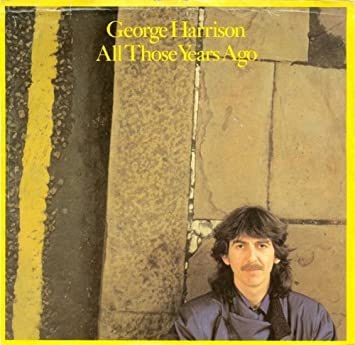
8. “All Those Years Ago” – George Harrison
From the album: Somewhere in England (1981)
Written in tribute to John after his death, George’s song is full of fond memories and admiration. “You were the one who imagined it all,” he sings. It’s sincere, soaring, and a final love letter across the sky.

Even when they were feuding, The Beatles still found a way to make brilliant music out of it. Petty? Occasionally. Poetic? Always. Whether it was a dig, a tribute, or an attempt to heal old wounds, these songs remind us that their connection ran deeper than any headline. They made history and wrote some of the greatest songs in history, and some they wrote it to each other.

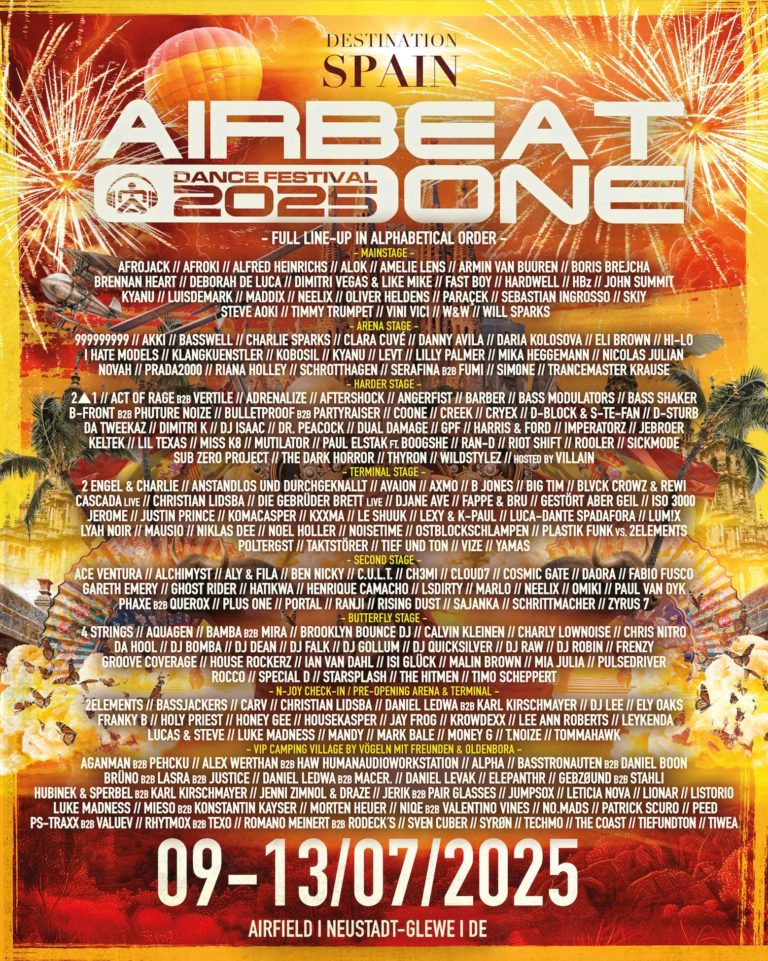
AIRBEAT ONE Festival 2025 Drops Final Line-Up With Afrojack, Armin van Buuren, Hardwell, and More

0

The countdown is officially on for AIRBEAT ONE Festival 2025, as organizers reveal a blockbuster final line-up featuring more than 250 of the world’s leading electronic music talents. Running from July 9 to 13, 2025, the festival will transform the historic airfield at Neustadt-Glewe into a vibrant “Spain”-themed festival city, complete with six uniquely crafted stages and an atmosphere that promises to transport attendees straight to the sun-drenched shores of the Mediterranean.

Headlining the gargantuan Mainstage—spanning 180 meters in width and soaring 45 meters high—are global superstars whose names alone guarantee electrifying performances. Dutch Grammy® winner Afrojack will kick off his set with the pure festival energy fans have come to expect, while trance titan Armin van Buuren returns to deliver his signature uplifting melodies. Big-room powerhouse Hardwell follows with fresh anthems destined for dancefloors everywhere, and Steve Aoki rounds out the evening with his trademark cake-throwing spectacle. Rounding out this elite roster are Sebastian Ingrosso of Swedish House Mafia fame, Australia’s genre-defying Timmy Trumpet, psytrance pioneers Vini Vici, and hardstyle hero Brennan Heart—alongside a host of other top acts including ALOK, Amelie Lens, Boris Brejcha, Deborah de Luca, Dimitri Vegas & Like Mike, John Summit, Neelix, Oliver Heldens and W&W.

Techno aficionados can lose themselves on the Arena Stage, where the underground’s finest converge. Highlights include the enigmatic Italian duo 999999999 delivering rugged analog sets, Clara Cuvé spinning razor-sharp vinyl between techno and acid, and Oliver Heldens’ darker alter ego HI-LO wielding pulsing, high-voltage beats. Crowd-stirring performances will also come from Eli Brown, I Hate Models, Klangkuenstler and Kobosil, among others, ensuring a deep and immersive journey through contemporary techno’s frontiers.

For those craving harder sounds, the Harder Stage answers the call with an uncompromising hardcore and hardstyle assault. Miss K8 will reign supreme as the queen of hardcore, while D-Block & S-Te-Fan, Wildstylez and Sub Zero Project showcase melodic hardness at its finest. International hardcore icons Angerfist, Bass Modulators, Coone and Jebroer will join forces with fierce newcomers like Sickmode, Rooler and Thyron to deliver relentless kicks and earth-shaking drops.

The festival’s Terminal Stage offers chart-ready hits alongside homegrown favorites. Gestört aber Geil will unleash earworms and emotional peaks, Cascada returns live with her Eurodance classics, and Lum!x lights up the crowd with infectious pop-EDM hybrids. Also performing are Jerome, Fappe & Bru, 2 Engel & Charlie, Avaion, Le Shuuk & K-Paul and many more, creating a kaleidoscopic showcase of house, future bass and party anthems.

Psytrance enthusiasts will find their haven on the Second Stage, headlined by legends Ace Ventura and Ranji, whose trance-inducing soundscapes have defined the genre. Paul van Dyk brings his storied trance legacy to the stage, joined by Cosmic Gate, Aly & Fila, Ben Nicky and a host of rising stars like Alchimyst, Daora, Ghost Rider and Sajanka. Together, they will guide festival-goers through a deep-dive into hypnotic rhythms and transcendent melodies.

Nostalgia takes center stage on the Butterfly Stage, where the golden era of Eurodance and Hands-Up is reborn. Ian van Dahl revisits “Castles in the Sky,” while classics from 4 Strings, Brooklyn Bounce, Charly Lownoise, Scooter’s own Chris Nitro and DJ Dean evoke carefree party vibes. Mia Julia, House Rockerz, Da Hool and Aquagen round out this stage with high-octane, sing-along nostalgia.

With six intricately decorated stages, a setting that transports guests to Spain, and a roster of over 250 international superstars, AIRBEAT ONE Festival 2025 cements its status as one of Europe’s most significant electronic music gatherings. Presale Phase 2 tickets are available now for €169.99 (plus fees) at https://airbeat-one.myticket.de. Don’t miss your chance to be part of this unforgettable celebration of sound, spectacle and summer spirit.

AIRBEAT ONE Festival is part of the DEAG Group. For full line-up details, news and travel information, visit www.airbeat-one.de or follow facebook.com/airbeatoneyoutube.com/airbeatone00 and instagram.com/airbeatone.