Home Blog Page 71

Is It Possible to Work 3 Days a Week?

0

By Mitch Rice

Work has become one of the main things that shape daily life. The alarm rings, the day starts, and a large part of our time goes to earning money, finishing tasks, joining meetings, answering messages, and trying to keep up. We accept the 5-day week and 8-hour workday as normal, but they were created for a different world.

Now AI and robots are changing what “work” means. Many tasks can already be done faster with technology, and this will only grow in the coming years. So, the question is worth asking: could people work only 3 days a week and still live better, not worse?

Where Did the 5-Day Workweek Come From?

The 5-day workweek did not appear because it was the perfect model for human life. It came from the needs of the industrial age.

Factories needed workers to be present at fixed times. Machines, production lines, and managers all worked better with a clear schedule.

Over time, this system became the standard. Offices later copied the same structure, even though the type of work was very different.

So, in many ways, today’s workweek is still carrying out the habits of an older economy.

The 8-Hour Day Was Once a Big Improvement

Before the modern workweek, many people worked much longer hours. In factories and industrial jobs, 10, 12, or even more hours a day were common. The idea of “8 hours for work, 8 hours for rest, 8 hours for life” was a major step forward.

At that time, the 8-hour day was not a limitation. It was progress.

But what was progressive in the past does not have to remain the best option forever.

But the World Has Changed

Today, a lot of work no longer depends on physical presence or long hours. Many tasks are digital, flexible, and supported by software. AI can now help with writing, coding, research, planning, customer support, data analysis, and many other daily tasks.

This does not mean every job can suddenly move to a 3-day week. But it does mean the old model deserves to be questioned.

If the tools have changed, maybe the rules of work can change too.

Can Technology Reduce Human Work?

AI is already reducing the amount of human effort needed in many jobs. AI can write drafts, summarize reports, answer customer questions, analyze data, create images, support coding, and organize daily workflows.

This does not mean humans are useless. It means many boring, repetitive, and time-consuming tasks can be handled faster. A person may still make the final decision, but the heavy part of the work can be supported by machines.

Robots Could Change Physical Work Too

AI mostly changes digital work. Robots could do the same for physical work.

In the future, humanoid robots may help in warehouses, factories, restaurants, hospitals, cleaning, delivery, agriculture, and even construction. They can carry, sort, serve, move, assist, and repeat the same task without getting tired.

This could be a major shift because physical labor still takes a huge amount of human time and energy.

Productivity Could Rise

If AI and robots can do more work in less time, productivity may rise. Companies could produce more without asking people to work longer hours.

This is where the 3-day workweek becomes interesting. The goal would not be to work less and produce less. The goal would be to let technology carry more of the workload, while humans focus on tasks that need judgment, creativity, communication, and responsibility.

Human Roles May Start to Change

If machines handle more routine work, human jobs may move in a different direction. People may spend more time on planning, managing, designing, caring, teaching, selling, building relationships, and solving problems.

Some jobs may disappear, but new roles may also appear. The challenge is helping people move from old tasks to new ones without leaving them behind.

The Big Question Is Who Benefits

Technology alone does not guarantee a better life. It depends on how the benefits are shared.

If AI and robots only increase company profits, people may not work less. They may just compete with machines. But if societies and businesses use technology to reduce working hours, improve income models, and protect workers, then a shorter workweek becomes much more realistic.

Could a 3-Day Week Actually Work?

A 3-day work week can only work if the lost time is replaced by better productivity. In simple terms, people and companies would need to produce similar value in fewer days.

This is where AI, automation, and better systems become important. If a task that once took five hours can be done in one hour with technology, the old working schedule starts to lose its logic.

Companies Must Measure Results

Many workplaces still measure work by hours. Someone stays at the office for eight or nine hours, so it looks like they are working hard. But time spent is not always the same as value created.

A 3-day model would force companies to focus more on output. What was completed? Was the result useful? Did the business move forward? These questions matter more than how long someone sat in front of a screen.

Some Sectors Will Adapt Faster

Some jobs can move faster toward shorter workweeks. Digital businesses, marketing, software, online trading, consulting, and creative roles may adapt more easily.

Other sectors are harder. Healthcare, logistics, hospitality, construction, and manufacturing still need physical presence, shift planning, and continuous service. For these industries, robots and automation would need to improve much more before a 3-day system becomes realistic.

Income Is the Hardest Part

The biggest question is not only “Can people work less?” It is “Can people work less without earning less?”

If salaries fall with working hours, many people will not benefit. A real 3-day workweek would need a stronger productivity model, lower living costs, or new income systems. Otherwise, it becomes a luxury for a small group, not a better future for everyone.

What Would People Do with More Free Time?

More Time for Health and Rest

A shorter week would give people something many are missing today: time to breathe. Sleep, exercise, cooking at home, walking, reading, or doing nothing for a while could become part of normal life again.

This may sound simple, but it could change a lot. A person who is less tired can think better, work better, and live with more balance.

More Time for Family and Social Life

Work often takes the best hours of the day. By the time people return home, they are already tired. A 3-day workweek could give families more real time together.

Parents could spend more time with children. Friends could meet without waiting for one free evening. Relationships could become less rushed and more natural.

More Learning and Personal Growth

Free time does not have to mean only entertainment. People could learn new skills, study different subjects, start a small project, or improve themselves in areas they never had time for.

This could also help the economy. A society with more time to learn may become more creative, flexible, and productive in the long run.

More Creativity and Small Businesses

Many people have ideas, but no time or energy to try them. With more free days, some may start a side business, create content, build a product, make art, or work on community projects.

In that sense, less work time could create more human activity. The difference is that people would have more choice over what they do with their energy.

The Risk of Empty Time

Of course, more free time would also bring a new challenge. Some people may feel lost without the structure of work. Others may spend most of that time on screens, shopping, or passive entertainment.

That is why a better future would need more than shorter work hours. People would also need better education, stronger communities, and a healthier culture around time, purpose, and life.

The Dark Side: What Could Go Wrong?

Job Loss Could Hit Many People

If AI and robots take over more tasks, some jobs may disappear faster than new ones are created. This is the biggest fear.

For companies, automation can mean lower costs. For workers, it can mean uncertainty. A 3-day workweek sounds positive, but only if people still have income and security.

Wealth Could Become More Unequal

Technology can create huge value. The problem is who receives that value. People or Nasdaq?

If most of the benefits go to big companies and tech owners, inequality could grow while workers lose income security and bargaining power.

Work Gives People Structure

Work is not only about money. It also gives people routine, identity, social contact, and a feeling of being useful.

If people suddenly work much less, some may feel free. Others may feel empty or disconnected. A better work model would also need better ways for people to find meaning outside their jobs.

Governments May Not Be Ready

Most systems are still built around traditional work. Taxes, pensions, insurance, education, and social support all depend on people working regular jobs.

If technology changes work too quickly, governments may struggle to update the system. Without new rules, automation could create more pressure instead of more freedom.

The Future Could Become Less Human

There is also a deeper problem. If machines do too much, people may lose certain skills, habits, and human connections.

A world with more technology is not automatically a better world. It depends on how we use it. The goal should be to make life easier, not to replace human value with endless automation.

Data and information are provided for informational purposes only, and are not intended for investment or other purposes.
Free Jazz Pioneer Sonny Simmons Finally Gets His Due with New Memoir ‘Better Do It Now before You Die Later’

0

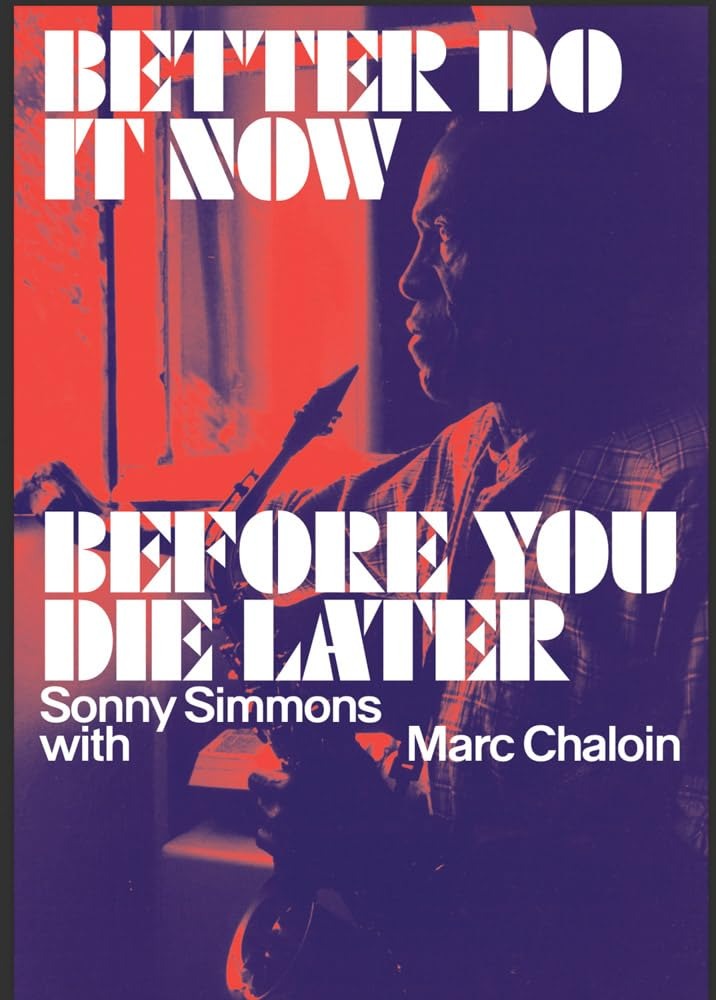
Saxophonist Sonny Simmons (1933–2021) was one of the most forceful voices in New York’s free jazz scene of the 1960s, and one of its most overlooked. His 588-page memoir ‘Better Do It Now before You Die Later,’ written with jazz historian and biographer Marc Chaloin and published by Blank Forms Editions, is out now and delivers the full story: his Louisiana childhood, his years in the Bay Area jazz scene, his star-studded New York run alongside the greats, the years of homelessness and addiction that followed, and the remarkable career resurrection sparked by 1994’s critically acclaimed ‘Ancient Ritual’ on Qwest Records. Fiery, funny and long overdue, it’s the definitive document of a singular life in music.

Frank Ray Tips His Hat to a Country Icon with New Single “Third Row George Strait”

0

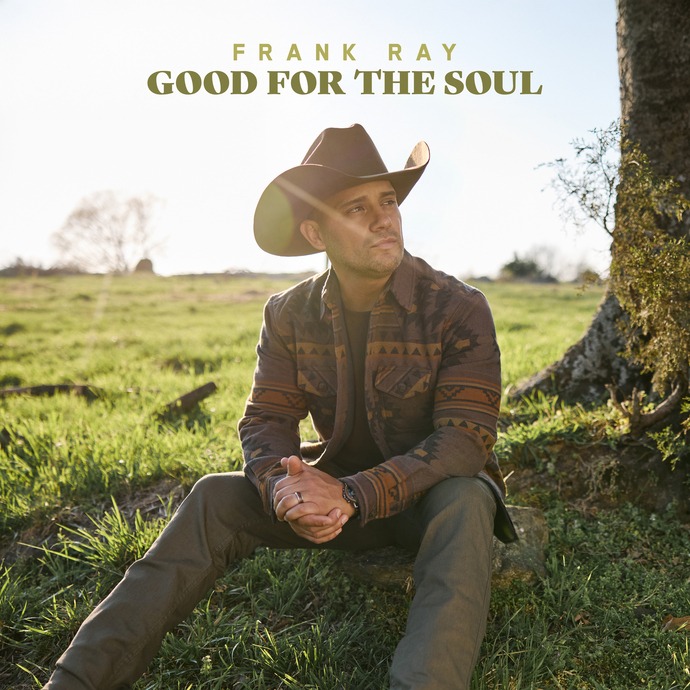
Frank Ray is out with “Third Row George Strait,” the first single from his forthcoming EP ‘Good For The Soul,’ dropping June 26. Written by Ben Hayslip, Dan Isbell and Ben Stennis, and produced by Seth Mosley and Michael “X” O’Connor, the track is a catchy, up-tempo nod to country icon George Strait that hits with the warmth of a nostalgic summer romance and the energy of something brand new. It’s the kind of song that wins over country fans and George Strait devotees in the same breath. Listen here.

“After sitting with the demo for a while and stacking new songs, I started drifting away from this song,” says Ray. “Not because it wasn’t great, I just hadn’t made it mine yet. But after working on it with my producer a bit more, everything clicked. Now I can’t stop playing the song and I hope it hits fans the same way it hit me the first and second time around, it’s kind of like falling in love with your someone all over again.”

The EP behind the single is a five-track collection that pulls from sunny ’90s and 2000s honky-tonk tones, epic balladry and Ray’s smooth, Latin-inflected country vocal. The title track features Tracy Lawrence, and the full project reflects a songwriter who has spent years building toward exactly this kind of focused, confident statement. Ray’s path from Las Cruces law enforcement officer to touring with Luke Combs, Kane Brown and Luke Bryan is well documented at this point, and ‘Good For The Soul’ reads like the next logical step.

‘Good For The Soul’ Track List:

  1. “One Way To Do It” (Matt Dragstrem, Jordan Minton, Seth Ennis)
  2. “Lookin’ Out For Me” (Frank Ray, Seth Mosley, Joybeth Taylor)
  3. “Third Row George Strait” (Ben Hayslip, Dan Isbell, Ben Stennis)
  4. “Hard To Be A Hero” (Frank Ray, Trannie Anderson, Jordan Walker, Seth Mosley)
  5. “Good For The Soul” – Frank Ray and Tracy Lawrence (Tim Nichols, Michael Carter, Brett Kissel)

Video: IDLES Delivered a Raw and Relentless Set at Primavera Sound Barcelona 2025

0

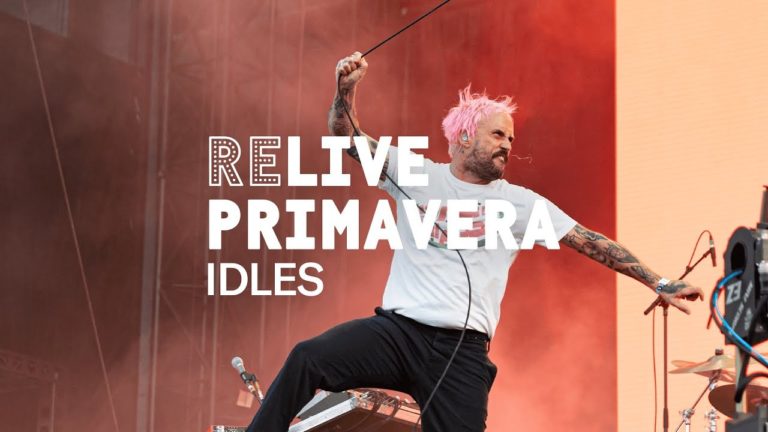
IDLES took the Primavera Sound stage in Barcelona on May 30, 2025, and delivered exactly the kind of performance that has made them one of the most vital live acts in post-punk. Joe Talbot’s vocals swung between grit and near-silence while Lee Bowen and Mark Bowen built walls of guitar around a rhythm section that held the whole thing together with force.

Runkus Pushes Reggae Into New Territory with Bold and Acclaimed New Album ‘SUPERNOVA’

0

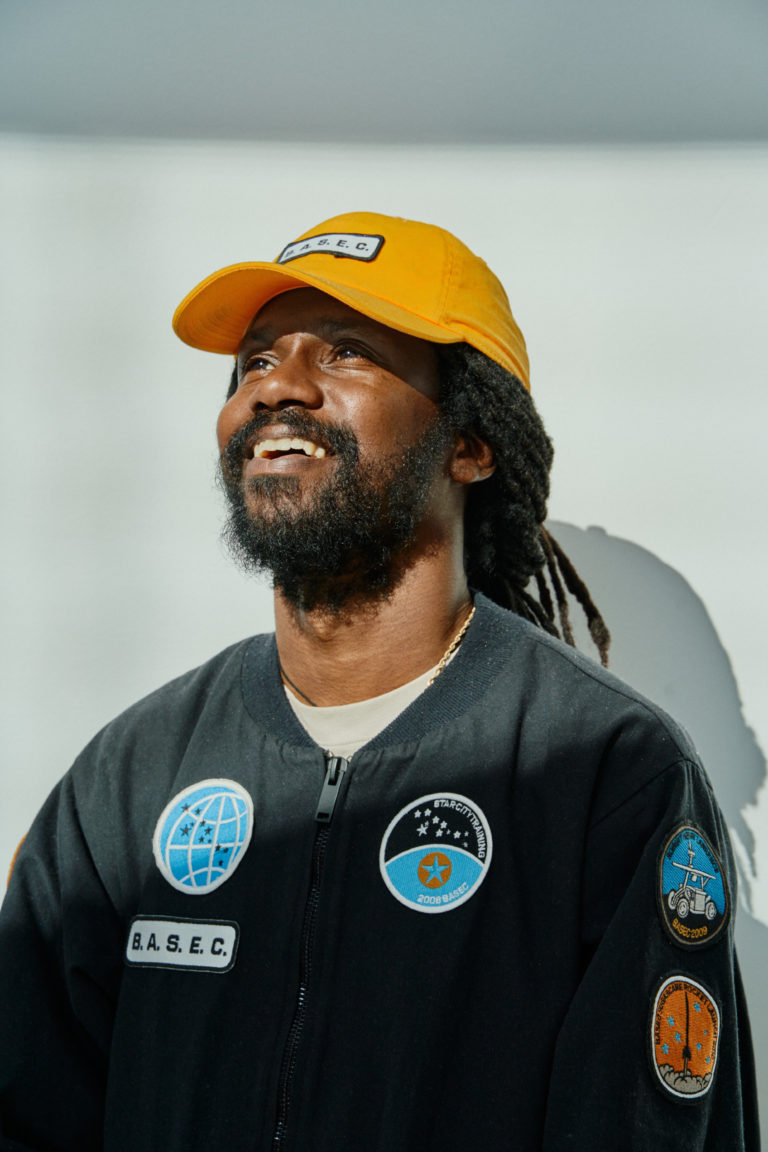
Runkus arrives with ‘SUPERNOVA,’ a forward-thinking reggae album that blends roots, dancehall and experimental production into something genuinely ambitious. The project explores themes of transformation and rebirth, features collaborations with Sean Paul, and incorporates archival elements from Peter Tosh, adding serious cultural depth to an already striking record. The momentum behind it is real: a 2026 JUNO Award win, a 2024 MOBO Award, a performance at the Jamaican Culture Tent at New Orleans Jazz Fest, a featured set on Tuff Gong Radio on SiriusXM, and cover features in both RIDDIM Magazine in Germany and Echoes Magazine in the UK. ‘SUPERNOVA’ is out now on Spotify and Apple Music.

Miranda Lambert Opens a New Chapter on MCA with Irresistible New Single “Crisco”

0

Miranda Lambert has a new single and a new label home, and both announcements land at the same time. “Crisco” arrives May 15 as her first release under a newly announced partnership with MCA, and it sounds like nothing she’s put on tape before. Lush strings, jangly piano, a shimmering ’70s disco glow and an irresistible groove make it one of the most immediately compelling tracks of her career. Co-written with Aaron Raitiere, Jesse Frasure and Chill Fellacheck, the song nods to classics like “Southern Nights” and “Islands in the Stream” while carving out something entirely its own.

“It has so many elements of the country music that I love that I’ve never put on tape,” Lambert says. “There’s a looseness to it, a joy. It feels like dancing in your kitchen with the person you love, spinning old records, not overthinking a thing.” That description is exactly what the track delivers, and for an artist with her catalog, that kind of creative freshness is worth paying attention to.

Lambert arrives at this moment with serious momentum. Her GRAMMY-nominated single “A Song To Sing” with Chris Stapleton marked the biggest streaming debut of her career, and her 10th solo studio album ‘Postcards from Texas’ continued her unbroken run of 10 consecutive Top 10s on the Top Country Albums chart. The most-awarded artist in Academy of Country Music history, including Entertainer of the Year, she’s also a three-time GRAMMY winner, 14-time CMA Award winner and a TIME100 honoree. NPR has called her “the most riveting country star of her generation,” and “Crisco” gives that reputation plenty to work with.

“Crisco” is out May 15 on MCA. Pre-save and pre-add are available now.

Howard Jones, Heaven 17 and Blancmange Headline Brand-New Synth Pop Festival Electric Summer This August

0

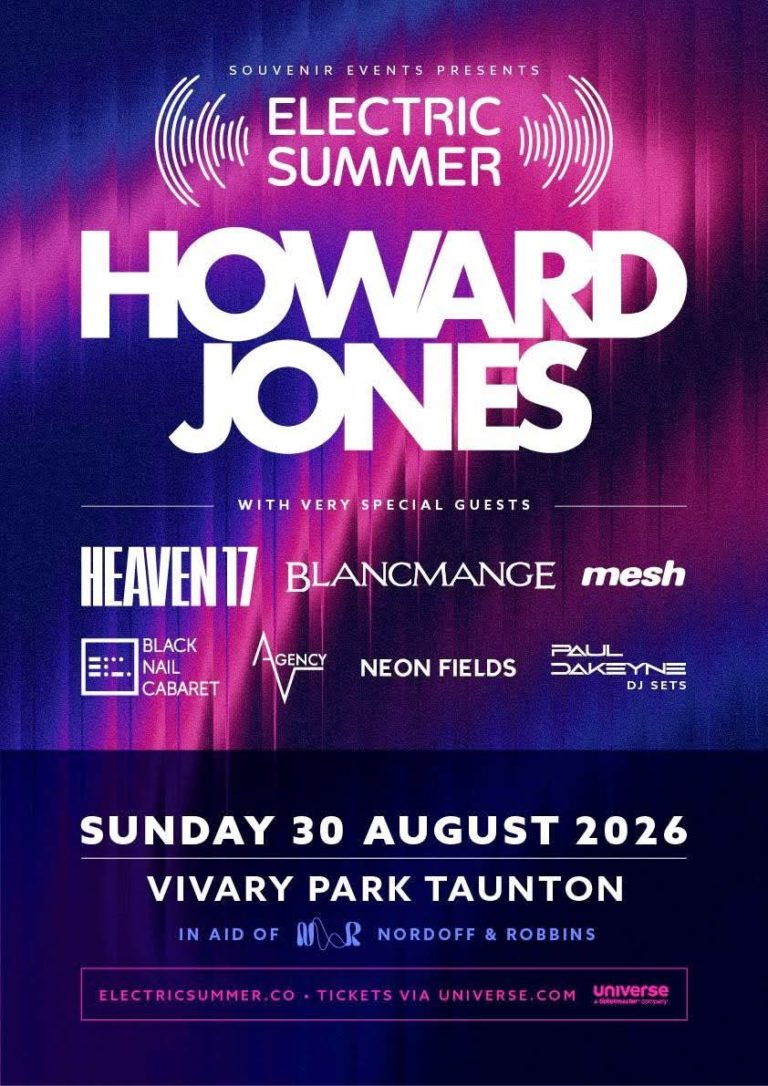
A brand-new festival is coming to Taunton, and the lineup makes a strong case for why synth pop never really went anywhere. Electric Summer lands at Vivary Park on Sunday August 30, presented by Souvenir Events, with Howard Jones headlining alongside electronic pop pioneers Heaven 17 and Blancmange. Between them, these three acts wrote some of the most enduring songs of the 1980s, from “Temptation” and “(We Don’t Need This) Fascist Groove Thang” to “Living On The Ceiling,” “Don’t Tell Me” and Jones’ landmark debut album ‘Human’s Lib,’ which hit number one in 1984 and remains an acknowledged synthpop classic.

For Howard Jones, the day carries extra weight. Taunton has been his home for more than 20 years, making Electric Summer a genuine homecoming, and the only UK show he’s doing this year. He arrives fresh from headlining his THINGS CAN ONLY GET BETTER festival tour in the United States. “Vivary Park is such a beautiful venue for this show and come rain or shine it’s gonna be a must-see gig because of the incredible lineup,” says Jones. “I’m very happy to be playing with my friends Heaven 17 and Blancmange, and can’t wait to see everyone on August 30th.”

The festival doesn’t stop at the legends. Dark electronic pop duo Black Nail Cabaret fly in from Hungary, Bristol-based alternative electronic rock outfit Mesh bring their devoted European following, Agency V arrive with momentum after supporting Gary Numan for his Glastonbury warm-up shows in June 2025, and Neon Fields, a south-west band drawing comparisons to Depeche Mode, Muse and Gary Numan, round out a contemporary lineup that sits naturally alongside the headliners. Internationally renowned producer and remixer Paul Dakeyne handles DJ sets between acts.

Electric Summer also supports Nordoff and Robbins, the music therapy charity that works with some of the most vulnerable people across the UK, with a donation from every ticket sold going directly to the organization. Tickets are available now at universe.com/electricsummer26.

Latin Rock Legends Soda Stereo Bring Their Groundbreaking “ECOS Tour” to the U.S. This September

0

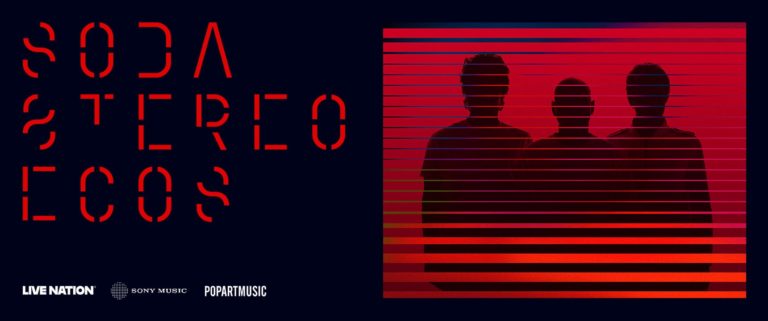
Soda Stereo are bringing ECOS to the United States, and the scale of what’s already happened makes this announcement impossible to ignore. Nearly 180,000 people have experienced the show since its Buenos Aires debut just six weeks ago, and now the legendary Argentine rock trio are headed to five major U.S. cities this September. This isn’t a tribute, a homage or a film. It’s a live show, with Gustavo, Charly and Zeta together on the same stage, made possible through cutting-edge technology that the band is calling exactly what it is: avant-garde.

The ECOS Tour has already swept through Latin America and Europe, and the U.S. leg kicks off September 10 in San Jose at SAP Center before hitting Los Angeles, Las Vegas, New York and Miami. The production behind it is a massive cross-disciplinary effort, and the response everywhere it’s landed has been overwhelming. General on-sale begins May 7 at 10AM local time at LiveNation.com, with Verizon and Citi presales running May 5 and 6.

ECOS U.S. Tour Dates:

September 10 – San Jose, CA – SAP Center

September 12 – Los Angeles, CA – The Kia Forum

September 13 – Las Vegas, NV – Dolby Live

September 17 – Belmont Park, NY – UBS Arena

September 20 – Miami, FL – Kaseya Center

Lawrence Kasdan’s Intimate Documentary “Marty, Life Is Short” Brings Martin Short to Netflix

0

Filmmaker Lawrence Kasdan has turned his lens on one of comedy’s most enduring figures. “Marty, Life Is Short” is an upcoming Netflix documentary offering an intimate portrait of Martin Short, built from archival footage and reflections from his friends, peers and family. The trailer is out now and the emotional range on display makes a strong case for what Kasdan has assembled. Coming to Netflix.

YouTube Builder Not a Luthier Turns an Old Bass Drum Into a Massive Bass Banjo

0

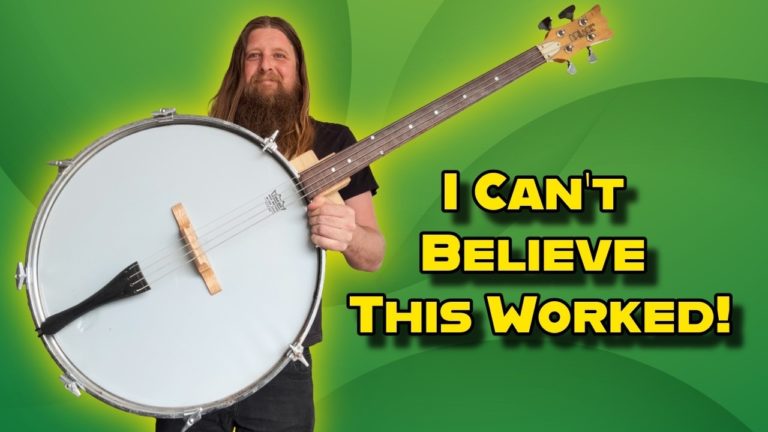
YouTube builder Not a Luthier took an old bass drum, cut it in half, fabricated a custom mount, then attached a neck, bridge and strings to create an oversize bass banjo that produces a deep, reverberant sound unlike anything a standard instrument delivers. The build is as much about ingenuity as it is about craft, and the results speak for themselves.