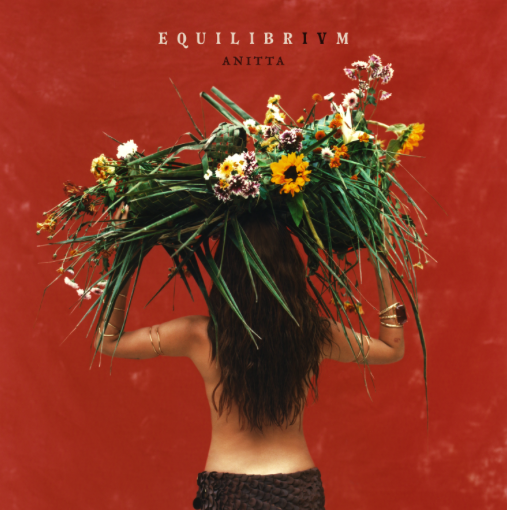
Today, Anitta releases her new album, the highly anticipated EQUILIBRIVM. The album brings reflections on spirituality, love, faith, and female empowerment, while exploring diverse sounds of Brazilian music. The album features collaborations with Shakira, Liniker, Marina Sena, Luedji Luna, Ebony, Papatinho, Rincon Sapiência, King Saints, Melly, Os Garotin, Los Brasileros, Ponto de Equilíbrio, and Emanazul. Listen HERE.
At her most vulnerable, Anitta delivers songs that are the direct result of the self-discovery journey she’s been on since mid-2022, when she began reflecting on the balance between body, mind, and soul. Now, she hopes to inspire others to embark on that same path.
“It’s an album with very clear intentions, but expressed in a subtle way. I’m not singing about religions or dogmas, but about love, healing, and Brazilian culture,” Anitta explains. “More than talking about orixás, saints, or other religious figures, I want to focus on the values they represent.”
The opening track, “Desgraça,” sets the tone with an unexpected reference to Carmen Miranda. A longtime admirer of the Brazilian icon, Anitta begins the song with a 1940s-style choro, complete with a vintage filter to evoke that era. “I start with this little samba, this choro, and then it transforms into something powerful. In the studio, we have many photos of Carmen Miranda, and when we began working on this track, everyone drew inspiration from her,” she says.
The shift is striking: from nostalgic choro, the song plunges into the intense energy of Pombagira. “Crossed seven crossroads / Just to find me / Gave me seven skirts to impress me,” she sings, referencing symbolic elements of Umbanda. These traditional motifs are reimagined through a pop, danceable lens. “It’s a tribute to my Pombagira and to Carmen Miranda. It carries strength and power, but always with respect, in a pop format,” Anitta explains.
“The album unfolds like a journey, with each track channeling a different energy from ‘Desgraça,’ which explores the anguish of heartbreak, to ‘Ouro,’ which points toward self-love rooted in recognizing life’s true value,” says creative director Nídia Aranha.
“Mandinga,” featuring Marina Sena, is one of the album’s most layered tracks. It’s intentionally divided into two parts: in the first, Anitta sings about seduction and desire, sampling “Canto de Ossanha” to create an almost spell-like atmosphere. “The idea is that we begin already under a spell,” she explains. “The lyrics reflect how women are often shaped by a male-dominated world, influencing how we relate and connect.” In the second half, Marina Sena breaks that spell, turning the track into a statement of empowerment. “It’s not a rejection of who I was — it’s about transformation,” Anitta reflects.
EQUILIBRIVM was recorded almost entirely in Anitta’s home studio in Rio de Janeiro, something she sees as deeply symbolic. After moving back to Brazil to be closer to her family, she found that the shift profoundly impacted her well-being.
“Being in Brazil, close to my family, changed everything about my mental and physical balance. That’s why it feels so meaningful that this album was made at home — it came out of that healing process,” she says. “We held these amazing creative retreats. My house became a space for artistic exchange and total creative freedom, and I helped shape everything, producing and writing alongside everyone. It was incredible.”
It was during one of those sessions that singer-songwriter Melly joined the project, contributing “Ternura” and “Casos de Amor.” She also features vocally on “Ternura.” “We spent a lot of time talking about life and what she was going through,” Melly recalls.
“Ternura” has a deliberately delicate sound. At Anitta’s request, producer Iuri Rio Branco incorporated a hang pan, an instrument that, as Anitta describes, “feels like playing underwater, like being in a river or a waterfall.” The track references Oxum, the orixá of love. “It’s about feeling saved by love, about an inner state of softness. It makes me reflect, feel, and embrace myself.”
“Casos de Amor” features vocals from the R&B trio Os Garotin and offers a lighter take on romance, “a desire to be with someone, to love, to share life,” as Anitta puts it.
That same lightness carries into “So Much Love,” a bilingual track that begins with a laid-back funk groove before evolving into an airy love song. “It feels like a kind of love that doesn’t have to hurt — one that makes you want to live, to sing, to be happy,” she says. Meanwhile, “Pinterest,” which introduced this new era, celebrates a sense of romantic ease rooted in self-love. “It’s one of my favorite lyrics I’ve ever written,” she adds.
Anitta’s return to Brazil is deeply reflected in the album’s sound. EQUILIBRIVM weaves together multiple layers of Brazilian music — MPB, samba, bossa nova, and funk — while also incorporating reggae, afrobeat, and Latin influences. It features samples of samba de roda and chants from Afro-Brazilian religions, blending them with contemporary pop and rap elements. Tracks like “Bemba,” featuring Luedji Luna, draw directly from Afro-Brazilian culture, celebrating Bahia as a center of cultural and spiritual resistance. “This moment in Anitta’s career is important, especially in a country where religious intolerance still exists,” says Luedji Luna. “Her global reach amplifies these traditions and stories.”
Bahia is also honored in “Várias Queixas,” originally by Olodum and later reinterpreted here in Spanish. “I heard it outside Brazil and thought it deserved a Spanish version,” Anitta explains. “For me, it represents balance within my career.” Funk remains a core element throughout the album, often blending with Afro-Brazilian percussion. In “Meia-Noite,” Anitta embodies Pombagira herself. “I wanted a powerful funk track that I could perform on stage as if I were channeling her energy,” she says.
“Nanã,” built around a sample from Os Tincoãs, pays tribute to the orixá associated with creation and wisdom. “We always talk about God as a father figure — but what about the mother?” Anitta reflects. “Nanã represents creation. It’s important to recognize that feminine divine energy.” The track features Rincon Sapiência and King Saints, while “Vai Dar Caô” brings a more street-driven energy. Notably, the opening rap is performed by Anitta herself. “Everyone keeps asking who it is — it’s me,” she says.
“I see this album as an exploration of different forms of faith for anyone open to hearing it,” Anitta says. “Balance is something we practice every day, and this album reflects that ongoing search.”
“Caminhador,” featuring Liniker, is described as “a poem set to music,” centered on perseverance and self-belief. Meanwhile, “God Exists,” with Ponto de Equilíbrio, reflects on her evolving spiritual perspective.
The closing track, “Ouro,” functions as a mantra. It reflects Anitta’s understanding of balance not as extremes, but as finding a middle ground. “If you’re freezing, you don’t want to burn — you just want to stop being cold,” she explains.
One of the album’s biggest surprises is “Choka Choka,” featuring Shakira. Blending funk and samba in Portuguese and Spanish, the track also draws inspiration from Indigenous traditions. The visuals reference Quarup, a ritual that celebrates ancestral memory through dance and joy. “She didn’t want to sing about it without understanding it,” Anitta says of Shakira. “And she really took the time to learn.”
The album’s collaborative spirit extends across its many contributors. “This is the kind of project that makes you feel part of something culturally significant,” says producer Iuri Rio Branco.
EQUILIBRIVM is as much a visual experience as it is musical. The project’s imagery draws heavily from Brazilian culture, folklore, and mythology, creating a cohesive narrative across all visuals.
“Each symbol carries living meaning and ancestral memory,” explains creative director Nídia Aranha.