Home Blog Page 731

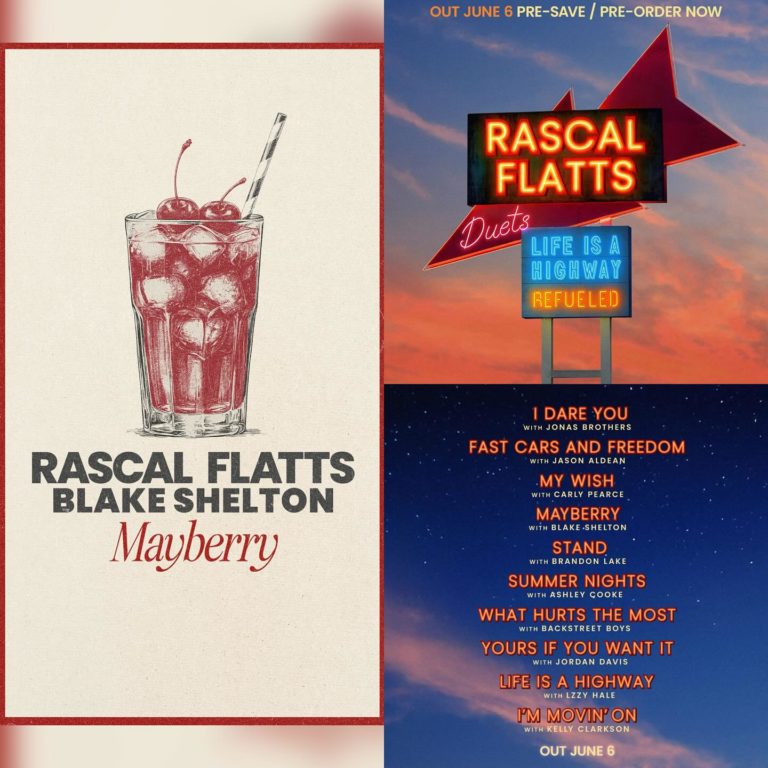
Rascal Flatts and Blake Shelton Breathe New Life into “Mayberry” on ‘Life Is A Highway: Refueled Duets’

0

Like friends catching up on an old porch swing, Blake Shelton and Rascal Flatts team to revamp the nostalgic “Mayberry,” resulting in a twangy, bright rendition of the 2002 chart-topper.

The third release from the iconic trio’s highly-anticipated LIFE IS A HIGHWAY: REFUELED DUETS album, “Mayberry” embodies the “refueled” theme, with steel guitar, breezy production and the combination of Shelton’s signature baritone with the Flatts’ soaring harmonies – seamlessly blending their musical styles.

“It was so much fun playing with Blake again. He was on our first two tours with us back in the day, and it means so much that he wanted to do this project with us,” says Joe Don Rooney. “He’s one of the best in the business. He truly owned this song…it sounds like a Blake Shelton record now!”

Recently nominated for ACM Group Of The Year following the overwhelming outpour of support for their reunion, Rascal Flatts is set to release their much-anticipated LIFE IS A HIGHWAY: REFUELED DUETS collaboration album June 6th. Releasing via Big Machine Records, the project features nine reimagined, beloved Rascal Flatts hits, including the infectiously emotive “I’m Movin’ On” with Kelly Clarkson and record-breaking single “I Dare You” with Jonas Brothers, boasting an eclectic lineup of guest artists from all walks of life, each infusing their individual music styles to create all-new arrangements of timeless hits from the trio’s acclaimed catalogue.

Life Is A Highway: Refueled Duets Album Track List:
1. “I Dare You” (with Jonas Brothers)
2. “Fast Cars And Freedom” (with Jason Aldean)
3. “My Wish” (with Carly Pearce)
4. “Mayberry” (with Blake Shelton)
5. “Stand” (with Brandon Lake)
6. “Summer Nights” (with Ashley Cooke)
7. “What Hurts The Most” (with Backstreet Boys)
8. “Yours If You Want It” (with Jordan Davis)
9. “Life Is A Highway” (with Lzzy Hale)
10. “I’m Movin’ On” (with Kelly Clarkson)

Ari Lennox Ushers in Her “Soft Girl Era” with New Single Produced by Jermaine Dupri and Bryan Michael Cox

0

GRAMMY-nominated recording artist Ari Lennox, celebrated her birthday last week by releasing her anthemic new single “Soft Girl Era,” Ari is embarking on her new journey where peace and serenity reign supreme.

Produced by GRAMMY-Award Winning hitmakers Jermaine Dupri and Bryan Michael Cox, Ari peels back her layers and embraces her femineity as she yearns for the finer things, including being a passenger princess, first-class trips, and more.

“It’s a hard knock life / Can you treat me right?” she commands to any eligible bachelor willing to fulfill her needs. “Soft Girl Era” arrives is a welcoming return for Ari, Jermaine Dupri, and Bryan Michael Cox, as the trio previously teamed up on her first Billboard radio No. 1 hit “Pressure.”

Ari returned to music with 2024’s “Smoke,” an expert blend of classic and contemporary R&B sounds that resulted in her sixth top 20 hit on Billboard’s Adult R&B Airplay chart and millions of streams. The multihyphenate has been a constant presence in 2024, gracing the festival circuit with her live performances at Essence Festival along with Dreamville Festival. Her pristine vocals have continued to captivate audiences, as she collaborated with Camper on “War” with Jeremih, Foggieraw’s “Stay Awhile” and Jessie Reyez’s “JUST LIKE THAT.” Fans can catch Ari live at the fifth and final Dreamville Festival next weekend in North Carolina, where she’ll join J. Cole, Erykah Badu, Lil Wayne, and more.

Ari’s career reached a landmark moment with the release of ‘Pressure’ from her riveting 2022 album age/sex/location. The RIAA platinum-certified hit, which soared to over 300 million streams and hit No. 1 on Billboard’s Adult R&B Airplay, marked her first solo Hot 100 single. The scintillating track “Waste My Time” topped the R&B radio and Billboard’s Adult R&B Airplay in 2023, further solidifying her position in the industry. With such a successful track record, the release of her new single “Soft Girl Era”‘ is sure to be a thrilling experience for her fans.

Willie Nelson’s “King of the Roadies” to Premiere at Dallas International Film Festival

0

Directors Amy Lee Nelson and Trevor Doyle Nelson are proud to announce the upcoming world premiere of Willie Nelson Presents: King of the Roadies at the Dallas International Film Festival (DIFF), an official Oscar qualifying festival, on Sunday, April 27, 2025 at 4:00 p.m. at the historic Texas Theater.

A true American tale -16 years in the making – Willie Nelson Presents : King of the Roadies honors and celebrates the story of Ben Dorcy, aka Lovey, the first and oldest roadie who shaped music history, pioneered an entire profession, and rivaled time itself to keep the show on the road. An unsung hero of country music, Lovey was the man behind the bona fide legends of the past century. Willie Nelson, Waylon Jennings, Jessi Colter, Johnny Cash, June Carter Cash, Kris Kristofferson, Johnny Knoxville, Kinky Friedman, Jamey Johnson, Ann-Margret and more come together to honor this legend among legends who shaped Texas and American music history.

Willie Nelson Presents: King of the Roadies illuminates the invaluable role this pioneering figurehead played in the golden era of American country music. The film aims to honor all of those in the service industry who work tirelessly behind the scenes to keep things running smoothly with little or no public recognition.

25 Songs You Didn’t Know Were Covers

Here’s the thing about music—it’s like a game of telephone with guitars. Some of your favorite songs? Not actually originals. The mind-blowing truth is that chart-toppers, karaoke classics, and even Grammy winners sometimes started out in someone else’s notebook. Covers aren’t just tributes—they’re reinventions. They’re love letters with different handwriting. And once you know, you can’t un-hear it. So, let’s blow your musical mind with 25 songs you didn’t know were covers!

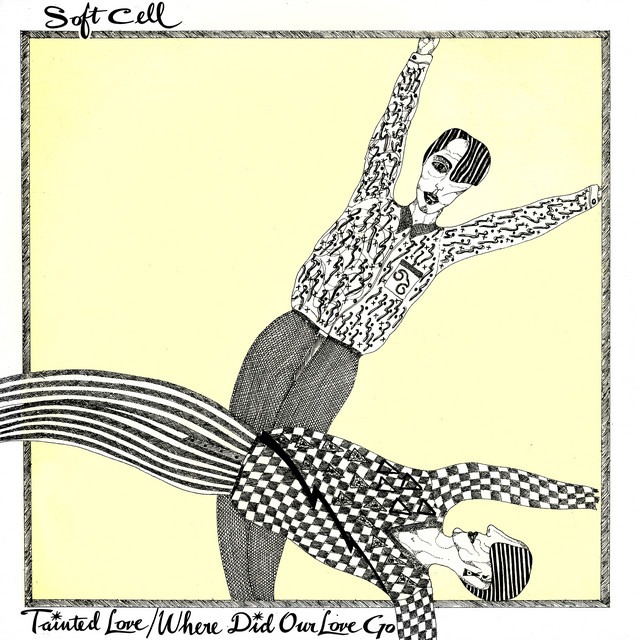
 “Tainted Love” – Soft Cell (1981)
This synth-pop banger actually came from the 1960s soul scene. It was first recorded by Gloria Jones in 1964—and didn’t do so well until it came back as part of the British Northern Soul momnent, Now it’s an ‘80s anthem for eyeliner-wearing romantics everywhere.

“Girls Just Want to Have Fun” – Cyndi Lauper (1983)
Before it became a feminist anthem, this was a guy’s tune! Written and first recorded by Robert Hazard in 1979, the lyrics were reimagined by Lauper—and the rest is girl-powered history.

“I Will Always Love You” – Whitney Houston (1992)
Dolly Parton wrote it. Sang it. Released it in 1974. But Whitney took it to another planet with The Bodyguard. Dolly cried tears of joy when she heard it—and then cried again all the way to the bank.

“Hound Dog” – Elvis Presley (1956)
Big Mama Thornton recorded the original in 1952—and it was full of grit and growl. Elvis’s version cleaned it up and cranked it out, but Thornton’s bark came first.

 “Nothing Compares 2 U” – Sinéad O’Connor (1990)
Prince wrote it. The Family recorded it. But it didn’t hit until Sinéad stood in front of a camera, shed a tear, and made it hers forever.

“Respect” – Aretha Franklin (1967)
Otis Redding wrote and recorded it in 1965. Then Aretha added “R-E-S-P-E-C-T,” flipped the gender dynamic, and turned it into a civil rights and feminist rallying cry.

“Twist and Shout” – The Beatles (1963)
This Beatles barn-burner was originally by The Top Notes in 1961, produced by a young Phil Spector. The Isley Brothers gave it life, but the Beatles gave it a roar.

“I Love Rock ’n’ Roll” – Joan Jett & the Blackhearts (1981)
It’s hard to imagine anyone but Joan Jett snarling through this one, but British band Arrows did it first in 1975. Jett saw them on TV while touring—and decided to own it.

“The Man Who Sold the World” – Nirvana (1993)
Yes, Bowie did it first in 1970. But when Kurt Cobain crooned it on MTV Unplugged, a whole new generation thought it was his. Bowie was flattered. And a little annoyed.

“Red Red Wine” – UB40 (1983)
That reggae shuffle hides its true origin: Neil Diamond wrote and recorded it in 1967! UB40 didn’t even realize that when they covered it—they thought it was a Jamaican tune.

“Hallelujah” – Jeff Buckley (1994)
Leonard Cohen wrote this biblical beauty in 1984. Buckley’s haunting version came a decade later, and now it’s the version you cry to after breakups, existential crises, and movie endings.

“I Fought the Law” – The Clash (1979)
This punk rebellion anthem started with The Crickets (yes, Buddy Holly’s band) and was later made famous by The Bobby Fuller Four. The Clash lit the fuse and made it dangerous.

“Blinded by the Light” – Manfred Mann’s Earth Band (1976)
Bruce Springsteen wrote it and released it in 1973. It didn’t chart. Then Manfred Mann added synths and misheard lyrics—and turned it into a #1 hit.

“You Really Got Me” – Van Halen (1978)
The Kinks roared this riff into the world in 1964. Van Halen gave it a steroid shot, but the bones were already British and beautifully unhinged.

“All Along the Watchtower” – Jimi Hendrix (1968)
Bob Dylan wrote it, but Hendrix made it eternal. Dylan himself later said that Hendrix’s version was definitive. Imagine writing a song and someone else improves it so much, even you agree.

“Torn” – Natalie Imbruglia (1997)
This aching ‘90s anthem was first recorded by Danish band Ednaswap in 1995. Natalie’s version turned pain into pop perfection.

“Black Magic Woman” – Santana (1970)
It wasn’t born in Latin rock—it came from British blues! Peter Green wrote it for Fleetwood Mac in 1968. Santana just gave it that irresistible groove.

“I’m a Believer” – Smash Mouth (2001)
This Shrek smash is actually a Monkees hit from 1966. Written by Neil Diamond (again), it’s been stuck in heads for over five decades and two generations of kids’ birthday parties.

“Downtown Train” – Rod Stewart (1989)
Tom Waits recorded it first in 1985 with gravel and gloom. Stewart turned it into a glossy radio hit. Waits probably lit a cigarette and said, “Fine.”

“Because the Night” – 10,000 Maniacs (1993)
Patti Smith wrote it with help from Bruce Springsteen. But for a whole new crowd in the ’90s, Natalie Merchant and 10,000 Maniacs made it soar on MTV Unplugged.

“I Wanna Be Your Man” – The Rolling Stones (1963)
Written for them by Lennon and McCartney before the Stones were famous. The Beatles recorded their own version later. That’s what you call an all-star assist.

“Piece of My Heart” – Janis Joplin (1968)
Aretha’s sister Erma Franklin released it first in 1967, but Janis ripped it apart and made it cry. It’s a heartbreak classic wrapped in a scream.

“If I Were a Boy” – Beyoncé (2008)
Originally written and recorded by BC Jean, Beyoncé heard it and turned it into a soul-stirring powerhouse. BC got the credit, but Queen B made it iconic.

“Me and Bobby McGee” – Janis Joplin (1971)
Kris Kristofferson wrote it. Roger Miller recorded it. But Janis took it to #1 posthumously—and gave it the raw ache of someone who’d really lived it.

 “Valerie” – Mark Ronson ft. Amy Winehouse (2007)
Yep, this dancefloor staple was originally by indie rockers The Zutons in 2006. Amy sang it like she’d known Valerie her whole life. That’s what soul does.

Music is a living, breathing thing. A great song is never finished—it just finds new voices. From dusty B-sides to pop anthems, these covers prove that reinvention is the heart of artistry. So next time you belt out your favorite tune, remember: you might just be singing someone else’s first draft—and making it your own. And really, that’s what great music is all about.

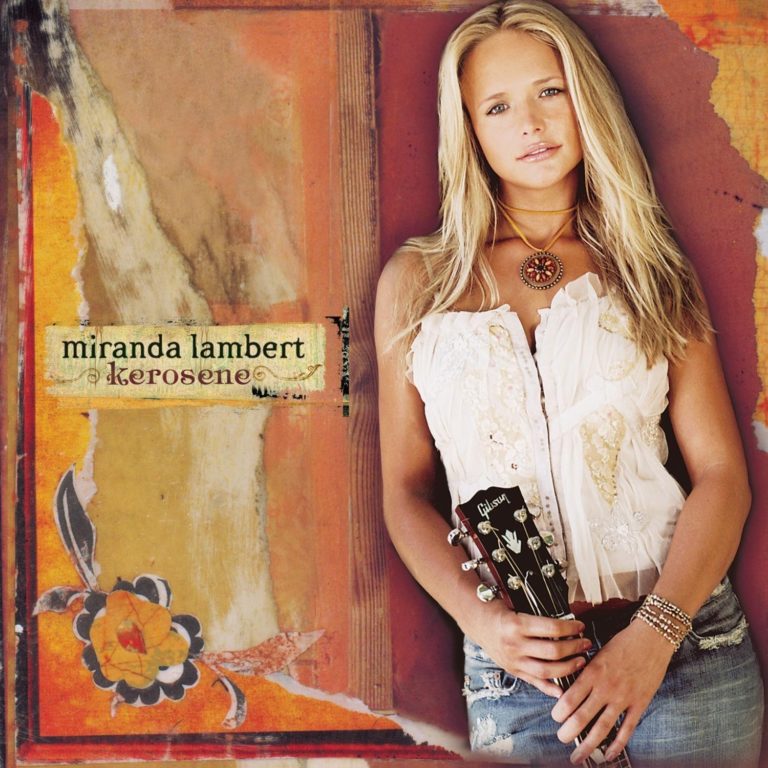
Miranda Lambert Celebrates 20 Years of ‘Kerosene’ with New Song and First-Ever Vinyl Release

0

Miranda Lambert is celebrating the 20th anniversary of her groundbreaking major label debut, Kerosene, with a special milestone release. Today, Lambert unveiled the never-before-released “I Don’t Love Here Anymore,” recorded during the original album sessions, while on April 25 fans can get Kerosene on vinyl for the first time ever.

“This album changed everything for me,” Lambert shares of the project named by New York Magazine as one of the year’s best debuts across all genres. “It’s where my journey truly began, and I can hardly believe it’s been 20 years. Releasing Kerosene on vinyl for the first time-and sharing a never-before-heard song from that era-feels incredibly special. I can’t wait for y’all to hear it and relive the fire that started it all!”

Kerosene debuted at No. 1 on the Billboard Top Country Albums chart upon its March 15, 2005 release, eventually gaining Platinum certification by the RIAA and earning praise from AllMusic as a “thoroughly winning debut,” with Rolling Stone celebrating “the songs’ sustained excellence” when revisiting the project on its 10th anniversary a decade ago.

With the breakthrough album setting the stage for the storied career that followed – including her latest critically-acclaimed project, Postcards from Texas, marking the 10th consecutive Top 10 album for the most-awarded artist in Academy of Country Music history – Variety proclaims that “Whoever the entertainer of the year may be at any given recent point, Lambert has a strong claim on being country’s entertainer of the last two decades.”

Today’s anniversary release follows her latest single “Run,” which arrived at Country radio on Feb. 24 with 73 first-week adds. The three-time GRAMMY Award-winner is also set to join Morgan Wallen for several stadium dates of the upcoming I’m The Problem Tour, while headlining sets at festivals and one-off dates this summer including Two Step Inn, Country Stampede, Lakefront Music Fest, Field & Stream Music Fest and more.

Jon Anderson and The Band Geeks Announce Second Leg of 2025 U.S. Tour, Celebrate Live Album Release

0

To celebrate today’s release of their live album, Jon Anderson and The Band Geeks announce the second leg of their 2025 U.S tour. The 11-show tour commences June 15th at the Warner Theater in Washington D.C and ends July 13th at The Factory in St. Louis, Missouri.

These shows follow the previously announced 18 show leg that starts April 1st in Tucson, Arizona. Both legs of the tour will feature an evening of YES classics as well as tracks from their critically acclaimed debut album TRUE released August 2024.

Premiering today is a video for the YES classic Roundabout, taken from the CD/DVD/Blu-ray “Jon Anderson and The Band Geeks Live- Perpetual Change”.

Dates for the 2025 tour are below:

April 1-Tucson AZ -The Rialto Theater
April 3-Anaheim CA-The Grove of Anaheim
April 5-Las Vegas NV-The Theater at Virgin Hotels Las Vegas
April 8-Oakland CA-Fox Theater
April 11-Sacramento CA- SAFE Credit Union Performing Arts Center
April 14-Seattle WA- Moore Theater
April 19-Rockford IL-Coronado Pac
April 23-Milwaukee WI-Pabst Theater
April 25-Des Plaines IL-Des Plaines Theater
April 27-St. Charles IL-The Arcada Theater
April 30-North Tonawanda NY-Riviera Theater
May 2-Cleveland OH-The Agora
May 4-Lancaster PA-American Music Theater
May 7-Wilmington DE-The Grand Opera House
May 10-Ridgefield CT -The Ridgefield Playhouse
May 12-Ridgefield CT-The Ridgefield Playhouse
May 16-Westbury NY-Flagstar at Westbury Music Fair
May 18-Carteret NJ- Carteret Performing Arts Center
June 15-Washington DC-Warner Theatre
June 18-Ocala FL-Circle Square Cultural Center
June 20-Clearwater FL-Ruth Eckerd Hall
June 23-Dallas TX-Moody Performance Hall
June 25-Austin TX-Paramount
June 27-San Antonio TX-Tobin Center
July 01-Macon GA-Auditorium
July 05-Farmington PA-Timber Rock Amphitheatre
July 07-Ocean City NJ-Ocean City Music Pier
July 11-Nashville IN-Brown County Music Center
July 13-St. Louis MO-The Factory

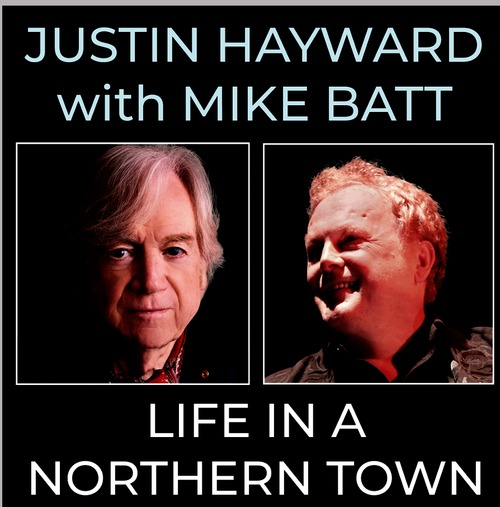
Justin Hayward and Mike Batt Reunite for Orchestral Cover of “Life In A Northern Town”

0

In a collaboration between some serious British music heavyweights, the voice of The Moody Blues, Justin Hayward has teamed up with singer-songwriter, producer and conductor Mike Batt to create a brand new digital-only 2-track single. The A-side features a vocal and orchestral rendition of ‘Life In A Northern Town’ – released almost exactly 40 years after the Dream Academy original. Available on 14 March 2025 through Universal, the single’s B-side is a new live version of The Moody Blues’ ‘Hope and Pray’ which was recorded in Kent, Ohio as part of Justin’s recent ‘Blue World’ Tour.

Justin Hayward said, “Mike and I have known each other since we were young. I always loved the atmosphere and mood he created, and didn’t hesitate when he asked me to be part of his production of Lewis Carroll’s ‘The Hunting of The Snark’ in 1987. Soon we were putting together the album ‘Classic Blue’, featuring Mike’s orchestral arrangements of some of our favourite songs. It was the first time since ‘The War Of The Worlds’ that I had enjoyed the responsibility of being the featured voice, as opposed to being the writer, the guitar player and arranger of my own songs – and I loved it. Most of the songs were recorded live, with me in the vocal booth, and Mike conducting the London Philharmonic Orchestra playing his gorgeous arrangements. These are the moments we love and live for. The chance to revisit those feelings was an opportunity I wasn’t going to pass up. Last year we fixed a new recording session, again with The LPO and with Haydn Bendall engineering. The first release is ‘Life in a Northern Town’, a song, and a record that was at the top of both our lists of favourites.”

Mike Batt added, “When the Dream Academy version came out originally, I had floods of phone calls congratulating me on ‘my hit’. People just thought it sounded like me – vocally and arrangement-wise. Of course, I had nothing to do with it – but loved the record. It has always been one that Justin and I have had on our list: to do “one day”. One day arrived, a few months ago, and we still had it on top of the list, so we did it! Vocally, this single is basically Justin singing the verses and me singing the choruses. It just turned out that way – whereas the original ‘Classic Blue’ project was clearly a Justin solo album with me doing backup vocals. The absence of a rhythm section gives more space for the voice to occupy. It also means the arrangement isn’t obscured, so you can hear the inner orchestral parts. I do think there’s a chemistry we tap into when we work together. I think it’s just because we’ve known each other so long, and we’re musically comfortable together”.

Justin Hayward and Mike Batt remain tight lipped for now as to what may follow, though they do volunteer that it was a three-hour recording session.

Tedashii Shares Personal Pain and Resilience on New Single “Heavy Heart”

0

Following singles with Billboard-charting artist Sam Rivera & award-winning Jordin Sparks, Tedashii lands his 3rd single of the year, “Heavy Heart.” “Heavy Heart” reveals the agony of internal turmoil and a resilience to persevere despite overwhelming challenges. In a fresh pop-indie rock rap track reminiscent of the 2000s, Tedashii continues to explore new sounds and the mountain and valleys of mental health.

“Ever since the loss of my son, every moment with my music has been influenced by him,” says Tedashii. “This song is a continuation of my journey through the losses in my life.”

Tedashii is a tenured artist, musician, public speaker, writer, and communicator burdened to see people become who they were born to be. Growing up in Texas on the fringes of society, family and football were everything – then he found faith. With this faith, he ventured into vocational ministry and eventually artistry as a member of the 116 Life on Reach Records. He graduated from the University of North Texas with a dual Bachelor’s degree in Anthropology and Sociology to further his ambitions to reach those beyond his city limits.

For the last twenty years he’s devoted his life to encouraging others to find their identity in God and leading a movement of unashamed believers who desire to engage the world for His glory. He is the founder of the Chase Foundation-an organization to serve families who have lost children by being a present help for future hope, the originator of Chase Wellness, the CEO of Unashamed Ministries, and the host of his podcast The Dash. Tedashii and his wife (Danielle) live in Atlanta, GA and are the proud parents of four amazing boys.

Unlock Your Luck: How Creative Minds Win Big

0

By Mitch Rice

Everyone talks about luck like it’s lightning in a bottle, random, fleeting, and impossible to control. But for creative minds, luck isn’t just a coincidence. It’s a mindset, shaped by vision, strategy, and the relentless pursuit of the unexpected.

This article explores how creativity, when paired with intention, transforms luck into a repeatable advantage. Whether it’s in the realm of gaming, entrepreneurship, or everyday problem-solving, we break down five key traits that help creative individuals consistently come out on top, and why platforms are attracting those who think beyond chance.

Strategic Play Turns Luck Into a Repeatable Skill

Creative thinkers don’t just leave outcomes to chance, they break down systems, observe patterns, and shape outcomes through informed decision-making. They treat every scenario as a test ground for strategy, sharpening their instincts with every choice.

This mindset thrives in environments that reward strategy over impulse. Platforms that offer multi-layered mechanics and evolving challenges become arenas where cognitive flexibility and risk management skills can shine. One such example, when viewed through a critical lens, is sweepstakes-based gaming, where rules, structures, and outcomes differ significantly from standard gambling models.

Reviewing McLuck Casino gives us a detailed look at how this platform stacks up, its game variety, customer support, and payment methods. Explore McLuck sweepstakes options to better understand where it’s legal, how its bonuses compare, and whether the user experience matches up to industry standards. For creative minds, it’s not about spinning the wheel, it’s about knowing why and when to spin it in the first place.

Creative Thinkers Spot Opportunities Where Others See None

Creative individuals have a knack for observing the overlooked. They don’t wait for opportunities, they make them. This mindset allows them to find potential in places others deem ordinary. Their success starts with seeing differently.

This ability is especially valuable in spaces like gaming, where recognizing the potential of emerging platforms or trends can make a huge difference. While many stick to mainstream solutions, creative minds are out testing the waters elsewhere, always looking for what’s next.

By staying open to exploration and resisting conventional limits, they cultivate a habit of turning even the smallest ideas into breakthrough moments.

Curiosity Drives Them Toward New Experiences

Creative individuals are natural explorers. They’re driven by an insatiable urge to ask “what if?”, and they answer it not with theory, but with action. This instinct leads them to test new methods, dive into unfamiliar platforms, and adopt unconventional strategies.

Each new experience becomes a source of insight. Whether it’s mastering the rules of a newly released game or applying a fresh approach to a known challenge, creative minds view every moment as a chance to grow. They don’t need assurances or guarantees, just the opportunity to experiment and refine their thinking in real time.

This consistent cycle of exploration and learning helps them build a sharper mental toolkit. By staying curious and taking intelligent risks, they uncover patterns, develop new tactics, and often achieve results that more rigid thinkers would never reach.

Adaptability and Community Insight Help Creative Minds Stay Ahead

Winning big isn’t just about having a great idea, it’s about knowing when to evolve and how to respond to change. Creative individuals are highly tuned to feedback. They test, revise, and move forward while others hesitate. This flexibility allows them to maintain momentum even when the rules shift or the landscape changes.

In digital arenas like sweepstakes and gaming, where formats are frequently updated and strategies can go stale overnight, adaptability is essential. The most successful players remain agile, ready to tweak their tactics the moment old ones lose their edge. They don’t fear change, they use it.

This advantage is multiplied when combined with shared knowledge. Creative minds don’t operate in isolation, they connect. By participating in online communities, forums, and strategy groups, they gain access to insights that can dramatically accelerate their learning curve.

As reported by the Pew Research Center, over 72% of online adults engage with peer-driven content to inform their decisions, illustrating the value of shared expertise in shaping effective outcomes.

Conclusion

Winning big isn’t reserved for the lucky few, it’s a pattern that emerges when creativity meets action. From spotting opportunities others ignore to learning from a collaborative community, the most successful players aren’t waiting for luck to strike. They’re building it with every choice they make.

Creative minds thrive by turning uncertainty into strategy, exploration into mastery, and chance into opportunity. The formula remains the same: stay curious, stay flexible, and never stop learning. Because for those who know how to unlock it, luck isn’t random, it’s earned.

Data and information are provided for informational purposes only, and are not intended for investment or other purposes.


OCR A Level Chemistry Past Papers: Still the Gold Standard for Science Students in 2025?

0

By Mitch Rice

Trustworthy sources are crucial—a good scientist always checks their data. OCR A Level Chemistry past papers are still top-tier for revision and exam readiness. So, combine them with up-to-date spec knowledge, and supplement with newer sample papers for anything that’s just been added.

OCR Past Papers Specifics

OCR past papers are tailor-made for your science students. They test the exact way OCR likes to ask questions, structure their papers, even how they phrase command words (“describe” vs. “explain” vs. “evaluate”). Practicing with them means you’re training for your exam, not a generic one.

The best thing about past papers is pattern recognition. OCR (like most exam boards) has certain themes, calculation types, and classic practical questions that love to pop up again and again. Doing OCR A Level Chemistry past papers, you get savvy at spotting what’s most likely to appear.

And, the mark schemes are like cheat sheets to the examiners’ minds. It will help you like a lot. They teach you what keywords and explanations will actually win you marks, and you get a sense for how much detail to give for each type of question without wasting too much time. 

What makes OCR A Level Chemistry papers special compared to other boards?

Different boards like AQA, OCR, and Edexcel might cover similar topics, but they each have their own quirks.

  • OCR leans into practical application. There’s a strong emphasis on understanding experiments, interpreting results, and applying knowledge beyond just memorizing facts.
  • Their questions sometimes sneak in context. Like, instead of a plain “what’s the ionic equation for neutralisation?” they might wrap the question in a real-life scenario or data interpretation task.
  • The specification for OCR A can go into areas like spectroscopy, organic mechanisms, and transition metals a bit differently than AQA.

How about using other resources?

Mixing in AQA or Edexcel questions can help you get comfy with broad concepts—but always circle back to OCR style when it counts. Think of them as bonus practice, but let OCR past papers be your main training ground before the big duel.

What about this year—are past papers still effective?

Totally! Even with recent syllabus tweaks, the foundational concepts and style of questioning haven’t shifted radically. However, keep an eye on any official OCR updates or changes to the spec—sometimes very recent topics or assessment tweaks won’t be in older past papers. For those, check out any “sample assessment materials” or new specimen papers from OCR.

Typical OCR Exam Question

Question:

Ammonia is manufactured by the Haber process.

N₂(g) + 3H₂(g) ⇌ 2NH₃(g)

(a) Explain, in terms of collision theory, how increasing the pressure affects the rate of reaction.

(b) State the effect of increasing the temperature on the position of equilibrium, and explain your answer.

What’s gold here?

OCR always loves to frame questions in practical, industrial or everyday settings. Haber process, titrations, reaction rates—they all show up with references to “the lab,” “industry,” or “medical use.”

Concept + Application: Not only do you have to explain a concept (collision theory), you must apply it to this actual reaction.

Command Words: “Explain,” “state and explain”—know these inside out! “State” = short fact. “Explain” = cause, reason, mechanism.

Mark Scheme Snippet

(a)

  • Increased pressure = more particles per volume (1)
  • Increased frequency of collisions between N₂ and H₂ molecules (1)
  • Higher rate of successful collisions per second (1)

(b)

  • Increasing temp moves equilibrium to the left (towards N₂ and H₂) (1)
  • Because forward reaction is exothermic / reverse is endothermic (1)
  • Higher temp favors endothermic direction (1)

Keywords win marks! “Frequency of collisions,” “successful collisions,” “endothermic,” “moves equilibrium”…the mark scheme is all about those phrasing nuggets—not waffle. So, each mark comes from hitting each logical link in the chain, not just dumping everything you know.

What makes OCR distinctive?

They’ll work data and graphs into practical chemistry questions (not just theory). You might get blended synoptic questions, like interpreting spectra plus applying organic mechanisms. Scared? 

And, occasional “Describe an experiment to show…” questions—that’s them testing practical understanding!

Oxford Edition Past Papers

These are usually official OCR papers repackaged and sometimes paired with examiner tips, mark schemes, and extra revision advice. If you prefer a print copy over scrolling PDFs, or if you want everything in one place (sometimes with extra commentary), the Oxford version is totally solid. Just make sure it’s for the correct specification year (new spec = from 2015 onwards for A Level, so check before buying).

Pro-Tips for Working with Past Papers

  • Do it timed for at least some tries—practice the real pressure.
  • Mark yourself ruthlessly with the mark scheme. Every mark is a lesson in exam technique, not ego.
  • Note “model answers”—write them down as templates for future use. It’ll train your brain to answer “the examiner’s way.”
  • After marking, re-answer weaker questions in a few days—it’s the spaced-out practice that locks it in.

You’ll save a lot of money on a human tutor at first just by wrangling a bunch of past papers with mark schemes. But a tutor might still be ace for deep troubleshooting and accountability if chemistry starts to feel like a solo climb up a foggy mountain.

Top-Tier A Level Chemistry Prep Plan

Are Past Papers Enough?

Past papers are your “exam fitness” gym—they get you exam-fit, teach you timing, and help you think like an examiner. But imagine only ever sparring before a boxing match, never training your muscles or learning new moves. Eventually, you’ll hit a limit. 

  • Gaps & New Content—Past papers only cover what’s been asked before. If the spec changes or something new is added, those questions won’t be there. Not that ‘aha!’ moment, more of ‘haha!’ one.
  • Surface vs Deep Learning—You might get good at “doing the papers,” but struggle if a question twists the concept or asks for something novel. You need to understand, not just repeat.
  • Mark Scheme Memorizing—Sometimes students accidentally just memorize mark schemes—great for old questions, but risky for curveballs.

What Should You Add?

  1. Specification-Tailored Textbook

Get a textbook written for your exact OCR spec. Not just any chemistry book—look for “OCR A Level Chemistry” (publishers like Oxford, CGP, or Pearson). These map every topic, learning outcome, and even use similar language. They’re vetted, reliable, and won’t leave you studying off-spec.

  1. Official Revision Guides

OCR itself (and trusted publishers) often release revision guides—these condense what you must know, highlight “common errors,” and include end-of-chapter quizzes. Super handy for quick recaps.

  1. Online Video Tutorials—Official or Teacher-Led

YouTube is a treasure trove, but stick to big, reputable channels.

  • OCR’s own YouTube (yep, they have one)—They sometimes share walkthroughs, examiner tips, or sample experiments.
  • Freesciencelessons (UK favorite, super clear)
  • MaChemGuy (well-known for A Level, especially OCR)
  • Primrose Kitten (covers every board, but tags OCR content) Choose these over random channels and you’re golden.
  1. Practical Work—Virtual or Real

OCR loves practicals. If you can’t do them in the lab, look for:

  • OCR’s Practical Endorsement guides (official PDF resources on required practicals)
  • CLEAPSS or your school’s VLE: Sometimes schools have subscriptions to virtual labs or official experiment walkthroughs.
  1. Specimen & Sample Assessment Material

OCR publishes “specimen papers” for new specs—these are like pre-past papers. Always worth doing as they reflect the latest exam style.

  1. Summary Cards or Apps

Make or buy flashcards (or use apps like Quizlet) for definitions, equations, and mechanisms. They’re unbeatable for bite-size revision and bus rides.

  1. AQA/Edexcel Papers (as Bonus)

For extra practice on core concepts and to see a different “take” on similar topics. Just remember, mark against your OCR spec.

Main rule here: Stick to big names (as above), official publishers, or channels recommended by teachers and exam boards. Avoid “enthusiast” videos that aren’t clear. Combine past papers, a solid textbook, official revision resources, and a pinch of strategic YouTube, and you’re cooking up a recipe for exam success.

Data and information are provided for informational purposes only, and are not intended for investment or other purposes.