Home Blog Page 774

National Recording Registry Inducts Sounds of Elton John, Chicago, Broadway’s ‘Hamilton,’ Mary J. Blige, Amy Winehouse, Minecraft and Microsoft

0

Elton John’s monumental album “Goodbye Yellow Brick Road,” Chicago’s debut “Chicago Transit Authority,” the original cast recording of Broadway’s “Hamilton,” Mary J. Blige’s “My Life,” Amy Winehouse’s “Back to Black,” Microsoft’s reboot chime, and the soundtrack to the Minecraft video game phenomenon have been selected as some of the defining sounds of history and culture that will join the National Recording Registry of the Library of Congress.

Librarian of Congress Carla Hayden today named 25 recordings as audio treasures worthy of preservation for all time based on their cultural, historical or aesthetic importance in the nation’s recorded sound heritage.

The 2025 class of inductees includes Tracy Chapman’s self-titled debut album, Celine Dion’s 1997 single “My Heart Will Go On” from the blockbuster film “Titanic,” Roy Rogers and Dale Evans’ classic “Happy Trails,” Miles Davis’ jazz fusion album “Bitches Brew,” Charley Pride’s groundbreaking “Kiss an Angel Good Mornin,’” Vicente Fernandez’s enduring ranchera song “El Rey,” Freddy Fender’s breakthrough song “Before the Next Teardrop Falls” and the Steve Miller Band’s “Fly Like an Eagle.”

“These are the sounds of America – our wide-ranging history and culture. The National Recording Registry is our evolving nation’s playlist,” Hayden said. “The Library of Congress is proud and honored to select these audio treasures worthy of preservation, including iconic music across a variety of genres, field recordings, sports history and even the sounds of our daily lives with technology.”

More than 2,600 nominations were made by the public this year for recordings to consider for the registry. “Chicago Transit Authority” finished No. 1 in the public nominations this year. Other selected recordings in the top 10 of public nominations include “Happy Trails,” “Goodbye Yellow Brick Road” and “My Life” by Blige.

The recordings selected for the National Recording Registry this year bring the number of titles on the registry to 675, representing a small portion of the national library’s vast recorded sound collection of nearly 4 million items.

Elton John, the 2024 winner of the Library’s Gershwin Prize for Popular Song with his songwriting partner Bernie Taupin, reflected on their 1973 album “Goodbye Yellow Brick Road.”

“Nobody really knows what a hit record is. I’m not a formula writer. I didn’t think ‘Bennie and the Jets’ was a hit. I didn’t think ‘Don’t Let the Sun Go Down on Me’ was a hit. And that’s what makes writing so special,” John told the Library. “You do not know what you’re coming up with and how special it might become.”

Mary J. Blige recalled her 1994 soulful hip-hop album “My Life.” “My favorite lyric from the ‘My Life’ album is ‘Life can be only what you make of it,’” she said.

The latest selections named to the registry span from 1913 to 2015. Ten of this year’s selections are from the 1970s. The earliest recording on the list is the long-beloved Hawaiian song “Aloha ‘Oe,” recorded in 1913 by the Hawaiian Quintette. The original Broadway recording of “Hamilton” by Lin-Manuel Miranda and the cast from 2015 becomes the newest recording to join the registry.

The 2025 selections span the sounds of folk, jazz, country, pop, comedy, sports, Latin, dance, R&B, tech, choral and musical theater. The recording from Minecraft is only the second video game soundtrack to join the registry, following the theme from Super Mario Brothers, selected in 2023.

“This year’s National Recording Registry list is an honor roll of superb American popular music from the wide-ranging repertoire of our great nation, from Hawaii to Nashville, from iconic jazz tracks to smash Broadway musicals, from Latin superstars to global pop sensations – a parade of indelible recordings spanning more than a century,” said Robbin Ahrold, chair of the National Recording Preservation Board.

Listen to many of the recordings on your favorite streaming service. The Digital Media Association, a member of the National Recording Preservation Board, compiled a list of some streaming services with National Recording Registry playlists, available here: https://dima.org/national-recording-registry-class-of-2025/.

NPR’s “1A” will feature selections in the series “The Sounds of America” about this year’s National Recording Registry, including interviews with Hayden and several featured artists in the weeks ahead.

Recordings Selected for the National Recording Registry in 2025

(chronological order)

  • “Aloha ‘Oe” – Hawaiian Quintette (1913) (single)
  • “Sweet Georgia Brown” – Brother Bones & His Shadows (1949) (single)
  • “Happy Trails” – Roy Rogers and Dale Evans (1952) (single)
  • Radio Broadcast of Game 7 of the 1960 World Series – Chuck Thompson (1960)
  • Harry Urata Field Recordings (1960-1980)
  • “Hello Dummy!”– Don Rickles (1968) (album)
  • “Chicago Transit Authority” – Chicago (1969) (album)
  • “Bitches Brew” – Miles Davis (1970) (album)
  • “Kiss An Angel Good Mornin’” – Charley Pride (1971) (single)
  • “I Am Woman” – Helen Reddy (1972) (single)
  • “El Rey” – Vicente Fernandez (1973) (single)
  • “Goodbye Yellow Brick Road” – Elton John (1973) (album)
  • “Before the Next Teardrop Falls” – Freddy Fender (1975) (single)
  • “I’ve Got the Music in Me” – Thelma Houston & Pressure Cooker (1975) (album)
  • “The Kӧln Concert” – Keith Jarrett (1975) (album)
  • “Fly Like an Eagle” – Steve Miller Band (1976) (album)
  • Nimrod Workman Collection (1973-1994)
  • “Tracy Chapman” – Tracy Chapman (1988) (album)
  • “My Life” – Mary J. Blige (1994) (album)
  • Microsoft Windows Reboot Chime – Brian Eno (1995)
  • “My Heart Will Go On” – Celine Dion (1997) (single)
  • “Our American Journey” – Chanticleer (2002) (album)
  • “Back to Black” – Amy Winehouse (2006) (album)
  • “Minecraft: Volume Alpha” – Daniel Rosenfeld (2011) (album)
  • “Hamilton” – Original Broadway Cast Album (2015) (album)

The public can submit nominations throughout the year on the Library’s website. Nominations for next year will be accepted until Oct. 1, 2025. The public may nominate recordings for the registry here.

Chicago’s Lee Loughnane and James Pankow Reflect on the Band’s Sound

The sound of Chicago was “the result of us growing up in Chicago and listening, all of us, to different styles of music as we were growing up – jazz, rock and roll, classical – and when we started playing our instruments, that listening experience permeated our playing. So that when we played any song, we were able to just play naturally, organically, and what came out was what we sound like on that first album,” trumpeter, vocalist and songwriter Lee Loughnane told the Library of Congress.

Loughnane and trombone player James Pankow are two of the original members who remain with the band. They recalled how “Chicago Transit Authority” involved both improv and written material the band had carefully prepared to record for the first time.

“We would do solos and the solos were improvised, they were spontaneous,” Pankow said. “As we recorded and we fine-tuned these tracks, little ideas would pop in. The song would kind of blossom into a complete result. It was a very nurturing experience. It cast the mold for every album to come.”

“This career has been remarkable, a phenomenon that we never expected. This is our 58th year touring, and it’s quite apparent that this music will far outlive us as people,” Pankow told the Library. “This music has been validated by the fans, by the listeners who continue to come to experience this music with great anticipation. This music seems to be timeless. This music seems to be multi-generational. And that is an amazing validation of the timelessness of the music. But to be acknowledged by the Recording Registry is the ultimate validation because it’s now in the record, and it is truly historical.”

“It’s an incredible honor to be included in the registry,” Loughnane said. “It’s something that we never thought would happen. We were hoping when we initially wrote the songs that anyone else besides us would like them. So to have it go this long is phenomenal for us and to be included in the registry is over the top.”

Tracy Chapman on Starting in Music and the Importance of Preservation

“For me, actually, my interest in music started when I was very young. I started writing songs when I was 8-years-old, and I started playing guitar at that time as well. I grew up in a very musical household. My mom sings, and my sister has a lovely voice. There was always music all the time, either the record player was on or my mother was singing to gospel music on Sundays. And I just had an interest in acoustic guitar, I think, in part, because I saw a country music program called ‘Hee Haw’ and really loved the guitars and begged my mom to get one for me. So that was the beginning of my songwriting. … I played clarinet, I played ukelele – I think that was actually the first instrument that I played. And then I played classical clarinet when I was in school, I studied that. But the guitar was something that I just was so drawn to. Because I also had written poetry when I was a kid – and so this combination of my interest in poetry and my interest in music, it all culminated in me, in a way, becoming a singer/songwriter at a very early age. And so by the time I got to Boston in the ’80s, I’d already been writing songs – I’d written hundreds of songs – and I’d also even been playing for people,” Chapman said.

“When I was thinking about this question about why people should care about recording preservation, it reminded me that I studied anthropology, and I have a bachelor’s degree in sociocultural anthropology,” Chapman said. “This is just the sort of thing that, had I gone on to study and work as an anthropologist that I would have loved to have available. These are the things that anthropologists dream of because it tells you so much about how people live. You not only learn about what entertains them, about maybe what’s considered current or culturally relevant at a certain time, but you also get a glimpse into the things that matter to them. And that’s the stuff that you go digging for and that you hope you’ll find somewhere when you’re on the path of studying people and how they live. … And lastly, I would say too, I basically grew up in a public library. I lived across the street from one. It was the only place my mother would let me go on my own. And so, I love libraries, and I love books and archives, and so it’s really so amazingly awesome to be part of one of the most important libraries in the world, I’d say, but certainly in the United States.”

‘Hamilton’ Creator Lin-Manuel Miranda Looks Back on Show’s 10 Years

When “Hamilton” finally opened at the Public Theatre off-Broadway in 2015, “I remember just feeling an enormous weight off my chest, incredible pride in our unbelievable company and the way in which they were telling the story, and feeling like, ‘OK, it’s out of my head and on a stage now.’ That first preview at the Public Theatre clocked in at three hours and 12 minutes, so it was also a feeling of, ‘OK, it’s out of my head and I can look at it – and we still have work to do,’” Miranda told the Library.

“I learned early on that we can’t control what the world does with what we make – in fact it’s even a theme in Hamilton. Washington says to Hamilton, ‘You have no control who lives, who dies, who tells your story.’ I knew it was pulling the best out of me, that telling Hamilton’s story was forcing me to reach deeper personally and reach wider musically than any other project I’d worked on,” Miranda said.

“I think the National Recording Registry is an artistic version of a nation’s conversation with itself,” Miranda said. “Every piece of art that is made is both deemed timeless by the Library of Congress and also a product of its time. To listen to these recordings, to go back as far as the turn of the century, to the beginning of recorded sound to the present is to hear points in a timeline, to time travel. I feel incredibly honored that ‘Hamilton’ is a point in that timeline.”

Miranda Discusses ‘Hamilton’s” Registry Induction in Spanish

“Las grabaciones que son parte de este elenco son una conversación sobre esta nación y cada momento es un momento de nuestra historia, y ser parte de esta historia es muy especial”, dijo Miranda.

“Lo que más me ha sorprendido sobre el éxito de Hamilton es todo. Que estas 46 canciones han viajado por todo el mundo, que tiene fanáticos por todo el mundo, y que esta historia de Alexander Hamilton fue muy impactante porque para mi es la historia de inmigración de nuestra nación, antes de que fueran los EE.UU.”, dijo Miranda.

“Estos diez años han sido una sorpresa pero yo espero que en un par de años, no sé cuándo, las producciones de Hamilton van a estar en las escuelas. Que las escuelas tengan los derechos para montar la obra”, dijo Miranda.
About the National Recording Registry

Under the terms of the National Recording Preservation Act of 2000, the Librarian of Congress, with advice from the National Recording Preservation Board, selects 25 titles each year that are “culturally, historically, or aesthetically significant” and are at least 10 years old. More information on the National Recording Registry can be found at loc.gov/programs/national-recording-preservation-board/about-this-program/. The public may nominate recordings for the registry here.

Some registry titles have already been preserved by the copyright holders, artists or other archives. In cases where a selected title has not already been preserved, the Library of Congress National Audio-Visual Conservation Center works to ensure that the recording will be preserved by some entity and available for future generations. This can be through the Library’s recorded-sound preservation program or through collaborative ventures with other archives, studios and independent producers.

In addition to their work with the registry, the Library and Board undertake preservation and access initiatives with archives and other organizations throughout the United States. As authorized by the legislation, the Librarian of Congress has appointed seven members to the Board of Directors of the Congressionally-chartered National Recording Preservation Foundation. For more information, visit the Foundation’s web page at: https://www.recordingpreservation.org/

The national library maintains a state-of-the-art facility where it acquires, preserves and provides access to the world’s largest and most comprehensive collection of films, television programs, radio broadcasts and sound recordings (loc.gov/avconservation). It is home to more than 10 million collection items.

The Library of Congress is the world’s largest library, offering access to the creative record of the United States – and extensive materials from around the world – both on-site and online. It is the main research arm of the U.S. Congress and the home of the U.S. Copyright Office. Explore collections, reference services and other programs and plan a visit at loc.gov; access the official site for U.S. federal legislative information at congress.gov; and register creative works of authorship at copyright.gov.
National Recording Registry, 2025 Selections
(about each selection, chronological order)

“Aloha ‘Oe” – Hawaiian Quintette (1913) (single)

By the time of this 1913 recording, the song “Aloha ‘Oe” had been a beloved song in Hawaii for more than 30 years. It was heard on the mainland of the United States as early as 1884 when the Royal Hawaiian Band performed at the New Orleans World’s Fair. It was composed by Princess, later Queen, Lili’uokalani after a heartfelt parting from her close friend James Aalapuna Harbottle Boyd. This recording, and the many performances of the song that Hawaiian Quintette made as musicians on tour with the popular Hawaiian-themed play “Bird of Paradise,” did much to popularize the song further. The Quintette featured Walter Keaumakalani Kolomoku playing lap steel guitar in a fashion that gave birth to the dobro and the pedal steel guitar and also influenced slide guitarists playing the blues. Joining him were Benjamin Waiwaiole on guitar, S.M. Kaiawe on tenor guitar, A. Kiwala on ukelele, and W.B.J. Aeko on banjo ukulele. Kolomoku sang lead and all harmonized on the now famous chorus:

Aloha ʻoe, aloha ʻoe Farewell to thee, farewell to thee
E ke onaona noho i ka lipo The charming one who dwells in the shaded bowers
One fond embrace, One fond embrace,
A hoʻi aʻe au Ere I depart
Until we meet again Until we meet again

“Sweet Georgia Brown” – Brother Bones & His Shadows (1949) (single)

No one knows who first took a pair of animal bones, carved them down to size and rattled them in rhythm between their fingers, but Freeman “Brother Bones” Davis is surely the most widely heard bones player in history. He was born in Alabama in 1902. The instrument was a hobby for him, and he usually made do with makeshift wooden substitutes until a vaudeville player recognized his talent and gifted him with a set of real carved, polished bones. Davis moved to Long Beach, California, in the 1920s, where he used whistling and bones to attract customers to the shoeshine stand where he worked. He was also heard on local radio. By the late 1940s, he worked as a carpenter by day and an entertainer by night, and he was noticed by Tempo Records, a new label looking for something different to release. His recording of the 1925 standard “Sweet Georgia Brown” was a surprise hit in 1949, and when the Harlem Globetrotters basketball team made it their theme song – which it remains to this day – it ensured a place for the recording on the all-time American playlist.

“Happy Trails” – Roy Rogers and Dale Evans (1952) (single)

Dale Evans wrote “Happy Trails” in 1951, inspired partly by the chorus of a song of the same name that her husband Roy Rogers had sung in his 1951 film “Spoilers of the Plains.” As a duet, it soon became the theme of the couple’s radio and television programs, and it remains a classic song of farewell, as well as an enduring spoken phrase of parting. Like the couple themselves, the song projects optimism and happiness, though both Evans and Rogers had faced adversity in their lives, and the song’s lyrics reflect life’s challenges as well: Some trails are happy ones/ Others are blue/ It’s the way you ride the trail that counts/ Here’s a happy one for you.

Radio Broadcast of Game 7 of the 1960 World Series – Chuck Thompson (Oct. 13, 1960)

Although the Pittsburgh Pirates took the first game of the World Series from the favored New York Yankees by a score of 6-4, they were clobbered in the next two games, 16-3 and 10-0. Undaunted, the Pirates fought their way back with two victories before being blown out again, 12-0, when the Yankees tied the Series. At the outset of game seven, announcer Chuck Thompson remarked that the song that all of ballplayers were singing around the batting cage was one called “There’s No Tomorrow,” a hit from 10 years earlier, and both sides played like this was literally true, with each hitting three home runs and the Yankees tying the score 9-9 going into the bottom of the ninth inning. Pittsburgh’s Bill Mazeroski took the first pitch from the Yankees’ Ralph Terry for a ball, then hit a home run over the head of left fielder Yogi Berra for the winning run. World Series games were strictly daytime affairs and this one began at 1 p.m. on a Thursday – therefore, more people may have been listening to the game than watching it. Thompson was a seasoned baseball broadcaster with over 20-years’ experience when he was assigned NBC’s radio coverage of the Series but inexplicably misidentified the pitcher in his call of the blast and even gave the final score of 10-0 before correcting himself. In the off-season, he was offered the chance to re-record the call for a commemorative record the Pirates were going to produce: “I figured it had gone on the air that way, so it would not be honest to change it.”

Harry Urata Field Recordings (1960-1980) (collection)

Musician and educator Harry Urata, confined to an internment camp after the bombing of Pearl Harbor, encountered Japanese-American workers who had processed sugar cane leaves (“holehole”) on Hawaiian plantations since the late 19th and early 20th centuries. Like many immigrant workers, they adapted and sang old folksongs (“bushi”) to reflect their daily circumstances. Known as holehole bushi, these songs expressed the hardships and hopes of the workers. Recognizing the cultural and historical significance of the songs, and the possibility that they might vanish with the passing of the older generations, Urata traveled throughout Hawaii’s islands recording elderly singers who had toiled on sugar plantations. His collection features 20 open-reel tapes recorded from the 1960s to the 1980s. Urata’s recordings, in their native language with the original singers, are now being used to teach future generations and communities, ensuring these songs are preserved, honored and sung.

“Hello Dummy!” – Don Rickles (1968) (album)

Calling all hockey pucks! Master of the insult, comedian Don Rickles’ first album, “Hello Dummy!,” captures Rickles in all his 1968 Las Vegas glory. In his act, Rickles blasted all groups, ethnicities and orientations, long before the idea of political correctness. “That’s right, I make fun of my own people. We’re the chosen people, that’s right…. We’re human beings: Jew, Gentile, Irish, Negro, Puerto Rican…ah Puerto Rican, that’s trouble….” “Mr. Warmth,” as Johnny Carson nicknamed him, found his voice in stream of consciousness crowd work when hecklers first brought out the “Merchant of Venom” in him onstage. “Laugh at bigotry, that’s what I do. My own life is based on that. Bigots, morons and dummies. God put us on this earth to laugh.” In real life, Rickles was a gentleman and a peacemaker. At the end of his shows, he sang a song, danced and became genuinely contrite, showing appreciation for the audience. On “Hello Dummy!,” he wraps up by quoting Will Rogers, becoming solemn in tone: “‘I never picked on the little guy.’ All of you are very big, and for that, I thank you.”

“Chicago Transit Authority” – Chicago (1969) (album)

Few bands have the bold innovation and material to make their debut album a double-disc masterpiece. Even fewer could accomplish this in less than two weeks working in the studio. Self-described as “a rock band with horns,” “Chicago Transit Authority” delivers almost 90 minutes of a tight mix of big band jazz-infused rock, rhythm and blues, classical and pop. The album includes the songs “Does Anybody Really Know What Time It Is?,” “Beginnings,” “Questions 67 and 68,” “I’m a Man,” “Poem 58” and “Someday.” While highly praised for its musical talent and diversity, an often-overlooked strength is the band’s three strong lead vocalists each with their own individual styles to bring to their collective work.

“Bitches Brew” – Miles Davis (1970) (album)

If it is not the first jazz fusion album, Miles Davis’ “Bitches Brew” may be the first fully realized one. Davis had already mixed electric instruments into his quintets, but “Bitches Brew” expanded and further amplified this with ensembles of as many as 12 other players who skillfully blended jazz with rock elements while leaving ample room for improvisation. Musicians included Wayne Shorter, Chick Corea, Jack DeJohnette and Dave Holland, who artistically were veterans of Davis’ quintet, as well as Bennie Maupin, John McLaughlin, Harvey Brooks, Billy Cobham and Lenny White. Davis and producer Teo Macero also utilized all the possible benefits of modern studio production in this album that was recorded over three days in New York City in August 1969. The finished product, at first, attracted mixed reviews and confusion from both listeners and the jazz press, though it is now celebrated for giving birth to a new genre of jazz.

“Kiss An Angel Good Mornin’” – Charley Pride (1971) (single)

Long before Beyonce and others broke the presumed color line of country music, the Black singer Charley Pride was a prolific and respected Nashville success story. A one-time professional baseball player with long-held dreams of singing country music, Pride cut his first songs at the legendary Sun Studios in 1958. But he was not able to release his first album until 1966. That album went gold and rose to No. 16 on the country charts. Blessed with a smooth and melodious voice, and with a good ear for songs to suit it, Pride would chart eight No. 1 hits over the next several years. In 1971, his recording of this Ben Peters song solidified his country legend status as it became a success on both county and pop stations. This hit allowed Pride to win the Country Music Association’s Entertainer of the Year award that year, the only African-American winner of the award to date.

“I Am Woman” – Helen Reddy (1972) (single)

A movement needs an anthem. And that is exactly what Helen Reddy, rather unknowingly, delivered to women with this massive and enduring hit from 1972. When Reddy wrote the song with co-writer Ray Burton, she was thinking only of the many great and resilient women within the multiple generations of her own family. But when her song hit the world airwaves in May of 1972, it coincided with the explosion of America’s second wave of modern feminism. The synergy, pride and strength of Reddy’s message was indeed “too much to ignore,” and American women found their own musical battle cry. Even decades later, after countless other pro-woman anthems have been written and heard, Reddy’s simple yet profound message – which has survived innumerable attempts to be diminished and parodied – remains the movement’s definitive theme.

“El Rey” – Vicente Fernandez (1973) (single)

“El Rey” – its title translates to “The King” – is one the most enduring songs of the ranchera genre, a category of Mexican music known for its dramatic emotion and lyrics about love, though the subject of “El Rey” is the singer’s declaration of personal pride and honor: And my word is the law/ I have no throne or queen/ Nor anyone who understands me/ But I am still the king. It was first recorded in 1971 by its writer Jose Alfredo Jimenez, one of Mexico’s most iconic songwriters. In 1973, however, mariachi singer Vicente Fernandez made it entirely his own, much as Frank Sinatra did with a similarly prideful song “My Way,” with which it is often compared.

“Goodbye Yellow Brick Road” – Elton John (1973) (album)

“Goodbye Yellow Brick Road” is the seventh album by the legendary songwriting team of Elton John and Bernie Taupin, and it is considered to be the masterpiece that launched John into superstardom, even extending his reach beyond the pop charts. One of its songs, “Bennie and the Jets,” became, in a surprise to many, a hit on the soul charts. To date, “Goodbye Yellow Brick Road” is John’s biggest-selling studio album of all time, selling more than 30 million copies worldwide. Primarily written and recorded at the famous Château d’Hérouville in France, this double-album includes “Bennie and the Jets,” “Candle in the Wind,” “Saturday Night’s Alright for Fighting,” “Funeral for a Friend/Love Lies Bleeding,” and “Harmony,” as well as the title track. According to John, “‘Goodbye Yellow Brick Road’ is the height of our personal powers and is true perfection.”

“Before the Next Teardrop Falls” – Freddy Fender (1975) (single)

Freddy Fender, born Baldemar Huerta in San Benito, Texas, in 1937, had enjoyed some local success as a singer in the late 1950s and 1960s, singing rock and roll and ballads in English and Spanish, but he was still only a part-time musician when he made his breakthrough with this signature song. “Before the Next Teardrop Falls” was an unlikely candidate for success, being recorded for a local Texas record label and using a muted instrumental accompaniment in an era of high-volume production and with one whole verse and chorus sung in Spanish. However, Fender’s expressive and plaintive tenor carried the day, and when the song was issued nationally, it was a crossover hit with pop and country audiences, and a major artist emerged into the mainstream.

“I’ve Got the Music in Me” – Thelma Houston & Pressure Cooker (1975) (album)

Thelma Houston started making records in 1969 and, in spite of many strong efforts, had little to show for it when a unique opportunity arose with which to demonstrate her artistry in jazz and soul stylings on a “direct-to-disc” album with a crack team of studio players known collectively as Pressure Cooker. Those studio musicians included Michael Omartian, Larry Carlton, Jim Keltner, Jim Gordon, Tom Scott, Victor Feldman and Larry Knechtel, who played for Lincoln Mayorga’s Sheffield Labs label. Sheffield’s specialty was albums recorded entirely live to lacquer-coated discs that were then used to create metal pressing parts to manufacture the album directly, bypassing analog tape stages and mixing sessions in favor of sonic clarity and visceral impact. Full sides of several songs had to be recorded at one time. Any mistakes meant starting over.  The finished result, skillfully achieved by talented recording engineer Bill Schnee, delivered a musically organic presence combined with a stunning immediacy.

“The Kӧln Concert” – Keith Jarrett (1975) (album)

Keith Jarrett was a well-established jazz pianist when he began giving solo and completely improvised concerts in 1973, playing new, lengthy unnamed pieces that might later only be identified by the date and location of the performance – if that. He said he didn’t know what he was going to play at the outset of any performance, but audiences were willing and able to follow the development of each piece as he played it. Against all odds, his appeal broadened, and an audience of 1,400 awaited him in Kӧln, West Germany, when he arrived there Jan. 24, 1975, exhausted, wearing a back brace and forced to play on a well-worn rehearsal piano with faulty pedals and an inconsistent, even irritating tone in the upper and lower registers. Within these frustrating limitations, however, he played two pieces of 26 and 33 minutes each, and an encore of less than seven minutes that the audience followed closely and welcomed warmly. The commercial reception of the album proved them right, and latter-day audiences unfamiliar with this backstory are still moved by the beauty of these performances.

“Fly Like an Eagle” – Steve Miller Band (1976) (album)

By the time he recorded his ninth album, Steve Miller’s San Francisco blues/rock band had been performing regularly in the area, while also touring extensively and recording albums, something they had been doing since the late 1960s. Most of “Fly Like an Eagle” was written during a yearlong hiatus from this punishing schedule. Miller received assistance from the able rhythm section of bassist Lonnie Turner and drummer Gary Mallaber. “Mercury Blues” and “Sweet Maree,” the latter a duet with blues harmonica player James Cotton, both reflect Miller’s blues roots. But many other tracks on the album push beyond the blues. The title track, “Fly Like an Eagle,” using an extended synth intro, a catchy guitar riff and keyboardist Joachim Young’s Hammond organ groove, can be thought of as an amalgamation of space blues, rock and pop. “Take the Money and Run,” a mid-tempo heist song, adds to the band’s roster of unforgettable melodies while “Rock’n Me” picks up the pace. It, along with “Fly Like an Eagle” and “Take the Money and Run,” would not only top the charts at the time, but also remain widely recognized to the present day.

Nimrod Workman Collection (1973-1994)

Born in Inez, Kentucky, in 1895, Nimrod Workman was a folk singer, coal miner and union activist. He began his work in the West Virginian mines at age 14, and he would continue for the next 42 years. Along with his union activities on behalf of his fellow miners, including work with Mother Jones and participation in the Battle of Blair Mountain, Workman was also a songwriter and balladeer. He learned his first songs from his grandfather and, after retiring from the mines (due to black lung and a bad back), began recording unaccompanied traditional ballads, songs of his own composition and oral history at the then newly established Appalshop media center and archive in Whitesburg, Kentucky. Workman put out his first album, “Passing Thru the Garden,” in 1974. This was followed by “Mother Jones’ Will” in 1978. In 1986, Workman (who died in 1994) was a recipient of a 1986 National Heritage Fellowship, the United States government’s highest honor in the folk arts.

“Tracy Chapman” – Tracy Chapman (1988) (album)

Though never dormant, the singer-songwriter scene underwent a major revitalization with the remarkable debut of Cleveland-born troubadour Tracy Chapman. Bringing both lovely contralto, deft guitar playing and evocative lyrics to the fore, her 1988 debut album and its lead single, “Fast Car,” achieved instant-classic categorization. An acoustic album made in the middle of the multi-track era, the album spoke directly to scores of listeners, selling over 20 million copies. The album has had such an impact that 35 years after its debut, country superstar Luke Combs covered “Fast Car” – with zero lyrical changes – and it became a hit all over again, on both the pop and country charts.

“My Life” – Mary J. Blige (1994) (album)

In “My Life,” Mary J. Blige reflects on her life’s hardships and her aspirations for love and happiness. Through samples and references to the music of Marvin Gaye, Curtis Mayfield and the Mary Jane Girls, Blige combines the soul and funk spirit of these artists with her own lived experiences. Blige wrote the majority of the album’s songs. What results is an album of soulful hip-hop that speaks to a larger collective experience. When Blige sings on the title track that “things will turn out fine,” she extends an authentic invitation of inspiration and hope to the album’s listeners.

Microsoft Windows Reboot Chime – Brian Eno (1995)

The 1990s witnessed the beginning of ubiquitous use of personal computing that is a familiar aspect of the world today. This revolution gained significant momentum in August 1995 with the release by Microsoft of the Windows 95 operating system. This iteration brought more of the computer’s operation under a graphical user interface (GUI), making a home computer more accessible to a non-specialist audience of consumers. To mark this and other improvements, Microsoft chose to incorporate a brief start-up sound that would play when Windows 95 booted up. The company chose the ambient music creator and prolific music producer Brian Eno to compose this sound. Eno, now a member of the Rock and Roll Hall of Fame, has also been a pioneer in the creation of ambient and electronica music.  Eno delivered 84 sound elements to the Microsoft designers, who ultimately selected a sound almost twice as long as requested but which they felt conveyed the sense of welcome, hopefulness and progress that they envisioned.

“My Heart Will Go On” – Celine Dion (1997) (single)

While “My Heart Will Go On” is the theme song to the blockbuster film “Titanic,” the song succeeds as a stand-alone ballad of enduring love and survival. James Horner composed both the soundtrack and the song, with lyrics by Will Jennings. Horner’s soundtrack weaves the motifs of the song throughout the film so effortlessly that “My Heart Will Go On” seems like a natural coda to the film. The recording of Celine Dion’s demo of “My Heart Will Go On” that was presented to director James Cameron led to the song’s inclusion in the final film. Released on two separate albums, both the soundtrack to “Titanic” and Dion’s own album, “Let’s Talk About Love,” the song won numerous awards, including Best Original Song at the 70th Academy Awards. Both albums were released in stores before the film’s opening in December 1997 and, like the film, have become wildly popular successes.

“Our American Journey” – Chanticleer (2002) (album)

In this 25th anniversary collection from the acclaimed a cappella choral group, Chanticleer takes its listeners on an eclectic musical trip across America, through its history and a variety of musical genres. The repertoire includes “Jeanie with the Light Brown Hair,” “Willow Weep for Me” and “Wayfarin’ Stranger.” The selections range from the works of 16th and 17th century Mexican hymns and Buddhist chants to those by George Gershwin and Doyle Lawson. The disc is inclusive in its celebration of the varied spirits and history of America.

“Back to Black” – Amy Winehouse (2006) (album)

Amy Winehouse’s second album successfully captures the sound of 1960s girl groups and R&B with expert assistance from producers Salaam Remi and Mark Ronson. Winehouse’s personal torch songs center on lost love and broken relationships with frank lyrics and searing irony. “You Know I’m No Good” narrates the confusion of being with one person while wanting to be with someone else. That remix by rapper Ghost Face Killah, along with Jay-Z’s remix of “Rehab,” demonstrate Winehouse’s debt to hip-hop, while the presence of The Dap-Kings (borrowed from Sharon Jones) shore-up the album’s funk and soul roots. “Me and Mr. Jones,” while echoing the 1972 Billy Paul song, features a narrator who lets a friend know that causing her to miss a performance by hip-hop artist Nas (aka Nasir bin Olu Dara Jones, or Mr. Jones) would be unforgivable. “Back to Black” is a record with deep roots in jazz, soul, R&B and hip-hop by a canny yet vulnerable singer-songwriter whose work resonated deeply with her fans and later generations of female vocalists, including Adele, Estelle, Duffy, Lady Gaga, Eliza Doolittle, Rumer and Ellie Goulding.

“Minecraft: Volume Alpha” – Daniel Rosenfeld (2011) (album)

Since its official release in 2011, Minecraft has grown into a cultural phenomenon, building its legacy as one of history’s most successful video games one voxel at a time. Key to the game’s early success is the ambient-style soundtrack, created by German producer Daniel Rosenfeld under his alias, C418. The gentle electronic score lends itself perfectly to the game’s open-ended design and sandbox environment, which invites players to interact, explore and build, free from any specific narrative constraints. Inspired by pioneers of intelligent dance music such as Aphex Twin and the ambient music of Brian Eno, Rosenfeld’s original soundtrack to the game, compiled on the 2011 release “Minecraft: Volume Alpha,” provides a soothing and inviting backdrop to the video game’s open-world environment, creating instant nostalgia in the process. The influence of C418’s music can be traced through the proliferation of ambient scores appearing in video games since Minecraft’s initial release, as well as the cultural phenomenon of “lo-fi hip-hop,” which grew in popularity during the late 2010s and shares many of the same calming and nostalgic musical aesthetics as those found in Minecraft’s original score.

“Hamilton” (Original Broadway Cast Album) (2015) (album)

At first, retelling the story of one of America’s Founding Fathers through the lens of rap and hip-hop seems incongruous – if not impossible. But from the wildly fecund mind of Lin-Manuel Miranda, it became a reality. Bowing for the first time on Broadway on July 13, 2015, “Hamilton” was a sensation, a phenomenon and seismic change to the world of musical theater. The production easily garnered the Tony Award that year for Best Musical and was awarded a Pulitzer Prize for Drama. The album has achieved the distinction of being the best-selling original cast recording in history, earning the Grammy Award for Best Musical Theater Album in the process. In its translation from the stage show to album, little, musically, has been lost on this original Broadway cast album released not long after the show opened.

What Are the Key Benefits of Hiring a Truck Accident Lawyer

0

By Mitch Rice

When accidents in Jersey City involve commercial trucks, the risk of severe and catastrophic injuries and even death increases significantly. Should you find yourself injured in a truck accident anywhere in New Jersey,  you have the right to receive adequate compensation, whether through an insurance claim or a personal injury lawsuit.

An experienced Jersey City truck accident lawyer will work tirelessly to ensure you receive the compensation to pay for your treatment and secure your and your family’s future. The three significant benefits of hiring a truck accident lawyer include:

A Truck Accident Can Help Navigate Complex Trucking Regulations And Personal Injury Laws

From initial consultations to the final settlements, a specialized truck accident lawyer offers legal guidance and support to help accident victims navigate the complex aftermath of trucking accidents. Federal acts such as the Federal Motor Carrier Safety Act (FMCSA) and  New Jersey state traffic laws regulate the operation of commercial trucks on New Jersey State public roadways.

Commercial trucking companies operating in the state must comply with all regulations regarding vehicle size, weight, and load before operation. Truck drivers must also conform to all laws, including age conditions, commercial driving license requirements, health certifications, and insurance.

A Truck Accident Lawyer Can Investigate Your Accident To Determine Liability And Value Your Injury Claim

Accidents involving commercial trucks can result in substantial property damage, severe injuries, or even fatalities due to the sheer size and weight of these vehicles.

When you are involved in a truck accident, multiple parties may be liable or vicariously liable for your medical injuries and other damages. Truck accident injuries can have lasting effects that accumulate thousands of dollars worth of medical expenses and lost wages.

An experienced truck wreck lawyer can identify the liable party and determine the claim value accurately after carefully considering the extent and severity of injuries sustained by truck accident victims, lost wages, medical treatment and ongoing care costs, and other damages. The lawyer will review the trucking company’s policies,  gather relevant insurance company records, and determine coverage limits.

Compensation For Treatment of Psychological and Emotional Harm

Truck accident injuries can have deep, psychological effects on the mind.

Besides sustaining physical injuries, truck accident victims may suffer from severe psychological issues such as depression, insomnia, fear, anxiety, crippling phobias, and Post-Traumatic Stress Disorder (PTSD). Victims experiencing catastrophic injuries such as paralysis, an amputation, physical scarring, or disfigurement may become vulnerable to severe depression, emotional trauma, and pain and suffering.

Allowing the mental state to deteriorate further can lead to secondary complications such as relationship problems, work conflicts, and an inability to function normally in daily life. Seasoned truck accident lawyers know how to investigate the circumstances leading up to a truck accident, gather evidence, and enlist the help of distinguished experts from various fields.

Contact An Accomplished Jersey City  Truck Accident Lawyer

Jersey City truck accident lawyers have a thorough understanding of the personal injury law, court rules and procedures in New Jersey, and the underhanded tactics that insurance companies use to prevent accident victims from receiving fair and just compensation on time after a truck accident.

If you or a loved one have suffered severe injuries in a truck accident in Jersey City, you may be entitled to a larger compensation than you realize. A competent Jersey City truck accident lawyer possesses the knowledge, skill, and resources critical to determine the value of your claim and fight for the damages you deserve. Contact a truck accident lawyer immediately to schedule your free case evaluation.

Data and information are provided for informational purposes only, and are not intended for investment or other purposes.

It’s Time to Light the Lights: 10 of the Greatest Songs Ever Sung by The Muppets

Some songs are catchy. Some are classics. And some are pure magic when sung by a pig in a feather boa or a frog with a banjo. The Muppets have always danced on that brilliant line between childhood wonder and adult cleverness, using music as their not-so-secret weapon. Whether they’re making you cry into your morning coffee or laugh until your soda shoots out your nose, the Muppets know how to hit every emotional chord.

1. “Rainbow Connection” – Kermit the Frog
Written by Paul Williams and Kenny Ascher, this gentle banjo ballad became the defining Muppet song. It’s hopeful, wistful, and wise beyond its felt. Kermit asks the questions we all wonder — about rainbows, dreams, and the magic in the air — and somehow, we all feel seen.

2. “Mah Nà Mah Nà” – The Snowths & Mahna Mahna
It’s nonsense. It’s genius. It’s been stuck in your head since 1969. A true absurdist anthem, this song proves that you don’t need actual words to make people laugh, dance, or drive their parents up the wall.

3. “Bein’ Green” – Kermit the Frog
Tender and timeless, this song is about identity, acceptance, and embracing what makes you different. It became an anthem for outsiders everywhere. No one delivers emotional honesty quite like a green puppet with ping-pong ball eyes.

4. “Man or Muppet” – Walter & Gary
From The Muppets (2011), this Oscar-winning track brought Muppet existentialism into the 21st century. It’s part rock ballad, part identity crisis, and all heart. Plus, seeing Jim Parsons as Human Walter? Perfection.

5. “Life’s a Happy Song” – Jason Segel, Amy Adams & the Muppets
With its classic Broadway bounce and earnest joy, this song is a love letter to optimism. It’s impossible to hear it and not want to join a conga line with chickens, bears, and whatever Gonzo is.

6. “Pictures in My Head” – Kermit & Friends
Quiet, reflective, and full of longing, this song reminds us that even Muppets feel the ache of time and memory. It’s a tribute to the power of friendship — even when the friends are foam and fur.

7. “Can You Picture That?” – Dr. Teeth and the Electric Mayhem
Wild, funky, and brilliantly chaotic, this psychedelic jam is peak Electric Mayhem. Packed with color, imagination, and more than a few nonsensical rhymes, it’s the Muppets at their grooviest. Dr. Teeth leads the charge with his signature swagger and grin, proving that art, music, and weirdness make the world go ‘round.

8. “Movin’ Right Along” – Kermit & Fozzie
The ultimate road trip jam. This toe-tapper is packed with groan-worthy jokes, mismatched rhymes, and unshakable charm. Whether you’re headed to Hollywood or just the grocery store, it’s the perfect driving soundtrack.

9. “Together Again” – The Muppets
Used in The Muppets Take Manhattan and revived in the 2011 reboot, this is the ultimate reunion song. It’s simple, sweet, and reminds us how much better life is when we’re all in it — and singing — together.

10. “The First Time It Happens” – Kermit & Miss Piggy
This Oscar-nominated song from The Great Muppet Caper captures that moment of pure, gooey romance. It’s sweeping and sincere, with just enough Muppet melodrama to keep it from being too syrupy.

From felt to film, from Broadway ballads to banjo solos, the Muppets have always known how to make music that matters. These songs stick with us not just because they’re catchy, but because they remind us of love, laughter, and the joy of being a little weird. Jim Henson believed in using puppets to say things that were too big for people alone — and through song, those truths found a tune.

5 Surprising Facts About Willie Nelson’s ‘Red Headed Stranger’

There’s “iconic,” and then there’s Red Headed Stranger—the 1975 concept album that changed Willie Nelson’s – and country music’s from that point onwards. A sparse, haunting tale about a fugitive preacher, told in whispers and steel-string confessionals, it was the album Columbia Records thought was a demo… until it sold millions and cemented Nelson as a rebel legend.

Let’s saddle up and dive into five lesser-known truths behind one of the most influential records of all time:

1. The Album Was Almost Rejected By Columbia Records
Red Headed Stranger was recorded in 1974, but the final product wasn’t what Columbia Records executives were expecting. They initially thought the sparse arrangements, which featured just Nelson’s guitar, his sister Bobbie on piano, and minimal instrumentation, were unpolished, believing the album to be no more than a demo. But Nelson, who had full creative control under his Columbia contract, pushed back. After a heated exchange, the label relented, and the album was released with little modification, changing the course of his career.

2. “Blue Eyes Crying in the Rain” Was the Album’s Breakthrough
While Red Headed Stranger is often seen as a cohesive concept album, the song that put it on the map was Blue Eyes Crying in the Rain. Originally written by Fred Rose, the song was a hit for Hank Williams and Gene Autry before Nelson’s haunting rendition took it to the top of the charts. The song became Nelson’s first No. 1 hit as a singer and set the stage for the album’s success, despite Columbia’s initial skepticism.

3.The Title Track Was Meant for Perry Como
Yes, you read that right. “Red Headed Stranger” was originally written in 1953 by Edith Lindeman and Carl Stutz for the velvet-voiced crooner Perry Como. But due to publishing issues, Como never recorded it. Nelson, who used to play the song on his Fort Worth radio show, later transformed it into a centerpiece for his sprawling Western saga. Imagine a Perry Como version—then forget it. Nelson made it his, and music history is grateful.

4. The Sound Was Inspired by the Simplicity of Old Country Hits
Nelson’s decision to strip down the production was partly inspired by his love of early country and western music, particularly the sparse recordings of legends like Eddy Arnold and Hank Williams. Nelson’s creative control meant that Red Headed Stranger wasn’t weighed down by the orchestral flourishes typical of the Nashville Sound at the time. Instead, Nelson embraced minimalism, relying on his acoustic guitar, piano, and a small ensemble of musicians, creating an intimate, raw listening experience.

5.It Was Recorded for the Price of a Used Pickup Truck
While major-label albums in the mid-’70s cost upwards of six figures to produce, Red Headed Stranger came together for about $20,000—$4,000 of that just for the studio time. Nelson recorded it in a modest Texas studio, Autumn Sound, far from the flash of Nashville. His stripped-down approach was intentional: no glossy overdubs, just raw emotion. The label panicked—it was too minimal, too plain—but Nelson had full creative control, and the gamble paid off.

Red Headed Stranger is a landmark in country music history, and the album’s unique combination of sparse instrumentation, gripping storytelling, and undeniable authenticity changed the way country music was made, and its influence is still felt today.

5 Surprising Facts About Daft Punk’s ‘Discovery’

On March 12, 2001, Daft Punk changed everything with their second studio album, Discovery. Trading in the raw Chicago house vibes of Homework for a glittery fusion of disco, funk, and French house, the French duo created a love letter to childhood, the 70s and 80s, and a wide-eyed sense of sonic possibility. The result? A genre-defying, generation-crossing masterpiece that redefined EDM and reshaped pop music forever.

Here are 5 facts about Discovery even die-hard fans might not know—straight from the crate-digging, vocoder-worshipping, anime-loving cosmos that is Daft Punk.

1: “One More Time” Was Almost Left in the Vault
Daft Punk finished “One More Time” way back in 1998—three years before Discovery came out. And then they… shelved it. That’s right, the most iconic dance anthem of the 21st century almost never saw the light of day. The duo felt unsure how the track would fit into their evolving sound. Thankfully, they trusted their instincts (and Romanthony’s unforgettable vocal) and released it as the first single in 2000. It became the beating heart of the album—and of dance floors worldwide.

2: “Aerodynamic” Was a Love Letter to Shred Guitar
Yes, that lightning-fast guitar solo was meant to sound like Yngwie Malmsteen took a wrong turn into a disco. Daft Punk weren’t trying to be ironic—they genuinely loved those guitar hero moments from their youth. The duo wanted Discovery to be about blending the past and the future. With “Aerodynamic,” they mashed up baroque phrasing, metal shredding, and funk grooves, then filtered it all through a spaceship. Mission accomplished.

3: “Face to Face” Took Over 40 Samples and 3 Studio Sessions
The cut-and-paste masterpiece “Face to Face,” featuring Todd Edwards, was built like a mosaic—with over 40 samples from folk, soft rock, disco, and jazz. Edwards and Daft Punk sifted through 140+ vinyl snippets, then spent days assembling the track like a sonic jigsaw puzzle. It’s not just a dance-pop gem—it’s a Frankenstein of funk, stitched together with surgical precision and pure passion.

4: Discovery’s Vocals Pushed Auto-Tune Into Art
Long before Auto-Tune was a mainstream sound, Daft Punk were turning it into an emotional instrument. From the robotic croon of “Digital Love” to the stuttered vocoder loops of “Harder, Better, Faster, Stronger,” Discovery used pitch correction not as a crutch, but as a creative tool. Thomas Bangalter even compared Auto-Tune criticism to early hate for the electric guitar. Discovery wasn’t hiding flaws—it was enhancing emotion, electronically.

5: It Was Always Meant to Be a Space Opera
Discovery wasn’t just an album—it was part of a full-blown sci-fi narrative. Daft Punk teamed up with legendary anime artist Leiji Matsumoto to create Interstella 5555, a full-length animated film set to the entire album. It was their tribute to the music videos, cartoons, and sci-fi flicks they devoured as kids. The result? A kaleidoscopic, neon-lit, VHS-dream of a movie that turned the album into an intergalactic experience.

 With its fearless fusion of funk, its DIY guitar heroics, and its heartfelt tribute to youth, it became the blueprint for everything from The Weeknd to almost every pop artist afterwards. Even 24 years later, its influence is still echoing across the galaxy.

One more time? Always.

TURNSTILE Announce New Album ‘NEVER ENOUGH,’ Share Title Track & 2025 Tour Dates

0

TURNSTILE have announced details of their eagerly awaited new album NEVER ENOUGH, which is set to arrive on June 6th, marking their first full-length release in four years [album artwork below]. Today, the band have also shared the album’s title track, which is available on all streaming platforms and features an official music video directed by the band’s own Brendan Yates and Pat McCrory.

NEVER ENOUGH is available for pre-order / pre-save today, with several limited edition vinyl color variants available in the band’s store.

Recorded between Los Angeles and their homes in Baltimore, NEVER ENOUGH is produced by TURNSTILE’s Brendan Yates. The expansive collection is a restless and exhilarating evolution of the band’s genre-defying sound. A transformative journey, both fearless and alive, by one of the most forward-thinking and influential bands of their generation.  NEVER ENOUGH follows TURNSTILE’s widely celebrated album GLOW ON, which earned the band four GRAMMY nominations.

TURNSTILE is Brendan Yates (Voice / Synth / Keys ), Franz Lyons (Bass), Pat McCrory (Guitar), Daniel Fang (Drums), and Meg Mills (Guitar). Since forming in 2010, TURNSTILE have never stopped moving forward.

TURNSTILE 2025 LIVE DATES
JUN 07 – Barcelona, Spain – Primavera Sound 2025
JUN 13 – London, United Kingdom – Outbreak Fest London 2025
JUN 14 – Porto, Portugal – Primavera Sound Porto 2025
JUN 21 – Clisson, France – Hellfest 2025
JUN 28 – Ysselsteyn, Netherlands – Jera On Air 2025
JUN 29 – Somerset, United Kingdom – Glastonbury Festival 2025
JUL 12 – Ottawa, Canada – Ottawa Blues Festival 2025
OCT 03 – Sacramento, CA – Aftershock 2025

Diamond Cafe to Join Teddy Swims on North American Arena Tour, Announces ‘Fantasy Real’ EP

0

Diamond Cafe is hitting the road this spring, opening for Teddy Swims on his upcoming North American leg of the I’ve Tried Everything But Therapy arena tour. The 14-date run kicks off May 9th and will travel to cities across the US and Canada including New York City, Boston, Toronto and more.

To coincide with the upcoming tour, Diamond Cafe will release an EP titled Fantasy Real on April 25th. With his next full-length album nearly complete, the project serves as a warm-up for what’s ahead — a collection guided by fan-favourite moments from his recent Sex Love Color tour.

This announcement follows Diamond’s debut headlining Sex Love Color Tour coming to an end. The tour took him to New York, Los Angeles, Chicago, Toronto, Vancouver and Seattle, of which several shows sold out. Diamond is keeping the momentum going, joining his friend Teddy Swims for his Eastern North American run. The two artists connected in 2024 when Diamond supported Teddy in New Hampshire, and Teddy has continued to champion and share Diamond’s music across his platforms, and now bringing him on the road.

Diamond Cafe has quickly become one to watch, captivating audiences with his impeccable falsetto and church choir vocals. His Festival D’ete performance in Quebec put him in front of 65,000 concert goers and quickly drew in more fans by his highly energetic and magnetic live performance, with Radio-Canada admitting they are “still trying to recover from” his stage presence and electrifying energy. Fans can expect the same on the upcoming tour.

Diamond Cafe has emerged as an artist on the rise with his latest tracks “Lover Boy,” and “Sweet Cherry.” He recently did a special live performance for Cadillac Chronicles and continues to gain more champions like TikTok music tastemaker Sam Murphy (popsamcam) slating Diamond as a must listen to. With upcoming festival appearances and new music on the horizon, 2025 is shaping up to be Diamond Cafe’s biggest year yet.

Hailing from Victoria, BC, Diamond Cafe has been labeled a “Pop-Funk Prodigy” by Pitchfork and has impressed audiences, alongside some of your favourite artists, with his signature sound, incredible live performances, and latest LP, Diamond Cuts. Diamond has garnered support from notable figures such as Zack Fox, Anderson .Paak, F1 driver Lewis Hamilton, PNAU, and the legendary El DeBarge (“Rhythm Of the Night”), who joined him on stage for a duet during his sold-out debut show in LA. He possesses a unique quality that inspires and excites fellow musicians, which has led to collaborations with the likes of Free Nationals, SG Lewis, PNAU, Jenevieve, and Bones. He has also been a featured artist on several projects, including Gashi’s album 1984 and the Cool Kids’ album BABY OIL STAIRCASE / CHILLOUT. In addition to all this, Diamond has taken on the role of producer not only for his own music but also collaborated with BNYX on Zack Fox’s wood tip EP. His music has been heard on screen, with eight tracks synced in the HBO series Ballers, as well as placements on The Lake (Netflix) and Flinch (Prime). For the past seven years, Diamond Cafe has honed his craft, preparing for this breakthrough moment in his career.

“I’VE TRIED EVERYTHING BUT THERAPY” TOUR DATES W/ DIAMOND CAFE
May 09 2025 – Hard Rock Live at Seminole Hard Rock Hotel & Casino Hollywood – Hollywood, FL, USA
May 10 2025 – Daily’s Place – Jacksonville, FL, USA
May 12 2025 – The Amphitheater at the Wharf – Orange Beach, AL, USA
May 14 2025 – Live Oak Bank Pavilion at Riverfront Park – Wilmington, NC, USA
May 15 2025 – Skyla Credit Union Amphitheatre – Charlotte, NC, USA
May 17 2025 – Red Hat Amphitheater – Raleigh, NC, USA
May 18 2025 – Mann Center for the Performing Arts – TD Pavilion – Philadelphia, PA, USA
May 20 2025 – Jacobs Pavilion – Cleveland, OH, USA
May 21 2025 – Michigan Lottery Amphitheatre at Freedom Hill – Sterling Heights, MI, USA
May 23 2025 – Coca-Cola Coliseum – Toronto, ON, Canada
May 24 2025 – Place Bell – Laval, QC, Canada
May 27 2025 – Radio City Music Hall – New York, NY, USA
May 28 2025 – Radio City Music Hall – New York, NY, USA
May 30 2025 – Suffolk Downs – Boston, MA, USA

Skydiggers Announce New Album ‘Dreams & Second Chance’s and 2025 Tour

0

Iconic songwriter Harlan Howard believed that songs exist in the air all around us— a sentiment that perfectly captures the spirit behind Skydiggers’ forthcoming studio album, Dreams & Second Chances. Born from spontaneous sessions with no advance charts and no road-tested material, the album’s 14 new tracks emerged organically, marking a fresh chapter for the beloved roots rock band.

Set for release on May 9, 2025, Dreams & Second Chances is officially announced today alongside the album’s second single, “Snow Blind” — a striking blend of Peter, Paul and Mary harmonies with the raw energy of The Who, resulting in what can only be described as a marriage made in rock ’n’ roll heaven.

All I see
Is blinding me
From what I know
It’s touch and go

“Snow Blind is about the memory of driving through a winter storm in white out conditions on a country highway. The snow against the car windshield is hypnotic and mesmerizing. And the blind faith required as you white knuckle your way through it,” shares songwriter and band member Josh Finlayson. He adds, “This was the first song we recorded for Dreams & Second Chances, and I believe it was the first take we did. A good start and a great band performance.”

The new single follows the release of the album’s title track this past February, which coincided with the announcement of Skydiggers’ upcoming album release tour. The run includes a special hometown performance at Toronto’s iconic Concert Hall on May 31, where the band will be joined by special guests Brooks and Bowskill for what promises to be an unforgettable night of music. Additional stops include Peterborough, Kingston, Ottawa, Saint John, Halifax, and Charlottetown.

DREAMS & SECOND CHANCES 2025 TOUR
May 22 – Peterborough, ON – Market Hall
May 23 – Ottawa, ON – Bronson Centre (Capital Music Week)
May 24 – Kingston, ON – The Broom Factory
May 31 – Toronto, ON – The Concert Hall (w/ Brooks and Bowskill)
June 5 – Saint John, NB – Area 506
June 6 – Halifax, NS – Light House Arts Centre
June 7 – Charlottetown, PE – Trailside Music Hall

Tickets are available now at https://skydiggers.com/tour/.

Surrounded by trees on three sides and water on the fourth, Tragically Hip’s studio, The Bathouse, is a setting without distraction. The silence of the vast lake provided the perfect tone for what was to occur. The creation would begin when each song was first played in the studio’s kitchen by Josh with a guitar and Andy’s voice — many of these songs heard by the larger group for the first time.

After a quick huddle, the musicians would move to their stations. There was little time to think. Most importantly, there was little time to overthink. What followed was instinct. What unfolded is a magical euphoric reflection of the chemistry that these musicians have developed over years of beautiful nights in the nation’s most beautiful soft seaters and the country’s most gin soaked bar rooms. Yes, their sound has evolved. The acoustic guitar, harmony-guided Skydiggers sound of our youth is still an arrow that is in the band’s quiver, but now there is more.

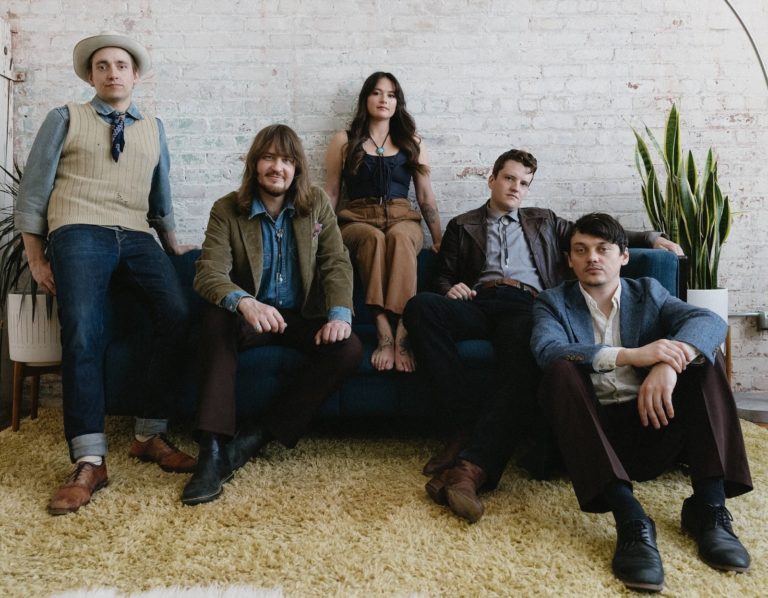
Led by original bandmates Andy Maize and Josh Finlayson, and featuring Noel Webb on drums, Derrick Brady on bass, Jessy Bell Smith on vocals, Aaron Comeau on guitars, and Michael Johnston on keyboards, Dreams & Second Chances reveals these Skydiggers at the peak of their ability – a collective with the intrinsic ability of finish each others musical sentences and weave a sound that is uniquely their own.

Dreams & Second Chances Tracklisting:
1. Dreams and Second Chances
(Andy Maize / Michael Johnston)
2. Start Again
(Josh Finlayson)
3. Mother’s Pocket
(Jessy Bell Smith)
4. Snow Blind
(Josh Finlayson)
5. Chase the Sun
(Josh Finlayson / Tom Wilson / Thompson Wilson)
6. Light on the Water
(Jessy Bell Smith)
7. I Love You, Too, Maybe…
(Andy Maize / Michael Johnston)
8. Don’t Change a Good Mind
(Josh Finlayson)
9. We Just Carry On
(Josh Finlayson / Andy Maize)
10. Walk With the Stars
(Josh Finlayson / Jim Bryson)
11. One, Maybe Two, Maybe…
(Andy Maize / Michael Johnston)
12. Quiet Mind
(Josh Finlayson / Michael Johnston)
13. Broken Year
(Jessy Bell Smith)
14. All Good All the Time
(Andy Maize)

Why Single and Album Cover Art Still Matters in 2025

In an age of algorithm-driven playlists and AI-generated content, it might seem like album and single cover art has taken a backseat. But in 2025, great visuals are more powerful—and more necessary—than ever. Here’s why cover art still matters, maybe more than it ever has.

1. The First Hook Isn’t Always a Riff—It’s a Visual.
Before a listener hears a single note, they see something. In an endless scroll of streaming thumbnails, a powerful image can stop someone mid-swipe. Great cover art isn’t just a pretty wrapper—it’s your music’s first impression, and first impressions stick.

2. You’re Not Just Building a Sound—You’re Building a Brand.
Think of Nirvana’s baby in the pool, or Billie Eilish’s haunting self-portraits. Cover art is how your music dresses up for the world. It’s the logo, the color palette, the visual vibe that fans wear on T-shirts and tattoo on their skin. That matters.

3. In the Vinyl Era Revival, Size Matters Again.
Vinyl is back, and with it, the 12-inch canvas for imagination. Album art is no longer just a digital stamp—it’s tangible, collectible, and frameable. When fans buy records, they’re not just buying sound—they’re buying story, artwork, and nostalgia.

4. Social Media Runs on Aesthetics.
Instagram, TikTok, and YouTube thrive on visuals. If your music doesn’t look as good as it sounds, you’re missing half the conversation. Every album cover becomes a square post, a profile picture, a story frame. Good art multiplies your reach.

5. It’s a Cultural Marker—Not Just a Marketing Tool.
The best album covers define moments. From Kendrick Lamar’s DAMN. to Taylor Swift’s folklore, a single image can say everything about an era, a mood, or a movement. Years from now, your cover might be the thing people remember the most.

6. AI Can’t Fake Intent.
Sure, AI can generate art. But it can’t replicate your vision. Cover art designed in collaboration with musicians tells a deeper story—one rooted in emotion, not just aesthetics. Real art comes from lived experience, and fans can feel the difference.

7. Visual Memory Is Music’s Best Friend.
Ever remember a song because you saw the cover in your mind? That’s no accident. Sight and sound are tied together in our brains. A striking image can recall the melody, the moment, and the magic of a song—all in one instant.

8. A Great Cover Says: “I Care.”
When an artist invests in beautiful cover art, it signals that they believe in their work. It shows attention to detail, to craft, to legacy. Fans feel that. So do gatekeepers. It tells the world: this isn’t just a file—this is an experience.

Album art isn’t going anywhere. If anything, in 2025, it matters more—because attention is rare, memory is precious, and your music deserves to be seen as well as heard.

Now go make it iconic. If you’re still looking for help, or have any questions, or looking for more information, email me, I’ll be happy to chat – Eric@ThatEricAlper.com and talk soon!

Manuel Turizo Announces 201 Tour Across Latin America and U.S.

0

Today, Latin music star Manuel Turizo has officially announced his highly anticipated 201 Tour, a major international run that will take him across some of the most iconic venues in Latin America and the United States (dates for Europe will be announced soon). The tour is produced by CMN Events in collaboration with his label, La Industria INC.

With a string of global hits like “La Bachata”, “El Merengue”, and his latest collaboration with Kapo, Turizo is gearing up to connect with fans in more than 25 cities including a one-night stop in Miami at Kaseya Center on August 29. Backed by an all-new production and elevated stage design, the 201 Tour is set to be one of the standout Latin music tours of 2025.

“I can’t wait to be back on stage and feel that energy again,” said Turizo. “Every country, every city holds a special meaning for me, and this tour is a celebration of the journey we’ve shared.” 

TICKETS: Tickets go on sale to the general public on Friday, April 11 at 10:00 a.m. A pre-sale will take place on Thursday, April 10 at 10:00 a.m. to Friday, April 11 at 9:45 a.m.

OFFICIAL TOUR DATES – 201 TOUR:

JUNE
June 11 – Arena Guadalajara – Guadalajara, Mexico
June 13 – Arena CDMX – Mexico City, Mexico
June 14 – Arena Monterrey – Monterrey, Mexico
June 28 – Feria de Veracruz – Veracruz, Mexico

AUGUST
August 9 – Parque Viva – San José, Costa Rica
August 11 – Antel Arena – Montevideo, Uruguay
August 12 – Costa 21 – Lima, Peru
August 14 – Movistar Arena – Santiago, Chile
August 18 – Movistar Arena – Buenos Aires, Argentina
August 21 – Rosemont Theatre – Chicago, IL
August 23 – United Palace – New York, NY
August 24 – EagleBank Arena – Fairfax, VA
August 28 – Walt Disney Theater – Orlando, FL
August 29 – Kaseya Center – Miami, FL
August 31 – Ovens Auditorium – Charlotte, NC

SEPTEMBER
September 11 – Smart Financial Center – Sugar Land, TX
September 12 – Texas Trust CU Theatre – Grand Prairie, TX
September 14 – Payne Arena – Hidalgo, TX
September 17 – Graton Resort and Casino – Rohnert Park, CA
September 19 – Peacock Theater – Los Angeles, CA
September 21 – Pechanga Theater – Temecula, CA
September 26 – Coliseo Voltaire – Guayaquil, Ecuador
September 27 – Coliseo Medplus – Bogotá, Colombia

DECEMBER
December 4 – Estacionamiento Comisariato Los Andes – San Pedro Sula, Honduras
December 5 – Complejo Cuscatlán – San Salvador, El Salvador
December 6 – Explanada Distrito Futeca – Guatemala City, Guatemala

Dates for Europe will be announced soon.