Home Blog Page 807

“Immediate” By Simon Spence Tells The Wild Story Of The UK’s First Indie Label

0

What happens when you throw Mick Jagger, Keith Richards, Andrew Loog Oldham, and a maverick dream into the heart of Swinging London? You get Immediate Records—the UK’s first truly independent label, where anything felt possible (and sometimes impossible). Simon Spence’s Immediate: The Rise and Fall of the UK’s First Independent Record Label is packed with rock legends, wild stories, and enough sixties swagger to fill Carnaby Street. It’s the ultimate behind-the-scenes tour through the music industry’s most colorful, chaotic era.

Rolling Stones manager Andrew Loog Oldham was the enfant terrible of Swinging Sixties London, the man who had crafted The Beatles’ antithesis. By 1965 he was a millionaire notorious for working every publicity angle for his rising stars but he still felt frustrated by the men in grey suits who controlled the music industry. His solution to that problem was Immediate Records – the UK’s first independent label – with a mission statement to wash away those grey men.

What followed was five years of scams, chicanery, sex, drugs, violence and sensational music. Immediate’s ‘in-house’ polymath producers: Mick Jagger, Keith Richards, Oldham himself, Jimmy Page and Steve Marriott, attracted a crowd of daring, young British talent, forging the hippest scene in the world.

Yet, following his ousting as Stones manager in 1967, the label itself began to fray at the seams as the drugs and booze clouded Oldham’s creative genius and the grey suits quietly took their revenge.

Simon Spence’s acclaimed telling of Immediate’s rise and fall was first published in 2007 but has now been augmented with explanatory footnotes and even more detail following a further decade’s research.

“Only You Know And I Know” Book By Dave Mason Tells Rock’s Untold Stories

0

What do you get when a quiet giant of rock finally decides to speak up? Only You Know And I Know by Dave Mason—co-written with Chris Epting—is a backstage pass to some of the greatest moments in music history. From Traffic to Hendrix to Fleetwood Mac, Mason’s life reads like a rock and roll dream… with a few nightmares along the way. It’s raw, riveting, and packed with the kind of stories only a true insider could tell.

A co-founder of the legendary band Traffic, Dave Mason’s musical path started strong and only grew more significant over time. In addition to his renowned work as a revered guitar player and singer-songwriter (who penned “Feelin’ Alright,” one of rock’s most-covered anthems, when he was only 21), Mason has appeared on some of the most acclaimed recordings in music history, including The Spencer Davis Group’s “Gimme Some Lovin,’” George Harrison’s All Things Must Pass album, The Rolling Stones’ “Street Fighting Mam” and close friend Jimi Hendrix’s classic “All Along the Watchtower.” After leaving Traffic, Dave’s popularity exploded with the release of his debut solo album, Alone Together, igniting one of the most successful careers of the 1970s—marked by sell-out performances at Madison Square Garden and requests from artists such as Paul McCartney, who recruited Dave to play guitar on Wings’ #1 hit “Listen to What the Man Said.”

But the triumphs didn’t come without hurdles. By the mid-1970s, cocaine and a seemingly endless touring schedule began to take their toll. Workmanlike in his dedication, however, the determined craftsman never gave up. Here, for the first time, Dave shares some of the great untold tales in rock and roll—his complicated relationship with Steve Winwood, his wild legal episodes with record companies, his tenure in Fleetwood Mac, his battle with addiction and the loss of a child, and his eventual induction into the Rock & Roll Hall of Fame. He dives deep on the music, from “World in Changes” to “We Just Disagree,” and shares inside stories featuring a cast of characters that includes Bob Dylan, The Beatles, Cass Elliot, Delaney and Bonnie, Eric Clapton, and Crosby, Stills, Nash and Young.

Dave Mason’s reputation as a “quiet giant” has long been one of music’s great mysteries. Now, one of rock’s true heroes finally shares his colorful, unique, and ultimately triumphant journey through a life in music.

Tariq Trotter’s “The Upcycled Self” Is One Of Hip-Hop’s Most Powerful Memoir

0

Today Tariq Trotter—better known as Black Thought—is the platinum-selling, Grammy-winning co-founder of The Roots and one of the most exhilaratingly skillful and profound rappers our culture has ever produced. But his story begins with a tragedy: as a child, Trotter burned down his family’s home. The years that follow are the story of a life snatched from the flames, forged in fire.

In The Upcycled Self, Trotter doesn’t only narrate a riveting and moving portrait of the artist as a young man, he gives readers a courageous model of what it means to live an examined life. In vivid vignettes, he tells the dramatic stories of the four powerful relationships that shaped him—with community, friends, art, and family—each a complex weave of love, discovery, trauma, and loss.

And beyond offering the compellingly poetic account of one artist’s creative and emotional origins, Trotter explores the vital questions we all have to confront about our formative years: How can we see the story of our own young lives clearly? How do we use that story to understand who we’ve become? How do we forgive the people who loved and hurt us? How do we rediscover and honor our first dreams? And, finally, what do we take forward, what do we pass on, what do we leave behind? This is the beautifully bluesy story of a boy genius’s coming-of-age that illuminates the redemptive power of the upcycle.

Luna Lee Reimagines Stevie Wonder Classic “You Are The Sunshine Of My Life” On Gayageum

0

What happens when you take one of the smoothest love songs of all time and play it on a 1,500-year-old Korean string instrument? You get Luna Lee’s breathtaking take on Stevie Wonder’s “You Are The Sunshine Of My Life.” It’s funky, it’s fresh, it’s proof that great music knows no borders—and the Gayageum just might be the coolest instrument you’re not listening to (yet).

“Rise Up!” By Craig Harris Celebrates Indigenous Music’s Legacy

0

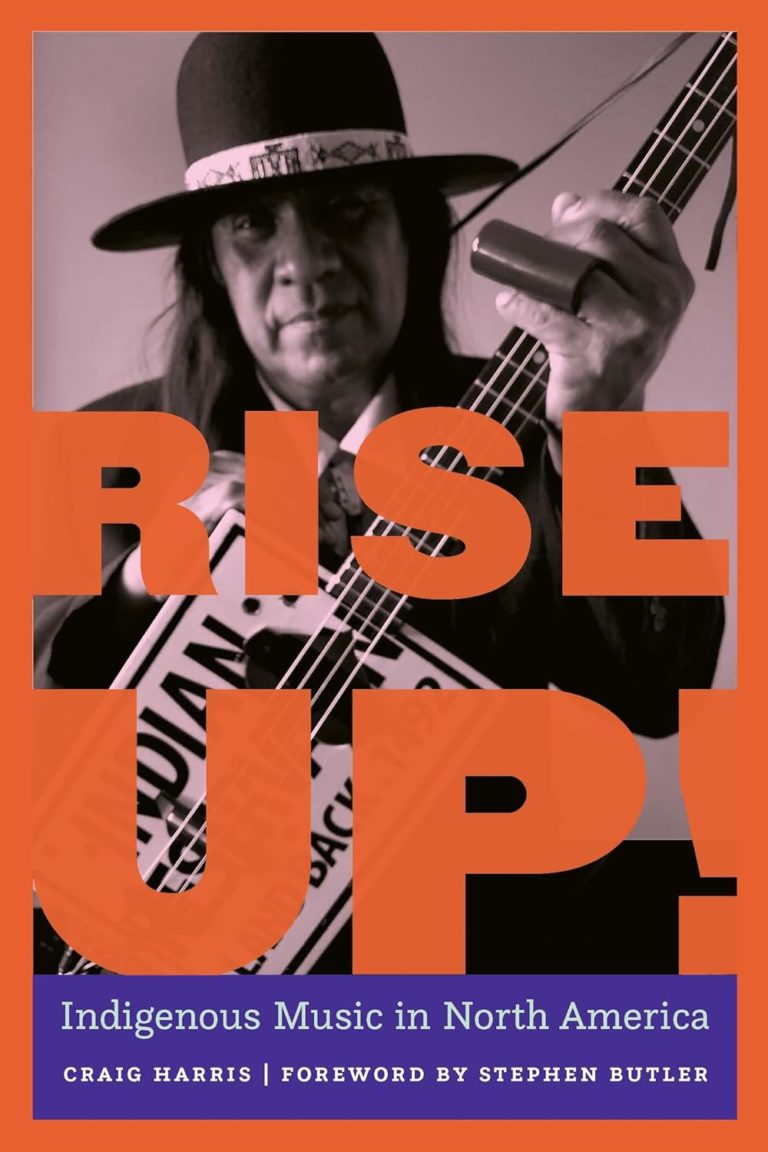
Music historian Craig Harris explores more than five hundred years of Indigenous history, religion, and cultural evolution in Rise Up! Indigenous Music in North America. More than powwow drums and wooden flutes, Indigenous music intersects with rock, blues, jazz, folk music, reggae, hip-hop, classical music, and more. Combining deep research with personal stories by nearly four dozen award-winning Indigenous musicians, Harris offers an eye-opening look at the growth of Indigenous music.

Among a host of North America’s most vital Indigenous musicians, the biographical narratives include new and well-established figures such as Mildred Bailey, Louis W. Ballard, Cody Blackbird, Donna Coane (Spirit of Thunderheart), Theresa “Bear” Fox, Robbie Robertson, Buffy Sainte-Marie, Joanne Shenandoah, DJ Shub (Dan General), Maria Tallchief, John Trudell, and Fawn Wood.

Willie Nelson’s “Energy Follows Thought” Book Is Songwriting Gold

0

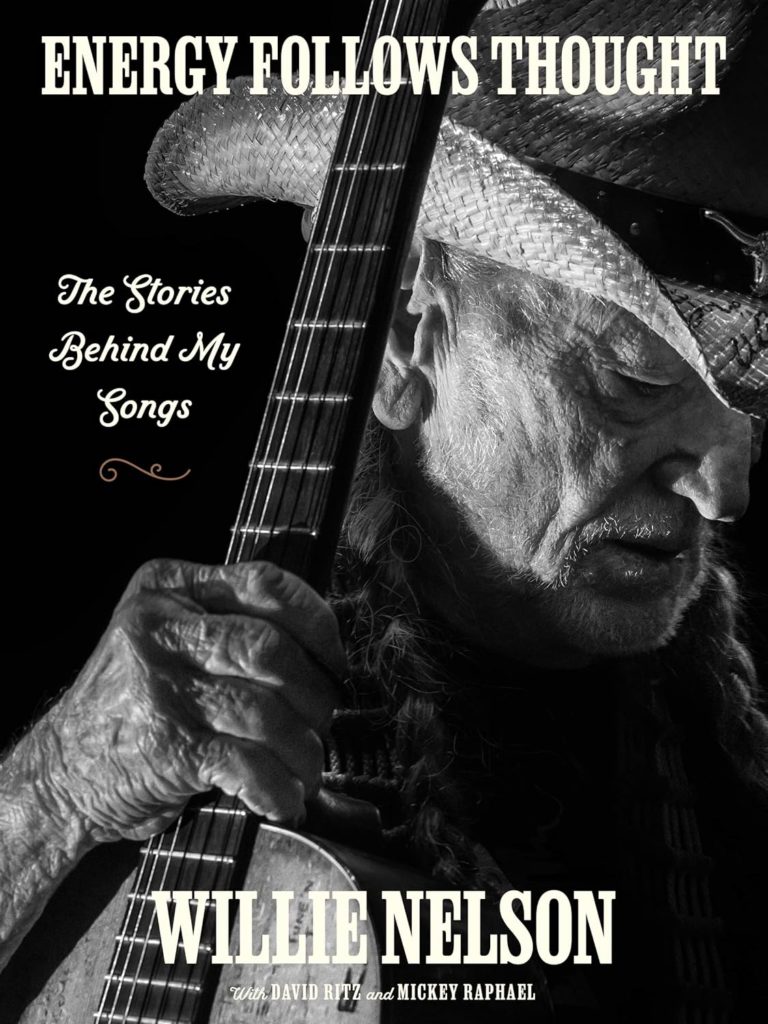
In Energy Follows Thought: The Stories Behind My Songs, Willie Nelson—alongside co-authors David Ritz and Mickey Raphael—invites readers into the heart and soul of his songwriting journey. Both whimsical and wise, this beautifully crafted memoir is filled with lyrical insights, candid reflections, and decades of musical memories from one of country music’s most legendary voices.

From his earliest work in the 1950s to today, Willie looks back at the songs that have defined his career, from his days of earning $50 each to his biggest hits, from his less well-known songs (but incredibly meaningful to him) to his concept albums. Along the way, he also shares the stories of his guitar Trigger, his family and “family,” as well as the artists he collaborated with, including Patsy Cline, Waylon Jennings, Ray Charles, Merle Haggard, Ray Price, Dolly Parton, and many others.

Willie is disarmingly honest—what do you have to lose when you’re about to turn 90? —meditating on the nature of songwriting and finding his voice, and the themes he’s explored his whole life—relationships, infidelity, love, loss, friendship, and, of course, life on the road.

“The Greatest Band That Ever Wasn’t” by Barrett Martin Tells The Wild, Untold Story Of Screaming Trees

0

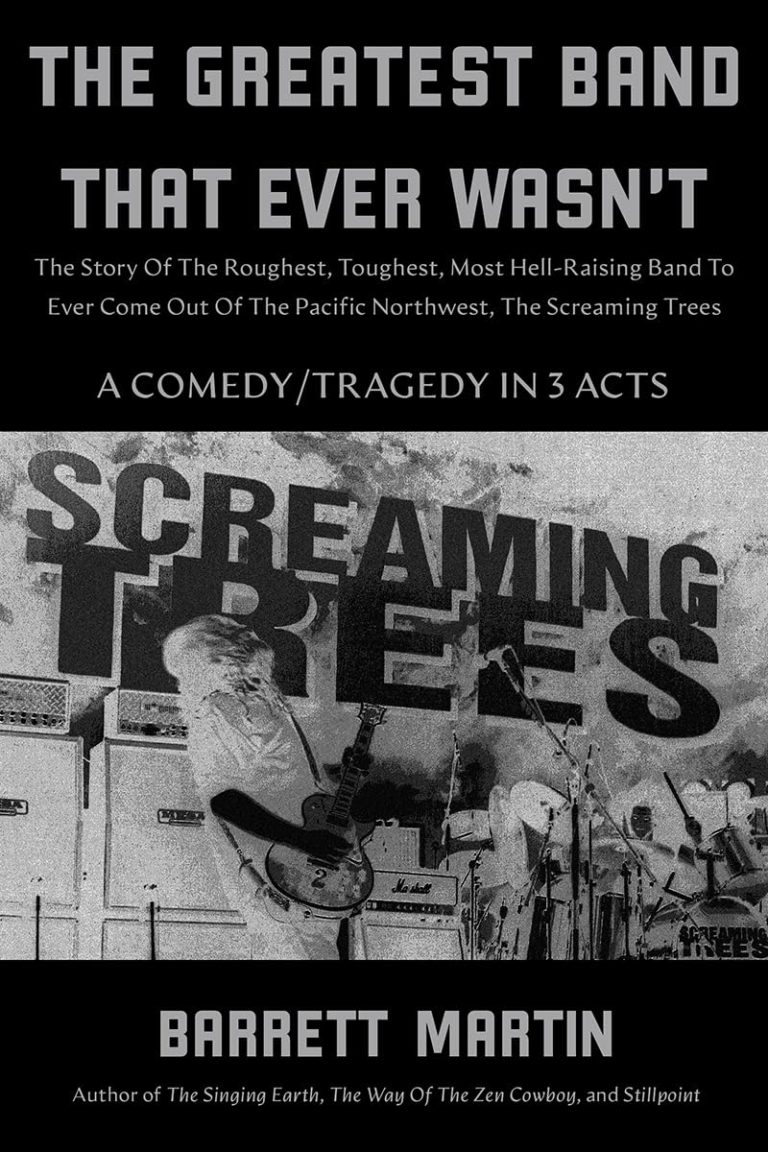
In 1992, the Screaming Trees were expected to become the next big band to come out of the Seattle music scene during the heyday of grunge. Except it never happened. It wasn’t because the band didn’t have great songs-indeed, the Trees were revered for their ability to write a great song that was both artistically original and commercially viable, which is no easy task. Other Seattle bands like Nirvana, Pearl Jam, and Soundgarden were fans of the Screaming Trees, playing shows with them and collaborating on albums, long before their own bands broke through into the mainstream. That kind of success eluded the Screaming Trees, and it seemed as if there were more demons than angels in the band’s corner when it came time for the Trees to make their mark. Their songwriting skills, however, remain as their greatest legacy.

Written by Screaming Trees long-serving drummer, Barrett Martin, The Greatest Band That Ever Wasn’t reads like a Greek comedy or tragedy, depending on your viewpoint. Each of the three acts contained in this book features 11 short stories, for a combined total of 33 stories. These tales will make you laugh and perhaps even cry, which is why the saga of the Screaming Trees reads more like a great myth-one that is incredible, at times unbelievable, yet still contains volumes of humor and wisdom.

How Hip-Hop Influences College Campuses: From Music to Fashion

0

By Mitch Rice

Hip-hop is more than music—it’s a cultural movement. Since its emergence in the 1970s Bronx, hip-hop has evolved from street corners to global stages, impacting art, politics, identity, and education. On college campuses, it’s not just playing in headphones or on party playlists; it’s shaping mindsets, sparking conversations, and redefining expression. From the clothes students wear to the way they speak and even the way they think, hip-hop’s fingerprints are everywhere.

And its influence isn’t superficial. For many students, hip-hop acts as a mirror and a megaphone. It reflects lived experiences and gives voice to marginalized stories. It challenges academic norms, introduces new ways of storytelling, and bridges gaps between disciplines. Some students even find themselves thinking, “I wish I had someone to write a paper for me,” just to unpack the complexity of a Kendrick Lamar verse or the social commentary embedded in a J. Cole album. That’s because hip-hop isn’t simple entertainment—it’s often nuanced, political, poetic, and worthy of deep analysis.

Music as a Tool for Learning and Resistance

In classrooms, hip-hop is increasingly being used as a pedagogical tool. Professors across disciplines—English, Sociology, History, African American Studies, and even Political Science—are incorporating lyrics, documentaries, and hip-hop scholarship into their curricula. Artists like Tupac Shakur and Lauryn Hill are studied for their lyrical brilliance and socio-political commentary. Kendrick Lamar’s To Pimp a Butterfly and Nas’s Illmatic have been dissected like Shakespearean sonnets.

This academic interest isn’t performative. Hip-hop, with its roots in systemic resistance, gives students—especially students of color—a cultural framework through which they can analyze structural inequality, express identity, and build critical thinking skills. Through beat and rhyme, students explore the complexities of poverty, race, policing, and class struggle in a way that traditional textbooks sometimes fail to capture.

Colleges that adopt hip-hop as part of their pedagogy not only make education more relatable but also more inclusive. They validate the experiences and voices of students who’ve often felt alienated in academic spaces.


A New Fashion Language: Style as Identity

Hip-hop’s impact on campus fashion is impossible to ignore. Baggy jeans, oversized hoodies, Air Jordans, gold chains, crop tops, Timberlands, and bold streetwear brands like Supreme or Off-White—these styles aren’t just about following trends. They carry identity, attitude, and social commentary.

College campuses have become runways for self-expression where fashion rooted in hip-hop reflects everything from cultural pride to political rebellion. The rise of Black-owned clothing brands and campus-based fashion entrepreneurs is a testament to this movement. These creators channel hip-hop’s aesthetic while addressing issues like sustainability, representation, and economic independence.

It’s also common to see student orgs or clubs centered around fashion inspired by hip-hop culture. Whether it’s through fashion shows, campus photo shoots, or DIY apparel lines, students are not only consumers of style—they’re producers of it, remixing what hip-hop started and turning it into their own campus-centric dialect.

Slang, Speech, and Campus Conversation

Language is one of hip-hop’s most overlooked yet powerful tools. Phrases like “on fleek,” “woke,” “no cap,” “drip,” and “sus” didn’t just pop up—they evolved out of Black vernacular and hip-hop’s influence. These terms have made their way into everyday student conversations, group chats, campus events, and even classroom discussions.

More importantly, this linguistic influence reflects a shift in how authority and intelligence are expressed. Students are more confident using their own voices and cultural codes, rejecting the notion that academic language has to be dry, Eurocentric, or devoid of personality. Professors who embrace this—who allow students to write in ways that fuse formal analysis with an authentic voice—are helping dismantle outdated academic barriers.

Hip-hop’s language democratizes communication on campus, allowing for a blend of intellect and culture that’s refreshing, empowering, and deeply personal.

Campus Events and Hip-Hop Communities

Walk through almost any college campus, and you’ll find hip-hop embedded in student life. Dance crews rehearse routines in quads. Rap battles take place in dorm lounges. Poetry slams filled with freestyle verses spill over into campus cafes. From open mic nights to DJ sets at student unions, hip-hop is a communal experience—one that builds belonging and challenges traditional campus norms.

Organizations like Hip-Hop Congress, Black Student Unions, and performance arts collectives offer spaces for expression and activism. These groups don’t just entertain—they educate. They bring in speakers, organize panels, and create safe spaces for discussion around race, gender, justice, and identity.

Homecoming concerts, talent showcases, and student-produced cyphers are more than just entertainment. They’re cultural affirmations, places where students can be unapologetically themselves, free from the pressure to conform to outdated academic or social molds.

Entrepreneurship and Innovation on Campus

One of hip-hop’s most inspiring legacies is its entrepreneurial spirit. And this has translated into how students hustle on campus. Inspired by artists who built empires from mixtapes and YouTube videos, many students are launching side hustles that blend creativity with commerce.

Whether it’s producing beats, managing campus artists, selling fashion lines, creating hip-hop-themed podcasts, or offering music production services—college students are using hip-hop’s DIY ethos to turn passion into profit. This mindset encourages independence, risk-taking, and financial literacy in a way traditional education rarely does.

College incubators and business programs have started to notice. More universities now include startup support tailored toward student creatives, bridging the gap between cultural capital and economic opportunity.

Mental Health, Identity, and Representation

Hip-hop has long been a medium for emotional expression. In recent years, artists like Kid Cudi, Logic, and Megan Thee Stallion have opened up conversations around anxiety, depression, and trauma. These themes resonate deeply with students juggling school pressure, social expectations, and personal challenges.

For many, listening to hip-hop isn’t just entertainment—it’s therapy. The vulnerability expressed in lyrics makes it easier for students to talk about their own struggles. On some campuses, counseling services have even begun using hip-hop in group therapy sessions or student outreach programs.

Hip-hop gives students language for what they’re feeling. It helps them articulate experiences around race, gender, sexuality, and mental health in ways that traditional discourse often fails to reach.

The Challenges and Criticisms

Of course, hip-hop’s influence on college campuses isn’t without controversy. Lyrics with misogynistic, violent, or materialistic messages can reinforce harmful stereotypes or clash with campus values. There’s also the issue of cultural appropriation—when students adopt the style or language of hip-hop without understanding its origins or respecting its roots.

This tension creates important conversations around accountability, allyship, and respect. Many student organizations are now pushing for more conscious consumption and education about hip-hop’s history and political roots. These efforts are essential in ensuring the culture is appreciated rather than exploited.

Conclusion: More Than a Soundtrack

Hip-hop isn’t just a backdrop to campus life—it’s an active force shaping how students express themselves, challenge norms, and build communities. From the classroom to the dorm room, from fashion statements to business startups, hip-hop continues to redefine what it means to be a student in the 21st century.

It teaches resilience, celebrates authenticity, and demands justice. It empowers students to bring their full selves to campus; no filter is needed. And that’s what makes its influence not only relevant—but revolutionary.

Data and information are provided for informational purposes only, and are not intended for investment or other purposes.

What Results Can You Expect from Facial Fillers

0

By Mitch Rice

With age, facial skin loses elasticity and starts to sag. Facial fillers can reduce wrinkles and restore fullness to the face.

Facial Fillers in Philadelphia can reverse visible signs of aging by plumping up thin lips, repositioning hollow cheeks, contouring shallow contours, and reducing wrinkles and facial lines. Facial fillers are appropriate for those individuals impacted by the appearance of aging signs but want to avoid surgical and complex procedures such as facelifts.

How Do Facial Fillers Work?

Facial fillers are gel-like materials containing hyaluronic acid that are injected into the facial skin to achieve a more youthful appearance. The hyaluronic acid used in facial fillers is bioidentical – your skin can’t differentiate between the injected hyaluronic acid and the hyaluronic acid it produces naturally.

While Botox is extensively used to reduce wrinkles, crow’s feet, and forehead and frown lines, it doesn’t plump up your skin or add symmetry to your features like facial fillers. Facial fillers can stimulate collagen production, refresh tired and drooping eyes, and augment sunken cheeks. Facial or Dermal fillers are safe and effective.

For individuals seeking more targeted adjustments that go beyond surface rejuvenation, a number of facial feature refinement procedures offer tailored solutions to improve both appearance and breathing function. These approaches often address structural imbalances while preserving harmony across the face, making them a fitting consideration for those whose aesthetic goals go beyond what injectable fillers can achieve.

The Food And Drug Administration (FDA) has approved the use of facial fillers for cosmetic purposes in the country.

What Results Can You Expect From A Facial Filler Procedure

The procedure for getting facial fillers is relatively simple. At Avellina Aesthetics, a trained facial filler administrator will inject the filler into targeted areas. Some patients may experience slight discomfort. Common side effects of facial fillers include bruising, swelling, itching, redness,  or slight pain.

After the facial filler procedure, you may expect to see visible results in two to three days. Most reputed skin rejuvenation clinics advise clients to expect optimal results in two to three weeks. Facial filler results are not permanent. However, results can last from six months to up to two years. It is advisable to book a follow-up consultation once you notice that your results are diminishing.

If patients are unsatisfied with their look,  it is possible to undo the results of the procedure. An enzyme called hyaluronidase can break down the hyaluronic acids and restore your face to the way it was before the procedure. Overuse or improper placement of injectables can lead to unnatural results. The key to seeking and maintaining natural results lies in selecting a reputable skin rejuvenation clinic with highly skilled and experienced injectors.

Contact A Philadelphia Skin Rejuvenation Clinic To Enhance Your Natural Beauty With Facial Fillers

At Avellina Aesthetics, our professional injectors know how to enhance your beauty and preserve your natural features and expressions with unmatched artistic precision. Patients must start their facial filler journey with minimal fillers. A skincare expert will gradually increase the injection doses to yield optimum results.

Regular consultations can help your facial filler clinic to adjust treatment plans based on your evolving needs. Contact our Philadelphia skin rejuvenation clinic today to schedule a consultation or learn more about Philadelphia facial fillers. Facial fillers can help you achieve the youthful appearance you desire and deserve.

Data and information are provided for informational purposes only, and are not intended for investment or other purposes.

Steve Earle Announces ‘Fifty Years of Songs and Stories’ Solo Acoustic Tour Across U.S. and Canada

0

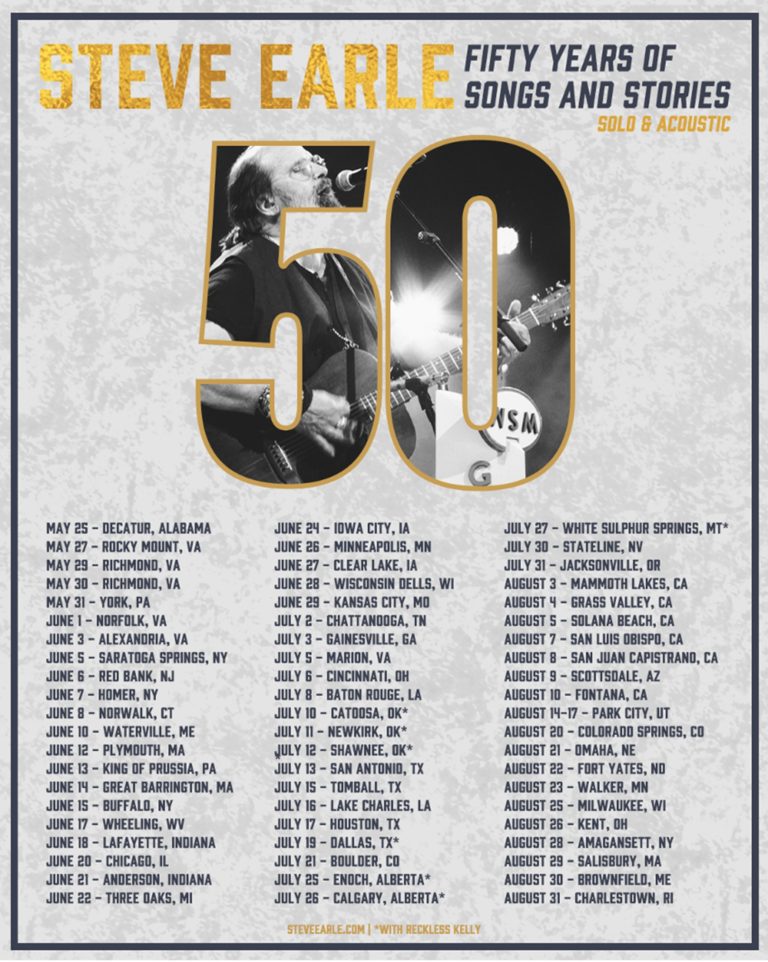
Today, Steve Earle announces his Fifty Years of Songs and Stories, a solo acoustic tour sprawling journey across over 50 cities in the U.S. and Canada. Marking half a century since he began writing songs and stories, this solo acoustic tour will take fans on a chronological exploration of his extensive discography. Along the way, Earle will share personal anecdotes from his legendary career, offering an intimate look at the moments that shaped his music. In addition to his solo acoustic dates, Earle will also perform select shows with Reckless Kelly, co-headline dates with Taj Mahal, and open for Parker McCollum.

Kicking off on May 25 at the Princess Theater Centre for the Performing Arts in Decatur, AL, the tour will make stops at renowned venues such as The Vic Theatre in Chicago, IL; Dos Equis Pavilion in Dallas, TX; Calgary Folk Festival in Calgary, Alberta; and the Egyptian Theatre in Park City, UT, before concluding at the Rhythm & Roots Festival at Ninigret Park in Charlestown, RI, on August 31.

Tickets are available HERE.

In regards to the tour Steve said “Awhile back I was interviewing John Hiatt on my radio show and we realized that we had known each other for fifty years. I met John in 1975, my first full year in Nashville and it occurred to me that the oldest songs that I still play (there are 3) were written that year. Now, I live to follow creative rabbits down holes and Im old enough, now, that the idea of legacy comes up now and then, so, I decided that a more or less chronological live songbook might make for an interesting evening of music.”

Steve Earle is one of the most acclaimed singer-songwriters of his generation. A protégé of legendary songwriters Townes Van Zandt and Guy Clark, he quickly became a master storyteller in his own right, with his songs being recorded by Johnny Cash, Waylon Jennings, Joan Baez, Emmylou Harris, The Pretenders, and countless others. 1986 saw the release of his record, Guitar Town, which shot to number one on the country charts and is now regarded as a classic of the Americana genre. Most recently, Earle’s 1988 hit Copperhead Road was made an official state song of Tennessee in 2023. Subsequent releases like The Revolution Starts…Now (2004), Washington Square Serenade (2007), and TOWNES (2009) received consecutive GRAMMY® Awards. Jerry Jeff, released in 2022, consisted of Earle’s versions of songs written by Jerry Jeff Walker, one of his mentors. Earle has published both a novel, I’ll Never Get Out of This World Alive (Houghton Mifflin Harcourt, 2011), and Dog House Roses, a collection of short stories (Houghton Mifflin, 2003). Earle produced albums for other artists such as Joan Baez (Day After Tomorrow) and Lucinda Williams (Car Wheels on a Gravel Road).

As an actor, Earle has appeared in several films and had recurring roles in the HBO series The Wire and Tremé. In 2009, Earle appeared in the off-Broadway play Samara, for which he also wrote a score that The New York Times described as “exquisitely subliminal.” Earle wrote music for and appeared in Coal Country, for which he was nominated for a Drama Desk Award. Earle is the host of the weekly show Hard Core Troubadour on Sirius Radio’s Outlaw Country channel. In 2020, Earle was inducted into the Nashville Songwriters Hall of Fame. And in 2023, Steve was honored by the Bruce Springsteen Archives & Center for American Music. Steve’s latest album, Alone Again (Live), was released on July 12th, 2024.

Tour Dates:

May

May 25, 2025 – Decatur, AL – Princess Theater Centre for the Performing Arts

May 27, 2025 – Rocky Mount, VA – Harvester Performance Center

May 29, 2025 – Richmond, VA – Tin Pan

May 30, 2025 – Richmond, VA – Tin Pan

May 31, 2025 – York, PA – Appell Center for the Performing Arts – Capitol Theatre

June

June 1, 2025 – Norfolk, VA – Attucks Theatre

June 3, 2025 – Alexandria, VA – The Birchmere

June 5, 2025 – Saratoga Springs, NY – Universal Preservation Hall

June 6, 2025 – Red Bank, NJ – The Vogel

June 7, 2025 – Homer, NY – Center for the Arts of Homer

June 8, 2025 – Norwalk, CT – District Music Hall

June 10, 2025 – Waterville, ME – Waterville Opera House

June 12, 2025 – Plymouth, MA – The Spire Center for the Performing Arts

June 13, 2025 – King of Prussia, PA – Concert Under The Stars

June 14, 2025 – Great Barrington, MA – Mahaiwe Performing Arts Center

June 15, 2025 – Buffalo, NY – Asbury Hall

June 17, 2025 – Wheeling, WV – The Capitol Theatre

June 18, 2025 – Lafayette, IN – The Long Center

June 20, 2025 – Chicago, IL – The Vic Theatre

June 21, 2025 – Anderson, IN – The Paramount Theatre Centre + Ballroom

June 22, 2025 – Three Oaks, MI – The Acorn

June 24, 2025 – Iowa City, IA – The Englert Theatre

June 26, 2025 – Minneapolis, MN – Uptown Theater

June 27, 2025 – Clear Lake, IA – Surf Ballroom

June 28, 2025 – Wisconsin Dells, WI – Crystal Grand Music Theatre

June 29, 2025 – Kansas City, MO – Knuckleheads Saloon

July

July 3, 2025 – Gainesville, GA – Boot Barn Hall

July 5, 2025 – Marion, VA – Songs of the Mountains – Lincoln

July 6, 2025 – Cincinnati, OH – The Ludlow Garage

July 8, 2025 – Baton Rouge, LA – Manship Theater

July 10, 2025 – Catoosa, OK – Hard Rock Hotel & Casino (with Reckless Kelly)

July 11, 2025 – Newkirk, OK – 7 Clans First Council Casino Hotel (with Reckless Kelly)

July 12, 2025 – Shawnee, OK – The Firelake Arena (with Reckless Kelly)

July 13, 2025 – San Antonio, TX – Empire Theater

July 15, 2025 – Tomball, TX – Main Street Station

July 16, 2025 – Lake Charles, LA – Southlake Theater

July 17, 2025 – Houston, TX – The Heights Theatre

July 19, 2025 – Dallas, TX – Dos Equis Pavilion (with Parker McCollum)

July 21, 2025 – Boulder, CO – Chautauqua Auditorium

July 25, 2025 – Enoch, Alberta – River Cree Casino (with Reckless Kelly)

July 26, 2025 – Calgary, Alberta – Calgary Folk Festival (with Reckless Kelly)

July 27, 2025 – White Sulphur Springs, MT – Red Ants Pants Music Festival (with Reckless Kelly)

July 30, 2025 – Stateline, NV – Harrah’s Lake Tahoe Casino

July 31, 2025 – Jacksonville, OR – Britt Pavilion (with Taj Mahal)

August

August 3, 2025 – Mammoth, CA – Mammoth Bluesapalooza Festival (co-headline with Robert Cray)

August 4, 2025 – Grass Valley, CA – The Center for the Arts

August 9, 2025 – Scottsdale, AZ – Talking Stick Casino

August 14, 2025 – Park City, UT – Egyptian Theatre

August 15, 2025 – Park City, UT – Egyptian Theatre

August 16, 2025 – Park City, UT – Egyptian Theatre

August 17, 2025 – Park City, UT – Egyptian Theatre

August 20, 2025 – Colorado Springs, CO – Phil Long Music Hall

August 21, 2025 – Omaha, NE – The Admiral

August 22, 2025 – Fort Yates, ND – Prairie Knights Casino & Resort

August 23, 2025 – Walker, MN – Northern Lights Casino

August 25, 2025 – Milwaukee, WI – Pabst Theater

August 26, 2025 – Kent, OH – Kent Stage

August 28, 2025 – Amagansett, NY – Stephen’s Talkhouse

August 29, 2025 – Salisbury, MA – Blue Ocean Music Hall

August 30, 2025 – Brownfield, ME – Stone Mountain Arts Center

August 31, 2025 – Charlestown, RI – Rhythm and Roots Festival – Ninigret Park