Home Blog Page 82

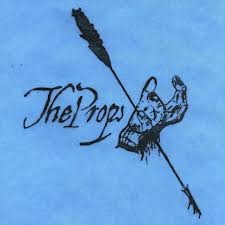
Indie Rock Newcomers The Props Introduce ‘Arrow’ EP With Video For “Se Llama (Tell Me What You Want)”

0

The Props are stepping into the spotlight with their debut EP ‘Arrow’, a five-track release produced by Grammy winner Carlos de la Garza. The collection arrives April 10 and marks a confident opening chapter for the rising indie rock newcomers.

The announcement arrives alongside the video for the first single, “Se Llama (Tell Me What You Want).” The track kicks off with sharp riffs and urgent rhythm, driving forward with the kind of restless energy that fuels late-night drives and long stretches of open highway.

“‘Se Llama’ is cathartic,” says Ruiz. “Think faded photos where you can barely tell who’s in it. That feeling of Lethologica, knowing the face but not the name.” The track channels that emotional blur into a tight, propulsive performance that leans into both melody and momentum.

Carlos de la Garza brings a seasoned production touch to the EP. Known for shaping powerful modern rock records, he helps frame The Props’ sound with punch and polish while keeping the edge intact.

‘Arrow’ arrives as a strong introduction. The songs move with confidence and melodic urgency, a promising first step from a group ready to make noise.

Blues Rock Guitar Hero Jared James Nichols Ignites New Album ‘Louder Than Fate’

0

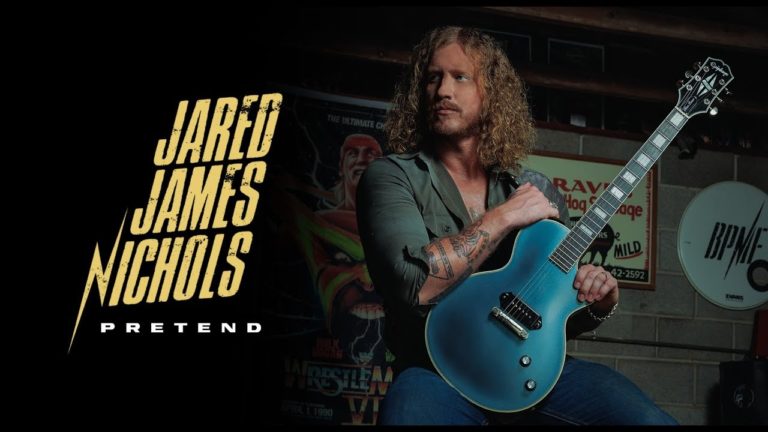
Jared James Nichols is turning the volume up again. The blues rock guitar hero has announced his fourth studio album, ‘Louder Than Fate’, arriving June 5 via Frontiers Music Srl. The record captures Nichols pushing deeper into the sound that has powered his rise, heavy riffs, muscular grooves, and a voice that carries equal parts grit and soul.

The announcement arrives with the new single “Pretend” and its accompanying video. The track charges forward on pounding drums and thick guitar chugs, riding a raw, restless energy that sits right at the edge of chaos. It is a sharp, riff-driven jolt that highlights Nichols’ unmistakable playing style and commanding presence.

Nichols describes the album as a deeply personal project. “I’m beyond excited for this record. I’ve been counting down the days until its release like it’s a personal holiday. If the singles are any hint for you, there are plenty of riffs ripping through the speakers like a buzz saw,” he says. “Going deeper into the record, there are tons of different emotions and sounds that I have yet to explore as a singer/songwriter.”

Produced and mixed by Jay Ruston, with additional production from Roger Alan Nichols, ‘Louder Than Fate’ balances muscle with melody. Thunderous riffs collide with searing solos and emotionally charged vocals. Tracks like “Bending or Breaking” and “Killing Time” expand the sound with subtle keyboards and cinematic string arrangements while keeping the core firmly rooted in blues-driven hard rock.

Since his breakout debut, Jared James Nichols has built a reputation as one of the most electrifying guitar slingers of his generation. His tone is unmistakable, his performances intense, and his connection to the blues rock tradition runs deep. ‘Louder Than Fate’ hits with force and confidence, another powerful entry in Nichols’ fast-growing catalog.

Garage Psych Rockers The Lords Of Altamont Return Loud With ‘Forever Loaded’ Album

0

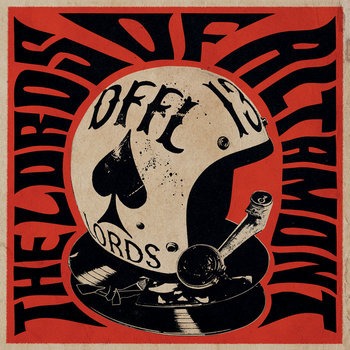
The Lords Of Altamont are back with another blast of gasoline-soaked rock and roll. The long-running garage psych rockers have released their eighth studio album, ‘Forever Loaded’, through Heavy Psych Sounds Records. Ten tracks, no brakes. The record captures the raw pulse that has powered the group for nearly three decades.

The new album dives straight into the grit. Riffs grind. Organs howl. Rhythm sections hit like engines firing to life. ‘Forever Loaded’ moves from dive-bar chaos to full-throttle psychedelic drive, keeping the group’s signature swagger intact. The music lands hard and loud, a sharp reminder of why The Lords Of Altamont remain one of garage rock’s most relentless forces.

The story behind the name reaches back to the infamous 1969 Altamont Free Concert, an event that marked a darker turn in rock culture. The Lords Of Altamont channel that tension into their sound. Detroit muscle, Sunset Strip sleaze, London R&B, and Bowery punk all collide inside these songs.

The group formed in 1999 when vocalist and organist Jake Cavaliere teamed up with fellow motorcycle rider Johnny DeVilla of The Bomboras. The early years included a first show at Hollywood’s legendary venue The Garage and touring alongside icons like The Cramps and The Who. MC5 bassist Michael Davis later joined their ranks, further cementing the group’s connection to rock history.

Decades later, Jake Cavaliere continues to lead a fierce lineup that delivers hard-driven performances around the world. ‘Forever Loaded’ stands tall in their catalog, a roaring statement from rockers who refuse to slow down.

Tracklist:

  1. Got A Hold On Me
  2. What’s Your Bag
  3. Devil Rides
  4. Rusty Guns
  5. Procession For A Gorehound
  6. Get Out Of My Head
  7. Got You On The Run
  8. Disconnection
  9. I Got Your Number
  10. Twisted Black

Why Timing (Sometimes) Matters More Than Talent In Music Publicity

In music, talent is essential. But talent alone rarely guarantees attention. The reality of modern publicity is that timing, context, and cultural momentum often determine which artists break through and which remain hidden. History shows that the right song, at the right moment, in the right environment can outweigh even exceptional ability. Here are five reasons why timing can sometimes matter more than talent in music publicity.

1. Viral Moments Can Instantly Rewrite an Artist’s Career

A perfectly timed moment can propel an artist from obscurity to global recognition overnight. In 2016, singer-songwriter Maggie Rogers became widely known after a classroom video of Pharrell Williams reacting in amazement to her song “Alaska” went viral online. Within days, she gained hundreds of thousands of followers and intense industry attention. The song had existed before the moment, but the viral timing made the difference. Publicity in music often depends on when the world is watching.

2. Social Media Timing Creates Hits Out of Thin Air

Platforms like TikTok have transformed how songs gain attention. Tracks can suddenly explode years after release because they fit a cultural moment or trend. A number of songs have charted long after they were first released when they went viral on social media. The timeline for success is now fluid, meaning publicity often comes from the right online moment rather than the original marketing push.

3. “Hot Streaks” Show That Success Happens In Bursts

Academic research on creative careers suggests that artists experience “hot streaks,” short periods where several successful works appear close together. These bursts happen somewhat unpredictably within a career and dramatically increase an artist’s impact. The work produced during those periods receives significantly more attention and recognition than other work. In other words, the timing of when a piece of art enters the cultural conversation can matter as much as the work itself.

4. Strategic Release Timing Amplifies Publicity

Music releases rarely succeed without careful timing. Publicists and labels often plan releases months in advance to align with playlist pitching, press coverage, and social media campaigns. A coordinated timeline allows artists to build anticipation and maximize first-week engagement, which strongly influences streaming visibility and algorithmic discovery. When a release hits the market at the right moment, publicity multiplies the impact of the music itself.

5. Cultural Context Can Turn a Song Into a Movement

Sometimes timing aligns with a broader cultural conversation. Songs that capture the mood of a moment often spread faster than technically superior music released at the wrong time. For example, artists such as Penelope Scott saw their songs gain traction on TikTok when themes resonated with online communities and current events. The music was always there, but the cultural moment created the audience.

Talent builds the foundation of a music career, but timing often determines visibility. Viral moments, cultural context, strategic release schedules, and unpredictable “hot streaks” can elevate a song far beyond its original reach. For music publicists, this means success is rarely just about promoting great music. It is about recognizing the moment when the world is ready to listen.

30 Classic Rock and Pop Artists From the 1960s Who Still Tour Like It’s Opening Night

Some of them are in their 80s. Some of them have been on the road for sixty years. None of them are stopping. The 1960s produced the most enduring artists in the history of popular music, and a remarkable number of them are still out there, night after night, playing to sold-out crowds who know every word. Here are 30 artists who came up in that golden decade and still hit the stage like they have something to prove.

Bob Dylan At 84, Dylan is mid-run on his 2026 Rough and Rowdy Ways tour, playing intimate theaters across the American Midwest and South. He has been on the road in some form for over six decades, and he is not stopping.

Willie Nelson At 92, Willie Nelson anchors the annual Outlaw Music Festival tour and closes every night with his weathered guitar Trigger in hand. Seven decades on the road and he still treats every show like a family reunion.

Ringo Starr The Beatles’ drummer is touring the West Coast in spring 2026 with his All Starr Band, a rotating ensemble of accomplished musicians. At 85, his sets are focused, intimate, and joyful.

Paul McCartney The most decorated live performer of his generation wrapped his Got Back Tour in late 2025 with a new album reportedly nearly finished. When McCartney takes a stage, the world stops.

Mick Jagger At 82, Jagger remains one of the most physically commanding frontmen alive. The Rolling Stones released their first album of original material in 18 years with Hackney Diamonds and immediately went back on the road.

Keith Richards Jagger’s creative foil and the riff architect behind decades of Stones classics is still out there alongside him, proving that rock and roll is not just a phase.

Eric Clapton Slowhand turned 81 in March 2026 and has a full European tour confirmed, opening in Guildford before hitting Amsterdam, Belgium, Poland, Hungary, Spain, and Germany, with a summer show at the Royal Sandringham Estate. The man does not rest.

Carlos Santana The 78-year-old guitar legend launched his 2026 Oneness Tour in March, hitting cities across the American South and maintaining his Las Vegas residency at the House of Blues at Mandalay Bay. Over 50 years of live performance and the tone is still supernatural.

Rod Stewart At 80, Stewart’s voice and showmanship remain a force, his catalog stretching from Faces-era rock to the timeless ballads that filled arenas for decades. He continues to tour internationally.

Neil Young At 79, Young remains one of the most unpredictable and fiercely committed live performers in music. Every tour feels like a statement, and he has never made a complacent one.

Diana Ross At 81, Diana Ross commands a stage with the same elegance and authority she brought to the Supremes more than sixty years ago. Her live shows remain a masterclass in presence.

Smokey Robinson At 85, the Motown architect and one of the greatest songwriters in American popular music still performs with warmth, precision, and the kind of vocal delivery that made him a legend.

Tom Jones The Welsh powerhouse is 85 years old and still delivering vocals that make rooms shake. Few performers from any era have maintained the raw physical force Jones brings to a live show.

Cliff Richard At 85, Sir Cliff Richard remains one of the most durable live performers in British music history, still drawing devoted audiences across the UK and beyond.

Van Morrison At 80, Morrison remains one of the most prolific and uncompromising artists of his generation, releasing new music consistently and touring on his own ferocious terms.

Frankie Valli At 91, Frankie Valli and the Four Seasons continue to tour, delivering the falsetto hits that defined an era, from “Sherry” to “Can’t Take My Eyes Off of You,” to audiences across generations.

David Gilmour The Pink Floyd guitar voice is 79 and touring behind his 2024 solo album Luck and Strange, bringing his signature sustain and emotional depth to stages around the world.

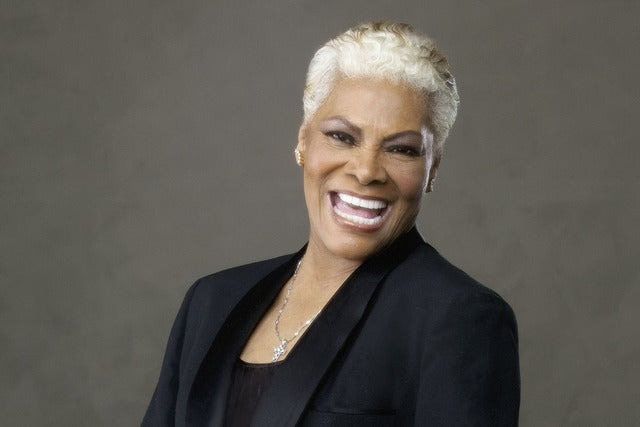
Dionne Warwick At 85, Dionne Warwick remains one of the most distinctive voices in popular music, still performing the Burt Bacharach songbook and her own remarkable catalog live.

Debbie Harry At 80, the Blondie frontwoman continues to tour with the band, bringing downtown New York cool and undimmed energy to stages that span from clubs to festivals.

Patti Smith The punk poet laureate is 78 and still performing with the intensity and conviction that made Horses one of the most important debut albums ever made. She treats every show as a ritual.

Iggy Pop The 78-year-old Godfather of Punk continues to tour with ferocity, proving that nobody has ever matched his physical commitment to a live performance. He remains a force of nature.

John Fogerty The voice behind Creedence Clearwater Revival is 80 years old and still bringing swamp rock energy to arenas. His catalog of American rock classics sounds as urgent live as it did in 1969.

Buddy Guy The 89-year-old Chicago blues legend continues to perform, a direct living link to the electric blues tradition that shaped every rock guitarist who followed him.

Steve Miller At 81, the Steve Miller Band continues to tour behind one of the most beloved catalogs of American rock radio, from “The Joker” to “Fly Like an Eagle” to “Jet Airliner.”

Barry Gibb The last surviving Bee Gee is 79 and still performing the harmonies and songwriting genius that made his group one of the bestselling musical acts in history. He carries the legacy with grace.

Peter Noone Herman’s Hermits frontman Peter Noone was just 15 when the band’s first single hit. He is still touring with the group, delivering the British Invasion hits with genuine enthusiasm decades later.

Tommy James Tommy James and the Shondells gave the world “Crimson and Clover” and “Mony Mony,” and James is still on the road, performing the songs that made him one of the defining voices of 1960s AM pop.

Judy Collins At 86, the folk legend continues to tour and record, her voice still carrying the crystalline authority that made “Both Sides Now” and “Send in the Clowns” timeless. She has released 55 albums and shows no signs of slowing down.

Gladys Knight At 81, the Empress of Soul continues to perform with the power and elegance that made her one of the defining voices of Motown and beyond. Decades on, she still delivers every note like it matters.

Mike Love The Beach Boys co-founder continues to tour with the group, keeping the harmony-rich catalog of California rock and roll alive for audiences who grew up with it and new generations discovering it for the first time.


50 Things You Didn’t Know About Conan O’Brien, Late Night’s Greatest Weirdo (In A Great Way)

0

Conan O’Brien has been making people laugh for over four decades, from Harvard dorm rooms to The Tonight Show to the Oscars stage. He wrote for Saturday Night Live and The Simpsons before most people knew his name. He survived cancellation threats, network warfare, and a concussion caused by Teri Hatcher. He married a ghost in a same-sex ceremony on his own show. He is, by any measure, one of the most singular figures in the history of American entertainment. Here are 50 things you probably didn’t know about the man himself.

  1. He was born on April 18, 1963, in Brookline, Massachusetts.
  2. His father was a physician and professor of medicine at Harvard Medical School specializing in epidemiology.
  3. His mother was an attorney and partner at the Boston firm Ropes & Gray.
  4. He is a third cousin of comedian Denis Leary.
  5. He served as managing editor of his high school newspaper, then called The Sagamore.
  6. He was a congressional intern for Congressmen Robert Drinan and Barney Frank.
  7. In his senior year of high school, he won the National Council of Teachers of English writing contest with a short story called “To Bury the Living.”
  8. He graduated as valedictorian in 1981.
  9. At Harvard, he majored in history and literature and graduated magna cum laude.
  10. His senior thesis was titled Literary Progeria in the Works of William Faulkner and Flannery O’Connor.
  11. He briefly played drums in a college band called the Bad Clams.
  12. He served as president of The Harvard Lampoon during his sophomore and junior years.
  13. His future NBC boss Jeff Zucker was president of The Harvard Crimson at the same time.
  14. His first TV writing job was on HBO’s Not Necessarily the News.
  15. He took improvisation classes with The Groundlings.
  16. He co-wrote the SNL sketch “The Girl Watchers,” first performed by Tom Hanks and Jon Lovitz.
  17. During the 1987-88 writers’ strike, he put on an improv comedy revue in Chicago with Bob Odenkirk and Robert Smigel called Happy Happy Good Show.
  18. While living in Chicago during that period, he briefly shared an apartment with Jeff Garlin near Wrigley Field.
  19. He and his SNL writing staff won an Emmy for Outstanding Writing for a Variety Series in 1989.
  20. His most notable SNL appearance was as a doorman in the sketch inducting Tom Hanks into the Five-Timers Club.
  21. He co-wrote the TV pilot Lookwell starring Adam West, which aired on NBC in 1991 but never went to series. It became a cult hit.
  22. Lisa Kudrow helped him find an apartment in Beverly Hills when he joined The Simpsons. They also briefly dated.
  23. Kudrow believed he should perform rather than write. He disagreed.
  24. On his first day at The Simpsons, a bird flew through his office window, hit the far wall, and fell dead on the floor.
  25. He wrote some of The Simpsons’ most acclaimed episodes, including “Marge vs. the Monorail” and “Homer Goes to College.”
  26. His arrival at The Simpsons coincided with the show taking a rapid shift toward the surreal.
  27. He was picked as host of Late Night on April 26, 1993, while at a voice recording session for “Homer Goes to College.”
  28. When he got the call, a colleague found him “passed out facedown into this horrible shag carpet.”
  29. His Late Night premiere received deeply unfavorable reviews. One critic suggested he “resume his previous identity, Conan O’Blivion.”
  30. In 1994, NBC threatened to put him on a week-to-week contract and considered replacing him with Greg Kinnear.
  31. Interns filled empty seats in the audience during those early struggling years.
  32. A turning point came when David Letterman appeared on the show in February 1994 and validated O’Brien on air.
  33. He holds the record as the longest-serving host in the history of the Late Night franchise, hosting for 16 years.
  34. In 2006, he ran mock political ads in Finland exploiting his perceived resemblance to Finnish president Tarja Halonen. Halonen won re-election.
  35. He traveled to Finland for five days following the election and was, in his own words, “embraced like a national treasure.”
  36. On September 25, 2009, he suffered a mild concussion after slipping and hitting his head while running a comedy sketch with guest Teri Hatcher.
  37. Tom Hanks coined his nickname “Coco” during the second episode of his Tonight Show run. O’Brien responded: “If that catches on, I’ll sue you.”
  38. His Tonight Show exit deal with NBC was worth $45 million, of which $12 million was designated for his staff.
  39. On his final Tonight Show, Neil Young sang “Long May You Run,” and Will Ferrell performed “Free Bird” with Ben Harper, Beck, and ZZ Top guitarist Billy Gibbons.
  40. His post-NBC comedy tour was called The Legally Prohibited from Being Funny on Television Tour. It ran 32 cities.
  41. A documentary about that tour, Conan O’Brien Can’t Stop, premiered at SXSW in March 2011 to positive reviews.
  42. He refused to do to George Lopez at TBS what NBC had done to him, only agreeing to join TBS after Lopez personally called to persuade him.
  43. His Conan Without Borders international travel series eventually took him to 13 countries and won an Emmy in 2018.
  44. In February 2015, he became the first American television personality to film in Cuba for more than half a century.
  45. His podcast Conan O’Brien Needs a Friend launched in November 2018 with Will Ferrell as the first guest. By August 2021, it had been downloaded over 250 million times.
  46. In May 2022, his production company Team Coco was sold to SiriusXM for $150 million.
  47. On October 21, 2011, he was ordained as a minister by the Universal Life Church Monastery and performed a same-sex wedding on the stage of the Beacon Theatre, the first such ceremony broadcast on American late night television.
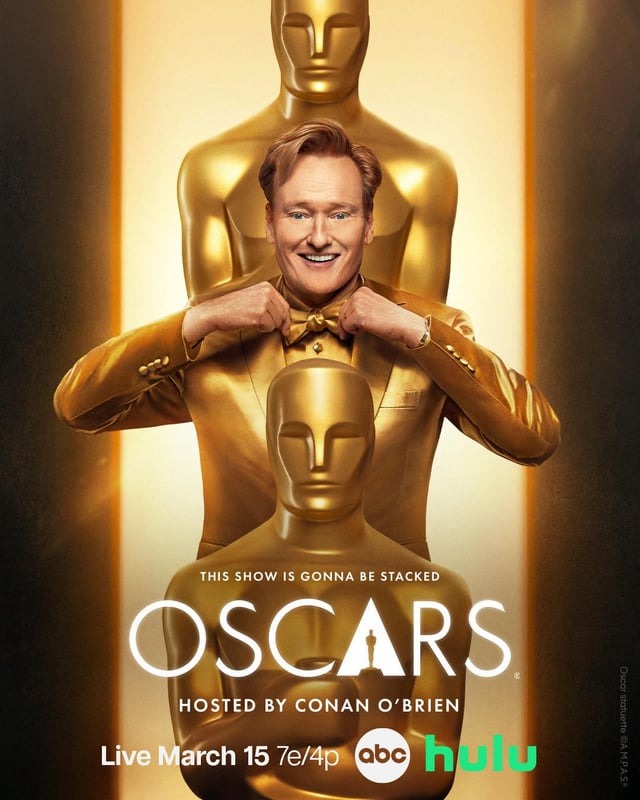
  48. He hosted the 97th Academy Awards in March 2025 to wide acclaim, with the ceremony achieving its best U.S. television ratings in five years. He was immediately invited back to host the 98th.
  49. He was inducted into the Television Academy Hall of Fame in 2025 and received the Mark Twain Prize for American Humor the same year.
  50. He is set to voice a character called Smarty Pants in Toy Story 5.

Motörhead Guitarist Phil Campbell Passes Away at 64

0

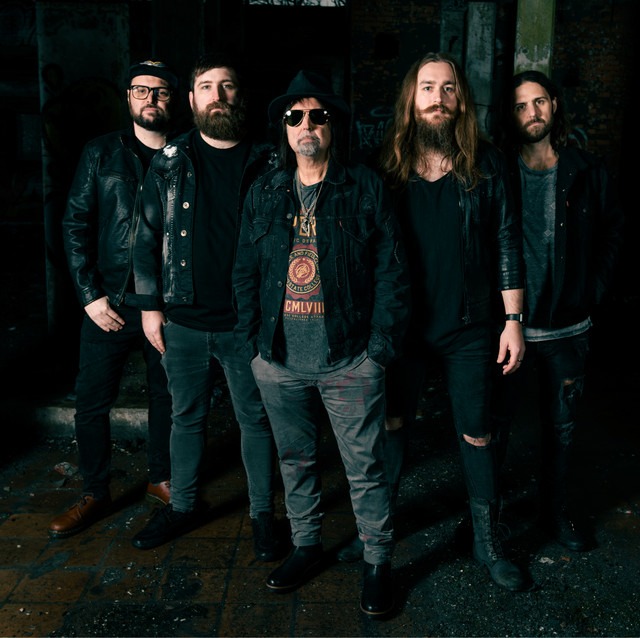
The rock world is mourning the loss of a titan. Philip Anthony Campbell, the legendary Welsh guitarist who served as the backbone of Motörhead for over three decades, passed away peacefully on March 13, 2026, at the age of 64. His family confirmed the news, stating that Campbell died following a “long and courageous battle in intensive care following a complex major operation.” A devoted husband, father, and grandfather—known affectionately as “Bampi”—Campbell leaves behind a legacy that fundamentally shaped the sound of heavy metal.

Campbell’s journey began in Pontypridd, Wales, where he picked up the guitar at age 10, inspired by the likes of Tony Iommi and Jimi Hendrix. After a formative run with the heavy metal band Persian Risk, he landed the audition of a lifetime in 1984. Alongside Michael “Würzel” Burston, he joined Motörhead, transforming the group into a powerhouse four-piece. Following Würzel’s departure in 1995, Campbell remained the sole guitarist and Lemmy Kilmister’s most consistent creative foil until the band’s disbandment in 2015.

The fire did not dim after Motörhead. Campbell immediately formed Phil Campbell and the Bastard Sons with his three sons—Todd, Dane, and Tyla. The project was a celebration of family and rock and roll, releasing four studio albums, including the acclaimed ‘Kings of the Asylum’ in 2023. In 2019, he further cemented his solo authority with ‘Old Lions Still Roar’, an album featuring collaborations with heavyweights like Alice Cooper and Rob Halford. His work remained assertive and human until the very end, recently performing a sell-out show in his hometown.

His family has requested privacy as they navigate this incredibly difficult time, noting that “his legacy, music, and the memories he created with so many will live on forever.” From the deafening stages of Wacken to intimate pub-rock gigs in South Wales, Campbell remained a champion of the riff. “Phil was a huge influence on the music industry and will be remembered fondly,” noted the Muni arts centre. He was a musician who lived for the stage, proving that while legends pass, the music is immortal.

Indigenous Opportunity: Submissions Now Open For The Henry Armstrong Award

0

The Henry Armstrong Award is officially moving into its fourth year, reinforcing its position as a primary engine for Indigenous musical talent in Canada. Today marks the launch of the 2026 application window for this vital bursary and mentorship program. Designed to elevate First Nations, Métis, and Inuit artists, the award provides a $10,000 bursary alongside a tailored 12-month professional development program. This is an essential opportunity for artists ready to scale their careers with the backing of top-tier industry experts. Apply here.

The mission behind the HAA is rooted in a commitment to inclusivity and equity within the Canadian music landscape. Established by Mike Denney, president of MDM Recordings Inc., the award honors his grandfather, Lloyd Henry, and mother, Gloria Denney (née Armstrong), both members of the Six Nations Lower Mohawk. The program arrived as a direct response to the need for actionable support for Indigenous creators, providing not just financial resources but the education necessary to navigate the modern music business.

Previous recipients have demonstrated the transformative power of this recognition. Inaugural winner Kyle McKearney leveraged the mentorship to secure international representation, while recent winners like Boogey the Beat and City Natives used the resources to fund high-profile collaborations and project budgets. The juried selection process involves a committee of Canadian music industry professionals, ensuring the chosen act is positioned for immediate and sustainable growth. This is a platform that turns creative potential into industry authority.

Eligible artists must be Canadian citizens of Indigenous descent and registered members of SOCAN. Applications are open until April 20, 2026, and can be submitted through the official portal. The winner will be announced on June 21, 2026, in celebration of National Indigenous Peoples Day. Artists are encouraged to detail their career goals and how the bursary will elevate both their individual path and the broader Indigenous arts community. This is a moment to claim your space in the future of Canadian music.

2026 Award Timeline:

March 13, 2026: Applications officially open

April 20, 2026: Application deadline

June 21, 2026: Recipient announcement on National Indigenous Peoples Day

Canadian Arts and Media Jobs For March 13, 2026

Apple Canada Inc. – Bilingual Editor, Apple News Canada – Toronto, Ontario – Full-time – $96,300-$185,700 – Apply Here

AtkinsRealis Canada Inc. – Senior Advisor, External Communications, Nuclear – Mississauga, Ontario – Full-time – Salary not listed – Apply Here

Bell Canada – Programming Specialist, TSN, Bell Media – Toronto, Ontario – Full-time – Salary not listed – Apply Here

CBC / Radio-Canada – Chargé des comptes intégrés (Solutions Média) – Toronto, Ontario – Temporary – Salary not listed – Apply Here

CBC / Radio-Canada – Senior Broadcast Technologist (T I) – Toronto, Ontario – Full-time – Salary not listed – Apply Here

Cineflix – Digital Producer (Contract) – Toronto, Ontario – Contract – Salary not listed – Apply Here

Cossette Communications Inc. – Account Director, Media Planning – Toronto, Ontario – Full-time – $95,000-$115,000 – Apply Here

EY – External Communications Leader, Associate Director – Toronto, Ontario – Full-time – Salary not listed – Apply Here

FGF Brands – Digital Producer (Contract) – Toronto, Ontario – Contract – Salary not listed – Apply Here

Groupe Média TFO – Reporter ONFR – Toronto or Ottawa, Ontario – Full-time – $70,051-$85,722 – Apply Here

HUB International Limited – Senior Manager, Corporate Communications – Toronto, Ontario – Full-time – $100,000-$112,000 – Apply Here

Interac Corp. – Lead, Strategic Communications and Citizenship – Toronto, Ontario – Full-time – Salary not listed – Apply Here

Johnson and Johnson Inc. – Director, Communications Public Affairs Canada – Toronto, Ontario – Full-time – Salary not listed – Apply Here

Klick Health – Assistant Medical Writer (Summer 2026) – Toronto, Ontario – Internship – Salary not listed – Apply Here

LabX Media Group Canada Inc. – AI Content Coordinator – Toronto, Ontario – Full-time – $50,000-$65,000 – Apply Here

Metrolinx – Co-op, Corporate Communications External – Toronto, Ontario – Co-op – $21.22-$24.41/hr – Apply Here

Mississauga, Corporation of the City of – Senior Communications Advisor – Mississauga, Ontario – Full-time – $50.39-$67.18/hr – Apply Here

Moneris Solutions Corp. – Communications Specialist – Toronto, Ontario – Full-time – $53,000-$72,000 – Apply Here

Mosaic Sales Solutions Canada – Producer – Toronto, Ontario – Full-time – Salary not listed – Apply Here

Royal Bank of Canada – Communications Analyst, Publishing and Design, RBC Economics – Toronto, Ontario – Full-time – Salary not listed – Apply Here

Royal Bank of Canada – Senior Manager, Digital Communications – Mississauga, Ontario – Full-time – $90,000-$140,000 – Apply Here

Spin Master Ltd. – Head of Editorial Creation (Lylli Studios) – Toronto, Ontario – Full-time – $85,000-$100,000 – Apply Here

StrategyCorp Inc. – Communications Associate – Toronto, Ontario – Full-time – $50,000-$55,000 – Apply Here

StrategyCorp Inc. – Communications Consultant – Toronto, Ontario – Full-time – Salary not listed – Apply Here

Tennis Canada – Assistant, Communications (April-August 2026) – North York, Ontario – Temporary – $21-$23/hr – Apply Here

Toronto Metropolitan University – Journalism AA Hiring Cycle – Toronto, Ontario – Contract – $39.57/hr – Apply Here

York Region – Communications Advisor, Business Services – Newmarket, Ontario – Full-time – $50.65-$55.05/hr – Apply Here

When AI Image Generators Meet Real Work: What Actually Changes in Your Creative Process

0

By Mitch Rice

Most people’s first encounter with an AI image tool feels like a small miracle. You type a few words, wait a few seconds, and something visual appears on your screen. It’s fast enough to feel magical and free enough to feel risk-free. Then you try to use it for something that actually matters—a social post, a product mockup, a concept for a client—and the experience becomes more complicated.

That friction point is worth examining before you decide whether a tool like Nano Banana belongs in your regular workflow. Not because the tool is good or bad, but because understanding what changes and what doesn’t is the only way to know if you’re saving time or just trading one kind of work for another.

The Prompt Problem Nobody Mentions Until They Hit It

The marketing around AI image generators tends to suggest that writing better prompts is a learnable skill, like learning Photoshop. That’s technically true. It’s also incomplete.

What actually happens: your first few generations feel revelatory because your expectations are low and the novelty is high. You ask for “a coffee cup on a wooden table” and you get something usable. You ask for “a professional product photo of a blue water bottle” and you get something close enough that you might use it.

But the moment you need something specific—a particular color palette, a specific composition, a certain mood that matters for your brand—the relationship with the tool changes. You start writing longer prompts. You add qualifiers. You try different phrasings. You generate five versions instead of one.

This is where people’s time calculations often go wrong. They measure the speed of the first generation, not the speed of getting to something actually usable. The difference is significant. A solo creator or small business owner might spend 15 minutes writing and refining prompts to get one image that works, versus 30 minutes in a traditional editor where the workflow is more familiar and the outcome more predictable.

The real question isn’t whether AI is faster. It’s whether the speed gain is worth the uncertainty you’re introducing into your process.

Where the Tool Actually Saves You Something

There are specific moments when an AI image generator stops being a novelty and becomes genuinely useful. These tend to happen in workflows where speed matters more than precision, or where you’re exploring multiple directions quickly.

Concept drafting is one. If you’re a marketer testing whether a visual direction works before investing in a photo shoot, or a small business owner trying to visualize a product idea before committing to design work, generating multiple rough versions in minutes has real value. You’re not looking for a finished asset. You’re looking for direction. The tool excels at that.

Social media content is another, though with conditions. If you post frequently and you’re comfortable with a certain aesthetic, AI-generated images can fill gaps in your content calendar without the friction of finding stock photos or creating everything manually. The catch: your audience will eventually recognize the style. Whether that matters depends on your brand and your audience’s expectations.

What tends to happen after a few weeks of regular use is that creators develop a clearer sense of what the tool is actually good for in their specific context. It’s rarely “everything.” It’s usually “this specific type of content, in this specific scenario, when I have this much time.”

The Revision Work That Doesn’t Show Up in Marketing

Here’s what the product descriptions don’t emphasize: AI image generators are fast at creating something, but they’re not always fast at creating the right thing.

If you need an image that matches specific brand guidelines—exact colors, particular typography, a certain composition—you’ll likely end up in an AI image editor anyway. You might use the AI output as a starting point, but you’re not saving the entire design step. You’re changing the shape of the work, not eliminating it.

This is especially true if you’re working with text overlays, specific product placements, or any requirement where precision matters. The tool generates something in seconds. You spend the next 10 minutes adjusting it to match what you actually needed. That’s not a failure of the tool. It’s a realistic picture of how these things work in practice.

Small business owners and solo creators often discover this after the initial enthusiasm fades. The first week feels productive. By week three, you’re noticing that you’re spending more time correcting outputs than you expected. That’s not unusual. It’s part of the learning curve.

What You Can’t Know From a Product Description

The information available about Banana Pro AI is limited to its core positioning: it’s a free AI image generator that supports text-to-image and image-to-image conversion. That’s useful to know, but it doesn’t tell you everything you need to evaluate whether it fits your workflow.

You can’t know from that description:

  • How consistently the tool generates usable outputs versus ones that need significant revision
  • Whether the image quality is sufficient for your specific use case (social media, client work, internal mockups, etc.)
  • How the tool performs with specific types of requests (product images, landscapes, abstract concepts, text-heavy designs)
  • What the learning curve actually feels like after your first five generations
  • Whether the free tier has meaningful limitations that would push you toward paid options

These are the questions that matter for actual adoption. They’re also questions that only trial and observation can answer. No product description, no matter how detailed, can replace that.

The Decision Is Less About Features, More About Fit

People often approach tool selection as a feature-matching exercise: Does it have X? Does it support Y? But the real decision is usually simpler and more personal.

Do you have a specific workflow problem that this tool might solve? Not “could I use this for something?” but “do I actually have a gap that this addresses?” If you’re a designer with established processes, the answer might be no. If you’re a solo operator creating multiple pieces of content weekly with limited design skills, the answer might be yes.

Do you have time to experiment without expecting immediate payoff? The first few uses of any AI tool involve a learning phase. Your first generations won’t be your best. You need to be comfortable with that before committing to regular use.

Are you clear about what “good enough” looks like in your context? This is crucial. If you’re creating internal mockups, good enough is different than if you’re creating client-facing assets. That clarity changes everything about whether a tool is useful or frustrating.

The people who tend to stick with AI image tools aren’t necessarily the ones who found them most impressive on day one. They’re the ones who identified a specific, recurring need and then tested whether the tool actually solved it better than their previous approach. That’s a different evaluation than “is this cool?” It’s “does this fit?”

The real value of a free AI image generator isn’t that it replaces design work or eliminates the need for visual thinking. It’s that it lowers the barrier to experimentation. You can test ideas quickly. You can see if a direction is worth pursuing before investing time or money. You can fill specific gaps in your workflow without overhauling your entire process.

Whether that’s useful depends entirely on what your workflow actually looks like right now. The only way to know is to try it, pay attention to what actually happens, and be honest about whether the time you save is real or just feels real on the first day.

Data and information are provided for informational purposes only, and are not intended for investment or other purposes.