Home Blog Page 848

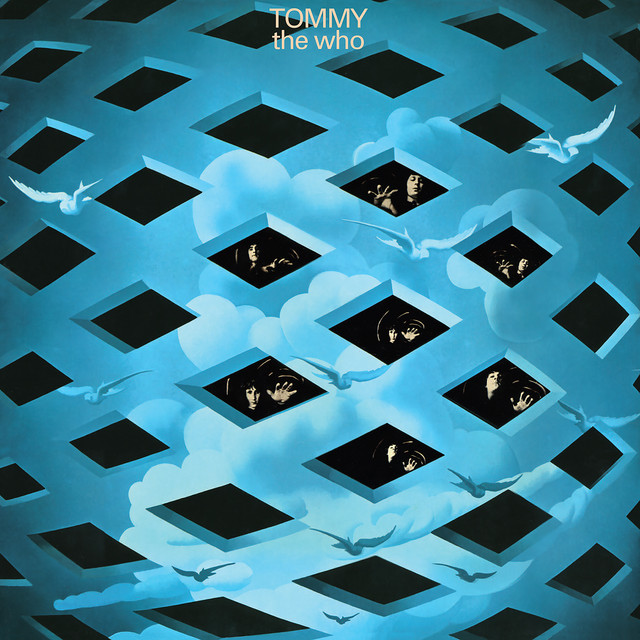
5 Surprising Facts About The Who’s ‘Tommy’

Some albums redefine a band. Some redefine a genre. Tommy did both. Released in 1969, The Who’s ambitious double album was a rock opera, an audacious concept that changed music forever. Here are these five fascinating facts that make Tommy even more legendary than you thought.

1. The Album’s Title Wasn’t Final Until the Last Minute

Before Tommy became Tommy, Pete Townshend and The Who cycled through several potential names. Early working titles included Deaf, Dumb, and Blind Boy, The Brain Opera, and Amazing Journey. Townshend eventually settled on Tommy because it was short, simple, and memorable. The name also nodded to the British soldiers of World War I, commonly referred to as “Tommies.” The decision proved to be a stroke of genius, making the album’s concept and character instantly recognizable worldwide.

2. Pinball Wizard Was Written as a Last-Minute Gimmick

It’s hard to imagine Tommy without “Pinball Wizard,” but believe it or not, the song was a late addition. Pete Townshend wrote it purely to impress rock critic Nik Cohn, a huge pinball fan, hoping for a better review. The gamble worked—Cohn called Tommy a masterpiece, and “Pinball Wizard” became one of The Who’s most iconic tracks. Not bad for what Townshend later called “the most clumsy piece of writing I’ve ever done.”

3. Keith Moon’s Drums Were Too Destructive for the Studio

Keith Moon’s drumming was legendary for its power and unpredictability—so much so that it caused problems during Tommy‘s recording. After Moon repeatedly destroyed drum kits, Premier Drums refused to lend him any more equipment. The solution? Roadie Tony Haslam lent Moon his own double bass drum kit. That thunderous sound you hear on Tommy? It was partly the result of a desperate attempt to keep the sessions going without breaking more gear.

4. The Acid Queen Was a Symbol of More Than Just Drugs

“The Acid Queen” stands out as one of Tommy’s most intense moments, but its meaning goes far beyond psychedelics. Pete Townshend saw the character as a representation of mindless self-indulgence, not just drug culture, but excess in all its forms—sex, alcohol, and hedonism. Over the years, the song has been powerfully covered by artists like Tina Turner, Patti LaBelle, and Bette Midler, proving its lasting impact beyond the album.

5. The Who Had to Tour Tommy to Stay Afloat

By 1968, The Who was in financial trouble. Their stage shows, including Pete Townshend’s signature guitar-smashing and Keith Moon’s drum destruction, had left them in deep debt. Tommy became their saving grace. The album’s success led to a relentless tour schedule, with groundbreaking performances at Woodstock, the Isle of Wight Festival, and even the Metropolitan Opera House. These shows cemented Tommy as not just an album but a live spectacle that pushed rock music into uncharted territory.

Tommy turned rock into theater, challenged the boundaries of storytelling in music, and inspired generations of artists to think bigger. From concept albums to rock operas to Broadway musicals, its influence is everywhere.

Tommy wasn’t just an album—it was a revolution. It turned rock into theater, challenged the boundaries of storytelling in music, and inspired generations of artists to think bigger. From concept albums to rock operas to Broadway musicals, its influence is everywhere
5 Surprising Facts About Sleater-Kinney’s ‘Dig Me Out’

Some albums shake up a scene. Some kick the door down and demand attention. Dig Me Out did both. Sleater-Kinney’s 1997 breakthrough was was a full-throttle mission statement of feminist rage, blistering guitars, and raw emotion. But you already knew that. What you might not know are these five incredible facts that make Dig Me Out even more iconic than you thought.

1. The Album’s Title Wasn’t Just a Metaphor—It Was Reality

Recording Dig Me Out wasn’t just an emotional storm—it happened during an actual one. The band was hit by a brutal snowstorm in Seattle during recording sessions in December 1996. They literally had to dig out the studio just to get inside and record. That battle with nature became the perfect metaphor for the album’s themes of struggle, survival, and reinvention. It was a fight from the start, and you can hear it in every riff.

2. Janet Weiss’ Drumming Completed the Band’s Sound

Before Dig Me Out, Sleater-Kinney had cycled through a series of drummers, but Janet Weiss’ arrival changed everything. Corin Tucker and Carrie Brownstein have both said that Weiss was the missing piece, giving the band a more powerful backbone. Her style—rooted in classic rock influences like the Rolling Stones and The Kinks—brought a raw, propulsive energy that elevated every track. She wasn’t just keeping the beat; she was shaping the band’s future.

3. A Song That Transformed Pain Into Power

“One More Hour” isn’t just a breakup song—it’s a testament to emotional strength. Inspired by personal experiences, the track channels heartache into catharsis, proving that music can turn vulnerability into something powerful. The interplay between Tucker’s and Brownstein’s vocals adds intensity, creating a song that resonates far beyond its lyrics. It’s a moment of raw honesty, but also one of resilience—proof that from difficult times, great art can emerge.

4. The Album Was a Testament to Strength and Friendship

Despite the emotional weight behind Dig Me Out, the album stands as a testament to the band’s resilience and deep creative bond. Even with personal challenges, Tucker and Brownstein turned their experiences into music that resonated with thousands. Instead of falling apart, they grew stronger, channeling raw feelings into anthems of empowerment. The result? An album that continues to inspire musicians and fans alike with its fearless energy and uncompromising honesty.

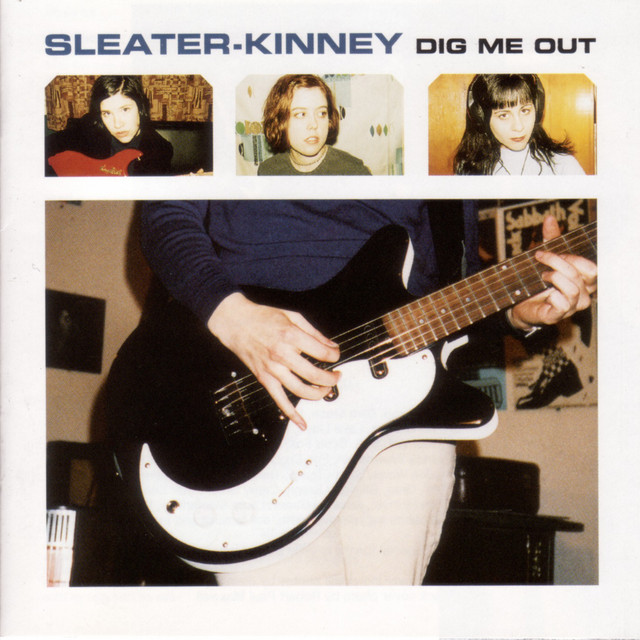
5. The Album Cover Is a Homage to Rock Royalty

Look at Dig Me Out’s album cover, then take a look at The Kink Kontroversy by The Kinks. Notice anything? That’s right—Sleater-Kinney’s cover is a direct tribute to the 1965 classic, swapping in their own faces and guitars. The nod wasn’t just about aesthetics; it was a statement that Sleater-Kinney saw themselves as part of rock’s lineage. They weren’t just indie upstarts—they were making music worthy of standing alongside the greats.

Dig Me Out  redefined what punk could sound like, what an all-women rock band could achieve, and how raw emotions could be turned into fire. More than 25 years later, it still punches you in the gut with every drum hit, every tangled guitar riff, every wail from Corin Tucker. If you haven’t listened in a while, consider this your invitation to turn it up loud—because some records never lose their power.

5 Surprising Facts About T. Rex’s ‘Electric Warrior’

Some albums define a genre. Some redefine an era. And then there’s Electric Warrior, the 1971 masterpiece by T. Rex, which did both. Marc Bolan was reshaping rock, injecting glam, swagger, and a touch of the surreal into every groove. But you already knew that. What you might not know are these five mind-blowing facts about the album that put glitter on rock’s leather jacket.

1. The Album Was Almost a Double LP

Believe it or not, Electric Warrior started as a far bigger beast than what eventually hit record stores. Marc Bolan and producer Tony Visconti had enough material to release a double album, thanks to marathon sessions in London, Hollywood, and New York. Outtakes like “Raw Ramp” and “There Was A Time” ended up as B-sides, while other songs were left in the vaults entirely. Bolan was known for moving fast—his philosophy was to keep writing and never look back—which meant that some of the discarded tracks might have been hits in another timeline.

2. A Future Prog Rock Titan Played on It

Rick Wakeman—yes, the Rick Wakeman from Yes—laid down the piano part on “Get It On.” At the time, he was still a session musician, playing on everything from Bowie’s Hunky Dory to Elton John’s early work. Wakeman later admitted that he got paid in beer for his Electric Warrior contribution, but there’s no bitterness—he always recognized that Bolan had an uncanny ability to make even the simplest rock and roll sound revolutionary.

3. Marc Bolan Had a Love-Hate Relationship With His Own Success

By the time Electric Warrior hit number one in the UK, Bolan had already begun to feel the weight of fame. He famously told a journalist that he didn’t want to be “the biggest thing in the world”—he just wanted to be big enough to keep making music on his terms. Ironically, the more he tried to stay grounded, the more extravagant his performances became. His glittering, otherworldly stage presence wasn’t just a persona—it was his armor against the pressures of being a rock icon.

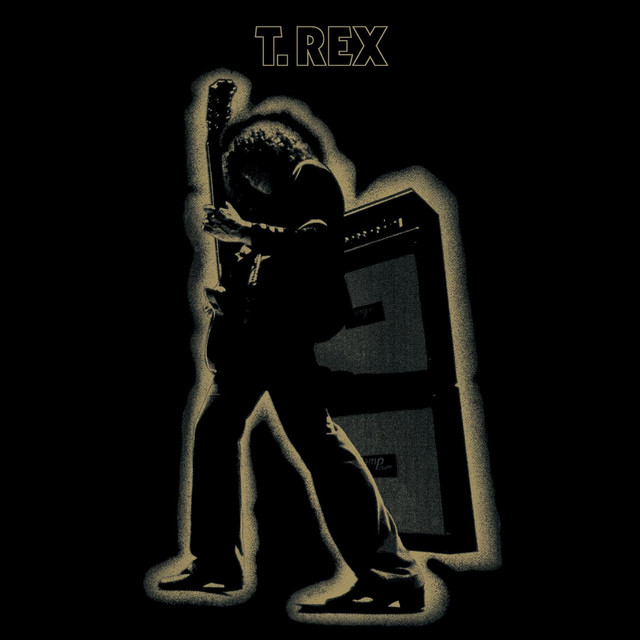
4. The Cover Art Was Inspired by a Happening Moment

That striking black-and-gold cover of Electric Warrior wasn’t some carefully staged studio shoot. It was snapped by photographer Kieron “Spud” Murphy during a live gig in Nottingham on May 14, 1971. The image captured Bolan in his full glam glory, mid-performance, completely lost in the music. The raw power of that moment made it the perfect visual for an album that was all about turning rock ‘n’ roll into something magical.

5. It Influenced More Than Just Rock Music

Glam rock wasn’t the only movement to take notes from Electric Warrior. French electronic duo Justice credited the album’s artwork as a direct inspiration for their 2007 debut, . That towering silhouette of Marc Bolan with his Les Paul became a blueprint for how to mix raw power with mystique. Even decades later, Bolan’s ability to fuse simplicity with spectacle continues to ripple through music and design.

Fifty years later, Electric Warrior still stands as a shimmering beacon of what rock and roll can be—playful, seductive, larger than life. Marc Bolan didn’t just make music; he made moments. And every time you drop the needle on this album, you’re stepping into one. So go ahead, turn it up, and let the boogie take over. Because as Bolan himself once said, “Whatever happened to the teenage dream?” It never ended. It just put on more glitter.

March is Music Therapy Month – An Urgent Call to Support Music Therapy for Canada’s Aging Population

0

March is Music Therapy Awareness Month, a time to recognize the life-changing impact of music therapy on people of all ages. This year, the Canadian Music Therapy Fund (CMTF) is calling for urgent support to ensure that older adults, particularly those with dementia and cognitive challenges, can continue to access this essential care.

For 31 years, CMTF has worked to make music therapy accessible to those who need it most—children with autism, people experiencing mental health challenges and older adults facing cognitive decline. As one of the only non-profits in Canada providing subsidized music therapy services, CMTF has seen firsthand how music connects, heals, and restores dignity when words are no longer enough.

Canada’s aging population is growing at an unprecedented rate. By 2030, seniors will make up nearly a quarter of the population, with many experiencing isolation, depression, or neurodegenerative diseases like Alzheimer’s. Research has shown that music therapy can reconnect individuals with their memories, reduce anxiety, improve mood, —yet funding for these programs remains critically low.

“This is about more than just music,” says Anna Kajtár, Executive Director of CMTF. “It’s about dignity, connection, and ensuring that people don’t spend their final years feeling lost and disconnected. Music therapy has been proven to change lives, but without support, these essential services are at risk of disappearing.”

Last year, thanks to donor support, CMTF helped bring music therapy to seniors facing cognitive challenges. In 2025, we aim to expand access for even more Canadians—children, adults, and older adults alike—who rely on music therapy for emotional and cognitive well-being.

This Music Therapy Awareness Month, CMTF invites the public to take action:

Music therapy is not a luxury—it is a vital form of care. This March let’s make sure no one is left without it.

“Atomic Reaction” Wins Best Local Feature at Belleville Downtown DocFest International Documentary Film Festival 2025

0

The groundbreaking documentary Atomic Reaction, directed by the acclaimed Michèle Hozer, has been awarded Best Local Feature at the 2025 Belleville Downtown DocFest International Documentary Film Festival. This powerful film, which delves into Canada’s role in the Manhattan Project and its lasting nuclear legacy, continues to captivate audiences with its gripping storytelling and unflinching historical revelations.

The film has already earned widespread acclaim, including a stellar A rating review from Original Cin, where critic Liz Braun describes it as “a quietly gripping documentary… This is a strange and sorry chapter in our history.” Braun further emphasizes the film’s lasting impact: “As the film makes clear, ongoing radioactive contamination from radium and uranium mining/refining makes it an unfinished chapter — nothing about this story can be safely relegated to the past.”

With meticulous research and striking archival footage, Atomic Reaction brings to light Canada’s pivotal role in the development of the atomic bomb—an often-overlooked narrative in global history. The film details the discovery of uranium in Canada by Gilbert LaBine, the environmental and human consequences of uranium mining, and the connection between Canadian industry and the devastating bombings of Hiroshima and Nagasaki. It also underscores the ongoing struggle of Indigenous communities who have faced the long-term health impacts of radiation exposure.

“We are thrilled and honored to receive this recognition at Belleville Downtown DocFest,” said Bernie Finkelstein, one of the film’s producers. “Atomic Reaction is an essential story about Canada’s involvement in nuclear history, and we hope this award helps bring even more attention to these important conversations.”

The film is co-produced by David Hatch, a veteran documentarian known for his investigative storytelling, alongside Hozer, whose award-winning career has shaped some of Canada’s most compelling documentary narratives. Their collaboration has resulted in a film that is both visually stunning and deeply informative, shining a light on the haunting legacy of nuclear development in Canada.

“Winning Best Local Feature is a testament to the importance of this story and the incredible response from audiences,” added Hozer. “Canada’s nuclear history isn’t just about the past—it continues to affect lives today. We hope Atomic Reaction encourages further dialogue.”

The movie lays out these momentous and sometimes horrific events with a full flair for drama and a journalistic commitment to the truth. Audiences will have a chance to see for themselves when Atomic Reaction is currently airing on the CBC Documentary Channel and on CBC GEM starting January 10, 2025.

Those three creative principals come to Atomic Reaction bearing a wealth of entertainment-media credentials. Finkelstein is a music-industry legend whose self-founded indie label True North Records has logged 500 releases (40 of them gold and platinum) and netted 40 JUNO Awards, its roster boasting A-list names like Bruce Cockburn, Randy Bachman, Rough Trade, Murray McLauchlan, Lenny Breau and Lighthouse. As an artist manager, he’s handled the likes of Cockburn, Dan Hill, The Paupers, Barney Bentall, and Blackie & The Rodeo Kings. Related ventures have included The True North Publishing Group, which guarded the rights to a library of works by pop songwriters and composers for films and TV. Finkelstein has served as chairman of the Ontario Film Development Corporation and sat on the board of that organization and numerous others, including the Canadian Independent Record Production Association (CIRPA, which he co-founded and is now known as CIMA), the Canadian Association Of Recording Arts and Sciences (CARAS) and the Toronto Arts Awards. He is a member of the Canadian Music Hall Of Fame and the Order of Canada, and has received both the Queen’s Diamond Jubilee medal and the JUNOs’ Walt Grealis Special Achievement Award, the highest honour given to a non-musician by the Canadian music industry. His work on Atomic Reaction adds to a film résumé that includes the 2012 Cockburn documentary Pacing The Cage, which debuted on Vision TV.

Hatch is the founder of WhistleStop Productions Inc., which since its founding in 1989 has produced 60 original network television series and numerous one-off, multicamera, live event productions for broadcast. With a focus on cutting-edge sports, magazine and documentary programming, the company has generated 23 original series for Netflix, Discovery Velocity, the Smithsonian Channel and others. Its documentary arm has dug deep into subjects ranging from professional auto racing to Canadian warships’ hunt for terrorists in the Persian Gulf to a 70-year-old man’s dream to set the world land-speed record on the Bonneville Salt Flats. In addition to his work with WhistleStop Productions, Hatch’s extensive programming résumé has included over 500 hours of original, broadcast network programming for Bell Media and ESPN Inc. and 180 hours of television for Blue Ant Media. A lifelong music devotee (and a guitarist in his own right), he’s shepherded documentaries on superstars like Rush and Lyle Lovett, and his six-hour blues docuseries, Cities in Blue (created for HIFI HD and Smithsonian), was nominated for a Canadian Screen Award.

As a filmmaker and editor, Hozer has been making a significant contribution to the Canadian cultural landscape since 1987. Her documentary Shake Hands with The Devil: The Journey of Roméo Dallaire won the 2007 Emmy for Best Documentary and the Audience Award at the 2005 Sundance Film Festival. Her co-directorial debut with Peter Raymont, Genius Within: The Inner Life of Glenn Gould, earned a coveted spot on the Academy Award shortlist and a Gemini Award for Best Biography. In 2012, Hozer and her team received the Allan King Award for Excellence in Documentary by The Director’s Guild of Canada (DGC) for their work on West Wind: The Vision of Tom Thomson. Other awards on her mantel include the Canadian Screen Awards’ Donald Brittain Award for her self-directed, -edited and -produced documentary Sugar Coated, and the Picture This Film Festival’s Dodie Spittal Award for her short The Barber of Augusta. More recently, she’s acted as both writer and editor on The Reckoning: Hollywood’s Worst Kept Secret and as an editor on the Frontline special In the Age of AI.

Atomic Reaction is already proving a more-than-worthy addition to this highly accomplished trio’s collective pedigree: The doc received an Honorable Mention at the 2024 International Uranium Film Festival, an event dedicated to nuclear issues that’s been presented since 2011 in Rio de Janeiro. With the film about to go before several entirely new sets of eyes, its own half-life seems to be nowhere near the horizon.

Louis Emory and The Reckless Few Deliver Anthemic Americana Rock with “Prophets Said” from Upcoming EP The Siege

0

There are songs that come and go, and then there are songs that stay with you, lingering like the echoes of a classic rock radio station fading into the night. “Prophets Said”, the latest single from Louis Emory and The Reckless Few, is exactly that—a modern rock anthem with the heart and soul of a ‘70s classic, taken straight from the vault of the greats.

Emory, a Troy, NY-based singer-songwriter with a knack for storytelling that rivals his heroes Tom Petty, Bob Dylan, and George Harrison, channels an electrifying mix of grit, melody, and raw emotion into “Prophets Said.” The track, recorded with longtime collaborators Tim Lynch and Bob Boyer at The Recording Company and mixed by Shelly Yakus (John Lennon, The Band, Tom Petty), showcases the kind of rock ‘n’ roll that doesn’t just demand to be heard—it demands to be felt.

Lyrically, “Prophets Said” is a heart-wrenching yet hopeful look at love that has run its course. With lines like “We were just ships passing in the night / Flames dancing in eternal vibes”, Emory captures the bittersweet realization that some relationships are fated to end—but that doesn’t make them any less meaningful.

“I’ve always been into history and the idea of prophets or oracles. But in this song, the ‘prophets’ are the good friends who tell you when something’s over, even when you don’t want to hear it.” — Louis Emory

The song’s driving electric guitars, haunting organ swells, and Emory’s smoky, Petty-esque vocals create a dynamic blend of classic rock energy and modern storytelling—a sound that has drawn praise from industry veterans:

“Louis Emory is writing top-shelf, catchy, meaningful rock and roll songs at a time when this type of music that champions perseverance, positivity, and the human spirit is sorely lacking. He’s right up there with the best of them. Prophets Said is a prime example.” — Greg Richling, Former Grammy-winning bassist for The Wallflowers

“Louis Emory has the melody, the words, and is now! I believe he is one of the most promising unsigned artists of our time.” — Shelly Yakus, Former Chief Engineer and VP of A&M Records
“Nice cut! Solid production.” Larry Ratso Sloman – Author, former writer for CREEM, Rolling Stone Magazine, and Crawdaddy

“What I love: The Tom Petty (“Won’t Back Down”) sound. The gritty, smoky vocals. The track’s lyrical depth and haunting/heavy emotion. The return to form — good ol’ fashioned rock n’ roll. The lonely roads, desert-y mood.” – Amanda Peukert, Culture Journalist, SPIN Magazine

“Prophets Said” is the lead single from Emory’s upcoming EP, The Siege, a collection of songs that further cement his signature fusion of timeless rock, heartfelt lyrics, and stadium-sized hooks.

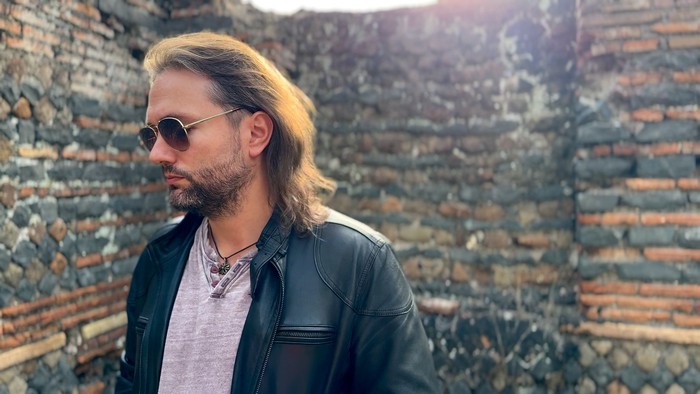
The song’s music video, shot in the ancient ruins of Ostia Antica, Italy, reflects the song’s themes of loss, resilience, and reflection. The cover art, captured at the same location, paints a moody yet hopeful scene—Emory standing among volcanic black bricks, caught between darkness and light, much like the song’s emotional pull.

Emory and The Reckless Few aren’t just making music—they’re reviving the spirit of rock and roll, one melody at a time. For fans of Petty, Dylan, and classic Americana storytelling, The Siege is a must-listen.

Victoria, BC Folk Artist Tobacco & Rose Explores Love and Spirituality in Cinematic New Single “Tara”

0

Songs having dual meanings are rare. But when put in the right hands of a talented singer-songwriter, those songs can sound effortless and incredibly easy on the ears. For Richard Moody, recording under the moniker Tobacco & Rose, he’s crafted a stellar single, “Tara.” It’s a gentle, alluring tune which could be thought of as a traditional love song. Yet for Tobacco & Rose, the song — the first single from the forthcoming album Tobacco & Rose — has a deeper, spiritually tinged resonance.

“‘Tara’ is a repurposed love song,” the musician says. “I wrote the first few lines for a crush that quickly dissipated and later completed it and dedicated it to the Buddhist deity Tara, the goddess of compassion and action. The song is reflective of my beginner’s take on Buddhism, and a reminder to myself to think and act with courage, compassion, and equanimity. And if listeners hear it as a good old-fashioned love song, that’s okay too.”

Tobacco & Rose wrote, recorded, engineered, and produced “Tara” on Vancouver Island. The single has a gorgeous, hushed tone throughout while also creating a style that is equally cinematic and majestic. “Tara” is terribly attractive, drawing the listener in instantly with a simple but strong vocal, some almost hypnotic acoustic guitar, and a rich but sparse background. The sonic jewel brings to mind obvious touchstones like the immortal Nick Drake while also recalling James Yorkston, Richard Thompson, and other great contemporaries of classic British folk. Violins can be heard while bassist Joey Smith adds a delicate touch throughout.

“Tara” is the first single from the forthcoming nine-song self-titled debut album by Tobacco & Rose. Featuring musicians such as guitarist Luke Doucet and drummer Barry Mirochnick on the Celtic folk-leaning “Broken Angel,” the album also includes bassists Smith and Scott White, Peter Dowse on electric bass, drummer and organist Joby Baker, and pedal steel player Tyler Lieb. Other musicians on the album include drummer Kelby MacNayr and pianist Adrian Dolan. Tobacco & Rose wrote all the songs, including the calming, tranquil “You and I” and the exquisite “Where My Lover Goes,” the closing track that would find itself near Springsteen’s “Secret Garden” and “If I Should Fall Behind” for its spine-tingling, heart-tugging effect.

Tobacco & Rose’s backstory is a long and winding road. Richard Moody studied classical viola in France in his teens, but as the 1990s commenced, he would tour with Manitoba-based folk-rock group Acoustically Inclined. He performed with countless musicians including Stephen Fearing, The Wailin’ Jennys, and The Bills, among others. However, the success wasn’t fulfilling Moody, resulting in him becoming a yoga instructor for several years but never far from being a “musician-for-hire.”

The musician, searching for deeper meaning, discovered ayahuasca, a plant-based medicine from the Amazon. Traveling to Peru seven years ago, and meeting Shipibo shamans, the experience — which included participating in some traditional ceremonies — left him writing a large batch of songs, some found on this forthcoming self-titled debut. “I felt like I was not the writer, but an open channel, and that the plant was speaking through me.” The moniker also celebrates the use of the tobacco plant for prayer and meditation, not to “glorify cigarette smoking.”

Now with Tobacco & Rose and the new single “Tara,” fans of great, traditional folk music should seek out this song immediately. It’s a brilliant new folk song that harkens back to the work of the late Drake, Joni Mitchell, and Bob Dylan. “The music itself is a nod to the classic singer-songwriters, with what I hope is a sophisticated harmony, arrangement and orchestration that honour my own musical past and upbringing.”

Bruce Cockburn, Ani DiFranco, Oysterband and Guy Davis Lead Supergroup Asking “Which Side Are You On?”

0

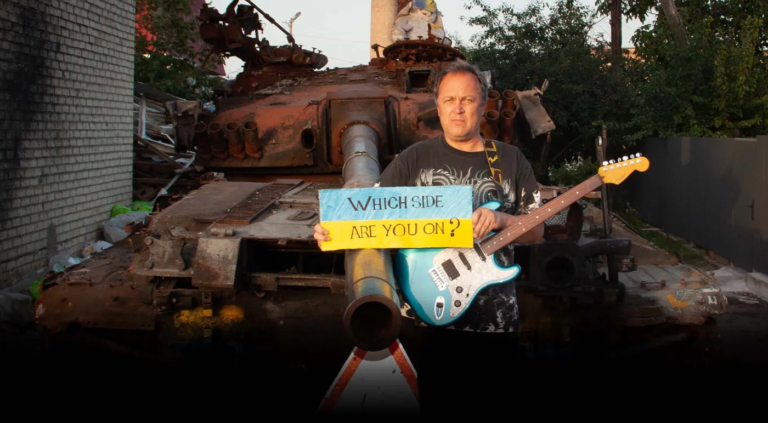
In September of 2022 an international folk supergroup consisting of 16 artists from six countries on four continents released “Which Side Are You On?”  Originally penned as a union song by Florence Reece in 1931, Artists for Action’s version took aim at the rise of far-right politics and the resurgence of fascism around the globe, the most glaring example of which was Russia’s brutal war against Ukraine.

With recent world events, including the implosion of American democracy and the resurgence of fascist groups such as Germany’s AfD, the message behind the song seems more important, more urgent, than ever, so Artists for Action is re-releasing the single, which aims to foster discussion, and asks people to choose which side they are on.  When the single was first released it enjoyed airplay all over the world, although there were some stations that refused to play it, stating that it was too controversial.

Well, it may be more controversial now than ever.  Canada, Greenland, Denmark, Panama and Gaza are all being threatened by hostile takeovers from the most powerful nation in the world, so each of us has to grapple not only with which side we are on, but what we are going to do about it.  Will we boycott?  Will we participate actively in politics?  Will we vote, demonstrate, protest?  Music has at times been a powerful catalyst for change, and the voices of musicians are needed now more than ever.

This project was born when spoken word poet and songwriter Bob Jensen received a note from an old friend, saying that “Which Side Are You On?” was ripe for a remake.  The two discussed how the song could be updated to reflect the rise of the far right in politics and the resurgence of fascism around the globe, and how that was affecting democracy, women’s rights, etc.  Jensen decided on the spot that he would do it, that he would record an updated version of the song and release it to radio.

“I was excited at the prospect,” says Jensen, “and thought I would invite a couple of friends and colleagues from the folk music community to join me.  My first ask was my old friend James Keelaghan, and he immediately said I should count him in.  I asked a few more people, and within a couple of days, I had half a dozen very fine artists from around the world committed to the project.”  It was at this point that Jensen decided to ask Bruce Cockburn’s manager if Cockburn might be interested, and within a week, he was confirmed.  Ani DiFranco was next to join the project, and additional artists fell into place over the next few weeks.

Who is Artists for Action?

Artists for Action is a folk supergroup consisting of 16 artists from around the world who have come together to raise their voices against the rise of the far right. The artists, in alphabetical order, are Black Umfolosi (Zimbabwe), Ray Bonneville (Canada), Bruce Cockburn (Canada), Guy Davis (USA), Ani DiFranco (USA), Maria Dunn (Canada), Bob Jensen (Canada), James Keelaghan (Canada), Lucy MacNeil (Canada), Tony McManus (Scotland), Moulettes (England), Oysterband (England), Richard Perso (Australia), Heather Rankin (Canada), Martin Simpson (England) and Jon Weaver (Canada).  (The artists are not being paid for this work, and in fact, have covered their own recording costs.  Additional hard costs have been covered by anonymous donors.)  The video for this song was produced on a budget of $0.00.

Proceeds to Assist Ukraine

The primary goal of this project is the message, as opposed to it being a fundraiser.  However, the song will generate revenue, all of which will be donated to a registered charity in aid of Ukraine.

Musicians in Alphabetical Order
Black Umfolosi – Vocals, Zimbabwe, (Eng. Octopus & his assistant Dumisani Moyo)
Ray Bonneville – Harmonica, Canada (Justin Douglas, King Electric Recording Studio)
Bruce Cockburn – Vocals, Canada (Eng. Mark Yarhiro)
Chris Corrigan – Acoustic guitar, Canada (Eng. Self, Chris Corrigan Studio)
Guy Davis – Vocals, America (Eng. Self, home studio)
Ani DiFranco – Vocals, America (Mark Napolitano, Ani DiFranco home studio)
Maria Dunn – Vocals, Canada (Eng. Terry Tran)
Adam Hill – Upright bass, Canada (Eng. Chris Corrigan, Chris Corrigan Studio)
Bob Jensen – Vocals, Canada (Eng. Colin Buchanan, The Pink Palace)
James Keelaghan  – Vocals, Canada (Eng. Self, James Keelaghan home studio)
Richard Knox – Drums, Canada (Eng. Chris Corrigan, Chris Corrigan Studio)
Lucy MacNeil – Vocals, Canada (Eng. Jamie Foulds, Sound Park)
Tony McManus – Guitar, Scotland/Canada (Tom Althouse, Silk Purse Recording)
Moulettes – Vocals, England (Eng. Hannah Miller/Raevennan Husbandes)
Oysterband – Vocals, England (Eng. Alan Prosser & Al Scott)
Richard Perso – Didgeridoo, Australia, (Secret Cupboard Studio, Yackandandah, AUS)
Heather Rankin – Vocals, Canada, (JRPR Productions, Dartmouth, NS)
Martin Simpson  – Vocals, banjo, electric guitar, England (Eng. Self, home studio)
Jon Weaver – Vocals, Canada, (Eng. Self, Salty Towers, St. Andrews, NB)

Produced and mixed by Chris Corrigan and Colin Buchanan at Chris Corrigan Studio, Charlottetown, PEI, Canada, and The Pink Palace, also in Charlottetown.

Mastered by Alex McCollough, True East Mastering, Nashville, TN

Video produced by Bob Jensen, Edited by Isaac Williams, Charlottetown, PEI

Folk Roots Powerhouse Aliza Hava Shines on ‘Into the Light,’ a Transformative Anthem of Healing and Resilience

0

The world can be divided into two groups of people: those who inherently believe in what messages or proverbs are found within fortune cookies and those who don’t. For Southern Oregon-based folk roots musician Aliza Hava, she falls into the former. “I have a whole box full of them at home that I’ve collected over the past two decades,” Hava says. However, a moment of serendipity arrived while working on her phenomenal new studio album Into the Light with producer Mikal Blue and, more specifically, the fantastic title track, which is also the album’s lead single.

“While I was making my album with Mikal Blue at his studio, we ordered Chinese takeout and Mikal got the fortune, ‘Courage isn’t the absence of fear. It’s facing your fear,'” Hava says. “I tripped out because that’s the line I wrote in verse two of ‘Into the Light’ — ‘Courage ain’t the absence of fear, it’s the power to face it…straight clear.’ I couldn’t believe he got that as a fortune as we were just wrapping up the recording. Talk about a sign from the universe.”

“Into the Light,” written by Hava and Alan Roy Scott, is a powerful, uplifting track that would find artists such as Amanda Marshall, Melissa Etheridge, and Brandi Carlile envious. The artist belts out the chorus with precision and soulful prowess as its mid-tempo feel provides a great counterbalance to her stellar, rock-solid pipes. Meanwhile, its message is near and dear to Hava, who survived a traumatic childhood.

“It took a lifetime for me to find the courage to speak up about the painful things I’ve been through and start healing from extreme child abuse,” Hava says of “Into the Light.” “But developing that strength is exactly what helped me find my voice and use it to move the trauma out of my body. That’s why I was able to write this song. I hope you feel as empowered by it as I do.”

“Into the Light,” produced, mixed, and engineered by Blue, and mastered by Daniel Rowland, whose impressive credits include Pixar (2017 Academy Award winner), Seal (2018 Grammy nomination), Star Wars (Clone Wars, Rebels, Battlefront, Squadrons), Nine Inch Nails, Adrian Belew, Lady Gaga, Marvel (Avengers, Jessica Jones)has gained terrific traction since its release. It was Number Two on the North America College and Community Chart’s Top 5 Folk Adds for the week ending Feb. 18. The song features Hava’s glorious vocals, Blue playing both acoustic and electric guitar, Toad The Wet Sprocket’s Dean Dinning on bass and organ, keyboardist Dalton Cyr, and drummer Gregg Bissonette (Ringo Starr’s All-Star Band). A video for the single, shot in Romania and directed by Andrei Zaitui and Kalman Eszter Antonia, has over 64,000 YouTube views in its first month of release.

“Into the Light” is the lead off track of Into the Light, a brilliant 10-track effort highlighted by Hava’s ridiculously powerful vocals, heartfelt lyrics, and craftsmanship. Hava and Roy co-wrote four songs (“Into the Light,” “The Last Goodbye,” “Behind Your Eyes” and “The Invitation”) while Hava also co-wrote two tracks with Marla Rubenstein (“Let It Roar” (with its spine-tingling, marathon-length note Hava holds in the middle) and “The Only Way Out Is Through”). The album, recorded at California’s Revolver Recording Studios, also includes keyboardist and guitarist Jason Achilles, guitarist Jason Perno, and cellist Giovanna Moraga Clayton.

Aside from three songs she wrote alone, Hava offers an exquisite cover of White Lion’s signature ballad “When The Children Cry.” “I chose to cover it because of its profound anti-war message and the impact it had on me as a kid,” Hava says. Other standouts are the gospel-tinged “Fix My Fate,” the impactful and deep “Behind Your Eyes” and the closing “Love Who You Are,” a song which lyrically brings to mind Christina Aguilera’s poignant “Beautiful.”

“Into the Light is a thematic rock album that takes listeners on a profound, transformative journey from trauma to triumph,” she says. “The songs on this album are reflections on my healing process. They are raw, vulnerable, honest, and the best work I’ve ever done. People who have heard these songs live told me they’ve felt their own trauma lifting off their bodies as I sang, as if some form of transmutation was happening in the room. My prayer is that these songs heal others as much as they’ve healed me.”

Inspired by artists such as Stevie Nicks, Indigo Girls, Ani DiFranco, Janis Joplin, and Brandi Carlile, Aliza Hava has crafted a sound that blends raw emotion with powerful storytelling. In 2006, she released her debut album, Rise. In 2017, she released her Songs for Social Change EP, followed by her breakout full-length album, Natural State, in 2020. Her re-record for “RISE” was featured on the star-studded compilation Occupy This Album: 99 Songs for the 99%, solidifying her place as a voice for change.

And her music was included in the soundtrack for Femme: Women Healing The World, a documentary directed by Sharon Stone. Hava also worked with the United Nations for seven years, being a vital catalyst and chair of the International Day of Peace NGO Music Committee.

Hava has shared the stage and billing with an incredibly eclectic array of talent, from the late Dr. John and Zac Brown Band to Loreena McKennitt, Pete Seeger, and members of both Cheap Trick and Deep Purple. And she’s logged ample air miles with performances in North America, Europe, India, Israel and Palestine, South Korea and Morocco, among other locales. She’s also been featured in Americana Highways and Americana UK.

Now with a memorable message-laden single “Into the Light” from a simply equally stunning album of the same name, Aliza Hava is doing what she was born to do. It’s music that should radiate with anyone who has endured and persevered through whatever life has thrown at them.

Canadian Folk Music Awards Special Screening of Sultans Of Strings’ ‘Walking Through the Fire’ Apr 5 At Ottawa’s The Mayfair

0

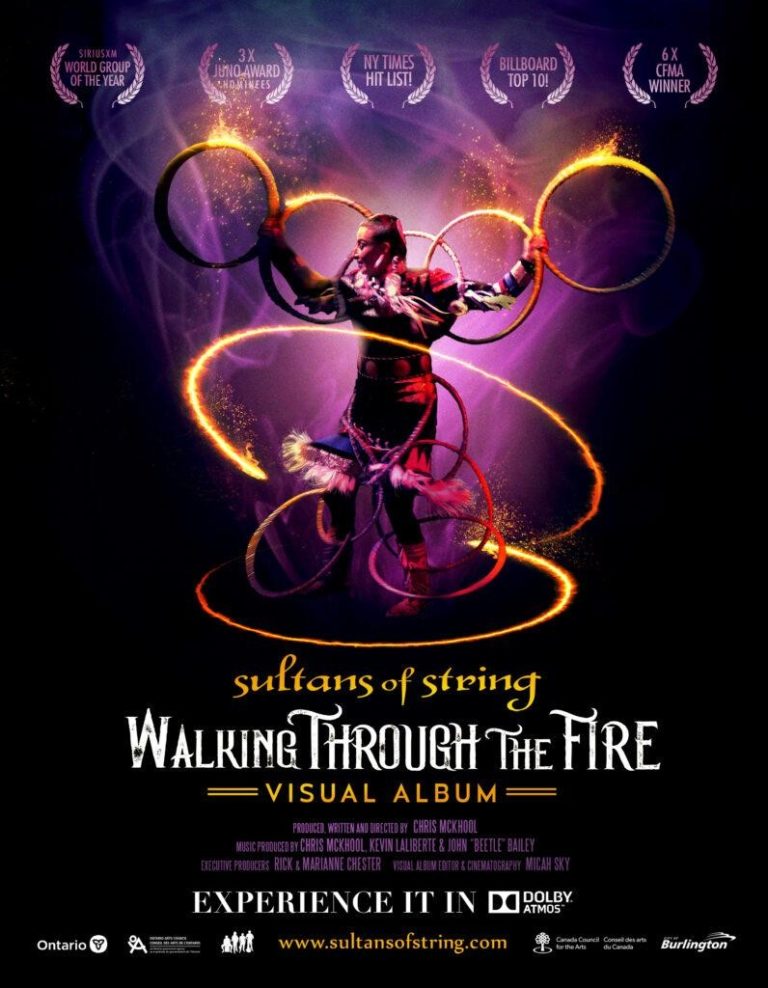
As part of the 20th Anniversary Celebrations, the Canadian Folk Music Awards will present Sultans of String’s film, “WALKING THROUGH THE FIRE”, at the Mayfair Theatre, Sat April 5, 12:30pm (doors at noon). Tickets are available here.

Winning Best Musical Film and Best Soundtrack at the Cannes World Film Festival, this powerful film production is unlike any other, bringing the magic of collaboration to the screen with award-winning First Nations, Métis and Inuit artists from across Turtle Island/Canada in performance with 6x CFMA winners Sultans of String.

This Special Screening is open to the public and also includes a Q&A with Sultans of String bandleader/producer Ottawa-born Chris McKhool along with  artists from the project, including Marc Meriläinen and Shannon Thunderbird.

“We are so excited to be able to present our collaborations that showcase and amplify Indigenous voices, while also engaging our audiences with access to these powerful artists in talkback sessions” says 3x JUNO nominee and Queen’s Diamond Jubilee Medal recipient Chris McKhool.

A central theme running through WALKING THROUGH THE FIRE is the need for the truth of Indigenous experience to be told before reconciliation can begin in earnest. Embedded in the title is the energy of rebirth: fire destroys, but it also nourishes the soil to create new growth, beauty, and resiliency. Walking Through The Fire ensures that we emerge on the other side together, stronger and more unified.

Sultans of String created this project in the spirit of the Truth and Reconciliation Commission’s 94 Calls to Action, and Final Report that asks for Indigenous and non-Indigenous people to work together as an opportunity to show a path forward. Says McKhool (whose grandfather was a stowaway from Lebanon at the turn of the last century), “We know that as a society we can’t move ahead without acknowledging and reflecting on the past. Before reconciliation can occur, the full truth of the Indigenous experience in this country needs to be told, so we’ve been calling on Indigenous artists to share with us their stories, their experience, and their lives, so we settler Canadians can continue our learning about the history of genocide, residential schools, and of inter-generational impacts of colonization.”