Home Blog Page 875

How do Swiss Taxes and Swiss Foundations Work Together to Optimize Wealth?

0

By Mitch Rice

Switzerland is famend for its sturdy economic device and appealing tax advantages. Many people and businesses are on the lookout for methods to decorate their wealth thru Swiss taxes and foundations. In this newsletter, we’ll explore how those  factors come collectively to assist people efficiently manipulate their price range.

Getting to Know Swiss Taxes

Swiss taxes play a crucial position in the united states’s monetary making plans. Switzerland has a completely unique tax machine that offers a ramification of benefits for each residents and worldwide buyers.

How Swiss Taxes Operate

The Swiss tax device is decentralized, which means taxes are levied at three extraordinary tiers

Tax Level Description
Federal Taxes Imposed by the Swiss federal government
Cantonal Taxes Vary according to each canton (state)
Municipal Taxes City-specific taxes that differ by location


Benefits of Swiss Taxes

Switzerland is well-known for its low tax prices and allowances that help both individuals and groups save money. Some key advantages include:

  • No tax on capital profits in maximum instances
  • Certain varieties of wealth are tax-free
  • Double taxation agreements with many countries

Who Pays Swiss Taxes?

Residents: People residing in Switzerland are taxed on their worldwide earnings.

Non-citizens: Only pay taxes on income sourced in Switzerland.

Companies: Businesses running in Switzerland are problem to company tax primarily based on their place and revenue.

What Exactly is a Swiss Foundation?


A Swiss foundation is a legal entity created to manipulate wealth and assets for a specific cause. Many people and agencies use Swiss foundations to protect their property, plan for inheritance, or aid charitable reasons.

Types of Swiss Foundations

Types of Swiss Foundations

Foundation Type Purpose
Charitable Foundation Supports social, educational, or environmental causes
Family Foundation Preserves family wealth and ensures succession
Corporate Foundation Facilitates corporate social responsibility


Why Form a Swiss Foundation?

Swiss foundations offer numerous benefits, along with

Asset protection: Safeguard your wealth against complaints and creditors.

Tax blessings: Minimize tax liabilities thru legal preparations.

Wealth control: Divide assets correctly among heirs or beneficiaries.

Confidentiality: Switzerland has strict privateness legal guidelines, which make it a popular vacation spot for foundations.

How Swiss Foundations and Swiss Taxes Complement Each Other?

Most people make use of Swiss foundations to maximize their wealth whilst playing Swiss tax blessings. Here’s how they complement each other

1. Tax Efficiency

Swiss foundations can help individuals and organizations in lowering their tax liabilities. Certain foundations are eligible for tax exemptions, which lower the whole tax burden.

2. Inheritance Planning

Swiss inheritance taxes may be heavy, but a Swiss foundation allows households to manipulate their fortunes without being difficulty to excessive taxation.

3. Growth of Business

Businesses hire Swiss foundations to design income that lessen taxation while enabling lengthy-term business increase.

4. Charitable Advantages

Soliciting donations in the form of money through a Swiss basis can also bring about tax deductions, and charitable giving is consequently high quality for each the donor and society.

FAQs About Swiss Taxes and Swiss Foundations

1. Are non-residents eligible to advantage from Swiss taxes?

Yes, non-residents are eligible to benefit from Swiss tax agreements and offshore tax planning in the event that they hold financial interests in Switzerland.

2. Are Swiss foundations taxable for tax planning?

Yes, Swiss foundations are identified by means of regulation and extensively hired for tax-advantaged wealth management.

3. Do Swiss foundations pay tax?

Some Swiss foundations are entitled to tax exemption, even as others pay negligible taxes based totally on cause and shape.

4. How do I begin a Swiss foundation?

To begin a Swiss basis, you want to draft a criminal file, define the cause, and sign in it with Swiss authorities.

5. Can a Swiss foundation own a business?

Yes, a Swiss foundation can own a commercial enterprise and manipulate its operations whilst making the most of tax making plans techniques.

Conclusion

Swiss foundations and Swiss taxes supplement every different to provide powerful wealth control tools. As an person who desires to comfortable your property or a organization that desires to maximize taxes, knowing how these  factors complement every other can help you in making higher economic selections.
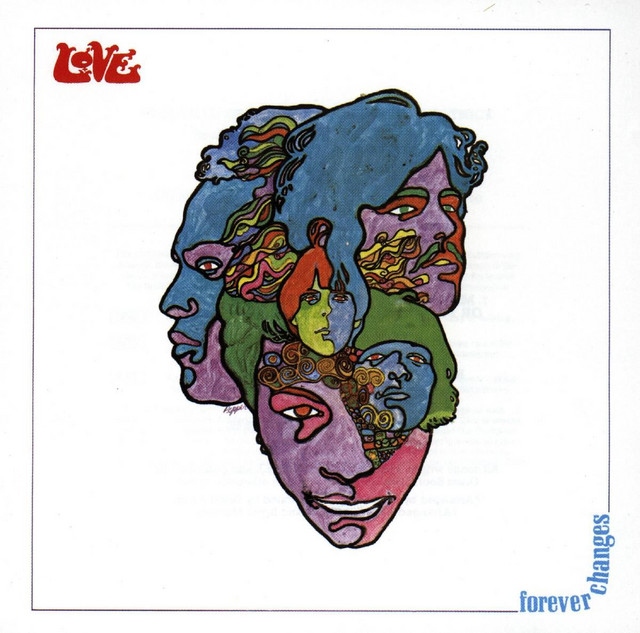
5 Surprising Facts You Didn’t Know About Love’s ‘Forever Changes’

Forever Changes, the 1967 masterpiece from Los Angeles band Love, barely made a dent on the charts when it was first released, but decades later, it’s widely considered one of the greatest albums ever recorded. A swirling mix of folk, baroque pop, and psychedelia, Forever Changes is both hauntingly beautiful and deeply unsettling, capturing the disillusionment of the late ‘60s in ways few other records could. But for all its legendary status, there are still stories hidden within its grooves.

1. The Wrecking Crew Nearly Replaced the Whole Band

Arthur Lee had a vision for Forever Changes, but his band wasn’t delivering. Frustrated with their lack of preparation, producer Bruce Botnick pulled in members of The Wrecking Crew—legendary session musicians who played on everything from The Beach Boys to Frank Sinatra—to record “Andmoreagain” and “The Daily Planet.” When the actual members of Love heard the finished tracks, they snapped into shape, realizing they might be left out of their own album. From that point on, the band tightened up and recorded the rest of the album themselves, but those two songs remain a testament to The Wrecking Crew’s quiet influence.

2. Neil Young Was Supposed to Co-Produce the Album

Arthur Lee wanted Forever Changes to be something completely unique, and he originally enlisted Neil Young to help make that happen. Fresh off Buffalo Springfield Again, Young was tapped to co-produce the album, but before sessions even began, he backed out to focus on his solo career. While Young later denied having any real involvement, some reports claim he arranged the track “The Daily Planet.” Either way, one can only imagine how Forever Changes might have sounded with Young behind the boards.

3. The Album Title Came from a Breakup

The phrase Forever Changes sounds poetic, philosophical, and grand—but its origin is surprisingly mundane. Arthur Lee had a friend who had just broken up with his girlfriend. When she protested, saying, “You said you’d love me forever!” the friend simply shrugged and replied, “Well, forever changes.” Lee was struck by the offhand profundity of that line and decided it would be the perfect title for his band’s magnum opus. It’s a reminder that even the most poetic truths sometimes come from everyday moments.

4. “Alone Again Or” Almost Didn’t Feature Bryan MacLean’s Vocals

Bryan MacLean, Love’s second songwriter, wrote Forever Changes’ opening track, “Alone Again Or,” and originally sang lead. But Arthur Lee, always the dominant force in the band, thought MacLean’s vocals were too weak. Lee remixed the track to bring his own unison vocals to the forefront, burying MacLean’s performance in the background. It was a move that fueled tensions between the two songwriters, and within a year, MacLean was out of the band. Despite the behind-the-scenes friction, the song became Love’s most enduring hit, covered by everyone from The Damned to Calexico.

5. The “Red Telephone” Wasn’t Really Red—Or a Telephone

“The Red Telephone” is one of the most haunting tracks on Forever Changes, full of eerie lyrics and ominous instrumentation. According to legend, Love’s communal house in Los Angeles had a mysterious red telephone that inspired the song. In reality, there was no red phone, and the lyrics had little to do with the supposed object. Instead, the song is a dark meditation on paranoia, mortality, and social unrest, ending with Lee’s chilling spoken outro: “All of God’s children gotta have their freedom.” It was Forever Changes in a nutshell—beautiful, mysterious, and a little bit terrifying.

For an album that was largely ignored upon release, Forever Changes has had an incredible afterlife. It has influenced everyone from The Stone Roses to Radiohead, and it continues to mystify and captivate listeners more than 50 years later. Whether it was the orchestral arrangements, the surreal lyrics, or the studio drama behind the scenes, Forever Changes remains one of rock’s greatest puzzles—one that, no matter how many times you listen, forever changes with each spin.

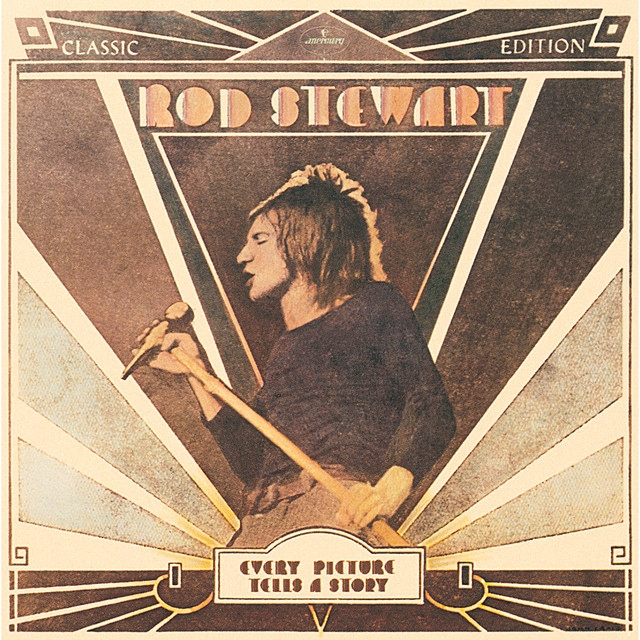
5 Surprising Facts About Rod Stewart’s ‘Every Picture Tells a Story’

Released in 1971, Rod Stewart’s Every Picture Tells a Story was a melting pot of folk, rock, blues, and even a little country swagger, and shot straight to number one in both the U.S. and the U.K., riding the wave of the now-iconic “Maggie May.” But beneath the radio hits and raspy vocals, there are secrets woven into its grooves. Here are five facts you probably didn’t know about Every Picture Tells a Story—until now.

1. The Drums Were Recorded With… No Cymbals?!

Drummer Micky Waller had a reputation for being a free spirit in the studio, and that led to one of the album’s quirkiest behind-the-scenes moments. When recording “Maggie May,” Waller showed up expecting a drum kit to be provided, as was often the case. However, the kit was missing one key ingredient—cymbals! Rather than delay the session, the band forged ahead, and the cymbals were overdubbed days later. The result? A surprisingly raw, stripped-down drum sound that gave the song its signature feel.

2. Rod Stewart Almost Didn’t Sing “Maggie May”

It’s hard to imagine Every Picture Tells a Story without “Maggie May”—but believe it or not, Stewart wasn’t convinced it should even be on the album. He considered it an odd little song, more of a throwaway B-side than a chart-topping single. In fact, it was originally released as the flip side to “Reason to Believe,” and radio DJs had to push for it to get airplay. Once they did, it took off like wildfire, becoming Stewart’s defining anthem and one of the greatest songs of the 1970s. And there’s no chorus.

3. Who Was That Mandolin Guy?

One of the most unforgettable parts of “Maggie May” and “Mandolin Wind” is the bright, lyrical mandolin playing that gives the songs their folk-infused charm. So, who was that guy? It was Ray Jackson of the British folk-rock band Lindisfarne. His delicate yet expressive playing perfectly complemented Stewart’s raspy vocals, adding a distinctive texture to the album. Though not a household name, Jackson’s contribution to Every Picture Tells a Story remains one of its most defining musical moments.

4. The Faces Are All Over the Album, But Their Names Are Not

Rod Stewart was still the lead singer of The Faces when he recorded Every Picture Tells a Story, and every member of the band contributed to the album. However, due to contractual issues, their names were conspicuously absent from the credits. Ronnie Wood played bass and guitar, Ian McLagan laid down the Hammond organ, and the entire band recorded the blistering cover of “(I Know) I’m Losing You.” But if you didn’t already know that, the album sleeve wouldn’t tell you—one of the many blurred lines between Stewart’s solo work and The Faces’ legacy.

5. The Title Track Was Almost a Disaster

The song “Every Picture Tells a Story” is a full-throttle rock-and-roll journey that barrels through verses with reckless abandon. But behind the scenes, it was chaos. The rhythm was loose—so loose, in fact, that even Stewart later admitted it was a bit of a mess. Critic Tim Ewbank described it as “shoddily thrown together,” while Rolling Stone’s John Mendelsohn praised its energy but called out its unpolished feel. Despite its rough edges, or maybe because of them, the track became a cornerstone of the album, proving that rock music doesn’t always have to be perfect—it just has to be alive.

The Story Still Resonates

More than 50 years later, Every Picture Tells a Story is still as vibrant and rebellious as it was in 1971. It’s the album that made Rod Stewart a superstar, cementing his place in rock history with a mix of barroom swagger and heartfelt storytelling. From cymbal-free drumming to forgotten session musicians, the album’s behind-the-scenes tales only add to its legend. And if you didn’t know these facts before, well—every picture tells a story, don’t it?

The Untold Story of Jimmie Strother: Music, Murder, and Memory in a New Biography by Gregg D. Kimball

1

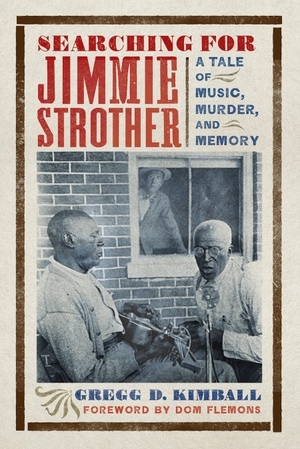
Searching for Jimmie Strother, A Tale of Music, Murder, and Memory by Gregg D. Kimball is the incredible true story of a blind musician, a brutal crime, and the making of an American folk legend.

In June 1936 James Lee Strother performed thirteen songs at the Virginia State Prison Farm for famed folklorist John Lomax and the Library of Congress. Rooted in the rich soil of the Piedmont region, Strother’s repertoire epitomized the Black songsters who defy easy classification. Blinded in a steel mill explosion, which only intensified his drive to connect to the world through song, Strother drew on old spirituals and country breakdowns as readily as he explored emerging genres like blues and ragtime. Biographer Gregg Kimball revives this elusive but singular talent and the creative and historical worlds in which his dramatic life unfolded.

Myths surround Strother but, as Kimball reveals, the facts of Strother’s life are just as compelling as the fanciful embellishments proffered by early folklorists. Musician, murderer, and beloved family member—Strother somehow played each of these roles, and more. And while the songster’s comedic ditties, spirituals, and blues tunes reached a wide range of listeners (and were later covered by musicians like Pete Seeger and Jefferson Airplane), they carried a dark undercurrent that spoke directly to the experiences of Black Americans: sundown towns, Jim Crow segregation, and labor exploitation. As Kimball shows, Strother’s powerful songs and remarkable, tumultuous life continue to influence and remain deeply relevant to American culture to this day.

Charlie Peacock’s Roots and Rhythm Blends Music, Faith, and Backstage Stories in a Powerful New Memoir

0

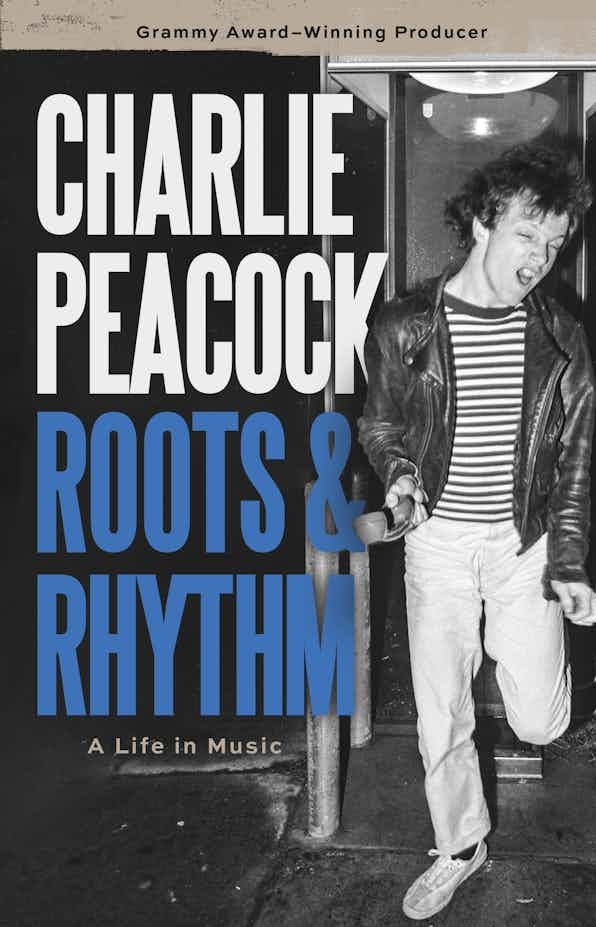
In this artful memoir, Roots and Rhythm – A Life in Music, Grammy Award–winning music producer Charlie Peacock flexes his literary chops and gives readers the gritty backstage stories they crave: biographical anecdotes, geeky trivia, and how the hits were written and recorded (from jazz to rock and pop). Threaded throughout is Peacock’s unique ancestral and spiritual story—the roots. Like Coltrane, Dylan, and Bono before him, Peacock reveals a Christ-affection while refusing genres too small for his music.

Peacock, the great-grandson of a Louisiana fiddler, is an American musical polymath. He’s been the young jazz musician sitting at the feet of trumpeter Eddie Henderson and pianist Herbie Hancock; the singer-songwriter plucked from the Northern California punk/pop underground by legendary impresarios Bill Graham and Chris Blackwell; a pioneering, innovative contributor to the nascent rise of gospel rock in the 1980s; and the genre-busting producer behind such diverse artists as Al Green, Ladysmith Black Mambazo, Chris Cornell, Audio Adrenaline, The Civil Wars, Switchfoot, Turtle Island Quartet, and John Patitucci.

Roots and Rhythm includes Peacock’s seminal NorCal days, the story of indie labels Exit and re:think, his first decade as a Nashville producer (1989–1999), and his essential role in the 21st-century folk/Americana boom (The Civil Wars, Holly Williams, The Lone Bellow). While his exploits and achievements grace the book (including the story of Amy Grant’s “Every Heartbeat” and the evergreen “In the Light”), Peacock is hardly the only character. Instead, he writes as a Joan Didion-style essayist, weaving together a quintessential American story. Beat poet Gary Snyder, evangelist Billy Graham, producer T Bone Burnett, saxophonist Wayne Shorter, and writers Wendell Berry and Isabel Wilkerson all appear in this sweeping tale where ancestry, migration, teenage love, Jesus, and Miles Davis collide.

The book is an invitation to all, including aspiring musicians: embrace the roots and rhythm of our own lives, letting the music and God’s insistent love lead us to gratitude and wonder.

5 Ways to Use Metal Buildings

0

By Mitch Rice

Metal buildings offer a versatile and durable solution for a wide range of applications. Whether used for storage, work, or leisure, these structures provide cost-effective and eco-friendly alternatives to traditional wood or brick buildings. Their adaptability makes them an excellent investment for homeowners, businesses, and agricultural operations. Here are five practical ways to use metal buildings.

1. Storage for Farm Equipment and Vehicles

For farmers and landowners, metal buildings serve as excellent storage solutions for tractors, plows, harvesters, and other farm equipment. Unlike wooden barns, metal buildings are resistant to pests, rot, and weather damage, providing a long-term, low-maintenance option. Similarly, they work well for storing boats, RVs, motorcycles, and classic cars, protecting them from the elements and extending their lifespan.

2. Garages and Workshops

Metal buildings are a great option for creating a garage or workshop space. Their open layouts and high ceilings accommodate vehicles, tools, and heavy machinery. Homeowners can use them for auto repair, woodworking, metalworking, or general DIY projects. These structures allow for easy customization, including the addition of insulation, ventilation, and storage racks to optimize workspace functionality.

3. Home Offices or Business Spaces

With the rise of remote work and small businesses, many people are turning to metal buildings as office spaces. Whether it’s a quiet home office, a retail store, or a service-based business like a small auto repair shop, metal buildings offer a cost-effective alternative to traditional commercial buildings. They provide the flexibility to design an open workspace, add partitions for separate offices, or install insulation and HVAC systems for year-round comfort.

4. Man Caves, She Sheds, and Recreational Spaces

For those looking to create a dedicated personal space, metal buildings make the perfect man cave, she shed, or recreational area. These structures can be customized with entertainment systems, seating, mini-bars, or game tables, transforming them into the ultimate getaway. They also work well as home gyms, art studios, or music practice spaces, providing a private retreat for hobbies and relaxation.

5. Guest Houses or Rental Units

With proper insulation, plumbing, and interior finishing, metal buildings can be converted into guest houses or short-term rental units. This is an ideal option for homeowners who want to provide private accommodations for family and friends or generate extra income through vacation rentals. Their durability and energy efficiency make them a smart choice for long-term use, offering a comfortable and sustainable living space.

Conclusion

Metal buildings in Auburn are more than just storage units—they offer practical and customizable solutions for a variety of needs. From agricultural storage to personal retreats and business spaces, their versatility and durability make them a valuable investment. Whether you’re looking to expand your workspace, create a private sanctuary, or generate rental income, a metal building provides a sustainable and cost-effective solution.

Data and information are provided for informational purposes only, and are not intended for investment or other purposes.

Margaret Cho Debut’s Official Music Video for “Lucky Gift”

0

Margaret Cho debuts the official music video for her “Lucky Gift” single today. The video was directed by photographer/director Nick Spanos.

“I loved making this video with director Nick Spanos! He’s the best! I think it just captures that VH-1 90s pop diva energy perfectly. Thank you Garrison Starr and my dog Lucia for being incredible co-stars! I hope you love this video as much as I do!” says Margaret.

On “Lucky Gift,” (which was written by Margaret and produced by Garrison Starr) Margaret sings in a sultry-pop tone while playing her double neck mandolin-guitar, “The Mandotar.” “This is my power pop anthem and the first song I wrote on my mandotar. It is definitely giving gay pop in the best way and it’s my favorite song I’ve ever written.” states Margaret.

It’s been 8 years since Margaret released her 2016 Grammy nominated American Myth album HERE which featured the standout track “Anna Nicole” here written about her friendship with Anna Nicole-Smith.

Margaret says of the forthcoming Lucky Gift album – “I am thrilled to share this album which has been many years in the making. There’s tributes to Robin Williams, lost love, found love and anthems to non- binary and gender non-conforming folx. I collaborated with Garrison Starr and Roger Rocha in different cities at different times but it all feels like it comes from the same place and the same heart.”

Lucky Gift Album Track Listing:
Lucky Gift
Funny Man
Wheels Of Gold
Doot Doot
Stevie
90s Sisyphus
You Can Be You
Baked Bread
Melinda
Waterside
Boyfriend From China

CLUE Brings Murder, Mystery, and Laughter to Toronto’s Royal Alexandra Theatre This Spring

0

CLUE, the hilarious murder mystery comedy inspired by the Hasbro board game and adapted from the fan-favorite film, is coming to Toronto’s historic Royal Alexandra Theatre from May 20 to June 8, 2025.

Tickets will be available at 10AM on Friday February 21 at mirvish.com or by calling 1.800.461.3333.

Led by Broadway Director Casey Hushion (Associate Director of Mean Girls and The Prom, Associate Resident Director of Aladdin, choreography for the Netflix seriesUnbreakable Kimmy Schmidt”), murder and blackmail are on the menu when six mysterious guests assemble at Boddy Manor for a night they’ll never forget! Was it Mrs. Peacock in the study with the knife? Or was it Colonel Mustard in the library with the wrench? Based on the fan-favorite 1985 Paramount Pictures movie and inspired by the classic Hasbro board game, CLUE is the ultimate whodunit that will leave you dying of laughter and keep you guessing until the final twist.

CLUE is based on the screenplay by Jonathan Lynn. Written by Sandy Rustin with additional material by Hunter Foster and Eric Price. It features original music by Michael Holland.

The production also features scenic design by Lee Savage, costume design by Jen Caprio, lighting design by Ryan O’Gara and sound design by Jeff Human.

The cast includes Jennifer Allen as Mrs. Peacock, Christina Anthony as Miss Scarlet, Mariah Burks as the Cook, Donna English as Mrs. White, David Hess as Colonel Mustard, Jamil A.C. Mangan as The Cop, John Shartzer as Mr. Green, Jeff Skowron as Wadsworth, Alex Syiek as Mr. Boddy, Elisabeth Yancey as Yvette, Evan Zes as Professor Plum. The understudies are Greg Balla, Aaron Kaburick, Mary McNulty, and Cassandra Marie Murphy.

The CLUE franchise began in 1949 with the manufacture of the ‘Cluedo’ board game. Currently owned and published by Hasbro, the game has since sold more than 200 million copies worldwide.  A murder-mystery comedy film by Paramount Pictures based on the board game was released in 1985 and went on to achieve cult classic status with a passionate fanbase.

The North American tour of CLUE is produced by The Araca Group, Work Light Productions, Lively McCabe Entertainment and Aged in Wood.

Originally produced at Bucks County Playhouse, New Hope, Pennsylvania, Alexander Fraser, Robyn Goodman, Josh Fiedler, Producers. Developed by Cleveland Playhouse, Laura Kepley, Artistic Director & Kevin Moore, Managing Director.

Olive Klug Joins Signature Sounds and Announces Sophomore Album ‘Lost Dog,’ Out This April

0

Signature Sounds is thrilled to announce the signing of acclaimed singer-songwriter and multi-instrumentalist, Olive Klug. Label president Jim Olsen says, “When a friend sent me the rough mixes for Lost Dog, I was immediately captivated by the catchy songwriting and raw, honest lyrics. Olive’s music evokes the spirit of some of my favorite rebellious songwriters like Michelle Shocked, Alynda Segarra (of Hurray For The Riff Raff), and Adrienne Lenker, pushing the boundaries of roots music with unapologetic authenticity and attitude.”

It’s been a short time since the van-dwelling Olive Klug has fully pursued the life of a touring musician. Their DIY career has resulted in a huge following with over 20 million Spotify streams, nearly 200,000 TikTok followers, and 100,000+ Instagram followers. Self-described as “someone who floats on the breeze, letting the wind take me wherever I’m meant to be,” Klug’s sophomore album and label debut Lost Dog finds them contemplating this propensity for adventure no matter which avenue of love and loss it leads down.

Fans can hear the album’s first singles “Taking Punches From The Breeze” and “What To Make of Me today and be sure to pre-order or pre-save Lost Dog ahead of its April release right here. Olive Klug hits the road again on April 9 in Salt Lake City, UT. A full list of tour dates can be found below.

“Taking Punches From The Breeze” is a fitting opening track to an album about “aging as a neurodivergent free spirit.” Klug reflects, ”As a young touring musician with a propensity for adventure, this instinct towards leaning into the breeze has gotten me into some tough situations, tired me out, and made me generally confused about my life’s direction.”

Gentle at the start, “Taking Punches From the Breeze” gets its title from Klug’s self-described nature of “letting the wind take them wherever they’re meant to be.” As more instrumentation fills in alongside fingerpicked guitar and Klug’s soft croon, a shuffling drum beat arrives under lyrical imagery of life’s new direction and the ups and downs of being beholden to the breeze.

Klug continues, “I was ready to let the breeze take me wherever it wanted me to go, but soon I realized that the breeze has got some hands and has the capacity to toughen and beat you up.”

“What to Make of Me” is an upbeat, zydeco-inspired romp about falling for someone who isn’t quite ready for all you have to offer. Klug writes, “This is the happiest song you’ll ever hear about unrequited love. More specifically, this song arose out of a short-term romance I had with someone who wasn’t ready to claim their queerness. With lines like “you’re too blind to see the goddamn miracle I made of me”, I am claiming my self-assuredness and do not let a lack of understanding from the object of my affection impact the confidence I’ve worked so hard to build.”

Although still very young, on Lost Dog Klug artfully addresses life on the road with an unarguable ability to fearlessly voice deeply honest emotions through captivating storytelling. Audiotree praised, ”equal parts vulnerable and powerful, ebullient and heartbreaking, reminding us how powerful the journey of music can be.” Olive Klug is a singular voice for the future of folk: honest, fearless, often unsure, but willing to try anyway.

Olive Klug refuses to be put in a box. Working out who you are in front of an ever-growing audience is no small task, but one that the Portland-born, Nashville-based singer/songwriter is up for and thriving.

Olive graduated with a liberal arts degree shortly before the 2020 pandemic derailed their plans of pursuing a career in social work. Though they’d recorded and self-released the 2019 EP “Fire Alarm” from a childhood friend’s bedroom, up until early 2021, Olive categorized their music as either a hobby or a pipe dream, depending on who was asking. However, after being laid off from a teaching job in late 2020, Olive started working as a barista and decided to commit all of their extra energy to an ever-growing community of fans online.

Combining their knack for storytelling with a lilting soprano voice, Klug offers observations with an unflinching honesty. 2025 finds Olive in Nashville, attempting to stabilize after a 3-year whirlwind of viral niche internet-fame, non stop touring, and music industry naïveté. Olive’s social work background grounds them in community, a word they keep coming back to when ego proves unfulfilling. Olive is excited to solidify themselves as a fixture of the greater folk community and return to what inspires them the most about music; the catharsis and social change that is possible when people come together and share themselves through song.

Lost Dog tracklisting:

  1. Taking Punches From The Breeze
  2. What To Make Of Me
  3. Cold War
  4. Train of Thought
  5. Opposite Action
  6. Lost Dog
  7. One Dimension
  8. Fleeting

Olive Klug on Tour:

WED 9 APR – Salt Lake City, UT @ Kilby Court
FRI 11 APR – Colorado Springs, CO @ Vultures
SAT 12 APR – Denver, CO @ Globe Hall
SUN 13 APR – Boulder, CO @ Etown Hall
WED 16 APR – Davenport, IA @ The Racoon Motel
THU 17 APR – Des Moines, IA @ xBK
FRI 18 APR – Minneapolis, MN @ Icehouse
SAT 19 APR – Milwaukee, WI @ Cactus Club
TUE 22 APR – Evanston, IL @ SPACE
WED 23 APR – Ann Arbor, MI @ Blind Pig
THU 24 APR – Lakewood, OH @ Mahall’s
FRI 25 APR – Buffalo, NY @ The 9th Ward at Babeville
SAT 26 APR – Toronto, ON, Canada @ The Drake Underground
MON 28 APR – Washington, DC @ The Atlantis
WED 30 APR – Millvale, PA @ The Funhouse at Mr. Smalls
THU 01 MAY – Philadelphia, PA @ The Lounge at World Cafe Live
FRI 02 MAY – Cambridge, MA @ Club Passim
SAT 03 MAY – Providence, RI @ AS220
SUN 04 MAY  – Brooklyn, NY @ Baby’s All Right
WED 07 MAY – Portsmouth, NH @ 3S Artspace
FRI 09 MAY – Portland, ME @ One Longfellow Square
SAT 10 MAY – Burlington, VT @ Higher Ground Showcase Lounge
THU 19 JUN – Telluride, CO @ Telluride Bluegrass Festival
SAT 21 JUN – Greenfield, MA @ Green River Festival
SAT 5- SUN 6 JUL – Orillia, ON, Canada @ Mariposa Folk Festival


Tori Amos Unveils ‘Tori and the Muses ‘— A Magical Book Into the World of Inspiration

0

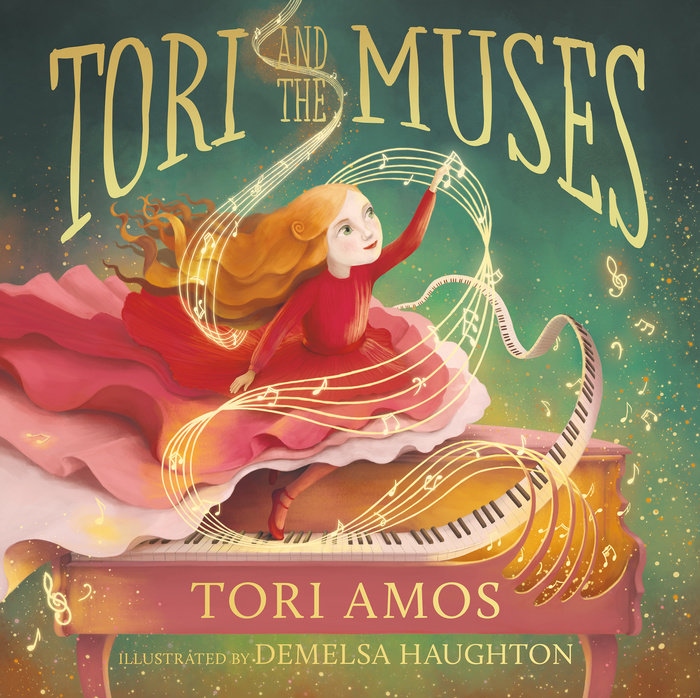
From the Grammy-nominated and multiplatinum singer-songwriter and New York Times bestselling author Tori Amos comes Tori and the Muses, a thoughtful and sprightly tale of young Tori navigating the magical world of inspiration in all its forms.

Tori is no ordinary child—her musical inspirations and talents are clear from a young age. But when her dad forces her to rehearse for her recital, Tori is unhappy. She wants to play what she wants to play! And though they don’t see eye to eye, Tori has a secret: eleven Muses who have visited her since she was a baby and inspire her to write and make her own beautiful music. These fairy godmother–like Muses remind Tori that inspiration is everywhere, and perhaps in helping others find their own Muses—including Dad—she may better understand her own inspirations.

So, Tori takes her brand-new floating pink piano—a gift from the Muses—to see what might inspire others, in hopes of understanding what her dad’s Muses might be. And she is surprised at what she finds.

Filled with joy, curiosity, and imagination, this debut picture book written by Tori Amos with otherworldly illustrations by Demelsa Haughton will inspire, encourage, and most importantly, remind young readers to find inspiration in the things they love, and to listen to their own Muses.