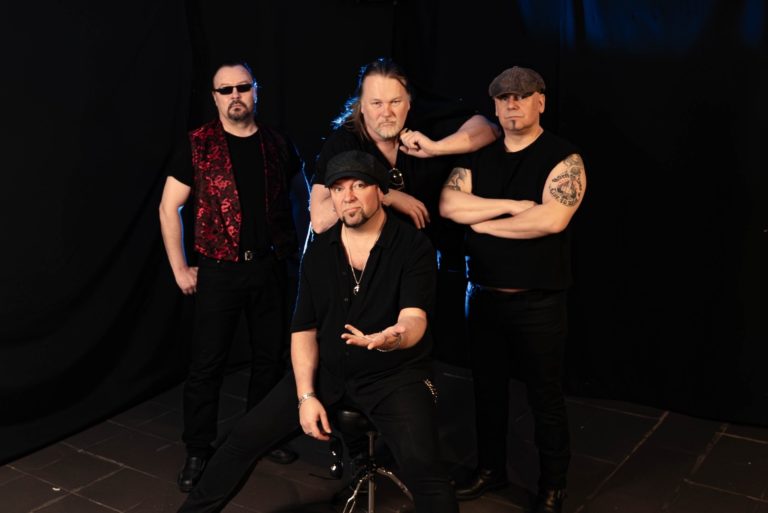
David Byrne brought the full ensemble from his “Who Is The Sky?” tour to The Late Show with Stephen Colbert for a special live performance of “When We Are Singing,” and it is exactly the kind of television moment that reminds you why Byrne remains one of the most vital live performers working today.
Kool & The Gang and Default With Wide Mouth Mason Are Headed to OLG Stage at Fallsview Casino This Summer
Two major shows just landed at OLG Stage at Fallsview Casino. Funk and soul legends Kool & The Gang take the stage on August 28, followed by Juno Award-winning rock outfit Default with special guests Wide Mouth Mason on September 3. Tickets go on sale Friday, April 3 at 10:00am through Ticketmaster.ca.
Kool & The Gang need no introduction. With more than 5 decades in the game, the group behind “Celebration,” “Ladies Night,” and “Get Down on It” has sold millions of records worldwide and performed continuously longer than any R&B group in history. Their funk-driven catalogue has also made them the most sampled R&B band of all time. This is a live show built entirely on feel-good energy, and it delivers every single time.
Default brings the rock. The Vancouver outfit, best known for “Wasting My Time,” “Deny,” and “It Only Hurts,” is one of the most recognizable names in early 2000s Canadian rock. Lead vocalist Dallas Smith has since built a record-setting country career, but Default is back and ready to remind Niagara Falls exactly what a hard-rocking Canadian band sounds like live. Wide Mouth Mason joins as special guests, bringing their blues-rooted, fluid musicianship to round out what is shaping up to be a genuinely strong night.
Cathy Price, Vice President of Marketing & Resort Operations at Niagara Casinos, puts it simply: “Between the soulful rhythms of Kool & The Gang to the incredible Canadian talent of Default and Wide Mouth Mason, the entertainment options are better than ever.” Both shows go at 8:00pm at the 5,000-seat OLG Stage at Fallsview Casino, ranked the number one venue in Canada by size.
Show Dates:
Friday, August 28, 2026 — Kool & The Gang, OLG Stage at Fallsview Casino, 8:00pm
Thursday, September 3, 2026 — Default with special guest Wide Mouth Mason, OLG Stage at Fallsview Casino, 8:00pm
BritBox Gives Jane Austen’s Most Overlooked Bennet Sister Her Own 10-Episode Series Starting May 6
Mary Bennet finally gets her moment. BritBox drops the official trailer and key art today for The Other Bennet Sister, a 10-episode series premiering May 6 in the U.S. and Canada. Based on Janice Hadlow’s acclaimed novel, the show pulls Pride and Prejudice’s oft-ignored middle sister out of the background and puts her front and center, in her own story, on her own terms.
Ella Bruccoleri leads the cast as Mary, alongside a lineup that includes Richard E. Grant, Ruth Jones, Indira Varma, Tanya Reynolds, Dónal Finn, and Laurie Davidson. The series is produced by Bad Wolf, the Cardiff-based company behind His Dark Materials and Industry, in co-production with BBC iPlayer and BBC One. Nine of the ten half-hour episodes were written by Sarah Quintrell, with Maddie Dai contributing one. Jennifer Sheridan and Asim Abbasi share directing duties.
The story picks up at Longbourn, where the Bennet household hums with the pressures of Regency England and five unmarried daughters navigating a world where marriage is both aspiration and necessity. While Jane, Elizabeth, Kitty, and Lydia pursue their familiar paths, Mary leaves for London to live with her aunt and uncle on Gracechurch Street, stepping into a journey of self-discovery that Pride and Prejudice never gave her. Iconic settings from the original story make appearances, including the Meryton Assembly Ball and the Netherfield Ball.
The series debuts May 6 with 3 episodes, followed by a weekly rollout for the remaining 7. It lands as part of BritBox’s “Austen Forever” programming slate, a six-month celebration of Jane Austen’s 250th birthday covering adaptations and documentaries across all six of her completed novels. Sony Pictures Television handles international distribution.
Doug Irwin, Luthier Who Built Jerry Garcia’s Most Iconic Guitars, Dead at 76
Doug Irwin, the Northern California luthier whose handcrafted guitars became inseparable from the sound and identity of Jerry Garcia and the Grateful Dead, died on March 27, 2026. He was 76. No cause of death has been announced.
Irwin was born October 29, 1949, and spent his life doing what very few craftspeople ever get to do: building tools that became genuinely historic. Over the course of his career he designed and built five custom guitars for Garcia — Eagle, Wolf, Wolf Jr., Tiger, and Rosebud — instruments so closely associated with their player that it’s nearly impossible to think of one without the other. Tiger, which Garcia played as his primary instrument from 1979 to 1989, sold at Christie’s in New York just weeks before Irwin’s death for $11.56 million, a staggering figure that speaks to the cultural weight these objects carry. Garcia had commissioned it in 1973; Irwin spent roughly 2,000 hours over six years completing it.
That kind of devotion to craft is worth sitting with for a moment. Two thousand hours. Six years. For one guitar.
His work for Garcia began in the early 1970s after Garcia purchased one of his instruments and simply asked him to build another. What followed was one of the most consequential partnerships in rock history — not celebrated in the way that Garcia himself was, but foundational to everything that came out of those marathon Grateful Dead performances that defined an era. The guitars were visually unmistakable: ornate woodwork, brass hardware, custom electronics. They weren’t just tools. They were statements.
Beyond Garcia, Irwin also built instruments for Grateful Dead bassist Phil Lesh and bassist-keyboardist Pete Sears, as well as a small number of other custom pieces over the years. Much of that broader history, along with photographs and documentation, was lost in a fire at The Art Farm — a reminder of how fragile legacy can be, and how much depends on the people who think to preserve it.
After Garcia’s death in 1995, his will directed that the Irwin-built guitars be returned to their maker. What followed was a legal dispute with the remaining members of the Grateful Dead, eventually settled with Irwin receiving Wolf and Tiger, while Rosebud and Wolf Jr. went to GD Productions. Irwin auctioned both guitars — Wolf fetching $789,500 and Tiger $957,500, believed at the time to be the highest price ever paid for a guitar at auction. Tiger, of course, has now shattered even that record.
Garcia’s equipment manager Steve Parish perhaps said it best years ago: “We slept with these instruments. You could lose amps. You could break things, and sometimes we did. But I could never look Jerry in the eye and say, ‘I don’t have your guitar.'”
That’s what Doug Irwin built. Things you couldn’t afford to lose.
His legacy, as Irwin Guitars wrote upon announcing his death, “will live on through the instruments he created and the music they helped bring to life.”
He is survived by his work — which, in his case, is no small thing.
15 Musicians With Magnetic Stage Energy
There is a quality to make a concert a SHOW that cannot be taught, rehearsed into existence, or faked for long, and the performers on this list have it in abundance. Call it presence. Call it electricity. Call it whatever you want. You know it the second the lights go down.
James Brown
The original blueprint. Every grunt, spin, cape drop, and perfectly timed collapse was a masterclass in controlling a room, and he did it for five decades without ever phoning it in. Every performer who has ever worked up a sweat on a stage owes James Brown a debt they can never fully repay.
Tina Turner
Raw power delivered through a five-foot frame that moved like it was plugged directly into the mains. Tina Turner did not perform songs so much as survive them in public, and watching her do it was one of the most electrifying experiences live music has ever offered.
Freddie Mercury
The Live Aid set in 1985 is still the standard by which every other live performance is measured. Freddie could conduct 100,000 people with a single hand gesture, and he did it without a setlist, without a plan, and without ever breaking a sweat that the audience could see.
Mick Jagger
Strutting, prowling, pouting, and somehow still doing it all at 80. Jagger turned the front of a stage into his personal territory the moment he walked out, and no matter the size of the venue, every person in it believed the show was happening specifically for them.
David Bowie
Bowie did not just perform, he inhabited characters that felt more real than most people’s actual personalities. Every tour was a new world, a new costume, a new version of himself, and the audiences who showed up never quite knew which Bowie they were getting, which was entirely the point.
Michael Jackson
The moonwalk was just the beginning. Michael Jackson turned live performance into a discipline with standards so high that entire production teams existed solely to keep up with what his body was already doing. His arrival on any stage caused a specific kind of hysteria that has not been replicated since.
Trent Reznor
Nine Inch Nails live is not a concert, it is a controlled confrontation. Reznor channels something genuinely unsettling from somewhere deep, and the result is a show that feels less like entertainment and more like a reckoning, leaving audiences shaken in the best possible way.
Beyoncé
Flawless choreography, four-octave vocals, and a command of spectacle that makes stadium-scale performance feel intimate. Beyoncé does not leave anything in the dressing room, and her work ethic on stage is so evident and so relentless that watching her is almost intimidating.
Prince
He could play every instrument on stage better than the person hired to play it, seduce an entire arena without saying a word, and close a Super Bowl halftime show in the pouring rain as though the weather had been arranged specifically for his benefit. Prince was simply on a different plane.
Bruce Springsteen
Three hours minimum, no intermission, no excuses. Springsteen treats every show like it might be the last one, and the audiences who have been coming back for forty years still leave feeling like they got more than they paid for. The E Street Band behind him doesn’t hurt either.
Patti Smith
Pure, unfiltered conviction. Smith brings a poet’s intensity and a punk’s disregard for anything that isn’t the absolute truth of the moment, and the result is a live experience that feels less like a show and more like a transmission from somewhere urgent and necessary.
Elvis Presley
Before anyone else figured out what stage presence even was, Elvis had already invented it. The hips, the sneer, the stillness before the explosion, he rewired the nervous systems of everyone who saw him live, and the music industry has been chasing that first jolt ever since.
Kendrick Lamar
Every Kendrick live performance is a thesis statement. He brings the density of his lyrics to the stage with a physicality and intentionality that turns concerts into events, and his Super Bowl Halftime Show confirmed what his fans already knew: there is no bigger performer working right now.
Janis Joplin
She sang like it cost her something real every single time. Joplin’s stage presence was raw, ragged, and completely unguarded, a woman pouring everything she had into every note and daring the room to keep up. There has been nobody quite like her before or since.
Harry Styles
The modern template for what magnetic live energy looks like in an arena context. Styles has turned his tours into inclusive, joyful, genuinely unpredictable events where anything might happen and the audience is always in on it. He makes massive venues feel like the best house party you have ever been to.
How to Build a Fanbase Without a Viral Moment (Yes, It’s Still Possible)
Let me say something that might sound like heresy in 2026: you don’t need to go viral.
I know, I know. Every week there’s another story about some bedroom producer in Saskatoon or a teenager in Tulsa who posted a thirty-second clip on TikTok and woke up the next morning with four million streams and a manager calling. The music industry loves these stories. They’re clean, they’re cinematic, and they’re almost entirely useless as a roadmap for building a real career.
Here’s what nobody tells you: most artists who go viral don’t survive it. The attention arrives like a flood, washes over everything, and recedes just as fast. There’s a familiar arc to viral moments. A fan-driven spark leads to a song catching fire. Dances, memes, and remixes add fuel. And then, inevitably, the hype slows. If you haven’t built anything underneath that spike, you’re left with a great story and a declining Spotify curve.
So what does building a real fanbase actually look like in 2026? Let’s talk about it.
With over 100,000 new songs released daily, competing against the entire history of recorded music, emerging artists face an unprecedented challenge in building the early fanbase every successful career needs. Spotify alone paid out more than eleven billion dollars to the music industry in 2025, the largest annual payment from any music retailer in history. That sounds great until you realize how many artists are splitting that pie.
The platform itself has acknowledged the problem. As AI makes all kinds of content more abundant, human connection has become more valuable, not less. Helping fans better understand who artists are and what inspires them establishes real connections that turn casual listeners into long-term fans.
Read that again. The biggest streaming platform on earth is telling artists that human connection is the answer. Not algorithms. Not trend-chasing. Connection.
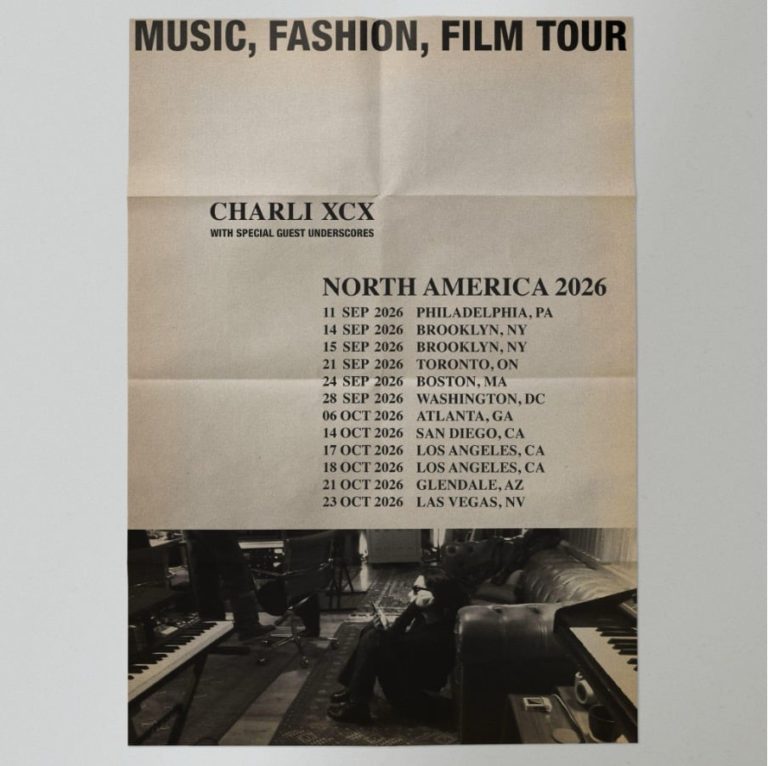
The smartest thing an emerging artist can do right now is stop thinking about global and start thinking about devoted. Industry insiders have described artists like Carly Rae Jepsen and pre-Brat Charli XCX as examples of artists who weren’t ascending to the top of the culture, but were becoming “the queen of your own underground.” From there, you can build and cultivate a solid fanbase that makes you feel like you’re topping the charts, without having to deal with the pressure of becoming the next Taylor Swift or Beyoncé.
That is not a consolation prize. That is a strategy.
Instead of trying to go viral globally, the smarter play is to go deep locally or within niche online communities. Join Discord servers, Reddit threads, or Facebook groups related to your genre. Connect with curators and influencers in your niche. Collaborate with other small artists to cross-pollinate fanbases. Show up at open mics, local festivals, or virtual showcases. Word of mouth still works. It always has. It just moves through different channels now.
Here is a truth that the music industry finds deeply inconvenient: showing up regularly matters more than showing up spectacularly. Many successful indie artists now follow a “single a month” strategy, which continuously re-engages past listeners and attracts new ones without long gaps. Consistency keeps both fans and algorithms interested. Each release is another chance to hook new listeners and remind your followers you’re still creating.
The most successful domestic acts are those nurtured over time: artists with a clear creative identity and a strong sense of purpose. The industry is rediscovering the value of patience and conviction, backing artists beyond the initial viral moment and focusing on sustainable careers built on authenticity, world-class music, and consistent execution.
Brick by brick. That’s the phrase I keep hearing from people who actually know how this works.
In a world where streaming pays artists fractions of a penny per play, more and more musicians are finding that 100 true fans on Patreon can outweigh 10,000 casual streamers in terms of both income and support.
The “1,000 True Fans” theory, first articulated by Kevin Kelly back in 2008, has aged remarkably well. The idea is simple: if you can find 1,000 people who love what you do enough to spend $100 a year on it, that’s a $100,000 income. In 2026, with direct-to-fan tools like Patreon, Bandcamp, and private community platforms, that math is more achievable than it has ever been. Community spaces and first-party data are where artists are building their real incremental following, showing what their real footprint will be, rather than chasing social media vanity metrics.
This one never goes away, and it never will. TV Girl’s songs blew up on TikTok organically, without the band actively pushing the trend or engaging heavily on social media. Instead of chasing the moment online, they focused on real-life opportunities: touring, playing shows, and making sure new listeners had a full catalog to explore. They were ready when the moment came, and that helped turn casual listeners into real fans.
That is the model. Build the live show. Build the catalog. Be ready. The thing you have control over is how good of a performer you are, and how much craft you put into being amazing live. A Tiny Desk performance might go absolutely everywhere because it can be clipped up and spread, and that comes back to being an extraordinary live performer.
Look, I get it. The temptation to chase the viral moment is real and completely understandable. When you can watch someone go from zero to a sold-out tour in eight months because of a single TikTok clip, the slow road feels almost insulting. But for every one of those stories, there are ten thousand artists who chased the same lightning bolt and got nothing.
Virality isn’t the goal anymore. The artists who win aren’t chasing trends; they’re building consistent connection. That comes from repeatable stories, behind-the-music vulnerability, song snippets, community engagement, and emotionally resonant content that makes people feel something.
The music industry in 2026 is noisier and more crowded than it has ever been. But it is also more direct. The tools to build a genuine relationship with a genuine audience have never been more accessible or more powerful. You don’t need a label. You don’t need a publicist on day one. You don’t need a viral moment.
You need good music, a clear identity, relentless consistency, and the patience to play a long game in an industry that keeps trying to sell you a shortcut.
There are no shortcuts. There never were.
Red Dirt Torchbearers Turnpike Troubadours Extend Their “Wild America Tour” Through the Fall
Turnpike Troubadours are pushing their headline run deep into the fall, adding major stops at Nashville’s Ascend Amphitheater, Chicago’s Huntington Bank Pavilion at Northerly Island, Charleston’s Firefly Distillery, and Atlanta’s Synovus Bank Amphitheater at Chastain Park, among others. Tickets for the newly announced dates go on sale Friday, March 27. The band is currently in the middle of their “Wild America Tour,” with upcoming shows at New York’s The Rooftop at Pier 17, Philadelphia’s The Met Philadelphia, and Boston’s MGM Music Hall at Fenway, while also joining Cross Canadian Ragweed for more “The Boys From Oklahoma” co-headline shows this spring.
The expanded tour follows a run of milestones that underline just how far the Oklahoma outfit’s reach has grown. Their surprise album ‘The Price of Admission,’ produced by Shooter Jennings and released via Bossier City Records/Thirty Tigers, debuted at No. 1 on the iTunes all-genre and country charts as well as the Billboard Digital Albums chart. The band recently received a Pandora Billionaire plaque for surpassing one billion streams on the platform, adding to a catalog that has accumulated more than 2.2 billion global streams and over 1.7 million equivalent units sold.
Beyond the music, Turnpike Troubadours have cemented their place in American culture. They performed three songs in the penultimate episode of “Yellowstone” and have become a recurring presence in Paramount’s “Landman,” with eight songs featured to date. They were also inducted into the Oklahoma Music Hall of Fame. Evan Felker, Kyle Nix, Ryan Engleman, RC Edwards, Gabe Pearson, and Hank Early have spent two decades building something that keeps growing.
‘The Price of Admission’ Tracklist:
- On The Red River
- Searching For A Light
- Forgiving You
- Be Here
- Heaven Passing Through
- The Devil Plies His Trade
- A Lie Agreed Upon
- Ruby Ann
- What Was Advertised
- Leaving Town (Woody Guthrie Festival)
- Nothing You Can Do
Tour Dates:
March 27 – Maverik Center – West Valley City, UT *
March 28 – Extra Mile Arena – Boise, ID *
April 11 – Boone Pickens Stadium – Stillwater, OK (The Boys From Oklahoma)
May 8 – Country in the Park – Sacramento, CA
May 9 – Save Mart Center – Fresno, CA
May 22 – Amphitheater at Las Colonias Park – Grand Junction, CO
May 23 – Ford Amphitheater – Colorado Springs, CO
June 5 – The Rooftop at Pier 17 – New York, NY †
June 6 – The Stone Pony Summer Stage – Asbury Park, NJ †
June 7 – Whittmore Center Arena – Durham, NH
June 12 – Huntington Bank Pavilion at Northerly Island – Chicago, IL +
June 13 – Michigan Lottery Amphitheatre – Sterling Heights, MI +
June 25 – Snow King Resort – Jackson, WY
June 26 – Kettlehouse Amphitheater – Bonner, MT
June 27 – Jackalope Jamboree – Pendleton, OR
July 2 – Chateau Ste. Michelle – Woodinville, WA ^
July 3 – BECU Live at Northern Quest – Spokane, WA ^
July 17 – Skyla Credit Union Amphitheatre – Charlotte, NC ^
July 18 – Beech Mountain Resort – Beech Mountain, NC
July 23 – The Wharf Amphitheater – Orange Beach, AL #
July 24 – Ascend Amphitheater – Nashville, TN #
July 31 – Everwise Amphitheater at White River State Park – Indianapolis, IN ^
August 1 – Starlight Theatre – Kansas City, MO ^
August 14 – Artpark Amphitheater – Lewiston, NY #
August 15 – Bethel Woods Center for the Arts – Bethel, NY #
August 16 – Lasso – Montreal, QC
August 22 – Memorial Stadium – Lincoln, NE (The Boys From Oklahoma: Nebraska Edition)
September 11 – New Mexico State Fair – Albuquerque, NM
October 2 – Firefly Distillery – Charleston, SC #
October 3 – Allianz Amphitheater at Riverfront – Richmond, VA #
October 9 – Synovus Bank Amphitheater at Chastain Park – Atlanta, GA #
October 10 – The Red Hat Amphitheater – Raleigh, NC #
October 24 – The St. Augustine Amphitheatre – St. Augustine, FL ~
October 25 – The BayCare Sound – Clearwater, FL ~
*with Charles Wesley Godwin and Buffalo Traffic Jam | †with Lucero | +with Muscadine Bloodline and Katie Pruitt | ^with Muscadine Bloodline and Dexter and The Moonrocks | #with Muscadine Bloodline and The Creekers | ~with Muscadine Bloodline and Drayton Farley