Home Blog Page 909

The Future of Music: $184.69B Growth Fueled by Streaming, Tech & Global Expansion

0

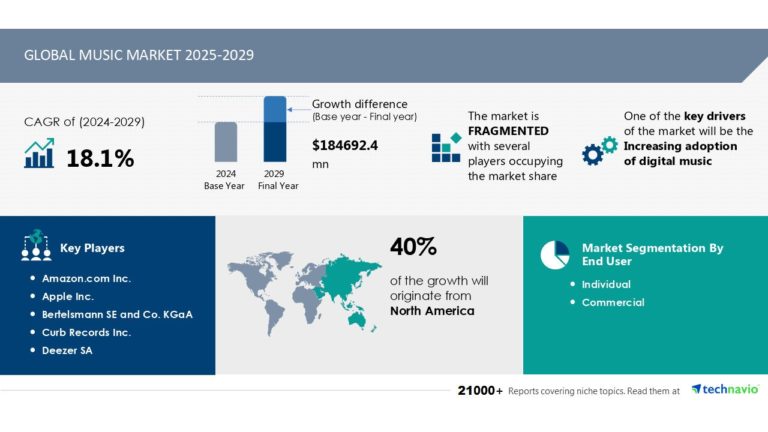
The global music market size is estimated to grow by USD 184.69 billion from 2025-2029, according to Technavio. The market is estimated to grow at a CAGR of  18.1%  during the forecast period. Increasing adoption of digital music is driving market growth, with a trend towards increase in mergers and acquisitions and strategic alliances among vendors and entry of new players. However, illegal downloads and piracy  poses a challenge. Key market players include Amazon.com Inc., Apple Inc., Bertelsmann SE and Co. KGaA, Curb Records Inc., Deezer SA, Kobalt Music Group Ltd., NORTHERN MUSIC Co. Ltd., Pioneer Music Co., Sirius XM Holdings Inc., Sony Group Corp., Spotify Technology SA, Tencent Music Entertainment Group, THEME MUSIC Co. Pvt. Ltd., TIDAL, Universal Music Group N.V., Vivendi SE, Warner Music Group Corp., Yamaha Corp., YouTube, and Zee Entertainment Enterprises Ltd..

The Music Industry is experiencing a significant shift with the rise of digital platforms. Youtube Music, Apple Music, Tencent Music, Wynk Music, and Spotify lead the Music Streaming Services market. Bollywood and artists like DIVINE and Naezy are trending on YouTube. Recording industry giants like Sony Music and Saregama collaborate with tech companies for internationalization. Businesses leverage Intelligent Devices and Digital Platforms for Live business, Podcasts, and Playlist Customization. Nielsen reports show Millennials prefer streaming services over traditional methods. Strategic Alliances between Music Industry players and tech companies, like PTZ Camera Series and Video Switchers manufacturers, provide innovative solutions. Rights Management, Customer Billing, and Royalty Administration are crucial for Record Companies and Record Labels. Financial Times forecasts an exponential trend in digital economy sectors, including Music Streaming Services and Podcasts. Consumer attitudes towards music consumption continue to evolve with mobile broadband connections and smartphone users. Apple Music, Amazon Music, and Napster offer in-app purchases and downloads. Companies adopt modeling and bottom-up approaches for forecasting techniques using S-curve functions and exponential trend smoothing. Despacito by Luis Fonsi and Ed Sheeran’s Shape of You were top hits in 2017. Trade associations and statistical offices monitor exchange rates and trends in the Music Industry.

The Music Market is witnessing intense competition among numerous global and regional vendors, each offering unique products. Vendors are implementing new strategies, such as collaborating with technology providers, to maintain their market positions. They are also partnering with each other for business expansions via new distribution channels. Mergers and acquisitions, as well as strategic alliances, have become common, with service providers aiming to expand their reach and customer base. Investments in joint ventures and acquisitions enable providers to capture a significant share of the global online streaming services market and establish a presence in new regions.

The Music Market faces various challenges in the current business landscape. Traditional players like Bollywood and Recording industry compete with Digital Platforms such as YouTube Music, Apple Music, Tencent Music, Wynk Music, and Spotify. Artists like DIVINE and Naezy from India and international stars like Lauv are leveraging platforms like YouTube and social networking sites to reach their audience. Intelligent Devices and Smartphones are driving the growth of Music Streaming Services. Nielsen reports show that Millennials prefer digital platforms for music consumption. Businesses need to adopt strategic alliances and model/bottom-up approaches to cater to this market. Rights Management, Customer Billing, and Royalty Administration are crucial for Record Companies and Record Labels. Financial Times forecasts an exponential trend in the digital economy, with mobile apps and desktop applications leading the way. The Music Industry is internationalizing, with the Royal Opera House and other cultural institutions exploring digital platforms. Podcasts, Playlist Customization, and Song Recommendations are the new trends. Live business, PTZ Camera Series, Video Switchers, Wireless Video Transmitters, and Sky Wire Broadcast are essential for broadcasters. Understanding consumer attitudes, exchange rates, and forecasting techniques like the S-curve function and exponential trend smoothing are vital for businesses in this sector. Rights management, customer billing, and royalty administration are crucial for businesses in the Music Market. Companies like Sony Music, SoundExchange, Napster, Rimas Publishing, and the App Store are leading the way in this digital economy. The Music Community is evolving, with in-app purchases, downloads, and streaming services shaping consumer behavior. The Games Industry and social networking sites are also impacting music consumption. The level of digitization, consumer attitudes, and exchange rates are key factors to consider. In conclusion, the Music Market is undergoing significant changes, with digital platforms, intelligent devices, and consumer behavior driving the growth. Businesses need to adapt to these changes and leverage strategic alliances, model/bottom-up approaches, and business intelligence to succeed.

The music industry faces a significant challenge from piracy, particularly in countries where copyright laws are not strictly enforced. For instance, in Europe, only a few nations like the UK, France, and Germany have effective piracy regulations. In contrast, countries such as Portugalthe Netherlands, and Spain experience high levels of copyright infringement. Some jurisdictions even permit downloading copyrighted works for personal use, like in Switzerland. However, uploading files for torrenting remains illegal. The music industry’s transition to digital formats further complicates piracy control efforts.

The individual segment is poised for dominance in the global music market due to advancements in network infrastructure. Lower costs of Internet services and access to music streaming on mobile devices have led to a rise in mobile data traffic, primarily driven by 4G and 5G services. This growth in mobile data traffic positively influences the expansion of the global music market. Telecommunication standards like 4G and 5G enable users to access high-quality music from anywhere, anytime. Free music streaming services cater to budget-conscious individuals, while paid subscriptions cater to those with a strong preference for specific genres, artists, or songs. The availability of affordable smartphones, such as OPPO and Xiaomi, expands the subscriber base for music streaming, thereby fueling the growth of the individual segment and the global music market.

The Music Market is a dynamic and ever-evolving industry, encompassing various sectors such as Bollywood, Recording industry, Live business, and more. Digital Platforms like Youtube Music and Apple Music, and Chinese giants Tencent Music and Wynk Music, dominate the Music Streaming Services scene. Intelligent Devices and Digital Platforms have disrupted traditional Music Industry models with their on-demand offerings, including websites, mobile apps, and desktop applications. Artists from all corners of the world, including India’s DIVINE and Naezy, have leveraged these platforms to reach global audiences. Internationalization and the Music Community continue to blur geographical boundaries. The digital economy thrives with in-app purchases, downloads, and model/bottom-up approaches. Social networking and the Games Industry further expand music’s reach, while Playlist Customization adds a personal touch. The App Store is a hub for innovation, with new features and services continually emerging.

The Music Market is a dynamic and ever-evolving industry, fueled by the passion of artists and the demand of audiences worldwide. Digital Platforms like Youtube Music and Apple Music have revolutionized music consumption, allowing on-demand access to millions of songs and videos. Bollywood and other music genres from around the world continue to captivate audiences, driving growth in the Recording industry. The Live business thrives with the help of Intelligent Devices and Smart Devices, enabling high-quality streaming and experiences. Digital Platforms offer Playlist Customization and Song Recommendations, catering to the unique preferences of Millennials and music enthusiasts. Businesses like Nielsen provide valuable insights into the Music Industry through Business Intelligence and Rights Management. Strategic Alliances between Recording Companies and Record Labels, such as Sony Music and SoundExchange, ensure fair Customer Billing and Royalty Administration. The Internationalization of the Music Community has led to the rise of artists like DIVINE, Naezy, Lauv, and Ed Sheeran, who have gained global recognition through Digital Platforms. The Music Industry continues to adapt to the Digital Economy, with forecasts predicting exponential growth in mobile app downloads, in-app purchases, and mobile broadband connections. The use of forecasting techniques like the S-curve function and exponential trend smoothing helps businesses understand the level of digitization and consumer attitudes. Trade associations and Statistical Offices play a crucial role in shaping the future of the Music Market. The Games Industry and Social Networking also contribute to the growth of the Music Market, with the App Store hosting a plethora of music-related apps and desktop applications. The Music Market is a complex ecosystem, involving various players like Tencent Music, Wynk Music, Spotify, Tencent Music Entertainment, Amazon Music, and Napster, among others. Publishers like Rimas Publishing and financial institutions like the Financial Times also play a significant role in the industry. The Music Market is constantly evolving, with new technologies like PTZ Camera Series, Video Switchers, Wireless Video Transmitters, and Sky Wire Broadcast shaping the future of live music experiences. The industry continues to adapt to the changing landscape, ensuring that music remains an integral part of our lives.
$111.7B Video Game Boom: 5G, AI, and Mobile Gaming Are Shaping the Future

0

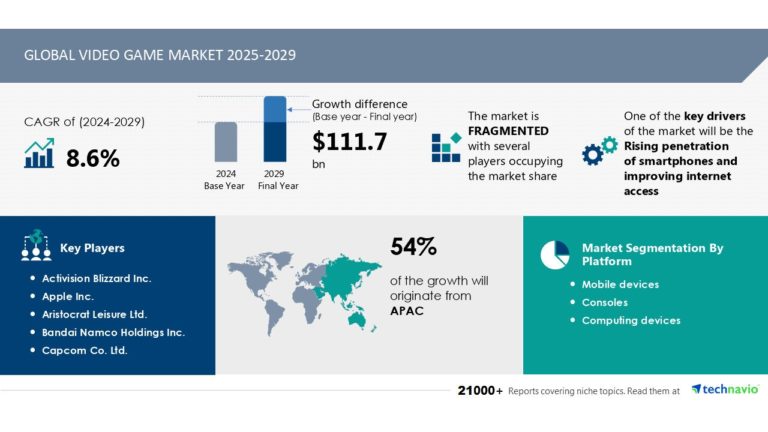
The global video game market size is estimated to grow by USD 111.7 billion from 2025-2029, according to Technavio. The market is estimated to grow at a CAGR of  8.6%  during the forecast period. Rising penetration of smartphones and improving internet access is driving market growth, with a trend towards increasing popularity of gaming among women. However, increasing cost of game development  poses a challenge. Key market players include Activision Blizzard Inc., Apple Inc., Aristocrat Leisure Ltd., Bandai Namco Holdings Inc., Capcom Co. Ltd., Electronic Arts Inc., Enad Global 7 AB, Epic Games Inc., Konami Group Corp., Krafton Inc., Microsoft Corp., MOBIRIX Corp., NetEase Inc., Nintendo Co. Ltd., Playtika Holding Corp., Roblox Corp., SEGA SAMMY CREATION INC., Sony Group Corp., Take Two Interactive Software Inc., and Tencent Holdings Ltd..

The video game market is experiencing significant trends with the rise of 3D games and 3D graphics. The advent of 5G networks is enabling faster download speeds and real-time gaming experiences. Adaptability and aesthetics are essential features for consumers, leading to the increasing popularity of games with experiences. Architecture and artificial intelligence are key innovations in game development, enhancing the interactive functionality of games. Audio effects, music, and narration add to the overall pleasure and relaxation for consumers. Businesses see potential in the gaming industry, with commercial software, cloud gaming services, and educational purposes driving growth. Esports tournaments and competitions attract professional video gamers, while increasing portability through mobile phones and consoles expand the reach of gaming. Hardware innovation and technologically advanced smartphones enable better graphics and performance. The gaming industry is transforming demographics, with rising urbanization and societal availability leading to a thriving profession for game creators and developers. The ubiquity of smartphones and online gaming services offer versatility and social interaction, making gaming an essential part of modern life. Virtual reality and augmented reality add to the experience, while streaming media services and open-source software cater to the changing consumer preferences. Primary market drivers include eye-hand coordination, fine-motor abilities, and the pleasure and relaxation that gaming provides. The potential customers are vast, from spectators to supporters, and the industry continues to evolve with specialized features, real-time strategy games, and first-person shooter games. The video gaming industry is a thriving business, offering a theatrical performance for consumers and providing a platform for innovation and entertainment.

The video game market has experienced a significant demographic shift in recent years. Historically, male gamers have dominated the industry. However, the rise of mobile gaming has attracted a growing number of female gamers. According to recent studies, female gamers now account for approximately 45% of the gaming population in the US, a figure that is projected to rise. This demographic shift is expected to positively impact the sales of gaming merchandise, software, and hardware. Notable games like League of Legends, Grand Theft Auto, and World of Warcraft have already seen an increase in female players. This trend is a positive sign for the future growth of the video game industry.

The video game market is experiencing significant changes due to advancements in technology and shifting consumer preferences. Three-dimensional games with 3D graphics are becoming essential features for businesses aiming to attract potential customers. The rollout of 5G networks enhances the experience by enabling real-time, high-quality gameplay. Adaptability and aesthetics are key, with architectures and artificial intelligence (AI) driving innovation. Audio effects, augmented reality (AR), and virtual reality (VR) add to the interactive functionality. Game creators and developers are focusing on ease of accessibility through cloud gaming services, commercial software, and multi-player capabilities. Consumers, from professional video gamers to casual players, seek the full command offered by controllers, gamepads, and keyboards. Educational purposes, entertainment, and recreation are primary market drivers, with increasing portability through mobile phones and technologically advanced smartphones. Online games, streaming media services, and esports tournaments cater to the thriving profession of gaming. The ubiquity of smartphones and transforming demographics ensure the industry’s versatility and societal availability. Challenges include the need for hardware innovation, high-quality video games, and hyper-scale cloud capabilities. Consumer expectations for specialized features, such as eye-hand coordination and fine-motor abilities, continue to rise. The market remains competitive, with businesses vying for the number of gamers and their pleasure and relaxation. The video gaming industry’s potential is vast, with opportunities in music, narration, real-time strategy games, and spectatorship. The industry’s future lies in its ability to adapt to changing trends, provide an experience, and cater to the evolving needs of consumers.

The demand for enhanced game content, including intricate characters, objects, stages, and visual effects, has driven up the cost of video game development. Developers utilize automated technologies like Speed Tree for authentic-looking vegetation, but large-scale projects also necessitate custom graphics creation, which increases expenses. Expert artists’ fees add to manufacturing costs, making game production a significant investment.

The mobile devices segment led the global video game market in 2024, with its dominance continuing due to the increasing number of consumers using smartphones and tablets as their preferred gaming platforms. Mobile games are generally smaller in size and complexity compared to console or PC games, making them accessible to a broader audience, including casual gamers. With over 3.5 billion smartphone users worldwide, the market holds a vast potential audience. Mobile games are easily distributed via app stores like Apple App Store and Google Play. Their diversity in genres, from casual puzzles to complex multiplayer games, caters to various age groups and interests. Mobile games also leverage unique mobile capabilities, such as touchscreens and gyroscopes, for innovative gameplay mechanics. Additionally, the availability of offline mobile games will significantly boost adoption, particularly in rural areas, expanding the market’s reach and revenue.

Online gaming has revolutionized the world of entertainment, allowing video gamers to immerse themselves in 3D games on various devices. With the advent of technologically advanced smartphones, mobile gaming has become a significant segment of the industry. The 5G network has further enhanced the gaming experience by enabling real-time strategy games and seamless multiplayer interactions. Game developers continue to push boundaries with cloud gaming services, leveraging hyper-scale cloud capabilities to deliver high-quality games on demand. Input devices like gamepads, controllers, keyboards, and more offer diverse options for players to enhance their gaming experience. Online gaming provides pleasure, relaxation, and even serves educational purposes. Whether it’s for competitions or casual play, video and computer games offer endless possibilities for entertainment. Streaming media services have also entered the fray, offering access to a vast library of games for subscribers. Overall, the future of gaming is bright, with innovation and advancements continually shaping the landscape.

The 3D games market is experiencing in growth with the advent of 5G networks, offering faster download speeds and real-time gaming experiences. Adaptability and aesthetics are essential features for modern gamers, leading to an increased demand for high-quality video games with experiences. Architecture, artificial intelligence (AI), and computer-generated effects are key components of the latest games, enhancing the overall gaming experience. Audio effects and narration add to the pleasure and entertainment value, while the rise of cloud gaming services and increasing portability make gaming more accessible than ever before. Consumers, both professional and casual, are drawn to the interactive functionality and social interaction offered by multiplayer games. The ubiquity of smartphones and technologically advanced hardware have transformed traditional games into mobile experiences, reaching a wider audience. Businesses are recognizing the potential of the gaming industry, leading to the development of new game titles and innovative hardware. Competitions, esports tournaments, and streaming media services have created a thriving profession for gamers, attracting potential customers from all walks of life. The gaming industry continues to evolve, adapting to changing consumer preferences and societal availability, offering a versatile form of recreation and relaxation.

Ticket Market to Grow by $554.2 Billion by 2029, Success of Movies Driven by Increased Use of Animation Boosts Market, AI-Redefined Report

0

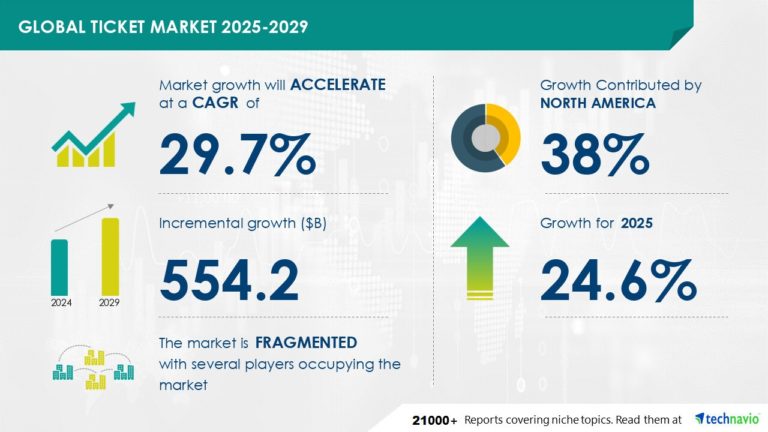
The global ticket market size is estimated to grow by USD 554.2 billion from 2025-2029, according to Technavio. The market is estimated to grow at a CAGR of  29.7%  during the forecast period. Success of movies due to increasing use of animation is driving market growth, with a trend towards high utilization of social media in selling tickets. However, growing threat of terrorism and occurrence of war between nations  poses a challenge. Key market players include AMC Entertainment Holdings Inc., Anschutz Entertainment Group Inc., Big Tree Entertainment Pvt. Ltd., Cinemark Holdings Inc., Citizen Ticket Ltd., Coast To Coast Tickets LLC, Comcast Corp., CTS Eventim AG and Co. KGaA, Cvent Holding Corp., eBay Inc., Eventbee Inc., Eventbrite Inc., Ideabud LLC, Live Nation Entertainment Inc., Lyte Inc., One97 Communications Ltd., Softjourn Corp., TickPick LLC, Viagogo Entertainment Inc., and Zoonga.

Ticket Market is witnessing exciting trends in the world of ticketing. Artificial intelligence is transforming the industry, making ticket purchase more convenient through virtual reality maps and contactless electronic tickets. Wearables like NFC cards and RFID tags are replacing traditional paper tickets, offering operational efficiencies and cashless transactions. Sports, parking, entertainment, and transportation sectors are embracing electronic ticketing, with buses and public transportation networks leading the way. Hardware components like Wi-Fi modules, GPS, and IR sensors are essential for these systems. Smart cards and smart ticketing are on the rise, offering premium experiences and discounts to customers. Event ticketing software and mobile ticketing apps are becoming essential tools for event organizers, reducing marketing costs and increasing patronage. Fintech companies like Mastercard are partnering with service providers to offer secure digital payment services, ensuring customer satisfaction and safety. The public sector is also undergoing digital transformation, with ticket validators and card readers becoming standard components in transportation networks. The entertainment industry, from movies to music concerts, is leveraging digital projection, 3-d content, and online purchasing for enhanced user experiences. Alternative entertainment and leisure services are also adopting digital ticketing, offering deals and special presentations to attract a larger customer base. The future of ticketing is digital, offering convenience, accessibility, and hygiene to customers. Stay tuned for more trends shaping the ticketing market!

Social media has emerged as a valuable data source for businesses due to its real-time feedback capabilities through blogs and social networking sites. Event organizers and filmmakers utilize social computing tools for branding, marketing, and knowledge management initiatives. They also sell tickets through these platforms, fostering cost-effective collaborations with their audience. By registering on social media sites like Twitter and Facebook, vendors expand their marketing reach, gather public opinions, and analyze sentiment and behavior. The significance of sentiment analysis and behavioral analytics drives businesses to integrate social media into their operations.

In today’s digital world, artificial intelligence is revolutionizing the ticketing industry. From convenient electronic ticketing for public transportation like buses and trains, to event ticketing for sports, movies, and concerts, the use of NFC cards, RFID tags, and contactless electronic tickets are becoming the norm. This digital transformation brings operational efficiencies, customer satisfaction, and cashless transactions. Wearables like smartwatches and wristbands offer tap-off readers for buses and parking, while virtual reality maps help customers navigate transportation networks. Component manufacturers provide hardware like ticket validators and card readers, enabling service providers to offer mobile ticketing and smart ticketing solutions. The entertainment industry benefits from digital projection, 3-d content, and deals, while event organizers use online ticket purchase platforms to expand their customer base and offer ticketless entry. Fintech companies like Mastercard collaborate to ensure secure transactions and contactless payments. The public sector embraces digital ticketing to improve accessibility and safety, making ticket purchases more convenient for internet users. The future of ticketing is about enhancing the user experience and offering premium experiences, all while adhering to hygiene and safety protocols.

The global rise in terrorist activities poses significant challenges for event organizers, particularly those hosting large gatherings at special venues or crowded places. This trend has led to heightened security concerns among attendees, resulting in increased border clearance issues and tighter inspections. The fear of potential terrorist attacks has caused a decline in participation in events, particularly in countries such as the US, the UK, France, and Germany. Organizers are investing in advanced technologies to enhance security, but the ongoing threat continues to deter many from attending.

 The primary segment of the global ticket market is the largest and most dynamic, driven by the growing number of movies and professional events. This segment includes tickets sold by event organizers through both online and offline platforms, as well as by third-party service providers. The increasing production of movies with visual and special effects is a significant factor driving growth, as is the rising number of sports events and the adoption of mobile devices for ticket booking. End-users have diverse expectations, leading to intense competition among vendors. The corporate segment, consisting of private organizations, businesses, and educational institutions, is another major contributor to the market’s growth. Technavio predicts that consumer preferences will shift towards digital content during the forecast period, driving the market share of the primary segment as event attendance gives way to mobile platform-delivered digital content.

Download a Sample of our comprehensive report today to discover how AI-driven innovations are reshaping competitive dynamics

Entertainment ticketing and transit ticketing are two essential aspects of the modern mobility landscape. Entertainment ticketing provides seamless access to various events, from concerts and sports games to theater performances. On the other hand, transit ticketing focuses on journey management and passenger experience optimization. Transit ticketing includes contactless and NFC solutions, RFID technology, and digital fare media, ensuring operational efficiency and connected transportation. Public transport innovation continues to evolve with ticket transfer, transit automation, and real-time transit information. Integrated ticketing systems enable multimodal transportation and accessibility, while ticket recovery and secure ticketing ensure peace of mind for travelers. Transit data analytics and smart mobility solutions provide valuable insights for transit infrastructure development and sustainable transportation. Parking ticketing and future transportation developments, such as fast ticketing and social media marketing, further enhance the overall user experience. Event ticketing solutions, including event ticketing APIs and management software, cater to various event types and sizes. Transit technology continues to shape the future of transportation, with smart city initiatives and sustainable transportation at the forefront.

Artificial intelligence is revolutionizing the ticketing industry, making ticket purchasing more convenient and efficient. Credit amounts can be stored on wearables like smartwatches or NFC cards for contactless electronic ticketing. Operational efficiencies are increased with hardware like ticket validators and tap-off readers. Virtual reality maps help customers navigate transportation networks, while RFID tags and IR sensors ensure ticketless entry. Sports, parking, entertainment, and transportation sectors benefit from electronic ticketing, with mobile ticketing and online purchasing becoming increasingly popular. Smarter ticketing solutions include smart cards, mobile ticketing, and contactless electronic tickets. Component manufacturers provide hardware and software for ticketing systems, while service providers offer ticketing platforms and digital payment services. Customer satisfaction is prioritized with cashless transactions and convenient ticket purchasing options. Digital transformation in the public sector leads to the adoption of smart ticketing, reducing marketing costs and increasing patronage. Premium experiences are offered through virtual reality maps, deals, and discounts for internet users. Event ticketing software facilitates online ticket purchase and event discovery, while digital wallets and mobile payment platforms ensure secure transactions. Safety and accessibility are prioritized with contactless transactions and hygiene measures. Digital ticket purchases are on the rise, with fintech companies like Mastercard leading the way in digital ticketing solutions.

Yamaha Confirms Automotive Audio Integration into North American Market

0

Yamaha Corporation (hereafter, Yamaha) confirms its partnership with Mitsubishi Motors North America, Inc. (MMNA) as part of the upcoming debut of the refreshed 2025 Mitsubishi Outlander, set for full unveiling in February 2025. The new Outlander features enhancements inside and out, highlighted by a premium audio system developed through an innovative collaboration with Yamaha.

In this groundbreaking partnership, Yamaha renowned audio experts have joined forces with Mitsubishi Motors’ engineers to develop two premium in-car sound systems specifically for the company’s flagship vehicle in the North American market. This marks the first time Yamaha has created a bespoke in-car audio system for a North American market vehicle, underscoring the significance of this collaboration.

However, this is not the first time Yamaha has partnered with Mitsubishi Motors. Internationally, in October 2024Yamaha Japan also debuted Yamaha-branded audio systems in the home-market Mitsubishi Outlander, following its initial integration with Mitsubishi’s XFORCE back in 2023. While the XFORCE is primarily available in the ASEAN region, this second venture will be featured in all 2025 Outlander models sold globally.

“We want to deliver excitement with a sound that impresses the driver’s heart and brings them closer to the artists. Yamaha respects the artists’ sounds, so we articulately craft the bass, mid and high ranges. We innovate to deliver a heart-stirring moment in the cabin,” says sound-meister Tomokazu Hikida.

MMNA will share more details about the 2025 Mitsubishi Outlander, including extensive feature updates and specifications, during the vehicle’s official North American debut in mid-February 2025.

Yamaha will continue to deliver high-quality Yamaha-branded automotive audio products through our ongoing partnership with Mitsubishi Motors.

Spotify & Warner Music Group Strike Multi-Year Deal to Expand Music, Video & Artist-Centric Royalties

0

Spotify and Warner Music Group  today announced a new, multi-year agreement, which covers both Recorded Music and Music Publishing. Through the deal, the two companies strengthen their joint commitment to artists, songwriters, and fans, as well as the growth of the music ecosystem through innovative collaboration.

WMG and Spotify will work together to shape the future of audio-visual streaming and enhance the value of music. The new deal will help deliver new fan experiences, a deeper music and video catalog, further paid subscription tiers, and differentiated content bundles. The agreement also builds on the companies’ existing alignment around ‘artist centric’ royalty models that reward and protect the power of artists to attract and engage audiences. Importantly, the new publishing agreement introduces a direct licensing model with Warner Chappell Music in several additional countries including the U.S., reinforcing songwriters’ benefit in this evolving landscape.

Robert Kyncl, CEO, WMG, said: “This major agreement delivers new benefits for artists, songwriters, and fans, while unlocking further collaboration that expands the music ecosystem. It’s a big step forward in our vision for greater alignment between rights holders and streaming services. Together with Spotify, we look forward to increasing the value of music, as we drive growth, impact, and innovation.”

Daniel Ek, Spotify’s Founder and CEO, said: “For Spotify, 2025 is a year of accelerated execution, and our partners at Warner Music Group share our commitment to rapid innovation and sustained investment in our leading music offerings. Together, we’re pushing the boundaries of what’s possible for audiences worldwide—making paid music subscriptions more appealing while supporting artists and songwriters alike.”

Warner Music Group brings together artists, songwriters, entrepreneurs, and technology that are moving entertainment culture across the globe. Operating in more than 70 countries through a network of affiliates and licensees, WMG’s Recorded Music division includes renowned labels such as 10K Projects, 300 Entertainment, Asylum, Atlantic, Big Beat, EastWest, Elektra, Erato, First Night, Fueled By Ramen, Nonesuch, Parlophone, Reprise, Rhino, Roadrunner, Sire, Spinnin’, Warner Records, Warner Classics, and Warner Music Nashville. WMG’s music publishing arm, Warner Chappell Music, has a catalog of over one million copyrights spanning every musical genre, from the standards of the Great American Songbook to the biggest hits of the 21st century. Warner Music Group is also home to ADA, which supports the independent community, as well as artist services division WMX.

Since its launch in 2008, Spotify has revolutionised music listening. Our move into podcasting brought innovation and a new generation of listeners to the medium. In 2022, we took the next leap, entering the fast-growing audiobook market—continuing to shape the future of audio.

Today, more listeners than ever can discover, manage and enjoy over 100 million tracks, 6.5 million podcast titles, and 350,000 audiobooks a la carte on Spotify. We are the world’s most popular audio streaming subscription service with more than 640 million users, including 252 million subscribers in more than 180 markets.

Warner Music Group Acquires Majority Stake in Tempo Music, Expanding Its Influence in Music Rights

0

Warner Music Group Corp. today announced that it has acquired a controlling stake in Tempo Music Investments, an investment platform for premium music rights, from Providence Equity Partners. Providence will remain a minority investor in Tempo and continue to work with WMG in an advisory capacity.

WMG and Providence partnered to launch Tempo in 2019, combining Providence’s capital and investment expertise with WMG’s deep music industry experience, resources, and network to support, promote, and build value around artists and songwriters globally. Through its disciplined approach to investments and collaborative work with creative talent, Tempo has amassed a diverse portfolio that focuses on empowering artists and songwriters, while delivering compelling financial results. WMG’s investment will also become more accretive over time, as other rights revert to Tempo, and expand the scope of WMG’s administration and distribution.

Guy Moot, Co-Chair and CEO of Warner Chappell said: “By acquiring Tempo’s impressive catalog, we’re expanding Warner Chappell’s reach, bringing rights from songwriters we currently don’t represent, as well as additional rights from songwriters with whom we’re already partners. Tempo has assembled a thoughtful, well-rounded catalog and I’m excited to dig into new opportunities and unlock more value for these songs.”

Michael Ryan-Southern, WMG’s EVP, Chief Corporate Development Officer, added: “WMG and Tempo have a long-standing history and aligned interests in uplifting great music and catalogs. This deal is a natural fit for us, and a good example of how our investment strategy is designed to build our scale and influence, while delivering additional revenue at a high margin.”

Michael Dominguez, Senior Managing Director and Chief Investment Officer at Providence, said: “The Tempo team has built a high-quality catalog over the years with top artists and songwriters, and has benefitted from a close partnership with WMG since its foundation. This is an exciting next step in the company’s evolution and a natural home for its catalog. We look forward to continuing to work with WMG and to support Tempo’s next phase of growth.”

Since inception, Tempo has acquired music rights from some of today’s leading songwriters, many of whom Warner Chappell co-publishes, including Twenty One Pilots’ Tyler Joseph, multi-platinum-selling recording artist Wiz Khalifa, country duo Florida Georgia Line, GRAMMY Award-winning songwriters Brett James and Shane McAnally, as well as Lukas Graham songwriters Stefan ForrestMorten Pilegaard, Morten Ristorp Jensen, and Jaramye Daniels.

Tempo has also acquired rights from top songwriters, artists, and producers including artists such as the Jonas Brothers, Ben Rector and Korn; singer-songwriter Mia Fieldes; GRAMMY Award-winning songwriter, producer, and CMNTY Culture founder Philip Lawrence (“24k Magic” & “Uptown Funk” Bruno Mars, “All I Ask” Adele, and more); GRAMMY Award-winning songwriter, producer, engineer, and Frank Ocean collaborator Malay; and GRAMMY Award-winning artist, songwriter, and producer Jeff Bhasker.

Road safety tips: How to reduce the risk of a car accident

0

By Mitch Rice

Road safety has become a concern over the years with all the innovations in vehicle manufacturing, along with more aggressive traffic laws around the world. Traffic accidents remain one of the most common causes of injury and death globally, and are primarily caused by the human factor.

Sometimes a second of inattention is enough for an accident. Drivers can reduce the chances of causing accidents by engaging and understanding signs, recognizing potentially unfavorable situations. Knowing road safety laws and their daily application can protect all road users and reduce the rate of accidents on a daily basis.

Stay focused and avoid distractions

One of the primary causes of car accidents is not paying attention while driving. Activities that reduce attention while driving, such as texting, talking on the phone, eating or tuning the radio, can lead to delayed reaction times and impaired judgment. Drivers must keep their eyes on the road and hands on the steering wheel, looking straight ahead and following the road situation.

Even minor distractions can have serious consequences, as taking your eyes off the road for a few seconds at high speed can be fatal. If you stay focused, you can react quickly to sudden obstacles, situations, and interruptions in traffic flow and other unpredictable situations that can threaten overall safety.

Maintain a safe following distance

Keeping a safe driving distance gives drivers enough time to react if the vehicle in front stops or slows down without warning. Driving beyond a safe distance endangers all road users. The general rule of thumb is to follow the “three-second rule”, which means you are at least three seconds behind the vehicle in front under normal driving conditions.

All drivers must follow this rule. In adverse weather conditions or heavy traffic, it is advisable to increase this distance to allow additional stopping time. By maintaining a safe distance between vehicles, drivers provide themselves and others with enough space to maneuver the vehicle if necessary.

Adapt to weather and road conditions

Weather conditions directly affect road safety, because rain, snow, fog, and ice can significantly threaten the safety of road users and increase the cause of traffic accidents. Slippery roads can reduce traction and make it difficult to stop or control the vehicle. Drivers should control their speed and increase their distance between cars in conditions where they encounter adverse weather conditions.

Reduced visibility on the road during adverse weather conditions influences safety, which is why it is necessary to use headlights correctly and ensure that windshield wipers are working effectively. It is important to check everything before driving, prevention is the most important. In bad weather, avoiding driving altogether may be the safest option.

Avoid driving under the influence

Driving under the influence of alcohol or intoxicating substances is also one of the leading causes of serious traffic accidents. Even small amounts of alcohol affect reaction time, judgment, and coordination.

Medications, and their irresponsible use, can also impact the driver’s ability to drive safely. If alcohol consumption has occurred in certain situations, using a taxi or relying on ride-sharing services is the best and most responsible choice. For those taking medication, it is advisable to understand the potential side effects and consult with a healthcare professional before driving. It is best not to drive immediately after treatment.

Ensuring safety on the road requires being fully alert and unharmed before getting behind the wheel. If you or a loved one has been involved in an accident due to impaired driving, seeking legal guidance can be crucial. Find the right team of car accident lawyers that can provide support and help navigate the legal process after an accident.

Be alert and manage tiredness

Driving late, tired or drowsy is just as dangerous as driving under the influence of opiates. Fatigue reduces the driver’s concentration, reaction time and decision-making ability under different road conditions. Long journeys, night driving or insufficient rest time contribute to driver fatigue. In those situations, a passenger is mandatory for safety reasons.

Taking regular breaks during long journeys, sharing driving responsibilities and ensuring adequate rest before you set off can help prevent accidents. If you feel drowsy while driving, stopping at a safe location and taking a short break can be a life-saving decision that protects all road users.

Recognizing signs of fatigue, such as yawning, heavy eyelids or swerving between lanes, and acting accordingly can prevent potentially disastrous outcomes. Maintaining communication and dynamic music can help with low energy.

Obey speed limits and traffic laws

Speeding is a leading cause of traffic accidents, especially those with a fatal outcome. When driving beyond the speed limit, the driver’s ability to react in time to road hazards, unexpected situations and increases the seriousness of a possible collision is reduced.

Respecting the recommended speed limits in urban areas and on open roads cuts down the possibility of cat accidents. In addition to respecting the speed limit, drivers should also respect other traffic signals, foremost the stopping at red lights, passing drivers when giving way, and using turn signals correctly.

Regular vehicle maintenance

Clearly, a new vehicle is less likely to experience mechanical failures that could cause an accident on the road. Regular routine checks of brakes, tires, lights and engine components keep the car in optimal condition. Tire pressure and tread depth should be checked regularly, as underinflated or worn tires can cause blowouts and loss of control.

Braking systems need to function properly to guarantee effective stopping power. Ensuring that all lights and indicators are working properly is critical to visibility, especially at night or in poor weather. Regular servicing and early resolution of potential mechanical problems can prevent dangerous situations on the road.

Take care of other road users

Safe driving goes beyond personal responsibility, at all times you should be aware of other road users, not only vehicles but also pedestrians, cyclists and motorcyclists. Responsible driving, anticipating potential hazards and expecting the unexpected can reduce the risk of accidents. Checking blind spots before changing lanes, being cautious at intersections and yielding the right of way when necessary all contribute to safer interactions on the road.

Conclusion

Reducing the risk of a traffic accident requires, first of all, attention on the road, respect for traffic signs and the law. Staying focused, maintaining a safe distance, changing weather conditions and avoiding impaired driving are basic practices that directly affect road safety. Regular vehicle maintenance and stress management additionally contribute to accident prevention.

A commitment to safe driving not only reduces the likelihood of an accident, but also promotes a culture of responsibility and awareness that benefits everyone.

Data and information are provided for informational purposes only, and are not intended for investment or other purposes.

Sing for Hope Pianos Bring Jon Batiste, Art, and Community to New Orleans’ 9th Ward for Big Game Week

0

Sing for Hope, in collaboration with the He Gets Us project, is announcing the launch of the Sing for Hope Pianos New Orleans 2025 initiative, marking the fourth consecutive year Sing for Hope has returned to The Big Easy. This project brings ten vibrant, local artist-designed Sing for Hope Pianos to the heart of New Orleans’ Ninth Ward from February 4-20 in celebration of the cultural moment around the big game. Sing for Hope Board Member and New Orleans native Jon Batiste joins this collaborative effort to bring the joy of the arts to his hometown and inspire creative expression among all, with the ten Sing for Hope Pianos serving as a community invitation to the Feb. 8 He Gets Us Presents Jon Batiste’s Love Riot Festival.

Sing for Hope and He Gets Us enlisted New Orleans-based StudioBE, and the nonprofit Eternal Seeds, to explore the theme of “selfless love” in the design of the pianos. Artists were encouraged to explore this concept through their designs and spark conversations and connections within the community. Each Sing for Hope Piano will feature original artwork created by New Orleans-based visual artists, transforming these instruments into stunning works that reflect the spirit of selfless love and the city’s vibrant culture.

The Sing for Hope Pianos will be placed in their designated public locations throughout the 9th Ward on Feb. 4, ready to be played and enjoyed by all. On Feb. 8, the He Gets Us Presents Jon Batiste’s Love Riot Festival will take place nearby on the grounds of George Washington Carver High School from 11 a.m. to 5 p.m. including a performance by Jon Batiste, a Sing for Hope Piano designed by a local artist, and other special guests. This community event will celebrate the power of art and music to bring people together and inspire progress. The Sing for Hope Pianos will remain in their public locations through Feb. 20, inviting everyone to play, listen, and enjoy the beauty of the arts. Explore a map of the Sing for Hope Pianos New Orleans, open play times, and more at singforhope.org/pianos/new-orleans-2025.

“We bring these Sing for Hope Pianos to our shared streets and public spaces because the context of where you experience music can profoundly change you,” said Jon Batiste. “Public sharing of art fosters and affirms community. It’s what we need right now, what the world needs. And as a Sing for Hope board member, I love that we’re celebrating in my hometown of New Orleans!”

Launched in New York City in 2010, the Sing for Hope Pianos program has become one of the world’s largest annually recurring public arts programs. With over 700 uniquely designed pianos placed in public spaces worldwide, from the Bronx to Beirut, the program brings music and joy to communities around the globe. After Feb. 20, all ten Sing for Hope Pianos in the New Orleans installation will find permanent homes in local schools, healthcare facilities, and community-based centers around the 9th Ward.

New Orleans is a city brimming with creativity and resilience, and we’re thrilled to partner with our Sing for Hope board member Jon Batiste and collaborate with the He Gets Us project to bring the Sing for Hope Pianos to the Ninth Ward for the big game,” said Monica Yunus, Sing for Hope Co-Founder. “These beautiful instruments will not only celebrate and shine a light on the spirit and community of the game but also offer moments of joy, connection, and artistic expression for the entire community.”

“Music has the power to unite and heal, and we believe the Sing for Hope Pianos will create a shared experience for the entire community,” added Camille Zamora, Sing for Hope Co-Founder. “We are grateful to He Gets Us and Jon for their support in making this project a reality.”

The Sing for Hope Pianos program is made possible by The Sing for Hope Founders’ Circle, including The International Foundation for Arts and Culture (Dr. Haruhisa Handa, Chairman, Sing for Hope Global Patron), The Arnhold Foundation in loving memory of Sissy and Henry Arnhold, The Thea Petschek Iervolino Foundation, The Anna-Maria & Stephen Kellen Foundation, Jacqueline Novogratz & Chris Anderson, The Seedlings Foundation, Ann Ziff, and the generosity of donors like you.

For more information on Sing for Hope Pianos in New Orleans, artists, and locations, visit singforhope.org. To download hi-res images, please visit: singforhope.org/press.

Sing for Hope harnesses the power of the arts to create a better world. Our creative programs bring hope, healing, and connection to millions of people in hospitals, schools, care facilities, refugee camps, transit hubs, and community spaces worldwide. A non-profit organization founded in New York City in response to the events of 9/11, Sing for Hope partners with hundreds of community-based organizations, mobilizes thousands of artists in creative service, and produces artist-created Sing for Hope Pianos across the U.S. and around the world. The official Cultural Partner of the World Summit of Nobel Peace Laureates, Sing for Hope champions art for all because we believe the arts have an unmatched capacity to uplift, unite, and heal. Learn more and join the movement at singforhope.org.

Triller Puts Creators First As It Unleashes The Future Of Tech, Music & Culture With The Latest Version Of Its App

0

Triller is at the forefront of the creator economy revolution, launching a new and improved tech platform designed to empower creators to take full control of their brand, engage with fans, and transform passion into profit. With a suite of next-gen tools and innovative features, Triller is rewriting the playbook on how creators distribute content, foster authentic relationships with their audience, and monetize their influence.

“Triller is not just a platform; it’s a movement that elevates creators to new heights. We’re giving them everything they need to own their content and their audience, from start to finish,” said Sean Kim, Triller’s newly appointed CEO and Former Head of Products at TikTok.

As top influencers and celebrities flock to Triller, they’re bringing their massive fanbases along with them, attracted by a platform that puts creators first. Triller’s dynamic ecosystem of cutting-edge tools allows creators to produce, distribute, and track content effortlessly while maintaining full ownership and control. Whether crafting viral videos or building lasting connections with superfans, Triller unlocks unprecedented opportunities for creators.

“What many people don’t know is that Triller is more than just a short-form video app—it’s an entire creator ecosystem,” said Manoj Malhotra, SVP of Technology Operations at Triller. “Our AI-powered features and audience engagement tools are specifically designed to supercharge creators’ reach and engagement, driving results in a way no other platform can.”

Triller’s technology platform gives creators unparalleled control over their work and audience; Creators can control how and when they engage with their fans, ensuring authentic connections and the ability to monetize without interference.

“Triller is redefining the creator economy by offering a platform that combines cutting-edge technology, privacy-first policies, and a commitment to supporting creators’ independence,” said Malhotra. “It’s a more accountable, data-friendly alternative to TikTok, ensuring that creators have the freedom to thrive without compromising their values.”

With the latest updates to the Triller app, shadowbans, and unpredictable algorithm changes are a thing of the past.  And with features like AI-powered messaging and streamlined campaign management, creators have the tools to connect and engage with their audiences and maximize monetization opportunities.

Amid uncertainty around data privacy, Triller stands out by prioritizing user security. As a U.S.-owned company, Triller ensures users’ information is kept safe and private. On the Triller app, creators and their fans can engage confidently, knowing their data and conversations are secure.

Music is at the core of the Triller experience, setting the platform apart from its competitors. Triller amplifies music’s role in connecting creators with their fans, from exclusive previews by A-list artists to emerging talent finding their voice. The platform has been pivotal in launching the careers of artists such as Lil Nas X, GloRilla, Coi Leray and Popphunna. Whether it’s building communities or creating viral music moments, Triller turns music into the ultimate tool for connection.

“Triller has become a launchpad for artists who are shaping today’s music culture,” said Melissa Philipian, Head of Music Partnerships at Triller. “From breakout stars to global icons, artists are leveraging Triller to connect with fans, drive engagement, and create viral moments that propel their careers forward.”

Triller’s innovative approach has attracted a star-studded roster of celebrity investors and industry leaders such as The Weeknd, Lil Wayne, French Montana, Dababy, who believe in its creator-first mission.

To discover how Triller is changing the game for creators, visit trillerinc.com and download the app from the Google Play or Apple App Store today!

Jelly Roll’s Goodnight Nashville Says Hello To Broadway With Music, Tattoos, And Southern Hospitality

0

Nashville’s very own award-winning icon Jelly Roll makes his mark on Broadway with the highly anticipated opening of his new venue, Goodnight Nashville. While doors opened in mid- January, a grand opening celebration will occur on Thursday, February 20. The new four-story venue promises an unforgettable experience for both locals and visitors alike. Created in partnership with Arizona-based Evening Entertainment Group, Goodnight Nashville stands out as Broadway’s first celebrity-backed concept from a Music City native.

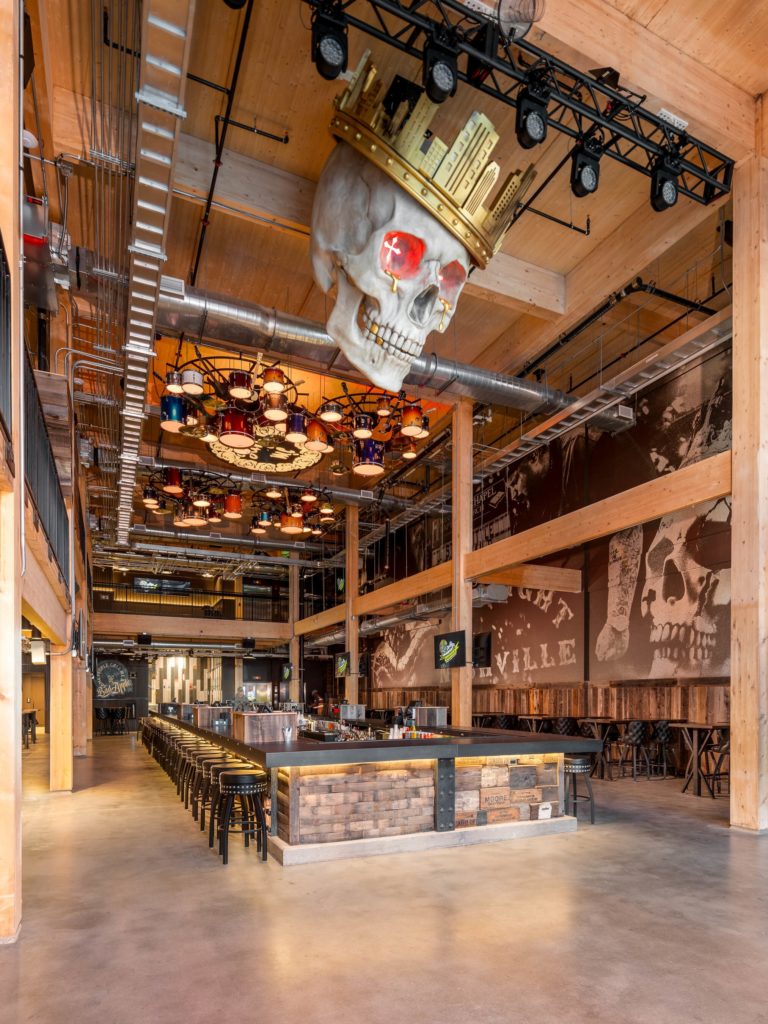
Situated between 2nd and 3rd Ave S in the former home to Trail West Boot Store, Broadway’s newest addition offers a full dining experience, tattoo parlor pop-up and lively nightlife inspired by Jelly Roll’s raw, authentic spirit. The first floor exudes a vibrant atmosphere, featuring a full bar, diverse menu, and live music—all under the glow of a massive skull chandelier, drum-head lights, and a “Save Me/I’m Fine” art installation. With a variety of seating options, including tables and bar stools, guests can enjoy drinks and meals while enjoying live bands performing from an elevated stage. Above, a wrap-around mezzanine offers a birds-eye view of the venue, complete with a dedicated space for flash-style tattoos which will open in conjunction with the grand opening on February 20.

The second floor pays tribute to Jelly Roll’s wife, Bunnie Xo of the popular Dumb Blonde podcast, with a larger-than life likeness of her above the bar. Bunnie’s immerses guests in an inviting, sultry world, featuring a stage for live DJs and plush booths perfect for nightlife and VIP table reservations. The third floor offers a more intimate, elevated experience with Buddy’s, a cocktail lounge named in honor of Jelly Roll’s late father. This upscale, speakeasy-style venue serves craft cocktails and a limited, thoughtfully curated food menu in a cozy setting. Reserved mainly for private events and for Jelly Roll’s personal use. Buddy’s will occasionally open its doors to the public for a more exclusive night out. Finally, the top floor is an indoor-outdoor rooftop, offering sweeping views, comfortable booths, space for a DJ, bar fare, and another signature rotating skull chandelier.

Goodnight Nashville’s opening menu offers an elevated take on American gastropub cuisine, curated by Executive Chef Patrick Murphy. From shareable starters, and gourmet burgers to pizzas, salads, and sandwiches, there is something for everyone. On the opening menu, standout shareables include the Family Recipe Meatballs with marinara, basil ricotta, arugula, lemon ($14) and “Wild One” Wings, with the choice of Nashville, Memphis BBQ, Buffalo Caramel, Albama White BBQ, or Broadway Dust Rubbed sauces ($16). The entrée portion of the menu features everything from a Nashville Mac N’ Cheese with fried Nashville hot chicken, beer cheese sauce, cavatappi pasta, and herbed bread crumbs ($21) to a more classic double wagyu smash patty cheeseburger dubbed the “Losers Burger” ($18). And of course, no menu is complete without desserts like Dad’s Key Lime Pie with vanilla whip and graham cracker crust ($12) and the Old-Fashioned Jelly Roll with lemon sponge cake, strawberry jelly, mascarpone whip, and toasted almonds ($14). In addition to bites, Goodnight Nashville has an extensive bar menu and will offer everything from specialty cocktails to beer, wine, seltzers, and non-alcoholic options.

“As we set out to create EEG’s first venue in Nashville, we knew there was no better person to partner with than a true hometown hero like Jelly Roll,” says Les Corieri, co-owner of Evening Entertainment Group. “Goodnight Nashville is more than just a place to grab a drink—it’s an experience where music, culture, and hospitality meet. Nashville has always been a vibrant city of energy and creativity, and we’re excited to be part of that spirit, bringing something new to the scene.”