


Matthew McConaughey reflects on the power of authenticity, linking it back to his iconic Alright, Alright, Alright moment. In Lyrics of Livin’, he challenges us all to ask life’s biggest questions — because knowing yourself is the key to everything.
Taylor Tomlinson Champions Robbie Williams’ ‘Better Man’ Biopic For 7-Full Minutes, And She’s Right

Taylor Tomlinson is all in on Better Man, the upcoming biopic where Robbie Williams is reimagined as an anthropomorphic chimpanzee. With infectious enthusiasm, she makes her case for why the world needs to experience this one-of-a-kind musical spectacle.
Chris Farley’s Unhinged ‘Late Show’ Entrance Is One of the Most Memorable Talk Show Moments of All Time

Chris Farley was a force of nature, and his Late Show entrance remains an all-time classic. A master of physical comedy, Farley’s over-the-top antics in this clip prove why he was one of the most electrifying late-night guests ever. Pure, chaotic brilliance.
CMH Records Set to Release Classic 1981 Album ‘The Clayton McMichen Story’ Out February 21
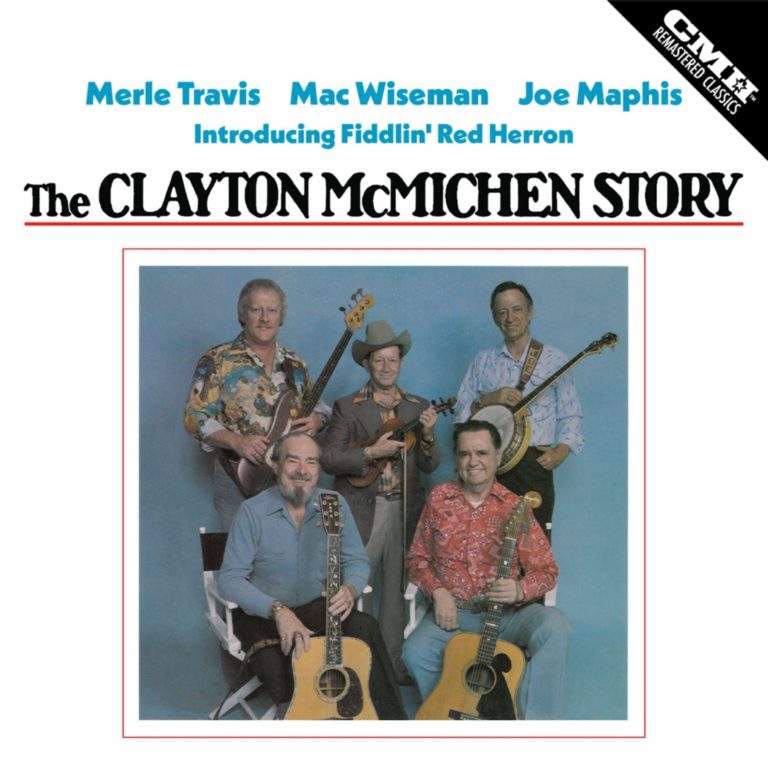
CMH RECORDS (Country. Music. Heritage.) maintains a rich history of classic country and bluegrass albums and is honoring several of these legacy releases by remastering them and making them available in new formats for the first time ever. Out February 21 for the first time ever on CD and digital, the 1981 classic title The Clayton McMichen Story features a star-studded cast of musicians–country and bluegrass legends Merle Travis, Mac Wiseman and Joe Maphis, alongside Jackson D. Kane and Fiddlin’ Red Herron–paying tribute to one of the unsung greats of American roots music, Clayton McMichen. Ahead of the release, “I’m Looking Over A Four-Leaf Clover,” a track highlight off the expansive 26-track collection, is now available for streaming.
Born in Cobb County, Georgia in the year 1900, Clayton McMichen was a true forefather of country, bluegrass and popular music. Grandson of a banjoist and son of a fiddler, McMichen took to the fiddle at a young age and began a life devoted to music. He was a virtuoso and pioneer, performing in a variety of styles early in his career, from traditional fiddle tunes to pop songs of the day as well as jazz and dance numbers and country ballads.
This album, recorded in 1981 after McMichen’s death, presents a selection of songs that were integral to McMichen’s musical life performed by an ensemble of country and bluegrass greats. Blues numbers like “House of the Rising Sun” sit alongside jazz standards like “Sweet Georgia Brown” and traditional fiddle tunes like “In the Pines,” representing McMichen’s decidedly eclectic repertoire. Special tribute is also paid through the selection of “Sweet Bunch of Daisies” and “Peach Pickin’ Time in Georgia,” two songs that served as major hits for the fiddler, as well as “Arkansas Traveler,” the song that won him second place at the 1922 Atlanta fiddlers convention for what was his first documented performance.
The ensemble here includes musicians who are bluegrass legends in their own right, with Merle Travis, Mac Wiseman and Joe Maphis performing alongside Jackson D. Kane and Fiddlin’ Red Herron playing the part of McMichen. Merle Travis is of special note here as the country icon got his start playing in McMichen’s band in 1937. In his original liner notes for the album, Travis reflects on the immense musical and personal influence McMichen had on him, painting a picture of him as a mentor in every sense.
Clayton McMichen passed in 1970, over a decade before the release of this album. This collection stands as a small part of his musical legacy, showing his influence and undeniable presence in the history of American roots music.
Founded in 1975 by Martin Haerle, CMH Records has released albums from artists whose monumental influence on American roots music is unparalleled. The ‘70s and ‘80s represent the foundational recordings in CMH Records’ bluegrass, old time and traditional country history, with material being put out by Merle Travis, The Osborne Brothers, Mac Wiseman, Joe Maphis, Jim & Jesse McReynolds, Grandpa Jones, Lester Flatt and Eddie Adcock. Throughout the ‘90s and into the new millennium, CMH Records continued to cut records with artists such as Wanda Jackson (aka “The Queen of Rockabilly”), Raul Malo, Larry Cordle, Pine Mountain Railroad, Jimmy Gaudreau, and many others. Producing songs rich in American heritage by artists with their own distinct style created a strong backbone and history for the label.
The label remains a proud family business, now run by Martin’s son David. Described by the Los Angeles Times as a “stubborn, curious Silver Lake music company,” the label has been a strong proponent for honest music and has found success with its classic catalogue and its ongoing “Pickin’ On” series, which features bluegrass interpretations of contemporary artists, including recent hit albums dedicated to the music of Nirvana and Modest Mouse. The Times piece added that CMH “meets unsung needs in the music industry” and cited its “creative diversification.”
Track List for The Clayton McMichen Story:
Give The Fiddler A Dram
In The Pines
Fire On The Mountain
Fifty Years Ago Waltz
Hell Broke Loose In Georgia
Trouble In Mind
McMichen’s Reel
Peach Pickin’ Time In Georgia
Limehouse Blues
The Convict And The Rose
Carroll County Blues
House Of The Rising Sun
I’m Looking Over A Four-Leaf Clover
Dreamy Georgiana Moon
Waiting For The Robert E. Lee
Ida Red
Rock Jenny Rock
Arkansas Traveler
Bile ‘Em Cabbage Down
Medley: In the Blue Hills of Virginia/Back to Old Smoky Mountain
Sweet Georgia Brown
They Cut Down The Old Pine Tree
Darktown Strutters’ Ball
Goodnight Waltz
Farewell Blues
Sweet Bunch Of Daisies
Yasmin Williams’ Tiny Desk: A Fingerstyle Masterclass in Musical Storytelling

Yasmin Williams doesn’t just play the guitar—she transforms it into a world of rhythm, melody, and movement. From the rollicking Hummingbird, where Allison de Groot’s banjo and Tatiana Hargreaves’ fiddle bring old-time energy, to the percussive brilliance of Guitka, Williams taps, slaps, and slides across her fretboard with effortless grace. Closing with Restless Heart, she takes us full circle, reminding us that music, at its best, is pure play.
Roberto Fonseca’s Tiny Desk: Afro-Cuban Jazz at Its Finest

Roberto Fonseca’s Tiny Desk session is a masterclass in Afro-Cuban jazz, blending rich rhythms with seamless improvisation. Backed by a powerhouse band, Fonseca’s piano work drives the performance, from the lively Yanim to the percussive groove of Baila Mulata. As the set strips down to a quartet, his fiery finale showcases pure mastery—this is jazz at its most electrifying.
Braxton Cook’s Tiny Desk: A Celebration of Growth and Gratitude

Braxton Cook steps into the spotlight with a set that blends jazz, soul, and raw emotion. Opening with the stirring MB (for Ma’Khia Bryant), he leads his band through a dynamic, heartfelt performance, switching between sax, vocals, flute, and guitar. From the smooth title track My Everything to the electrifying Zodiac, Cook’s artistry shines, closing with We’ve Come So Far—a triumphant reflection on progress and appreciation.
Faye Webster’s Tiny Desk Is A Swoon-Worthy Escape into Dreamlike Orchestration

Faye Webster’s Tiny Desk performance is a masterclass in understated elegance. Backed by her ever-faithful band and a lush string quartet, she delivers a hypnotic set that blends woozy indie-folk with orchestral grandeur. Tracks like But Not Kiss and Underdressed at the Symphony float effortlessly, while Jonny and its spoken-word reprise take on a new, ethereal life. The absence of the original’s brassy horns is more than made up for by Trey Pollard’s sweeping string arrangements, adding to the set’s intoxicating dreamscape. It’s Webster at her most entrancing—lost in the music, yet completely in control.
The Future of Pianos: Market Growth, Customization Trends & Digital Innovation

The global piano market size is estimated to grow by USD 349.4 million from 2025-2029, according to Technavio. The market is estimated to grow at a CAGR of over 2.5% during the forecast period. Inclusion of music in academic curricula is driving market growth, with a trend towards preference for customized pianos. However, availability of music production software poses a challenge. Key market players include AUGUST FORSTER GmbH, C. Bechstein Pianoforte AG, Carl Sauter Pianofortemanufaktur GmbH and Co. KG, CASIO Computer Co. Ltd., Fazioli Pianoforti spa, GROTRIAN PIANO COMPANY GmbH, Guangzhou Pearl River Piano Group Co. Ltd., Julius Bluthner Pianofortefabrik GmbH, Kawai Musical Instruments Mfg. Co. Ltd., KORG Inc., Mason and Hamlin Piano Co., PETROF Spol s.r.o., Roland Corp., Samick Music Corp., SCHULZE POLLMANN PIANOFORTI SRL, Steingraeber and Sohne KG, Steinway Inc., Stuart and Sons, Wilhelm Schimmel Pianofortefabrik GmbH, and Yamaha Corp..
The piano market is thriving with trends that cater to various segments. Luxury pianos remain popular among wealthy people, reflecting cultural tastes and longstanding musical traditions. Music education programs in colleges and universities continue to drive demand for both acoustic and digital pianos. Internet merchants and physical retailers sell a range of conventional musical instruments, including acoustic grand pianos, upright pianos, vertical pianos, digital pianos, keyboard synthesizers, self-playing pianos, and hybrid pianos. Acoustic pianos, with superior sound quality, are preferred by professional musicians, while digital pianos offer electronic sound generation, multiple instrument sounds, recording capabilities, headphone outputs, and silent practice options for amateur musicians and small venues. Unstable economies have led some to consider tuning acoustic pianos more frequently. Domestic and foreign piano producers compete in this market, offering a variety of pianos. Traditionalists favor acoustic pianos with wire strings, wooden hammers, and a compass of 88 keys, while younger generations explore digital entertainment and self-learning tools. Piano trends include reality television musical competitions, portable pianos, and music production software catering to pop, rock, jazz, and other music genres.
Customized pianos have gained significant traction in both developed and emerging markets, with the Americas, Europe, India, and China leading the way. This trend is driven by the unique and distinct nature of customized musical instruments. Premium piano vendors cater to this segment, providing visually appealing and high-quality customized pianos. Customization options range from color and finish choices to monograms, inlays, and designs. For instance, Amro Music Stores Inc. Offers customization, enabling clients to select pianos in various shapes and sizes and design their personalized inlays.
The piano market faces unique challenges in catering to luxuries sought after by wealthy people, while addressing the changing musical tastes and preferences of various generations. Traditionalists value the longstanding tradition of piano-focused music, while younger generations gravitate towards digital entertainment. Acoustic grand pianos, known for their superior sound quality, remain a favorite among professional musicians. However, unstable economies and tuning requirements pose challenges for domestic and foreign piano producers. Meanwhile, digital pianos, keyboard synthesizers, self-playing pianos, and hybrid pianos offer solutions with electronic sound generation, multiple instrument sounds, recording capabilities, headphone outputs, and silent practice options. Music education programs in colleges and universities, music schools, and educational institutions play a crucial role in nurturing talent. Piano sales to these institutions contribute significantly to the market. Internet merchants and physical retailers compete to meet the demands of amateur musicians and small venues, offering a range of conventional musical instruments like acoustic pianos and digital pianos. Market trends include the rise of reality television musical competitions, portable pianos, and the integration of music production software into pianos, enabling the creation of pop, rock, jazz, and other genres. Piano manufacturers must adapt to these changes while maintaining the essence of the piano – its wire strings, wooden hammers, compass, octaves, hardwood, laminated, and acoustic pianos – to cater to diverse customer needs.
Music production software is gaining popularity as a cost-effective alternative to traditional musical instruments like pianos. This software allows users to compose music with various options that mimic the sounds produced by professional musicians. Amateurs can create music without formal training, making it a versatile solution. The software offers a wide range of sounds and is more affordable than purchasing a piano. Additionally, its mobility feature enables recording music in various environments, making it a practical choice for musicians.
Offline distribution channels remain crucial in the global piano market due to their tangible and interactive advantages. Traditional piano retailers and dealers provide customers with the opportunity to personally inspect pianos and test them before purchasing. Skilled employees in these stores offer expert advice, which is particularly valuable when buying expensive acoustic pianas. Renowned piano brands like Yamaha and Steinway maintain private showrooms globally, fostering consumer trust and loyalty. Despite the rise of e-commerce, offline channels remain indispensable for complex, high-value transactions. Universities’ adoption of hybrid learning models will also necessitate continued purchases from local vendors. As a result, the global piano market is projected to expand substantially during the forecast period.
The piano market is a thriving industry that caters to the luxurious world of music. It offers various types of pianos, each with unique characteristics that cater to diverse musical tastes and education needs. Pianos range from acoustic, including grand, upright, and vertical pianas, to digital, keyboard synthesizers, self-playing, hybrid, and portable options. Each piano type comes with distinct features such as wire strings, wooden hammers, compass, octaves, hardwood, laminated, and sensors. The education sector plays a significant role in the market, with music education programs in colleges and universities fostering the next generation of pianists. Reality television and musical competitions further fuel the demand for pianos, particularly among professional pianists. Music production software and piano-focused music also contribute to the market’s growth.
The piano market caters to luxuries and wealthy people with a deep appreciation for music education and cultural tastes. With a longstanding tradition, pianos have been a symbol of musical excellence and sophistication. Pianofocused music encompasses various genres, from classical to pianoforte, and traditionalists continue to champion acoustic grand pianos with superior sound quality. Acoustic pianos, including acoustic grand pianos, upright pianos, and vertical pianos, are prized for their wire strings, wooden hammers, and compass of octaves made from hardwood or laminated materials. In contrast, digital pianos, keyboard synthesizers, self-playing pianos, and hybrid pianos offer electronic sound generation, multiple instrument sounds, recording capabilities, headphone outputs, and silent practice options, appealing to younger generations and amateur musicians. Unstable economies and tuning requirements add to the market’s complexity. Acoustic pianos require regular maintenance, while digital pianos are more stable and cost-effective. Piano producers, both domestic and foreign, cater to various segments, including professional musicians and small venues. Music schools and educational institutions provide music education programs, while colleges and universities offer comprehensive music programs. The market also includes internet merchants, physical retailers, and reality television musical competitions, showcasing pianos as extracurricular activities and performance opportunities. Piano, as a conventional musical instrument, continues to evolve with digital entertainment, offering a range of options, from P-125 digital pianos to professional pianists’ preferred instruments. Music production software and various music genres, including pop, rock, jazz, and classical, further expand the market’s reach.
5 Surprising Facts About Elton John’s “Goodbye Yellow Brick Road”
Few albums stand the test of time quite like Goodbye Yellow Brick Road, Elton John’s 1973 magnum opus. A sprawling double album packed with cinematic storytelling, genre-hopping brilliance, and some of the most iconic songs of all time, it cemented Elton John’s status as a global superstar. But even with its legendary status, there are still some lesser-known gems hidden in its history. Here are five unknown facts about Goodbye Yellow Brick Road that even die-hard fans might not know.
1. The Album Was Almost Recorded in Jamaica—And It Was a Disaster
Before settling into the idyllic Château d’Hérouville in France, Elton and his band initially planned to record the album in Kingston, Jamaica. Why? Because The Rolling Stones had just wrapped up Goats Head Soup there, and Elton wanted to capture some of that same magic. But instead of inspiration, they found chaos: political protests, logistical nightmares, and a recording studio with terrible equipment. Things got so bad that the only song recorded there, “Saturday Night’s Alright for Fighting,” sounded like it was “made on the worst transistor radio,” according to Elton. Within days, the whole operation packed up and moved to France—where history was made.
Before settling into the idyllic Château d’Hérouville in France, Elton and his band initially planned to record the album in Kingston, Jamaica. Why? Because The Rolling Stones had just wrapped up Goats Head Soup there, and Elton wanted to capture some of that same magic. But instead of inspiration, they found chaos: political protests, logistical nightmares, and a recording studio with terrible equipment. Things got so bad that the only song recorded there, “Saturday Night’s Alright for Fighting,” sounded like it was “made on the worst transistor radio,” according to Elton. Within days, the whole operation packed up and moved to France—where history was made.
2. Elton Wrote Most of the Music in Three Days
When inspiration strikes, it really strikes. Bernie Taupin delivered the lyrics for the album in just two and a half weeks, but Elton John took things to a whole new level—writing most of the melodies for the 17 tracks in a mere three days. That’s right: in less than 72 hours, songs like “Candle in the Wind,” “Goodbye Yellow Brick Road,” and “Bennie and the Jets” took shape. The man was on fire. It’s a testament to his otherworldly talent and intuition as a songwriter.
When inspiration strikes, it really strikes. Bernie Taupin delivered the lyrics for the album in just two and a half weeks, but Elton John took things to a whole new level—writing most of the melodies for the 17 tracks in a mere three days. That’s right: in less than 72 hours, songs like “Candle in the Wind,” “Goodbye Yellow Brick Road,” and “Bennie and the Jets” took shape. The man was on fire. It’s a testament to his otherworldly talent and intuition as a songwriter.
3. “Bennie and the Jets” Wasn’t Supposed to Be a Single—Until Radio Stations Made It One
The funky, futuristic “Bennie and the Jets” wasn’t even on the radar as a single—until U.S. radio DJs took matters into their own hands. American stations, especially R&B stations in Detroit, started playing the song non-stop, recognizing its crossover potential. The label eventually gave in and released it as a single, and it shot straight to #1 in the U.S. Even more incredible? The “live” sound of the track was completely fake—producer Gus Dudgeon added artificial crowd noise, including a sample from a Jimi Hendrix concert, to make it sound like an arena anthem.
The funky, futuristic “Bennie and the Jets” wasn’t even on the radar as a single—until U.S. radio DJs took matters into their own hands. American stations, especially R&B stations in Detroit, started playing the song non-stop, recognizing its crossover potential. The label eventually gave in and released it as a single, and it shot straight to #1 in the U.S. Even more incredible? The “live” sound of the track was completely fake—producer Gus Dudgeon added artificial crowd noise, including a sample from a Jimi Hendrix concert, to make it sound like an arena anthem.
4. “Funeral for a Friend” Was Written as the Soundtrack to Elton’s Own Imaginary Funeral
Elton John has a flair for the dramatic, and nothing proves it more than the epic opening of the album. “Funeral for a Friend” wasn’t inspired by a real-life loss—it was Elton fantasizing about what music he’d want played at his own funeral. The grandiose, synthesizer-heavy instrumental intro, created by engineer David Hentschel on an ARP 2500 synth, segues perfectly into “Love Lies Bleeding,” making for one of the most stunning album openers in rock history. It remains a live favorite to this day, often played in extended versions that showcase Elton’s dazzling piano skills.
Elton John has a flair for the dramatic, and nothing proves it more than the epic opening of the album. “Funeral for a Friend” wasn’t inspired by a real-life loss—it was Elton fantasizing about what music he’d want played at his own funeral. The grandiose, synthesizer-heavy instrumental intro, created by engineer David Hentschel on an ARP 2500 synth, segues perfectly into “Love Lies Bleeding,” making for one of the most stunning album openers in rock history. It remains a live favorite to this day, often played in extended versions that showcase Elton’s dazzling piano skills.
5. “Harmony” Was Almost a Hit, But Timing Killed It
“Harmony,” the album’s final track, had all the makings of a smash single—lush harmonies, soaring melodies, and an unforgettable chorus. It was even considered for release as a fourth single, but the sheer success of Goodbye Yellow Brick Road worked against it. By the time they were ready to release another single, Elton had already moved on to Caribou, and the label didn’t want to overshadow his next album. However, “Harmony” became a cult classic, getting heavy airplay on FM radio and even topping Boston’s WBZ-FM chart in 1974.
“Harmony,” the album’s final track, had all the makings of a smash single—lush harmonies, soaring melodies, and an unforgettable chorus. It was even considered for release as a fourth single, but the sheer success of Goodbye Yellow Brick Road worked against it. By the time they were ready to release another single, Elton had already moved on to Caribou, and the label didn’t want to overshadow his next album. However, “Harmony” became a cult classic, getting heavy airplay on FM radio and even topping Boston’s WBZ-FM chart in 1974.
A half-century later, Goodbye Yellow Brick Road remains untouchable—a symphony of excess, heartbreak, and sheer musical bravado. It’s the sound of an artist at his creative peak, effortlessly blending glam rock, balladry, and cinematic storytelling. If rock ‘n’ roll had a golden age, this was its crown jewel.