Home Blog Page 933

Trading Cards Market to Hit $21 Billion by 2034, Fueled by Nostalgia and Digital Trading

0

The 2025 Version Report “Trading Cards Market Size, Statistics, Growth Trend Analysis, and Forecast Report, 2024 – 2034” published by Market Decipher, presents updated findings and insights. It highlights the market size of the trading cards sector, driven by increased interest in nostalgia and the shift towards digital trade through online platforms. The trading cards industry is projected to reach $21 billion by 2034, with a robust CAGR of 8.5% during the forecast period of 2024–2034.

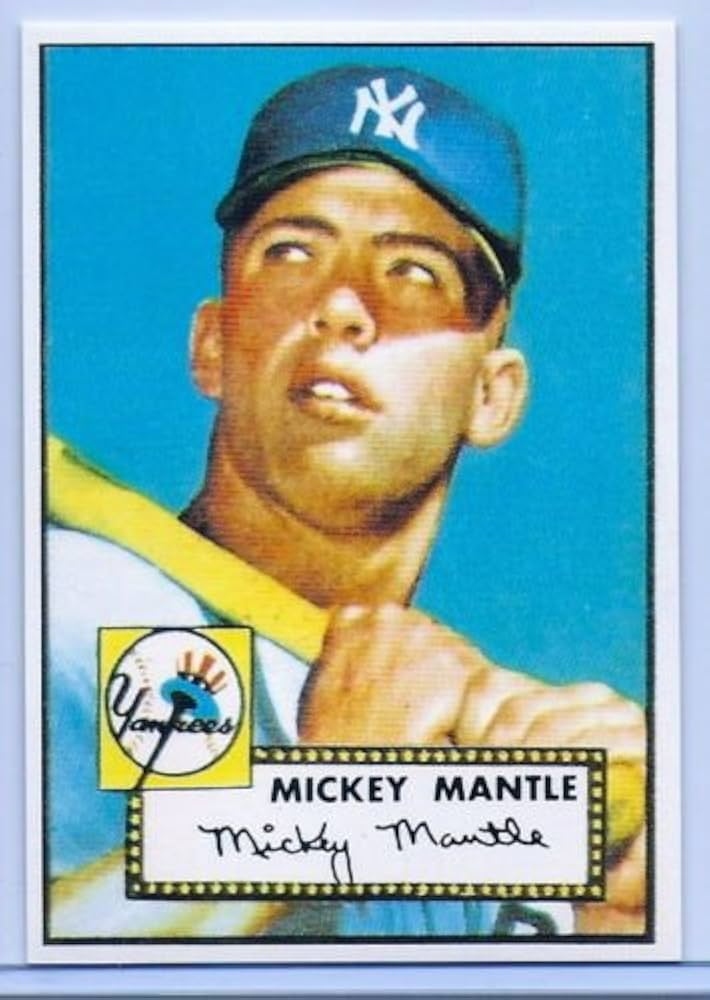
Trading cards are collectible, themed cards associated with various subjects like sports, entertainment, or hobbies. Each card typically displays a distinctive image or character on the front, while the reverse side contains relevant information or statistics. These cards are limited in production, encouraging aficionados to purchase, exchange, and amass them. Trading cards have garnered substantial popularity over time, fostering a lively community of collectors who engage in swapping, purchasing, and vending to complete their sets. Some cards can possess considerable monetary worth, especially rare or vintage versions, rendering them not merely a pastime but also an investment for numerous enthusiasts.

Trading Cards Market Overview
The trading cards market is a flourishing industry centered on collectible cards representing diverse themes, including sports, entertainment, and hobbies. These cards, featuring unique artwork or characters on the front and informative content on the reverse, captivate collectors worldwide. With limited production runs, trading cards encourage buying, selling, and trading among enthusiasts, fostering a vibrant community.

The trading cards market has witnessed robust growth driven by several key trends and growth drivers. One prominent trend is the digitization of trading cards, allowing collectors to engage in virtual trading and purchases. Moreover, the surge of nostalgia for vintage cards has escalated demand, leading to significant price appreciation for rare editions. Additionally, partnerships between trading card companies and popular franchises, such as sports leagues and entertainment studios, have expanded the markets appeal and increased sales. Furthermore, the rise of e-commerce and online marketplaces has made it easier for collectors to access a global pool of trading cards, boosting market growth.

Despite its growth, the trading cards market faces certain challenges. One challenge is the risk of counterfeits and fraud, which can undermine collector trust and market integrity. Ensuring card authenticity and provenance becomes paramount in mitigating this issue. Additionally, fluctuations in the secondary market value of cards can pose challenges for collectors and investors alike. Economic uncertainties and market speculation can lead to price volatility, requiring careful consideration by participants. Lastly, environmental concerns related to the production and disposal of trading cards, often made from non-recyclable materials, are increasingly important, prompting calls for more sustainable practices.

Amidst these challenges, the trading cards market presents several business opportunities. Companies can explore innovations in card authentication and blockchain technology to enhance trust and security within the market. Collaborations with emerging artists and creators can inject fresh designs and themes into the market, attracting a broader audience. Furthermore, the sustainability trend offers opportunities for eco-friendly card production and packaging, aligning with environmentally conscious consumer preferences. Diversifying card themes and targeting niche collector communities can also unlock untapped market segments. Lastly, leveraging digital platforms for augmented reality experiences or gamification can enhance the overall trading cards ecosystem, providing unique value to collectors and investors alike.

Impact of COVID-19

The COVID-19 pandemic had a multifaceted impact on the trading cards market. Initially, it disrupted production and distribution chains, leading to supply shortages and delays. However, as lockdowns and social distancing measures took hold, the market experienced a surge in online sales and trading card-related digital platforms. The pandemic also heightened interest in collectibles as alternative investments, driving up prices for rare and vintage cards. With more people staying home, nostalgia for trading cards grew, attracting new collectors and investors. Overall, COVID-19 reshaped the trading cards market by accelerating its digitalization and expanding its appeal, despite temporary setbacks in the supply chain.

According to the type, the sports trading cards segment has held 53.8% revenue share in 2022. The sports trading cards segment commands a significant share in the trading cards market primarily due to its enduring popularity and a dedicated fan base. Sports trading cards hold a unique appeal, as they offer collectors the opportunity to own a piece of sporting history, featuring their favorite athletes and memorable moments. The association with renowned sports leagues and events, coupled with the potential for high resale value, attracts both seasoned collectors and newcomers. This enduring demand and emotional connection make sports trading cards a cornerstone of the market, contributing substantially to its overall share.

North America has held largest revenue share 42% in 2022. North America dominates the trading cards market due to several key factors. Firstly, the region boasts a strong sporting culture with avid fans and collectors, driving demand for sports-related trading cards. Secondly, it houses major trading card manufacturers and sports leagues, facilitating collaborations and marketing efforts. Additionally, a robust e-commerce infrastructure and widespread availability of trading cards contribute to market growth. Lastly, North Americas affluent population and willingness to invest in collectibles further bolster the market share. These factors collectively establish North America as a significant player in the global trading cards market.

Recent Strategic Developments

• The trading card industry is undergoing transformative shifts driven by strategic investments and innovations. Notably, companies are heavily backing Online Trading Card Games (OCGs) as a key growth catalyst, with the Topps Companys acquisition of Metta in 2022 exemplifying this trend.
• Another pivotal development is the industrys expansion into untapped markets like the Asia Pacific and Latin America. In 2023, Panini Americas introduction of a trading card set featuring Brazilian soccer players underscores this global reach.
• Furthermore, diversification is evident in the launch of novel card sets highlighting various subjects, including female athletes and ethnically diverse characters. An example is the Upper Deck Companys 2023 release of a set featuring female athletes from a spectrum of sports.
• Partnerships with sports leagues and teams are also flourishing, aimed at creating exclusive trading card sets. Fanatics, in 2023, inked a multi-year deal with the National Basketball Association to become the leagues sole trading card partner.
• The industry is harnessing technology for an enhanced trading card experience, as evidenced by Topps Companys plans to introduce a digital trading card platform in 2023. This innovation will enable users to collect and trade digital trading cards, marking a significant leap forward in the industrys evolution.
Vinyl Records Market to Grow by $857.2M by 2029, Fueled by Collectors and Special Edition Releases

0

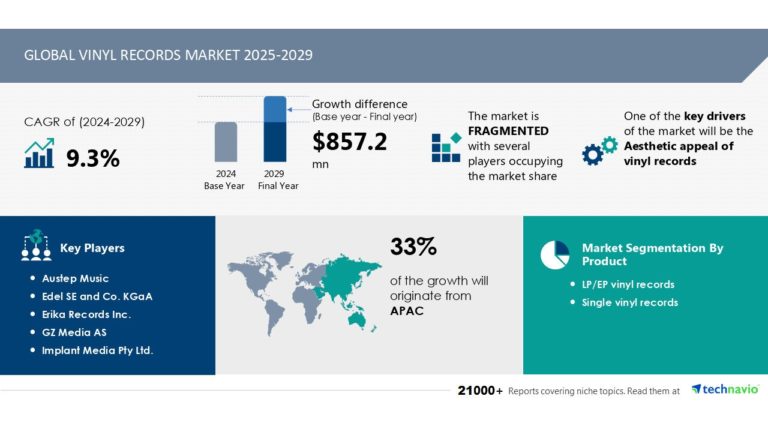
The global vinyl records market size is estimated to grow by USD 857.2 million from 2025-2029, according to Technavio. The market is estimated to grow at a CAGR of  9.3%  during the forecast period. Aesthetic appeal of vinyl records is driving market growth, with a trend towards promoting vinyl records as special editions/deluxe product. However, coping with demand is major challenge faced by manufacturers  poses a challenge. Key market players include Austep Music, Edel SE and Co. KGaA, Erika Records Inc., GZ Media AS, Implant Media Pty Ltd., Independent Record Pressing, Microforum Services Group, MPO France, New Press Vinyl, Pallas Group, PrimeDisc Ltd., Quality Record Pressings, R.A.N.D. MUZIK GbR, Record Industry BV, Suitcase Records, Takt Direct GmbH, The Vinyl Factory Ltd., United Record Pressing, Vinyl Presents Ltd., and Zenith Records.

Vinyl records are making a comeback in the music industry, with music collectors and audiophiles leading the trend. Omnichannel retailing practices allow consumers to buy these records from record shops, online marketplaces, and even through IoT devices. The demand for vinyl records is driven by their analog sound quality, which sets them apart from digital recordings. PVC, the primary material used in making vinyl records, is being replaced with metallic resins and cardboard for eco-friendly alternatives. DJs and music lovers use turntables to play vinyl records for their unique sound and aesthetic appeal. Vinyl records offer a record experience that digital music formats cannot match. Music labels and record shops are capitalizing on this trend by releasing exclusive songs on singles vinyl records. Vinyl Technologies and other companies are innovating in this space, offering advanced turntables and stylus technology. The vinyl record market is growing, with musicians and record labels recognizing the value of physical music formats. Despite the rise of music streaming sources, vinyl records continue to attract music aficionados with their offline charm. Vinyl record pricing varies based on rarity, condition, and demand. Promotional events and listening parties are common in the vinyl record community, providing opportunities for fans to connect and share their love for music. Whether it’s pop music or niche genres, vinyl records offer a unique listening experience that continues to resonate with music lovers.

In today’s digital age, the vinyl record market experiences a significant resurgence as younger generations seek unique value and experiences from their music collections. Limited-edition vinyl releases, such as Arthur Verocai’s “Bis” on seven vinyl and Banda Black Rios’ “Super Nova Samba Funk” on yellow vinyl, attract collectors. Online stores like Rare Ltd focus on exclusive variants, offering collectible vinyl records to music enthusiasts. This trend underscores the enduring appeal of vinyl records in the modern music landscape.

Vinyl records have experienced a resurgence in popularity among music collectors, audiophiles, and disc jockeys (DJs). Omnichannel retailing practices have played a role in this revival, allowing consumers to purchase vinyl records both offline at record shops and online. The demand for vinyl records is driven by music lovers who appreciate the analog sound quality of phonograph records, contrasting digital recordings. Vinyl records are made from polyvinyl chloride (PVC) and come in various formats such as singles and full-length albums. The turntable stylus reads the modulated sound data etched into the vinyl, providing a unique listening experience. However, challenges persist in the vinyl records market, including the high cost of production due to metallic resins and cardboard packaging. Music labels and record shops are adapting to meet the demands of vinyl enthusiasts by investing in technology from companies like Viryl Technologies to improve production efficiency. DJs continue to use vinyl records for their aesthetic attractiveness and the unique experience of creating DJ sets. The vinyl record market faces competition from digital music formats, but its appeal to music aficionados remains strong. Vinyl records offer an offline record-buying experience, contrasting the convenience of digital music streaming sources on smartphones. Despite the challenges, the vinyl records market continues to thrive, with exclusive songs and promotional events driving demand. Record companies are responding by releasing limited-edition vinyl records and collaborating with musicians to create unique listening experiences.

The vinyl records market faces a significant challenge due to the limited number of factories producing records compared to the vast number of music labels worldwide. This supply shortage has resulted in extended production times, with some plants taking up to six months to deliver orders. This delay is problematic in today’s music industry, where listeners expect instant access to new releases. Independent labels are particularly affected, as larger orders from established artists can prioritize production over smaller orders. Vinyl record manufacturing plants are working diligently to meet the high demand, but the bottleneck in supply persists.

 The LP vinyl record format, with a diameter of 12 or 10 inches and a speed exceeding 33 rpm, is the standard for most record labels. In 2024, the LP segment experienced growth due to the increasing demand for retro music. Vendors offer various colored LP vinyl records with creative packaging to attract customers. LPs can accommodate over 20 minutes of playtime per side, providing more music value for consumers. EPs, introduced as singles in vinyl format, gained popularity in the 1950s and 1960s with musicians like the Troggs and the Beatles. EPs are often used in album launches, and their popularity continues to rise, driving the demand for LP/EP vinyl records in the market.

Vinyl records, also known as phonograph records or LPs, continue to captivate music enthusiasts worldwide. Music collectors and audiophiles are drawn to the unique, tactile experience of owning and playing these analog records. The warmth and richness of the sound produced by vinyl records cannot be replicated by digital recordings on compact discs or streaming music subscriptions. The process of dropping the needle onto a vinyl record and listening to the music unfold is a ritual cherished by vinyl enthusiasts. DJs also value vinyl records for their aesthetic appeal and the ability to create seamless transitions between tracks during their sets. The vinyl record industry, which uses polyvinyl chloride (PVC) as its primary material, continues to thrive, offering a diverse range of recordings from pop music to niche genres. Vinyl records provide a record experience that goes beyond listening to music, with promotional events and listening parties offering unique opportunities for fans to connect with their favorite artists and music labels.

The vinyl records market is experiencing a resurgence in popularity, with music collectors and audiophiles rediscovering the unique analog sound quality of phonograph records. The use of omnichannel retailing practices allows consumers to purchase vinyl records both offline at record shops and online through e-commerce platforms. The production of vinyl records involves the use of polyvinyl chloride (PVC), metallic resins, and cardboard. The turntable stylus reads the modulated sound data etched into the record, providing a distinct listening experience. Music lovers, DJs, and music aficionados continue to appreciate the aesthetic attractiveness of vinyl records. The record experience extends beyond listening to music, with promotional events and DJ sets showcasing the cultural significance of vinyl records. While digital music formats have become prevalent, vinyl records offer an offline alternative, appealing to those who value the tactile experience and the unique sound quality. Vinyl enthusiasts can collect singles vinyl records, exclusive songs, and limited edition releases, making the market a lucrative one for musicians and record labels. The vinyl records market also caters to the needs of DJs, with turntables and recordings essential for creating DJ sets. The Internet of Things has also influenced the market, with companies like Viryl Technologies developing innovative technologies to improve vinyl record production and preservation. Despite the convenience of digital music formats and music streaming sources, the vinyl records market continues to thrive, offering a unique listening experience and a connection to music history. The vinyl record pricing reflects the demand for these physical music formats, with collectors and enthusiasts willing to pay a premium for rare and limited edition releases.

Music Production Software Market to Surge by $432.8M by 2029, Driven by AI and Cloud Tech

0

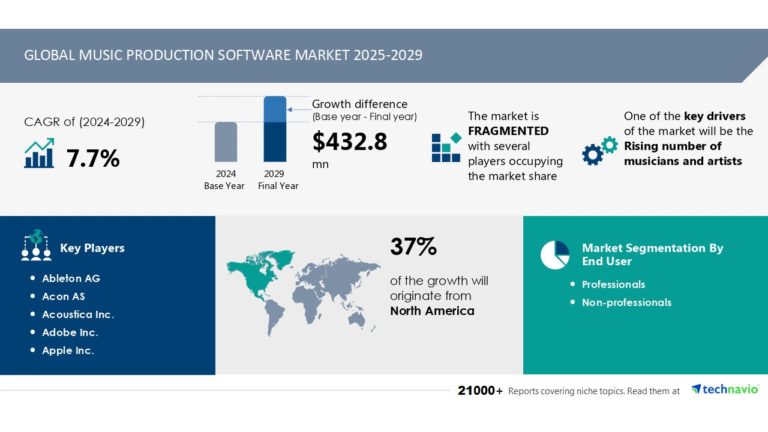
The global music production software market size is estimated to grow by USD 432.8 million from 2025-2029, according to Technavio. The market is estimated to grow at a CAGR of almost 7.7%  during the forecast period. Rising number of musicians and artists is driving market growth, with a trend towards growing use of AI for music production. However, easy availability of open-source software for music production software  poses a challenge. Key market players include Ableton AG, Acon AS, Acoustica Inc., Adobe Inc., Apple Inc., Avid Technology Inc., Bitwig GmbH, Cockos Inc., GoldWave Inc., Image Line Software NV, iZotope Inc., MAGIX Software GmbH, MOTU Inc., MuTools, NCH SOFTWARE Pty Ltd., Peaksware Holdings LLC, PreSonus Audio Electronics Inc., Reason Studios AB, Serato Ltd., and Yamaha Corp..

The music production software market is thriving with innovations, driven by trends like social media, artificial intelligence, and cloud-based solutions. Digital audio workstations (DAWs) are the heart of music production, with technological advancements including AI-powered music creation, virtual instruments, and automated mixing. Younger generations are leveraging mobile apps and freemium models for music production, democratizing the creative process. Electronic dance music (EDM) dominates, but cloud technology caters to various music genres. DAWs offer collaborative tools, machine learning algorithms, and sophisticated recording and editing features. Operating systems and subscription-based models cater to diverse music production needs. AI-powered music production, including machine learning algorithms, is revolutionizing music creation, with applications in jingles, background scores, and audio environments. Music production services and firms embrace these technological advancements for high-quality recordings and competitive edge. Social media platforms and music production apps enable real-time collaboration and feedback, lowering the entry barrier for music producers. Innovations in music production software technology continue to reshape the music industry, providing creators with sophisticated tools and audio environments.

Advanced technologies, specifically artificial intelligence (AI) and cloud technology, have significantly enhanced the music production process. Musicians and artists now utilize AI for refining human-generated music through editing and mastering. AI-based music composing tools, such as Orb Composer 1.5 by HEXACHORDS ENTERTAINMENT SL, are popular among musicians and producers. AI automates music production by emulating cognitive skills to create music and discover patterns, thereby improving the overall process. Consequently, many music production software companies are focusing on AI technology integration to stay competitive in the industry.

The music production software market is experiencing significant growth due to technological advancements and changing consumer preferences. Challenges include social media’s influence on music trends, artificial intelligence (AI) integration, perpetual license vs. Cloud-based solutions, and genre focus in electronic dance music (EDM) and other music genres. DAWs (Digital Audio Workstations) and recording tools are essential digital audio production tools for music producers. Innovations like AI-powered music creation, machine learning algorithms, and AI-virtual instruments are democratizing music production. Freemium and subscription-based models cater to younger generations and education. Operating systems and formats compatibility, collaborative tools, and automated mixing are key considerations. Cloud technology enables cloud-based music production, music production services, and audio environments. The music industry demands high-quality recordings and sophisticated music production apps for background scores, jingles, and entertainment. The entry barrier is lowering, making music production accessible to all.

Open-source music production software poses a challenge to proprietary providers in the music production software market. With the source code freely accessible on web portals, this software is developed and used by a large community of engineers. Its benefits, such as free usage and support, have led music producers worldwide to adopt it. Notable options include Audacity, a multi-track audio editor and recorder for Windows and Mac OS devices, and LMMS, Mixxx, and Ardour. While open-source software may impact revenue for some, it offers an accessible and cost-effective alternative for many in the music production industry.

The music production software market caters to end-users such as musicians, DJs, and music production companies. These professionals utilize music production software for composing, recording, editing, mixing, and mastering music. The global film industry’s growth presents an opportunity for music production software providers to increase revenue. Film producers require high-quality sound effects for their content, leading to an uptick in demand for music production software. Apple, for instance, recently updated Logic Pro X with new tempo detection technology and professional sound-shaping tools, catering to the needs of musicians producing electronic music. The increasing number of musicians and artists, along with the popularity of music streaming services and remix songs, fuels the market’s growth. Vendors continuously introduce new versions, timely updates, and security patches, encouraging professionals to invest more in music production software. These advancements will contribute significantly to the expansion of the professionals segment in the global music production software market.

The Music Production Software market is a dynamic and innovative industry, offering a wide range of tools and technologies for composing, producing, and distributing music. From AI music composers that generate customized music based on specific parameters, to music production workflow software that streamlines the entire production process, there’s a solution for every need. Film scoring, podcasting, game audio, and live performance are just a few of the many applications for music production software. For those new to music production, there are user-friendly options available, including software for mobile devices and free music production tools. Electronic music producers will appreciate plugins and MIDI controller support, while hip hop artists may prefer specific software designed for their genre. Music production techniques and tips are readily available through tutorials and reviews, and music education resources offer in-depth learning opportunities. Music composition software, audio mixing software, and audio mastering tools are essential for creating high-quality music. The latest trends in music production include AI music generation, cloud music production, and the integration of virtual and augmented reality technologies. Music licensing and distribution platforms help artists monetize their creations and reach a wider audience.

Music production software has seen significant advancements in recent years, with innovations such as social media integration, artificial intelligence, and cloud-based solutions revolutionizing the way music is created and produced. Electronic dance music and other genres have benefited greatly from these technological developments, making music production more accessible to home studios and younger generations. Digital audio workstations (DAWs) and recording tools have become more sophisticated, with AI-powered music creation, machine learning algorithms, and AI-virtual instruments enabling new levels of creativity. Perpetual licenses and subscription-based models offer flexibility, while cloud technology allows for collaborative tools and cloud-based music production services. The music industry is being democratized, with free trials, freemium, and subscription-based models making digital tools more accessible to music producers and creators. The use of machine learning and AI in music production apps is also leading to automated mixing, editing, and even music production services. Audio environments, high-quality recordings, and background scores are now within reach for music producers, with formats ranging from jingles to entertainment music. The creative processes of music production have been transformed, with education and software technology playing a central role in this evolution.

5 Surprising Facts About Bruce Springsteen’s “Darkness on the Edge of Town”

0

When Bruce Springsteen released Darkness on the Edge of Town on June 2, 1978, it marked a dramatic turning point in his career. Coming off the anthemic success of Born to Run, Springsteen stripped back the grandeur for a raw, hard-hitting, and deeply introspective album. The songs told stories of working-class resilience, shattered dreams, and the quiet defiance of people fighting against the odds.

Despite its initial lower commercial performance compared to Born to Run, the album has since become one of Springsteen’s most revered works. Critics and fans alike praise its gritty sound, stark storytelling, and the unmistakable urgency that runs through every track. But beyond the well-known narratives, Darkness on the Edge of Town holds some fascinating secrets. Here are five unknown facts about this seminal album.

1. A Legal Battle Nearly Derailed the Album

Before Darkness on the Edge of Town could even be recorded, Springsteen was locked in a bitter legal dispute with his former manager, Mike Appel. The conflict, which began in 1976, prevented Springsteen from recording for nearly a year. Appel had Springsteen locked into a restrictive contract, and when the singer-songwriter tried to take creative control over his career, a lawsuit ensued.

The case was finally settled in May 1977, just days before recording sessions for Darkness began. During this time, Springsteen reportedly wrote 40 to 70 songs, many of which would never make it onto the final album. The tension and frustration of this period bled into the music, shaping the album’s themes of perseverance, struggle, and hope in the face of hardship.

2. Songs Were Given Away to Other Artists

Springsteen is known for his prolific songwriting, and the Darkness sessions were no exception. The recording process yielded a wealth of material—so much that several songs had to be cut. Instead of letting them go to waste, Springsteen gave some away to other artists, many of whom turned them into hits.

  • “Because the Night” was passed to Patti Smith, who transformed it into one of her biggest songs.
  • “Fire” was handed off to Robert Gordon, but it was The Pointer Sisters who made it a smash hit.
  • “Hearts of Stone” and “Talk to Me” were given to Southside Johnny and the Asbury Jukes.
  • “Rendezvous” was recorded by Greg Kihn, while Gary U.S. Bonds later received “This Little Girl.”

Springsteen himself wouldn’t release many of these tracks until years later, some appearing on The Promise, the 2010 archival release of Darkness outtakes.

3. The Album Was Almost Titled Badlands

Before settling on Darkness on the Edge of Town, Springsteen considered naming the album Badlands—the title of the opening track. A mockup album sleeve was even designed with this name. However, he ultimately scrapped it, possibly due to a Bill Chinnock album released the previous year that had the same title.

The title track, “Darkness on the Edge of Town,” was one of the last songs recorded and captured the album’s mood of resilience amid despair. The final name felt more fitting, encapsulating the brooding themes of isolation, defiance, and endurance that run through the record.

4. The Cover Shoot Captured the Album’s Mood Perfectly

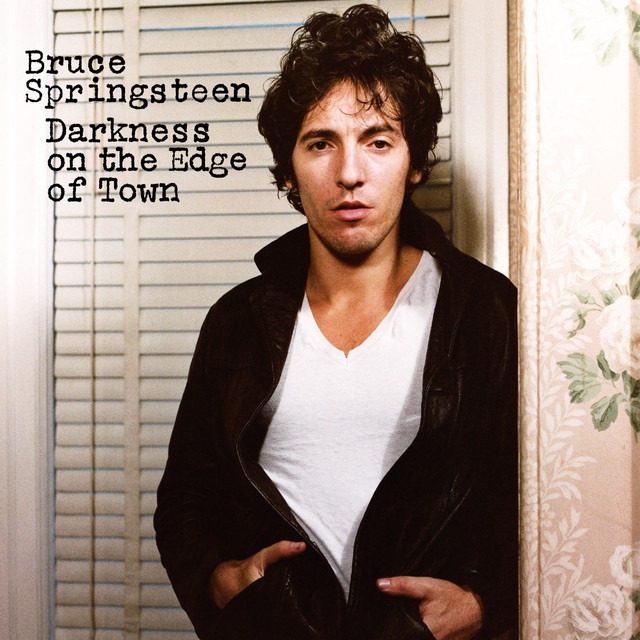
The iconic album cover of Darkness on the Edge of Town was shot by Frank Stefanko, a then-unknown photographer introduced to Springsteen by Patti Smith. The photo session took place in Stefanko’s home in Haddonfield, New Jersey, and the resulting image perfectly reflected the album’s mood—Springsteen standing in front of floral wallpaper, looking exhausted, defiant, and weathered by life’s struggles.

Springsteen later said:
“When I saw the picture, I said, ‘That’s the guy in the songs.’ I wanted the part of me that’s still that guy to be on the cover.”

The stripped-down simplicity of the cover reflected Springsteen’s shift away from the cinematic bombast of Born to Run toward something more raw and real.

5. The Sound Was Inspired by Punk, But Also Fought Against It

By the time Darkness on the Edge of Town was being recorded, punk rock was on the rise. Artists like The Sex Pistols, The Clash, and Elvis Costello were capturing youthful rebellion and economic frustration. Springsteen was paying close attention, but rather than fully embrace punk’s minimalism, he channeled its anger into his own style.

Instead of adopting the DIY rawness of punk, Springsteen took its spirit of defiance and merged it with the cinematic storytelling of classic rock and the working-class realism of country and folk. The result was an album that felt leaner, grittier, and more aggressive than anything he had done before, yet still deeply poetic.

Songs like “Badlands” and “Prove It All Night” carried punk’s urgency, but tracks like “Racing in the Street” and “Factory” maintained the introspective storytelling that defined Springsteen’s work. This balance helped him bridge the gap between old-school rock and the raw energy of a new generation.

Through legal battles, an evolving sound, and some of the best songwriting of his career, Springsteen crafted an album that remains one of the most powerful and enduring works in rock history. For many fans, Born to Run may have been the dream, but Darkness on the Edge of Town is where the real fight begins.

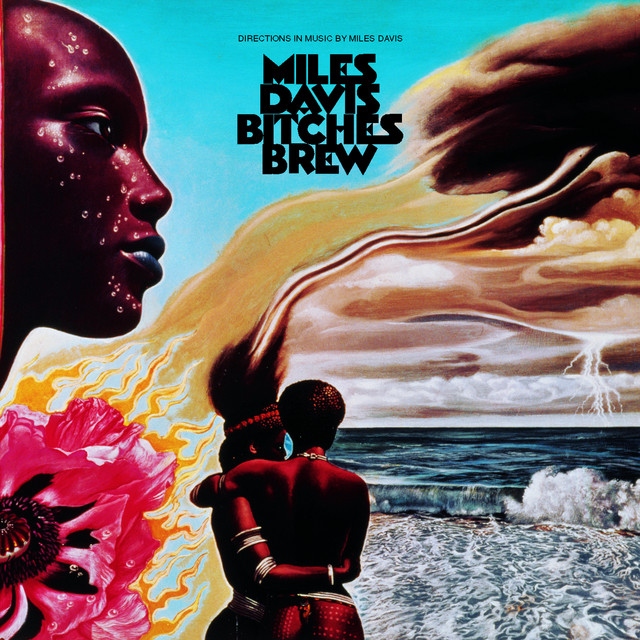
5 Surprising Facts About Miles Davis’ “Bitches Brew”

Think you know Bitches Brew? Think again. This walbum was a revolution, a seismic shift in the very foundation of jazz. In 1969, Miles Davis redefined what music could be. With electric instruments, hypnotic rhythms, and an improvisational spirit that felt like jazz and rock had a baby in outer space, Davis turned the studio into a playground of possibilities. Critics were baffled. Fans were divided. But history? History crowned it a masterpiece. It won a Grammy, went gold, then platinum, and changed music forever. Ready to dive into some of its best-kept secrets? Let’s go.

1. A Title Wrapped in Mystery
Nobody really knows where the name Bitches Brew came from, not even Davis himself. Some say it was inspired by the women in his life, who were introducing him to new ideas in the 1960s. Others believe it was a direct challenge to jazz purists—a way for Davis to signal that this album was brewing a storm of change. A third theory? Davis had simply jotted the phrase down in his notebook, feeling its raw energy and rebelliousness fit the music perfectly. Whatever the reason, one thing’s for sure: the title alone was enough to shake up the jazz world.

2. The Album Wasn’t Just Played—It Was Built in the Studio
What you hear on Bitches Brew is not exactly what the musicians played in the studio. Producer Teo Macero and Davis took a razor blade to the master tapes, cutting and splicing together different takes, adding looped sections, reverb, and tape effects. Tracks like Pharaoh’s Dance contain over 19 edits, including a famous stop-start intro that never actually happened in real time. The result? A collage of organized chaos, something that had never been done in jazz before.

3. A Band Unlike Any Other
Davis wasn’t interested in just hiring session musicians—he wanted to assemble an army. The lineup for Bitches Brew featured 13 players, including three electric pianists, three drummers, and two bassists—all playing at once. Imagine trying to control that kind of sound! The result was a layered, hypnotic groove that gave soloists like Wayne Shorter, Bennie Maupin, and John McLaughlin a wide, dynamic canvas to explore. It wasn’t jazz as people knew it—it was something bigger, bolder, and wilder.

4. The Album’s Sound Was Inspired by Rock and Funk
Davis was listening to a lot of rock and funk in 1969, including Jimi Hendrix, Sly & The Family Stone, and James Brown. He wanted Bitches Brew to have that same raw power and rhythmic drive, pushing jazz beyond swing and bebop into something more primal and hypnotic. Tracks like Miles Runs the Voodoo Down are dripping with that influence, with gritty blues guitar, pounding drums, and an energy that feels more Woodstock than Birdland.

5. It’s One of the Most Edited Jazz Albums Ever—But Also One of the Most Influential
Before Bitches Brew, jazz albums were usually recorded live in the studio, straight through. But Davis and Macero took a radical approach, using the studio as an instrument itself. They cut, rearranged, looped, and reshaped everything. This technique, inspired by musique concrète, wasn’t just revolutionary—it influenced entire genres. Rock bands like Radiohead, fusion artists like Weather Report, and even hip-hop producers like Madlib and J Dilla have cited Bitches Brew as a blueprint for sonic experimentation.

Miles Davis didn’t just make an album—he blew open the doors of jazz and let every genre come rushing in. Bitches Brew redefined improvisation, composition, and even how albums were constructed. It challenged jazz purists, invited rock fans into the mix, and created a ripple effect that can still be heard today in jazz, fusion, rock, hip-hop, and beyond. Some albums are classics. Others are revolutions. This? This was a sonic explosion.

Moulettes Bring Their Genre-Blending Folk Sound to Canada for 2025 Tour

0

Described as “the most thrillingly nimble ensemble the UK has produced in decades” by Prog Magazine, & “Orchestral folk at its finest” by Time Out, Moulettes have captivated Canadian audiences on every tour.

After their mainstage performance at Winnipeg Folk Festival, CBC q host Tom Power said they were the best act at the festival that year. That summer they went on to perform at Montreal International Jazz Festival, Mariposa, Calgary and Vancouver folk festivals, Nova Scotia’s Stan Rogers Folk Festival, as well as prestigious theatres such as Palais Montcalm in Quebec City, & Montreal’s Theatre Outremont.

“Moulettes are the rare type of group that memorize you with their stunning soundscape, lyrical prowess, and absolutely jaw dropping vocals! A band who keep you captivated and engaged from the first to the last note!” – Ronnie Brown, Oakville Centre for the Performing Arts, Oakville, ON – October 2024

About the track : “This song started tongue in cheek, just a reminder to extricate ourselves from the digital dimension for some analogue human love time. I had read this quote which struck a chord with me, “Attention is the rarest and purest form of generosity” which I later found was attributed to Simone Weil. It’s really about human communion, the only thing that will get us through this Existathon ™

We wanted to a make you a big joyful playground of cheeky references to our favourite bits from the musical time machine- 50’s doo wop, 60’s psychedelic playfulness, & some 80’s bombast amalgamated in to one maximalist sandwich. This is a song to bring the party,” says Hannah Moule.

This track is part of a larger project, Xenolalia – 55 pieces of music for 5 ensembles.

TRACK CREDITS
Cello, Vocals – Hannah Moule
Drums, Synths, percussion, Vocals – Oli Austin
Vocals, Guitar – Ravennan Husbandes
Synths – Jules Arthur
Violin – Mike Simmonds
Additional Feature Guitar – Lee Westwood

MOULETTES CANADIAN TOUR DATES:
February 6, 2025: Cultural Centre, Midland, ON
February 7, 2025: Hugh’s Room, Toronto, ON
February 8, 2025: Aeolian Hall, London, ON
February 9, 2025: Emmanuel United Church, Waterloo, ON
February 12, 2025: The Bassment, Saskatoon, SK
February 13, 2025: Charles Bailey Theatre, Camrose, AB
February 14, 2025: The Legion, Calgary, AB
February 15, 2025: Flare and Derrick , Turner Valley, AB
February 16, 2025: Artsplace, Canmore, AB
February 18, 2025: Live Theatre, Grande Praire, AB
February 19, 2025: Festival Place, Sherwood Park, AB

SULTANS OF STRING Celebrate Cannes Win with Free Screening of Walking Through The Fire at Montreal’s Folk Alliance

0

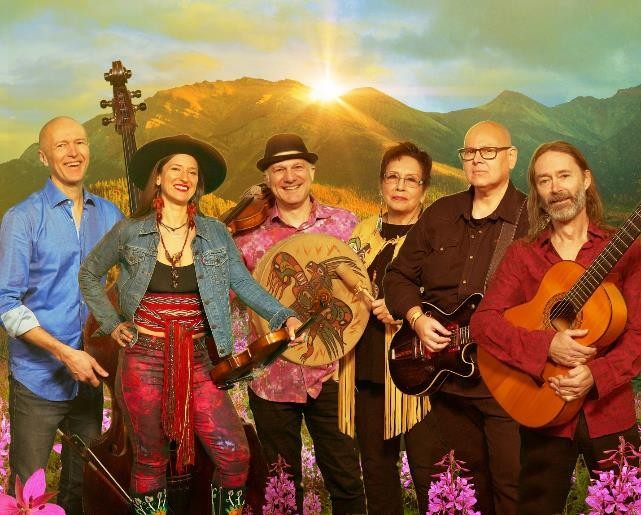
3x JUNO nominees and 6x Canadian Folk Music Award winners Sultans of String are kicking off the New Year and beyond with a free screening of their award-winning film WALKING THROUGH THE FIRE, that just won Best Musical Film and Best Soundtrack at the Cannes World Film Festival. This powerful film production is unlike any other, bringing the magic of collaboration to the screen with award-winning First Nations, Métis, Inuit artists across Turtle Island/Canada.

This Free Screening is open to the public and also includes a Q&A moderated by Joel Elliot, along with producer Chris McKhool and several artists from the project, including Marc Meriläinen, Shannon Thunderbird, and Alyssa Delbaere-Sawchuk.

Join them on Saturday, February 22, 2025, from 2:15 PM to 4:00 PM at Le Centre Sheraton Montreal Hotel, East Room – Level 4 (1201 René-Lévesque Blvd W, Montréal, Quebec H3B 2L7). This event is free, open to the public, and it’s free.

“We are so excited to be able to present our collaborations that showcase and amplify Indigenous voices, while also engaging our audiences with access to these powerful artists in talkback sessions” says bandleader/producer and Queen’s Diamond Jubilee Medal recipient Chris McKhool.

A central theme running through Walking Through The Fire is the need for the truth of Indigenous experience to be told before reconciliation can begin in earnest. Embedded in the title is the energy of rebirth: fire destroys, but it also nourishes the soil to create new growth, beauty, and resiliency.

Sultans of String created this project in the spirit of the Truth and Reconciliation Commission’s 94 Calls to Action, and Final Report that asks for Indigenous and non-Indigenous people to work together as an opportunity to show a path forward.

Says McKhool “We know that as a society we can’t move ahead without acknowledging and reflecting on the past. Before reconciliation can occur, the full truth of the Indigenous experience in this country needs to be told, so we’ve been calling on Indigenous artists to share with us their stories, their experience, and their lives, so we settler Canadians can continue our learning about the history of genocide, residential schools, and of inter-generational impacts of colonization.”

LASSO Montréal 2025 lineup is HERE! Bailey Zimmerman, Jelly Roll, Shaboozey, Sheryl Crow + More

0

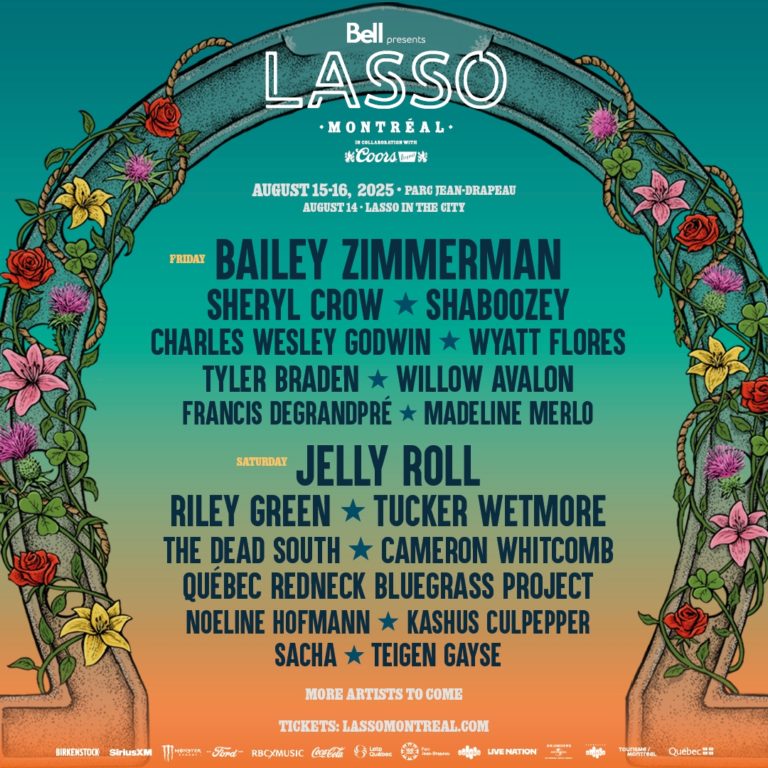
Saddle up, country music fans! LASSO Montreal, presented by Bell in collaboration with Coors Original is thrilled to announce the lineup for its 2025 edition, taking place on August 15-16 at the picturesque Parc Jean-Drapeau on Montreal’s Île Sainte-Hélène (and LASSO in the City on August 14). Building on the excitement of the previously announced headliners Bailey Zimmerman and Jelly Roll, this year’s festival promises a celebration of country music like never before, bringing together chart-toppers, legends, and rising stars.

LASSO is honoured to welcome the iconic Sheryl Crow, whose timeless hits like “Soak Up the Sun” and “If It Makes You Happy” have defined generations of music lovers. With nine GRAMMY Awards to her name, Crow’s performance is sure to be a highlight of the weekend! Also part of this year’s lineup is Alabama native Riley Green, whose chart-topping hits like “There Was This Girl” and “I Wish Grandpas Never Died” showcase his heartfelt storytelling and authentic country roots. His performance will certainly resonate deeply with festivalgoers and stand out as a must-see moment of the weekend! Virginia’s genre-bending Shaboozey will hit the stage for a unique set where he will fuse hip-hop, country, and rock influences. His mega-hit “A Bar Song (Tipsy)” earned him 5 GRAMMY nominations for 2025. Small town storyteller Tucker Wetmore’s unique country sound is sure to connect with the crowd! Having previously toured with Luke Bryan and Kameron Marlowe, he’s quickly become a seasoned live performer on the big stage.

As usual, the lineup promises to keep festivalgoers dancing and singing all weekend. Catch the Quebec Redneck Bluegrass Project as they perform a live performance in their home province! Canadian group The Dead South are set to deliver their signature mix of bluegrass and folk with unforgettable tracks like “In Hell I’ll Be in Good Company”, while fellow Canadian stars Madeline Merlo and Sacha will captivate audiences with empowering anthems and dynamic performances. If you’re looking for something a little more traditional, catch Charles Wesley Godwin for a set that is both authentic and deeply masterful!

LASSO is a great springboard for rising artists: some catch-miss sets include Wyatt Flores, Cameron Whitcomb (playing Théâtre Beanfield on February 24), Kashus Culpepper, Noeline Hofmann and Teigen Gayse.

This year’s lineup reflects the vibrant and inclusive spirit of LASSO Montreal, which has quickly become one of Canada’s premier country music festivals. From chart-topping headliners to emerging artists pushing the boundaries of the genre, there’s something for every country music fan. And as always, festivalgoers can look forward to all the country-inspired fun that has become a signature of LASSO — come on out, sing at the top of your lungs, line-dance and round up your favourite country-inspired outfits! You can even set up your camping chair on the lawn during the festival! So dust off your boots and pack up your chair — Parc Jean-Drapeau is calling for a weekend-long country music adventure!

Kick off the festival early with LASSO in the City hosted by SiriusXM on August 14 at a concert venue downtown (more details to come). Plus, more exciting acts will be announced shortly to complete the festival lineup!

2-day tickets for LASSO Montreal 2025 are already on sale. Single-day tickets will go on sale this Friday, January 31, at 10 a.m. For tickets and more information, visit www.lassomontreal.com.

Andy Toomey Teams Up With King Crimson Legends For Bold New EP ‘Perseus Calling’

0

For most musicians, getting to record with members of the legendary King Crimson would be intimidating enough. For Jacksonville, Florida-based guitarist/singer Andy Toomey, it raised a dilemma that was even more daunting: figuring out something for them to actually play.

That’s the scenario that transpired early last year, when Toomey happened to notice that Crimson über-bassist Tony Levin and his offshoot project, Stick Men, were going to be playing a concert in Toomey’s native Jacksonville. On little more than a whim, he reached out to Levin and asked if he and his crew would be interested in doing a session together when the band hit town. The answer was an enthusiastic yes—leading to an immediate freakout when Toomey realized he had no idea what they’d be playing.

“Like the dog who caught the car, I panicked,” he recalls. “How could I write music that would be worthy of these amazing players in a few short weeks?”

Fortunately, he found the answer in February Album Writing Month (FAWM.ORG), an annual exercise that challenges songwriters to come up with 14 new tunes in 28 days. Toomey managed a full 20, and the feedback he received from the effort helped him to whittle that bumper crop down to six top-shelf compositions for his esteemed guests to sink their teeth into.

The resulting EP, Perseus Calling, shows just how fruitful Toomey’s process was. Its sextet of dreamy prog numbers proves the perfect vehicle for the celebrated talents of Levin (bass and Chapman Stick), Pat Mastelotto (drums) and Markus Reuter (Touch Guitars and loops)—all alumni of Crimson as well as compadres in Levin’s Stick Men. The record is full of symmetrical guitar lines and purposefully skewed beat patterns, overlaid with Toomey’s highly present and declaratory vocals.

The backing tracks were cut in one day at Jacksonville’s Endangered Wise Men Recording Studios (with gold-record-winning engineer Rick Grice), whereupon Toomey had another 24 hours to write and record all the lyrics. The end product certainly doesn’t come across as rushed or underthought: Toomey’s wordplay on tracks like “Hater” and “Dada” is minimalist but meaningful, and the title track even draws the suggestive silhouette of a narrative about a space probe on an ill-fated mission. As an overall package, the record makes for an auspicious debut by Toomey on his new label, Iapetus.

It helps that Toomey has a bit of a history with Levin, whom he met through the bassist’s keyboardist brother, Peter: Together with drummer Jerry Marotta, they had all recorded several tracks together in 2020 that wound up on Toomey’s albums Paper Heart and Budget Soul. But Toomey himself was no slouch going in. The definition of a highly trained pro, he holds a BFA and an MFA in music composition, with a BFA in classical guitar thrown in for good measure. Since putting out his first album in 1995, he’s written and recorded over 300 original songs. On the performing front, he’s a true Renaissance man, having played guitar in his blues band, The Andy Toomey Trio, and bass in his eponymous jazz-piano trio. That’s not to mention touring Spain in the metal outfit Jerguistas y Borrachos, singing in the U2 tribute Bonomania and playing drums in the Led Zeppelin tribute Wearing & Tearing.

The year 2025 will bring the release of a second EP Masterpiece recorded in August with Markus Reuter back on touch guitar and loops and the amazing Zach Alford (Bowie/NIN, and many others) on drums. For now, we have Perseus Calling, and the reminder it brings that a little serendipity can work wonders. Or to put it another way, if you have a dream, Stick with it.

Canadian Musicians The Cooper Brothers Join Canada’s Fight Against U.S. Tariffs

0

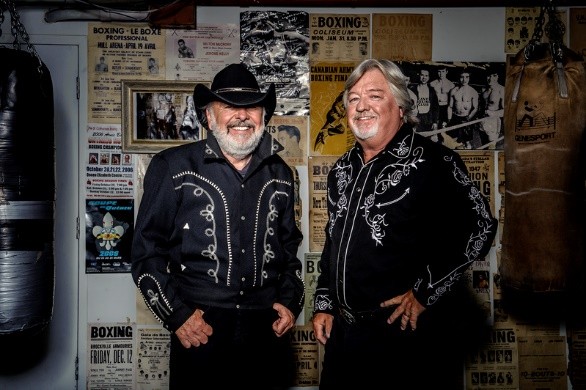
Internationally acclaimed country-rockers, the Cooper Brothers, are joining the fight against the threat of U.S. tariffs.

With the possibility of 25% tariffs being levied by new U.S. President Donald Trump on all Canadian goods as early as February 1st, the Cooper Brothers are re-releasing their song “That’s What Makes Us Great”.

The 51tst State? Take off, eh! The Cooper Brothers are back with a song that’s as Canadian as a double-double, a frozen pond, and a game-winning goal in overtime.

“That’s What Makes Us Great!” is a love letter to the True North, strong and free, celebrating the spirit, resilience, and unshakable pride that defines this country.

Inspired by a chance encounter with young soldiers returning from Afghanistan, Richard Cooper channeled their passion, dedication, and unwavering belief in making a difference into lyrics that remind us of what it means to be Canadian. “We never seem to toot our own horn,” Cooper reflects, “but we have so much to be thankful for.”

From universal healthcare to Tim Horton’s, from beavertails and poutine to the coldest beer and the hottest women, “That’s What Makes Us Great!” captures the essence of a country that doesn’t brag—but has every reason to.

Produced by Grammy Award-winning producer Colin Linden, this track is infused with the classic Cooper Brothers sound: heartfelt storytelling, undeniable energy, and a chorus made for singing at the top of your lungs—whether you’re in a packed hockey arena or a campfire up north.

The Cooper Brothers first gained international attention when they signed with Capricorn Records (famous for producing several of the most popular southern-rock acts of the time including The Allman Brothers and Marshall Tucker) in Macon, Georgia. Over the next few years, the Cooper Brothers released two albums under the Capricorn label, the eponymous Cooper Brothers and Pitfalls of the Ballroom. Subsequent singles “The Dream Never Dies”, “Rock and Roll Cowboys” and “I’ll Know Her When I See Her” all charted on The Billboard Hot 100 in the U.S.

Among their many accolades, the Cooper Brothers were voted Best New Group in 1978, Best MOR Group in 1979 and Best Overall Group in 1980 by Canadian Contemporary Music Programmers. In 1980, “The Dream Never Dies” also earned an A.S.C.A.P Award as one of the most played songs on U.S radio.

At the height of their career, the band toured extensively with such diverse artists as The Doobie Brothers, Joe Cocker, Charlie Daniels and the Atlanta Rhythm Section garnering stellar reviews.

The Cooper Brothers continue to perform and have released a number of critically acclaimed new albums including In From The Cold (produced by Grammy nominee Colin Linden in Nashville/featuring special guests Jim Cuddy (Blue Rodeo), Delbert McClinton and Chuck Leavell (The Rolling Stones)), Southbound (recorded at the Tragically Hip’s studio/produced by Colin Cripps (Blues Rodeo) and their latest album Radio Silence.