Home Blog Page 933

“One to One: John & Yoko” Coming To IMAX Theaters

0

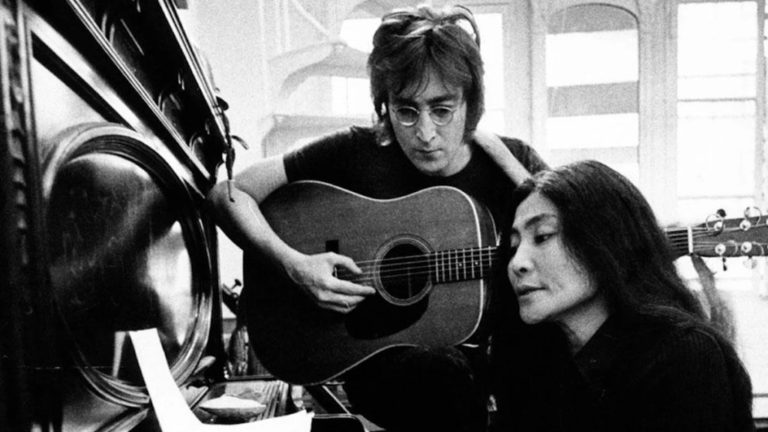
Magnolia Pictures announced today that they have acquired North American rights to ONE TO ONE: JOHN & YOKO, from Oscar-winning filmmaker Kevin Macdonald (The Last King of Scotland, Marley, HBO’s One Day in September, The Mauritanian). An expansive and revelatory inside look at the 18 months John Lennon and Yoko Ono spent living in Greenwich Village in the early 1970s, ONE TO ONE: JOHN & YOKO delivers an immersive cinematic experience that brings to life electrifying, never-before-seen material and newly restored footage of Lennon’s only full-length, post-Beatles concert. With mind-blowing remastered audio overseen by their son, Sean Ono Lennon, the film is a seismic revelation that will challenge pre-existing notions of the iconic couple. Following its world premiere at the Venice Film Festival, the documentary had its North American bow at the Telluride Film Festival and will screen next in Sundance Film Festival’s Spotlight section. Magnolia will open the film exclusively in IMAX on April 11 before expanding to additional theaters. The film will air on HBO and will be available to stream on Max in late 2025.

On August 30, 1972, in New York City, John Lennon played his only full-length show after leaving The Beatles, the One to One benefit concert at Madison Square Garden, a rollicking, dazzling performance from him and Yoko Ono. Macdonald’s riveting documentary takes that legendary musical event and uses it as the starting point to explore eighteen defining months in the lives of John and Yoko. By 1971 the couple was newly arrived in the United States—living in a tiny apartment in Greenwich Village and watching a huge amount of American television. The film uses a riotous mélange of American TV to conjure the era through what the two would have been seeing on the screen: the Vietnam War, The Price is Right, Nixon, Coca-Cola ads, Cronkite, The Waltons. As they experience a year of love and transformation in the US, John and Yoko begin to change their approach to protest—ultimately leading to the One to One concert, which was inspired by a Geraldo Rivera exposé they watched on TV. Filmed in a meticulously faithful reproduction of the NYC apartment the duo shared, ONE TO ONE: JOHN & YOKO offers a bold new take on a seminal time in the lives of two of history’s most influential artists.

“ONE TO ONE: JOHN & YOKO is a revelation,” said Magnolia Pictures co-CEOs Eamonn Bowles and Dori Begley. “Kevin Macdonald has given us an incredibly fresh, marvelously human and revealing look at the iconic couple.”

“I am personally thrilled to be back with the Magnolia and HBO teams to be giving ONE TO ONE: JOHN & YOKO the ambitious theatrical release that I always dreamed of for this film,” said Kevin Macdonald. “This is a movie about music and love and politics—and about immersing yourself in the year of 1972—a period in time that feels uncannily like the world we are currently inhabiting. And more than anything else I’m grateful to Sean Lennon and Mercury Studios for entrusting the incredible One to One concert to me.”

Mercury Studios Presents A Plan B/KM Films & Mercury Studios Production. ONE TO ONE: JOHN & YOKO is directed by Kevin Macdonald. Edited & Co-directed by Sam Rice-Edwards. Produced by Peter Worsley, Kevin Macdonald and Alice Webb. Executive Producers are Marc Robinson, David Joseph, Steve Condie, Brad Pitt, Dede Gardner, Jeremy Kleiner.

An expansive and revelatory inside look at the 18 months John Lennon and Yoko Ono spent living in Greenwich Village in the early 1970s, ONE TO ONE: JOHN & YOKO delivers an immersive cinematic experience that brings to life electrifying, never-before-seen material and newly restored footage of Lennon’s only full-length, post-Beatles concert. With mind-blowing remastered audio overseen by their son, Sean Ono Lennon, the film is a seismic revelation that will challenge pre-existing notions of the iconic couple.

On August 30, 1972, in New York City, John Lennon played his only full-length show after leaving The Beatles, the One to One benefit concert at Madison Square Garden, a rollicking, dazzling performance from him and Yoko Ono. Oscar®-winning filmmaker Kevin Macdonald’s riveting documentary takes that legendary musical event and uses it as the starting point to explore eighteen defining months in the lives of John and Yoko. By 1971 the couple was newly arrived in the United States— living in a tiny apartment in Greenwich Village and watching a huge amount of American television. The film uses a riotous mélange of American TV to conjure the era through what the two would have been seeing on the screen: the Vietnam War, The Price is Right, Nixon, Coca-Cola ads, Cronkite, The Waltons. As they experience a year of love and transformation in the US, John and Yoko begin to change their approach to protest — ultimately leading to the One to One concert, which was inspired by a Geraldo Rivera exposé they watched on TV. Filmed in a meticulously faithful reproduction of the NYC apartment the duo shared, ONE TO ONE: JOHN & YOKO offers a bold new take on a seminal time in the lives of two of history’s most influential artists.

Phish Donates $300,000 to Southern California Wildfire Relief Ahead of Hollywood Bowl Return

0

This April, Phish will return to the west coast for a short run of dates including two-night stands at Seattle’s Climate Pledge Arena and San Francisco’s Bill Graham Civic Auditorium as well the band’s first show in Portland, OR in over 25 years. The run concludes with three nights at the historic Hollywood Bowl in Los Angeles.

In conjunction with their return to the Hollywood Bowl, Phish will donate $300,000 to support relief and rebuilding efforts for communities affected by the devastating Southern California wildfires through the band’s non-profit The WaterWheel Foundation.

A ticket request period for all dates is now underway at https://tickets.phish.com, ending Monday, February 3 at 9AM PT/Noon ET. Tickets go on sale to the general public beginning Friday, February 7 at 10AM PT/1PM ET. Specific ticketing information and on sale times for each show can be found at at https://phish.com/tours. Travel packages will be offered for Hollywood Bowl on Wednesday, January 22 at 11AM PT and for Climate Pledge Arena on Thursday, February 6 at 10AM PT. Details at https://phishspring.100xhospitality.com/

Phish Spring 2025
April 18 + 19 Climate Pledge Arena, Seattle, WA
April 20 Moda Center, Portland, OR
April 22 + 23 Bill Graham Civic Auditorium, San Francisco, CA
April 25, 26 + 27 Hollywood Bowl, Los Angeles, CA

Rock and Roll Hall Of Famer Peter Frampton Announces 2025 North American Tour

0

Grammy-winning guitarist Peter Frampton has spent decades crafting a legacy that transcends generations, solidifying his place as a cornerstone of rock history. Known for his groundbreaking live album Frampton Comes Alive! and countless collaborations with music legends, Frampton continues to captivate audiences with his unmatched artistry and passion for the stage.

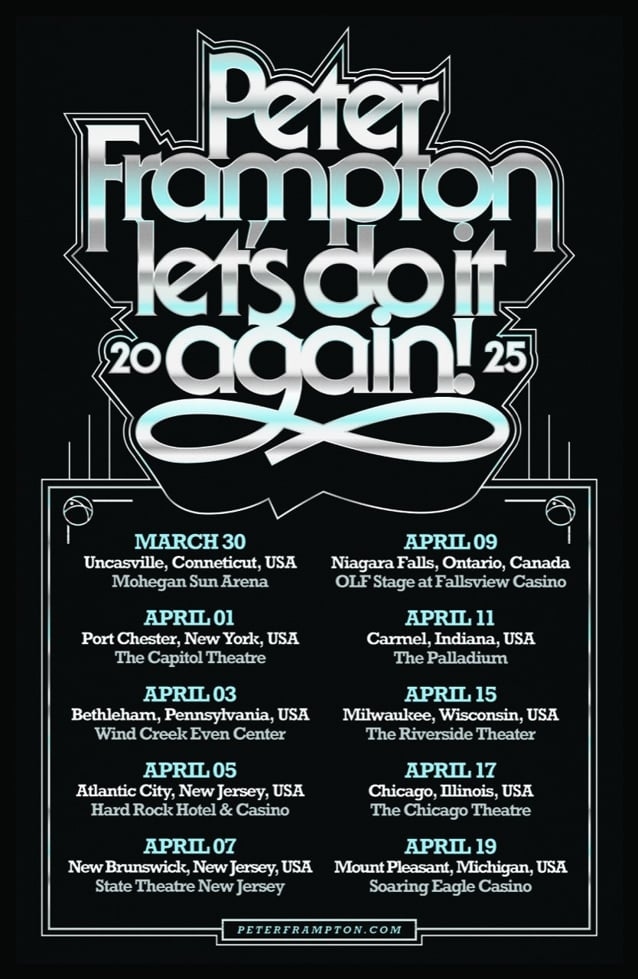
The Peter Frampton, Let’s Do It Again! Tour 2025 kicks off on March 30 at the Mohegan Sun Arena in Uncasville, CT, promising an unforgettable evening of classic hits and timeless performances. Frampton sayd, “I am so thrilled to be able to come out and play again for you, it’s been a spectacular year, looking forward to seeing everyone soon.”

Tickets will be available at 10 a.m. local time on Friday, January 24 at peterframpton.com. See below for the complete tour itinerary.

Frampton is one of the most celebrated artists and guitarists in rock history. His collaborations in recording sessions and live performances range from such legendary artists as George Harrison, Harry Nilsson, David Bowie, Dion, Hank Marvin, Ringo Starr, B.B. King, Mike McCready & Matt Cameron (Pearl Jam), Buddy Guy, Steve Miller and many others. Frampton’s relevancy has not waned in the least over the years. He worked closely with Cameron Crowe on his Oscar winning film, Almost Famous, as a technical advisor, writing music for the fictional band Stillwater and even making a cameo as Humble Pie’s road manager. In 2007, Frampton won a Grammy for Best Pop Instrumental Album for Fingerprints and in 2014 was inducted into the Musicians Hall of Fame. He received the prestigious Les Paul Innovation Award from NAMM’s TEC Awards in 2019 and his album All Blues was #1 for fifteen weeks on Billboard’s Blues Chart. In 2020 Frampton was inducted into the Grammy Hall of Fame, his autobiography Do You Feel Like I Do?: A Memoir debuted on The New York Times Bestsellers list, and his 2021 album Frampton Forgets The Words was released to widespread critical acclaim. After 46 years, Frampton Comes Alive! remains one of the top-selling live records of all time selling over 17 million worldwide.

Peter Frampton, Let’s Do It Again! Tour 2025
March 30—Uncasville, CT—Mohegan Sun Arena
April 1—Port Chester, NY—The Capitol Theatre
April 3—Bethlehem, PA—Wind Creek Event Center
April 5—Atlantic City, NJ—Hard Rock Hotel & Casino Atlantic City – Hard Rock Live at Etess Arena
April 7—New Brunswick, NJ—State Theatre New Jersey
April 9—Niagara Falls, ON—OLG Stage at Fallsview Casino
April 11—Carmel, IN—The Center for the Performing Arts – The Palladium
April 15—Milwaukee, WI—The Riverside Theater
April 17—Chicago, IL—The Chicago Theatre
April 19—Mount Pleasant, MI—Soaring Eagle Casino & Resort – Outdoor Summer Concert Series

The Horrible And Terrible Use Of A.I. In Music

0

AI in music is cool, right? It can write a song, play an instrument, and even “sing” like your favorite artist. But here’s the scary part—it’s not all fun and games. Behind the catchy algorithms and futuristic vibes, AI has a dark side, and it’s raising serious questions about creativity, ethics, and the future of music. Let’s dive into some truly terrifying ways AI is being used in the music industry.

1. When AI Brings Back the Dead—Without Permission

Imagine hearing a “new” song by a beloved artist who passed away years ago. Sounds exciting? Not so much when it’s done without their consent. AI has been used to mimic the voices of legendary artists, making them sing songs they never chose. It might sound cool at first, but think about it—would your favorite artist want their voice used this way? It’s like stealing their soul and turning it into a marketing gimmick.

2. Deepfake Vocals That Lie to You

Ever heard a clip of an artist singing a song they’d never touch in real life? That’s AI deepfakes, and while it might be funny to hear, it’s also dangerous. These fake vocals can spread like wildfire, making fans believe the artist did or said something they didn’t. What happens when it goes beyond music and into outright character assassination? Creepy, right?

3. AI Turning Music Into a Boring Algorithm

You know those songs that just feel like they were made to play in the background of your day? Well, some of them probably were—by AI. These tracks are designed to fit into playlists and keep you streaming, not to stir your soul. They’re perfect for the algorithm but awful for artists who pour their hearts into making something real. It’s like fast food for your ears—easy, cheap, and forgettable.

4. Stealing From the Greats, One Note at a Time

AI learns by copying existing music, but sometimes it gets too close to the originals. We’re talking songs that sound like they’ve been lifted straight from your favorite artist’s back catalog. If it’s not outright plagiarism, it’s walking a very fine line. Musicians spend years crafting their sound, and AI can swipe it in seconds. Fair? Not so much.

5. Goodbye, Session Musicians?

Why hire a live orchestra or session guitarist when AI can do it cheaper and faster? Sure, it saves money, but it’s also erasing opportunities for human musicians. The little imperfections, the emotion, the energy of a live player—it all gets replaced by a machine that never missed a note in its life. Music without humans? No thanks.

6. Emotion as a Manipulation Tool

AI doesn’t just make music; it knows you. It analyzes your listening habits and creates songs to keep you hooked. Sounds like the ultimate DJ, right? But here’s the catch: It’s less about creating great art and more about keeping you glued to the app. When music becomes a tool to manipulate your mood for profit, is it really music anymore?

7. Losing the Soul of Cultural Music

When AI tries to replicate traditional or cultural music, it often gets it wrong. Imagine a song inspired by indigenous rhythms or folk traditions—but flattened into something that just doesn’t feel authentic. It’s like taking a black-and-white photocopy of a masterpiece. AI might be great at mimicry, but it’s no match for the soul of cultural storytelling.

8. Propaganda You Can Dance To

Picture this: A catchy tune pops into your head, but it’s not just a song—it’s propaganda wrapped in a beat. AI could be used to create tracks that subtly promote ideologies or manipulate opinions. It’s like turning your favorite song into a commercial for ideas you might not even believe in. Scary, huh?

9. When AI Writes the Soundtrack to Hate

AI isn’t picky—it can create anything, including music with harmful messages. Without proper oversight, it’s easy to imagine anonymous creators using AI to churn out songs promoting violence, hate, or worse. Once it’s out there, who’s responsible? It’s a Pandora’s box waiting to be opened.

10. Where’s the Heart?

Music is supposed to connect us. It’s about shared experiences, raw emotions, and human imperfection. But when AI takes over, we lose that. Sure, the notes might be perfect, but the soul is gone. It’s like a robot telling you it loves you—it might say all the right words, but it’ll never mean them. And music without meaning? That’s not music at all.

AI in music is a double-edged sword. On one side, it’s exciting and full of potential. On the other, it’s a slippery slope that could hurt artists, erase authenticity, and turn music into nothing more than a product. We need to ask ourselves: What kind of music industry do we want? One where machines rule, or one that celebrates the magic of human creativity? The choice is ours. Let’s make it wisely.

How Music Enhances Your Experience at Online Casinos That Accept Visa

0

By Mitch Rice

The relationship between music and gambling dates back centuries, with today’s online casinos continuing this tradition through sophisticated audio design. For Canadian music enthusiasts who also enjoy online gaming, the intersection of soundscapes and seamless payment methods like Visa creates a multisensory experience worth exploring. Let’s dive into how music transforms the online casino experience, particularly at casinos with Visa where transactions make the financial aspects virtually invisible.

The Sonic Architecture of Online Casinos

Music producers and sound designers are increasingly finding work in the igaming industry, creating original compositions that enhance player engagement. According to audio engineer Samantha Travers, whom we interviewed for this piece, “Casino soundtracks are designed within very specific parameters to create a sense of excitement without distraction.”

These carefully crafted soundscapes serve multiple purposes:

🎵 Emotional Regulation – Upbeat tracks during wins trigger dopamine release, while subtle ambient sounds during losses help maintain player engagement

🎵 Environmental Immersion – Theme-specific music transporta players to different worlds, from Ancient Egypt to futuristic cityscapes

🎵 Branding Elements – Distinctive audio signatures help players identify specific casinos and games, similar to how sonic logos function in advertising

The effectiveness of these sound designs is amplified when paired with frictionless payment methods. Industry experts at GamblingInformation.com note that Visa’s widespread acceptance at Canadian casinos allows players to focus entirely on the audiovisual experience rather than transaction concerns.

The Genre Playlist: How Different Music Styles Shape Gaming Sessions

Casino audio directors curate different musical styles to match specific gaming experiences:

🎸 Rock & Pop: The High Energy Gaming Soundtrack

Fast-paced slots and instant-win games typically feature driving rock beats and catchy pop hooks. Music producer Trevor McPherson explains: “We use tempos between 120-140 BPM for slot games to maintain excitement and forward momentum.”

These high-energy games are often paired with instant-deposit options like Visa, where players can quickly fund their accounts and jump straight into action without waiting for processing times that would break the musical flow.

🎷 Jazz & Blues: Sophisticated Sounds for Strategic Play

Poker rooms and blackjack tables typically feature jazz-influenced soundtracks that create an atmosphere of sophistication while allowing for strategic thinking. These mid-tempo compositions typically avoid vocal elements that might distract from decision-making.

“The relationship between jazz and card games goes back to the speakeasies of the 1920s,” explains music historian Elena Winters. “Today’s online casinos are continuing that tradition digitally.”

Players engaged in these strategic games particularly appreciate the security features that come with Visa payments, as noted in recent player surveys from GamblingInformation.com.

🎼 Classical & Ambient: Creating Focus and Flow

Live dealer games often incorporate minimal classical compositions or ambient soundscapes that maintain atmosphere without overwhelming the social interaction between players and dealers.

Composer David Chen, who has created soundtracks for several Canadian gaming platforms, tells us: “We’re creating music that sits at the threshold of perception—present enough to set a mood but subtle enough to allow conversation.”

This elegant audio approach complements the premium feel of platforms that process Visa transactions quickly and securely.

The Technical Revolution in Casino Audio

The technology behind casino soundtracks has evolved significantly in recent years:

  • Adaptive Audio Systems now adjust music dynamically based on game events, player actions, and even spending patterns
  • Personalized Sound Profiles allow players to customize their audio experience or choose from curated playlists
  • Spatial Audio Design creates immersive 3D soundscapes, particularly effective with headphones

These audio innovations mirror the evolution in payment technologies, with both aiming to enhance immersion by reducing friction. Visa’s adoption of advanced security features has made it the payment method of choice for many Canadian players, according to recent industry data.

Creating Your Optimal Gaming Soundtrack

For music lovers who enjoy online gaming, consider these tips for enhancing your experience:

  1. Use quality headphones to fully appreciate the nuances in game soundtracks
  2. Try different audio settings when available in game menus
  3. Match your personal music choices to your gaming style if playing with your own soundtrack
  4. Choose casinos that invest in quality audio design alongside reliable payment processing

Dr. Melissa Kumar, a neuroscientist studying the effects of music on decision-making, suggests: “The right soundtrack can actually improve your focus and enjoyment, potentially leading to better decision-making during games of skill.”

The Future of Casino Soundscapes

Looking ahead, we’re likely to see even closer integration between music and online gaming:

  • Collaborations between game developers and well-known recording artists
  • VR casino environments with spatial audio designed by film and game composers
  • AI-generated soundtracks that adapt in real-time to individual player preferences

As payment methods like Visa continue to streamline the transactional elements of online gaming, the immersive potential of these audio innovations will only increase.

Final Notes

The relationship between music and gambling continues to evolve in the digital space. As online casinos that accept Visa payments become increasingly sophisticated in their audio design, players benefit from a more immersive, engaging experience where both sound and transactions fade into the background, allowing the games themselves to take center stage.

Next time you visit an online casino, take a moment to appreciate the soundtrack accompanying your session—you’re experiencing the work of skilled composers and sound designers creating the modern soundtrack to gaming entertainment.

For readers interested in exploring secure online casinos with quality audio design, resources like GamblingInformation.com offer reviews that consider both payment security and overall user experience for Canadian players.

Data and information are provided for informational purposes only, and are not intended for investment or other purposes.

Navigating SaaS Mergers and Acquisitions: What You Should Know

0

By Mitch Rice

If you are exploring the possibility of a merger or acquisition (M&A) for your SaaS business, understanding its worth is important. Whether you’re selling it off, merging with another firm, or bringing investors on board, knowing the SaaS business valuation gives you confidence when making decisions. Not only should this valuation process provide information regarding the current value of the business but it should also position the organization for the best acquisition or partner arrangements.

Understanding Mergers and Acquisitions in the SaaS Industry

SaaS companies often turn to mergers and acquisitions (M&A) for growth or exit strategies, offering various advantages like greater customer reach, access to cutting-edge technologies, or faster scaling speeds. When two SaaS businesses merge, they are often able to draw upon each other’s strengths such as customer bases, technological assets, and operational efficiency advantages to gain growth or exit strategies more rapidly.

Understanding SaaS markets can be essential when selling or merging businesses since buyers typically seek predictable revenue streams, scalable growth potential, and loyal customer bases as desirable traits in an M&A deal. To make your SaaS company attractive, its financials, operational processes, and long-term growth strategies must all be documented properly and regularly updated.

Prospective buyers typically look for SaaS businesses that fit seamlessly within their portfolio. They might prioritize companies that complement their tech stack or boast strong customer retention rates.

The Role of SaaS Business Valuations in M&A

Knowing your company’s value can play a crucial role in M&A transactions. Establishing expectations, negotiating better terms, and pinpointing when is an ideal time and place for sale are all benefits that arise from knowing its true worth. Valuation calculations usually consider elements like annual revenue, customer retention rates, market positioning, and growth potential.

Valuing SaaS businesses often involves revenue multiples based on annualized revenue growth rates. Buyers assess your financial performance over the previous 12 months before applying a multiple to determine your valuation. This multiple varies depending on factors like market conditions, growth rate, and customer acquisition costs.

Valuing businesses isn’t all about numbers alone; an M&A deal requires businesses with predictable cash flows, loyal customer bases, and clear paths toward scaling to be much more valuable than those without these characteristics. Therefore, when planning for M&A deals your business must possess strong finances as well as sustainable business models.

Choosing the Right SaaS Business Model to Ensure M&A Success

A key element in creating successful SaaS acquisitions lies in choosing an enduring business model for your SaaS offering. Your choice determines how revenue, customer acquisition, and scaling occur over time. Buyers tend to favor businesses using predictable yet flexible models when considering acquisition targets.

Subscription-based models often attract buyers because they ensure a steady source of recurring revenue that makes financial planning simpler and boosts investor confidence. Potential purchasers might favor businesses that demonstrate they can expand customer bases while keeping customer churn rates to an absolute minimum.

Conversely, freemium models can be both attractive and risky. While it allows you to attract many users quickly, turning these users into paying customers may take longer. Furthermore, buyers might perceive such models as risky since their conversion rate might not support long-term expansion.

Preparing Your SaaS Business for Acquisition

Now that you understand the role and significance of SaaS business valuation and SaaS business models, it’s time to prepare for acquisition. To start the acquisition process properly, your finances need to be in order; potential buyers will conduct a due diligence analysis to assess the revenue, expenses, and growth trends of your SaaS. If they see clear, accurate financial data, it gives buyers greater trust in purchasing your business.

First, streamline your operations. Potential buyers of your business want to see that it runs efficiently with customer support services that scale seamlessly for them. Having an engaging customer acquisition plan as well as plans for long-term growth is vital in making your enterprise more appealing.

Legal and compliance concerns should also be prioritized by business sellers. Buyers will want assurances that your organization complies with all relevant regulations, has no outstanding legal issues, and offers top service quality to clients. Be sure to keep contracts, terms of service agreements, and privacy policies current to prevent potential buyers from questioning these aspects of operation.

Conclusion

Understanding your SaaS business valuation and how your business model impacts it is a critical component for successfully merging and acquiring companies. Understanding which financial metrics influence it as well as your buyers’ preferences are the keys to successful M&A deals. Selecting appropriate SaaS business models can help you achieve your long-term growth while drawing in potential partners.

Data and information are provided for informational purposes only, and are not intended for investment or other purposes.

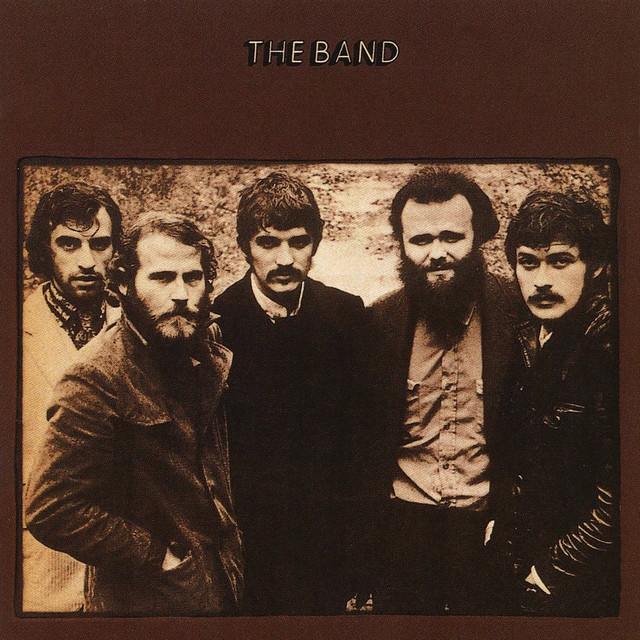
5 Unknown Facts About Garth Hudson

Garth Hudson, the legendary multi-instrumentalist from The Band, has passed away at age 87, the last surviving member of the group. He was an artist whose work transcended rock, blending elements of classical, jazz, and folk into a sound uniquely his own. While many know him as “the most brilliant organist in the rock world,” there’s so much more to his story. Here are five lesser-known facts about Hudson that highlight his genius, quirks, and contributions to music history.

1. His Parents Had Reservations About Rock Music

Garth Hudson’s journey into rock and roll wasn’t a straightforward one. His parents, both accomplished musicians, were skeptical about their son joining a rock band. To ease their concerns, Hudson negotiated an unusual arrangement: he charged his fellow Hawks (later The Band) $10 a week each for music lessons. This move not only helped justify his career choice but also elevated the musicianship of the entire group.

2. The Lowrey Organ Was His Secret Weapon

While many rock musicians favored the Hammond organ, Hudson made the Lowrey organ his signature instrument. Its distinct sound was integral to The Band’s music, from the haunting introduction of “Chest Fever” to the funky textures of “Up on Cripple Creek.” Hudson was so attached to the Lowrey that he made it a condition of joining the Hawks—Ronnie Hawkins had to buy him one as part of his contract.

3. He Had a Fascination with Electronic Music

Hudson was ahead of his time in embracing electronic music. In the mid-1970s, he incorporated synthesizers into The Band’s recordings, most notably on Northern Lights – Southern Cross. Beyond that, he composed electronic scores for theater productions and experimented with blending analog and digital sounds in his solo work. His pioneering spirit helped bridge traditional rock with emerging electronic trends.

4. He Was a Master Archivist

Hudson’s meticulous nature extended to preserving music. He recorded many of the sessions during The Band’s time in Woodstock, which would later become The Basement Tapes. His attention to detail and technical skill ensured the survival of these iconic recordings, which captured the raw synergy between The Band and Bob Dylan during one of rock’s most fertile creative periods.

5. A Lifelong Commitment to Collaboration

Even after The Band’s dissolution, Hudson remained one of the most in-demand session players in music. He worked with an eclectic range of artists, from Van Morrison and Leonard Cohen to Neko Case and The Sadies. Hudson’s ability to seamlessly adapt to different styles while bringing his own touch made him a treasured collaborator across generations.

Garth Hudson was more than a musician; he was a magician, transforming keys and reeds into emotional landscapes. His quiet genius left a profound mark on rock history, and his contributions continue to resonate through the music of those he inspired. Whether you knew him as The Band’s keyboard wizard or as the man behind countless iconic sessions, one thing is certain: Garth Hudson’s legacy will live on.

5 Surprising Facts About AC/DC’s “Back in Black”

Let’s talk about Back in Black, the thunderous roar of resilience that transformed AC/DC from grief-stricken survivors to rock legends. Released on July 25, 1980, this powerhouse record didn’t just mark the debut of Brian Johnson—it became a global anthem for triumph, grit, and headbanging glory. Whether you’re cranking up “Hells Bells” or pounding the steering wheel to “You Shook Me All Night Long,” Back in Black is a rallying cry for rock and roll itself. But did you know there’s a treasure trove of stories and secrets behind this masterpiece? Let’s dive into five little-known facts that make Back in Black a thunderous marvel of music history.

1. The Bell That Tolled for Bon:
The iconic bell that opens “Hells Bells” wasn’t just plucked from a random tower. It was custom-made by John Taylor & Co Bellfounders and weighed an astonishing 2,000 pounds! But here’s the kicker: the band initially tried recording a church bell, only to be thwarted by flocks of birds interrupting each chime. The result? A specially cast bell that tolls with perfect resonance, recorded using Ronnie Lane’s mobile studio. That toll is more than just a sound—it’s a spine-tingling tribute to Bon Scott.

2. Written in Mourning, Recorded in Paradise:
While the album is a tribute to Bon Scott, it was recorded in an unlikely place: Compass Point Studios in the Bahamas. Far from paradise, the studio faced tropical storms, power outages, and even customs delays with equipment stuck at the airport. Brian Johnson, new to the band and the tropics, joked that he felt like he’d been thrown into a hurricane—literally and figuratively.

3. The Genius of “Mutt” Lange:
Producer Robert John “Mutt” Lange didn’t just produce Back in Black—he obsessed over every detail. From ensuring Brian Johnson’s breath control was flawless to demanding multiple takes until perfection, Lange’s meticulous approach pushed the band to their limits. The payoff? A polished yet raw sound that captured the unrelenting energy of AC/DC like never before.

4. The Wireless Secret to Angus’s Riffs:
Angus Young’s searing guitar tone on the album wasn’t just his Gibson SG doing all the work. A crucial component was the Schaffer–Vega Diversity System, a wireless guitar device that added a unique compression and signal boost. This little-known piece of tech became a part of rock history, giving Back in Black its signature punch.

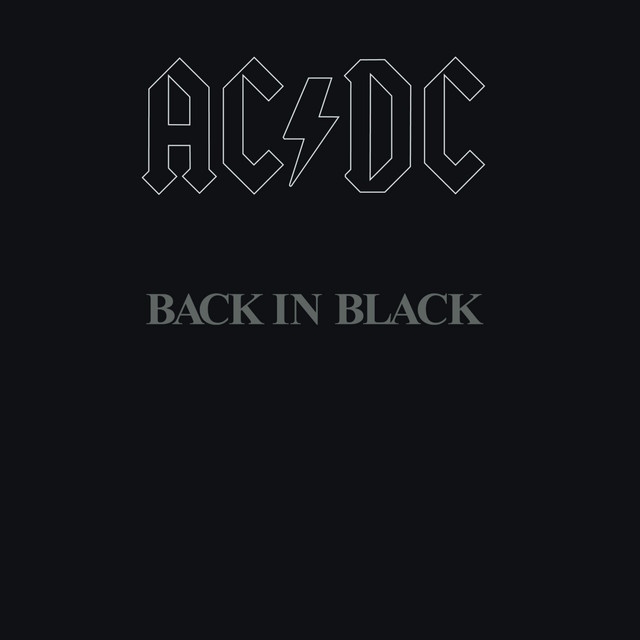
5. The All-Black Cover Controversy:
The album’s iconic black cover was a deliberate tribute to Bon Scott, symbolizing the band’s mourning. Atlantic Records initially hated the idea, fearing it wouldn’t catch consumers’ eyes on record store shelves. The compromise? A subtle gray outline around the AC/DC logo. But that understated design became one of the most recognizable album covers of all time.

Back in Black is a work of musical genius created in perseverance, creativity, and rock and roll grit. It’s the sound of a band turning tragedy into triumph and writing a new chapter that would echo through the ages. Whether you’re rediscovering the album or hearing these stories for the first time, let it remind you of the power of music to heal, inspire, and electrify. So, the next time those bells toll or that riff kicks in, crank it up and salute the pure, undying spirit of AC/DC. Rock on!

Machel Montano Brings the Energy of Soca to Tiny Desk in a Historic Performance

0

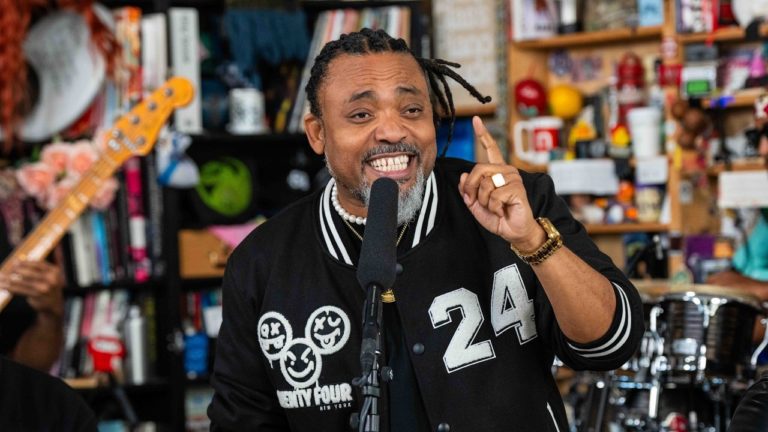
Soca music, with its infectious rhythms and boundless energy, found an intimate yet electrifying stage in Machel Montano’s groundbreaking Tiny Desk Concert. As the first artist to bring soca to this globally recognized platform, Montano showcased the genre’s dynamic evolution from its roots in Trinidad and Tobago during the 1970s. Soca emerged when calypso—already a fusion of African, French, Venezuelan, and American influences—embraced Indian percussion and rhythms under the pioneering vision of Lord Shorty (later Ras Shorty I). Montano’s performance wasn’t just music; it was a vibrant cultural exchange that underscored soca’s universal appeal and its historical foundation in unity and celebration.

Montano’s setlist offered a journey through his storied career, featuring signature hits like “One More Time,” “Famalay,” “Like Ah Boss,” and “Soca Kingdom.” Backed by a stellar ensemble, including Etienne Charles on trumpet and Modupe Onilu on percussion, the performance radiated the communal spirit of soca. Attendees waved Caribbean flags, danced in joyous syncopation, and celebrated the genre’s core ethos: connection through movement and rhythm. For those new to soca, Montano’s Tiny Desk debut was an invitation to explore a genre steeped in cultural resilience and festive exuberance—a living testament to the unifying power of music.

Live Nation and Crew Nation Global Relief Fund Commit $1M to Support Los Angeles Music Community Impacted by Wildfires

0

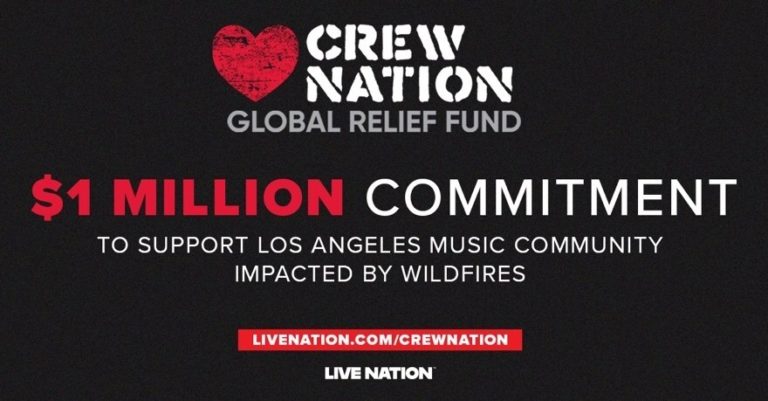
The Crew Nation Global Relief Fund is committing $1 million to assist performing musicians, live music crew, and live music industry workers affected by the recent wildfires in Los Angeles. Established by Live Nation Entertainment in 2020, Crew Nation has been dedicated to delivering aid to those in the music community experiencing unforeseen hardships.

In response to the wildfires’ devastation across L.A. County which are one of the largest natural disasters in U.S. history, Crew Nation has opened applications for grants up to $5,000 for individuals currently employed within the industry facing displacement expenses due to mandatory evacuation orders, damage, or loss. Those seeking support can apply for Crew Nation Fund grants here.

“L.A. is home to so many who help make live music possible, and Crew Nation is continuing its core mission of helping this hardworking community through unforeseen hardship,” said Michael Rapino, President & CEO, Live Nation Entertainment.

Separate from Crew Nation, Live Nation is also supporting impacted employees from its Los Angeles headquarters with direct relief through its Taking Care of Our Own program. And the company is partnering to help produce and promote FireAid, a benefit concert on Thursday, January 30, to help rebuild communities and support fire prevention efforts across Southern California.

Crew Nation was created when shows were paused during the pandemic and has helped get assistance to over 16,000 crew globally with a $10 million contribution from Live Nation, supplemented by $8 million from artists, fans, and industry partners. While live music has bounced back, the Fund continues its support, including a recent $5 million pledge through the On The Road Again program.

Anyone looking to support live music artists and crews through the L.A. wildfires can donate to Crew Nation via 501c3. For more information on Crew Nation visit https://www.livenationentertainment.com/crewnation/.