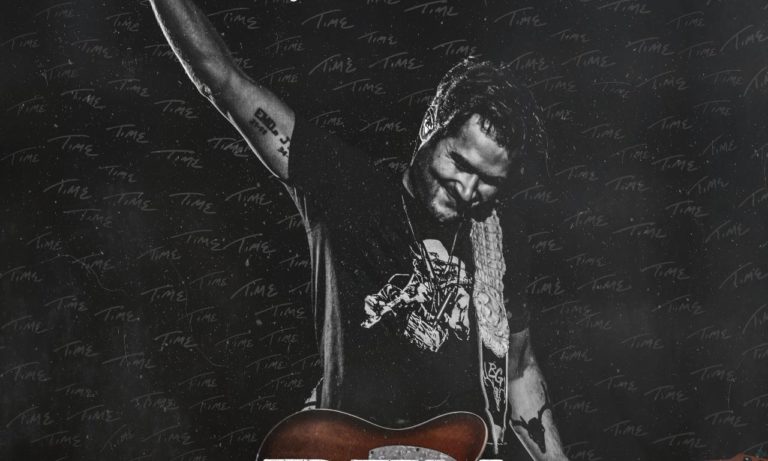
In this artful memoir, Roots and Rhythm – A Life in Music, Grammy Award–winning music producer Charlie Peacock flexes his literary chops and gives readers the gritty backstage stories they crave: biographical anecdotes, geeky trivia, and how the hits were written and recorded (from jazz to rock and pop). Threaded throughout is Peacock’s unique ancestral and spiritual story—the roots. Like Coltrane, Dylan, and Bono before him, Peacock reveals a Christ-affection while refusing genres too small for his music.
Peacock, the great-grandson of a Louisiana fiddler, is an American musical polymath. He’s been the young jazz musician sitting at the feet of trumpeter Eddie Henderson and pianist Herbie Hancock; the singer-songwriter plucked from the Northern California punk/pop underground by legendary impresarios Bill Graham and Chris Blackwell; a pioneering, innovative contributor to the nascent rise of gospel rock in the 1980s; and the genre-busting producer behind such diverse artists as Al Green, Ladysmith Black Mambazo, Chris Cornell, Audio Adrenaline, The Civil Wars, Switchfoot, Turtle Island Quartet, and John Patitucci.
Roots and Rhythm includes Peacock’s seminal NorCal days, the story of indie labels Exit and re:think, his first decade as a Nashville producer (1989–1999), and his essential role in the 21st-century folk/Americana boom (The Civil Wars, Holly Williams, The Lone Bellow). While his exploits and achievements grace the book (including the story of Amy Grant’s “Every Heartbeat” and the evergreen “In the Light”), Peacock is hardly the only character. Instead, he writes as a Joan Didion-style essayist, weaving together a quintessential American story. Beat poet Gary Snyder, evangelist Billy Graham, producer T Bone Burnett, saxophonist Wayne Shorter, and writers Wendell Berry and Isabel Wilkerson all appear in this sweeping tale where ancestry, migration, teenage love, Jesus, and Miles Davis collide.
The book is an invitation to all, including aspiring musicians: embrace the roots and rhythm of our own lives, letting the music and God’s insistent love lead us to gratitude and wonder.
Metal buildings offer a versatile and durable solution for a wide range of applications. Whether used for storage, work, or leisure, these structures provide cost-effective and eco-friendly alternatives to traditional wood or brick buildings. Their adaptability makes them an excellent investment for homeowners, businesses, and agricultural operations. Here are five practical ways to use metal buildings.
1. Storage for Farm Equipment and Vehicles
For farmers and landowners, metal buildings serve as excellent storage solutions for tractors, plows, harvesters, and other farm equipment. Unlike wooden barns, metal buildings are resistant to pests, rot, and weather damage, providing a long-term, low-maintenance option. Similarly, they work well for storing boats, RVs, motorcycles, and classic cars, protecting them from the elements and extending their lifespan.
2. Garages and Workshops
Metal buildings are a great option for creating a garage or workshop space. Their open layouts and high ceilings accommodate vehicles, tools, and heavy machinery. Homeowners can use them for auto repair, woodworking, metalworking, or general DIY projects. These structures allow for easy customization, including the addition of insulation, ventilation, and storage racks to optimize workspace functionality.
3. Home Offices or Business Spaces
With the rise of remote work and small businesses, many people are turning to metal buildings as office spaces. Whether it’s a quiet home office, a retail store, or a service-based business like a small auto repair shop, metal buildings offer a cost-effective alternative to traditional commercial buildings. They provide the flexibility to design an open workspace, add partitions for separate offices, or install insulation and HVAC systems for year-round comfort.
4. Man Caves, She Sheds, and Recreational Spaces
For those looking to create a dedicated personal space, metal buildings make the perfect man cave, she shed, or recreational area. These structures can be customized with entertainment systems, seating, mini-bars, or game tables, transforming them into the ultimate getaway. They also work well as home gyms, art studios, or music practice spaces, providing a private retreat for hobbies and relaxation.
5. Guest Houses or Rental Units
With proper insulation, plumbing, and interior finishing, metal buildings can be converted into guest houses or short-term rental units. This is an ideal option for homeowners who want to provide private accommodations for family and friends or generate extra income through vacation rentals. Their durability and energy efficiency make them a smart choice for long-term use, offering a comfortable and sustainable living space.
Conclusion
Metal buildings in Auburn are more than just storage units—they offer practical and customizable solutions for a variety of needs. From agricultural storage to personal retreats and business spaces, their versatility and durability make them a valuable investment. Whether you’re looking to expand your workspace, create a private sanctuary, or generate rental income, a metal building provides a sustainable and cost-effective solution.
Data and information are provided for informational purposes only, and are not intended for investment or other purposes.
Margaret Cho debuts the official music video for her “Lucky Gift” single today. The video was directed by photographer/director Nick Spanos.
“I loved making this video with director Nick Spanos! He’s the best! I think it just captures that VH-1 90s pop diva energy perfectly. Thank you Garrison Starr and my dog Lucia for being incredible co-stars! I hope you love this video as much as I do!” says Margaret.
On “Lucky Gift,” (which was written by Margaret and produced by Garrison Starr) Margaret sings in a sultry-pop tone while playing her double neck mandolin-guitar, “The Mandotar.” “This is my power pop anthem and the first song I wrote on my mandotar. It is definitely giving gay pop in the best way and it’s my favorite song I’ve ever written.” states Margaret.
It’s been 8 years since Margaret released her 2016 Grammy nominated American Myth album HERE which featured the standout track “Anna Nicole” here written about her friendship with Anna Nicole-Smith.
Margaret says of the forthcoming Lucky Gift album – “I am thrilled to share this album which has been many years in the making. There’s tributes to Robin Williams, lost love, found love and anthems to non- binary and gender non-conforming folx. I collaborated with Garrison Starr and Roger Rocha in different cities at different times but it all feels like it comes from the same place and the same heart.”
Lucky Gift Album Track Listing:
Lucky Gift
Funny Man
Wheels Of Gold
Doot Doot
Stevie
90s Sisyphus
You Can Be You
Baked Bread
Melinda
Waterside
Boyfriend From China
CLUE, the hilarious murder mystery comedy inspired by the Hasbro board game and adapted from the fan-favorite film, is coming to Toronto’s historic Royal Alexandra Theatre from May 20 to June 8, 2025.
Tickets will be available at 10AM on Friday February 21 at mirvish.com or by calling 1.800.461.3333.
Led by Broadway Director Casey Hushion (Associate Director of Mean Girls and The Prom, Associate Resident Director of Aladdin, choreography for the Netflix series “Unbreakable Kimmy Schmidt”), murder and blackmail are on the menu when six mysterious guests assemble at Boddy Manor for a night they’ll never forget! Was it Mrs. Peacock in the study with the knife? Or was it Colonel Mustard in the library with the wrench? Based on the fan-favorite 1985 Paramount Pictures movie and inspired by the classic Hasbro board game, CLUE is the ultimate whodunit that will leave you dying of laughter and keep you guessing until the final twist.
CLUE is based on the screenplay by Jonathan Lynn. Written by Sandy Rustin with additional material by Hunter Foster and Eric Price. It features original music by Michael Holland.
The production also features scenic design by Lee Savage, costume design by Jen Caprio, lighting design by Ryan O’Gara and sound design by Jeff Human.
The cast includes Jennifer Allen as Mrs. Peacock, Christina Anthony as Miss Scarlet, Mariah Burks as the Cook, Donna English as Mrs. White, David Hess as Colonel Mustard, Jamil A.C. Mangan as The Cop, John Shartzer as Mr. Green, Jeff Skowron as Wadsworth, Alex Syiek as Mr. Boddy, Elisabeth Yancey as Yvette, Evan Zes as Professor Plum. The understudies are Greg Balla, Aaron Kaburick, Mary McNulty, and Cassandra Marie Murphy.
The CLUE franchise began in 1949 with the manufacture of the ‘Cluedo’ board game. Currently owned and published by Hasbro, the game has since sold more than 200 million copies worldwide. A murder-mystery comedy film by Paramount Pictures based on the board game was released in 1985 and went on to achieve cult classic status with a passionate fanbase.
The North American tour of CLUE is produced by The Araca Group, Work Light Productions, Lively McCabe Entertainment and Aged in Wood.
Originally produced at Bucks County Playhouse, New Hope, Pennsylvania, Alexander Fraser, Robyn Goodman, Josh Fiedler, Producers. Developed by Cleveland Playhouse, Laura Kepley, Artistic Director & Kevin Moore, Managing Director.
Signature Sounds is thrilled to announce the signing of acclaimed singer-songwriter and multi-instrumentalist, Olive Klug. Label president Jim Olsen says, “When a friend sent me the rough mixes for Lost Dog, I was immediately captivated by the catchy songwriting and raw, honest lyrics. Olive’s music evokes the spirit of some of my favorite rebellious songwriters like Michelle Shocked, Alynda Segarra (of Hurray For The Riff Raff), and Adrienne Lenker, pushing the boundaries of roots music with unapologetic authenticity and attitude.”
It’s been a short time since the van-dwelling Olive Klug has fully pursued the life of a touring musician. Their DIY career has resulted in a huge following with over 20 million Spotify streams, nearly 200,000 TikTok followers, and 100,000+ Instagram followers. Self-described as “someone who floats on the breeze, letting the wind take me wherever I’m meant to be,” Klug’s sophomore album and label debut Lost Dog finds them contemplating this propensity for adventure no matter which avenue of love and loss it leads down.
“Taking Punches From The Breeze” is a fitting opening track to an album about “aging as a neurodivergent free spirit.” Klug reflects, ”As a young touring musician with a propensity for adventure, this instinct towards leaning into the breeze has gotten me into some tough situations, tired me out, and made me generally confused about my life’s direction.”
Gentle at the start, “Taking Punches From the Breeze” gets its title from Klug’s self-described nature of “letting the wind take them wherever they’re meant to be.” As more instrumentation fills in alongside fingerpicked guitar and Klug’s soft croon, a shuffling drum beat arrives under lyrical imagery of life’s new direction and the ups and downs of being beholden to the breeze.
Klug continues, “I was ready to let the breeze take me wherever it wanted me to go, but soon I realized that the breeze has got some hands and has the capacity to toughen and beat you up.”
“What to Make of Me” is an upbeat, zydeco-inspired romp about falling for someone who isn’t quite ready for all you have to offer. Klug writes, “This is the happiest song you’ll ever hear about unrequited love. More specifically, this song arose out of a short-term romance I had with someone who wasn’t ready to claim their queerness. With lines like “you’re too blind to see the goddamn miracle I made of me”, I am claiming my self-assuredness and do not let a lack of understanding from the object of my affection impact the confidence I’ve worked so hard to build.”
Although still very young, on Lost Dog Klug artfully addresses life on the road with an unarguable ability to fearlessly voice deeply honest emotions through captivating storytelling. Audiotree praised, ”equal parts vulnerable and powerful, ebullient and heartbreaking, reminding us how powerful the journey of music can be.” Olive Klug is a singular voice for the future of folk: honest, fearless, often unsure, but willing to try anyway.
Olive Klug refuses to be put in a box. Working out who you are in front of an ever-growing audience is no small task, but one that the Portland-born, Nashville-based singer/songwriter is up for and thriving.
Olive graduated with a liberal arts degree shortly before the 2020 pandemic derailed their plans of pursuing a career in social work. Though they’d recorded and self-released the 2019 EP “Fire Alarm” from a childhood friend’s bedroom, up until early 2021, Olive categorized their music as either a hobby or a pipe dream, depending on who was asking. However, after being laid off from a teaching job in late 2020, Olive started working as a barista and decided to commit all of their extra energy to an ever-growing community of fans online.
Combining their knack for storytelling with a lilting soprano voice, Klug offers observations with an unflinching honesty. 2025 finds Olive in Nashville, attempting to stabilize after a 3-year whirlwind of viral niche internet-fame, non stop touring, and music industry naïveté. Olive’s social work background grounds them in community, a word they keep coming back to when ego proves unfulfilling. Olive is excited to solidify themselves as a fixture of the greater folk community and return to what inspires them the most about music; the catharsis and social change that is possible when people come together and share themselves through song.
From the Grammy-nominated and multiplatinum singer-songwriter and New York Times bestselling author Tori Amos comes Tori and the Muses, a thoughtful and sprightly tale of young Tori navigating the magical world of inspiration in all its forms.
Tori is no ordinary child—her musical inspirations and talents are clear from a young age. But when her dad forces her to rehearse for her recital, Tori is unhappy. She wants to play what she wants to play! And though they don’t see eye to eye, Tori has a secret: eleven Muses who have visited her since she was a baby and inspire her to write and make her own beautiful music. These fairy godmother–like Muses remind Tori that inspiration is everywhere, and perhaps in helping others find their own Muses—including Dad—she may better understand her own inspirations.
So, Tori takes her brand-new floating pink piano—a gift from the Muses—to see what might inspire others, in hopes of understanding what her dad’s Muses might be. And she is surprised at what she finds.
Filled with joy, curiosity, and imagination, this debut picture book written by Tori Amos with otherworldly illustrations by Demelsa Haughton will inspire, encourage, and most importantly, remind young readers to find inspiration in the things they love, and to listen to their own Muses.
From Billie Eilish to Cassandra Wilson, Elvis Costello to Pearl Jam, many of the world’s most beloved musicians have entertained us on Austin City Limits. And for the past couple of decades, each performance recorded on the ACL stage has inspired a special bonus: an original, eye-catching screen-printed poster, commissioned by the show’s producer, Austin PBS, and designed by some of their favorite graphic artists from all over the world.
Screen to Screen celebrates the 50th anniversary of Austin’s premier gig, presenting every poster in brilliant full color alongside dazzling ACL concert photography and reminiscences from Neko Case, Leon Bridges, and other luminaries. Exciting, evocative, and always unique, the posters are accompanied by insightful creative discussion from several designers, including Mark Pedini and Diana Sudyka, and the book itself is designed by the award-winning, Austin-based firm Preacher Co. Introduced by long-time ACL producer Terry Lickona and with a foreword from Willie Nelson—whom you might remember from the pilot episode, taped half a century ago—this collection brings a piece of Austin and music history to life in vivid color.
Zach Top has releases Me & Billy-a three-song EP featuring 2x Grammy Award-winning artist Billy Strings. Previously released last fall as an Apple Music exclusive, the EP can now be streamed everywhere and finds the pair reimagining versions of Top’s original tracks “Bad Luck” and “Things To Do” along with a cover of Ricky Skaggs’ “Don’t Cheat In Our Home Town.”
Of the collaboration with Strings, Top shares, “We had a lot of fun, traded back and forth some playing and whatnot. It’s so fun to watch him play. And I feel like he’s known so much for a player that it gets passed over sometimes how freaking good of a singer he is too. It was so fun to get to sing with him and him kind enough to come in on a couple of my songs and sing a second verse, sing a little harmony, do that kind of thing. It was a blast.”
The new release adds to a breakout year for Top, who was recently named “the future of country music” by Billboard, nominated for New Artist of the Year at the 58th Annual CMA Awards and was named Discovery Artist of the Year at the 2024 MusicRow Awards. He released his widely praised debut album, Cold Beer & Country Music, last spring. Produced by Carson Chamberlain (Billy Currington, Easton Corbin), the record garnered over 3.5 million streams in just its first week and received widespread acclaim. The Tennessean said it’s full of “star-making tunes,” while Country Central praised, “Cold Beer & Country Music is a masterclass in traditional country music…With a record this strong, Zach Top has proven himself as a standout rising star in this format and a premier vocalist in country music.”
Furthermore, Top’s “Cold Beer & Country Music” headline tour completely sold out just hours after tickets went on sale and features stops at Nashville’s historic Ryman Auditorium (two nights), New York’s Terminal 5 and Boston’s MGM Music Hall at Fenway among many others. Additionally, Top is supporting select dates with Alan Jackson on his “Last Call Tour” and will join Dierks Bentley’s “Broken Branches Tour,” kicking off in May.
Raised in Sunnyside, WA, Top grew up on classic country music around the family farm. At the age of seven, he formed a band with his siblings which set the stage for his musical ambitions. Throughout his teenage years and early twenties, Top honed his craft by playing in various bluegrass bands before moving to Nashville in 2021, where he has been steadily making his mark as an artist to watch.
ZACH TOP TOUR DATES
February 28-Nashville, TN-Ryman Auditorium^ (SOLD OUT)
March 1-Nashville, TN-Ryman Auditorium+ (SOLD OUT)
March 5-Jacksonville, FL-Daily’s Place+ (SOLD OUT)
March 7-Orlando, FL-Kia Center#
March 8-Atlanta, GA-Buckhead Theatre+ (SOLD OUT)
March 11-Houston, TX-NRG Rodeo Houston
March 21-23-Willowbank, Australia-CMC Rocks
April 2-Oxford, MS-The Lyric Oxford~
April 3-Starkville, MS-Rick’s Cafe~
April 4-Starkville, MS-Rick’s Cafe~
April 5-New Orleans, LA-Hogs for the Cause 2025
April 10-Columbia, SC-Township Auditorium~
April 11-Winterville, GA-Athens Fairgrounds
April 12-Opelika, AL-Sistrunk Farms
April 24-Wilmington, NC-Live Oak Bank Pavilion^
April 25-Statesboro, GA-The Blue Room^
April 26-Tampa, FL-Amalie Arena#
May 1-New York, NY-Terminal 5^
May 2-Siver Spring, MD-The Fillmore^
May 3-Philadelphia, PA-The Fillmore Philadelphia^
May 4-Boston, MA-MGM Music Hall at Fenway^
May 15-Pikeville, KY-Appalachian Wireless Arena~
May 16-Indianapolis, IN-Everwisse Amphitheater at White River State Park~
May 17-Milwaukee, WI-Fiserv Forum#
May 29-Austin, TX-Moody Center*
May 30-Dallas, TX-Dos Equis Pavilion*
May 31-Tulsa, OK-BOK Center*
June 5-Alpharetta, GA-Ameris Bank Amphitheatre*
June 6-Tampa, FL-MIDFLORIDA Credit Union Amphitheatre*
June 7-iTHINK Financial Amphitheatre*
June 11-North Lawrence, OH-The Country Fest 2025
June 12-Toronto, ON-Budweiser Stage*
June 14-Tinley Park, IL-Credit Union 1 Amphitheatre
June 19-Chula Vista, CA-North Island Credit Union Amphitheatre
June 20-Phoenix, AZ-Talking Stick Resort Amphitheatre
June 21-Albuquerque, NM-Isleta Amphitheater
June 22-Telluride, CO-Telluride Bluegrass Festival 2025
June 26-Los Angeles, CA-Intuit Dome*
June 27-Wheatland, CA-Toyota Amphitheatre*
June 28-Mountain View, CA-Shoreline Amphitheatre
July 10-Virginia Beach, VA-Veterans United Home Loans Amphitheater
July 11-Bristow, VA-Jiffy Libe Live
July 12-Mansfield, MA-Xfinity Center
July 13-Clearfield, PA-Clearfield County Fairgrounds
July 17-Twin Lakes, WI-Shadow Hill Ranch
July 18-Cincinnati, OH-Riverbend Music Center
July 19-Noblesville, IN-Ruoff Music Center
July 31-Salt Lake City, UT-Utah First Credit Union Amphitheatre
August 1-Nampa, ID-Ford Idaho Center Amphitheater
August 2-Quincy, WA-Watershed Festival
August 7-Camden, NJ-Freedom Mortgage Pavilion*
August 8-Raleigh, NC-Coastal Credit Union Music Park at Walnut Creek
August 9-Charlotte, NC-PNC Music Pavilion
August 14-Darrien Center, NY-Darrien Lake Amphitheater*
August 15-Holmdel, NJ-PNC Bank Arts Center
August 16-Bethel, NY-Bethel Woods Center for the Arts
August 21-Savannah, GA-Enmarket Arena
August 22-Birmingham, AL-Coca-Cola Amphitheater
August 23-Biloxi, MS-Mississippi Coast Coliseum*
August 28-New York, NY-Madison Square Garden Arena*
August 29-Burgettstown, PA-The Pavilion at Star Lake*
August 30-Clarkston, MI-Pine Knob Music Theatre*
+with special guest Cole Goodwin
#supporting Alan Jackson
^with special guest Jake Worthington
~with special guest Lauren Watkins
*supporting Dierks Bentley
Light in the Attic (LITA) proudly presents Slow Magic, 1977-1978, a collection of never-before-heard songs that Jeff Bridges wrote and recorded with a band of his oldest and closest friends. At turns unruly, inventive, vulnerable, and joyfully weird, the tapes capture him singing and playing with total joy and abandon. The ragtag exuberance of these recordings not only evokes LA at a specific place and time-they reveal a missing link in the life of Bridges, an actor who has always considered himself a musician.
A native of West Los Angeles, Bridges was born into a showbiz family that happily encouraged him to follow them into movies and television. “I had other interests like music, painting, ceramics, all different kinds of things,” he says. “And my dad would say, ‘Jeff, don’t be ridiculous. That’s one of the great things about acting. You’re going to be called upon to tap into all the talent and different interests you have.'”
Even after being nominated for an Academy Award at age 22 for his role in 1971’s The Last Picture Show, Bridges was uncertain if acting would his path. He bought a ramshackle house in the hills above Malibu, which became a clubhouse for a group of close friends who had been the misfits of University High School, class of 1967. Among them were Stan Ayeroff (a guitar virtuoso who later wrote books about Django Reinhardt and Charlie Christian); David Greenwalt (a guitarist and songwriter who later started writing scripts and eventually co-produced Buffy The Vampire Slayer); Matthew Bright (a bassist who went onto to direct Reese Witherspoon in the gonzo cult film Freeway); and Steve Baim (their fearless leader, famous for his spontaneous art-making, taking over 300 acid trips, and auditioning to be James Brown’s drummer).
At the Malibu pad, they surfed and flew kites and soaked in the hot tub and sweated in the sauna that Jeff installed. Everyone played music. Songwriting was just an extension of the hang-as effortless as dancing or sharing a joint. While Bridges worshipped Bob Dylan and the Beatles, his approach to making music was spiked with weirdness-he loved Captain Beefheart and Moondog.
After Jeff finished 1976’s blockbuster remake of King Kong, he and his friends rented a warehouse in Venice, CA, where they recorded a set of songs that included “Obnoxious,” a gloriously chaotic waltz that satirizes self-consciousness, and “Slow Magic,” a sweet shuffle about stoned enlightenment. The sessions were overseen by songwriter and orchestrator Ken Lauber, who had recently relocated to LA to work with Bob Dylan and The Band at Shangri-La studio in Malibu. He and Bridges met when Lauber did the soundtrack for Hearts of The West. “Jeff was going to Est seminars with Werner Erhard, and that enabled him to get in touch with these psychological underpinnings of his life experiences up to this point,” says Lauber. “I thought he’d honed his writing and singing to a point where it could be recognized as a commercial venture.”
An assortment of old friends and LA oddballs floated through the sessions. Horns were played by Sam “Sluggo” Phipps or Billy Superball-both members of the guerilla theater troupe The Mystic Knights of Oingo Boingo, which later morphed into Oingo Boingo, led by composer Danny Elfman. While Jeff was recording at Village Recorder, the storied studio soon to be taken over by Fleetwood Mac for Tusk, he ran into the legendary character actor Burgess Meredith, who wrote and directed Jeff’s second film-the surreal thriller The Yin & Yang of Mr. Go (1970). Meredith was an early supporter of Jeff’s music and encouraged him to contribute original songs to the film. A few years later, fresh off his role as Mickey in Rocky (1976), Meredith added extraordinary monologues to “Kong” and “Here On This Island,” two mind-bending slices of mutant disco. The inspiration for “Kong” came from Jeff’s concept for a sequel to Kong (1976)-when producer Dino De Laurentiis rejected his pitch, Jeff turned it into a song.
At times, their music occupied the same airspace as Arthur Russell, or Talking Heads, or Frank Zappa-or all of them playing together. Still, they were aware that their tastes might be too weird or vulnerable for public consumption. After the sessions were shelved, Jeff and his friends continued to meet privately for “The Wednesday Night Jam,” a drug-fueled, free-form ritual held every Wednesday night at Steve Baim’s storefront art studio in Culver City. The rules were simple: 1) No songs, 2) No blues, 3) No preparation. The racket they made together could be disastrous or glorious. Either way, they loved it. For Jeff, it was a refuge from the pressure of movie stardom, a place where he was allowed to totally lose himself, surrounded by the old friends he trusted most. The atmospheric instrumental collages of “Space #1” and “Space #2” come from that space.
As Jeff’s fame grew, the old friends continued to meet, generating new songs and accumulating self-recorded tapes traded among themselves like Dead Heads. Meanwhile, his movie career and his music started to converge. He and T-Bone Burnett became lifelong friends and collaborators after meeting on the set of Heaven’s Gate (1980). Burnett and Bridges worked closely to develop the character and music of Crazy Heart (2010), for which Jeff won the Oscar for Best Actor. Burnett went on to produce Jeff’s self-titled 2011 album, the follow-up to his first solo album, Be Here Soon (2000). Following Crazy Heart, Jeff started touring with The Abiders, who have been his live band ever since.
After collaborating with Jeff on the 2015 ambient spoken word album Sleeping Tapes, Keefus Ciancia was in the studio with Jeff when he happened to pull up some old recordings from the 1970s. Ciancia was blown away. He said that the old tapes sounded like “The Band playing at CBGB with the Exploding Plastic Inevitable” and quietly tipped LITA to the existence of Jeff’s archive.
The music on Slow Magic, 1977-1978 comes from a single decaying cassette labeled “July 1978.” It represents a cross-section of those lost 1970s sessions. Keefus Ciancia, Jean Sievers, and Matt Sullivan spent the second half of 2024 working closely with Bridges to prep the music for release. Though he’s on a tight filming schedule, Bridges completely devoted himself to every aspect of this release-sharing stories for countless hours, studying mixes and sequences, and even hand-drawing a version of the LITA logo for the artwork.
Whether films, music, or visual art, his process has always been to joyfully immerse himself in whatever opportunity surfaces in the moment. He just never thought that opportunity would emerge for these tapes. “Pretty wild that this thing that happened around 50 years ago wants to bloom,” says Jeff. “I guess weirdness is what’s happening these days. You never can tell what’s gonna happen.” The spirit of these rediscovered tapes is connected to Emergent Behavior, a series of raw, unpolished songs that Jeff has been recording and releasing in recent years. The music is available directly through jeffbridges.com.
Pressed at RTI on transparent blue vinyl, Slow Magic, 1977-1978 will be available exclusively for Record Store Day (April 12) at participating independent retailers. Additionally, the album will arrive on digital platforms on the same day. All physical formats include extensive liner notes by Sam Sweet featuring a new interview with Jeff Bridges and a treasure trove of never-before-seen archival photos courtesy of photographers Loretta Ayeroff and Candy Clark. The album features eleven previously unreleased tracks newly mastered by multi-Grammy nominated engineer John Baldwin, with lacquers cut by John Golden at Golden Mastering. Designed by Darry Norsen, the LP edition features a 20-page booklet.
Ahead of the album’s release, digital single “Obnoxious” is streaming on all platforms today (Feb. 28). Behind the scenes, filmmakers Isaac Gale, Paul Lovelace, and Ben Wu (the team behind the acclaimed 2025 documentary, Swamp Dogg Gets His Pool Painted) have produced a series of short docs surrounding the project slated for release this spring.
Liner notes writer Sam Sweet conducted countless hours of interviews and research, working directly with Jeff Bridges and in partnership with Light in the Attic. Sweet is best known for All Night Menu, an ongoing series of microhistories of Los Angeles. The project encompasses books, archival collections, and an interview series. The mission of All Night Menu is to make the invisible equal to the visible.
Slow Magic, 1977-1978 LP/Digital Tracklist:
Side A
He’s Here
Obnoxious
Attitude
Space #1
Slow Magic
Here On This Island (feat. Burgess Meredith)
Side B
Light Blues
This Is The One
Space #2
You Could Be Ready
Kong (feat. Burgess Meredith)
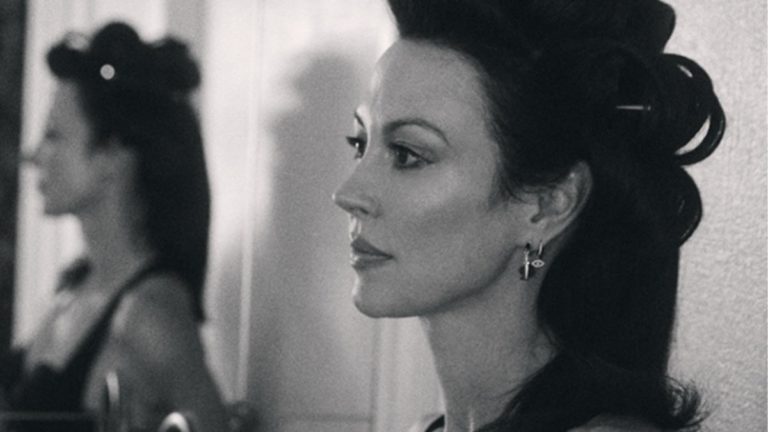
Bryan Ferry and performance artist, writer and painter Amelia Barratt release ‘Florist’, the latest work from their upcoming collaborative album Loose Talk, due for release on March 28.
Following the richly detailed and transportive ‘Orchestra’, ‘Florist’ invites the listener deeper into the cinematic world of Loose Talk. The accompanying video was shot and directed by Bryan Ferry.
Loose Talk signals the beginning of a new creative chapter for Bryan Ferry, blurring the lines between music, poetry and art. Fifty-three years since Roxy Music’s iconic debut album arrived like a bolt-from-the-blue, his latest project is just as startlingly unexpected. The sounds and shapes, and the spoken words they are set to, are unlike any previous Bryan Ferry album. At the same time, the mood that Loose Talk captures is rooted in Ferry’s past half-century of work.
Loose Talk marks the first time Ferry has created new music for another writer’s words. The album consists of eleven texts, composed by Amelia Barratt, creating fascinating micro-fictions, simultaneously fragmentary and self-contained.
The album balances refined minimalism and abstraction with an experimental and youthful energy. Ferry’s music and Barratt’s texts each hold their own codes. As those codes pulse as one, the album discovers its own language – two monologues begin a conversation that becomes a duet.
Discussing Loose Talk, Bryan Ferry said: “The whole experience of making Loose Talk has had an interesting newness about it. It seems to have opened a whole new chapter in my work. There’s a really strong mood to the work that Amelia does and I was very conscious of not getting in the way of her words. Hopefully, together, we’ve created something neither could do on our own.
The nearest I ever got to doing pieces like this before would maybe be back in Roxy with “In Every Dream Home A Heartache,” and “Mother Of Pearl”. To some extent, those are kind of spoken monologues. I’m pleased that when we’ve played Loose Talk to people, they’ve said, “Oh, this sounds really different.” That’s what I’ve always wanted with everything I’ve done, or been involved in, to be: different. Different to what you’ve heard before, or seen before. That’s the whole point of being an artist: trying to create a new thing, a new world.”
Amelia Barratt said: “Loose Talk is a conversation between two artists: a collaborative album of music by Bryan Ferry with spoken texts by me. It’s cinematic; music put to pictures.
There’s possibility for experimentation within a frame. And there’s a freedom in knowing exactly what my part to play is, then being able to pass a baton, stretching out creatively and knowing there is someone on the other side to take it further. Nothing feels off limits.”
Bryan Ferry and Amelia Barratt were first connected via their separate involvements in the art world. The collaboration began with a chance meeting at an exhibition opening, where Ferry grew intrigued to learn Barratt had started working with writing and performance in parallel with her painting. Both artists share an art school background – Bryan Ferry studied painting at Newcastle University in the 1960s, Barratt at Glasgow School of Art and the Slade School of Art, where she received an MFA in 2016 – but it’s the differences between them that animate Loose Talk and create unmapped territory.
Bryan Ferry’s collaboration with Amelia Barratt was first teased with the release of ‘Star’ in 2024 – presented as the latest composition on the newly released 81 track career-spanning collection, Retrospective: Selected Recordings 1973-2023. ‘Star’ was described with “smouldering brilliance” by Uncut Magazine, “a sinister sequel to Dance Away” by MOJO, “remarkable, crunching, frosted, sub-zero electronics” by CLASH Magazine and “a trippy new single” by the NME.