Home Blog Page 986

Music Production Software Market to Grow by USD 432.8 Million (2025-2029), Rising Number of Musicians and Artists Boost Market, AI-Driven Transformation

1

The global music production software market size is estimated to grow by USD 432.8 million from 2025-2029, according to Technavio. The market is estimated to grow at a CAGR of almost 7.7% during the forecast period. Rising number of musicians and artists is driving market growth, with a trend towards growing use of ai for music production. However, easy availability of open-source software for music production software poses a challenge. Key market players include Ableton AG, Acon AS, Acoustica Inc., Adobe Inc., Apple Inc., Avid Technology Inc., Bitwig GmbH, Cockos Inc., GoldWave Inc., Image Line Software NV, iZotope Inc., MAGIX Software GmbH, MOTU Inc., MuTools, NCH SOFTWARE Pty Ltd., Peaksware Holdings LLC, PreSonus Audio Electronics Inc., Reason Studios AB, Serato Ltd., and Yamaha Corp..

The music production software market is thriving with innovations, driven by trends like social media, artificial intelligence, and cloud-based solutions. Digital audio workstations (DAWs) and recording tools have become more sophisticated, offering genre-focused features for electronic dance music and background scores. Technological advancements include AI-powered music creation, virtual instruments, and automated mixing. Perpetual licenses and subscription-based models cater to various budgets, making music production more democratized. Younger generations are embracing mobile apps for music production and education. Cloud technology enables collaborative tools, central hubs, and music production services. Machine learning algorithms and AI-powered music production are revolutionizing the music industry, offering high-quality recordings and audio environments. Music production firms use these tools to create jingles and formats for entertainment. Freemium and subscription-based models, along with free trials, have lowered the entry barrier for music producers and enthusiasts. Overall, software technology continues to streamline creative processes and democratize music production for various music genres and formats.

Advanced technologies, specifically artificial intelligence (AI) and cloud technology, have significantly enhanced the music production process. Musicians and artists are utilizing AI for refining human-generated music through editing and mastering. AI-based music composing tools, such as Orb Composer 1.5 by HEXACHORDS ENTERTAINMENT SL, are being used for music production. AI automates music production by emulating cognitive skills to create music and discover patterns, improving the overall process. Consequently, many music software production companies are focusing on AI technology for music development.

The music production software market is experiencing significant growth due to technological advancements and changing consumer preferences. Challenges include social media influence, artificial intelligence, and cloud-based solutions. Electronic dance music and home studios dominate the genre focus, with innovations such as AI-powered music creation and digital audio workstations (DAWs) leading the way. Perpetual licenses and subscription-based models, including freemium and cloud-based music production, cater to various budgets and operating systems. Machine learning algorithms and AI-virtual instruments enhance creative processes, while recording tools and automated mixing simplify digital audio production. Music production apps and services cater to younger generations, democratizing music production and education. The music industry benefits from high-quality recordings and audio environments, while collaborative tools reduce the entry barrier for music producers. The future of music production lies in AI-powered music creation, machine learning, and cloud technology, offering endless possibilities for music creation tools and formats.

Open-source music production software poses a challenge to proprietary providers in the music production market. The availability of free software, such as Ardour, LMMS, and Mixxx, is easily accessible on web portals. Developed by a community of engineers, these tools offer benefits like free usage and support, preventing vendor lock-in. One popular option is Audacity, a multi-track audio editor and recorder suitable for Windows and Mac OS devices. Despite the revenue impact, proprietary software continues to offer unique features and support for those willing to pay.

The music production software market caters to end-users such as musicians, DJs, and music production companies. With the global film industry’s rapid growth, film producers are investing in better audio and video quality, including 3D and 4D formats. To meet their requirements, music production software providers are continuously developing and introducing new versions, offering updates, and releasing notifications about the latest products. The increasing number of musicians and artists, as well as the popularity of music streaming services and remix songs, fuels the demand for music production software in the media and entertainment industry. For instance, Apple’s Logic Pro X update, featuring new tempo detection technology and professional sound-shaping tools, caters to the needs of musicians producing electronic music. These innovations will contribute to the expansion of the professionals segment in the global music production software market during the forecast period.

The Music Production Software market is a dynamic and innovative industry, offering a wide range of tools and solutions for composers, producers, and artists to create, edit, and distribute music. From AI music composers that generate customized music based on specific parameters to music production workflow software that streamlines the production process, there’s a solution for every need. Film scoring, podcasting, game audio, and live performance are just a few applications of music production software. Music production techniques and tips are abundant online, with tutorials and reviews available for various software and plugins. Mobile and iOS users can also get in on the action with free and paid music production apps for electronic music creation, MIDI controller support, and more. Music education and licensing are also essential aspects of the market, with many platforms offering comprehensive courses and resources. The latest trends in music production software include AI music generation, cloud music production, music production in the metaverse, and augmented reality content creation. Audio mixing software, audio engineering, music creation tools, audio mastering, and virtual reality are also popular areas of development. Overall, music production software continues to evolve, providing endless possibilities for creators to bring their ideas to life.

Music production software has seen significant innovations in recent years, with technological advancements bringing about new capabilities and making music creation more accessible to a wider audience. Social media platforms have become central hubs for music producers to showcase their work and connect with peers. Cloud-based solutions and perpetual licenses offer flexibility in usage, while digital audio workstations (DAWs) and recording tools enable high-quality digital audio production. AI-powered music creation, including AI-virtual instruments and machine learning algorithms, are revolutionizing music production, offering automated mixing, genre focus, and even AI-generated compositions. Younger generations are increasingly turning to music production apps and mobile apps for creating electronic dance music and background scores. Cloud technology, freemium models, and subscription-based services have democratized music production, making it more accessible to those with limited budgets or operating systems. The music industry is embracing these technological advancements, with music production services offering sophisticated collaborative tools for remote work and audio environments for mixing and editing. Innovations in music production software continue to break down the entry barrier, making music creation a more accessible and exciting endeavor for all.
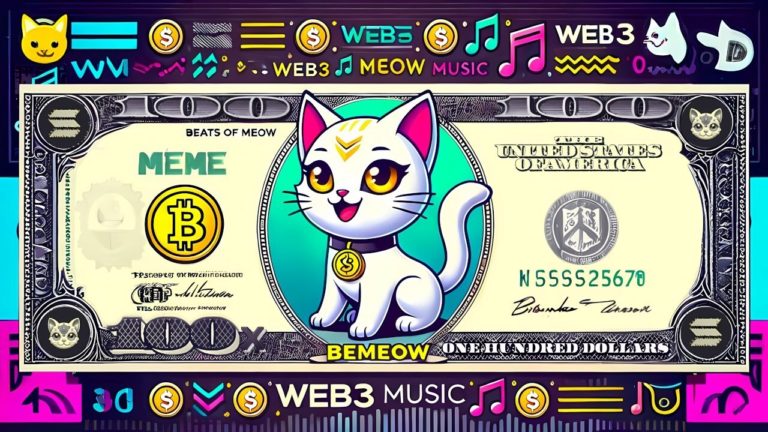

The First Community-Driven Web3 Music Label with Meme-Culture: Beats of Meow Prepares for Launch

0

Elon Musk’s tweets about DOGE have brought more attention to memecoins, with tokens like SHIB and PEPE making headlines as their value and popularity surge.

BeMeow (Beats of Meow) positions itself as the first community-driven Web3 record label embracing meme-culture. By merging blockchain and artificial intelligence technology with music and memes, they target better artist compensation while creating a novel community experience.

BeMeow is taking a step in a new direction. Instead of non-fungible tokens (NFTs), they use memecoins to digitize music on the blockchain. This unconventional tokenization approach enables songs to have their own dedicated trading charts. By applying trading fees to the tokens, BeMeow seeks to generate revenues that support independent artists making a living from their music releases.

BeMeow aims to reinvest a portion of the generated trading fees into an organic ecosystem. Planned initiatives include hosting club events and music festivals, as well as producing unique vinyl records with digital ownership features. These “vinyl NFTs” can generate passive income streams for collectors through a share of the music royalties and the fees paid by the memecoin traders.

BeMeow places its community at the heart of its operations. They encourage promotional engagement with token rewards allocated through a points-based system. Moreover, BeMeow integrates generative AI tools within its Telegram group, enabling users to create and submit music, without needing to be professional musicians. Community voting determines which songs are released on major music platforms such as Spotify, Apple Music, and Tidal. This way, creators and supporters can benefit from collected royalties.

Additionally, BeMeow plans to introduce copyright tokens and music index tokens, which aim to make music a more accessible and diversified investment class. The roadmap includes a dedicated music token exchange, designed to enhance the ecosystem with broader technical compatibility, reduced price volatility, and advanced trading features.

BeMeow’s native label token, $BEME, represents the ecosystem’s overall value. A portion of the trading fees from each music memecoin is reserved to buy back $BEME, supporting its long-term value.

The presale of $BEME is currently live, allowing early birds to support the project in its developing stage. To foster a smooth token launch in January 2025, BeMeow has implemented a vesting model, which gradually releases tokens to presale participants.

Presale participants can benefit from a two-tier referral program, offering additional rewards for bringing new supporters into the project.

TESSAN Partners with Rachael Yamagata to Inspire Travelers

0

The leading charging solution brand TESSAN has announced an exciting collaboration with American singer-songwriter Rachael Yamagata, launching a global initiative titled “What’s Your Next Journey?” This campaign aims to uncover the stories behind travelers and encourage everyone to explore the unknown during their journeys.

Rachael Yamagata, known for her soulful voice and emotive lyrics, began her music career with the funk band Bumpus before embarking on a solo journey. Her discography includes several albums and EPs, such as “Happenstance” and “Elephants…Teeth Sinking into Heart,” which explore themes of love, heartbreak, and personal growth.

In a conversation with TESSAN, Rachael delved into her profound reflections on music and travel, revealing how she interprets the meaning of life through her music. Discussing the concept of “connection,” which TESSAN champions, Rachael described music as a bridge for deep connection, allowing people to release emotions. “Connection to me is about authentic relation with those around you, taking off the mask and realizing that we are in this together and in every way and picking up on all of the subtleties of what we don’t always say,” she shared.

Rachael’s travels mostly stem from her passion for connecting with others. Her experiences around the world inspire her creativity, infusing her music with the colors and flavors of different places. This passion drives her to embark on new journeys continually. When asked what “Journey” means to her, Rachael explained, “Journey means a balance of a dream of where you’re going and the ability to be in the present moment and to enjoy it, because that really is what your life is about. It’s about that journey of… experience of meeting new people, of seeing how you grow, and traveling is what does that for me. Experiencing new cultures, new ideas, new energies of the places I go.”

As a frequently touring artist, Rachael Yamagata refers to “packing” as an art form that takes years to master, noting that one of the biggest challenges of travel is knowing what to bring. Among her travel essentials is TESSAN’s World Travel Adapter, which she praises for its versatility and convenience. “It’s got everything I need as an international traveler in one,” she said. “I love it, it is so good, I’m taking it everywhere.”

TESSAN embraces the idea that “The journey begins at home” and is committed to “connecting people to their journeys.” Over the years, TESSAN has transformed from merely keeping devices charged to becoming a trusted travel companion for many, empowering them to stay connected and embrace new experiences.

In collaboration with Rachael Yamagata, TESSAN explores the profound meanings of journeys and life, sharing inspiring stories of transformative travel. These narratives embody TESSAN’s core values of exploration, connection, and inspiration, encouraging people to pursue their dreams and embark on self-discovery, whether in grand or small adventures.

Jazz Icons Jools Holland OBE and Jamie Cullum Set Sail with Cunard in 2025

0

Cunard is setting the tempo for music collaborations in 2025 with globally renowned jazz artists Jools Holland OBE and Jamie Cullum* headlining exclusive performances on board Queen Victoria next year.

As the countdown to the New Year begins, the luxury cruise line can reveal that acclaimed musician and Hootenanny host Jools Holland OBE will feature on Queen Victoria’s eight-night Spain and Italy voyage from Southampton on May 4 to Civitavecchia on May 12.

Jools Holland, celebrated host of Later with Jools Holland and former Squeeze pianist, will perform two shows in the ship’s Royal Court Theatre. Guests can expect an extraordinary repertoire from his acclaimed career, including many iconic hits.

The May sailing will be a great adventure for foodies as well as music lovers, with port calls to Cadiz (including tours to Seville), Malaga (including tours to Granada), and the enchanting island of Majorca, where Rioja and tasty tapas await.

Prices currently start from $1,040 per person based on two sharing a Britannia Balcony stateroom. Full details can be found here.

Britain’s best-selling jazz artist and BBC Radio 2 presenter will join the 2,000-guest Queen as part of her 13-night roundtrip Atlantic Islands voyage, which departs Southampton on April 21. The MOBO Award-winner will captivate audiences with his best-known hits – including songs from breakthrough album Twentysomething.

The April-May sailing features port calls to Madeira, Tenerife, La Palma, Gran Canaria, Lanzarote and the charming coastal city of Cadiz (including tours to Seville). Prices currently start from $2,010 per person based on two sharing a Britannia Balcony stateroom. Full details can be found here.

Cunard has an incredible track record of collaborating with some of the biggest names in music, with legendary Italian tenor Andrea Bocelli headlining Queen Anne’s naming ceremony in Liverpool in June.

Cunard PresidentKatie McAlister, said: “At Cunard, we take pride in curating unique and unforgettable experiences for our guests, and we can’t wait to welcome the extraordinary Jools Holland OBE and Jamie Cullum aboard Queen Victoria in 2025. Their incredible talent, showcased in the elegant surroundings of the Royal Court Theatre, will make these sailings truly unforgettable.”

Jools Holland OBE commented: “I am incredibly excited about performing on Queen Victoria next year, especially as we’ll be sailing around such a beautiful part of the world. Playing on a luxury cruise ship is a new experience for me and one that I’m sure will be a lot of fun. I want my shows to be uplifting events and I hope guests on board leave the theatre with a renewed love of jazz music.”

Jamie Cullum added: “I’m very much looking forward to performing for guests on board Queen Victoria in the spring. It’s been many years since I performed on a cruise ship – it’s a time that holds many great memories. There’s something unique about the whole experience, playing music whilst at sea. My band and I promise everyone a fantastic night.”

For more information about Cunard or to book a voyage, contact your Travel Advisor, call Cunard at 1-800-728-6273, or visit www.cunard.com.

USPS Stamps Its Approval on Allen Toussaint’s Musical Legacy with 48th Black Heritage Stamp

0

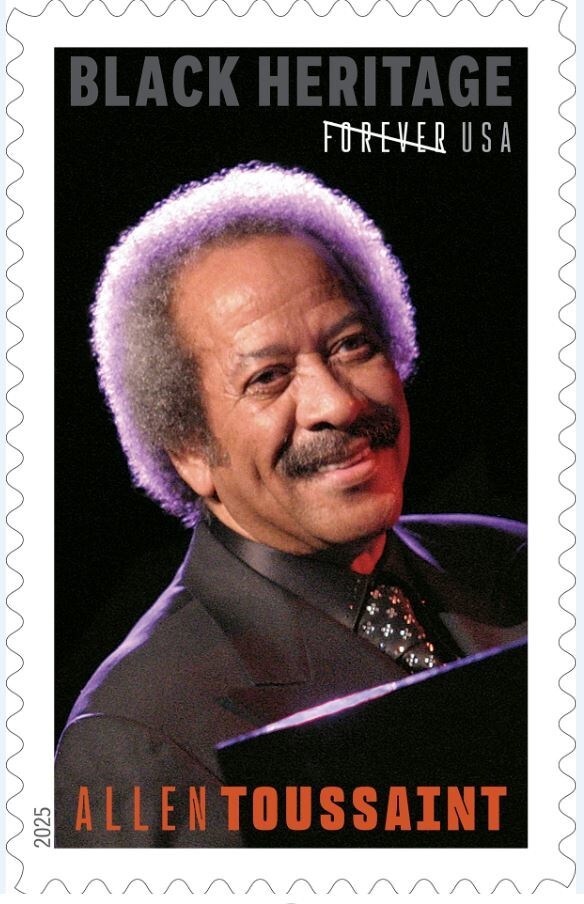
The United States Postal Service (USPS) is set to celebrate the life and legacy of legendary musician Allen Toussaint with the release of the 48th stamp in its Black Heritage series. This special tribute honors the New Orleans icon whose groundbreaking contributions to rhythm and blues (R&B), jazz, and rock ‘n’ roll continue to shape American music.

Allen Toussaint (1938-2015) was a prolific pianist, singer, songwriter, composer, arranger, and producer. From penning classics like “Fortune Teller” and “Southern Nights” to his behind-the-scenes collaborations with iconic artists, Toussaint left an indelible mark on the music world. His influence extended beyond New Orleans, resonating globally and inspiring generations of musicians.

Recognized by President Barack Obama with the National Medal of Arts in 2013, Toussaint’s achievements include inductions into the Rock & Roll Hall of Fame (1998), the Louisiana Music Hall of Fame (2009), the Songwriters Hall of Fame (2011), and the Blues Hall of Fame (2012). In 2022, the New Orleans City Council further cemented his legacy by renaming Robert E. Lee Boulevard after him.

The first-day-of-issue event for the Allen Toussaint Black Heritage stamp is free and open to the public. This celebration is a must for music enthusiasts and history lovers alike.

  • When: Thursday, Jan. 30, 2025, at 11 a.m. CST
  • Where: George and Joyce Wein Jazz & Heritage Center, 1225 N. Rampart St, New Orleans, LA 70116
  • Who:
    • Gary Barksdale, Chief Postal Inspector, U.S. Postal Inspection Service
    • Quint Davis, Chief Executive Officer, Festival Productions Inc.

Attendees are encouraged to RSVP at usps.com/blackheritagestamp.

Designed by USPS art director Ethel Kessler, the stamp features a stunning photograph of Toussaint captured by Bill Thompkins. Issued as a pane of 20 Forever stamps, these pieces of postal history will always hold the value of current First-Class Mail 1-ounce postage.

Allen Toussaint’s story is one of resilience, creativity, and unparalleled talent. Whether through his timeless music or this commemorative stamp, his contributions will continue to inspire and remind us of the rich cultural heritage he helped shape.

Nina DiGregorio of Femmes of Rock Nails Eddie Van Halen’s “Eruption” on a Custom 7-String Violin

0

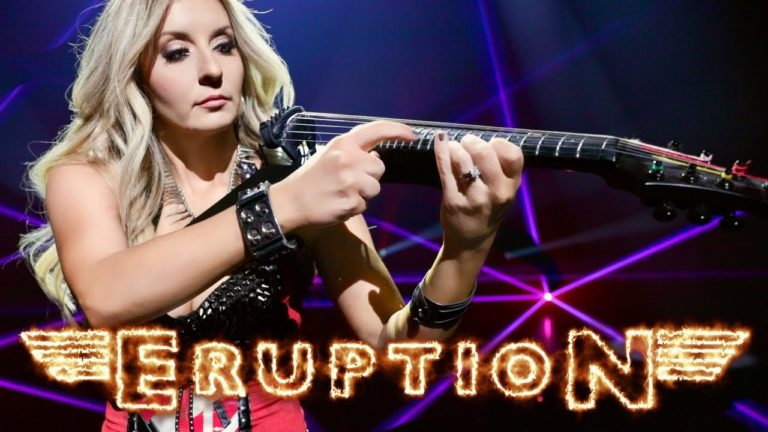
Eddie Van Halen’s “Eruption” on a violin? Yes, Nina DiGregorio of Femmes of Rock absolutely crushed it on a custom 7-string fretted electric violin. “My journey to learn Eruption began a few years ago, when I only had access to a 5-string fretless violin. I wanted to sound like Eddie. Thus began my journey with the 7-string fretted violin. Pretty much the entire reason for having this instrument custom-made was to see if I could play Eruption.,” she said, and wow —mission accomplished!

Memphis Music Hall of Famer Don Nix, Writer of Blues Classic ‘Going Down,’ Dies at 83

0

Don Nix, the Memphis-born saxophonist, songwriter, and producer who helped shape the sounds of Southern soul and blues-rock, has died at 83. From his early days with the Mar-Keys to his genre-defining anthem “Going Down,” Nix left an indelible mark on music history. His work with legends like George Harrison, Freddie King, and Jeff Beck not only cemented his reputation as a behind-the-scenes powerhouse but also underscored his rare ability to transcend genres. A true unsung hero of American music, Nix’s influence continues to ripple through generations of artists.

A Founding Member of the Mar-Keys

Don Nix began his musical journey as a saxophonist with the Mar-Keys, one of the pioneering acts of the Memphis soul scene and an early Stax Records house band. The group’s 1961 instrumental hit, “Last Night,” became one of Stax’s first big successes, laying the foundation for what would become a legendary label. Alongside future Booker T. & the MG’s members Steve Cropper and Donald “Duck” Dunn, Nix helped shape the vibrant, groove-heavy sound that would define Memphis soul.

The Creator of a Blues-Rock Standard
Nix’s composition “Going Down” is a defining blues-rock anthem, covered by icons like Freddie King, Jeff Beck, and Deep Purple. First recorded by the Memphis band Moloch in 1969, the song’s raw power and emotive storytelling captured the essence of the genre. Over the years, it has become a staple of blues and rock performances, resonating with artists and audiences alike for its authenticity and timeless appeal.

A Behind-the-Scenes Visionary
As a producer and arranger, Nix worked with some of the biggest names in music, including George Harrison, Freddie King, and Albert King. He was instrumental in Harrison’s Concert for Bangladesh, organizing backup vocalists for the iconic 1971 event. His knack for blending raw talent with polished production helped elevate countless albums, cementing his reputation as a behind-the-scenes maestro who shaped the sound of a generation.

In a career spanning six decades, Don Nix stood at the crossroads of soul, blues, and rock, bridging worlds with his immense talent and vision. Whether through his timeless compositions, groundbreaking productions, or evocative photography, Nix’s artistry resonated far beyond Memphis. His legacy is etched not just in records but in the very fabric of music history, a testament to a life lived in service of creativity and collaboration.


5 Surprising Facts About Black Sabbath’s “Paranoid”

Released in the seismic year of 1970, Paranoid by Black Sabbath wasn’t just another rock album—it was the primal scream of a generation wrestling with war, societal upheaval, and the darkness lurking in its soul. With tracks like “Iron Man,” “War Pigs,” and the title song, this landmark record didn’t just ignite the heavy metal movement—it became its cornerstone. The album’s raw power, haunting riffs, and dark lyrical themes cemented Black Sabbath’s place as the ultimate pioneers of a genre that would echo through the decades.

1. The Title Track Was a Last-Minute Addition
“Paranoid,” the album’s defining track, almost didn’t exist. With only hours left in the studio, Tony Iommi came up with the riff, and Geezer Butler wrote the lyrics in under two hours. The band completed the track in just 25 minutes. What started as an afterthought became Black Sabbath’s only Top 10 single in the UK and one of the most iconic songs in heavy metal history.

2. “War Pigs” Was Too Controversial for Its Time
Initially titled “Walpurgis” and inspired by satanic themes, “War Pigs” faced pushback from the record label, who deemed it too controversial, especially with the Vietnam War raging. The title was changed, but the song’s anti-war message remained, critiquing warmongers as the true “Satanists.” Its original title and lyrics reflect the band’s early boldness in tackling provocative themes.

3. “Iron Man” Had Nothing to Do With the Marvel Hero
While many fans associate “Iron Man” with the Marvel superhero, the song’s lyrics tell a very different story. Inspired by Ozzy Osbourne’s remark that Tony Iommi’s riff sounded like “a big iron bloke walking around,” Geezer Butler crafted a dystopian tale of a man turned to steel who brings about an apocalypse. The song’s haunting riff remains one of the most iconic in heavy metal.

4. “Planet Caravan” Showed Sabbath’s Softer Side
Unlike the heavy riffs that define the album, “Planet Caravan” is a dreamy, ethereal track about floating through space with a loved one. Featuring Ozzy Osbourne’s vocals filtered through a Leslie speaker and Tony Iommi’s jazz-influenced guitar work, the song showcased the band’s versatility. Despite initial doubts, it became a fan favorite for its unique, atmospheric sound.

5. The Cover Art Has Nothing to Do With the Title
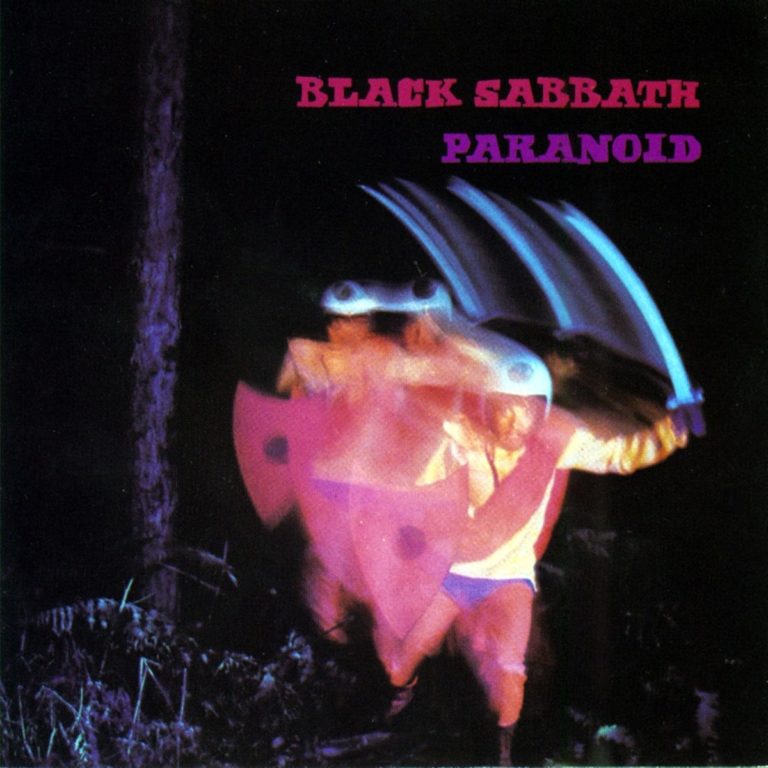
Originally titled War Pigs, the album’s cover features a mysterious figure dressed as a pig wielding a sword. When the label changed the title to Paranoid at the last minute, the cover art stayed the same, leaving fans scratching their heads about its connection to the music. Ozzy Osbourne later joked about the disconnect, calling the artwork “completely random.”

More than half a century after its release, Paranoid remains a towering achievement in the annals of rock history. Black Sabbath captured the chaos, anger, and alienation of their time and funneled it into a sonic assault that still reverberates today. This album was a harbinger of the future, marking the moment when heavy metal came roaring into existence. Paranoid is not just a record; it’s a legacy.

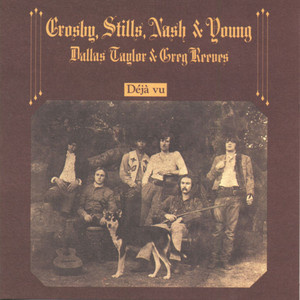
5 Unknown Facts About Crosby, Stills, Nash & Young’s “Deja Vu”

What happens when four of the most iconic voices in folk rock come together at the height of the counterculture era? You get Déjà Vu, the 1970 masterpiece from Crosby, Stills, Nash & Young. Packed with hits like “Teach Your Children” and “Our House,” it’s an album that defined a generation. But behind the harmonies and chart success lies a story of emotional turmoil, creative clashes, and groundbreaking artistry. Here are five fascinating, lesser-known facts about Déjà Vu.

1. Over 800 Studio Hours
Stephen Stills claimed that Déjà Vu took a staggering 800 hours to record. While this number might be exaggerated, it reflects the meticulous attention to detail the band poured into every track. Songs like “Déjà Vu” reportedly required over 100 takes, showcasing the perfectionism that defined the sessions.

2. Neil Young’s Solo Contributions
Neil Young was famously independent during the recording of Déjà Vu, often recording his parts solo in Los Angeles and sending them to the rest of the band. His haunting contributions, like “Helpless” and “Country Girl,” were deeply personal and added a unique dimension to the album.

3. Grief and Breakups Shaped the Mood
The album’s darker tone stemmed from personal tragedies and heartbreak. David Crosby mourned the recent loss of his girlfriend Christine Hinton, while Graham Nash and Joni Mitchell, as well as Stephen Stills and Judy Collins, had ended relationships. The emotional weight is palpable in tracks like “Almost Cut My Hair.”

4. Jerry Garcia’s Pedal Steel Guitar
Grateful Dead guitarist Jerry Garcia lent his pedal steel guitar skills to “Teach Your Children,” giving the track its signature country swing. In return, Crosby, Stills, Nash & Young helped the Grateful Dead improve their vocal harmonies for their albums Workingman’s Dead and American Beauty.

5. Joni Mitchell’s “Woodstock” Transformation
Joni Mitchell’s reflective ballad “Woodstock” became a rock anthem under Stephen Stills’ arrangement. While Mitchell’s version captured the festival’s spirit from afar, CSNY’s electric rendition added urgency and grit, making it one of the defining tracks of Déjà Vu.

Déjà Vu was a cultural moment, born from the chaos and creativity of its time. From its painstaking recording process to its deeply personal lyrics, every song tells a story of passion, loss, and triumph. It’s an album that resonates just as strongly today, a testament to the enduring magic of Crosby, Stills, Nash & Young.

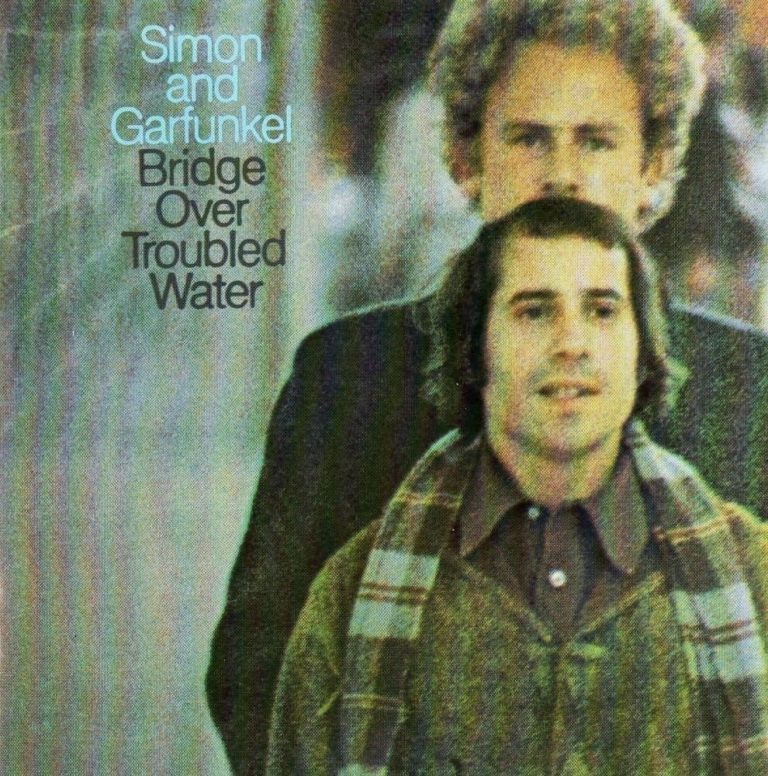
5 Surprising Facts About Simon & Garfunkel’s ‘Bridge Over Troubled Water’

When Simon & Garfunkel released Bridge Over Troubled Water on January 26, 1970, they delivered a cultural touchstone. From its gospel-inspired title track to the Peruvian sounds of “El Cóndor Pasa,” the record cemented their place in music history. Yet, beneath its polished surface lies a treasure trove of untold stories and fascinating details. Here are five little-known facts about this iconic album that will deepen your appreciation for its brilliance.

1. The Song That Almost Wasn’t
“Bridge Over Troubled Water” was initially written with just two verses. Art Garfunkel, sensing its potential, pushed for a third. Session musician Larry Knechtel’s gospel-infused piano work helped inspire Paul Simon to complete the final lyrics. What began as a simple tune evolved into one of the most powerful ballads of all time.

2. The Forgotten Peruvian Lawsuit
“El Cóndor Pasa (If I Could)” was based on a melody Simon thought was in the public domain. However, it was later revealed to have been copyrighted by Peruvian composer Daniel Alomía Robles. A successful lawsuit ensured proper credit—and royalties—were eventually given to Robles’ family.

3. The Echo of Friendship
“The Only Living Boy in New York” is a heartfelt expression of Paul Simon’s loneliness while Garfunkel was filming Catch-22 in Mexico. The song’s layered vocal harmonies, recorded with up to 15 overdubbed voices, capture the longing of a friend left behind.

4. The Saint Who Inspired “Cecilia”
Saint Cecilia, the patron of music, lent her name to one of the album’s most joyful tracks. Created during an experimental session in a rented house, the song features Paul Simon playing xylophone for the first time and incorporates unconventional sounds like falling drumsticks for its irresistible rhythm.

5. Reggae’s First Steps into Mainstream Rock
Paul Simon’s experimentation with reggae on “Why Don’t You Write Me” marked his first foray into the genre, foreshadowing hits like “Mother and Child Reunion” in his solo career. The playful track hinted at the musical diversity that Simon would explore post-Simon & Garfunkel.

Bridge Over Troubled Water was a masterpiece that showcased the genius of Simon & Garfunkel at their peak. With its mix of gospel, folk, and world music, the album transcended genres and generations. Every listen feels like discovering it for the first time, reminding us of the duo’s unmatched legacy.