


Reinvention has always been one of music’s most powerful tools. It can be the difference between an artist burning out after a few years and shaping decades of culture. In a business that thrives on novelty but also punishes missteps, the ability to evolve without losing your core identity is both an art and a survival tactic. Some of the greatest musicians in history have mastered the reset button, shifting genres, images, and sounds in ways that not only shocked fans but redefined popular culture itself.
Here are ten artists who proved that reinvention isn’t just about staying relevant—it’s about creating entirely new worlds for audiences to live in.
David Bowie
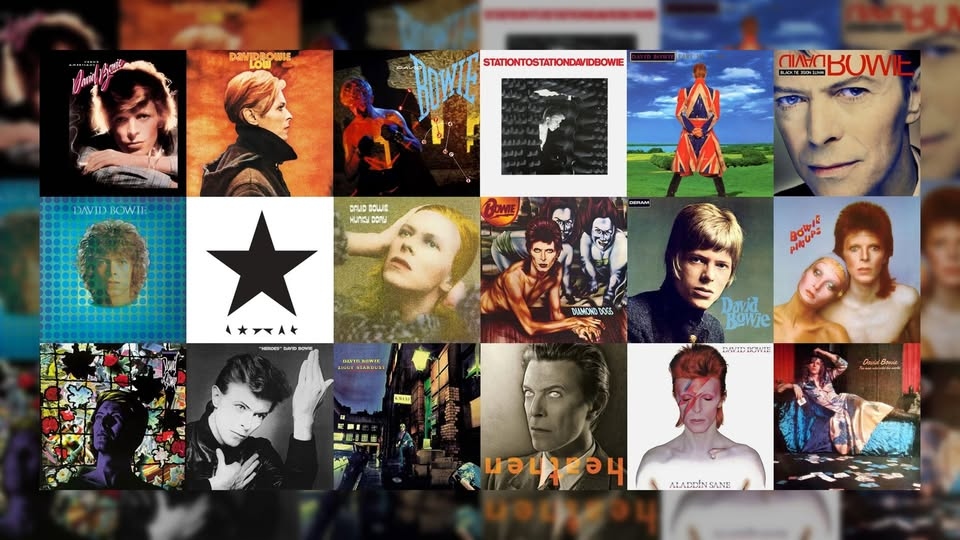
No artist is more synonymous with reinvention than David Bowie. Beginning in the late 1960s as a shaggy-haired folk singer with singles like “Space Oddity,” Bowie quickly realized he had little interest in staying in one lane. His first major transformation came with the creation of Ziggy Stardust in 1972—a glitter-drenched, androgynous alien who pushed glam rock into the mainstream and inspired a generation of outsiders.
By the late ’70s, he abandoned Ziggy and dove into the icy minimalism of the “Berlin Trilogy”—Low, Heroes, and Lodger—created with Brian Eno. This period marked Bowie as more than a chameleon; he was a curator of cultural mood. In the ’80s, he reinvented again with the mainstream pop sheen of Let’s Dance, scoring some of his biggest hits.
Bowie’s transformations weren’t always seamless, but each phase had a cultural impact. He famously said, “I don’t know where I’m going from here, but I promise it won’t be boring.” Reinvention wasn’t just his strategy—it was his identity.
Madonna
Madonna’s career has been a masterclass in evolution since she burst onto the scene in the early 1980s with club-ready hits like “Holiday” and “Borderline.” Initially the playful “Material Girl,” she quickly understood that pop music is as much about imagery as it is about sound.
Her first major reinvention arrived with 1989’s Like a Prayer, pairing provocative religious imagery with deeply personal lyrics. The move scandalized some but proved Madonna could balance controversy with artistry. In the ’90s, she shed the shock for sophistication, leaning into electronic textures with Ray of Light (1998), a critical and commercial triumph that earned her a Grammy and introduced her to a new generation.
Madonna’s constant reinvention has kept her in the cultural conversation for four decades. Whether through shock, style, or sonic innovation, she showed that pop stars who stand still risk fading—those who evolve endure.
Bob Dylan
Few reinventions were as controversial as Bob Dylan’s decision to “go electric.” In the early ’60s, Dylan was hailed as the voice of a generation, writing protest songs like “Blowin’ in the Wind” and “The Times They Are A-Changin’” that became anthems of social change.
Then came Newport Folk Festival, 1965. Dylan walked onstage with an electric guitar and The Paul Butterfield Blues Band. The audience booed. Folk purists felt betrayed, but Dylan pushed forward with Highway 61 Revisited and Blonde on Blonde, cementing his place as a rock poet.
This wasn’t his only reinvention. In the late ’70s, Dylan shocked again by releasing a series of gospel albums, including Slow Train Coming. While divisive, it showed his willingness to follow inspiration wherever it led. Dylan’s career reminds us that reinvention often means alienating some fans to create something greater.
Taylor Swift
Taylor Swift began as country’s golden girl, strumming acoustic guitars and writing about high school heartbreak on her 2006 debut. She dominated country radio, but by 2012’s Red, Swift was leaning heavily into pop hooks. The full pivot arrived with 2014’s 1989, a sleek synth-pop record that won Album of the Year at the Grammys.
In 2017, she reinvented yet again with the darker, reputation-focused Reputation, embracing hip-hop influences and a tougher persona. Then, in 2020, Swift shocked fans by quietly releasing Folklore and Evermore, indie-folk projects created during the pandemic with Aaron Dessner and Jack Antonoff. Both albums redefined her critical reputation, earning comparisons to classic singer-songwriters.
Swift has proven that reinvention can also mean expansion. She doesn’t shed past identities so much as she adds layers, building one of the most dynamic catalogs in pop history.
Johnny Cash
In the 1950s and ’60s, Johnny Cash was a country outlaw, known for his deep voice, rebellious songs like “Folsom Prison Blues,” and the infamous “Man in Black” image. By the late ’80s, though, his career had stalled, and Nashville largely considered him irrelevant.
That changed in the ’90s, when producer Rick Rubin invited Cash to record a stripped-down set of songs for American Recordings. With nothing but his guitar and voice, Cash covered contemporary artists like Nine Inch Nails and Soundgarden. His version of “Hurt” became one of the most haunting reinterpretations of modern music, introducing him to an entirely new audience.
Cash’s reinvention in his later years didn’t just revive his career—it reframed him as an elder statesman of American music. His final act proved that reinvention is possible even after decades in the business.
Radiohead
Radiohead’s early years were defined by the grunge-adjacent hit “Creep” and the guitar-driven The Bends. By the time they released OK Computer in 1997, they were hailed as the heirs to Pink Floyd—an ambitious rock band with big ideas.
But rather than stick with arena-ready guitar anthems, the band dismantled their sound on 2000’s Kid A, leaning heavily into electronic music, abstract lyrics, and glitchy production. Fans expecting another OK Computer were stunned. Critics, however, quickly called it a masterpiece.
Radiohead’s reinvention didn’t just save them from stagnation; it influenced an entire generation of alternative and electronic musicians. Thom Yorke later explained, “We had to destroy it in order to survive.” It was risky, but it cemented their legacy as innovators rather than imitators.
Beyoncé
Beyoncé’s early career was already monumental, fronting Destiny’s Child before launching a solo run with Dangerously in Love (2003). Initially framed as a pop-R&B powerhouse, her artistry deepened with each release.
The true reinvention arrived with her 2013 self-titled visual album, released without warning on iTunes. The project reframed her not just as a performer but as a cultural architect, marrying music, visuals, and narratives of empowerment. Then came Lemonade (2016), blending rock, country, and hip-hop into a personal and political statement that became one of the decade’s defining albums.
Beyoncé’s reinvention was not about changing who she was, but about expanding the boundaries of what a global superstar could achieve. She turned albums into cultural events and set a new standard for artistic control.
Lady Gaga
When Lady Gaga exploded in 2008 with The Fame, she was the embodiment of pop spectacle—meat dresses, outlandish wigs, and club anthems like “Poker Face.” She leaned into shock value, positioning herself as the heir to Madonna’s provocation.
But Gaga showed her depth with 2016’s Joanne, a country-rock departure that stripped away the costumes in favor of intimacy. Some critics questioned the pivot, but it laid the groundwork for her Oscar-winning role in A Star Is Born. Her ballad “Shallow” became a career-defining hit, winning Grammys and an Academy Award.
By balancing pop excess with stripped-down vulnerability, Gaga proved her artistry was never tied to just one persona. Reinvention gave her both credibility and longevity.
The Beatles
The Beatles are often remembered as the clean-cut “Fab Four” who took America by storm in 1964. Their early years were filled with love songs and harmonies that defined Beatlemania. But by 1965’s Rubber Soul, the group began pushing boundaries with more sophisticated songwriting.
The real reinvention arrived with Sgt. Pepper’s Lonely Hearts Club Band (1967), where they abandoned their mop-top image and embraced psychedelia. Later, with The White Album and Abbey Road, they explored everything from avant-garde experiments to hard rock.
Their ability to reinvent themselves album by album kept them ahead of their peers and helped transform the very idea of what a rock band could be. The Beatles’ reinvention wasn’t just personal—it reshaped the music industry itself.
Genesis
Genesis began in the 1970s as a progressive rock outfit, fronted by Peter Gabriel with theatrical live shows and complex compositions like The Lamb Lies Down on Broadway. When Gabriel left, Phil Collins stepped in as lead singer, shifting the band toward more accessible pop rock.
The transition was risky, but albums like Invisible Touch (1986) brought massive commercial success. Genesis went from cult prog heroes to global pop stars, selling out stadiums worldwide. Some fans lamented the change, but others embraced the accessibility, and Collins’ solo career flourished alongside.
Genesis’ reinvention illustrates that shifting direction doesn’t always mean abandoning artistry—it can mean widening the tent to bring more listeners in.
Reinvention is never easy. It risks alienating old fans, confusing critics, and failing commercially. But for artists willing to take that leap, the rewards can be enormous: renewed relevance, deeper artistry, and cultural immortality.
From Bowie’s shapeshifting to Swift’s genre pivots, from Cash’s late-career rebirth to Radiohead’s sonic deconstruction, these artists show that reinvention is more than survival. It’s a declaration: that music, like the people who make it, is always in motion.
The lesson for artists and fans alike? Never fear the reset. Sometimes, the boldest move is to become someone new.