


The artists who last are rarely the ones who did what they were told. Labels want consistency. They want the follow-up to sound like the record that sold. They want a formula repeated until the audience stops showing up, and then they want to know why the audience stopped showing up. The artists on this list ignored that logic entirely. Some of them fought for it openly. Prince changed his name to an unpronounceable symbol in a very public dispute with Warner Bros. over creative ownership. Radiohead walked away from Capitol after ‘OK Computer’ and self-released ‘In Rainbows’ in 2007 on a pay-what-you-want model that the industry called reckless and fans called genius. David Bowie retained ownership of his masters decades before Taylor Swift made it a cultural conversation. The through line across all 13 artists here is the same. They trusted the work more than they trusted the system, and the work rewarded them for it.
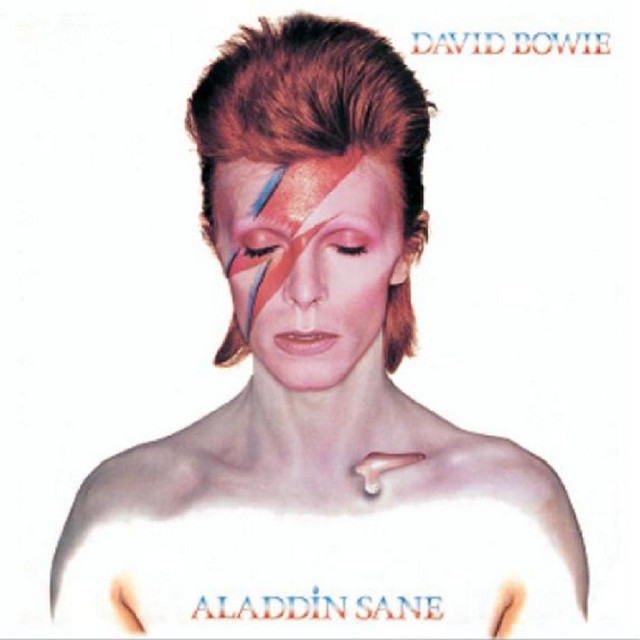
David Bowie changed sounds, identities, aesthetics and entire musical philosophies, sometimes within the span of a single year. Ziggy Stardust gave way to the Thin White Duke, which gave way to the Berlin Trilogy, which gave way to decades of restless reinvention that ended with ‘Blackstar’, released two days before his death in 2016. That album debuted at number one in 28 countries. He kept moving, and the work kept mattering.
Björk has never made the same album twice, and the gulf between each release is rarely small. ‘Post’ was electronic pop. ‘Homogenic’ was orchestral and volcanic. ‘Medúlla’ was almost entirely vocal. ‘Vulnicura’ was a string-driven dissection of heartbreak. ‘Utopia’ was a flute-laden vision of a feminist paradise. Each record arrives with its own visual language, its own sonic architecture, its own reason to exist.
Radiohead built toward ‘The Bends’ and ‘OK Computer’, two of the most acclaimed guitar-rock albums of the era, then scrapped the template entirely. ‘Kid A’ in 2000 introduced Ondes Martenot, processed vocals and abstract electronic structures, and won the Mercury Prize. ‘In Rainbows’ pulled back toward warmth and melody. ‘A Moon Shaped Pool’ leaned into orchestration. Every record sounds like a deliberate departure from the last.
Prince released ‘Purple Rain’, ‘Around the World in a Day’ and ‘Parade’ in consecutive years between 1984 and 1986. Three albums, three completely different sonic worlds, all operating at the highest commercial and artistic level simultaneously. He wrote, produced, arranged and performed nearly everything himself, and the music never stopped surprising.
Beyoncé released ‘Lemonade’ in 2016 as a visual album on HBO with zero conventional promotion. It debuted at number one and won the Peabody Award. ‘Renaissance’ in 2022 was a full-length house and dance record. ‘Cowboy Carter’ in 2024 became the best-selling country album of that year. She rewrites formats rather than following them.
Tyler, The Creator built an entirely new character, wardrobe and emotional arc for ‘IGOR’, which won the Grammy for Best Rap Album in 2020. ‘Flower Boy’ was confessional and warm. ‘Cherry Bomb’ was maximalist and chaotic. ‘Goblin’ was confrontational and raw. Each album is a distinct world with its own rules.
Frank Zappa released over 60 albums across rock, jazz, classical and avant-garde composition, and no two sounded remotely alike. ‘Hot Rats’ in 1969 was a jazz-fusion landmark. ‘Joe’s Garage’ in 1979 was a three-act rock opera about a dystopian government ban on music. His orchestral works were performed by the London Symphony Orchestra. He testified before the U.S. Senate in 1985 defending artistic freedom. The music and the man operated on their own terms, always.
Kate Bush took eight years between ‘Hounds of Love’ in 1985 and ‘The Red Shoes’ in 1993, then another twelve before ‘Aerial’ in 2005. The wait always meant something. ‘Hounds of Love’ split into two distinct sonic halves. ‘The Kick Inside’ announced a theatrical, emotionally intricate voice unlike anything in British pop at the time. When “Running Up That Hill” reached number one globally in 2022 after its placement in Stranger Things, a whole new generation discovered an artist operating decades ahead of the curve.
The Weeknd built ‘After Hours’ in 2020 around a cinematic character lost in a neon-soaked nightmare of Vegas excess and self-destruction, complete with a Super Bowl halftime show performance in bandaged makeup. ‘Dawn FM’ in 2022 reframed the entire narrative as a soul crossing over into the afterlife, scored like a late-night radio broadcast from purgatory. Abel Tesfaye treats albums as complete audio-visual universes, and the ambition compounds with each one.
Miles Davis recorded ‘Kind of Blue’ in 1959, the best-selling jazz album of all time. Ten years later he released ‘Bitches Brew’, a double album of electric jazz-fusion that fractured his existing audience and created an entirely new genre. Then came the funk-driven ‘On the Corner’ in 1972. Then a six-year silence. Then ‘Tutu’ in 1986, produced with synthesizers and programmed drums. He treated every era of music as raw material for something new.
The Beatles released ‘Please Please Me’ in 1963 as a straight-ahead rock and roll record recorded in a single day. Four years later came ‘Sgt. Pepper’s Lonely Hearts Club Band’, a studio construction of orchestras, backward tape loops, Indian instrumentation and character-driven concept songwriting that the Recording Industry Association of America named the best album of all time. In between came ‘Rubber Soul’, ‘Revolver’ and ‘A Hard Day’s Night’, each a distinct leap forward. They compressed a lifetime of reinvention into eight years of active recording, and the influence has never stopped compounding.
Bruce Springsteen followed ‘Born in the U.S.A.’ in 1984, one of the best-selling albums in history, with intimate, introspective work and the personal ‘Tunnel of Love’ in 1987. He followed the stadium-sized ‘The Rising’ in 2002 with the spare, Depression-era folk of ‘We Shall Overcome: The Seeger Sessions’ in 2006. He releases Broadway shows, memoir and rock records with equal commitment. The scale shifts constantly, and the quality holds.
St. Vincent arrived as Annie Clark, fingerpicking guitarist and orchestral pop songwriter on ‘Marry Me’ in 2007. By ‘St. Vincent’ in 2014 she had constructed an alien persona, a distinctive guitar sound and a visual language that won the Grammy for Best Alternative Music Album. ‘Masseduction’ in 2017 was sleek, synth-driven and emotionally raw. ‘Daddy’s Home’ in 2021 was a 1970s New York downtown rock record soaked in warm analog production. Each album arrives with a completely different set of rules, and she writes all of them herself.